
Custom Cleaning Brush
Brush Roller Recycling Plastic
Custom brush roller for plastic recycling lines. PA6/PA66 nylon filament cleans flakes, bottles, and film on wetted conveyors, sorting belts, and drums.
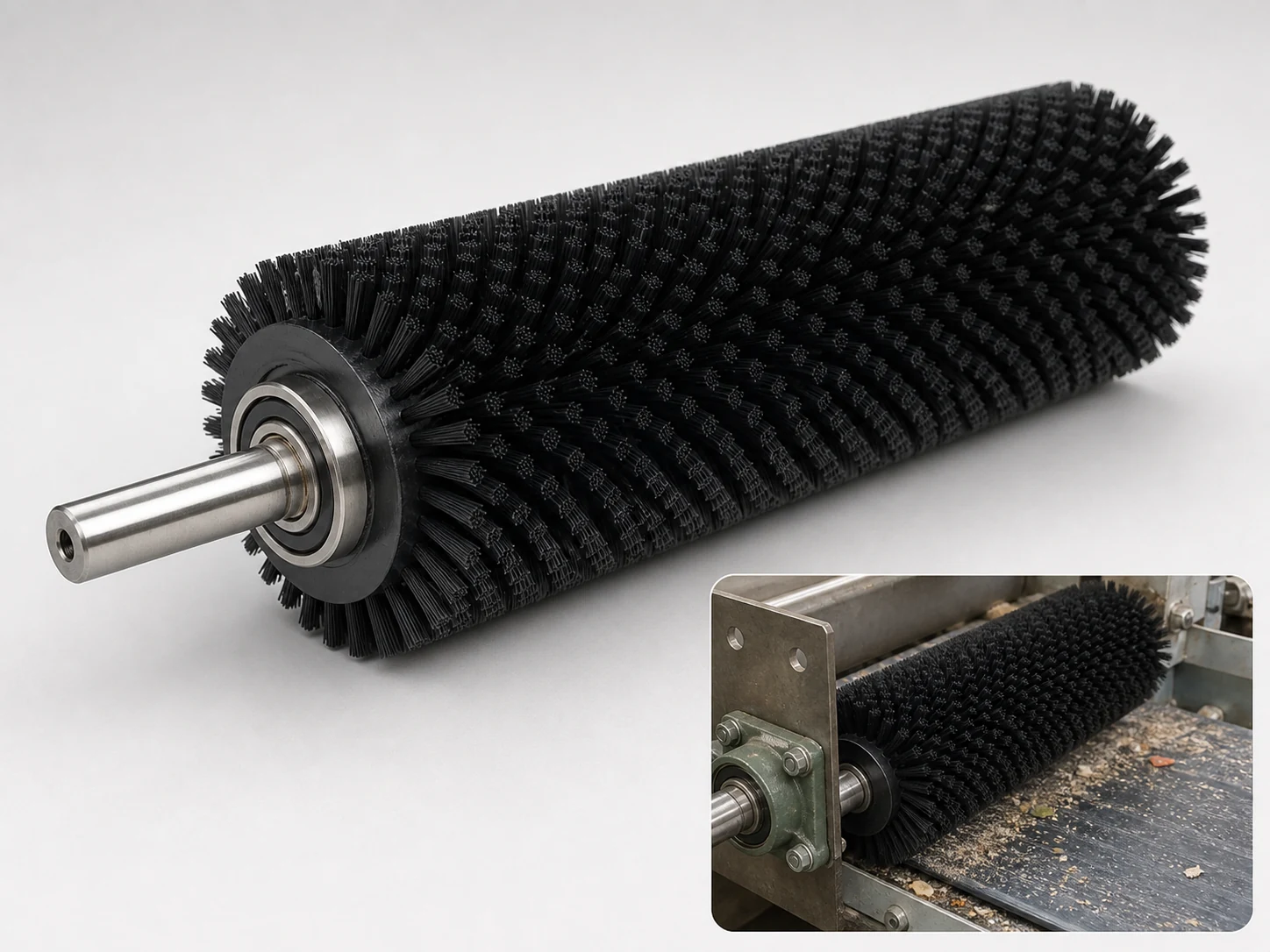
Large-format brush
100 pcs
Minimum order
Built one at a time on a core or channel: full-width rollers, sweeper brooms and long strip.
Production lead time, once the specification is confirmed
- Up to 100 pcsWithin 20 days
- 101–1,000 pcsWithin 30 days
- Over 1,000 pcsConfirmed with your quotation
Peak season can extend these times; the shipping date is confirmed in writing with your quotation. Sampling and shipping are quoted separately.
A custom-built roller brush for plastic recycling lines, engineered to scrub plastic flakes, bottles, film, and other recyclate on wetted conveyors, sorting belts, transfer drums, and discharge points. Its nylon filament wrap runs continuously in wet, abrasive environments to remove labels, dirt, fibers, and loose film while keeping metal out of the reclaimed material stream.
What can this brush do for you?
Scrubs labels, glue, and dirt off plastic flakes and bottles under wash spray
The PA6 or PA66 nylon filaments provide a firm but non-metallic wiping and scrubbing action that lifts water-softened labels, adhesive residues, and surface contamination from shredded plastic. Because the bristles are plastic, they will not shed metal particles that can contaminate a clean regrind stream or damage downstream optical sorting.
Runs in wet, abrasive recycling-line conditions without rusting or collapsing
The filament and core configuration is selected for continuous contact with wash water, dilute detergents, and moving recyclate. Nylon resists moisture absorption better than natural fibers, keeps its recovery after bending, and wears gradually rather than breaking suddenly, so the roller maintains predictable cleaning contact between scheduled maintenance intervals.
Matches the exact geometry of your existing conveyor, drum, or transfer point
The roller is built to your working length, brush outside diameter, core diameter, and shaft-journal details from the machine drawing. That means the brush drops into the existing bearing positions and drive without field modifications, and the bristle tips land exactly where the process needs them.
Provides controlled contact pressure rather than a fixed, aggressive crush
Bristle trim length, filament diameter, and winding density are set from the actual flake or bottle surface and line speed, not from a one-size-fits-all engagement rule. The result is enough contact to remove labels and dirt without excessive bristle fatigue, fines generation, or unnecessary motor load.
Supports fast strip replacement when the cleaning duty is continuous
Strip-roller construction with a spiral channel allows individual worn brush strips to be removed and replaced without returning the entire core to the manufacturer. For high-throughput washing lines, this reduces downtime and keeps the same core in service through multiple strip changes.
What is a Brush Roller Recycling Plastic?
A Brush Roller Recycling Plastic is a rotating cylindrical brush designed specifically for the wet-cleaning and handling stages of plastic recycling. It is normally supplied as a filled roller: a machined core with a continuous spiral channel or a series of channel-mount brush strips wound into a close, pitch, or helical pattern. The roller mounts on shaft ends or journals and is driven by the existing line.
In a typical recycling line, the roller sits above, below, or beside a moving belt or drum and makes controlled contact with passing plastic flakes, shred, bottles, or film. The rotating bristles scrub the top surface, loosen water-softened labels and adhesives, dislodge loose fibers and fines, and help keep downstream separation equipment working on a cleaner stream. The brush does not replace washing, air separation, or drying; it works inside those steps as the mechanical contact element.
Because the working contact is plastic-on-plastic, this type of brush is chosen when metal contamination is unacceptable and when the cleaning task is film, labels, dirt, and loose debris rather than heavy scale, rust, or high-temperature deposits. It is an industrial machine component, not a general-purpose shop brush.
Technical Specifications
Every roller is dimensioned from the customer’s machine drawing and process conditions. The table below shows the typical ranges for Brush Roller Recycling Plastic rollers supplied for plastic washing, sorting, and transfer lines.
| Parameter | Value / Options |
|---|---|
| Working length | 500–3000 mm, set from machine drawing |
| Brush outside diameter (over bristle tips) | 100–500 mm |
| Core diameter | 50–200 mm |
| Shaft / journal interface | Plain journal, keyed shaft, clamp, flange, or custom end detail per drawing |
| Filament material | PA6 nylon, PA66 nylon; PP or PBT available where chemistry or stiffness requires |
| Filament diameter | Nylon 0.05–1.2 mm; PP 0.07–2.0 mm; PBT 0.15–0.2 mm |
| Winding pattern | Close wound, pitch wound, or helical strip-roller construction |
| Core material | Steel, stainless steel, aluminum, or engineering plastic, selected for wash chemistry and rigidity |
| Contact engagement | Set from substrate type, line speed, and process requirement; not a fixed value |
| Operating environment | Wet washing, ambient to warm water, dilute detergent or wash-chemistry exposure; confirm temperature and chemical details for material grade |
| Brush type | Custom Roller and Conveyor Brushes |
| How it is driven | Machine-driven, mounted in the equipment |
| Cleaning target | wet washing conveyor, bottle and container pre-wash line, and sorting and optical-inspection belt cleaning |
| Surface or part | plastic, roller, drums, belts, metal, conveyors, sorting belts, and channel |
| Residue or debris | labels, fiber, loose films, fines, adhesive, pitch, dust, and adhesive residue |
| Mounting / connection | Shaft-Mounted / Fixed |
Where does this brush work best?
- Wet washing conveyors after granulation: scrub plastic flakes and shred while water spray softens labels and adhesive residues.
- Bottle and container pre-wash lines: brush the outside and accessible inside surfaces of bottles moving through drum or trough washers to lift labels and dirt before flaking.
- Sorting and optical-inspection belts: agitate or wipe passing recyclate to remove loose film, dust, and fibers that can cause false reads or block detection windows.
- Transfer chutes and discharge points: dislodge fines and loose film from moving material so buildup does not bridge or jam downstream equipment.
- Rotary drum washers and friction washers: provide a plastic-compatible scrubbing surface inside or against drums without introducing wire fragments into the recyclate.
How do I choose the right one?
Start from the machine drawing and mounting space
Working length, brush outside diameter, core diameter, and shaft-journal geometry must match the existing bearing centers, drive coupling, and available clearance envelope. Send the drawing first. A brush that is even a few millimeters too long in working length or too large in OD can interfere with guards, side rails, or adjacent rollers.
Pick the filament material for the wash chemistry and contact duty
- PA6 nylon: good general-purpose choice for wet washing, detergent exposure, and moderate abrasion at normal wash temperatures.
- PA66 nylon: higher stiffness, heat resistance, and wear life than PA6; a better match when the line runs warmer water or when the roller sees heavier contact loads.
- PP: lower moisture absorption and better resistance to some chemicals, but softer and less abrasion-resistant than nylon; suitable for lighter wiping or higher chemical exposure.
- PBT: finer, more flexible filament for gentle surface wiping, final cleaning stages, or when very fine contact is needed on thin films.
Match filament diameter and density to the residue, not just the material
Thicker filaments — nylon near 1.0–1.2 mm or PP up to 2.0 mm — scrub harder and remove heavier label and dirt loads. Thin filaments — 0.05–0.2 mm — make more, gentler contact points and are better for fine wiping, dust removal, or final cleaning before optical sorting. Close wound patterns give continuous contact for scrubbing; pitch or helical winding provides more open space for drainage and can help move material along the roller when angle is set correctly.
Set engagement from the actual process, then verify
There is no universal engagement depth for all recycling lines. Too little engagement leaves labels and dirt on the material. Too much bends bristles permanently, increases power consumption, and can grind the recyclate into extra fines. Start from the existing roller position or process trial, then confirm that the bristle tips just touch or lightly flex against the material at full line speed.
When a different brush or method fits better
If the line handles heavy metal fragments, rust, or mineral scale, a wire or abrasive roller may be required instead, and contamination control will need to tolerate metal fiber loss. If the roller only needs to convey material without cleaning, a rubber-covered roller or plain lagging is more efficient. If the wash water is steam-heated above the selected filament’s continuous-use temperature, switch to a higher-temperature filament grade or move the scrubbing action to a cooler stage.
Can I customize this brush?
Brush Roller Recycling Plastic is a project-specific component. To define the configuration, provide the machine drawing with mounting centers, clearance envelope, drive details, roller position, and any existing strip or core references, plus the material type and size range, wash chemistry and temperature, line speed, and desired cleaning outcome. A photo or short video of the current cleaning issue also helps.
We can adjust:
- Dimensions: working length, brush OD, core diameter, shaft length, journal/keyway/flange details, and overall roller length.
- Core: steel, stainless steel, aluminum, or engineering plastic; surface treatment or coating where wash chemistry demands it.
- Filament: PA6, PA66, PP, or PBT; filament diameter; trim length; bristle density; and winding pattern (close, pitch, or helical).
- Construction: continuous wound strip, single-spiral channel with replaceable strips, or double-spiral configuration for directional conveying action.
- Color and marking: natural, black, blue, or custom filament color for line identification; core marking or tag where required.
- Packaging: bulk pallet, individually wrapped rollers, or strip kits for replacement programs.
For projects that require material declarations, inspection protocols, third-party testing, or project-specific documentation, we can work with your quality team to define and supply the supporting records needed for your approval process.
Which filament survives the cleaning and still lasts on a brush roller recycling plastic?
What should I check before running a new Brush Roller Recycling Plastic in my line?
Before start-up, confirm the roller rotates freely in its bearings, the shaft journal engagement matches the drive, the bristle tips clear all guards and side rails through the complete revolution, and the intended contact zone covers the full material width or the specific spot where labels and dirt are hardest to remove. Run the roller unloaded for a short period and check for noise, vibration, or bristle rub before introducing material.
How can I tell if the bristles are wearing too fast?
Measure the brush outside diameter at several points along the roller after a known number of running hours. If the diameter is shrinking unevenly, the engagement is probably too deep on one side or the material is biased to one edge of the belt. If bristle tips are breaking rather than gradually wearing, the filament diameter may be too small for the impact load, or the material is bouncing against the roller.
Will the nylon bristles scratch or damage the plastic flakes or bottles?
Under normal engagement, nylon-to-plastic contact does not cut or scratch in a way that harms the recyclate. Excessive engagement, very stiff filaments, or a roller that is pushed hard against a bouncing load can grind the plastic and create extra fines. If you see increased fines generation or a visible change in flake surface texture after installing the roller, reduce engagement or move to a softer filament diameter before continuing production.
Can the same roller be used in both washing and drying stages?
Only if the temperature and chemistry in both stages stay within the filament and core material limits. A roller sized for wet washing may work in a low-temperature drying section as a wiping or agitation element, but hot-air dryers, steam-heated housings, or strong chemical exposure require a separate material grade. Do not assume a wet-line roller transfers to a hot stage without confirming the operating temperature against the filament specification.
How do I know when to replace the brush strips?
Replace the strips when the brush outside diameter in the contact zone has worn down to the point where the bristle tips no longer make the required engagement, when density in the working area visibly thins and cleaning quality drops, or when individual strips start to loosen in the channel. For strip-roller construction, order replacement strips with the same filament, diameter, trim length, and winding pattern so the roller returns to its original cleaning performance.
Does the brush roller remove all labels and adhesive without any other process step?
No. The brush roller provides mechanical scrubbing that helps release water-softened labels and adhesive, but successful label removal still depends on residence time in the washer, water temperature, detergent dosing, and downstream separation of the loosened label pieces from the plastic stream. The brush is one part of the washing sequence, not a replacement for the washer or the separation equipment.
Guides that go deeper on this
Abrasive Nylon Grit and Filament Selection
Read this guideGuideBrush Roller Conveyor Mistakes with Dry Dust
Read this guideGuideBrush Speed, Engagement, and Heat
Read this guideGuideConveyor Belt Cleaning Brush Design
Read this guideGuideFloor Scrubber Brush Selection: Disc Brush vs Roller Brush
Read this guideCustom Manufacturing RFQ
Describe Your Application
Send the key measurements, cleaning requirement, residue, material direction, mounting method, quantity, and drawing or photo.
Drawing or photo optional — it speeds things up, it does not gate the enquiry.
Custom Brush RFQ
Send Your Brush Project
Upload a drawing, product photo, or sample photo and provide the core dimensions and cleaning conditions.
“We need a brush to remove wet residue from a stainless steel conveyor, about 800mm wide. The current brush wears quickly. We can send photos.”
“We sell drinkware and need a cleaning brush to include with the product. Quantity around 5,000 pieces.”