
Application
Screen & Sieve Cleaning
For Screen & Sieve Cleaning, the brush must reach the working area, disturb or collect sand and gravel/dust/aperture-blocking particles, and release it without creating unacceptable surface damage or process interference. Brush selection starts with access, contact motion, and the cleaning method used in the process.
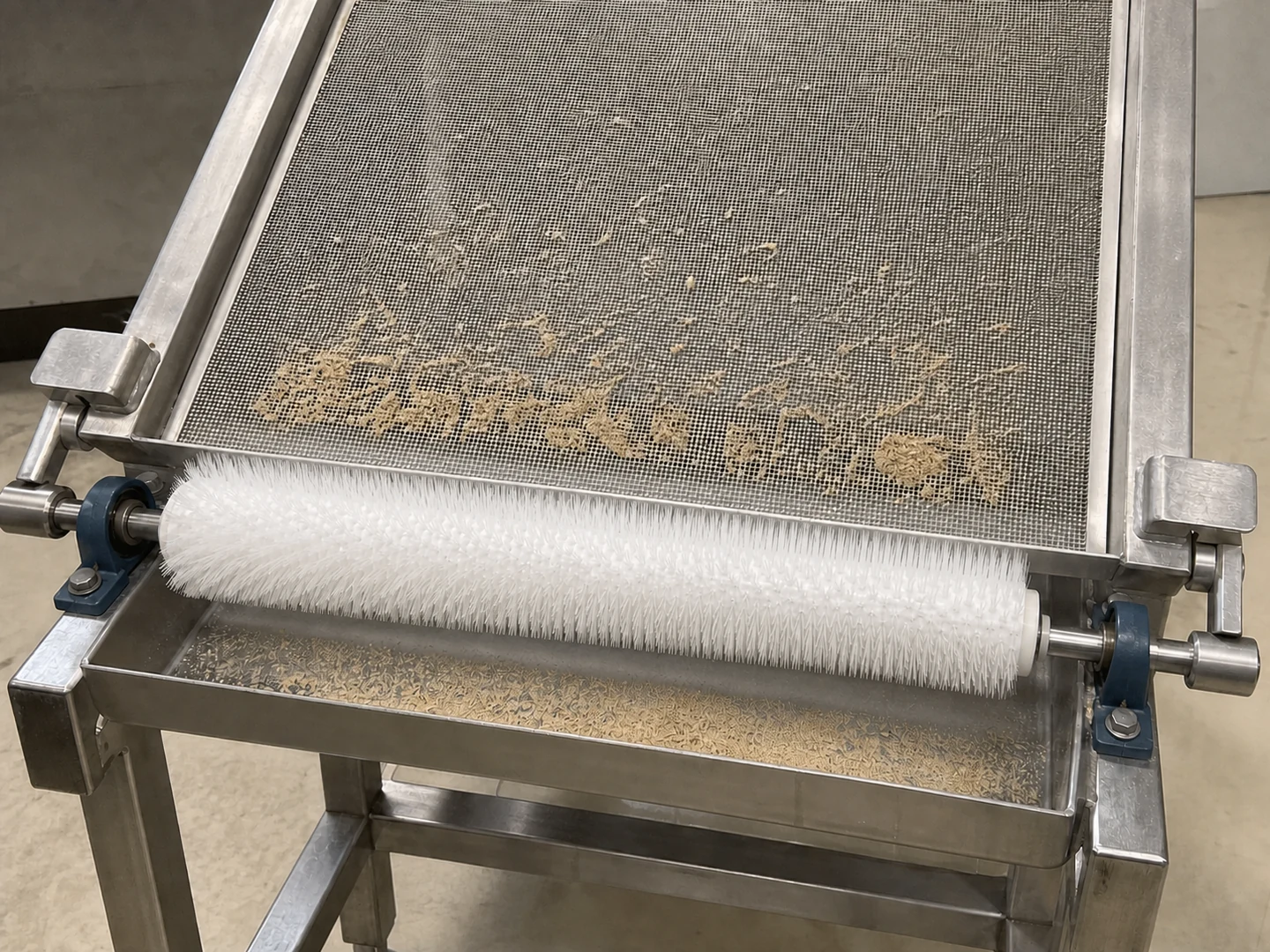
At a glance
- Cleaning target
- Sand and Gravel/Dust/Aperture-Blocking Particles
- Working environment
- Outdoor / Dry Indoor Area
- Cleaning method
- Dry Brushing / Wet Brushing
- Requirements to check
- Machinery-Safety SOP; Impact- and Wear-Resistance Requirements
A blinded screen loses throughput rather than appearance, so screen brushes are chosen to clear the aperture from the correct side without deforming the mesh or opening the weave.
What makes Screen & Sieve Cleaning different from other industrial and manufacturing cleaning?
The main difficulty is removing carryback, powder, fibers, chips, sticky product, and scale from belts, screens, drums, rollers, guides, and machine surfaces without damaging the surface, loading the brush, or carrying contamination back into the process.
The work happens in outdoor and dry indoor area against sand and gravel, dust and aperture-blocking particles.
The part people get wrong: this is not one job. The same equipment carries several targets, each with a different opening and a different residue, and one brush rarely covers them all.
What are the most common cleaning targets in Screen & Sieve Cleaning?
There are 5 distinct targets here, and the brush that suits one will usually not reach another.
| Part or area | Residue type | Cleaning requirement |
|---|---|---|
| Woven Wire Mesh | Sand and Gravel, Dust, Aperture-Blocking Particles | The tips must enter the apertures far enough to push lodged material back out, without wedging in the openings. |
| Perforated Plate | The face must stay flat against the surface so the whole working width contacts, with filament soft enough not to mark it. | |
| Vibrating Screen | The tips must enter the apertures far enough to push lodged material back out, without wedging in the openings. | |
| Rotary Screen | ||
| Food and Pharmaceutical Sieve | Powder, product fines, aperture-blocking particles |
The dimensional envelope those targets impose on the brush:
| Parameter | Typical range |
|---|---|
| Screen working width | 100–3000 mm |
| Brush outside diameter | 80–600 mm |
| Free trim length | 25–200 mm |
| Filament diameter | 0.30–2.00 mm |
| Working width | 100–3,000 mm |
| Brush diameter | 80–600 mm |
Which brush types work for each cleaning target?
Roller or rotary screen brush, strip wiper, small hand brush or cleaning-ball system.
| Cleaning target | Recommended brush type | Why it fits |
|---|---|---|
| Woven Wire Mesh | Roller and Conveyor Brushes | A woven mesh blinds in the openings themselves, so a brush whose tips enter the aperture pushes the near-size particle back out the way it came in. |
| Perforated Plate | Handheld Detail Brushes | A perforated plate is a solid sheet with holes, so a flat head clears the face and works the hole edges without deflecting the plate. |
| Vibrating Screen | Roller and Conveyor Brushes | A vibrating deck is cleaned while it runs, so a brush mounted under the deck works with the vibration to keep the apertures open through the shift. |
| Rotary Screen | A rotary screen carries its whole surface past one point, so a fixed brush at that point clears the full drum every revolution. | |
| Food and Pharmaceutical Sieve | A production sieve has to be clean and non-shedding, so the brush is specified so that no filament can pass the aperture into the product. |
The layouts this application is normally built in:
- Driven brush — use when carryback, powder, fibers, chips, sticky product, and scale needs repeatable scrubbing or controlled relative movement
- Passive or free-running brush — use for loose contamination and lower process complexity on belts, screens, drums, rollers, guides, and machine surfaces
- Localized hand, strip, or tube brush — use where only an edge, gap, port, or maintenance point needs contact
In practical brush terms: reach first, then residue. A brush that fits but is too soft can be stiffened; a brush that does not fit is simply the wrong tool.
What filament materials work best for Screen & Sieve Cleaning?
Nylon/PBT/PP for general cleaning; natural fiber for gentle dry sweeping; wire only for robust approved metal screens.
| If the condition is… | Filament to start with | Why |
|---|---|---|
| Sensitive or coated surface | Nylon PA | balanced flex life and abrasion resistance |
| Wet, washdown, or detergent service | Polypropylene PP | acid, alkali, water, and detergent resistance |
| Bonded residue or aggressive cleaning | PA612 Nylon | low water absorption and strong bend recovery |
The constraints this application puts on the filament:
| Constraint | Value for this application |
|---|---|
| Filament hardness | Hard |
| Maximum service temperature | 80°C |
| Chemical exposure | No Added Medium or Water |
| Cleaning method | Dry Brushing, Wet Brushing |
How do I choose the right brush for my screen & sieve equipment?
Aperture and wire diameter set the fill, the accessible side sets the tool type, and the screen dimensions set the width.
The order that avoids rework:
- Identify the target part and measure the access opening or clearance
- Describe the residue: what it is, how thick it sits, and how strongly it holds
- Choose the construction that can physically reach that target
- Set the filament from surface risk, working temperature and cleaning chemistry
- Fix filament diameter, free trim length and density for the contact pressure you need
- Run one cycle and check the result before committing to a production quantity
Before you commit to a quantity, send the aperture size, the wire diameter, the screen dimensions, and which side is accessible.
When is a screen & sieve brush the wrong tool?
Ultrasonic cleaning, air knives and cleaning balls or sliders clear blinded apertures without a bristle touching the weave. A screen that is stretched, torn or has opened at the aperture is replaced, because brushing accelerates that failure.
What common mistakes should I avoid in Screen & Sieve Cleaning?
- Giving screen size but not aperture and wire diameter, so the fill cannot be matched to the opening
- Changing brush material while leaving excessive engagement, poor alignment, or no discharge path unchanged
- Copying a worn brush without recording motion, direction, mounting, and the original working diameter
When a brush is running but not cleaning, start here rather than adding pressure:
| Symptom | What to change |
|---|---|
| Residue remains | Increase relative motion or discharge, then change filament diameter or density; do not add pressure before checking loading by carryback, powder, fibers, chips, sticky product, and scale. |
| Surface marks or scratches | Reduce engagement, use finer or softer fill, and remove trapped abrasive particles from contact with belts, screens, drums, rollers, guides, and machine surfaces. |
| Rapid wear or uneven cleaning | Check alignment, runout, support, motion, temperature, chemical attack, and whether the brush covers the complete working path. |
| Brush loads or redeposits residue | Open the fill pattern or add wash, vacuum, air, scraping, or a collection path so removed carryback, powder, fibers, chips, sticky product, and scale leaves the contact zone. |
Questions this page is asked
What should be checked before treating screen blinding as a brush-contact problem?
Inspect feed distribution, moisture, media tension and support, deck motion, torn or loose panels and the pattern of pegged or bridged openings. Use brush contact only when retained material is the confirmed restriction, because increasing engagement cannot correct installation, feed or machine faults.
How should brush engagement be qualified on mesh or perforated media?
Document aperture size and shape, wire or plate thickness, support direction, brush travel and the least contact that reaches the openings without permanent deflection. Run representative feed, isolate the machine and inspect the contact band, open area, media wear and brush fill before accepting the setting.
What should a post-clean screen inspection distinguish?
Check restored open area and released-material destination together with torn wire, enlarged openings, polished contact bands, loose panels and brush fragments. Stop escalating the brush when reduced throughput comes from damaged media or machine motion rather than removable blinding.
Continue Exploring
Recommended Reading & Related Brush Resources
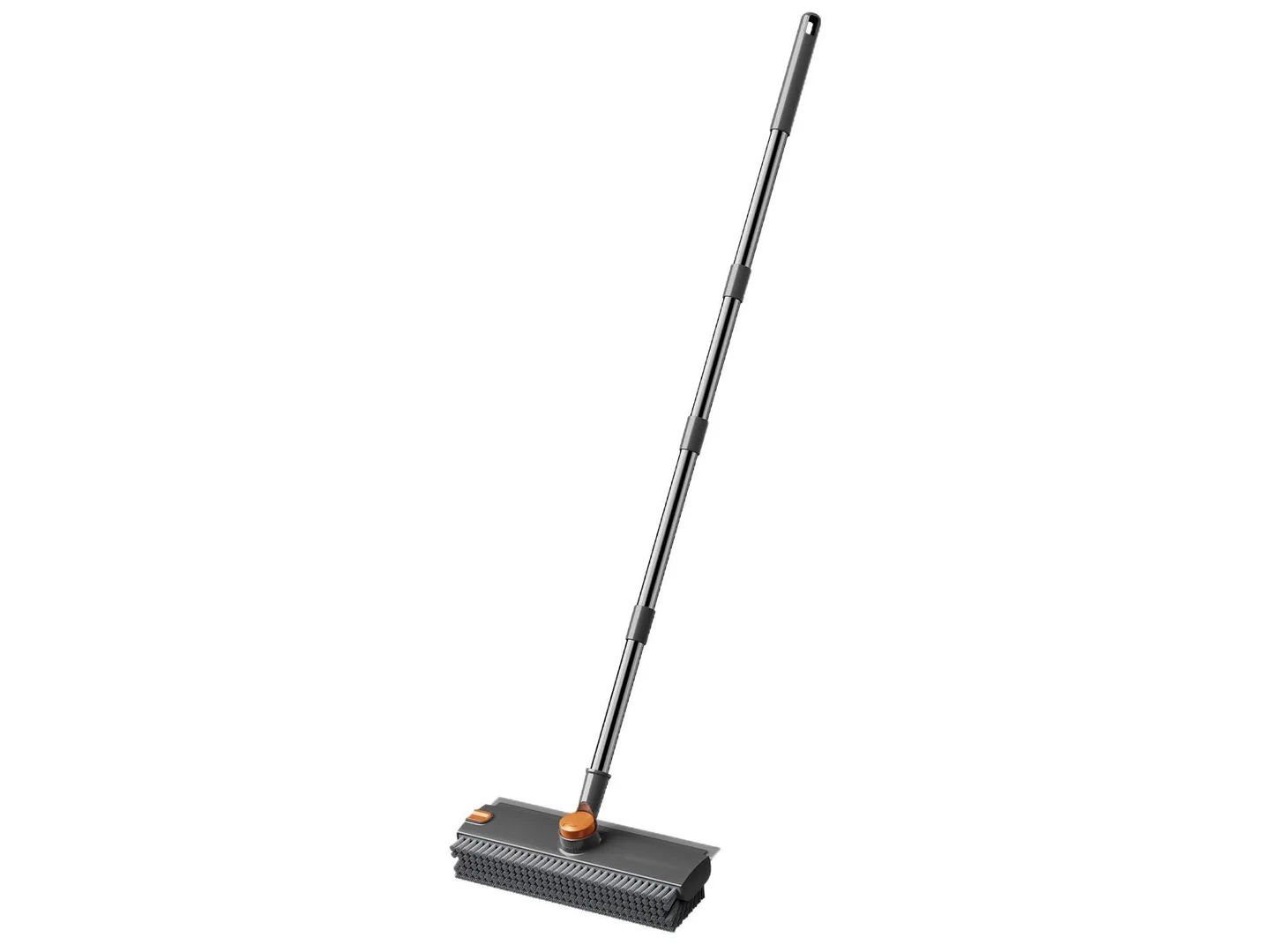
Aggregate Screen Cleaning Brush
Rotary aggregate screen cleaning brushes that clear blinding material from mesh, plate, and wedge…
See the specification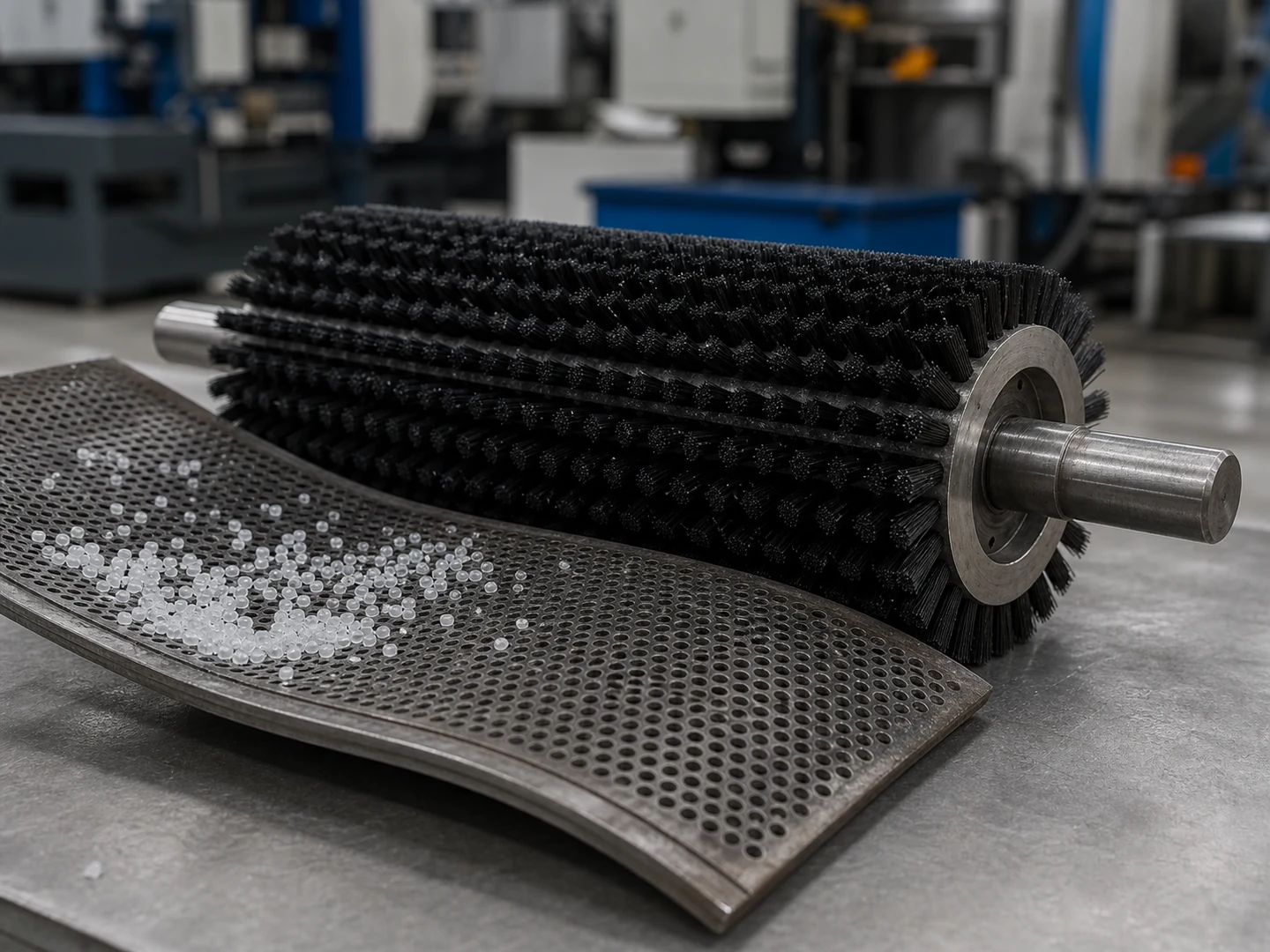
Granulator Screen Brush
Nylon filament brush for clearing blinded granulator and sifter screens. Widths 100–3000 mm, adjustable…
See the specification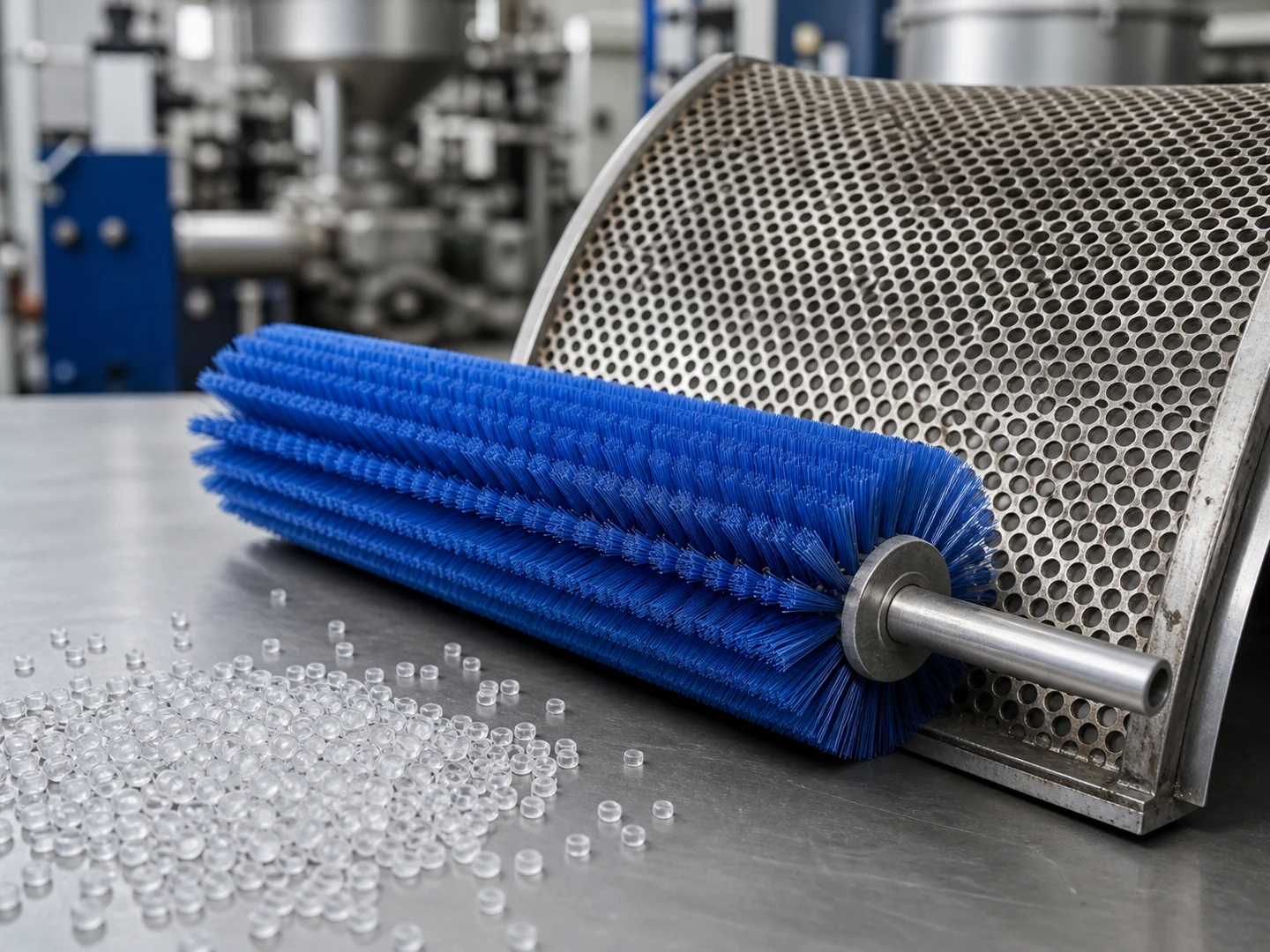
Pellet Screen Cleaning Brush
Custom pellet screen cleaning brushes for wire mesh, perforated plate and wedge-wire screens.
See the specification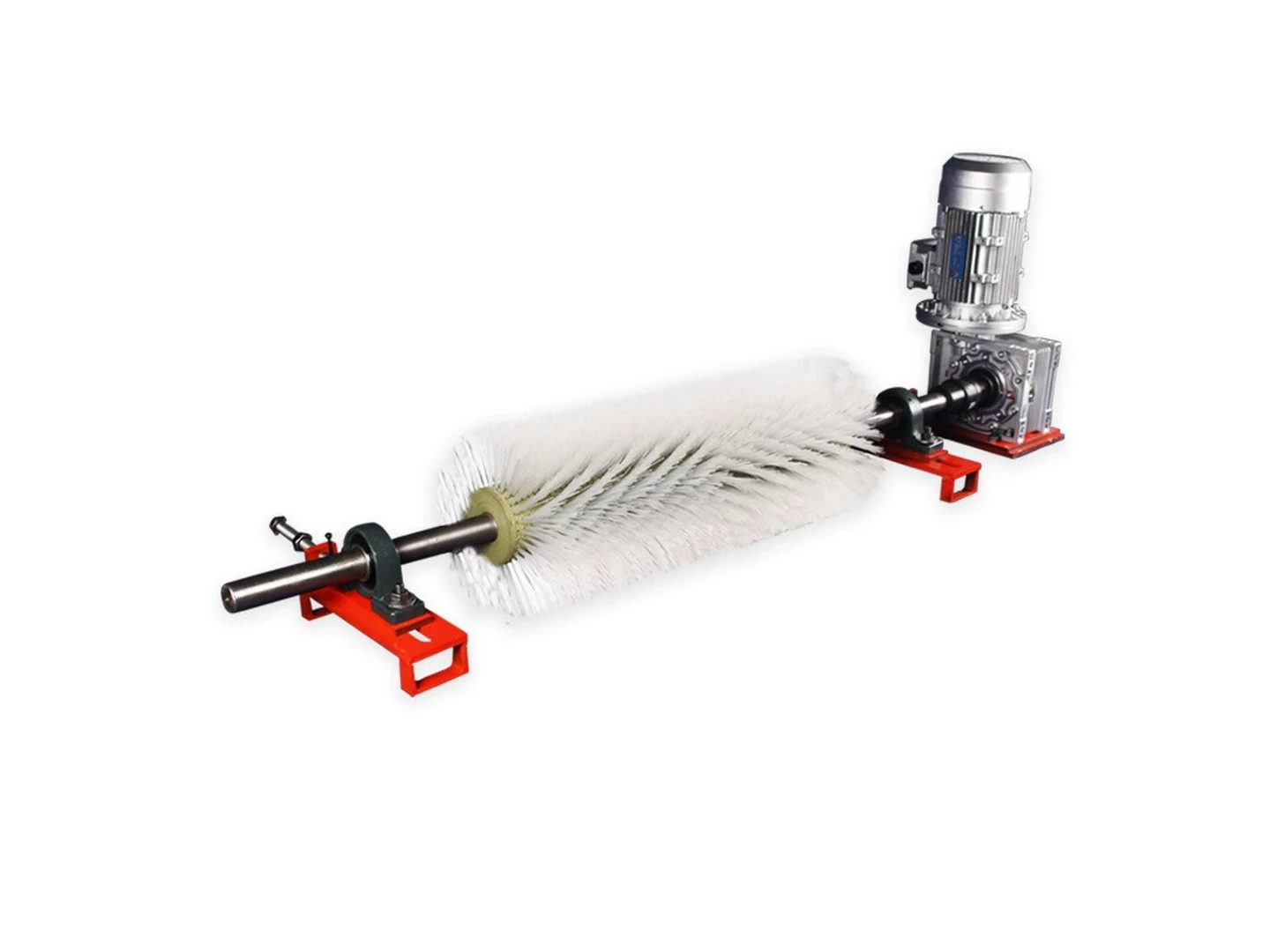
Custom Roller and Conveyor Brushes
Choose a roller or conveyor brush when a cylindrical brush must clean, wipe, guide,…
See how this type is built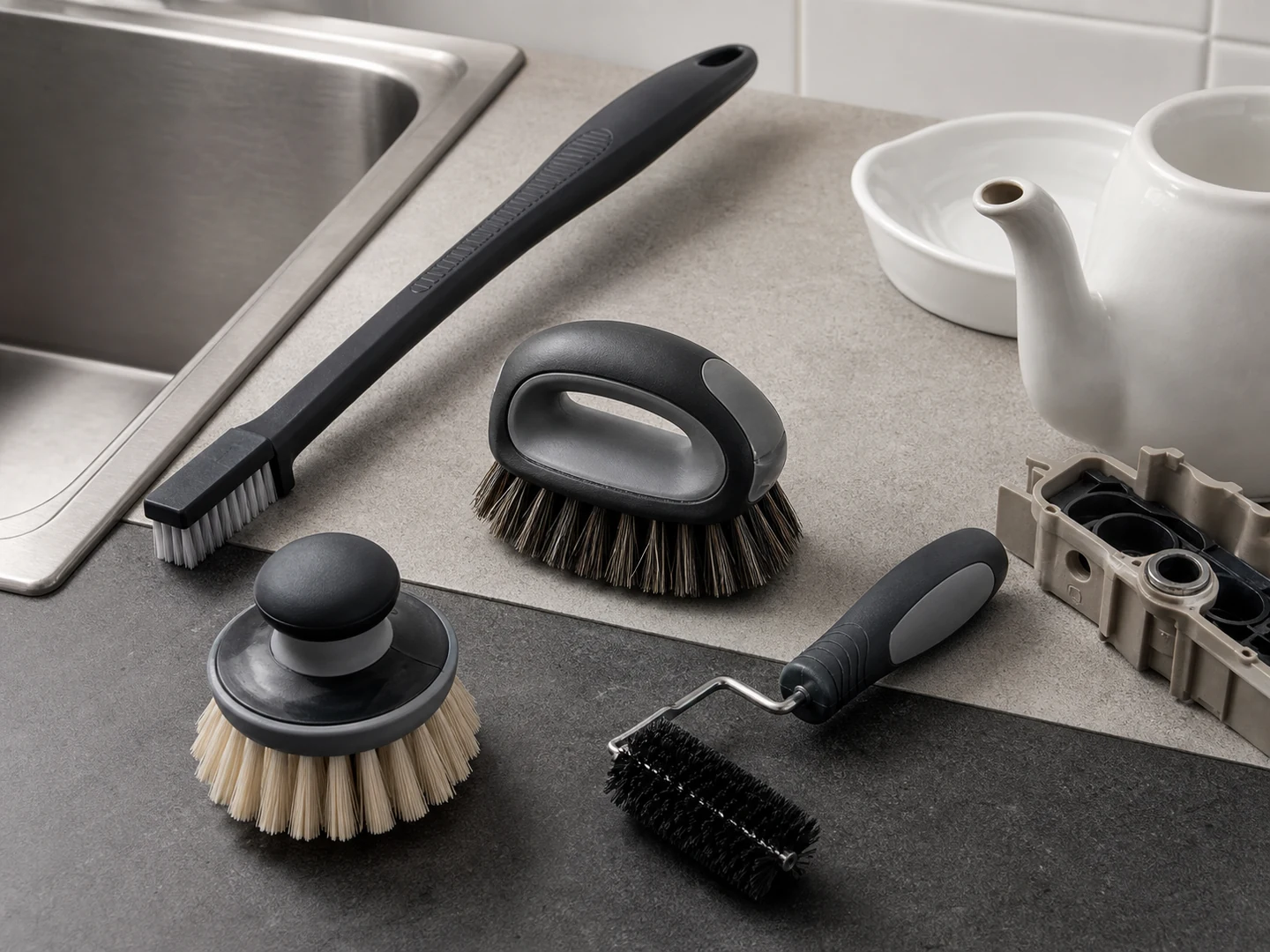
Custom Handheld Detail Brushes
Choose a handheld detail brush when you need direct control in seams, recesses, fittings,…
See how this type is built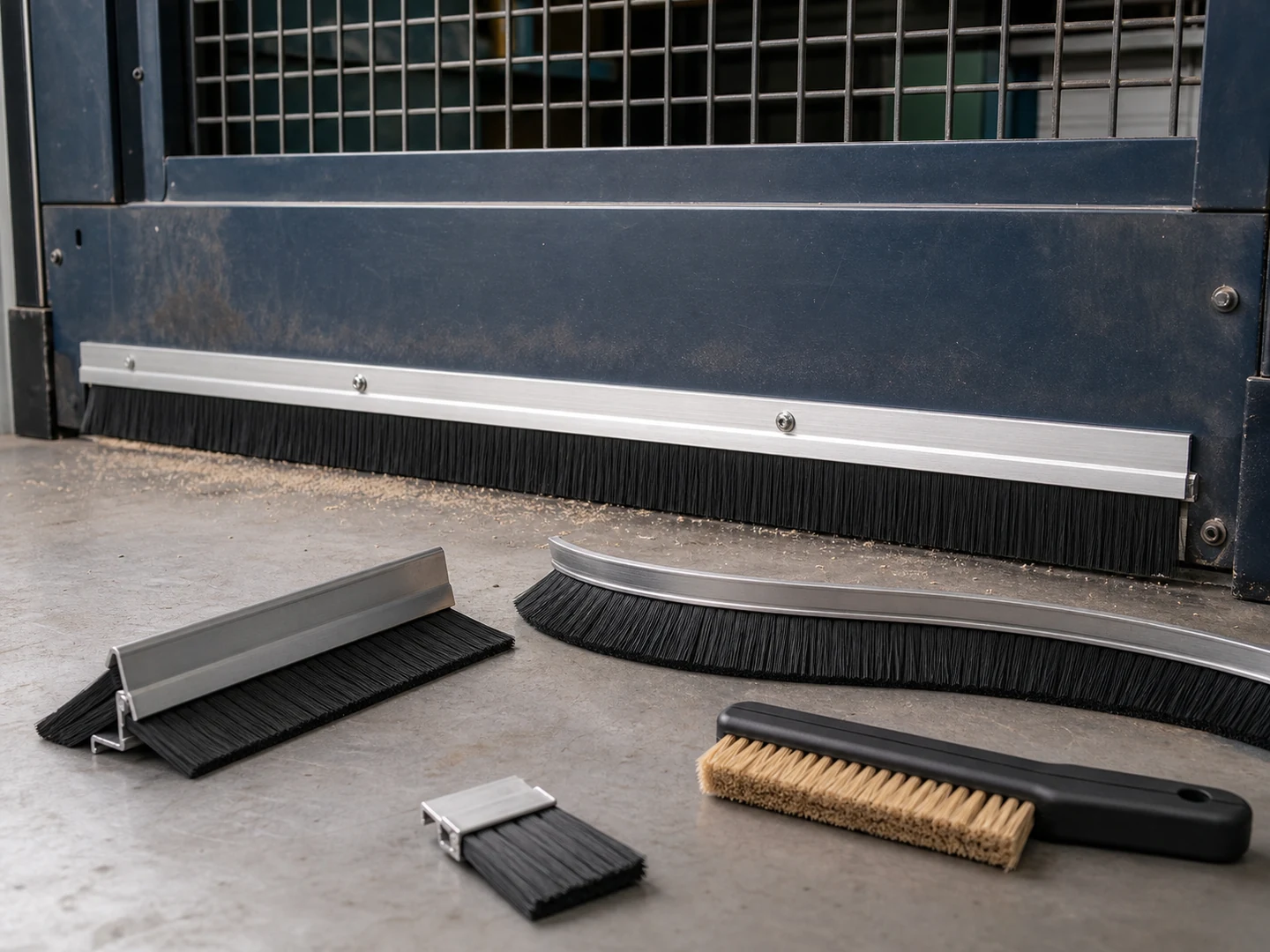
Custom Strip Seal Brushes
Choose a strip seal brush when a continuous line of filament must seal, wipe,…
See how this type is built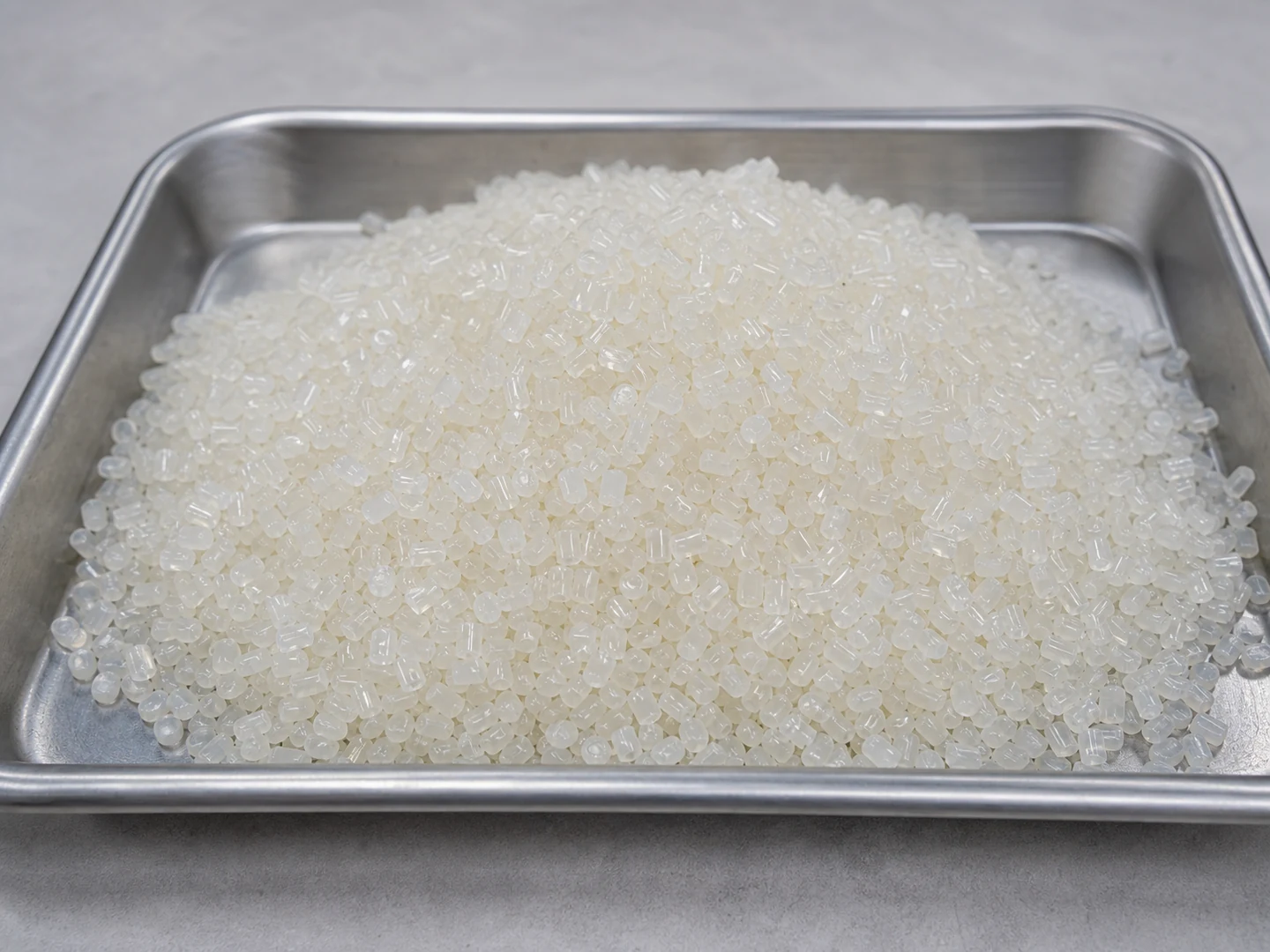
Nylon PA
Choose Nylon PA based on its stiffness, recovery, wear, wet-service, chemical, and temperature behavior.
Compare this material
Polypropylene PP
Choose Polypropylene PP based on its stiffness, recovery, wear, wet-service, chemical, and temperature behavior.…
Compare this materialCustom Manufacturing RFQ
Discuss This Application
Share the working surface, residue, dimensions, material direction, interface, quantity and drawing or sample photo.
Custom Brush RFQ
Request a Custom Cleaning Brush Quote
Upload a drawing, product photo, or sample photo and provide the core dimensions and cleaning conditions.
“We need a brush to remove wet residue from a stainless steel conveyor, about 800mm wide. The current brush wears quickly. We can send photos.”
“We sell drinkware and need a cleaning brush to include with the product. Quantity around 5,000 pieces.”