
Brush Type
Custom Polishing Buffing Wheels
Ring / Buffing Wheel
Choose a polishing or buffing wheel when a rotating flexible face must cut, blend, satin-finish, or bring a surface to a final gloss.
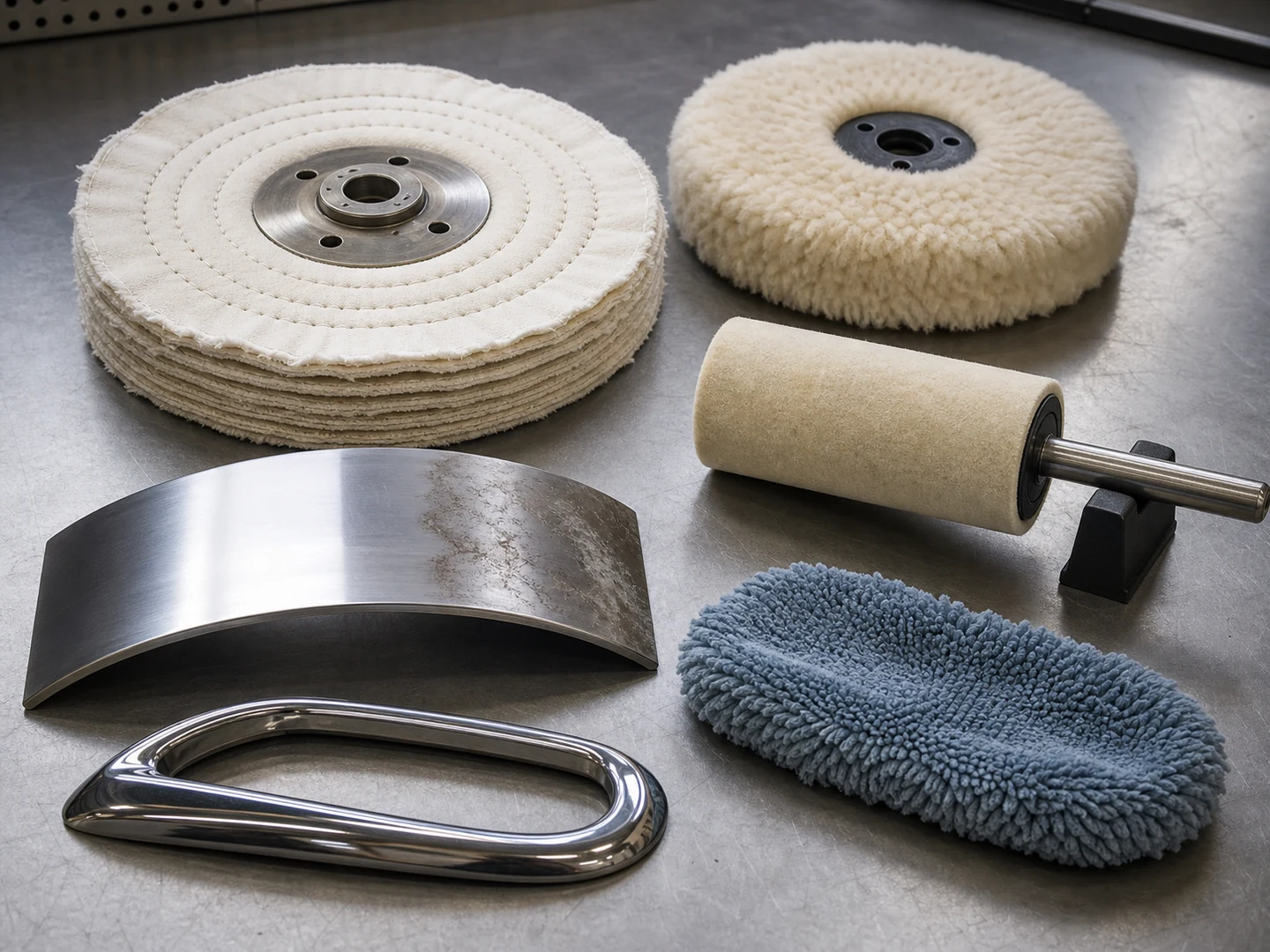
At a glance
- How it is driven
- Machine-driven
- How it mounts
- Arbor hole, center plate, clinch ring, flange, tapered spindle or stacked wheel assembly.
When should you choose this brush type?
Choose a polishing or buffing wheel when the goal is to refine finish with a compliant textile, fiber, felt, or nonwoven face, often together with compound. Use a wire wheel or cup brush when you need discrete wire or abrasive filaments for stronger rust removal, scale removal, deburring, or surface preparation instead of final finish refinement.
What are Polishing Buffing Wheels?
Polishing and buffing wheels use stacked, folded, sewn, pleated, nonwoven, sisal, or cloth sections around an arbor. The wheel face conforms to the workpiece while carrying compound or abrasive media, so construction controls cutting action, heat generation, flexibility, and the ability to reach profiles.
Loose sections are more conformable for coloring and final gloss, while tighter sewing, sisal, abrasive nonwoven, or ventilated construction increases cutting and supports earlier finishing stages. The wheel must be matched to the workpiece material, target finish, compound, face width, arbor, guard clearance, and customer-supplied machine conditions.
What dimensions can I customize?
| Contact setting | Use light edge contact on stitched buffs and 1–4 mm deflection on filament or abrasive brush faces. |
|---|---|
| Tool outside diameter | 80–300 mm |
| Active face width | 20–160 mm |
| Abrasive grade | 24–3000 grit |
| Tool thickness | 10–80 mm |
Where is this brush type commonly used?
Start with the job the brush needs to do, then confirm dimensions, contact direction, material, and mounting.
What configurations are available?
Loose cloth wheel
Highly conformable sections for final coloring and gloss on profiles and broad surfaces.
Sewn or spiral-sewn wheel
More controlled and firmer face for cutting and intermediate polishing.
Airway or pleated buff
Ventilated folded construction that presents a consistent face and manages heat during production work.
Sisal or sisal-cloth wheel
A firmer natural-fiber wheel for initial cutting and removal before finer polishing.
Nonwoven or flap wheel
Abrasive or conditioning media arranged for satin finishing, blending, and controlled stock removal.
What material is right for this brush type?
Cotton or cloth sections
Final polishing and coloring, selected by weave, treatment, and sewing density.
Sisal fiber
Higher initial cutting action on metal before the final buffing stages.
Nonwoven abrasive
Controlled blending, oxide removal, and satin finishing with less compound dependence.
Abrasive filament or flap media
More defined surface conditioning where a brush-like or coated-abrasive action is required.
Soft natural fiber or wool
Special low-marking polishing and finishing tasks where a soft carrier is needed.
Filament materials to compare
What do I need to know before ordering?
Specify the workpiece material, starting and target finish, compound or abrasive, wheel diameter and face width, arbor or flange, machine type, guard clearance, rotation direction, customer-supplied speed, and production quantity.
Questions this page is asked
Which rating controls the maximum speed of a polishing or buffing wheel assembly?
The operating speed must not exceed the lowest applicable rating among the machine, wheel, backing or flange, arbor and any attached pad or accessory. Before starting, verify bore fit, flange support, guarding and retention, inspect the wheel for damage, and make the initial run clear of bystanders according to the equipment instructions.
Why should polishing wheels be dedicated to a compound and process stage?
A wheel retains compound, removed material and abrasive particles, so moving it from a cutting stage to final finishing can reintroduce coarse contamination and obscure the true process result. Identify each accepted wheel and compound combination, store it protected, and change or clean the system only by the compound and wheel makers' compatible procedure.
How should a custom buffing wheel be trialed on a heat- or finish-sensitive part?
Start on representative scrap with the approved wheel, compound, speed, contact time and pressure, then inspect both the finish and the part temperature before extending the cycle. Stop for smearing, color transfer, distortion, coating lift, glazing, unusual vibration or loading that changes the contact behavior.
Guides that go deeper on this
Continue Exploring
Recommended Reading & Related Brush Resources
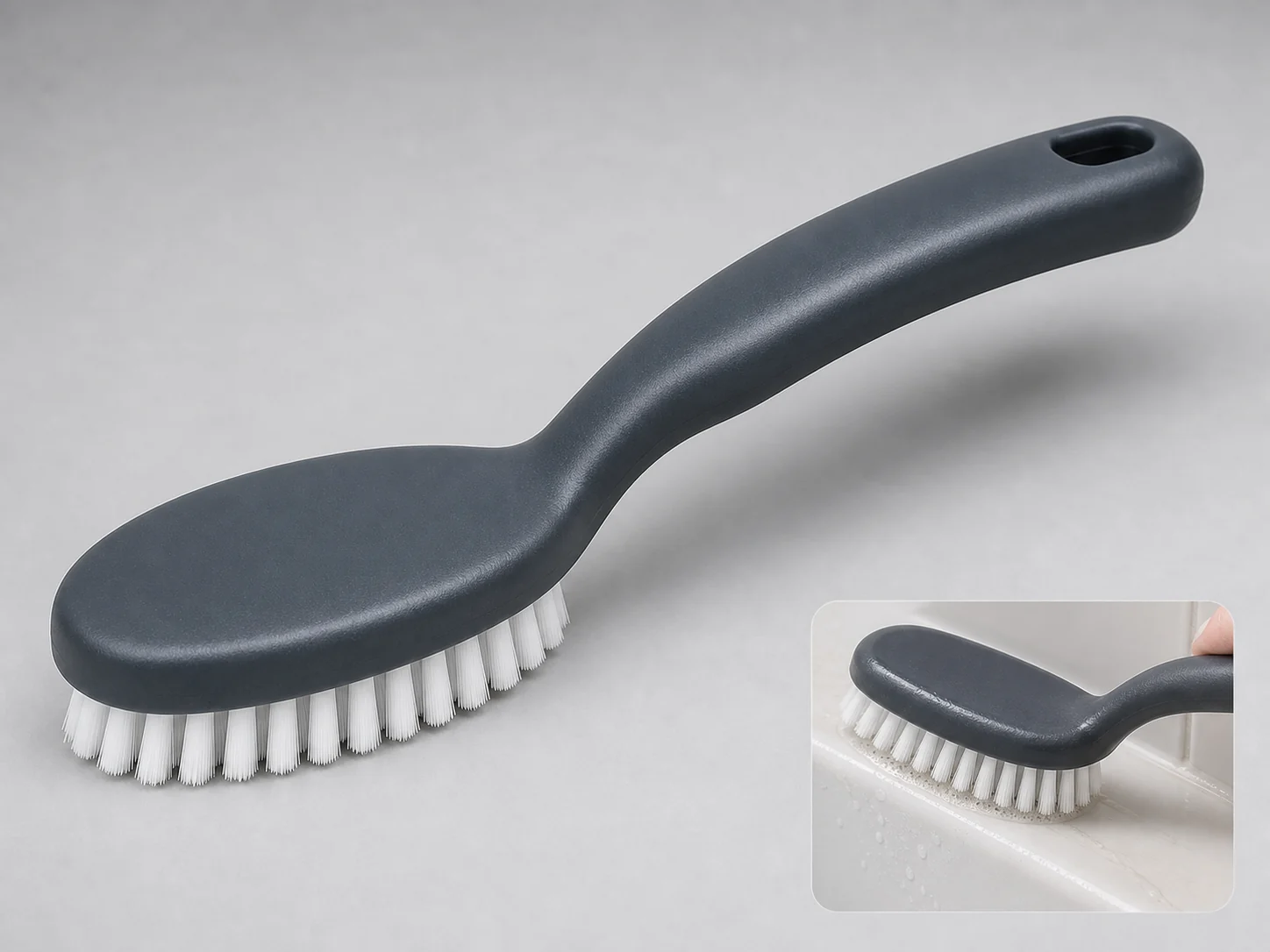
Ceramic Cleaning Brush
Custom ceramic cleaning brush with nylon PA or PBT abrasive filaments for tiles, GreenGrill…
See the specification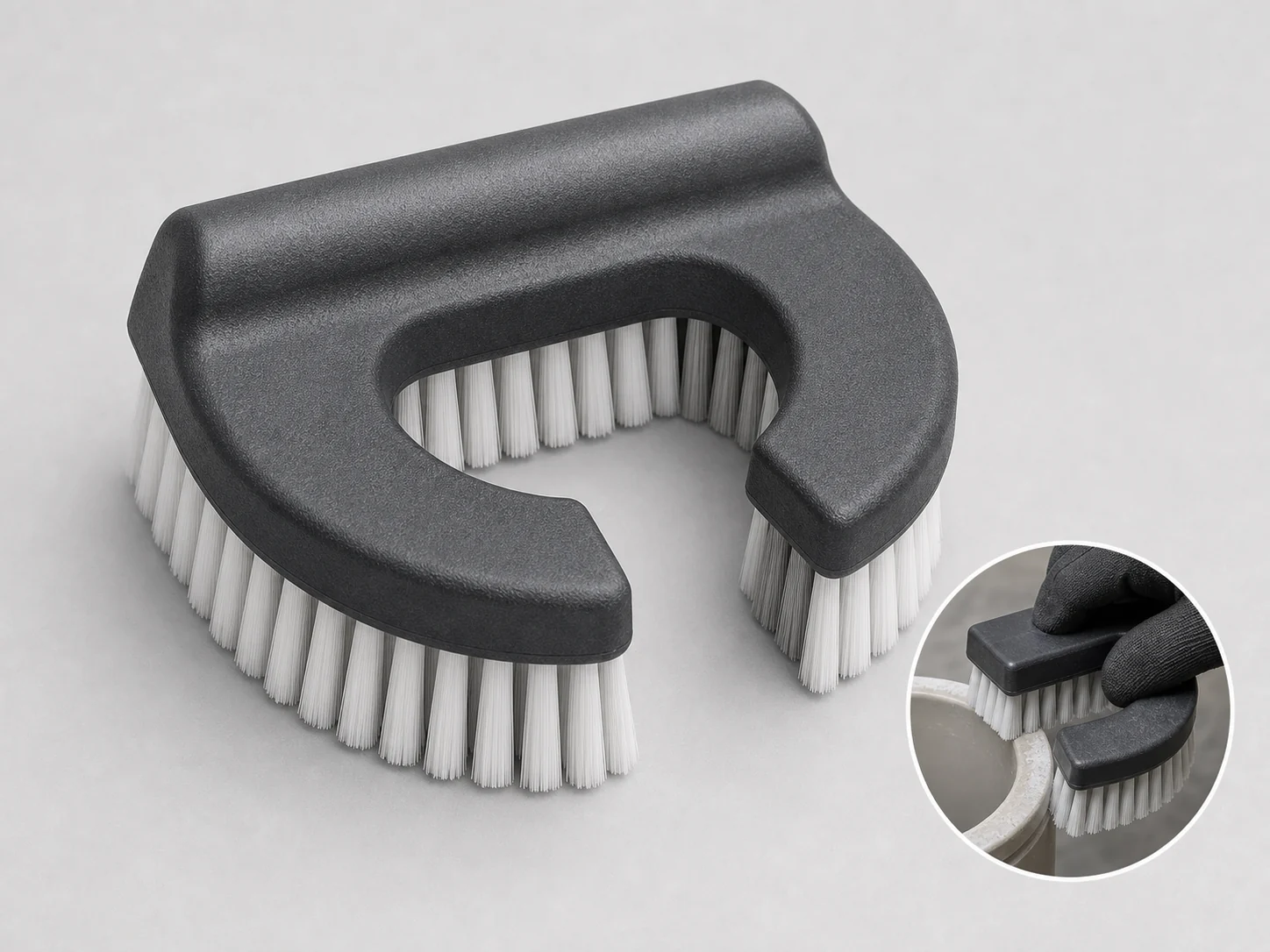
Horseshoe Composite Brush
Horseshoe/Frankfurt abrasive brush for marble, travertine, terrazzo and engineered stone with diamond or SiC…
See the specification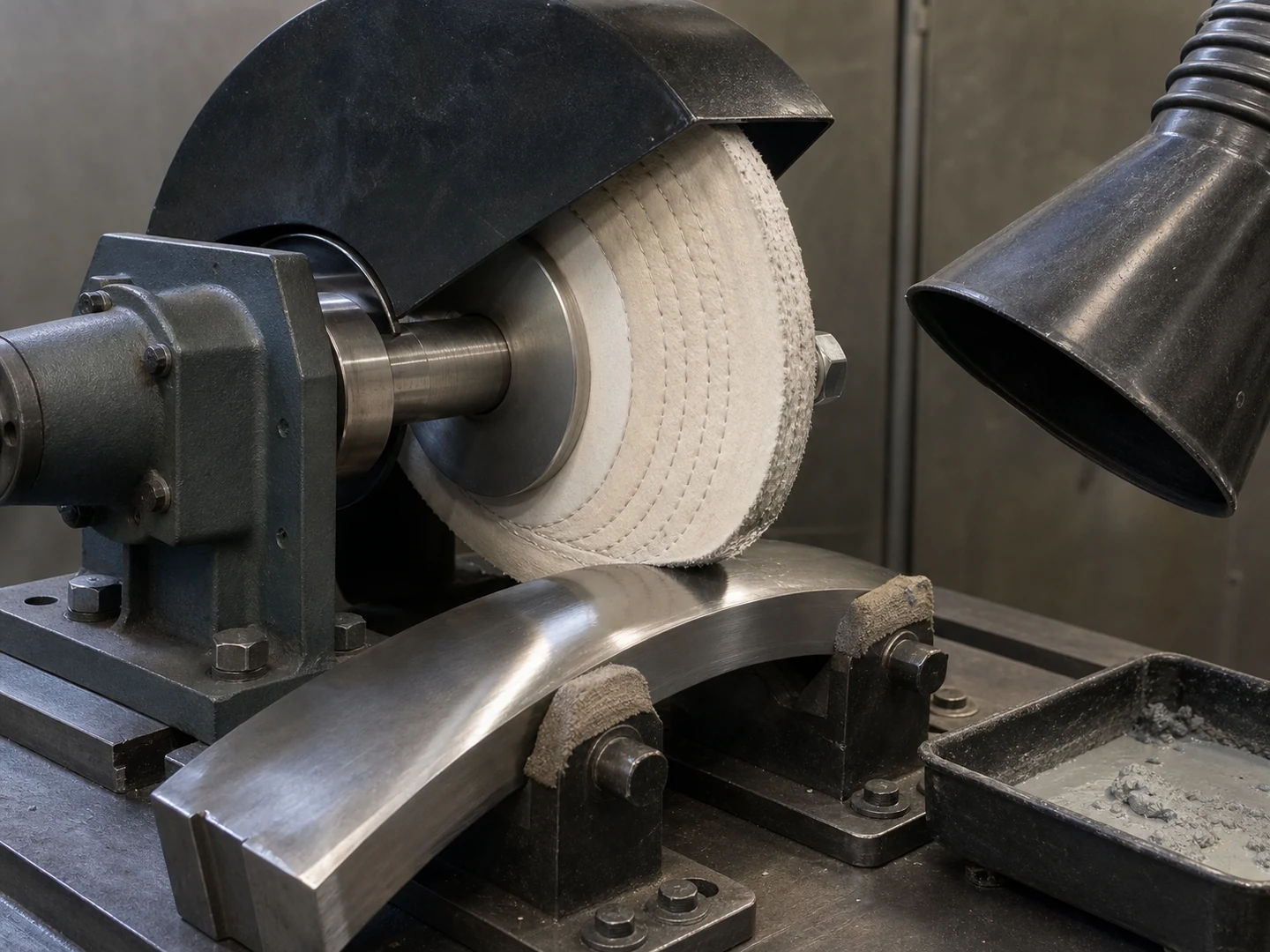
Polishing
Polishing is a process-use page rather than a general cleaning category.
See the cleaning job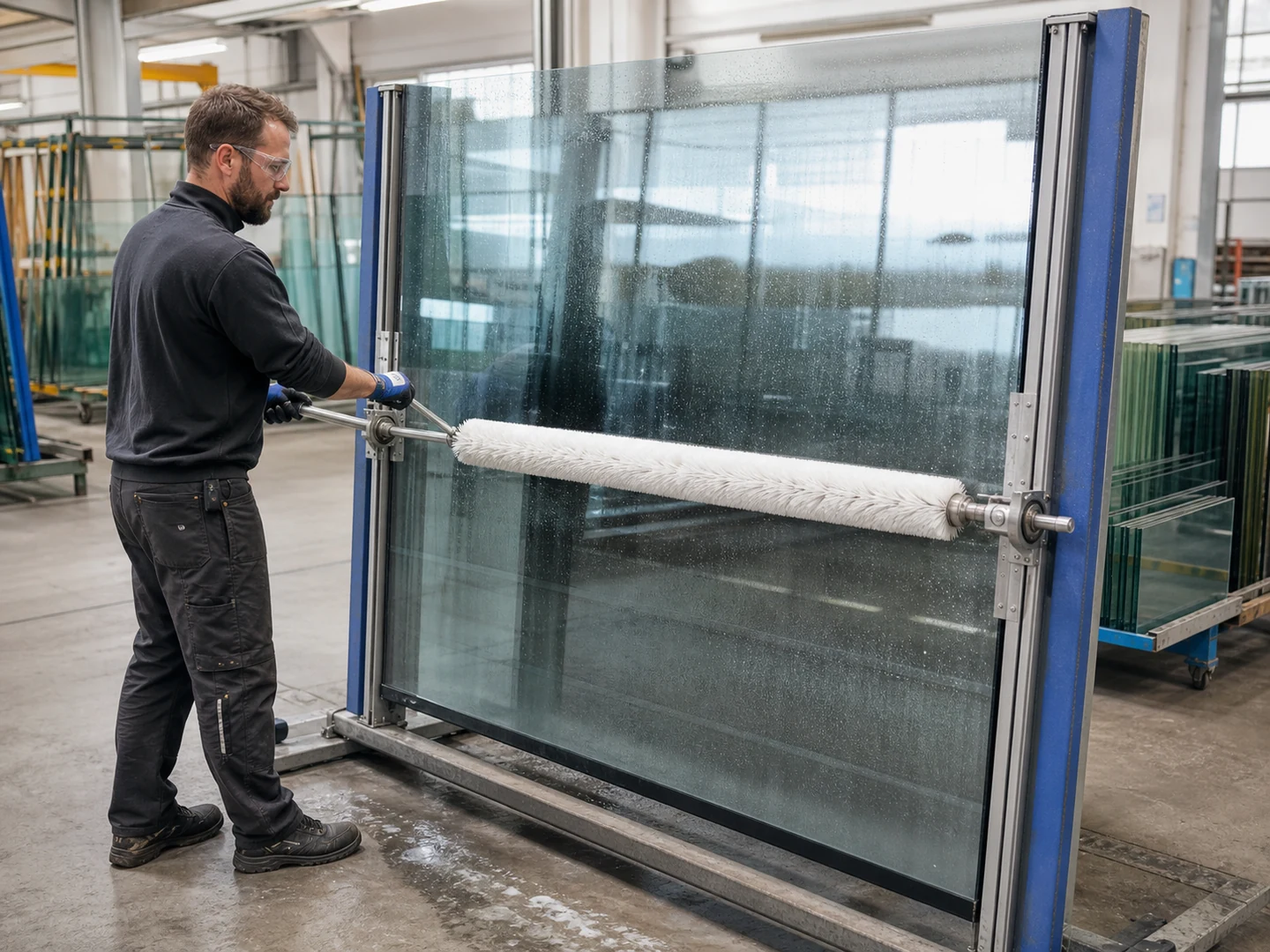
Glass Surface Cleaning
For Glass Surface Cleaning, the brush must reach the working area, disturb or collect…
See the cleaning jobCustom Manufacturing RFQ
Discuss This Brush Type
Share the working surface, residue, dimensions, material direction, interface, quantity and drawing or sample photo.
Custom Brush RFQ
Request a Custom Cleaning Brush Quote
Upload a drawing, product photo, or sample photo and provide the core dimensions and cleaning conditions.
“We need a brush to remove wet residue from a stainless steel conveyor, about 800mm wide. The current brush wears quickly. We can send photos.”
“We sell drinkware and need a cleaning brush to include with the product. Quantity around 5,000 pieces.”