
Material
Nylon PA
Polyamide filament
Choose Nylon PA based on its stiffness, recovery, wear, wet-service, chemical, and temperature behavior. For a usable stiffness specification, provide the material, filament diameter, free trim, density, grade, and operating conditions.
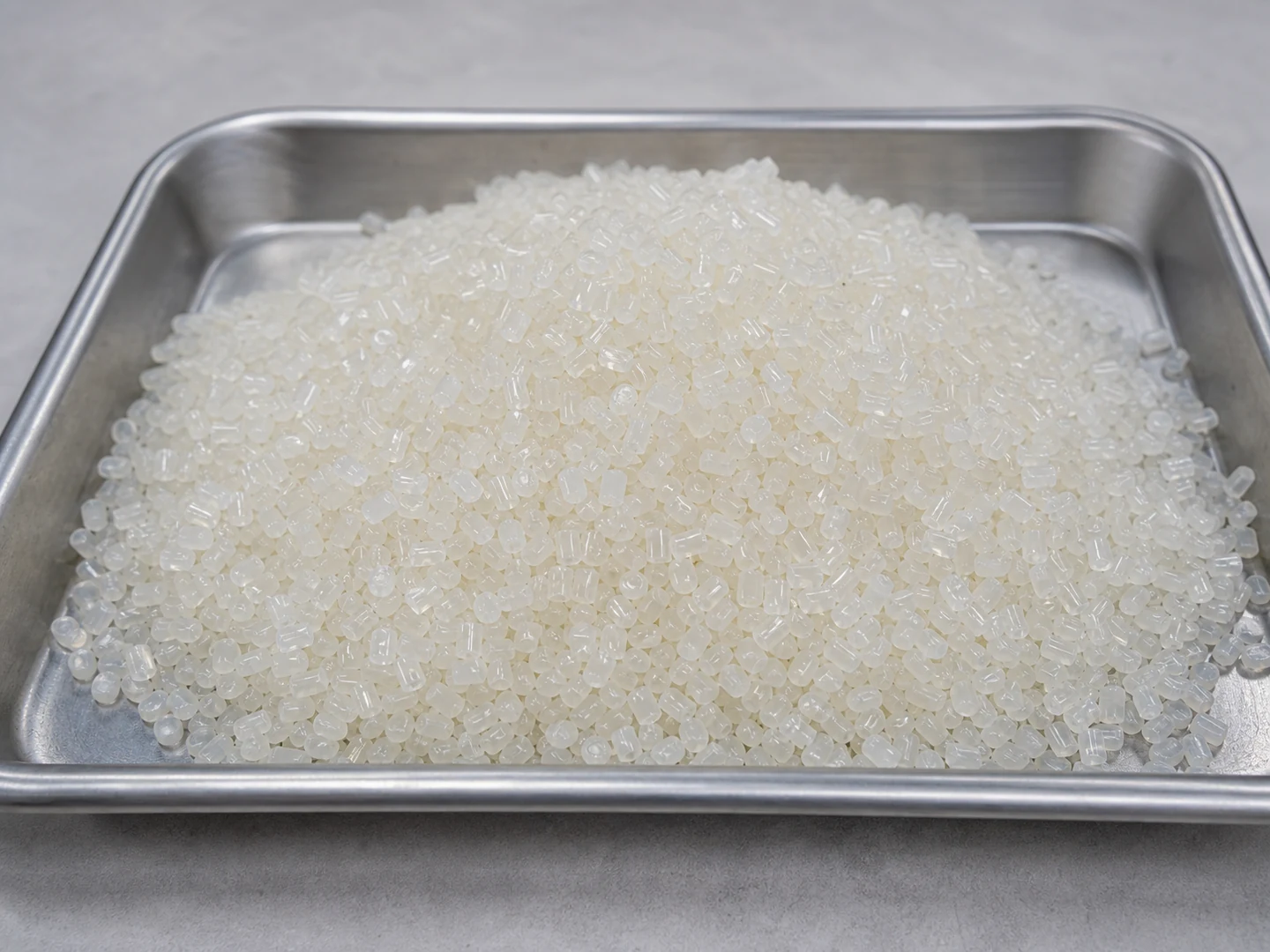
Datasheet values
- Density
- 1.01–1.15 g/cm³ by PA grade
- Melting range
- 175–265°C by PA grade
- Water absorption
- 0.3–9% by PA grade and conditioning
- Filament diameter
- 0.08–2.50 mm
Nylon brush filament is a polyamide monofilament family; the exact PA grade controls water absorption, stiffness recovery, chemical response and heat behavior.
What is Nylon PA, and what makes it different from other brush filaments?
In the polyamide filament family, Nylon PA is specified, supplied as filament, twisted wire bristle and strip brush fill, drawn in round, triangular, cross-shaped, hollow, star-shaped and rectangular sections and set in straight rows, helical, staggered, zoned, wavy and random fill patterns.
Nylon PA is used in custom cleaning brushes for general wet and dry cleaning, conveying, wiping and scrubbing where resilient contact and wear life are both important.
It is usually weighed against Polypropylene PP, PBT and PET Polyester, and the deciding difference is moisture uptake and working temperature rather than anything you can read off the name.
Compare Nylon PA with PP, PBT, PET. Change material when wet stiffness, temperature, chemical resistance, conductivity, particle shedding, or surface marking becomes the limiting factor.
What stiffness and contact pressure can I expect from Nylon PA?
Nylon PA is medium to firm; filament diameter and trim length control bending force, which is why Nylon PA changes brush stiffness through filament diameter, free trim, density, crimp, and contact. Use finer filament and longer trim for conformable contact; use coarser filament, shorter trim, or higher density for stronger displacement or cutting.
Filament-level figures for this grade and the ones it is usually compared to. A finished brush behaves differently again.
| Property | Nylon PA | Polypropylene PP | PBT | PET Polyester |
|---|---|---|---|---|
| Shore hardness | Medium to firm; filament diameter and trim length control bending force. | Shore D 65–75 | Shore D 80–90 | Shore D 80–90 |
| Continuous temperature (°C) | 93 | 80–100 | 120–140 | 120–150 |
| Peak temperature (°C) | 121 | 120–140 | 160–180 | 170–190 |
| Water absorption, 24 h | 0.3–9% by PA grade and conditioning | ≤0.03% (24h, ISO 62/ASTM D570) | 0.05–0.20% (24h, ISO 62/ASTM D570) | 0.10–0.30% (24h, ISO 62/ASTM D570) |
| Filament diameter (mm) | 0.08–2.50 | 0.08–3.00 | 0.03–2.00 | 0.04–1.50 |
| Flexibility | Medium to High Flexibility | Medium Flexibility | Medium to High Flexibility | Medium Flexibility |
The part people get wrong: the same grade can feel soft or aggressive depending on diameter, trim and density. Specify that geometry before the material, or the sample will surprise you.
How does water affect Nylon PA performance?
Nylon PA takes up 0.3–9% by PA grade and conditioning.
PA6 and PA66 absorb moisture; PA610, PA612 and PA12 retain stiffness better in wet service; this moisture response matters in general wet and dry cleaning, conveying, wiping and scrubbing where resilient contact and wear life are both important.
What this means for your application: absorbed water swells the filament and drops contact pressure, so a brush that reached the far end of a bore when dry may stop short once it is wet.
A practical check: soak a sample for an hour and re-measure the trim. If it has moved enough to change the contact band, the grade is wrong for the duty.
What temperature limits apply to Nylon PA?
Nylon type matters: Nylon 6 is listed at 93°C maximum continuous / 121°C short-term, Nylon 6.6 at 120°C / 180°C, and Nylon 6.12 at 93°C / 121°C. Confirm the exact nylon grade.
Design to that answer rather than to a raw-material datasheet figure: a brush rating already accounts for filament working under load rather than raw polymer sitting in an oven.
Published melting point is 175–265°C by PA grade. That is a material property, not an operating ceiling, and using it to justify a hot wash is the fastest way to ruin a brush.
Where it stops working: validate with a sample if the process sits near the top of that band. If the filament takes a permanent set under load, step up to PET Polyester or PBT, which hold a higher continuous temperature.
The usable limit also moves with diameter, trim and contact pressure. A fine filament under light load tolerates more than a thick one under heavy scrubbing.
What chemicals attack Nylon PA?
It stands up to water, oils, mild detergents and dilute alkalis.
What degrades it: strong mineral acids, phenols and strong oxidizers.
The same cleaner can be harmless or destructive depending on how strong it is, how hot it runs and how long it sits. Quote the concentration and the dwell time, not just the product name.
Before you commit to a quantity: Specify the exact Nylon PA grade or alloy, filament or profile size, color, straight or crimped form, working temperature, wet or dry use, chemical exposure, surface finish, and any required material documentation.
What is the practical lower limit for filament diameter?
About 0.08 mm. Below that the filament turns fragile and breaks under ordinary contact pressure, so 0.08–2.50 mm is the working range.
Free trim runs 3–300 mm, and the two interact: a finer filament needs a shorter trim to keep useful stiffness, while a thicker one carries a longer trim and still lands pressure on the tip.
Split the range by duty: roughly 0.08–0.68 mm for light wiping, dusting and surfaces that mark easily, and 0.68–2.50 mm where residue is packed on and point pressure matters more than surface risk.
Tip treatments available on this filament: end rounding, tapered-tip grinding, silicone-oil coating, anti-static coating and antibacterial coating.
In practical brush terms: reaching deep into a bore or crevice is a diameter problem before it is a length problem. A thicker filament on a moderate trim pushes further in before the tips fold over.
What applications typically use Nylon PA?
General wet and dry cleaning, conveying, wiping and scrubbing where resilient contact and wear life are both important.
Where it turns up in practice:
- Industrial Machine Cleaning
- Dust Removal
- Brick, Tile & Building Material Machine Brush Use
- Laboratory Tube Cleaning
- Household Dish, Teapot & Kitchen Detail Cleaning
- Carpet Machine Cleaning
It is normally set into these constructions:
- Custom Handheld Detail Brushes
- Custom Tube & Pipe Bore Brushes
- Custom Roller and Conveyor Brushes
- Custom Polishing Buffing Wheels
If the sample comes back rejected: The nylon family spans several grades, so heat, moisture and chemical limits should follow the selected PA resin rather than a generic nylon value.
How do I specify Nylon PA for a custom brush?
A usable specification carries the construction, the filament diameter and free trim, the density and contact setting, and the service conditions: wet or dry, temperature, and what the cleaner actually is.
The mistakes that most often send a sample back:
- Selecting Nylon PA from the material name alone without setting filament diameter, trim length, and density
- Using dry stiffness to predict wet behavior without checking moisture absorption or liquid exposure
- Ignoring trapped abrasive particles, chemical concentration, temperature, or contact motion when assessing surface risk
Reference standards behind the figures on this page: ISO 527-1:2019; ASTM D638; ISO 62:2008; ASTM D570-22; ISO 868:2003; ASTM D2240-15(2021); ISO 4892-3:2024; ASTM G154-23; UL 94.
Source: American Brush Manufacturers Association — Brush Lingo — Synthetic Filaments. Brush-industry limits vary by nylon type; do not use a generic nylon melting point as a service limit.
What else does the datasheet specify for Nylon PA?
| Filament cross-section | Round/Triangular/Cross-Shaped/Hollow/Star-Shaped/Rectangular |
|---|---|
| Electrical behaviour | Insulating |
Questions this page is asked
How should a nylon brush be compared in dry and service-conditioned states?
Measure trim geometry, contact force or deflection, recovery and any critical dimensions on an identified dry specimen, then condition a matched brush in the expected humidity or water cycle and repeat the same checks at the working temperature. Run the real surface and motion trial in the state the brush will actually reach, because absorbed moisture can trade stiffness and hardness for greater elongation and impact response.
What makes a chemical compatibility result relevant to the finished nylon brush?
Test the named PA grade with the actual mixture, concentration, temperature, duration, mechanical stress, rinse, drying and number of cycles, including anchors, base and any adhesive rather than an unstressed resin coupon alone. Release the construction only after checking mass or dimensions, stiffness and recovery, cracking, swelling, discoloration, filament loss and transfer to the cleaned surface against project limits.
Where these figures come from
| Property | Published value | Source |
|---|---|---|
| Chemical resistance | Good resistance to water, oils, mild detergents and dilute alkalis; strong mineral acids, phenols and strong oxidizers attack the polymer; for general wet and dry cleaning, conveying, wiping and scrubbing where resilient contact and wear life are both important, specify the carrier grade, cleaner co | Perlon Retrieved 2026-07-20 |
| Published datasheet figures |
|
Evonik Retrieved 2026-07-20 |
| Hardness and stiffness | Medium to firm; filament diameter and trim length control bending force. | Perlon Retrieved 2026-07-20 |
| Limitations | The nylon family spans several grades, so heat, moisture and chemical limits should follow the selected PA resin rather than a generic nylon value. | Perlon Retrieved 2026-07-20 |
| Temperature resistance | Continuous service: 93°C; short exposure: 121°C. | Evonik Retrieved 2026-07-20 |
| Water resistance | PA6 and PA66 absorb moisture; PA610, PA612 and PA12 retain stiffness better in wet service; this moisture response matters in general wet and dry cleaning, conveying, wiping and scrubbing where resilient contact and wear life are both important. | Evonik Retrieved 2026-07-20 |
Guides that go deeper on this
We have not written a guide specific to this one yet. The material that covers selection, filament, dimensions, maintenance and sourcing is collected in the technical resources library.
Continue Exploring
Recommended Reading & Related Brush Resources
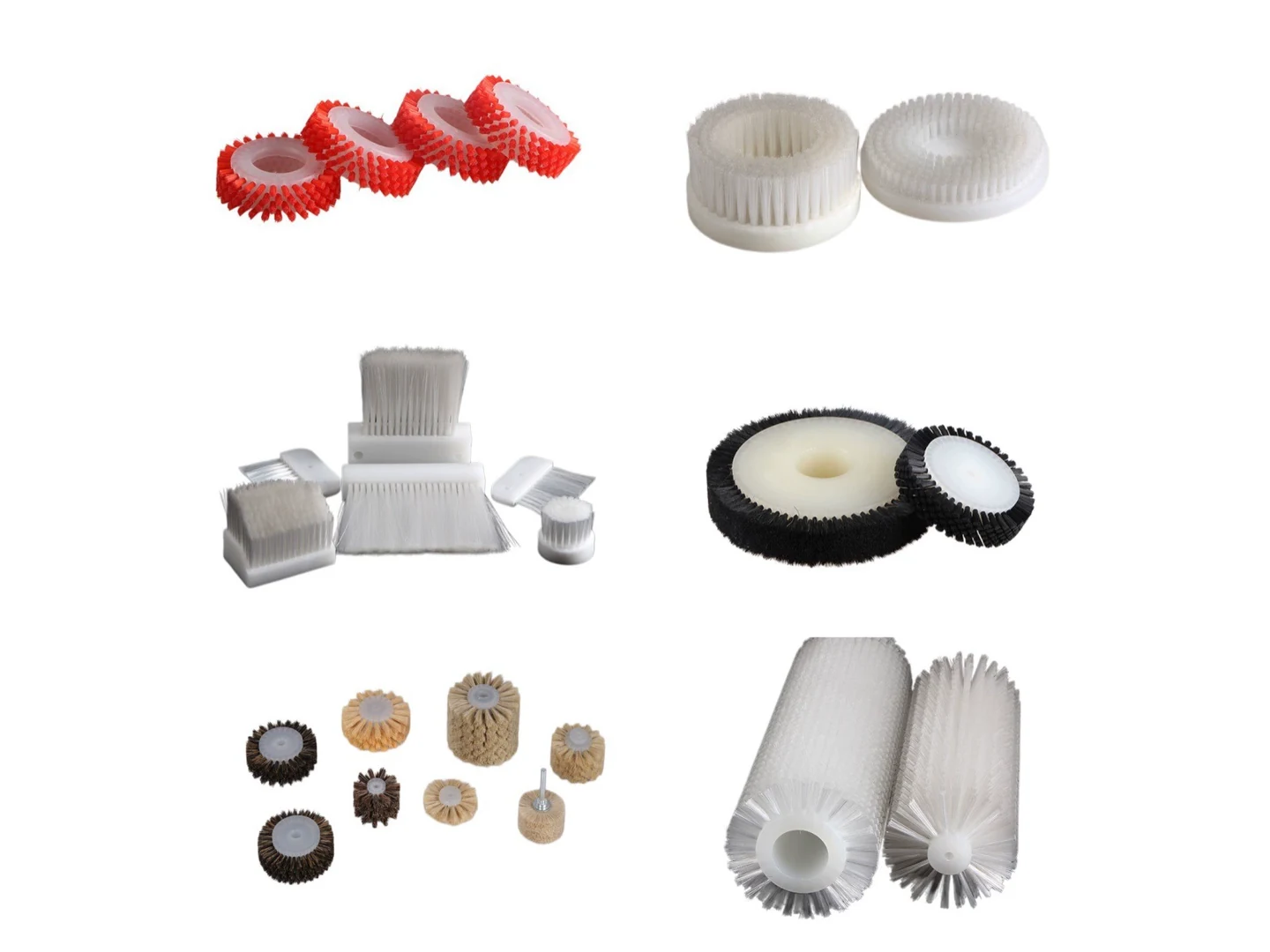
Nylon Brush Wheel
Nylon PA filaments work at the tips, so the wheel lifts oxide and loose…
See the specification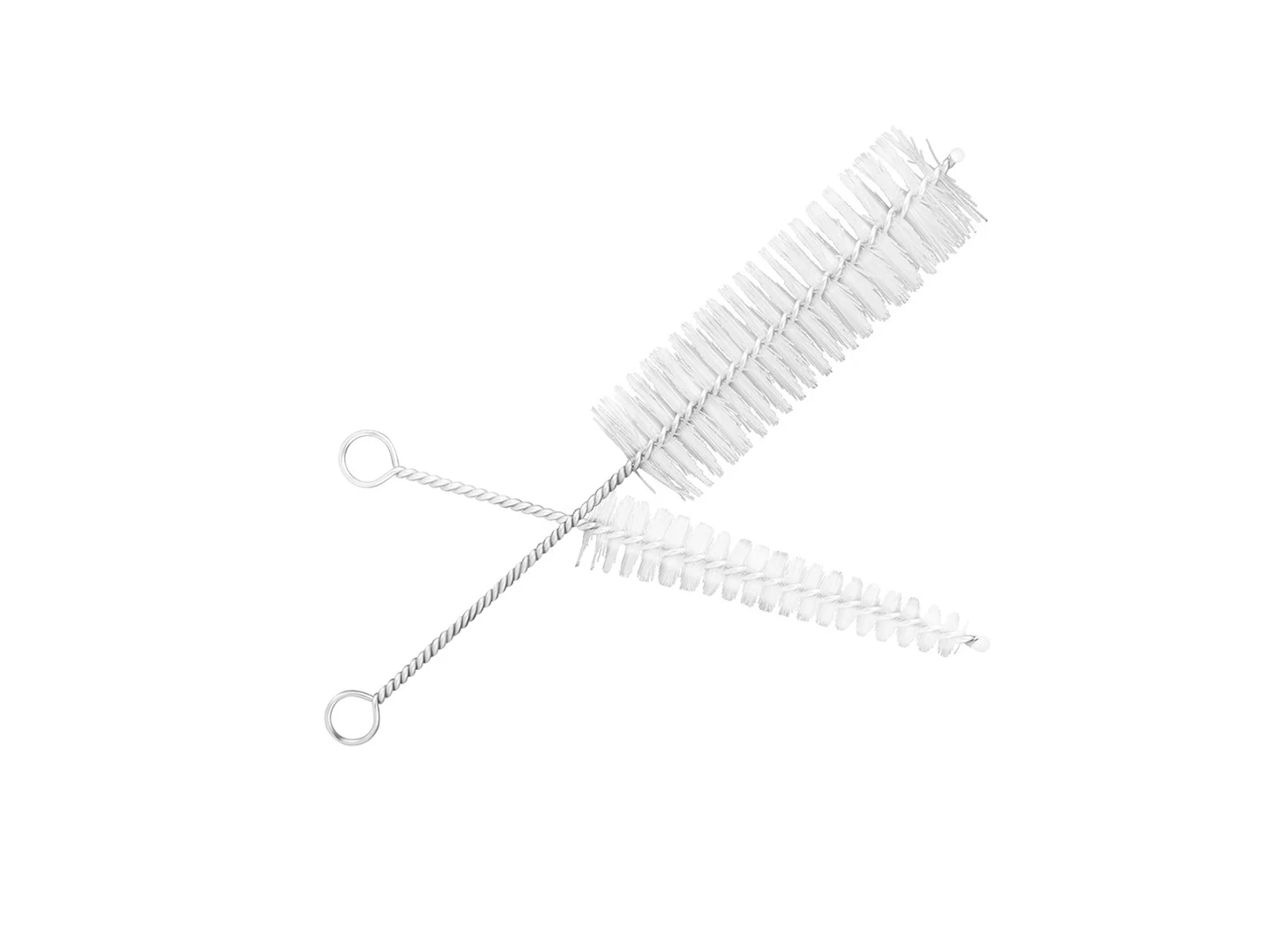
Nylon Tube Brush
Custom nylon tube brushes for bores, tubes, ports and internal passages. Flexible nylon fill,…
See the specification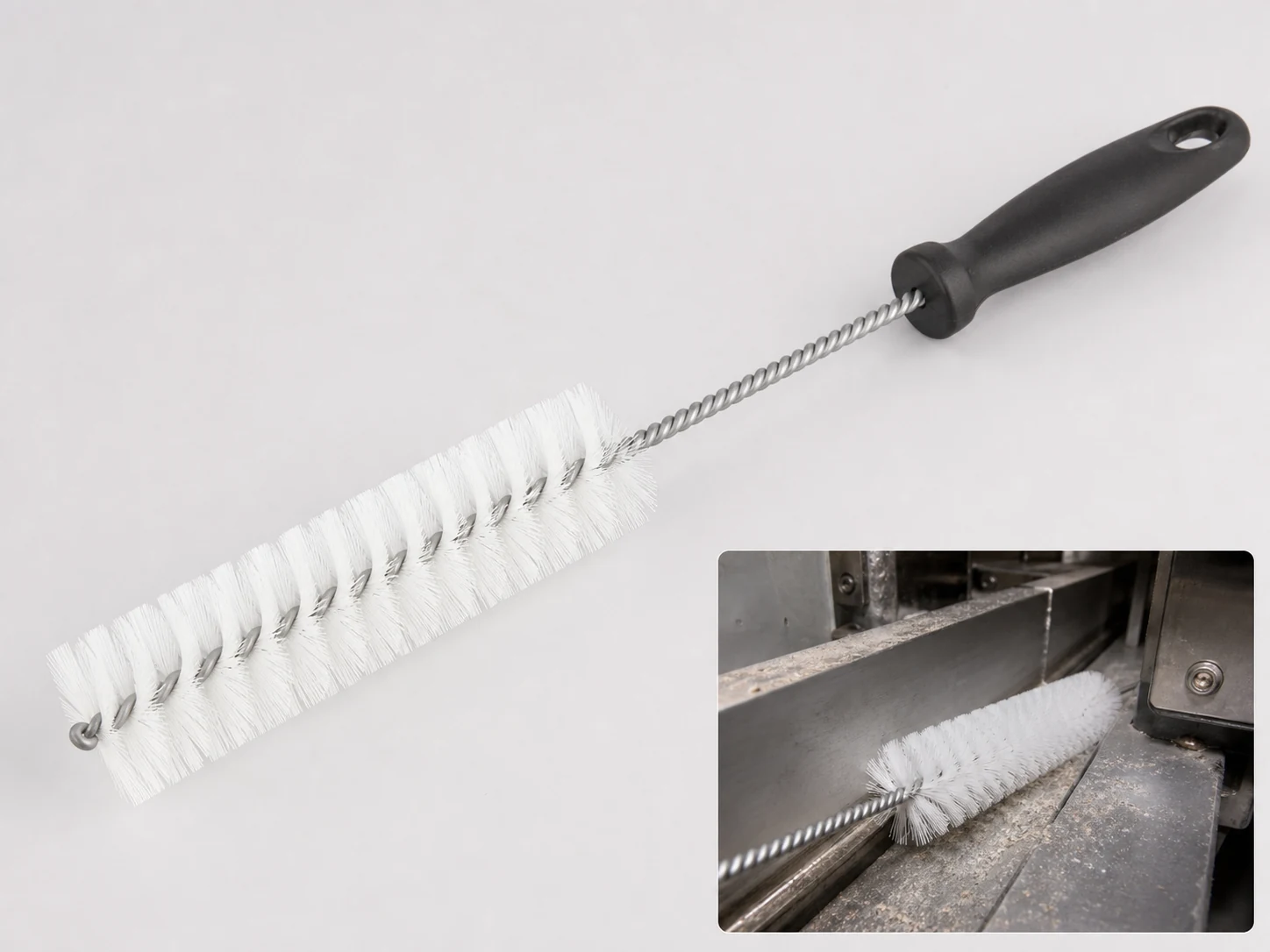
Nylon Cleaning Brush
Nylon cleaning brush for machine parts, slots, and panels. Configurable filament diameter, trim length,…
See the specification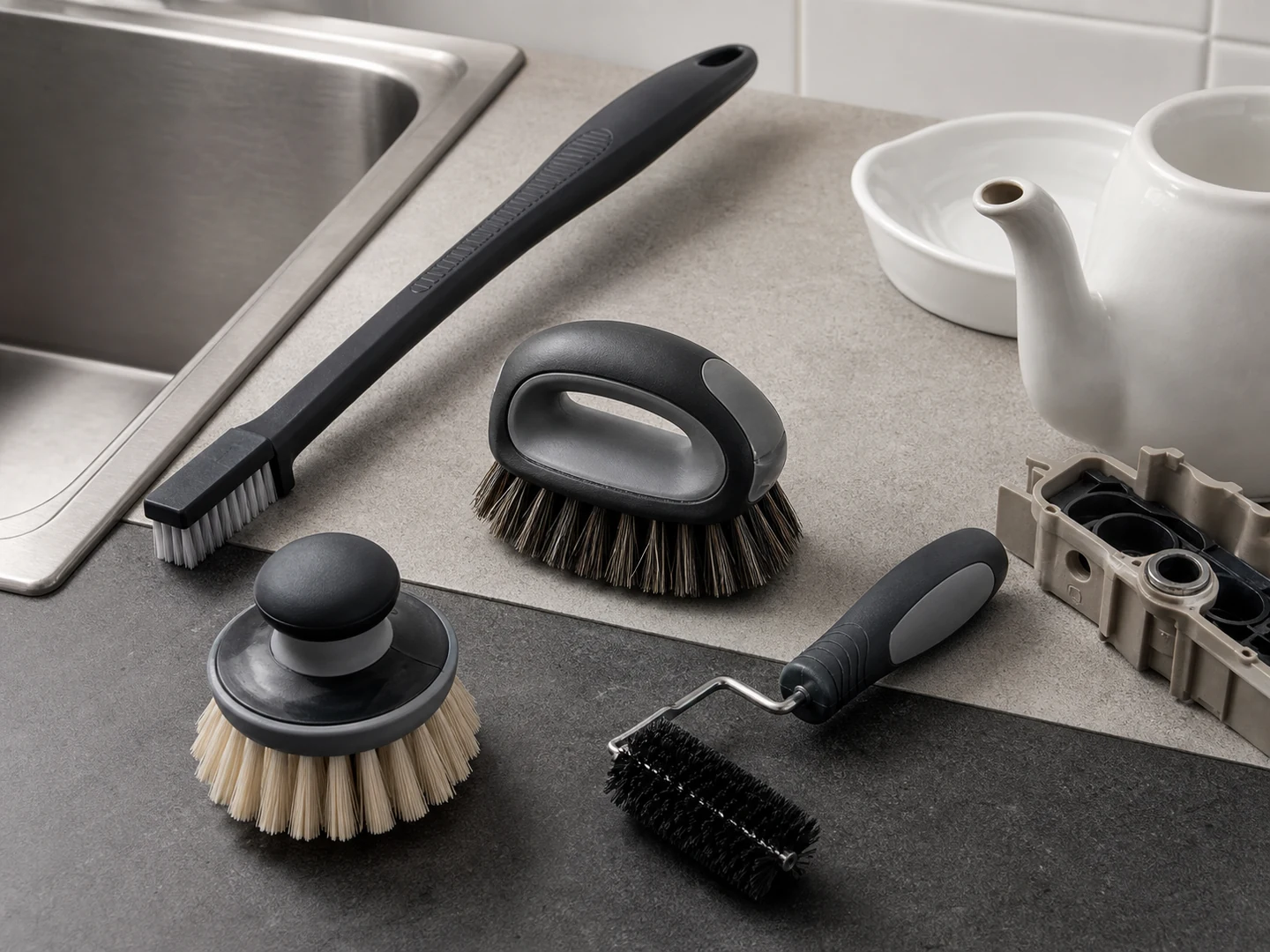
Custom Handheld Detail Brushes
Choose a handheld detail brush when you need direct control in seams, recesses, fittings,…
See how this type is built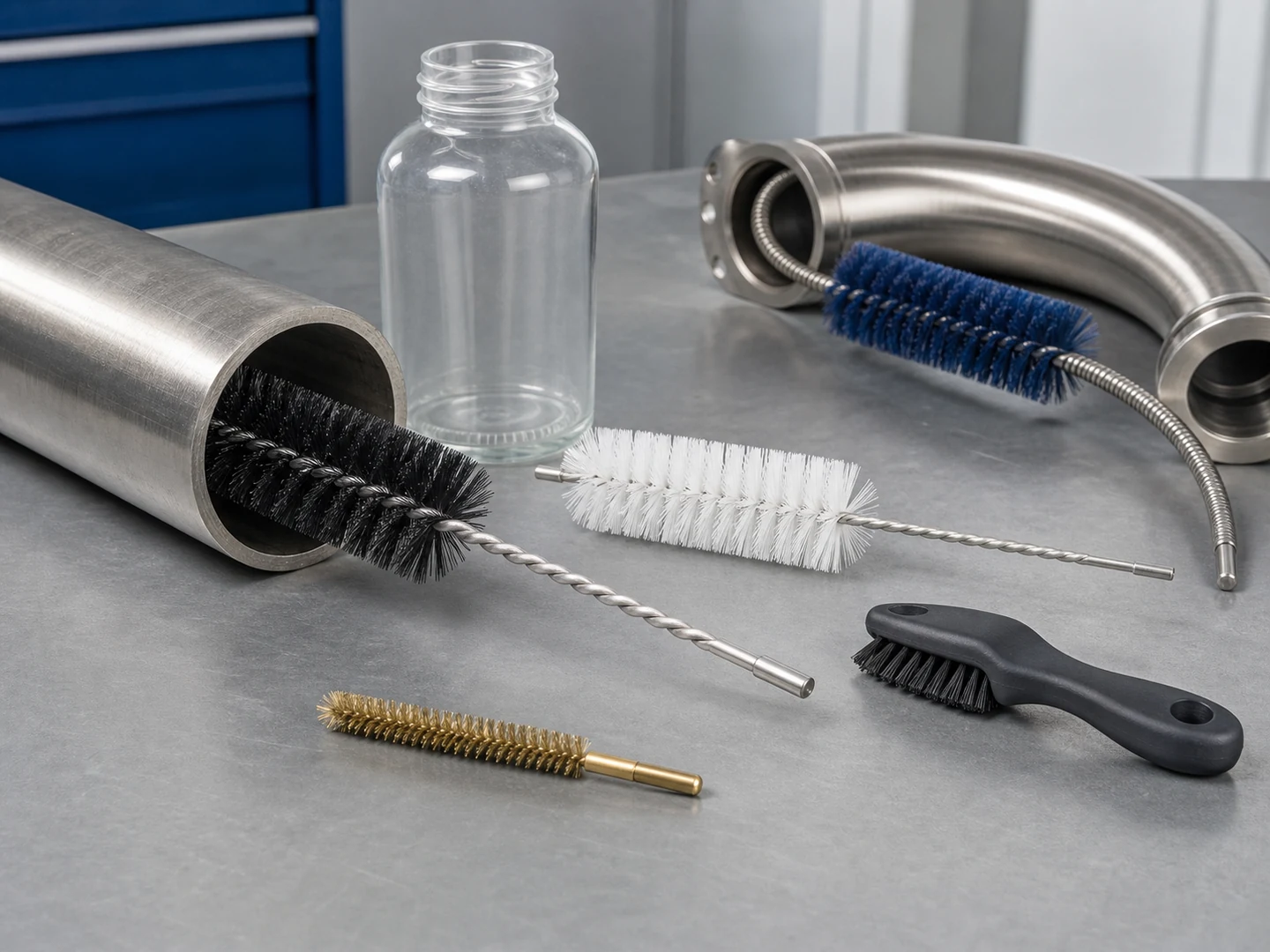
Custom Tube & Pipe Bore Brushes
Choose a tube, pipe, or bore brush when the working surface is inside a…
See how this type is built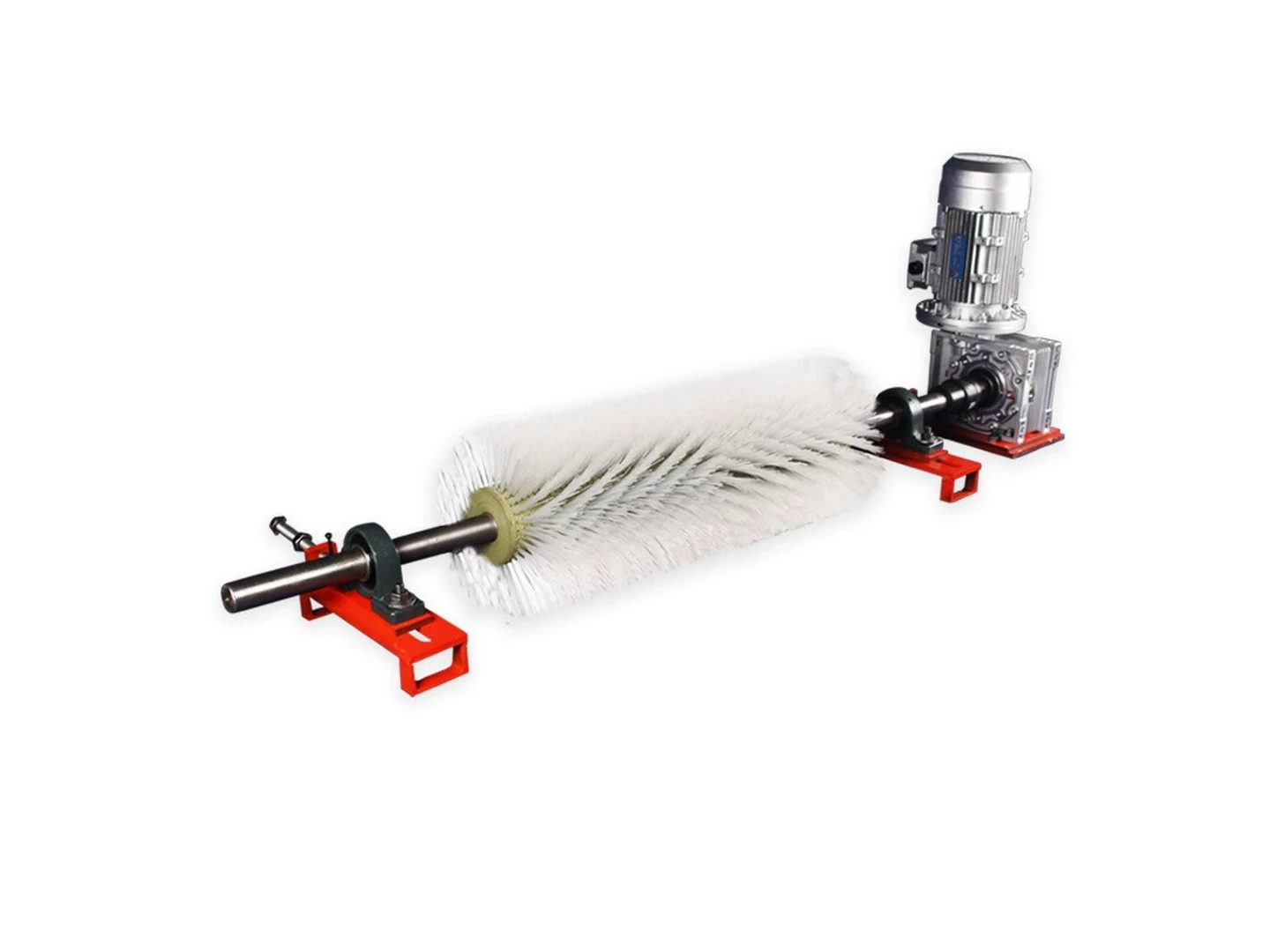
Custom Roller and Conveyor Brushes
Choose a roller or conveyor brush when a cylindrical brush must clean, wipe, guide,…
See how this type is built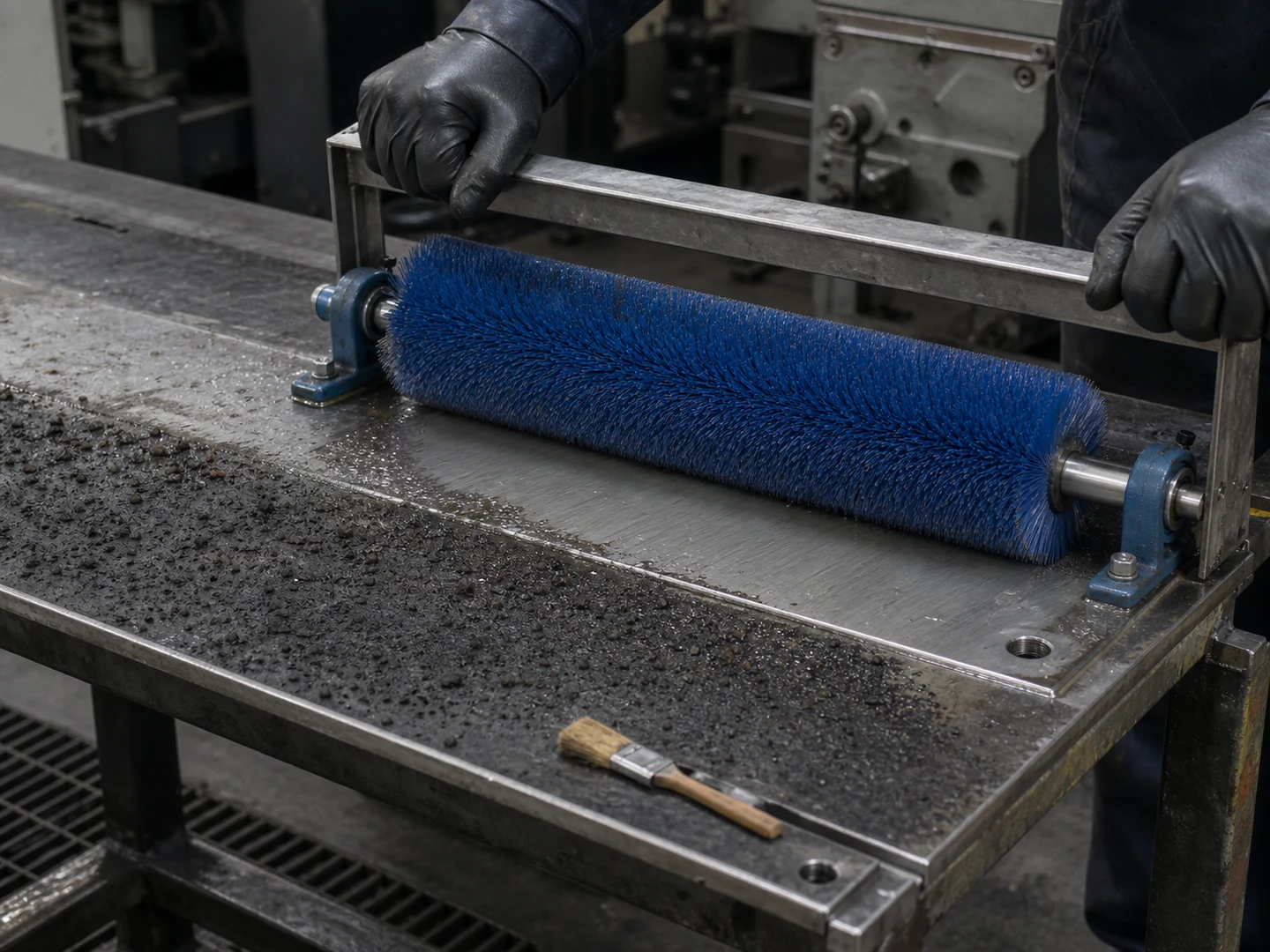
Industrial Machine Cleaning
For Industrial Machine Cleaning, the brush must reach the working area, disturb or collect…
See the cleaning job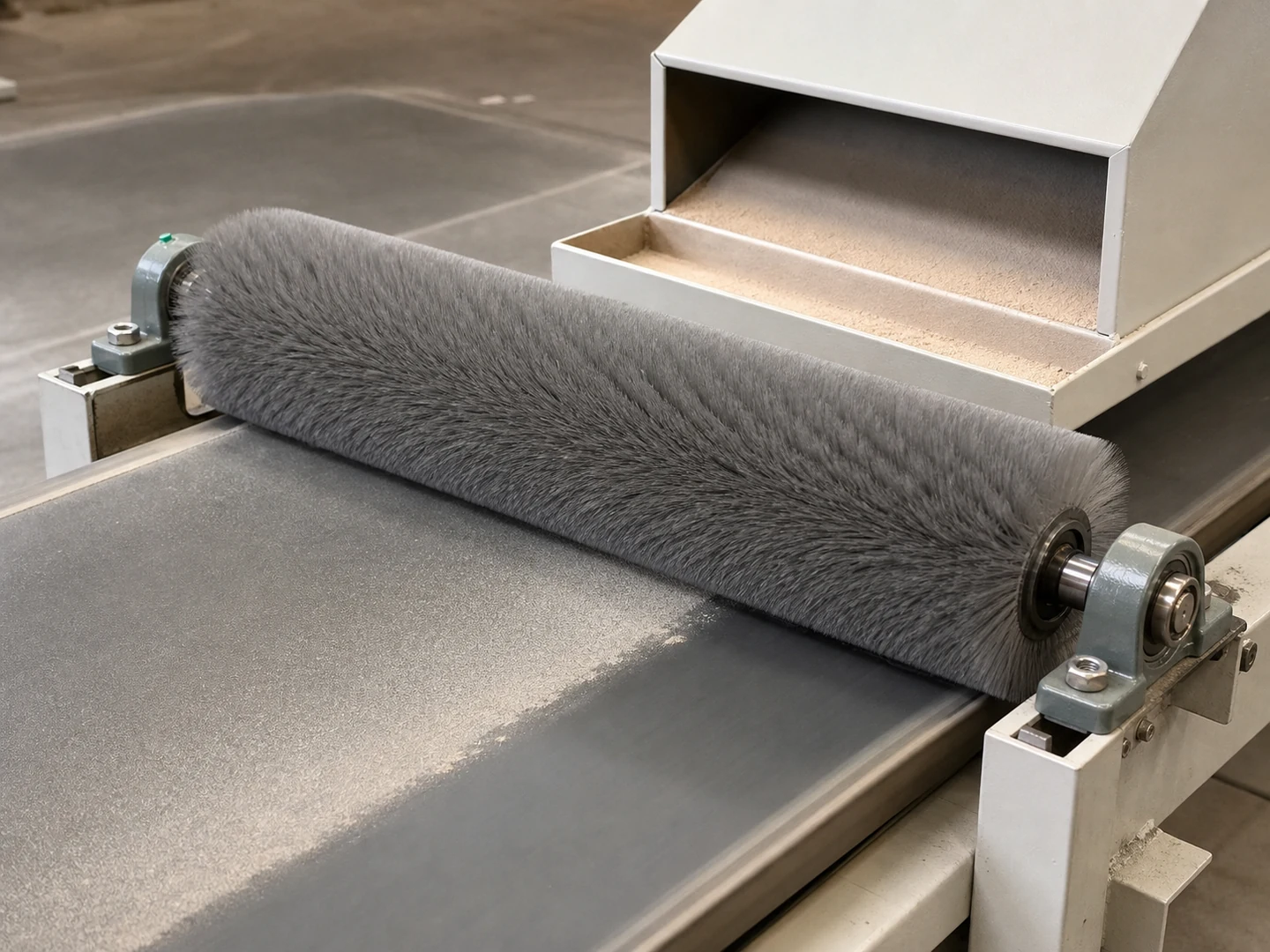
Dust Removal
For Dust Removal, the brush must reach the working area, disturb or collect loose…
See the cleaning jobCustom Manufacturing RFQ
Discuss This Material
Share the working surface, residue, dimensions, material direction, interface, quantity and drawing or sample photo.
Custom Brush RFQ
Request a Custom Cleaning Brush Quote
Upload a drawing, product photo, or sample photo and provide the core dimensions and cleaning conditions.
“We need a brush to remove wet residue from a stainless steel conveyor, about 800mm wide. The current brush wears quickly. We can send photos.”
“We sell drinkware and need a cleaning brush to include with the product. Quantity around 5,000 pieces.”