What Is Bristle Material Selection?
Bristle material selection is a practical engineering decision that matches filament properties to operating conditions, workpiece material, chemical exposure, and finish requirements. It is not a one-size-fits-all brand choice. The right bristle performs reliably across thousands of cycles; the wrong one can cause scratching, contamination, rapid wear, or process failure.
Common Bristle Materials for Industrial Brushes
Industrial brushes typically use synthetic polymers, metal wire, or natural fibers. The most common are nylon (PA6, PA66, PA612), PBT polyester, stainless steel, and brass. Each family has a distinct trade-off between stiffness, chemical resistance, temperature tolerance, and surface aggressiveness.
Abrasive-filled nylons, horsehair, and specialty alloys exist for niche cases, but this article focuses on the workhorse materials you will encounter in most catalog selections.
Comparing Nylon, PBT, Stainless Steel, and Brass
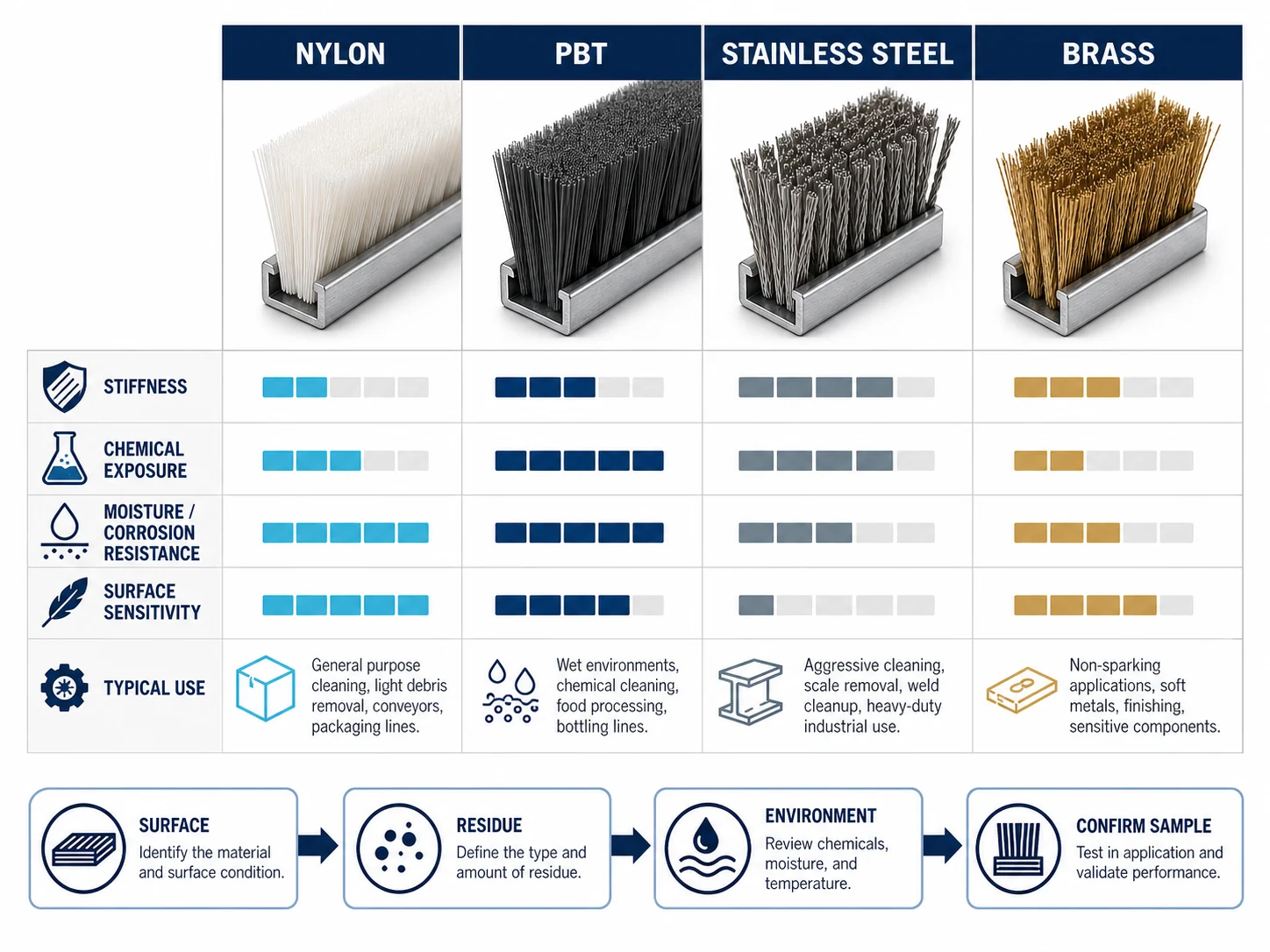
Use the table below as a quick-reference decision aid. Values are general comparisons, not exact specifications—always verify with supplier material data sheets against your process conditions.
| Material | Stiffness | Chemical Resistance | Temperature Sensitivity | Surface Risk | Typical Brush Roles |
|---|---|---|---|---|---|
| PA6 (Nylon 6) | Medium | Good against oils, weak acids; poor with strong acids, oxidizing agents | Softens above 150°F (65°C); continuous use best below 180°F (82°C) | Low – safe for many metals and plastics | Washing, light deburring, dusting, conveyor cleaning |
| PA66 (Nylon 66) | Slightly stiffer than PA6 | Similar to PA6; slightly better hydrolysis resistance | Similar thermal limit; slightly higher melting point | Low | Wet applications, food contact areas where stiffness retention matters |
| PA612 (Nylon 612) | Medium | Improved moisture and chemical resistance vs PA6/PA66; lower moisture absorption | Similar thermal limit | Low | Humid environments, outdoor machinery, longer-life cleaning brushes |
| PBT (Polyester) | Stiffer than nylon, especially when wet | Excellent resistance to many solvents, detergents, and weak acids; poor with strong bases | Continuous use up to 250°F (120°C); good heat stability | Low–Medium | Hot washdown, dairy, chemical stripping, aggressive cleaning without metal risk |
| Stainless Steel | Very high | Excellent with most chemicals except strong chlorides; rust-resistant grades available | High – can tolerate 500°F+ (260°C+) depending on grade | High – can scratch soft metals, plastics | Heavy rust removal, weld cleaning, surface texturing, high-temp areas |
| Brass | Lower than steel; forgiving bend | Good with water, oils; attacked by ammonia, some acids | Lower than steel; begins to soften above 350°F (175°C) | Lower than steel – reduces sparking risk; still abrasive | non-sparking cleaning, aluminum finishing, delicate rust removal |
How to Confirm Your Bristle Material Choice
Never treat one material as the universal best—your application conditions dictate the correct filament. Confirm your selection by answering three questions:
- What is the workpiece material? Stainless steel bristles can embed in aluminum and cause galvanic corrosion. Brass is safer for non-ferrous metals, but leaves a thin transfer layer that may be unacceptable in food or medical applications.
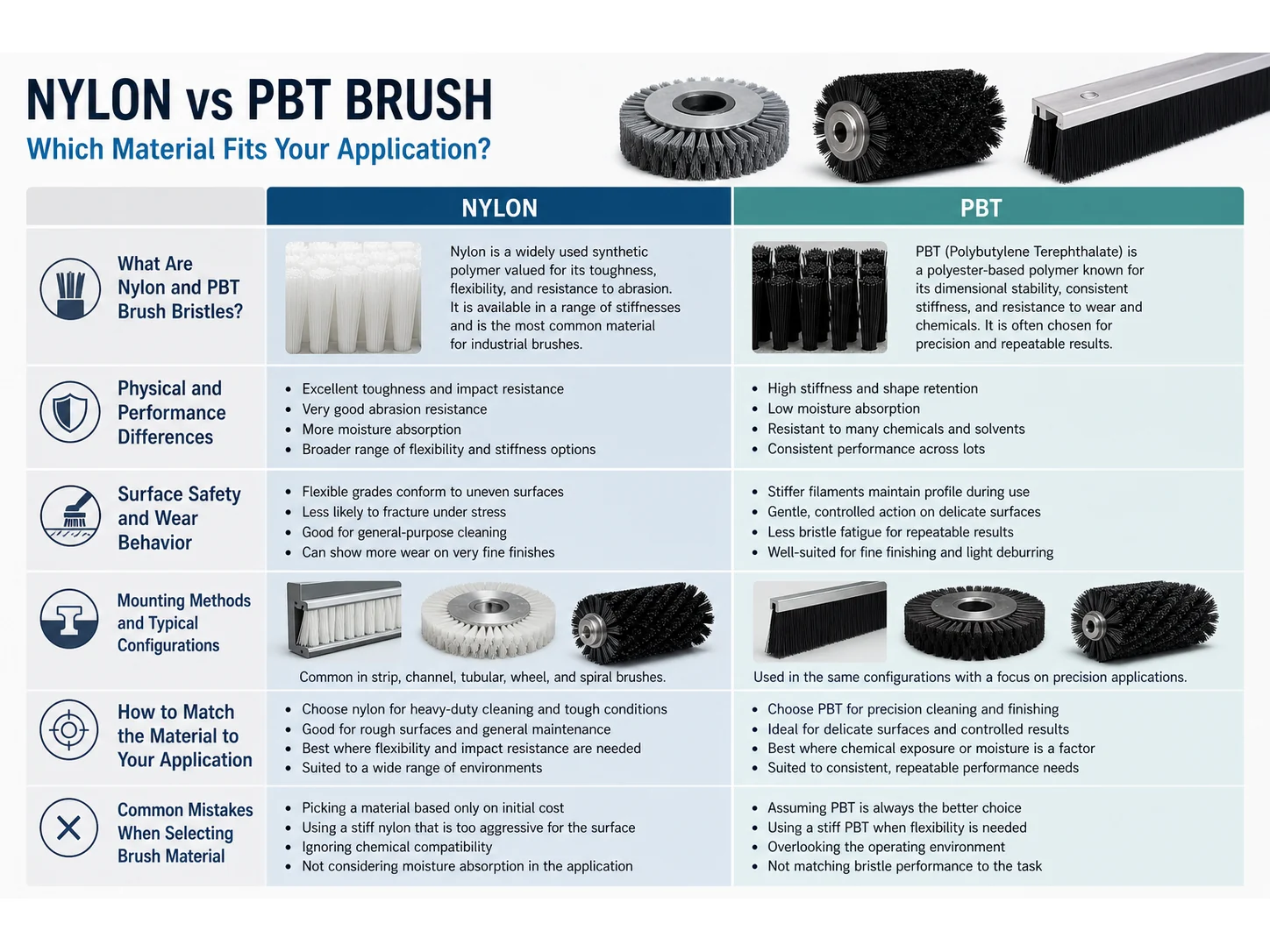
- What cleaning chemicals or fluids are present? Nylon absorbs moisture and loses stiffness; PBT holds its shape better in wet and hot processes. Acidic or caustic CIP fluids can degrade nylon quickly.
- What is the acceptable surface finish and cycle life? A stiff, aggressive bristle may clean faster but create micro-scratches that trap bacteria or weaken paint adhesion. Softer filaments may need more passes but preserve critical surfaces.
Always request material data sheets from your brush supplier and, when in doubt, run a sample test on scrap or sample workpieces before committing to a full production run.
Common Mistakes in Bristle Material Selection
Even experienced teams make these errors:
- Using stainless steel wire brushes on aluminum or soft alloys. This causes deep scratching, metal smearing, and potential pitting from iron contamination.
- Choosing by cost or size alone. A cheaper filament that fails in half the time costs more in downtime and rework.
- Ignoring moisture absorption. Nylon absorbs water and swells, which can change brush stiffness and interfere with automated equipment clearances.
- Assuming “chemical‑resistant” means all chemicals. PBT resists many solvents but is attacked by strong alkaline solutions. Always check compatibility with your specific concentration and temperature.
- Overlooking filament shape. Crimped vs straight vs abrasive‑impregnated filaments behave very differently, even within the same material family.
When Standard Bristle Materials Are the Wrong Choice
Standard nylon, PBT, stainless steel, and brass cover about 80% of industrial brushing tasks, but some conditions demand more:
- Extreme temperatures (above 300°F continuous) may require high‑performance polymers like PEEK or specialty alloys.
- Aggressive chemical environments with mixed acid/alkali exposure can degrade fasteners and backing, not just bristles—full brush construction must be evaluated.
- Ultra‑fine finishes or controlled abrasion may need abrasive‑filled nylon (e.g., silicon carbide or aluminum oxide grit loading) in a specific grit size.
- Food or medical contact applications may require FDA‑compliant materials, metal‑detectable filaments, or blue‑colored bristles for visual detection.
If your process falls into one of these areas, work with your supplier to explore custom material blends, fiber diameters, or hybrid brush designs. A short sample test on your actual product is the only way to validate that a non‑standard bristle will perform as expected without unintended side effects.
Final Takeaway
Start your bristle material selection by clearly defining the workpiece, environment, and finish requirement. Use the comparison table to shortlist candidates, then confirm with material data and a sample test if conditions are demanding. There is no universal “best” material—only the right match for your specific cleaning or finishing task.
Frequently Asked Questions
Can I use a wire brush on stainless steel without causing rust?
Yes, but only if you use a stainless steel wire brush designed for the same or a compatible alloy grade. Carbon steel brushes leave ferrous particles that can flash rust on stainless surfaces, especially in wet environments. Always use a dedicated stainless‑steel brush for stainless workpieces.
What is the softest bristle material for cleaning delicate surfaces?
Soft nylon filaments (PA6 or PA612) are the gentlest synthetic option for many applications. Horsehair is even softer but has limited durability. For ultra‑delicate tasks, consider a soft nylon brush with flagged (split) tips to reduce scratch risk further.
When should I choose brass over stainless steel for wire brushes?
Choose brass when you need a non‑sparking tool, are working with softer metals like aluminum or copper, or need to reduce the risk of deep scratching. Brass is also preferred in explosive or spark-sensitive or hazardous work areas because it does not produce sparks on impact.
How do I know if a nylon grade like PA612 is better than PA6?
PA612 absorbs less moisture and offers better dimensional stability in humid or wet conditions. If your process alternates between dry and wet, or operates outdoors, PA612 will maintain stiffness more consistently than PA6. For dry indoor applications, PA6 is often sufficient and more cost‑effective.
Can I use a brass wire brush for cleaning stainless steel?
Brass brushes can be used on stainless steel, but they may leave a faint brass transfer layer that can discolor or contaminate the surface. This is usually harmless for general maintenance but not acceptable in food, medical, or high‑purity applications. A stainless‑steel brush avoids this issue.
Why does PBT perform better than nylon in hot washdown?
PBT has a higher heat deflection temperature and retains stiffness when hot. It also absorbs much less water than nylon, so the filaments stay rigid and effective in continuous hot water spray. Nylon absorbs moisture and can feel limp in the same conditions.
Is there a “food‑safe” bristle material I should use?
Many nylon and polyester grades can be formulated to meet FDA and EU food contact regulations. Look for materials labeled as FDA‑compliant. Stainless steel is also widely accepted, but must be a corrosion‑resistant grade and free of embedded foreign matter. Metal‑detectable or blue‑colored bristles add extra safety for food processing.
How do I test a new bristle material before buying a large quantity?
Request a sample brush from your supplier and run it on scrap parts or off‑line test rigs. Measure before‑and‑after surface roughness, cycle time, and visual appearance. Check for any material transfer or contamination. A 2–4 hour trial under real production conditions will reveal most performance issues.
Technical References
- World Stainless — Corrosion Resistance of Stainless Steels
- British Plastics Federation — Thermoplastics
Which bristle material fits this job — AISI 304 Stainless Steel Wire, AISI 316 Stainless Steel Wire or Nylon PA?
| Material | Continuous temperature (°C) | Peak temperature (°C) | Water absorption | Hardness |
|---|---|---|---|---|
| AISI 304 Stainless Steel Wire | 400 | 500 | 0% | Rockwell B 70–95 depending on temper and cold work |
| AISI 316 Stainless Steel Wire | 400 | 500 | 0% | Rockwell B 70–95 depending on temper and cold work |
| Nylon PA | 93 | 121 | 0.3–9% by PA grade and conditioning | Medium to firm; filament diameter and trim length control bending force. |
| PBT | 120–140 | 160–180 | 0.05–0.20% | Shore D 80–90 |
Figures as published by Alleima; Brushtec / DuPont; Perlon. Confirm the exact grade against the supplier datasheet before ordering.
What should replace AISI 304 Stainless Steel Wire when it stops working?
- AISI 304 Stainless Steel Wire — Use AISI 316 stainless steel wire for chloride, marine, dairy, beverage, chemical washdown, or higher pitting-resistance requirements. Use carbon steel for dry aggressive cutting and brass or abrasive nylon for lower marking risk.
- AISI 316 Stainless Steel Wire — Use AISI 304 for general wet service without persistent chlorides. Use duplex, 904L, or higher-alloy wire when AISI 316 is insufficient for chloride stress-corrosion, severe crevice conditions, or aggressive acids.
- Nylon PA — Compare Nylon PA with PP, PBT, PET. Change material when wet stiffness, temperature, chemical resistance, conductivity, particle shedding, or surface marking becomes the limiting factor.
- PBT — Compare PBT with Nylon, PP, PET. Change material when wet stiffness, temperature, chemical resistance, conductivity, particle shedding, or surface marking becomes the limiting factor.