What Are Nylon and PBT Brush Bristles?
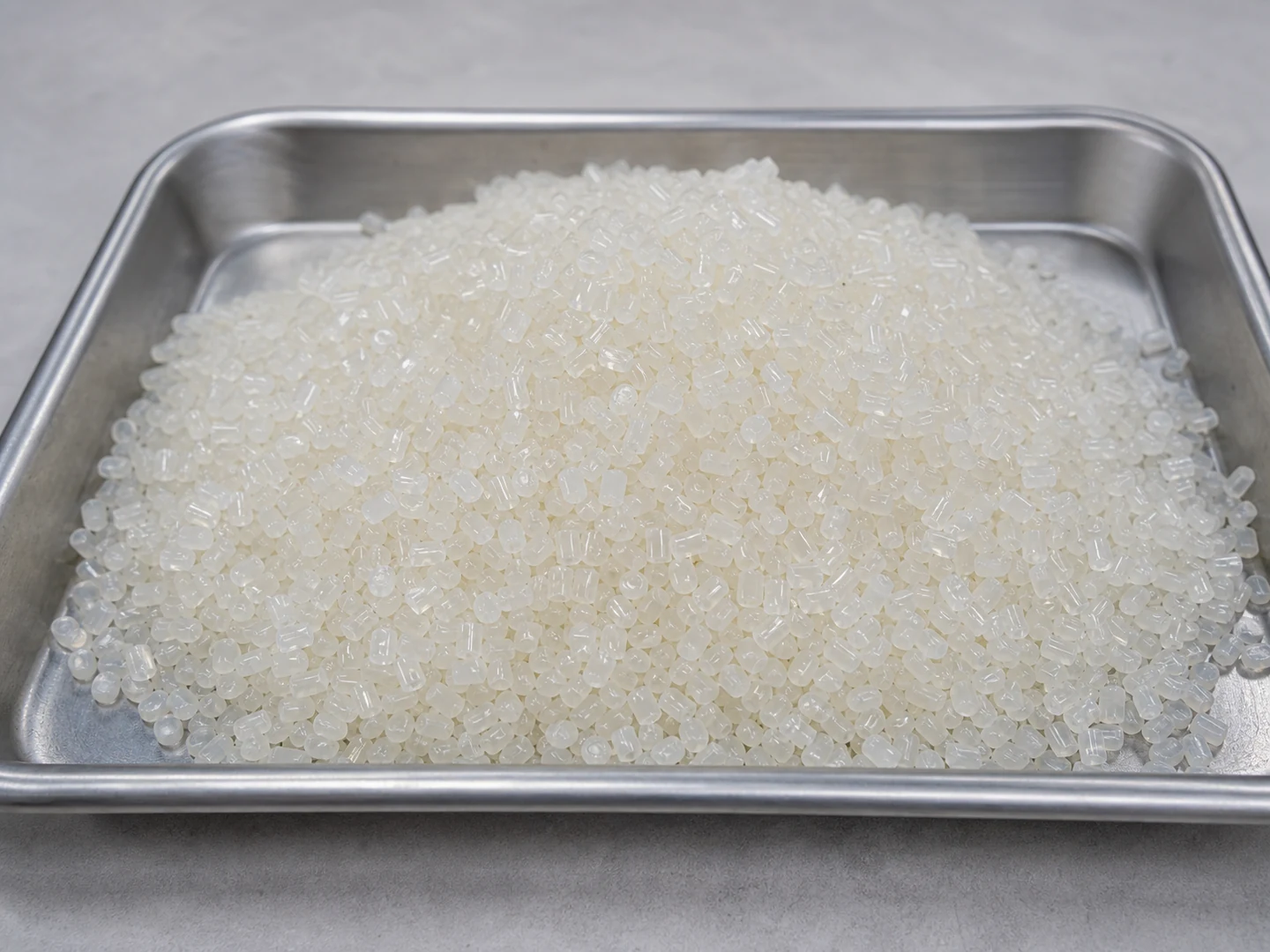
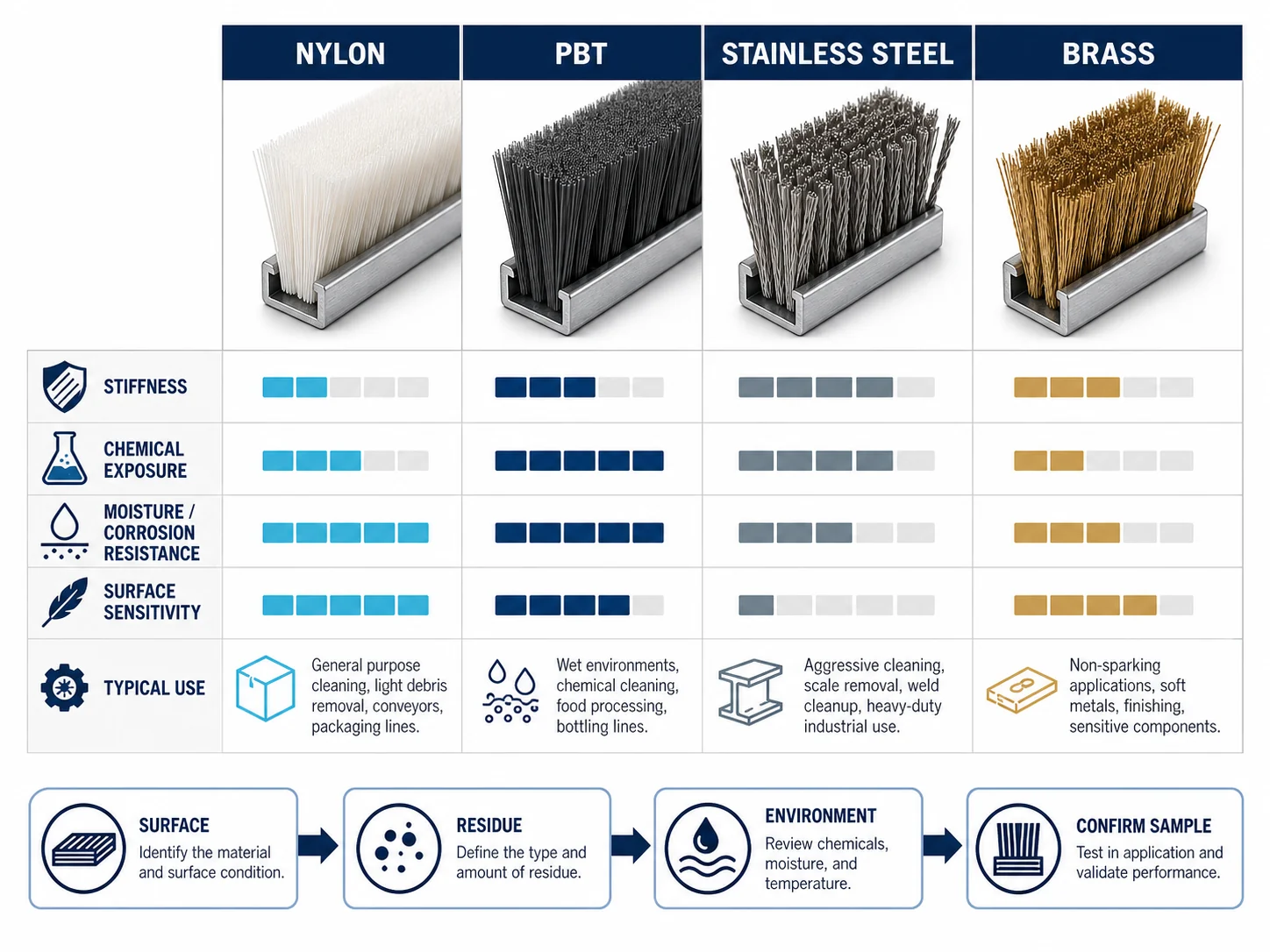
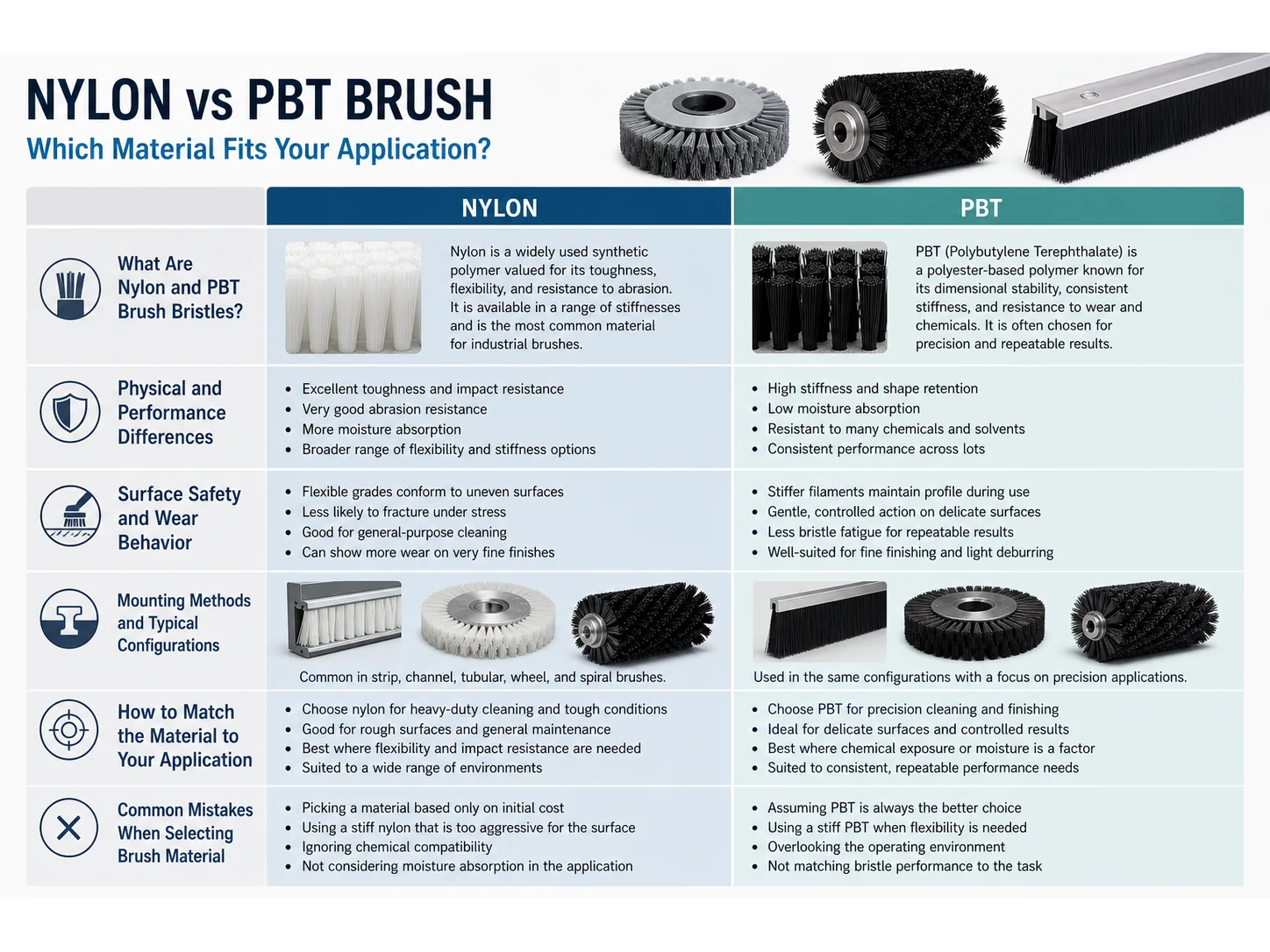
Nylon (commonly PA 6, PA 6.6, or PA 612) is a tough, flexible synthetic filament with excellent abrasion resistance and fatigue life. It can be filled with abrasive grit to create a more aggressive cleaning action, but standard nylon is gentle enough for many non-marring applications. PBT (polybutylene terephthalate) is a polyester-based filament that is stiffer, harder, and more dimensionally stable than nylon, especially in wet or high-humidity environments. It maintains its shape better under load and resists chemical attack from many solvents and mild acids.
For engineering drawing, dimensions, tolerance, thread, fit, and RFQ specification context, this section references ASME — Y14.5 Dimensioning and Tolerancing.
For thermoplastic material family and polymer property context, this section references British Plastics Federation — Thermoplastics.
For brush construction terminology, bristle/fill/backing/stem terms, this section references American Brush Manufacturers Association — Brush Lingo.
Physical and Performance Differences
The table below compares key properties that influence brush performance, durability, and surface compatibility.
| Property | Nylon | PBT |
|---|---|---|
| Stiffness | Medium to flexible (varies with diameter) | Stiffer, holds shape under pressure |
| Water absorption | Can absorb up to 8% moisture (softens and swells slightly) | Very low moisture uptake, stable in wet conditions |
| Temperature resistance (continuous) | ~80–100 °C (176–212 °F) | ~120–140 °C (248–284 °F) |
| Chemical resistance | Good against alkalis and oils, attacked by strong acids and oxidizing agents | Excellent resistance to many solvents, fuels, and mild acids |
| Abrasion resistance | Excellent, especially when reinforced with abrasive grain | Good, but may wear faster under heavy abrasive conditions |
| Surface safety (unfilled) | Gentle on soft metals, painted surfaces, and plastics | Harder tip can scratch delicate surfaces |
| Typical cost | Lower | Slightly higher |
Surface Safety and Wear Behavior
If the primary goal is to clean without scratching, unfilled nylon is usually the safer choice. It is used on aluminum, brass, copper, and coated surfaces where a soft touch is required. Filled or abrasive nylon bristles increase cutting action but reduce surface safety. PBT’s higher hardness helps it break brittle residues quickly, but the same stiffness can leave fine marks on soft substrates. In wet environments, nylon softens and may fold over, reducing cleaning effectiveness, while PBT maintains its working stiffness and cleaning aggression.
Mounting Methods and Typical Configurations
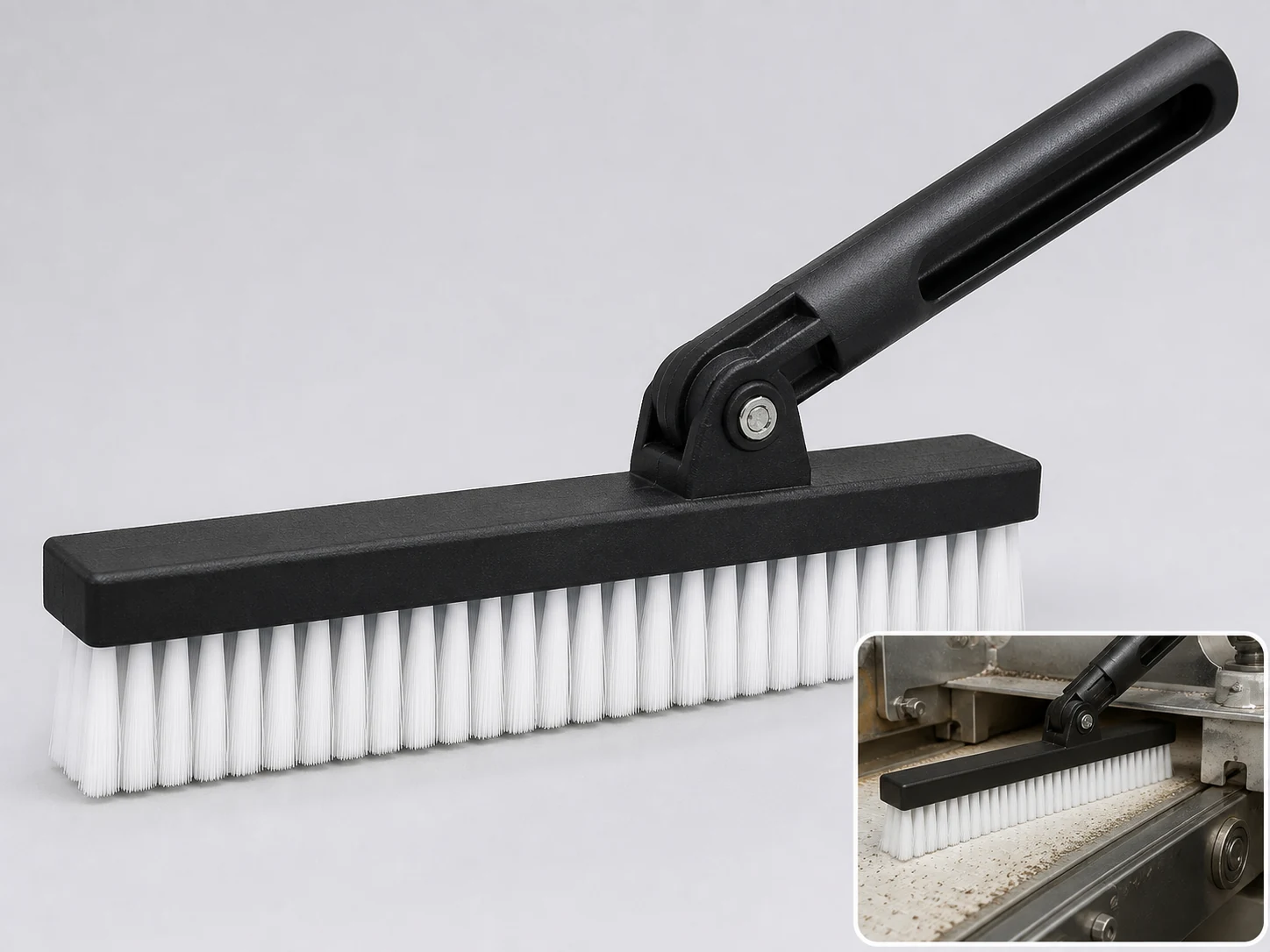
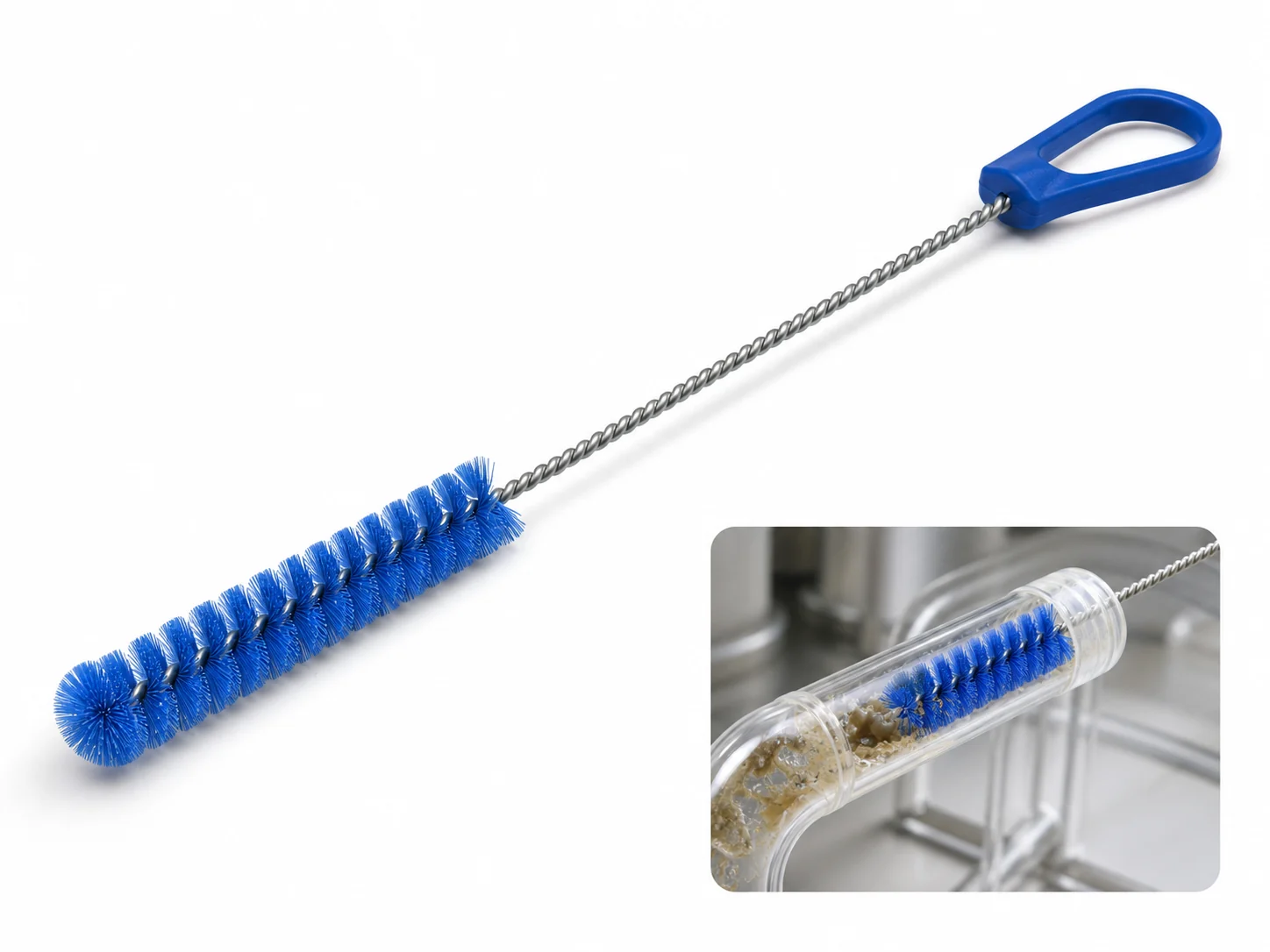
Both materials are available in cup brushes, wheel brushes, tube brushes, and strip brushes. The mounting method—threaded arbor, shank, or keyed hub—does not depend on bristle material but on the tool interface. However, PBT’s stiffness allows it to work with higher rotational speeds without flaring excessively, making it preferred in power brush applications that require consistent radial stiffness. Nylon filaments, especially unfilled, may need denser trim to compensate for flex, and they are common in rotary or manual cleaning brushes where conformability is an advantage.
How to Match the Material to Your Application
Use the following decision factors to choose between nylon and PBT:
- Workpiece material: For soft metals, plastics, or coatings, start with unfilled nylon. For steel, iron, or hard alloys, PBT may give better bite and longer life.
- Residue type: For sticky, wet, or oily debris, PBT’s low moisture absorption keeps bristles effective. For dry dust, light oxidation, or loose particles, nylon’s flexibility works well.
- Wet or dry use: In submerged, high-humidity, or coolant-flooded conditions, PBT is dimensionally stable; nylon can swell and lose spring-back.
- Replacement constraints: If brush changes are difficult or expensive, PBT’s higher upfront durability in wet or hot environments may reduce downtime.
- Surface finish requirement: When no visible scratch is allowed, choose soft nylon (or even natural fiber options).
- Temperature: Above 90°C (194°F), PBT becomes necessary. Nylon may degrade or permanently deform.
Common Mistakes When Selecting Brush Material
- Using unfilled nylon where aggressive cleaning is needed: It may take too long or not remove tough residues, leading operators to apply excessive pressure that bends filaments.
- Ignoring moisture exposure: Specifying nylon for a wet process without testing can lead to unexpected softening and poor performance.
- Assuming all synthetics are the same: PBT and nylon behave differently under load, heat, and chemicals; substitution without checking data sheets often causes early failure.
- Choosing by cost alone: A cheaper nylon brush that wears out quickly or damages a surface can cost more in rework and downtime than a slightly more expensive PBT brush designed for the working environment.
- Overlooking filament shape and grit: The base material is only one factor; crimped, straight, hollow, or abrasive-filled filaments change performance independently of the polymer.
When Nylon or PBT Brushes Are Not Enough
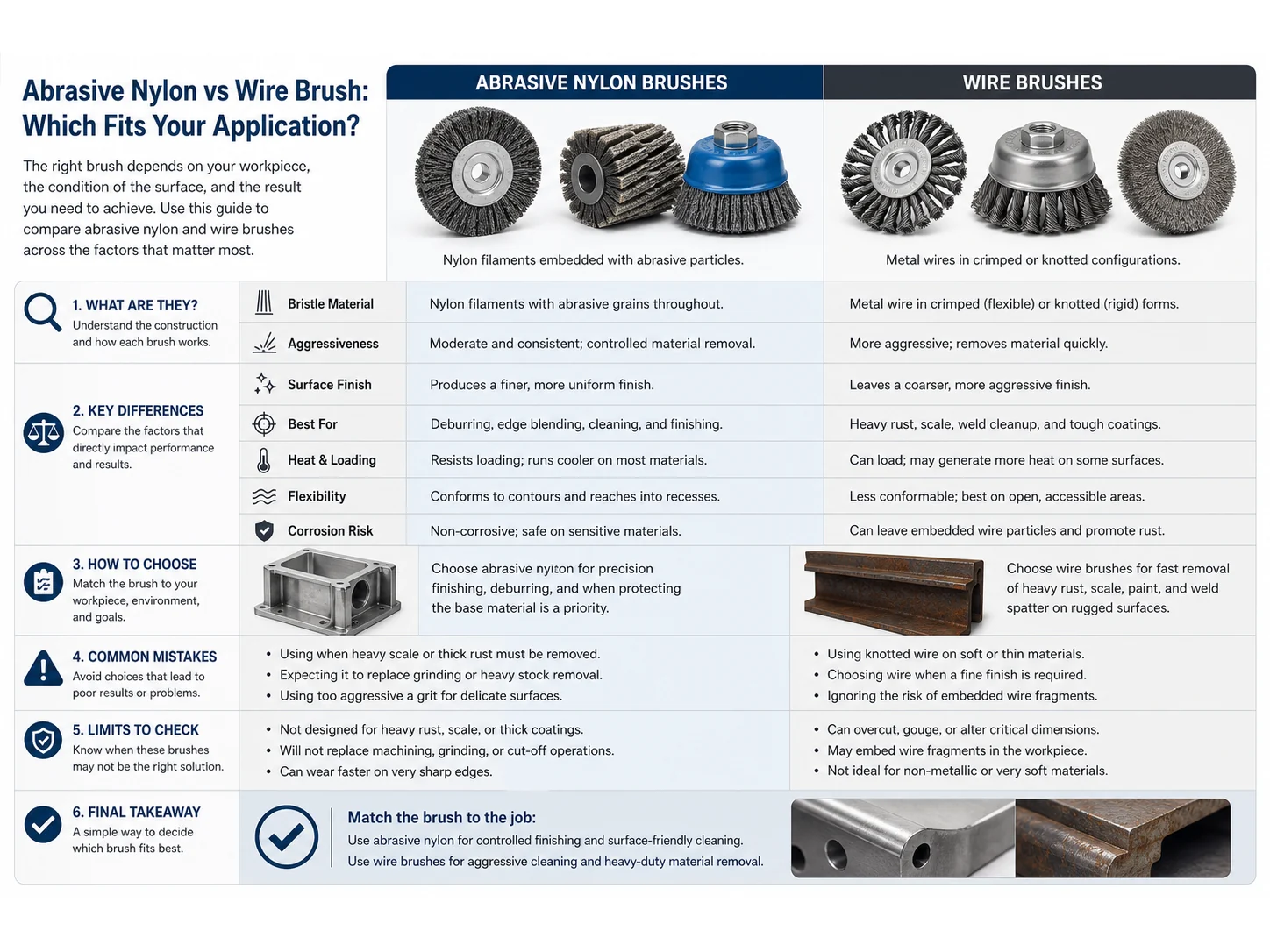
Neither nylon nor PBT is ideal for all cleaning or finishing tasks. If the application requires high-temperature resistance above 150°C (302°F), a different polymer like PEEK or natural bristle such as Tampico might be needed. For scale removal or heavy rust, abrasive nylon or wire brushes may outperform plain PBT. In sanitary or food-contact environments, brush filaments must comply with FDA or EU regulations that may limit polymer choices. A custom brush design—changing trim length, density, or filament shape—often solves performance issues better than simply switching between nylon and PBT. When residue is chemically aggressive, acid-proof filaments such as polypropylene may be required.
Final Takeaway
The nylon-vs-PBT decision comes down to three practical questions: How soft is the surface? Is the environment wet or hot? And how critical is tip stiffness to the cleaning action? Start with unfilled nylon for gentle, dry cleaning of delicate substrates; move to filled nylon when more abrasion is needed but surface scratching is still a concern. Switch to PBT when moisture, chemicals, or higher temperatures weaken nylon performance. If the bristle tip breaks down or damages the workpiece, revisit not only the polymer but also filament shape, grit type, and brush design. A quick bench test with a sample brush can confirm the choice before committing to a full order.
Practical Use Note
In daily use, the practical test is simple: check whether the brush reaches the full contact area, removes the target residue, and leaves the surface in the required condition. Record what changes when access, residue type, surface sensitivity, brush stiffness, operating environment, and replacement routine changes, because many brush failures are caused by the working condition shifting rather than by the brush body alone.
Frequently Asked Questions
Is nylon softer than PBT?
Yes, standard unfilled nylon is more flexible and less likely to scratch sensitive surfaces compared to PBT, which is naturally stiffer.
Can I use a nylon brush on aluminum?
Yes, unfilled nylon is widely used on aluminum for cleaning, deburring, and surface preparation because it is non-marring. Avoid heavily loaded abrasive nylon unless surface texture is acceptable.
What is the maximum temperature for a PBT brush?
PBT filaments generally withstand continuous temperatures of about 120–140 °C (248–284 °F). Above that, consider PEEK or other high-heat filaments.
Does nylon absorb water?
Yes, nylon can absorb up to 8% moisture by weight, which may soften the bristles and reduce stiffness. PBT absorbs almost no water, making it more stable in wet conditions.
Can I use PBT brushes with solvents?
PBT has excellent resistance to many common solvents, fuels, and mild acids, but always check a chemical compatibility chart for the specific cleaning agent.
How do I clean a nylon brush?
Light residues can be rinsed with water and mild detergent. For heavy buildup, ultrasonic cleaning or solvents compatible with nylon (e.g., isopropyl alcohol) are effective. Avoid strong acids.
What is the difference between filled and unfilled nylon?
Unfilled nylon has no abrasive grit and is soft. Filled (abrasive) nylon contains abrasive particles like silicon carbide or aluminum oxide, giving it a cutting action similar to grinding tools.
Are PBT brushes more expensive than nylon?
Generally, PBT filaments cost slightly more than basic nylon, but the total cost of ownership depends on how long the brush lasts and whether it improves process speed.