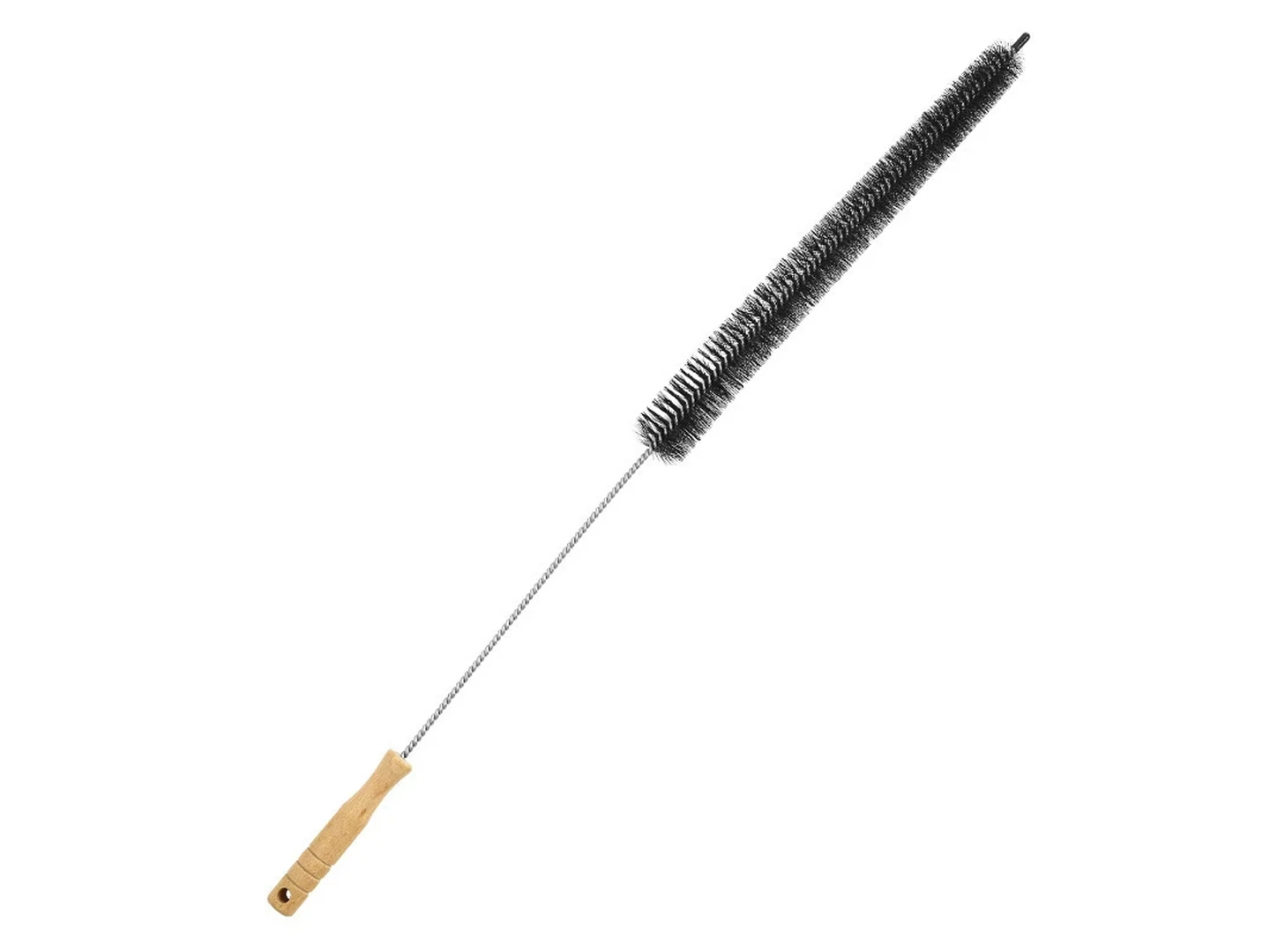
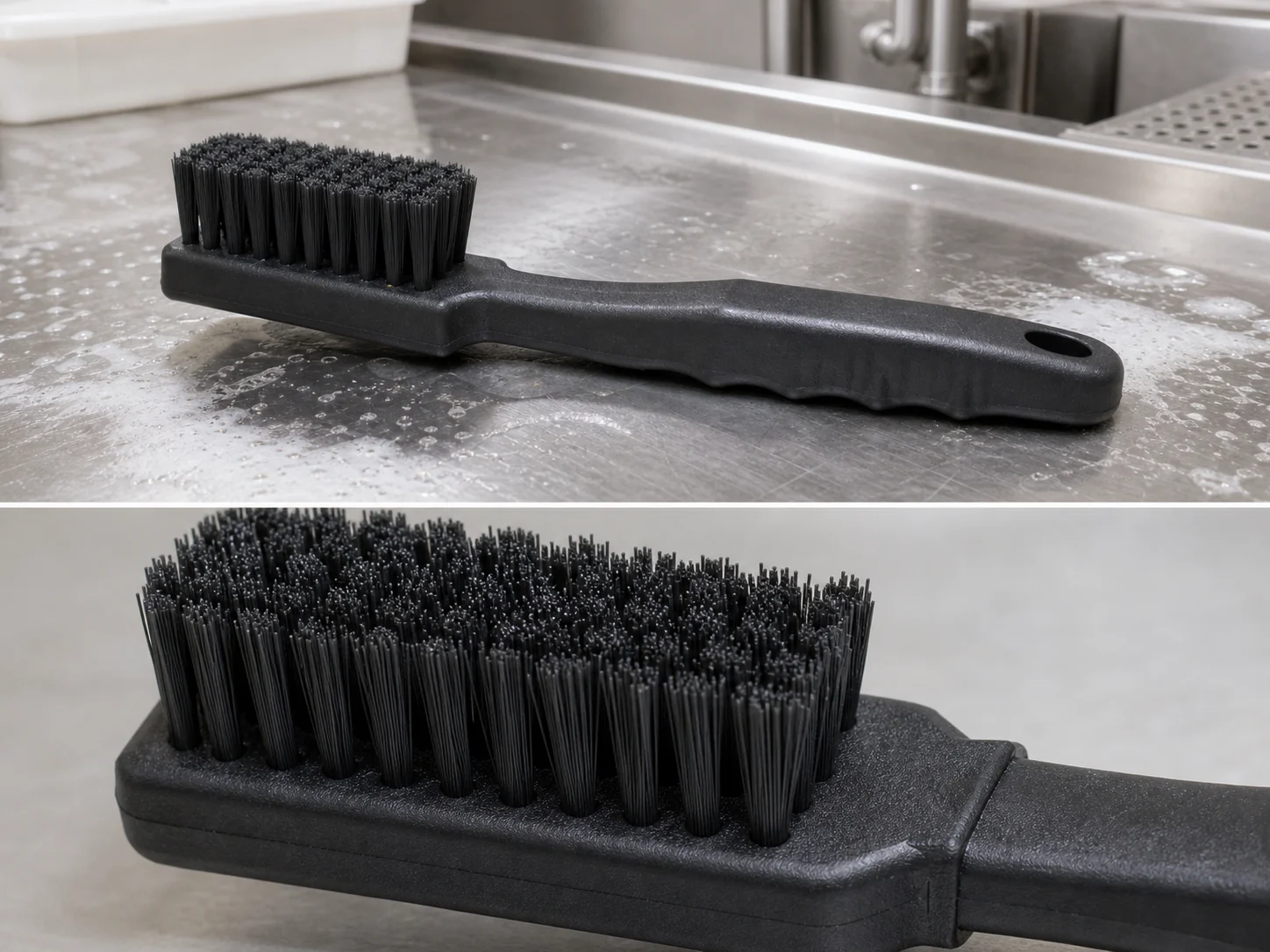
Dairy Equipment Cleaning Brush
Chemical-resistant dairy equipment cleaning brush for tanks, conveyors, and filling machines.
- Head Ø
- 20–300 mm
- Handle
- 180–1200 mm

Standard & Custom Brushes · Since 2011
PRODUCT CATEGORY
Food-processing brushes need to fit both the equipment and the sanitation routine. Conveyors, drums, tubes and machine surfaces collect different residues, and product-contact zones can impose material or documentation requirements that do not apply to general factory cleaning.
Compare conveyor rollers, drum brushes, tube brushes, hand brushes and general equipment-cleaning products used around food production.
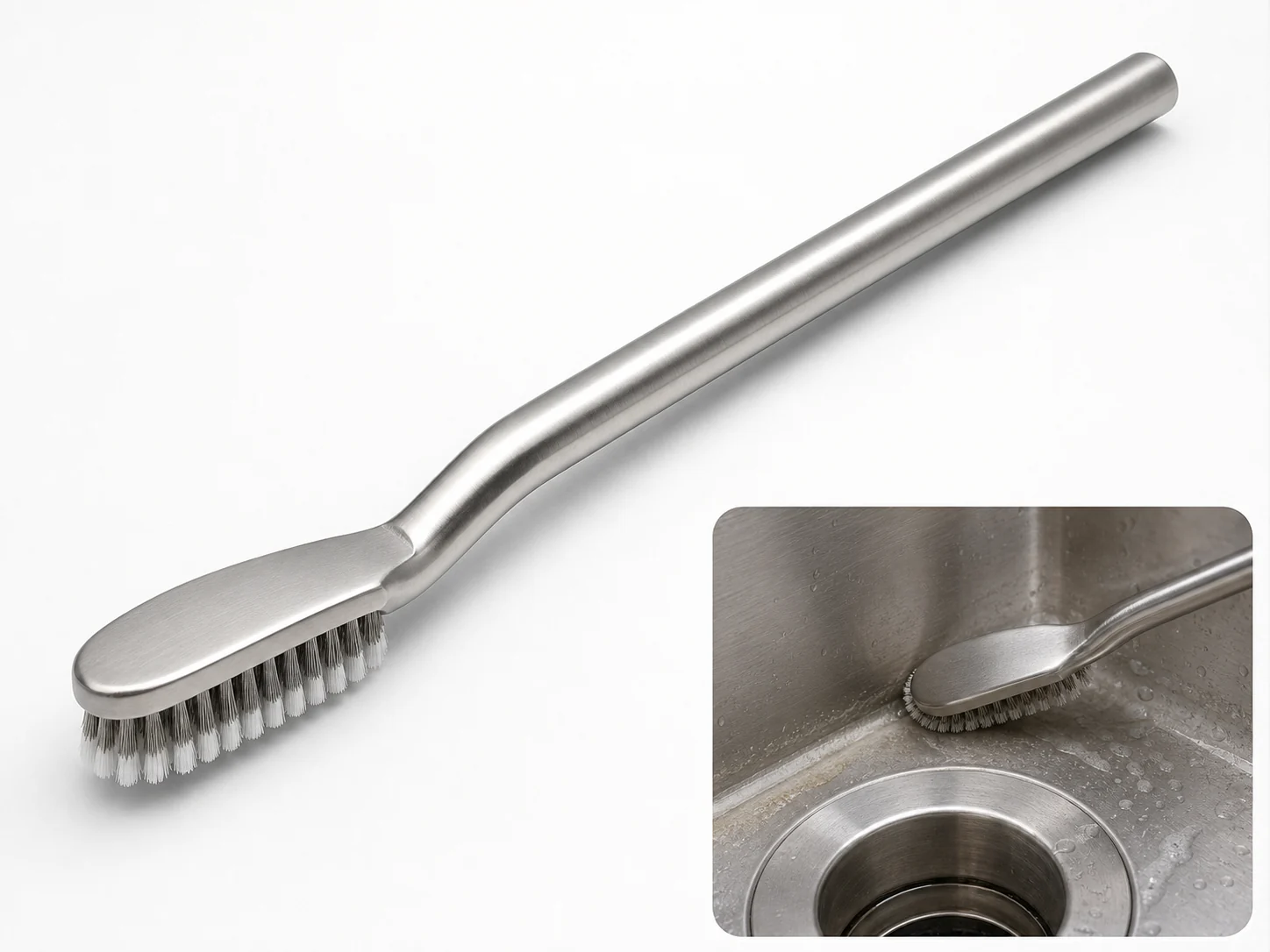
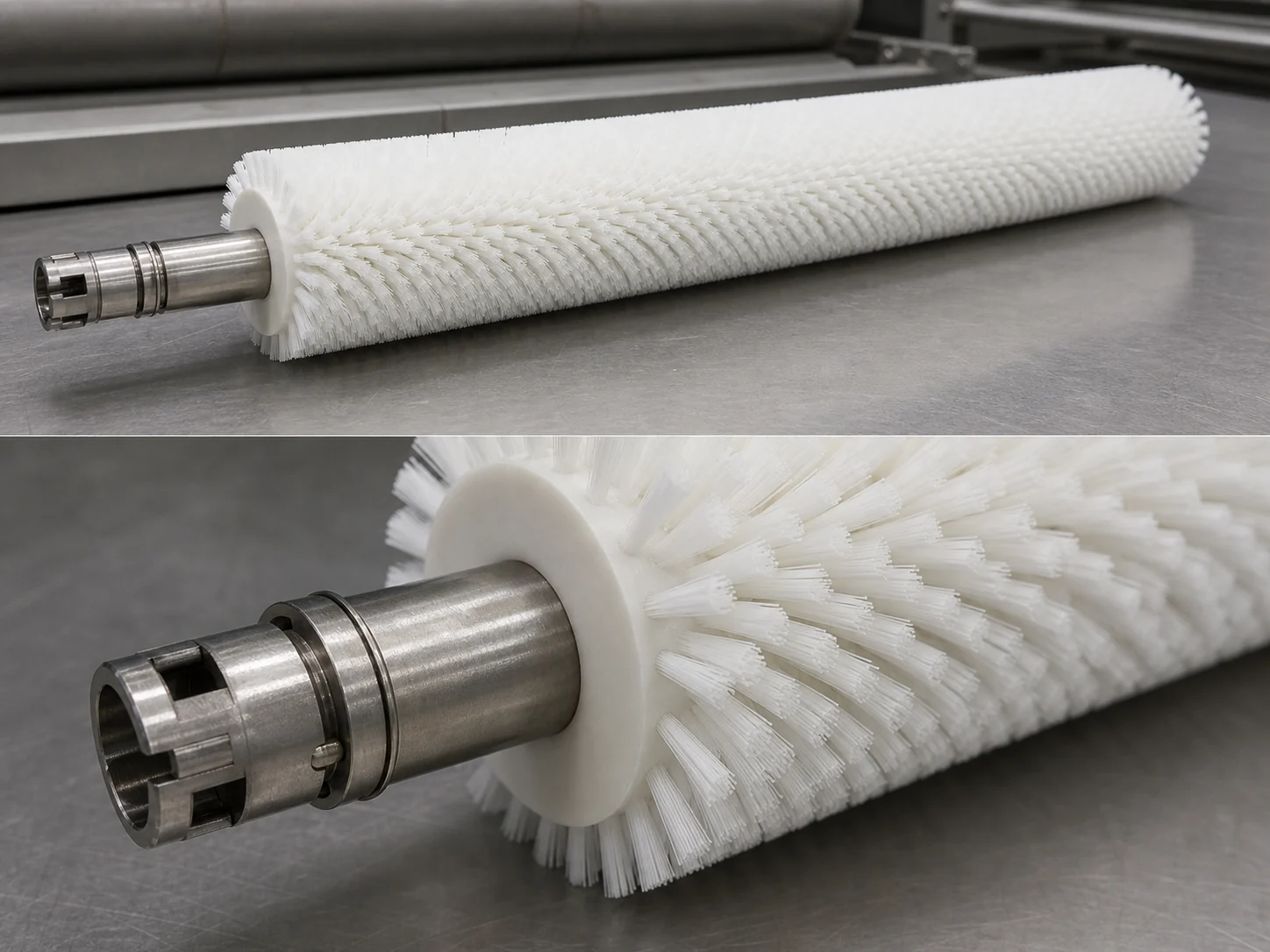
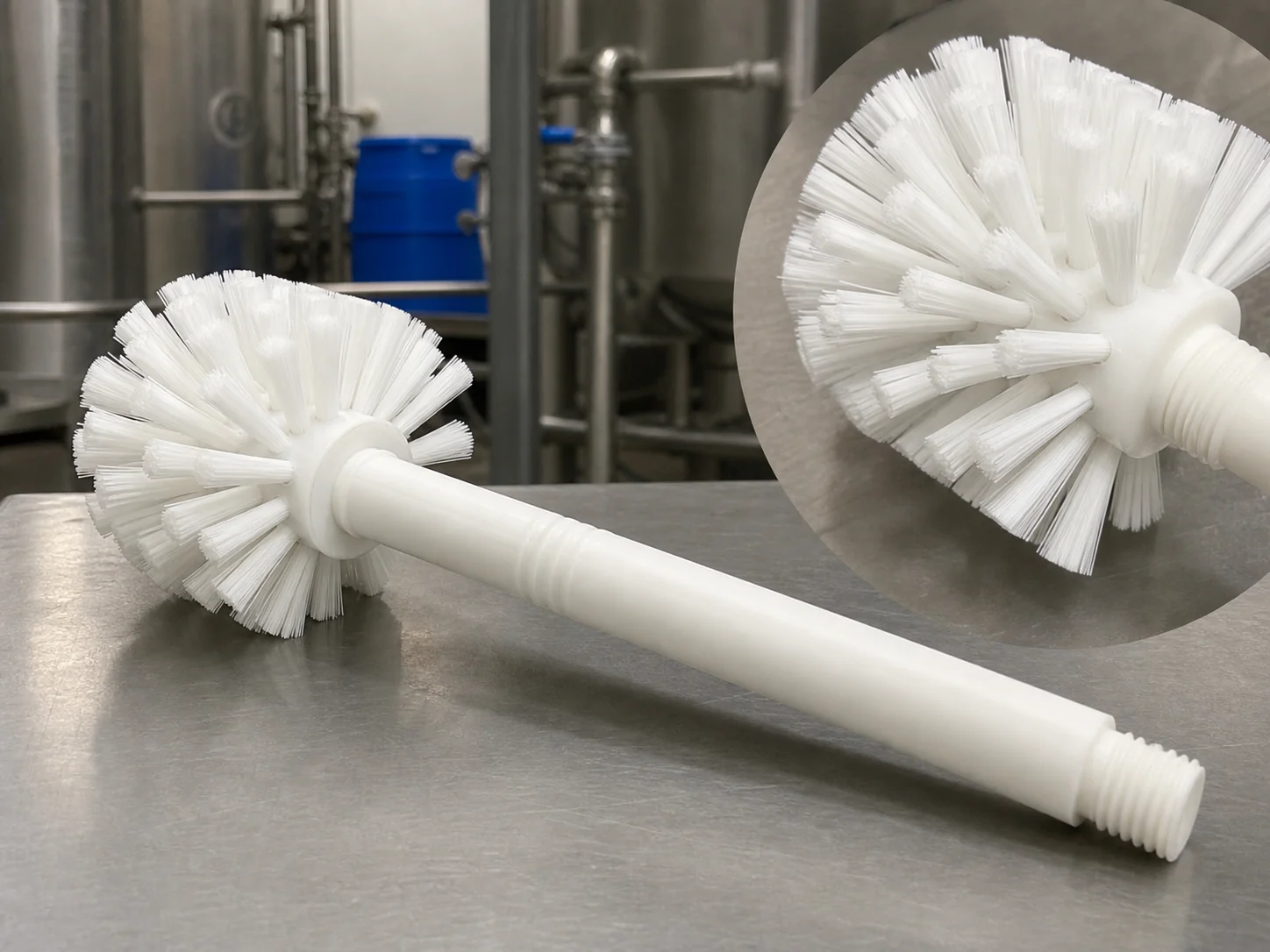
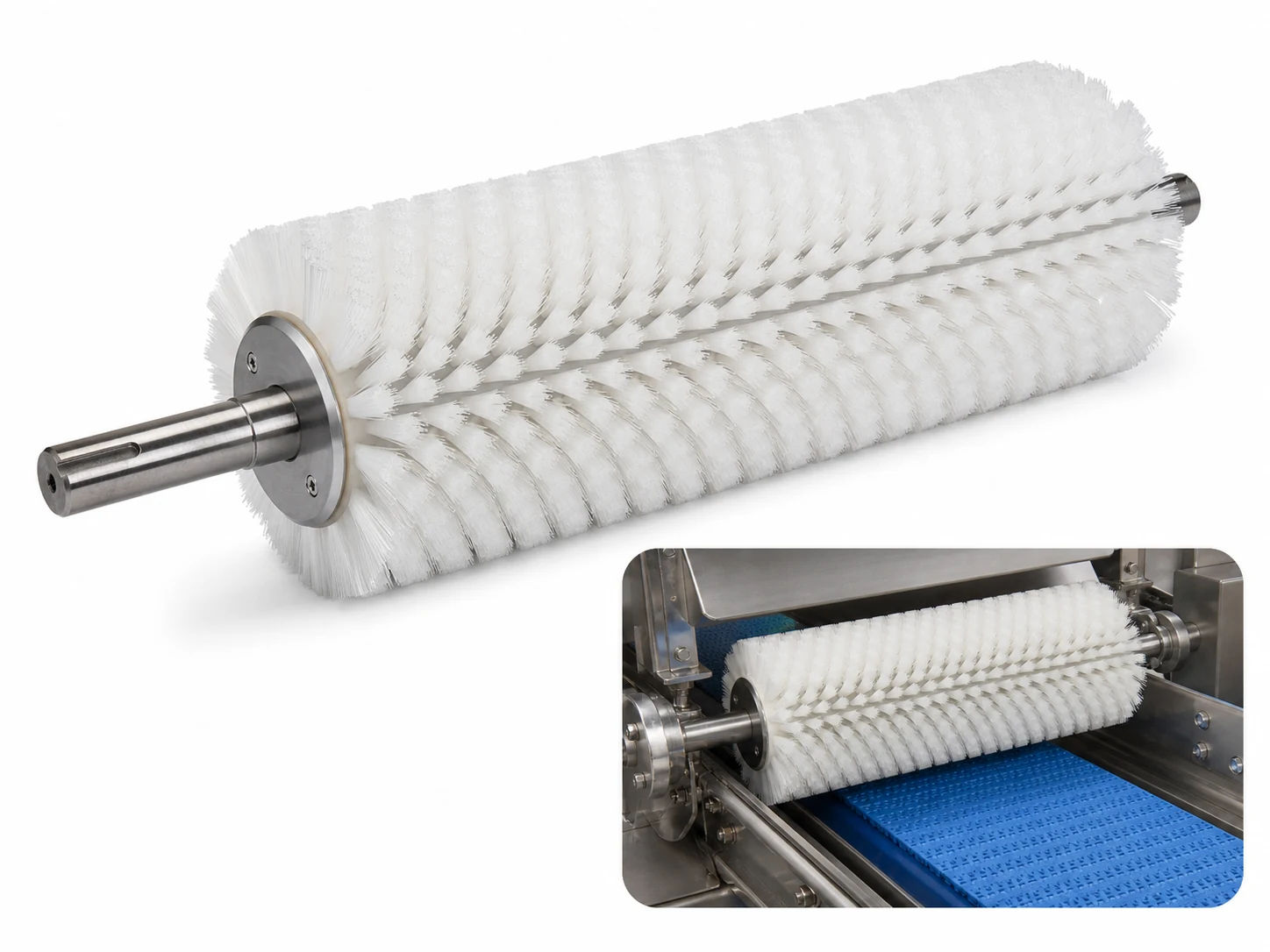
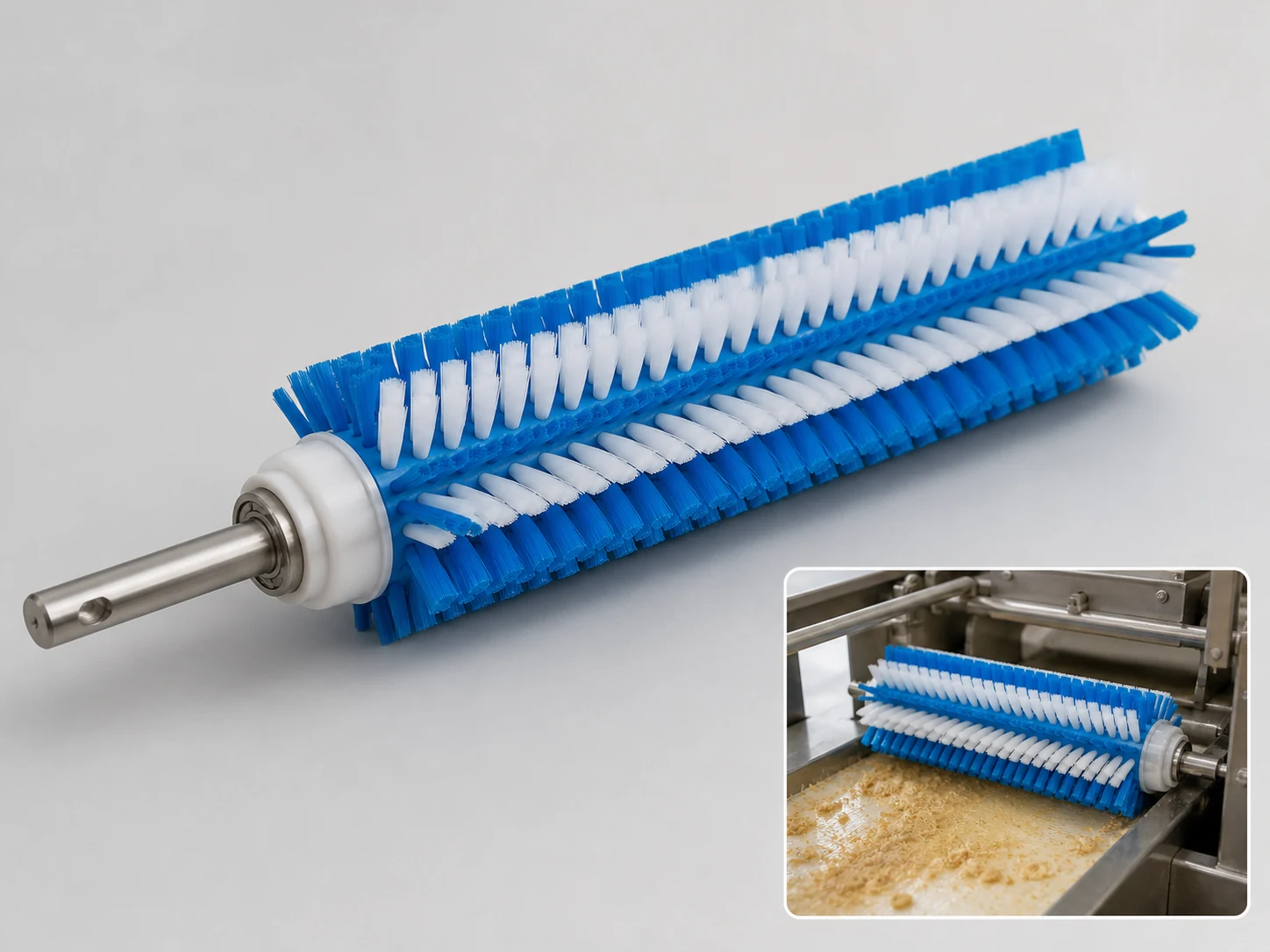
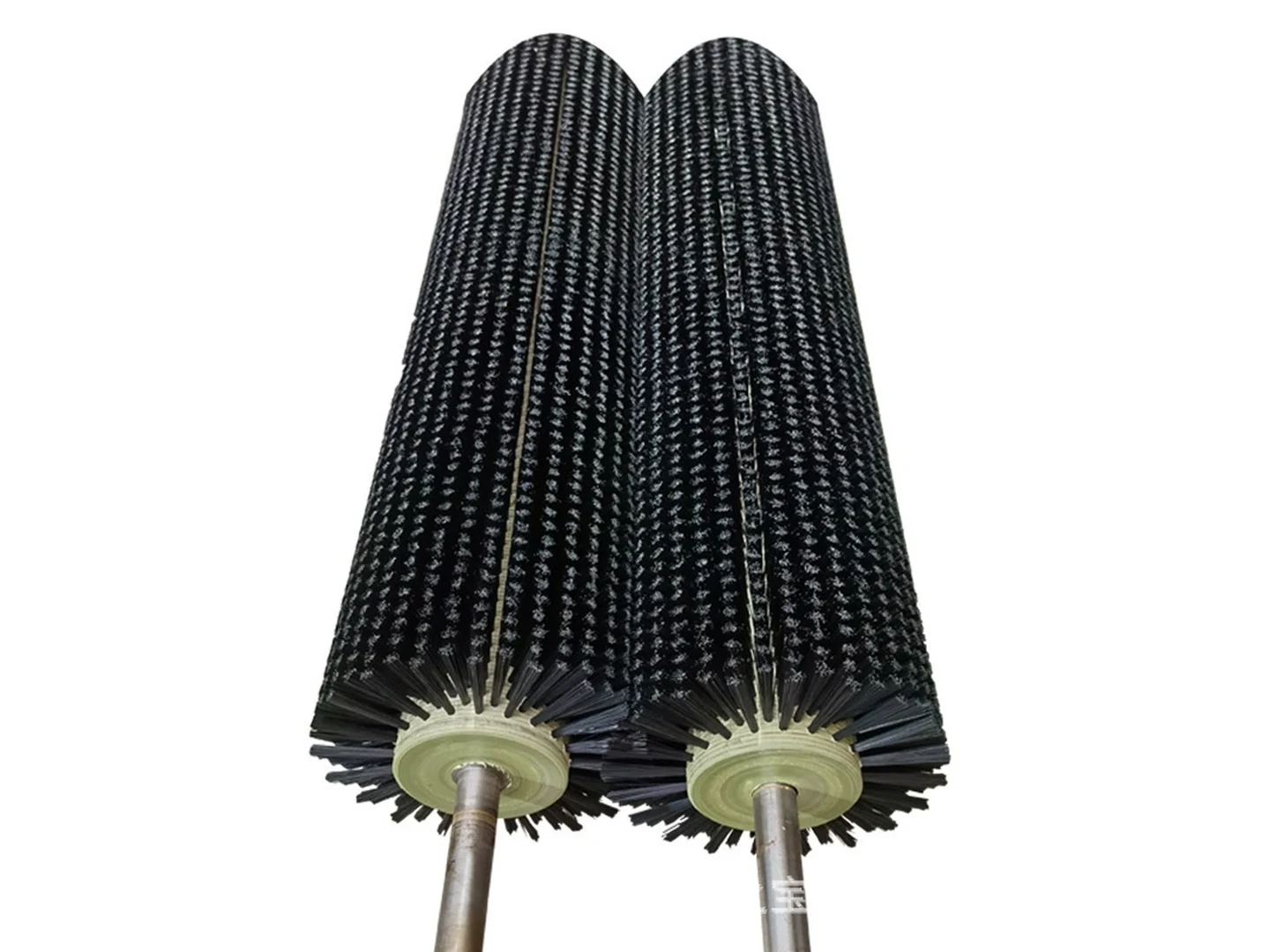
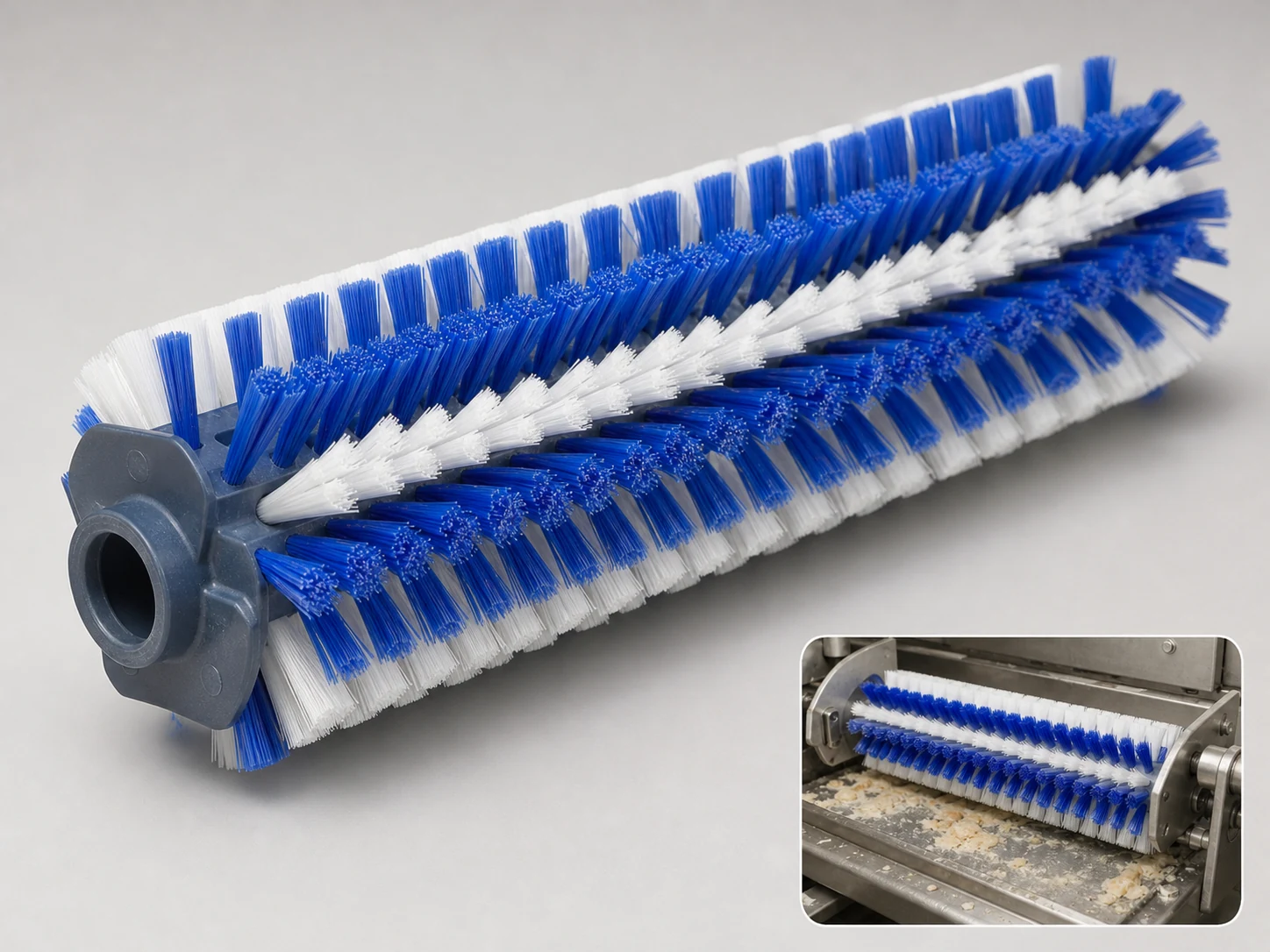
A food plant cleans to a written sanitation procedure, and the brush is part of it. Each machine part gets a brush shaped for it, made from a fill that survives the washdown, in the color of the zone it belongs to.
| Job | Brush in this range | Form |
|---|---|---|
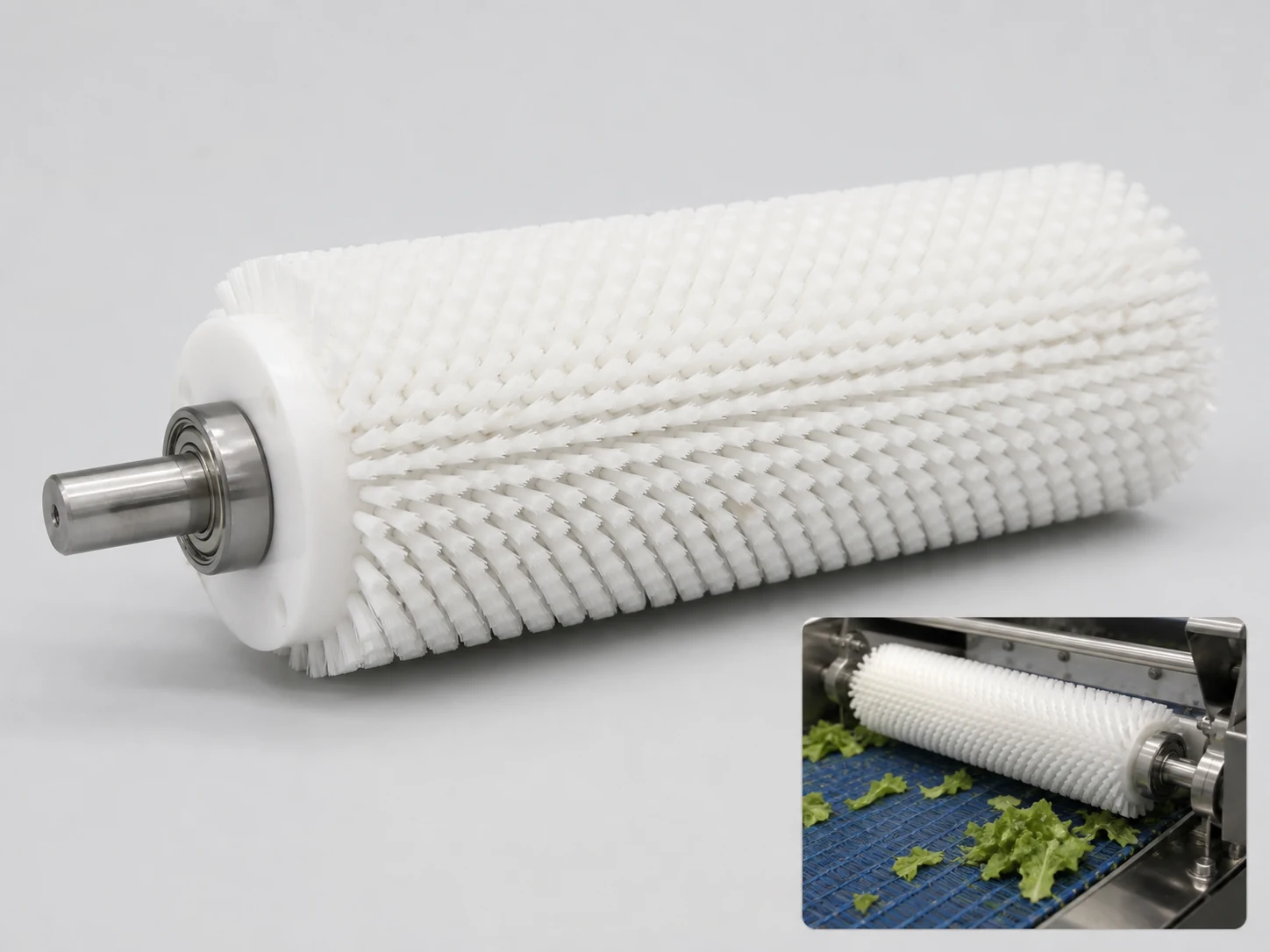
| Belts and conveyors while running | Food conveyor belt cleaning brush; 120 × 800 mm PBT conveyor roller on a 304 stainless core | Roller, 60–500 mm diameter, 100–3,000 mm wide |
| Washing and scrubbing produce | Fruit and vegetable washing roller; produce washing line brush | Roller, 60–400 mm diameter, up to 2,500 mm |
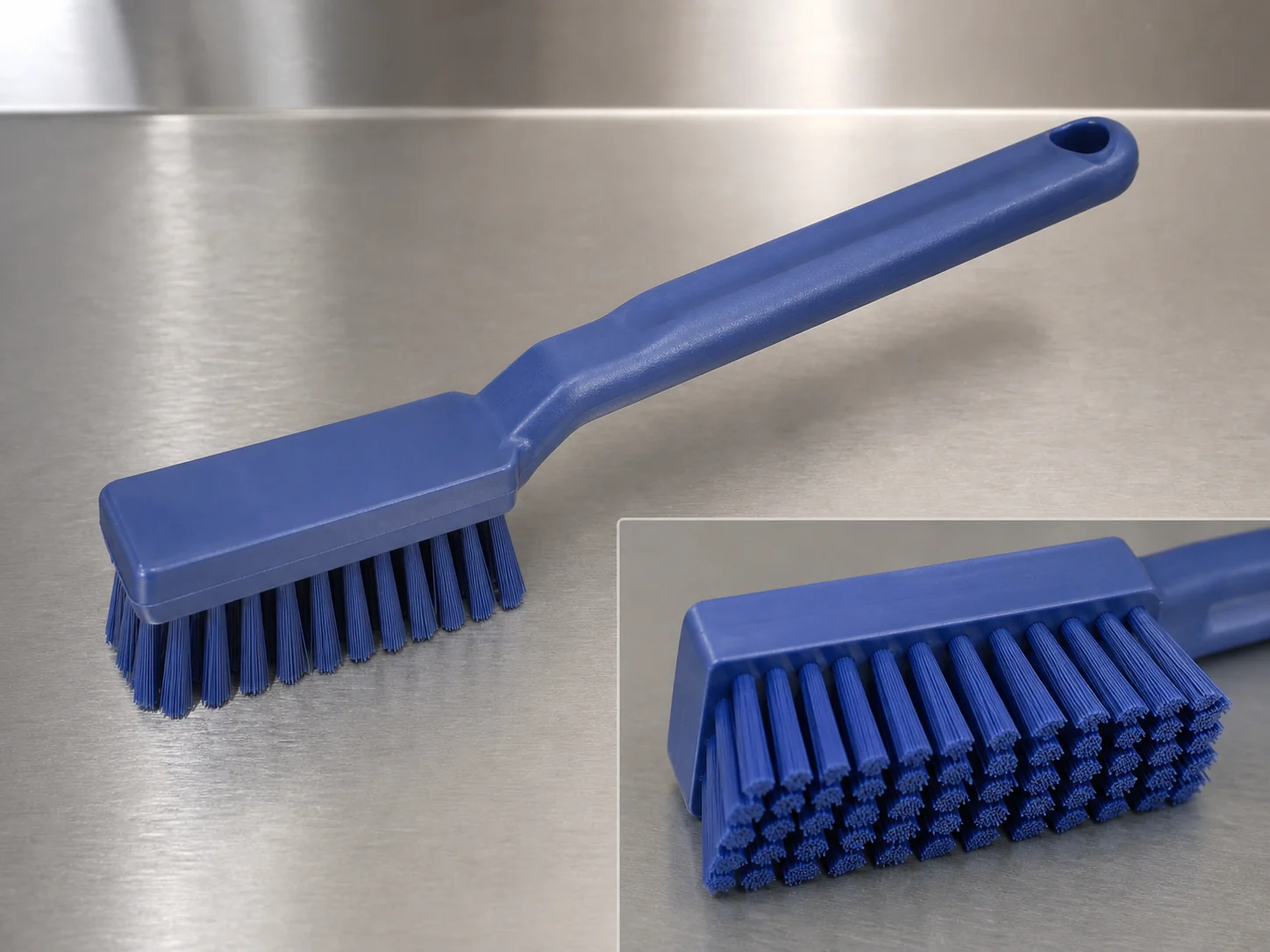
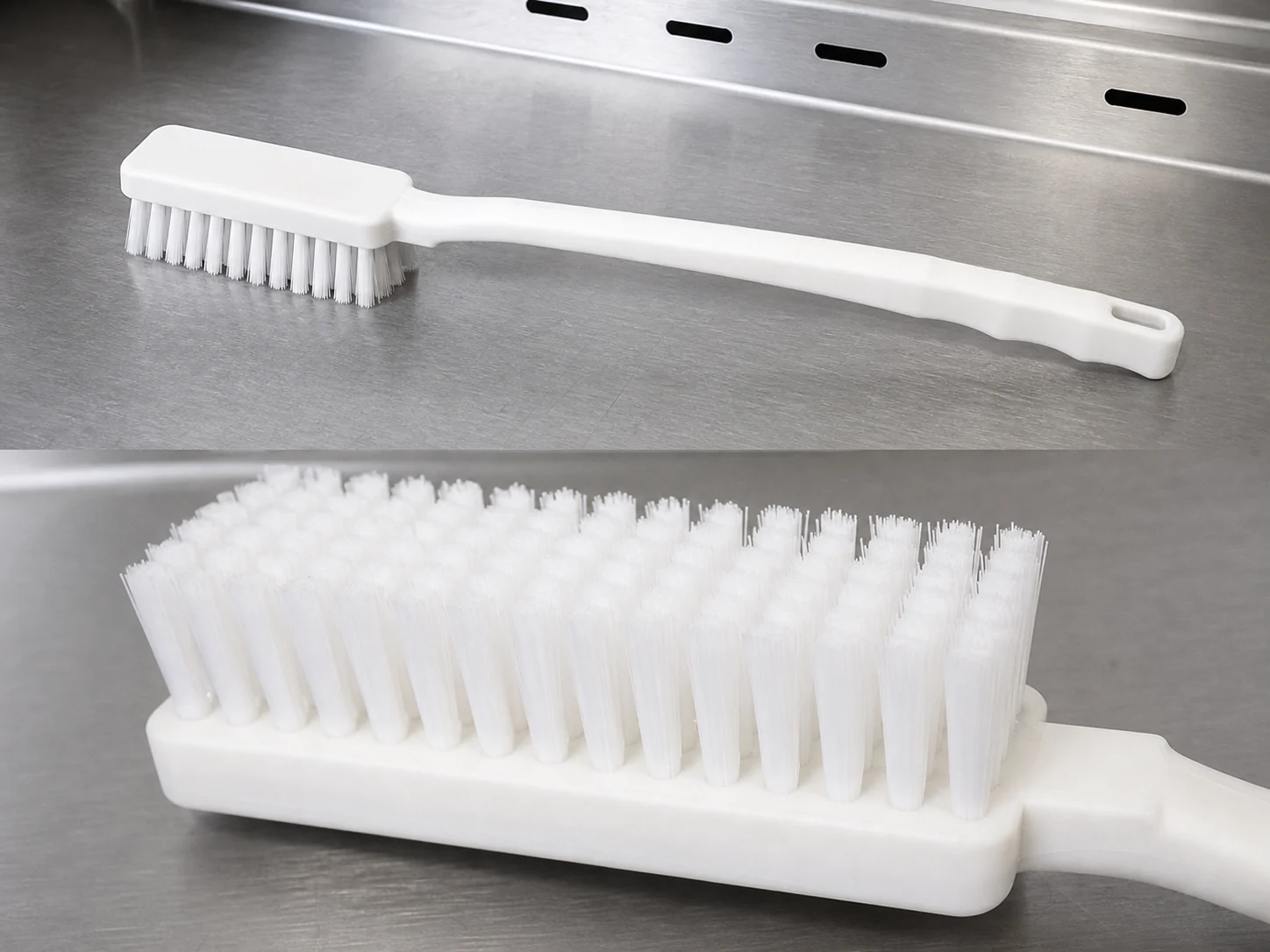
| Tables, trays, hoppers, guards and molds | Food equipment and food processing brushes; PBT food equipment hand brush; PA66 hand brush | Hand-held, 20–300 mm heads |
| Drums, vats and open tanks | 150 mm PBT food drum brush; dairy equipment brush | Long-handled, up to 1,200 mm |
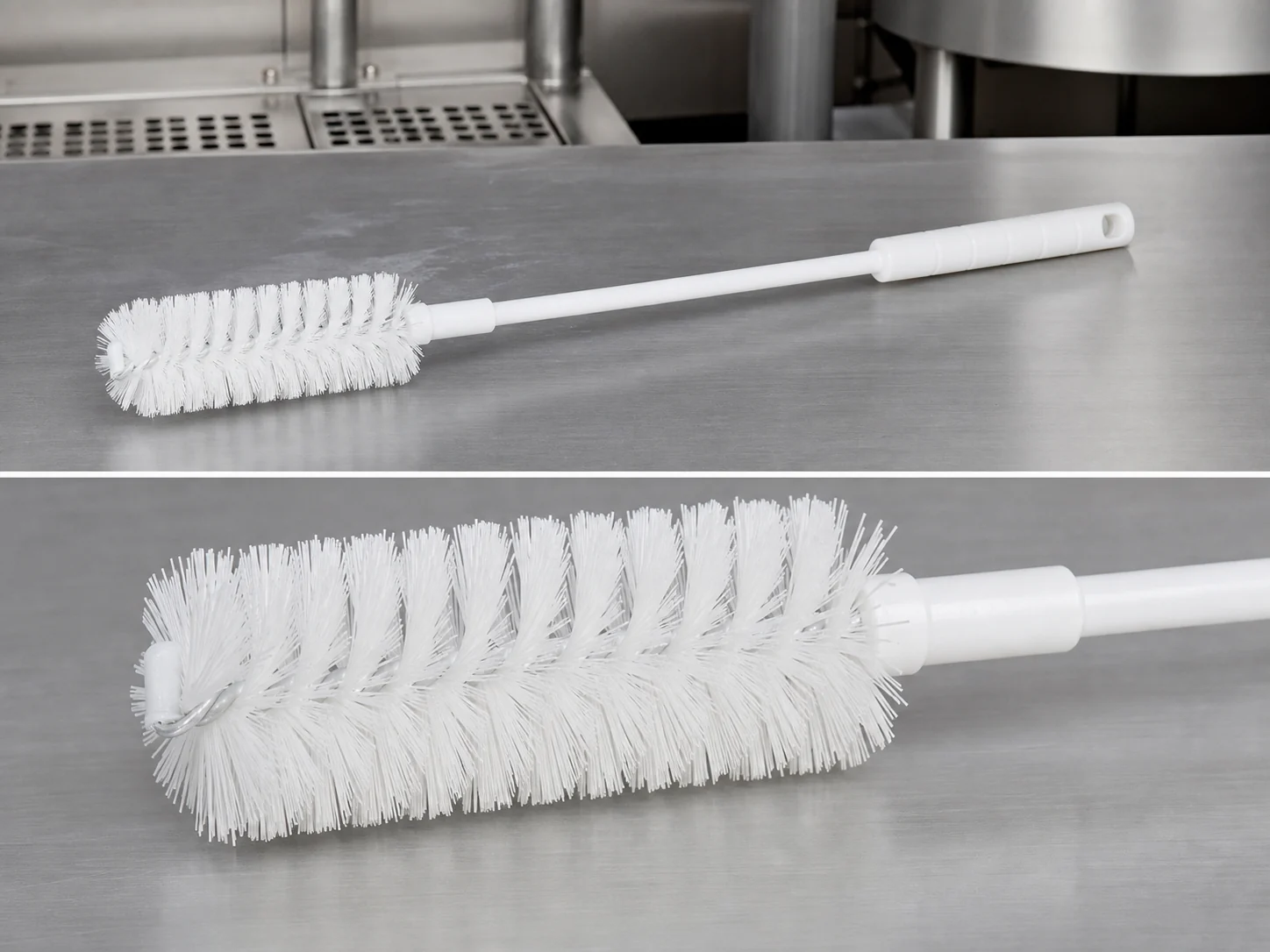
| Product tubes, fill nozzles and ports | 30 mm PBT food tube brush | Tube brush, 120 mm brush section |
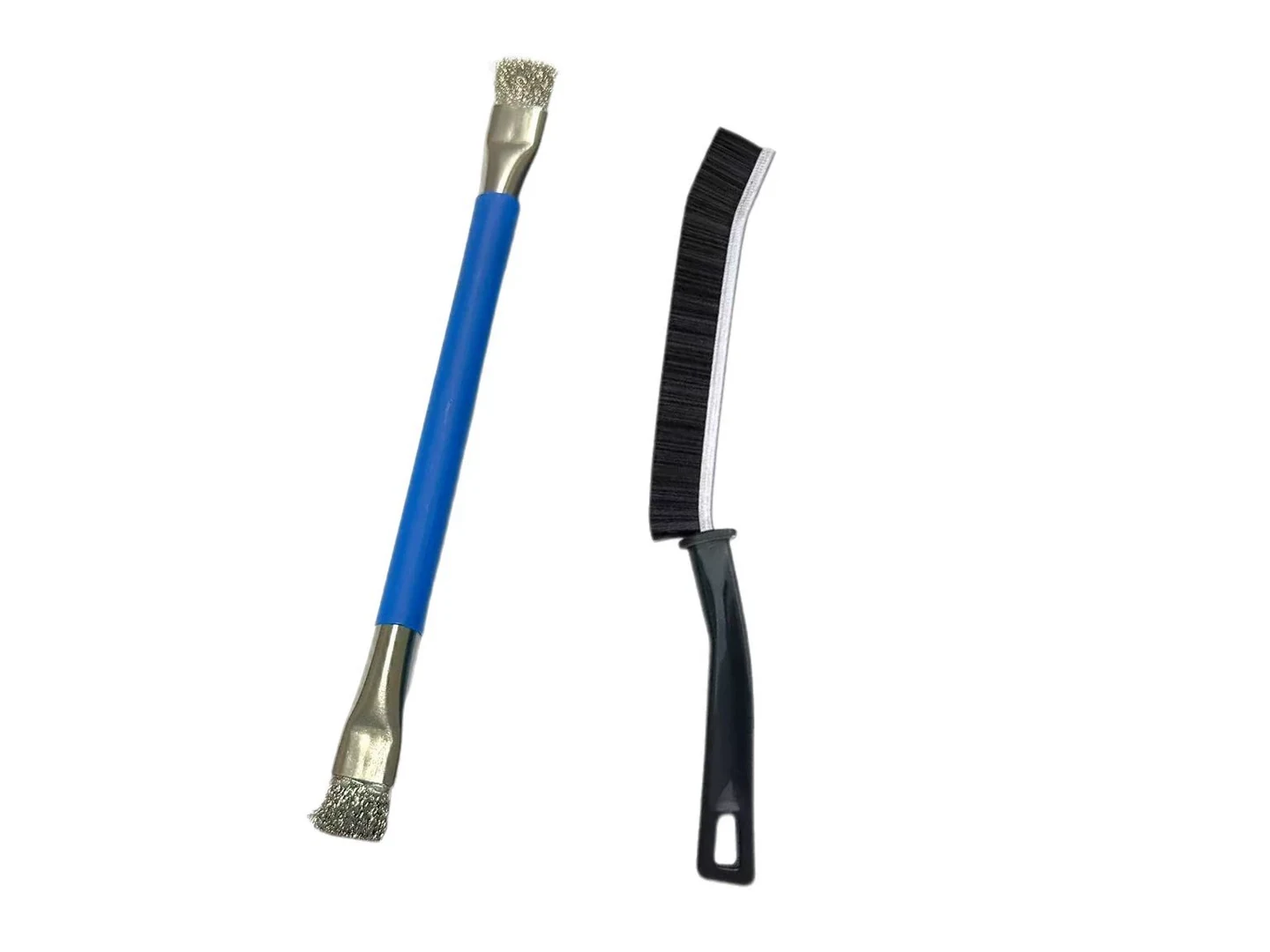
| Stainless sanitary surfaces | Sanitary equipment brush for stainless steel | Hand-held |
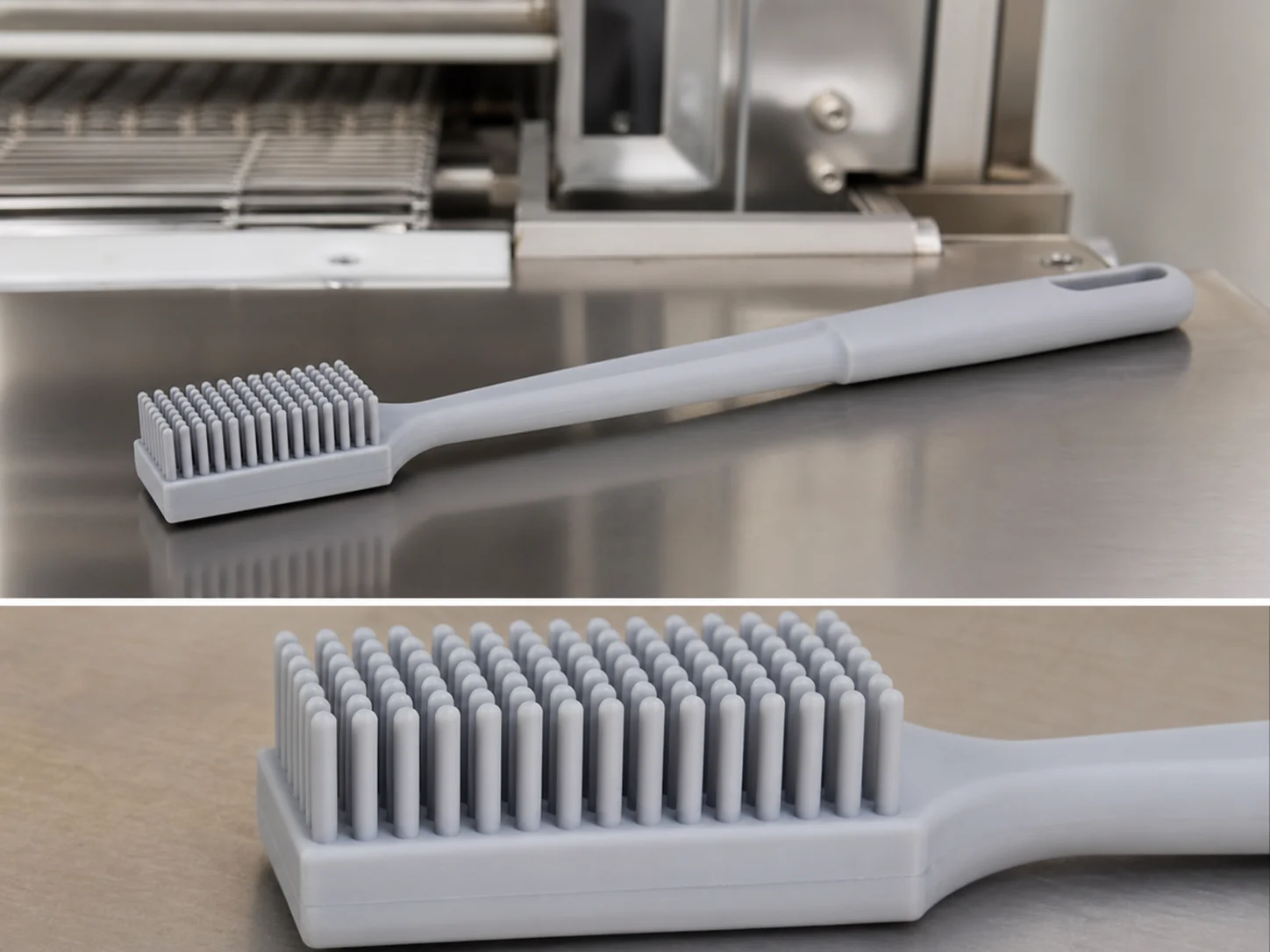
| Where loose bristles are a concern | 250 mm metal-detectable PBT brush; silicone food cleaning brush | Hand-held |
PBT is the usual choice for food plants. It stays stiff in hot water, does not soak it up and takes the common detergents and sanitizers. PP is the low-cost option for cooler water and for acid and alkaline cleaners, but it softens sooner in heat. Nylon and PA66 are tough and springy for dry soils and moderate washdown, but they take up water and soften when wet. Flagged polyester has split tips that hold fine flour and powder. Silicone heads are molded in one piece, so there are no tufts to pull out, and they rinse clean. Wash water in plants usually runs from about 20 to 85°C with detergent; tell us yours.
How it is built as much as what it is made of. The block is solid and open, with no wooden back to soak up water and no cavity to trap soil. Tufts are set firmly so they do not pull out. Specify stainless staples, so nothing in the block can rust. The handle is one material, with a hang hole so the brush dries off the floor. A worn or split brush is a hygiene risk, so it is replaced when the fill splays or the block cracks.
Color keeps tools in their zone. A brush for raw product is one color, cooked another, the floor and drains a third, so a drain brush never reaches a food table. Blocks and fill can be made in the plant's own colors, matched set by set. Metal-detectable fill and blocks carry a filler that the plant's metal detectors and X-ray units can find if a piece breaks off into product. The detection test is the plant's own, on its line; send us the detector type and the size it must find.
It sits under the return side of the belt and turns against it, usually the opposite way to the belt, so crumbs, powder, fat and sticky carryback are brushed off before the belt comes round to the product again. The roller is a little wider than the belt, about 5–15 mm each side, so the edges are cleaned too. Its core is stainless, and a quick-change coupling lets the sanitation crew take it out for its own wash. Produce washing rollers work the other way: the fruit or vegetables ride over turning brushes under spray, and the fill is chosen soft enough not to bruise the skin.
Send the standard you buy to, such as FDA 21 CFR or EU 10/2011, with the enquiry. The fill, block and handle are chosen to it, and the evidence is agreed before sampling. Food-contact testing is arranged per order, at the customer's cost.
Rollers, and hand and tank brushes built to your sizes, start at 100 pieces per design. The fixed-size hand, drum, tube, silicone and stainless sanitary brushes start at 500.
Provide the contact zone, residue, cleaning chemistry, temperature, dimensions and whether the brush is hand-held or installed. We can then match the product to the sanitation process.
Choose your brush type, cleaning task, material direction, and key details before sending a custom brush request.