
Custom Cleaning Brush
250mm Metal Detectable PBT Food Brush
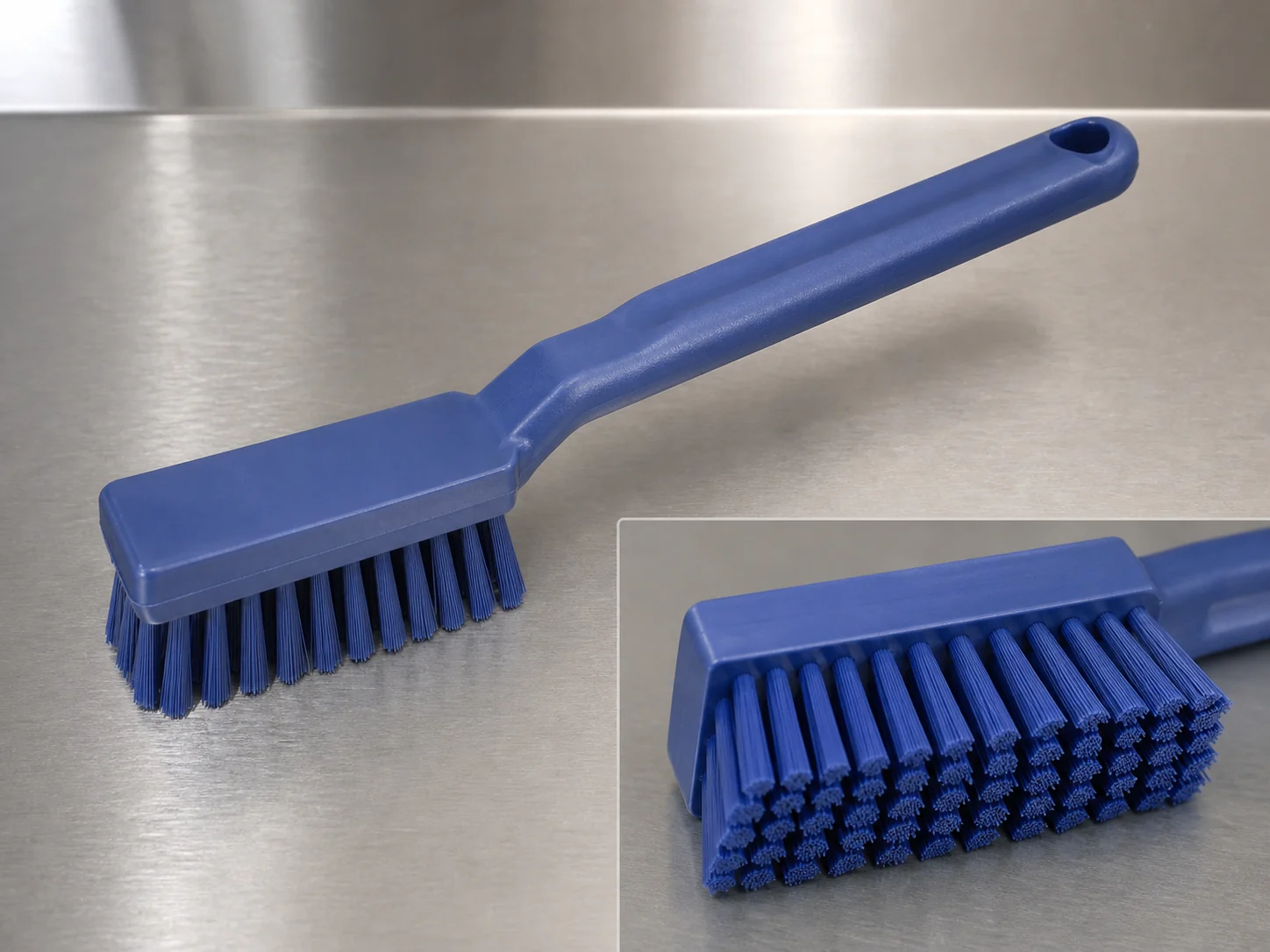
250mm metal detectable PBT food brush with 60mm rectangular head for food equipment cleaning. Detectable bristles, 134°C washdown, custom options.
Small brush
500 pcs
Minimum order
Held in one hand: tube, bottle, detail and swab brushes — including long-handled ones with a small head.
Production lead time, once the specification is confirmed
- Up to 500 pcsWithin 7 days
- 501–50,000 pcsWithin 14 days
- Over 50,000 pcsWithin 21 days
Peak season can extend these times; the shipping date is confirmed in writing with your quotation. Sampling and shipping are quoted separately.
A 250 mm hand brush with metal-detectable PBT bristles for manual cleaning of food processing and packaging equipment. The rectangular 60 mm brush face removes crumbs, dough, flour, fat, protein, syrup, and product film from flat and lightly contoured surfaces, and a broken bristle can still be located by standard metal detection or X-ray inspection.
What can this brush do for you?
Broken bristles can be caught before they reach product
The PBT bristles are compounded with a metal-detectable additive, so if a bristle snaps during use, the fragment carries a detectable signature. Inline metal detectors and X-ray inspection systems can identify the piece, helping your team locate and remove it instead of shipping it. This is the central reason food plants replace standard brushes with metal-detectable versions.
Bristles keep their shape through wet, hot washdown
PBT absorbs very little water and recovers its original form after bending, which keeps the brush working through repeated hot water and detergent exposure. The bristle set withstands short-term exposure up to 134°C, so the brush stays useful in steam-cleaned and sanitized work areas instead of collapsing into a flat mat.
Wide rectangular face clears flat equipment in fewer strokes
The 60 mm brush face is shaped for open, flat surfaces: cutting tables, conveyor belts, sheet pans, worktops, and machine housings. Densely set PBT bristles scrape away fatty and protein-based film with less operator pressure than a narrow utility brush, which shortens manual cleaning time between production runs.
Fixed construction leaves fewer places for debris to hide
The brush head and handle are built as one fixed assembly with the bristle set secured in the block. There is no threaded joint, clip, or detachable head that can trap food residue. This makes the brush easier to rinse, inspect, and sanitize, and reduces the number of parts that need to be tracked in a hygiene-controlled area.
High-visibility body supports quick tool checks
The standard blue color of the head and bristles stands out against stainless steel equipment and light-colored product surfaces, making it easier for operators and line supervisors to confirm the brush is present, intact, and stored in the right zone at the end of a shift.
What is a 250mm Metal Detectable PBT Food Brush?
This is a manual hand brush made for cleaning food-contact surfaces on processing and packaging lines. The working end is a rectangular PBT bristle set about 60 mm wide, set into a polypropylene handle and base. The 250 mm overall length keeps the operator’s hand close enough for controlled scrubbing on tables, conveyors, hoppers, and machine frames without being a long-reach tool.
The bristles do the actual cleaning: they carry detergent and hot water into the residue, loosen it from the surface, and move it toward the rinse stream. PBT is selected because it is stiff enough to push through grease and dough films while remaining softer than stainless steel, and because its low water absorption keeps it functional during long washdown sessions.
The metal-detectable formulation is built into the bristle material itself, not applied as a coating. If a bristle breaks away, the entire fragment retains the detectable property. In the standard configuration, the PP handle is not metal detectable; a metal-detectable PP handle can be specified when full-brush detection is required.
This brush is designed for manual cleaning as part of a larger hygiene sequence. It does not replace CIP systems, foam cleaning, or sanitizing steps, and it should not be used on surfaces where loose bristle fragments could enter product zones without passing a detector or screen.
Technical Specifications
The values below describe the standard configuration. Bristle diameter, trim length, handle form, and color can be changed for large projects without changing the basic cleaning principle.
| Parameter | Value / Option |
|---|---|
| Overall length | 250 mm |
| Brush face width | 60 mm |
| Head shape | Rectangular |
| Bristle material | PBT, metal-detectable formulation |
| Bristle diameter | 0.50-0.70 mm, selected to stiffness target |
| Bristle trim length | 20-25 mm standard; adjustable for access depth |
| Handle / base material | Polypropylene (PP); metal-detectable PP on request |
| Connection | Fixed, one-piece head and handle assembly |
| Color | Blue standard; custom colors available |
| Max exposure temperature | 134°C short-term washdown / steam exposure; continuous service below 100°C |
| Detectability | Bristle fragments designed for detection by standard industrial metal detectors and X-ray inspection systems |
| Chemical compatibility | Common food-surface detergents, quaternary sanitizers, mild alkaline cleaners; avoid concentrated strong acids and oxidizing agents |
| Use | Manual push-pull scrubbing on food processing and packaging equipment surfaces |
| Brush type | Custom Handheld Detail Brushes |
| How it is driven | Hand-guided |
| Cleaning target | bakery and snack line, meat and poultry processing, and dairy and beverage filling cleaning |
| Surface or part | metal, conveyors, frames, equipment surfaces, channel, belts, housings, and pans |
| Residue or debris | dough, fat, product film, flour, protein, syrup, chocolate, and sugar |
| Mounting / connection | Fixed, one-piece head and handle assembly |
Short-term temperature is for intermittent hot-water or steam exposure against the bristle face. Continuous operation above 100°C shortens the usable life of both PBT and PP and is not recommended.
Where does this brush work best?
The brush fits food manufacturing, commercial food preparation, and packaging environments where visible product residue has to be removed from open equipment surfaces between production runs or during changeovers.
- Bakery and snack lines: scraping dough, flour, and sugar residue from mixer bowls, dough troughs, divider tables, cooling conveyors, and sheet pans.
- Meat and poultry processing: breaking up fat, protein, and smear on stainless cutting tables, deboning stations, tray wash areas, and machine side panels.
- Dairy and beverage filling: clearing product film and dried splash from filling head housings, conveyor side guides, cappers, and tank exteriors.
- Confectionery and chocolate: loosening syrup, chocolate, and deposited sugar from cooling tunnels, troughs, belt edges, and packaging machinery frames.
- Central prep and food service: cleaning prep tables, racks, transport trays, and work surfaces that carry fats, starches, and sauce residues.
The rectangular face is most productive on flat or lightly curved surfaces. Narrow channels, pipe interiors, corners, and deeply recessed equipment features need a different brush geometry.
How do I choose the right one?
Check the access space first. The brush face is 60 mm wide; if the equipment has gaps, rails, or guard slots narrower than about 60 mm, the bristle set will not reach the surface. In that case, specify a narrower head or use a channel or detail brush for those areas.
Confirm the detection requirement with your quality team. Metal-detectable PBT addresses bristle fragments, but detection only works if the product passes a working metal detector or X-ray unit calibrated to the fragment size your plant considers critical. If the handle is also at risk of breaking into product, specify a metal-detectable PP handle so the entire tool is detectable.
Match the bristle firmness to the residue. PBT is appropriate for wet, fatty, starchy, and lightly dried product deposits. It will not cut through baked-on carbon, polymerized oil, or heavy mineral scale; those situations call for a pre-soak, hot water pressure, or a different mechanical tool before brushing.
Check the washdown temperature. Short exposure up to 134°C is acceptable, but continuous hot immersion or repeated autoclave cycles will degrade the bristles and handle faster. If your process maintains equipment surfaces above 100°C for long periods, discuss material options with us before ordering.
Consider operator handling. The 250 mm overall length is balanced for close, controlled scrubbing. If operators need more reach behind guard rails or into deep hoppers, ask about extended handles or an angled head. If the brush will be hung in a controlled tool shadow board, add a hanging hole or molded clip to the handle.
Choose a different brush when the task is aggressive surface preparation, rust removal, or confined internal passage cleaning. A stainless wire brush or an abrasive pad can remove deposits PBT cannot, and a tube or bottle brush is better for bores and small openings.
Can I customize this brush?
Yes. The standard configuration is a starting point. For food plant programs and distributor private labels, we adjust the brush to the equipment, residue, and control plan that will actually be used.
Common requests include:
- Overall length, handle angle, ergonomic grip shape, hanging hole, or molded hanging loop
- Brush head width, head depth, and bristle trim length for specific equipment gaps
- PBT filament diameter and stiffness for lighter or heavier scrubbing demand
- Metal-detectable PP handle or base when full-brush detection is required
- Custom brush color for zone coding, shift identification, or brand requirements
- Embossed or laser-marked tool numbers, plant codes, or distributor branding
- Packaging by unit, bag, box, or color-coded kit
To define the right configuration, send us the equipment type, surface material, residue description, cleaning chemical and concentration, washdown temperature, metal detector type and sensitivity, and the expected replacement cycle. A drawing or photo of the area helps us confirm the geometry. If your project requires material declarations, detection validation samples, third-party inspection, or specifications to support a supplier qualification file, we can assist with those requirements during the customization process.
Which filament belongs on a 250mm metal detectable PBT food brush, and how is that verified?
What makes PBT bristles metal detectable?
A detectable filler is compounded into the polymer before the filament is extruded. The property runs through the full cross-section of each bristle, so even a broken tip or worn fragment retains the detectable signature; it is not a surface coating that can wear off.
How small a bristle fragment can be detected?
That depends on the metal detector or X-ray system, its calibration, the product effect, and the orientation of the fragment as it passes through. The material is designed for standard industrial detection systems, but your plant should validate actual sensitivity using sample bristle fragments on your own line before rolling out the brush program.
Is the handle also detectable?
Not in the standard configuration. The standard handle is unfilled polypropylene. If handle fragments are a contamination risk in your process, request a metal-detectable PP handle so the complete brush is covered by the detection plan.
Can this brush be autoclaved?
It tolerates short exposure to 134°C, but repeated autoclave cycles shorten the life of both PBT and PP. If autoclaving is part of the routine hygiene cycle, expect a shorter replacement interval and inspect the brush more frequently for hardening, cracked handles, or bristle loss.
What should I check during each shift inspection?
Hold the brush under good light and check for missing, loose, or sharply bent bristles. Look closely at the rows around the head edge, where bristles break first. Run a gloved hand over the handle to feel for cracks or rough spots. If any bristle is missing, follow your plant’s foreign object procedure, isolate affected product, and replace the brush before the line returns to service.
Will this brush scratch stainless steel equipment?
Under normal wet cleaning conditions, PBT bristles are much softer than stainless steel and will not scratch the surface. However, if abrasive particles, metal shavings, or hard debris become embedded in the bristle set, those particles can mark the equipment. Rinse the bristles before use and avoid brushing over swarf, sand, or hard crystalline material.
Guides that go deeper on this
Custom Manufacturing RFQ
Describe Your Application
To prepare the correct quotation, provide the dimensions, cleaning task, residue, material, mounting details, quantity, and a drawing or photo.
Drawing or photo optional — it speeds things up, it does not gate the enquiry.
Custom Brush RFQ
Send Your Brush Project
Upload a drawing, product photo, or sample photo and provide the core dimensions and cleaning conditions.
“We need a brush to remove wet residue from a stainless steel conveyor, about 800mm wide. The current brush wears quickly. We can send photos.”
“We sell drinkware and need a cleaning brush to include with the product. Quantity around 5,000 pieces.”