
Application
Semiconductor Wafer Handling End-effector Cleaning
For Semiconductor Wafer Handling End-effector Cleaning, the brush must reach the working area, disturb or collect particles/abrasive slurry/organic film/silicon dust, and release it without creating unacceptable surface damage or process interference. Choose the brush structure from the available access, contact direction, and cleaning process.
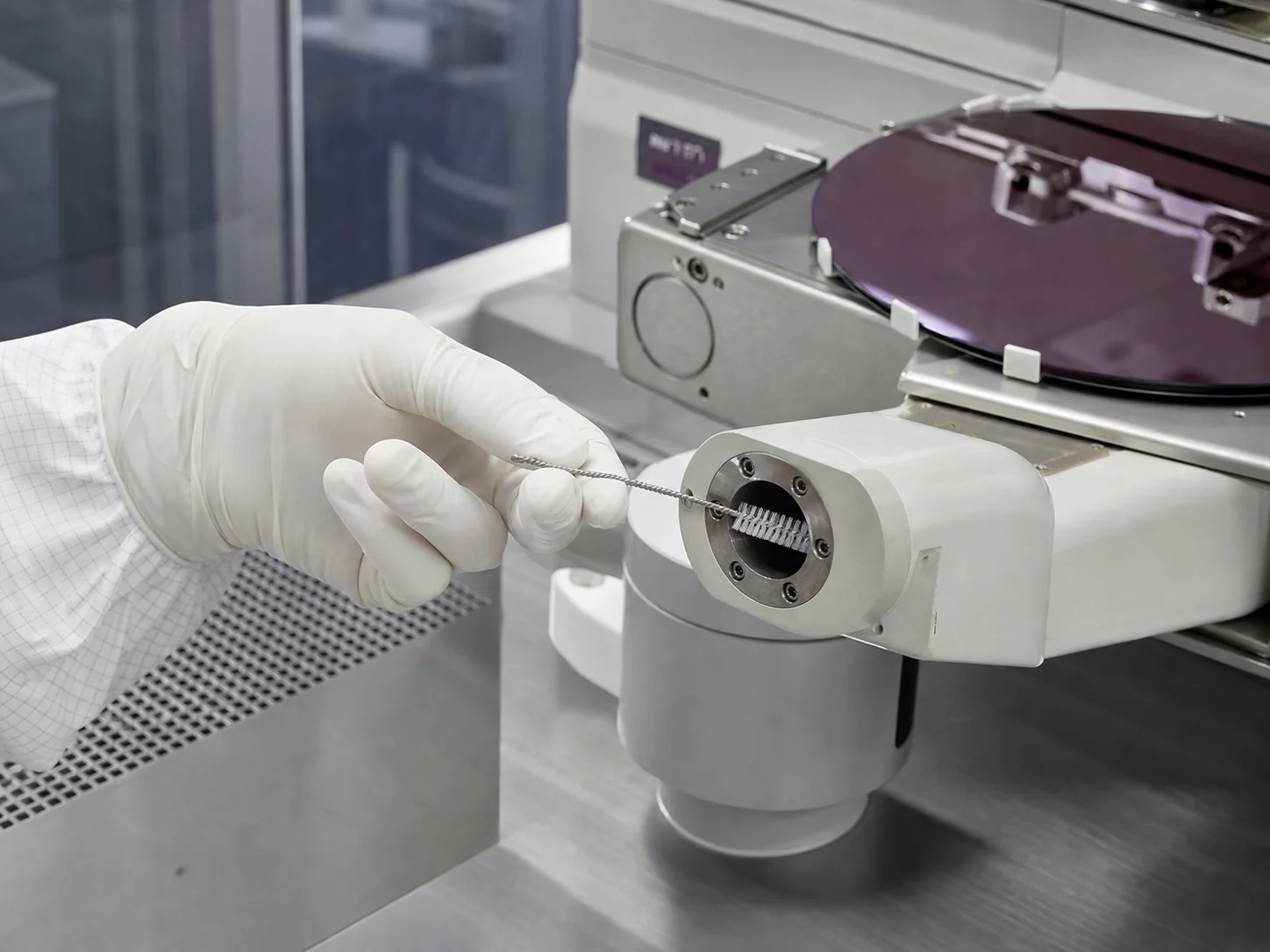
At a glance
- Cleaning target
- Particles/Abrasive Slurry/Organic Film/Silicon Dust
- Working environment
- Cleanroom / ESD-Controlled Area
- Cleaning method
- Dry Brushing / Wet Brushing / Ultrasonic Cleaning
- Requirements to check
- ISO 14644-1 Cleanliness Classification; SEMI S2; Low Particles / Low Ions / Low Outgassing
An end-effector touches every wafer passing through the tool, so whatever sits on it gets transferred — cleaning it is contamination control on the handler, not housekeeping.
What makes Semiconductor Wafer Handling End-effector Cleaning different from other electronics and precision cleaning?
The task is to remove Particles/Abrasive Slurry/Organic Film/Silicon Dust while controlling surface damage, residue carryover, brush shedding and chemical or temperature degradation.
The work happens in cleanroom and esd-controlled area against particles, abrasive slurry, organic film and silicon dust.
The part people get wrong: the residue tells you the filament, but the access opening tells you the construction. Get them in that order and the shortlist is short.
What are the most common cleaning targets in Semiconductor Wafer Handling End-effector Cleaning?
5 targets, each with its own opening, residue and contact requirement.
| Part or area | Residue type | Cleaning requirement |
|---|---|---|
| Vacuum-Wand | Particles, Abrasive Slurry, Organic Film, Silicon Dust | The brush must wrap a projecting part and clean all round it without marking the polished finish. |
| Blade End-Effector | The head must reach the working face and apply even contact without marking the surface. | |
| Edge-Grip End-Effector | The brush must concentrate contact on a small feature without touching the surrounding surface. | |
| Bernoulli End-Effector | The head must reach the working face and apply even contact without marking the surface. | |
| Robot-Arm Contact-Surface | The face must stay flat against the surface so the whole working width contacts, with filament soft enough not to mark it. |
What the equipment leaves you to work inside:
| Parameter | Typical range |
|---|---|
| Contaminant | Particles/Abrasive Slurry/Organic Film/Silicon Dust |
| Required hardness | Soft |
| Maximum temperature | 150°C |
| Chemical exposure | Ultrapure Water; Isopropyl Alcohol; Mild Acids and Alkalis pH 5–9 |
| Cleaning method | Dry Brushing/Wet Brushing/Ultrasonic Cleaning |
| Environment | Cleanroom/ESD-Controlled Area |
Which brush types work for each cleaning target?
Select hand, tube, strip, roller, disc or machine-mounted geometry from access and motion.
| Cleaning target | Recommended brush type | Why it fits |
|---|---|---|
| Vacuum-Wand | Handheld Detail Brushes | A wand is a slim tube with a tip pad, so a soft head wraps it and cleans the shaft and the pad face without lifting the pad. |
| Blade End-Effector | A blade is a thin flat paddle that contacts the wafer back, so a hand-guided head cleans that face at a pressure the blade will not flex under. | |
| Edge-Grip End-Effector | The grip pads are the only points that touch the wafer, so the brush concentrates on those small features and leaves the rest of the arm alone. | |
| Bernoulli End-Effector | A Bernoulli head works by flow through fine ports, so cleaning here is about keeping those ports open without changing their geometry. | |
| Robot-Arm Contact-Surface | The arm’s flat surfaces collect particles that later drop onto a wafer, so a flat head covers them evenly at each maintenance stop. |
All hand work at the tool, gowned, with the arm parked — and the brush is a cleanroom consumable carrying its own lot record, not shop-floor stock.
In practical brush terms: match the construction to the access before anything else. A geometry that cannot reach the target will not be rescued by a better filament.
What filament materials work best for Semiconductor Wafer Handling End-effector Cleaning?
Carbon fibre, chosen for what it does not do: it sheds almost nothing, carries no ionic load into the tool, and stays conductive, so the end-effector is not left charged after cleaning.
| If the condition is… | Filament to start with | Why |
|---|---|---|
| Particle and ionic limits on the wafer path | Carbon Fiber | sheds almost nothing and carries no ionic load into the tool |
| Charge left behind after cleaning | Carbon Fiber | conductive along the filament, so the end-effector is not left charged |
What the duty rules out before you start comparing grades:
| Constraint | Value for this application |
|---|---|
| Filament hardness | Soft |
| Maximum service temperature | 150°C |
| Chemical exposure | Ultrapure Water; Isopropyl Alcohol; Mild Acids and Alkalis pH 5–9 |
| Cleaning method | Dry Brushing, Wet Brushing, Ultrasonic Cleaning |
How do I choose the right brush for my semiconductor wafer handling end-effector equipment?
Start with soft fill, a 150°C ceiling and ultrapure water, then follow a written procedure, because the end-effector touches every wafer that passes.
Work through it in this order:
- Identify the target part and measure the access opening or clearance
- Describe the residue: what it is, how thick it sits, and how strongly it holds
- Choose the construction that can physically reach that target
- Set the filament from surface risk, working temperature and cleaning chemistry
- Fix filament diameter, free trim length and density for the contact pressure you need
- Run one cycle and check the result before committing to a production quantity
Before you commit to a quantity, send the end-effector geometry, the contact-pad material, and the written procedure the cleaning has to follow.
When is a semiconductor wafer handling end-effector brush the wrong tool?
Solvent wipes to a written procedure and ultrasonic cleaning of removed components are the qualified, verifiable routes. A worn or scored contact pad is replaced, because cleaning cannot restore the flatness the handler depends on.
What common mistakes should I avoid in Semiconductor Wafer Handling End-effector Cleaning?
- Treating this as housekeeping instead of contamination control with a written, verifiable procedure
- Changing the filament while leaving excessive engagement, poor alignment or no discharge path unchanged
- Copying a worn brush without first recording its motion, direction, mounting and original working diameter
If the brush is already in service and the result is wrong, work from the symptom:
| Symptom | What to change |
|---|---|
| Residue remains | Increase discharge or relative motion before adding pressure |
| Surface marks | Reduce engagement and use finer/softer fill |
| Rapid wear | Check alignment, temperature and chemical attack |
| Redeposition | Add wash, vacuum or collection path |
Guides that go deeper on this
We have not written a guide specific to this one yet. The material that covers selection, filament, dimensions, maintenance and sourcing is collected in the technical resources library.
Continue Exploring
Recommended Reading & Related Brush Resources
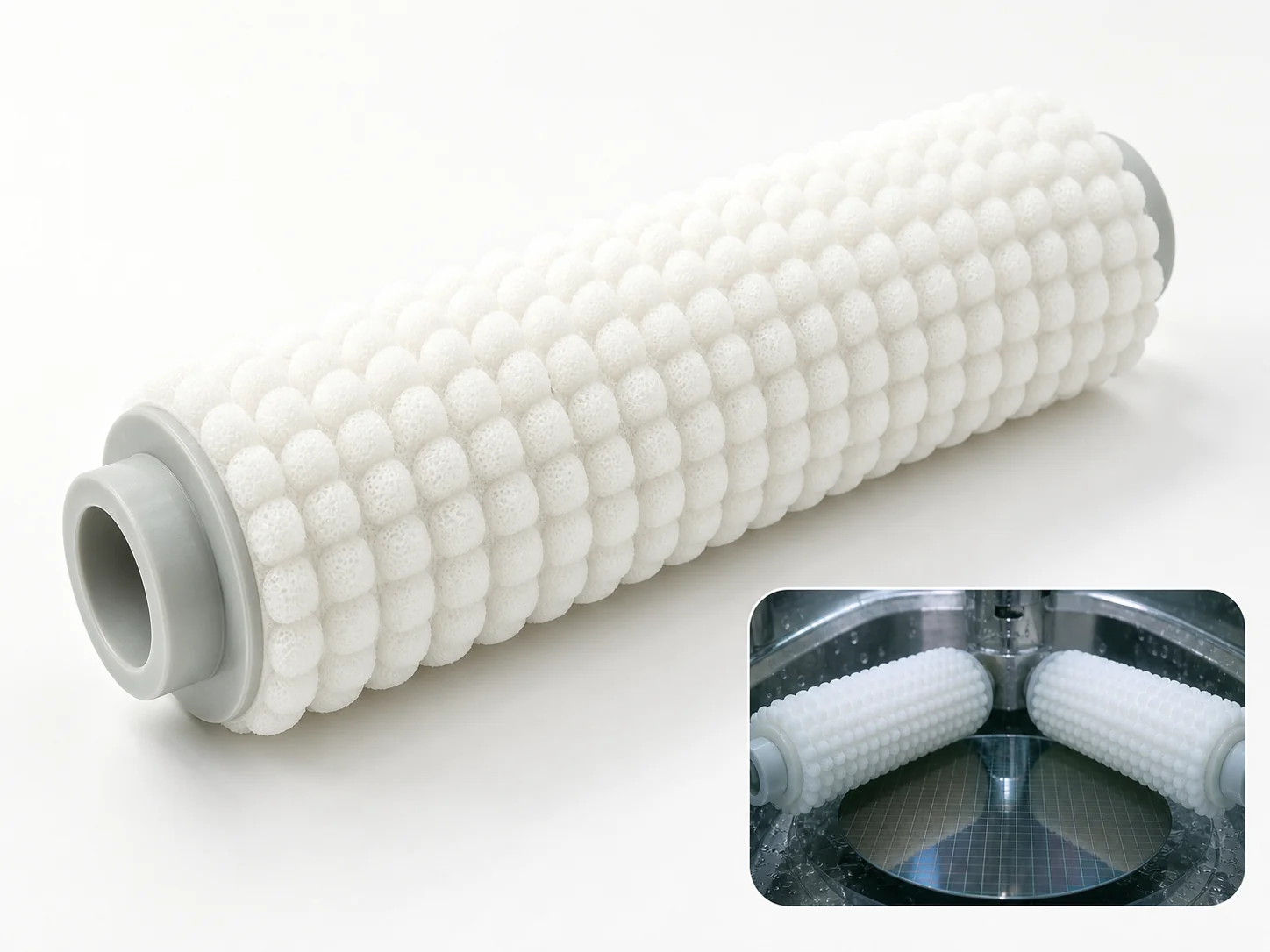
Semiconductor Wafer PVA Cleaning Brush Roller
Tool-matched PVA sponge roller for post-CMP wafer scrubbers. Removes slurry particles without scratching. Custom…
See the specification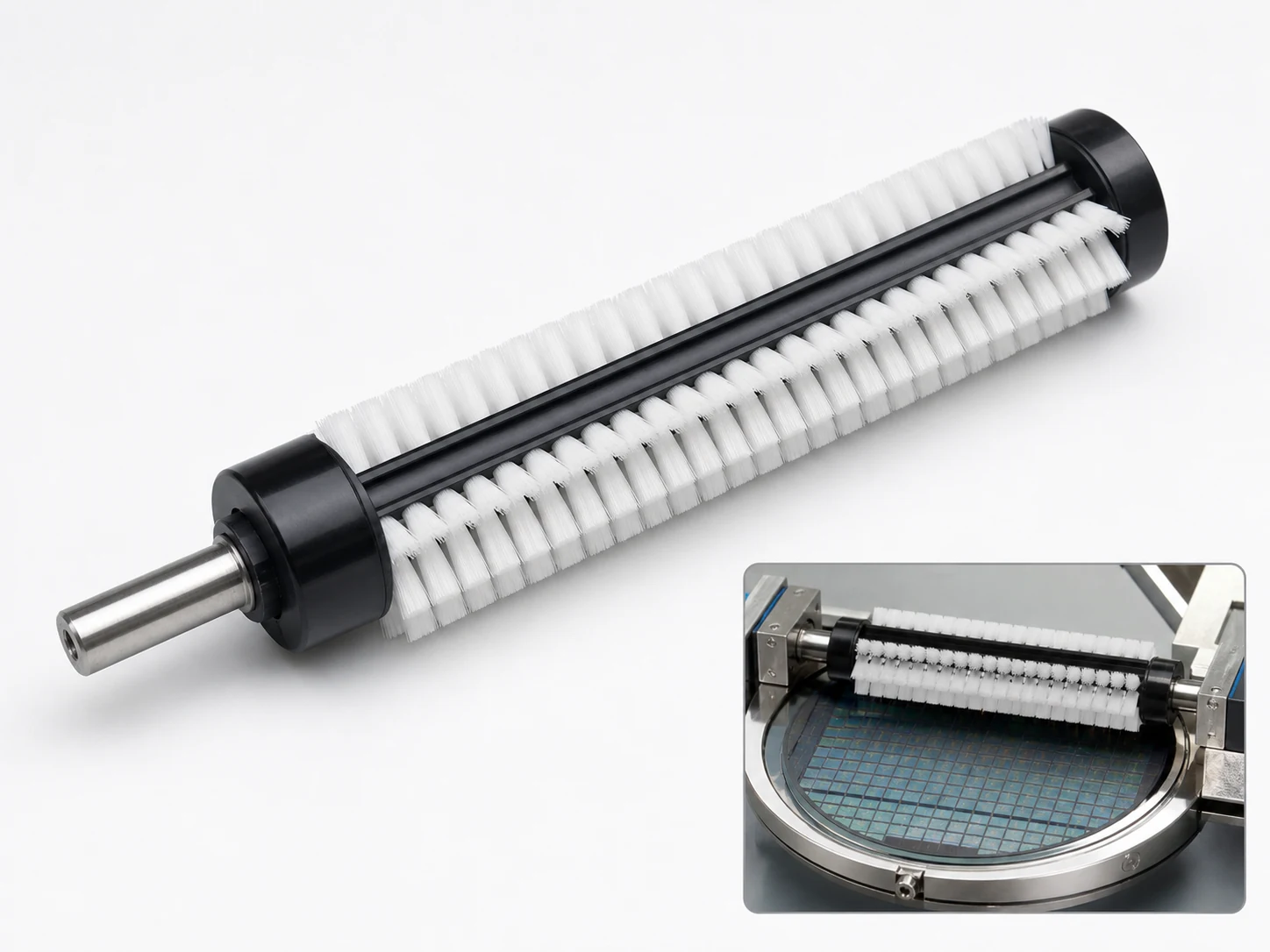
Precision Wafer Brush
Low-load, uniform contact for scratch-sensitive substrates, with width, core, fill and density matched to…
See the specification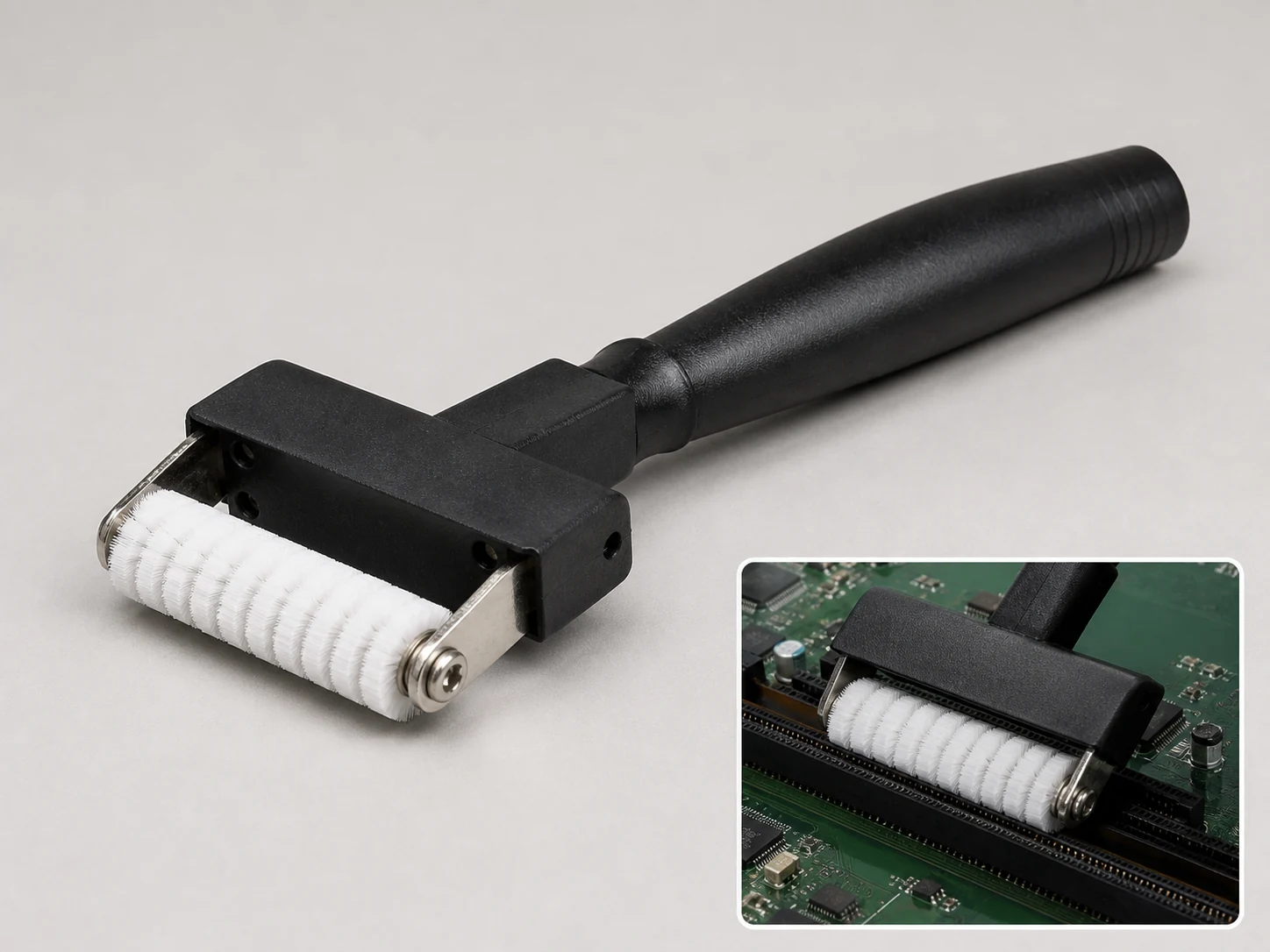
Semiconductor Brush
Custom semiconductor cleaning brushes with PVA sponge or fine nylon fill. Engineered for wafer…
See the specification
Custom Handheld Detail Brushes
Choose a handheld detail brush when you need direct control in seams, recesses, fittings,…
See how this type is builtCustom Manufacturing RFQ
Discuss This Application
Share the working surface, residue, dimensions, material direction, interface, quantity and drawing or sample photo.
Custom Brush RFQ
Request a Custom Cleaning Brush Quote
Upload a drawing, product photo, or sample photo and provide the core dimensions and cleaning conditions.
“We need a brush to remove wet residue from a stainless steel conveyor, about 800mm wide. The current brush wears quickly. We can send photos.”
“We sell drinkware and need a cleaning brush to include with the product. Quantity around 5,000 pieces.”