
Application
Aquarium Filtering
Aquarium Filtering is a process-use page rather than a general cleaning category. Select the brush from the required contact function, working surface, motion, and interface, then verify how Biofilm / algae / fish waste / suspended solids and Freshwater / Saltwater / Submerged Service affect the construction.
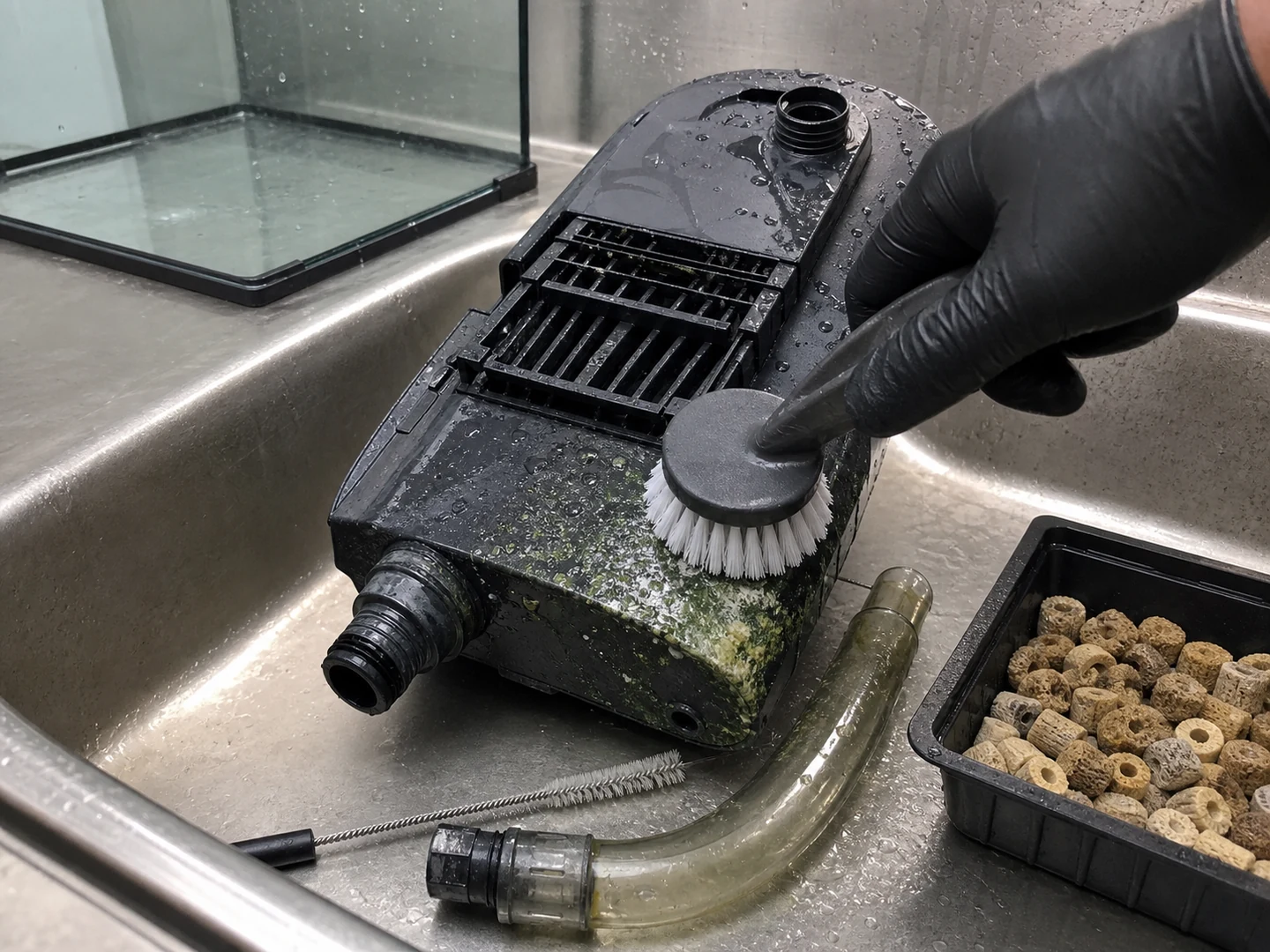
At a glance
- Cleaning target
- Biofilm / algae / fish waste / suspended solids
- Working environment
- Freshwater / Saltwater / Submerged Service
- Cleaning method
- Wet Brushing / Rinsing
- Requirements to check
- Aquatic-safe, non-toxic and corrosion-resistant material selection
Filter cleaning is the one aquarium job where sterility is not the goal — the tools stay detergent-free and tank-dedicated so the biological film in the media survives the service.
What makes Aquarium Filtering different from other specialty brush functions cleaning?
The main difficulty is removing algae, biofilm, suspended solids, and organic debris from filter chambers, tanks, ponds, media, and aquatic equipment without damaging the surface, loading the brush, or carrying contamination back into the process.
The work happens in freshwater, saltwater and submerged service against biofilm, algae, fish waste and suspended solids.
The part people get wrong: the residue tells you the filament, but the access opening tells you the construction. Get them in that order and the shortlist is short.
What are the most common cleaning targets in Aquarium Filtering?
4 targets, each with its own opening, residue and contact requirement.
| Part or area | Residue type | Cleaning requirement |
|---|---|---|
| Internal Filter Chamber | Biofilm, algae, fish waste, suspended solids | The tips must enter the apertures far enough to push lodged material back out, without wedging in the openings. |
| Canister Filter | ||
| Intake and Return Tube | The brush must pass the full length of the passage and hold contact with the wall without folding over at the far end. | |
| Biological Filter Media Brush Use | The filament field must stay open in flowing water and hold what it is placed there to collect, without packing shut or shedding into the water. |
What the equipment leaves you to work inside:
| Parameter | Typical range |
|---|---|
| Brush length | 300–2000 mm |
| Brush diameter | 100–200 mm |
| Core diameter | 2–8 mm |
| Filament diameter | 0.30–1.00 mm |
| Water temperature | 5–40°C |
Which brush types work for each cleaning target?
Small tube brush, soft detail brush or filter-media brush matched to passages and foam structure.
| Cleaning target | Recommended brush type | Why it fits |
|---|---|---|
| Internal Filter Chamber | Handheld Detail Brushes | The chamber is a moulded box holding sponge faces and media baskets, so a hand-guided head wipes those faces on contact instead of lifting each one out. |
| Canister Filter | A canister packs its media in stacked trays, so a hand-held head sized to the canister bore reaches the tray walls and the seal seat without dismantling the stack. | |
| Intake and Return Tube | Tube & Pipe Bore Brushes | The intake tube is a long small-bore run that grows biofilm out of sight, so a flexible hand-guided brush that passes its whole length is the only tool that touches the wall. |
| Biological Filter Media Brush Use | Filter Brushes | Here the brush is the media: a filter brush holds a very large filament surface in a small volume, and that surface is what the bacteria colonise. |
How the brush is usually carried on the machine:
- Driven brush — use when algae, biofilm, suspended solids, and organic debris needs repeatable scrubbing or controlled relative movement
- Passive or free-running brush — use for loose contamination and lower process complexity on filter chambers, tanks, ponds, media, and aquatic equipment
- Localized hand, strip, or tube brush — use where only an edge, gap, port, or maintenance point needs contact
In practical brush terms: match the construction to the access before anything else. A geometry that cannot reach the target will not be rescued by a better filament.
What filament materials work best for Aquarium Filtering?
Soft nylon/PBT or polypropylene; dedicated aquarium-only tools without detergent residue.
| If the condition is… | Filament to start with | Why |
|---|---|---|
| Sensitive or coated surface | Nylon PA | balanced flex life and abrasion resistance |
| Wet, washdown, or detergent service | PBT | stable wet stiffness and low moisture uptake |
| Bonded residue or aggressive cleaning | Polypropylene PP | acid, alkali, water, and detergent resistance |
What the duty rules out before you start comparing grades:
| Constraint | Value for this application |
|---|---|
| Filament hardness | Soft to Medium |
| Maximum service temperature | 40°C |
| Chemical exposure | Freshwater or saltwater; no detergent during biological filter maintenance |
| Cleaning method | Wet Brushing, Rinsing |
How do I choose the right brush for my aquarium filtering equipment?
Size to the tube bores and chamber depth, keep the tools tank-dedicated and detergent-free, and choose fill that will not shed into the media.
Work through it in this order:
- Identify the target part and measure the access opening or clearance
- Describe the residue: what it is, how thick it sits, and how strongly it holds
- Choose the construction that can physically reach that target
- Set the filament from surface risk, working temperature and cleaning chemistry
- Fix filament diameter, free trim length and density for the contact pressure you need
- Run one cycle and check the result before committing to a production quantity
Before you commit to a quantity, send the intake and return tube bores, the filter chamber depth, and the media type.
When is an aquarium filtering brush the wrong tool?
Media that has collapsed, channelled or gone anaerobic is replaced rather than cleaned, and a rinse in tank water does more for biological media than brushing ever will. Keep the brush for the housing, impeller well and the intake and return tubes.
What common mistakes should I avoid in Aquarium Filtering?
- Ordering by filter model without the intake and return tube bores the brush actually has to enter
- Changing brush material while leaving excessive engagement, poor alignment, or no discharge path unchanged
- Copying a worn brush without recording motion, direction, mounting, and the original working diameter
If the brush is already in service and the result is wrong, work from the symptom:
| Symptom | What to change |
|---|---|
| Residue remains | Increase relative motion or discharge, then change filament diameter or density; do not add pressure before checking loading by algae, biofilm, suspended solids, and organic debris. |
| Surface marks or scratches | Reduce engagement, use finer or softer fill, and remove trapped abrasive particles from contact with filter chambers, tanks, ponds, media, and aquatic equipment. |
| Rapid wear or uneven cleaning | Check alignment, runout, support, motion, temperature, chemical attack, and whether the brush covers the complete working path. |
| Brush loads or redeposits residue | Open the fill pattern or add wash, vacuum, air, scraping, or a collection path so removed algae, biofilm, suspended solids, and organic debris leaves the contact zone. |
Questions this page is asked
Which aquarium-filter parts should be separated before choosing a brush method?
Map rigid housings, intake tubes, impeller wells, mechanical pads, chemical media and biological media as different maintenance components under the filter manual. Use a brush only where the instructions permit contact, since a rigid passage can be scrubbed while delicate or colonized media may require a different rinse method.
How should brushing be limited around biological filter media?
Follow the filter maker's water source, rinsing and replacement sequence and remove only the accumulation the instructions identify as harmful to flow. Do not infer that detergent, hot water or aggressive brushing is acceptable merely because it produces a cleaner-looking medium, because the biological function can depend on retained microorganisms.
What should be checked before restarting an aquarium filter after brushing?
Account for all brush parts, remove loosened debris, seat media and seals in the documented order and complete the maker's fill or priming procedure. After power is restored, inspect for leaks, trapped air, abnormal impeller noise and correct flow before leaving the system unattended.
Guides that go deeper on this
We have not written a guide specific to this one yet. The material that covers selection, filament, dimensions, maintenance and sourcing is collected in the technical resources library.
Continue Exploring
Recommended Reading & Related Brush Resources
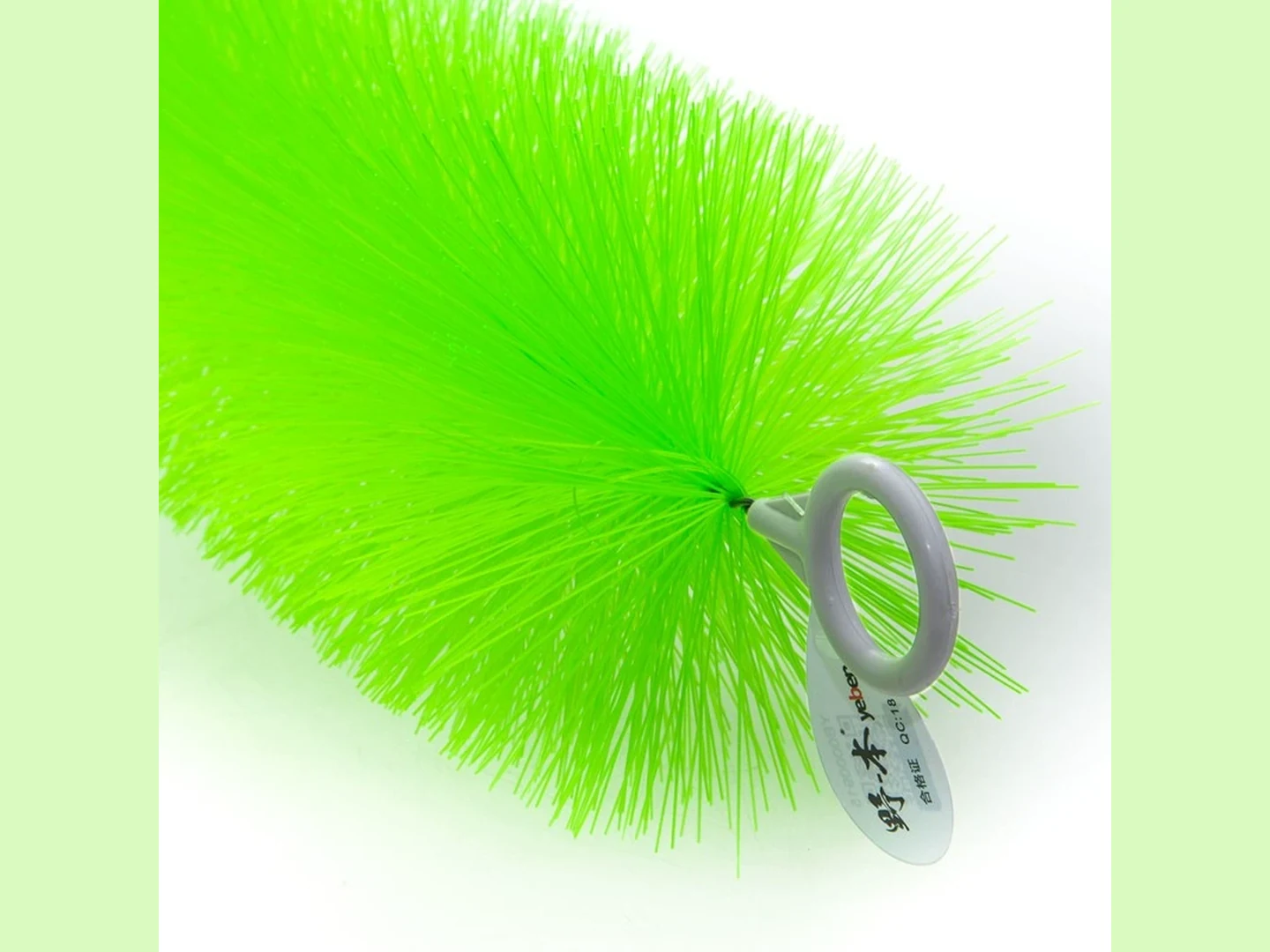
Biofilter Brush
Custom biofilter brush media for pond and aquarium filter chambers. Nylon filaments, corrosion-resistant cores,…
See the specification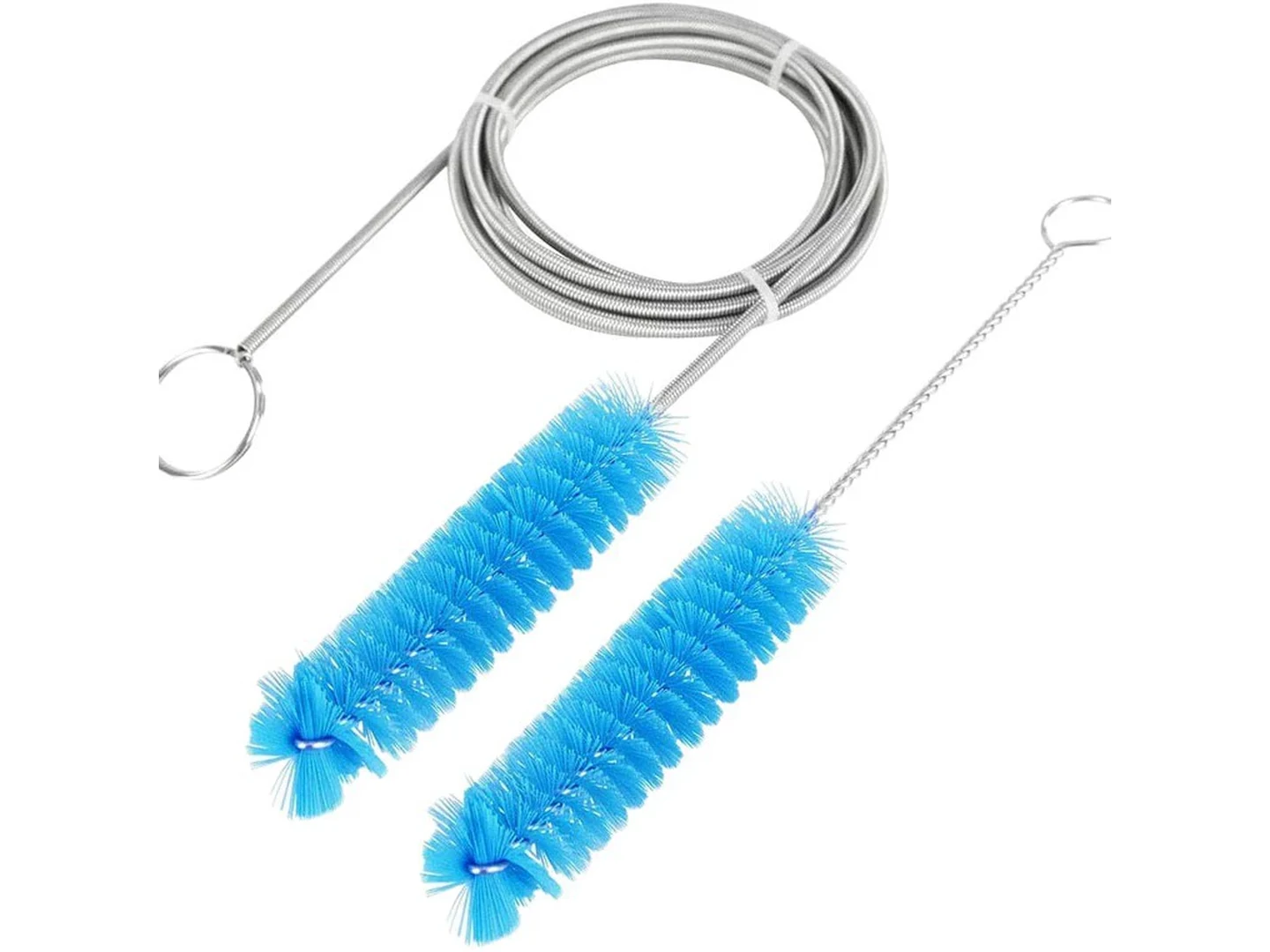
Aquarium Filter Brush
Custom aquarium filter brushes in Nylon PA and PBT for mechanical solids capture and…
See the specification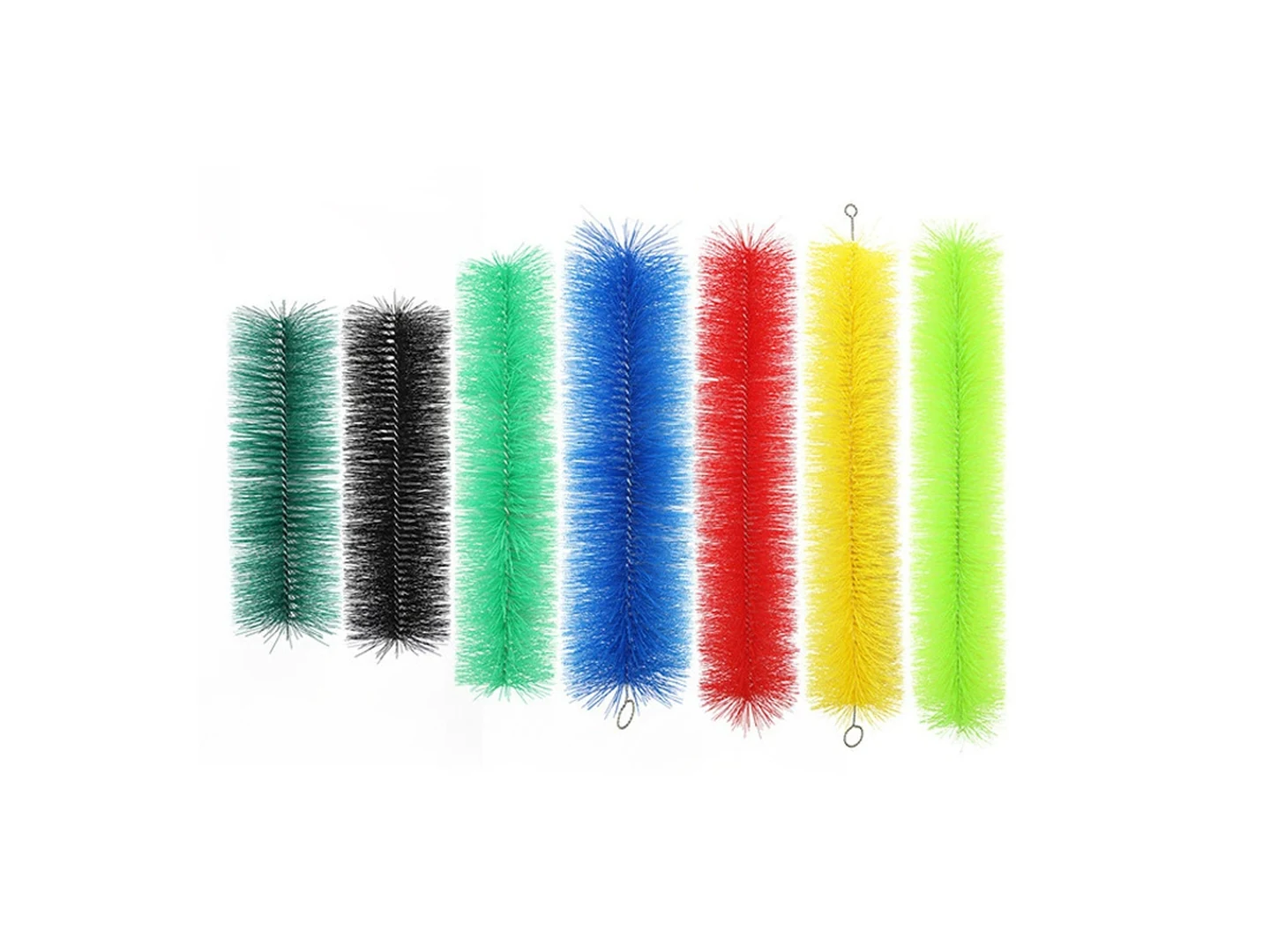
Pond Filter Brush
Hanging polypropylene pond filter brush for mechanical and biological filtration in koi ponds and…
See the specification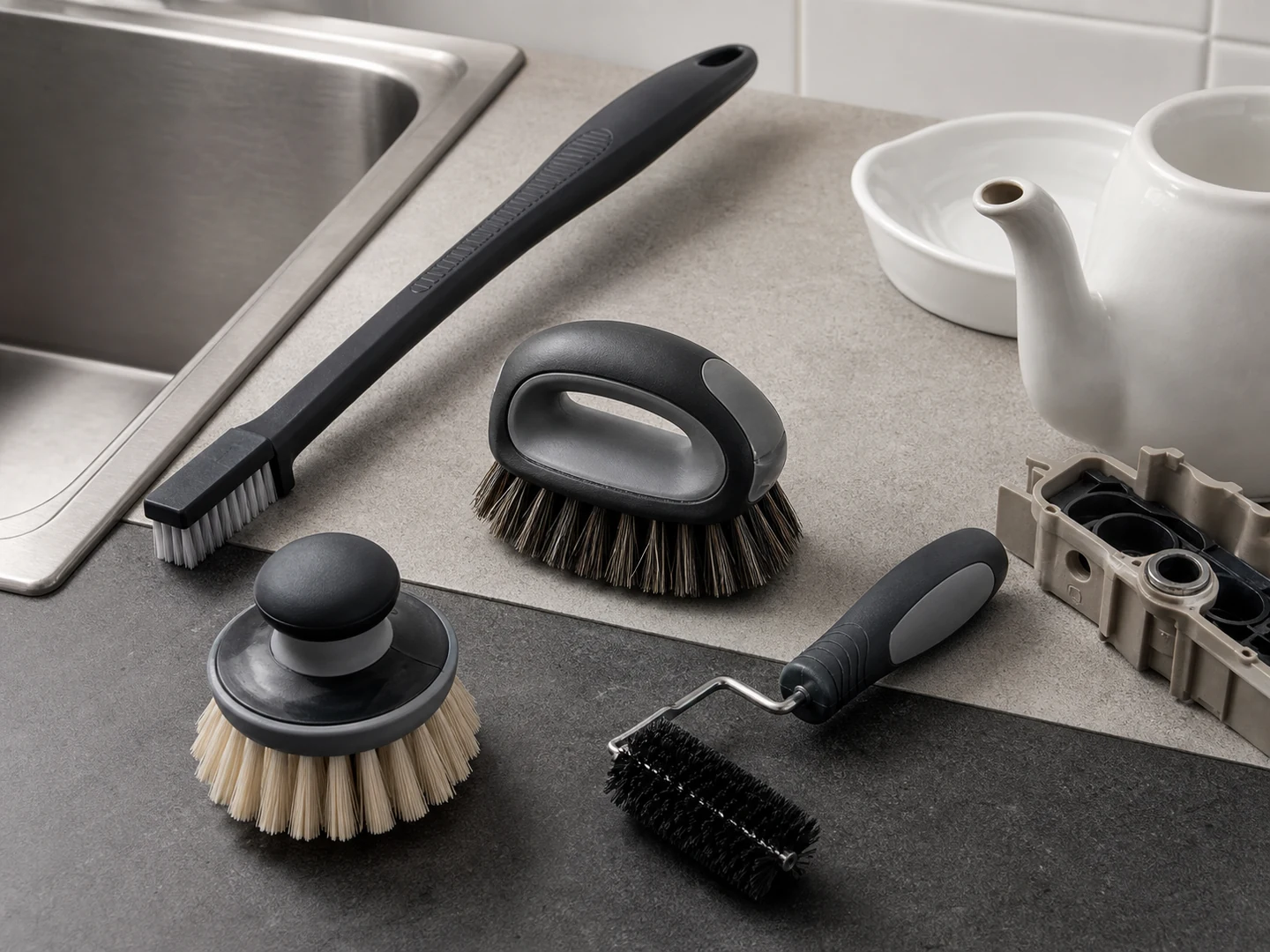
Custom Handheld Detail Brushes
Choose a handheld detail brush when you need direct control in seams, recesses, fittings,…
See how this type is built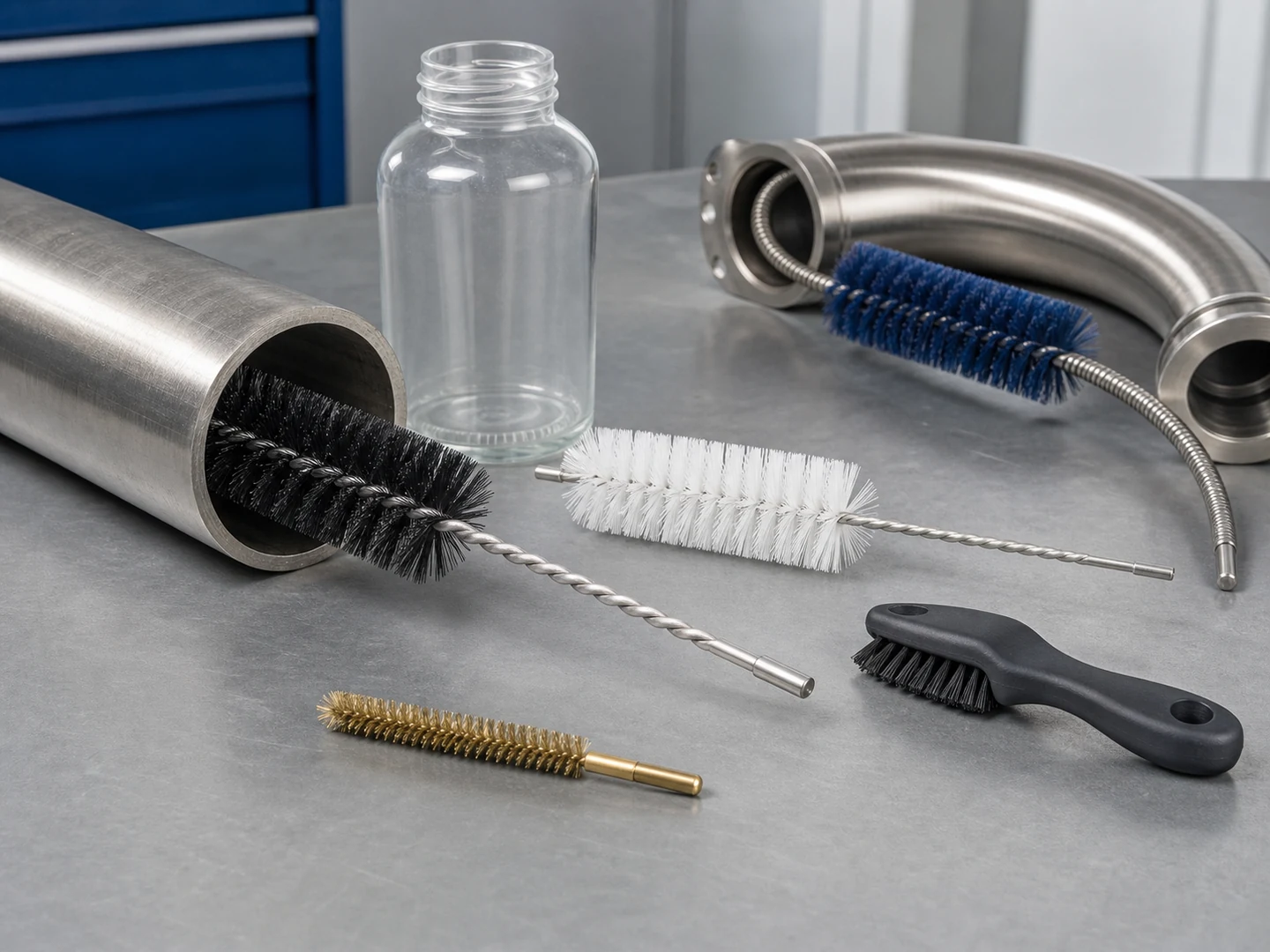
Custom Tube & Pipe Bore Brushes
Choose a tube, pipe, or bore brush when the working surface is inside a…
See how this type is built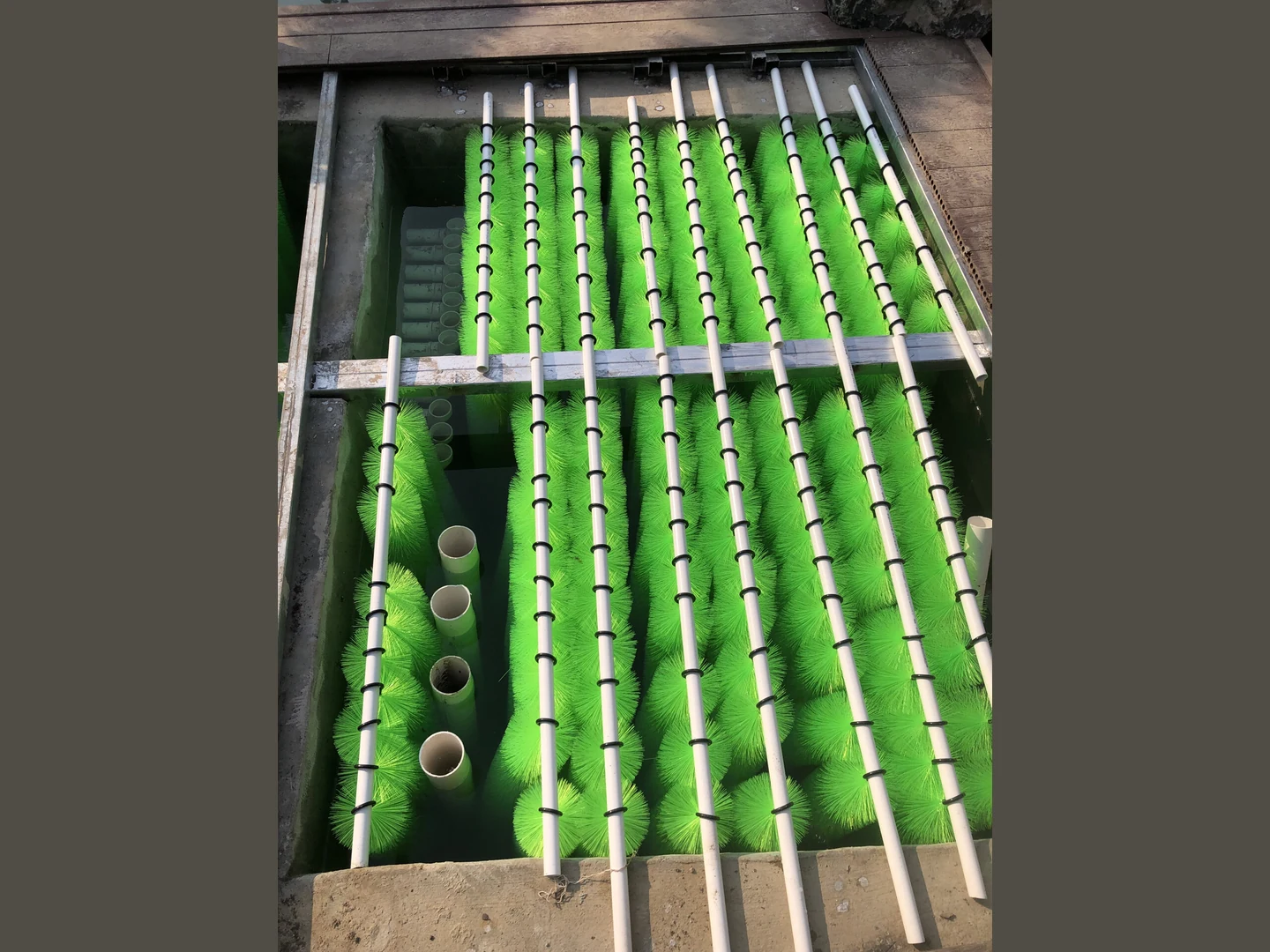
Custom Filter Brushes
Choose a filter brush when an open brush body must collect, intercept, agitate, or…
See how this type is built
Nylon PA
Choose Nylon PA based on its stiffness, recovery, wear, wet-service, chemical, and temperature behavior.
Compare this material
PBT
Choose PBT based on its stiffness, recovery, wear, wet-service, chemical, and temperature behavior. Do…
Compare this materialCustom Manufacturing RFQ
Discuss This Application
Share the working surface, residue, dimensions, material direction, interface, quantity and drawing or sample photo.
Custom Brush RFQ
Request a Custom Cleaning Brush Quote
Upload a drawing, product photo, or sample photo and provide the core dimensions and cleaning conditions.
“We need a brush to remove wet residue from a stainless steel conveyor, about 800mm wide. The current brush wears quickly. We can send photos.”
“We sell drinkware and need a cleaning brush to include with the product. Quantity around 5,000 pieces.”