
Brush Type
Custom Spring Brushes
Spring Brush
A spring brush carries its fill on, or behind, a coiled spring, so the brush body itself bends and recovers as it travels. Choose one when the passage curves, changes size or has obstructions that a rigid or simple flexible stem cannot follow; for a straight bore, an ordinary tube brush is simpler and cheaper.
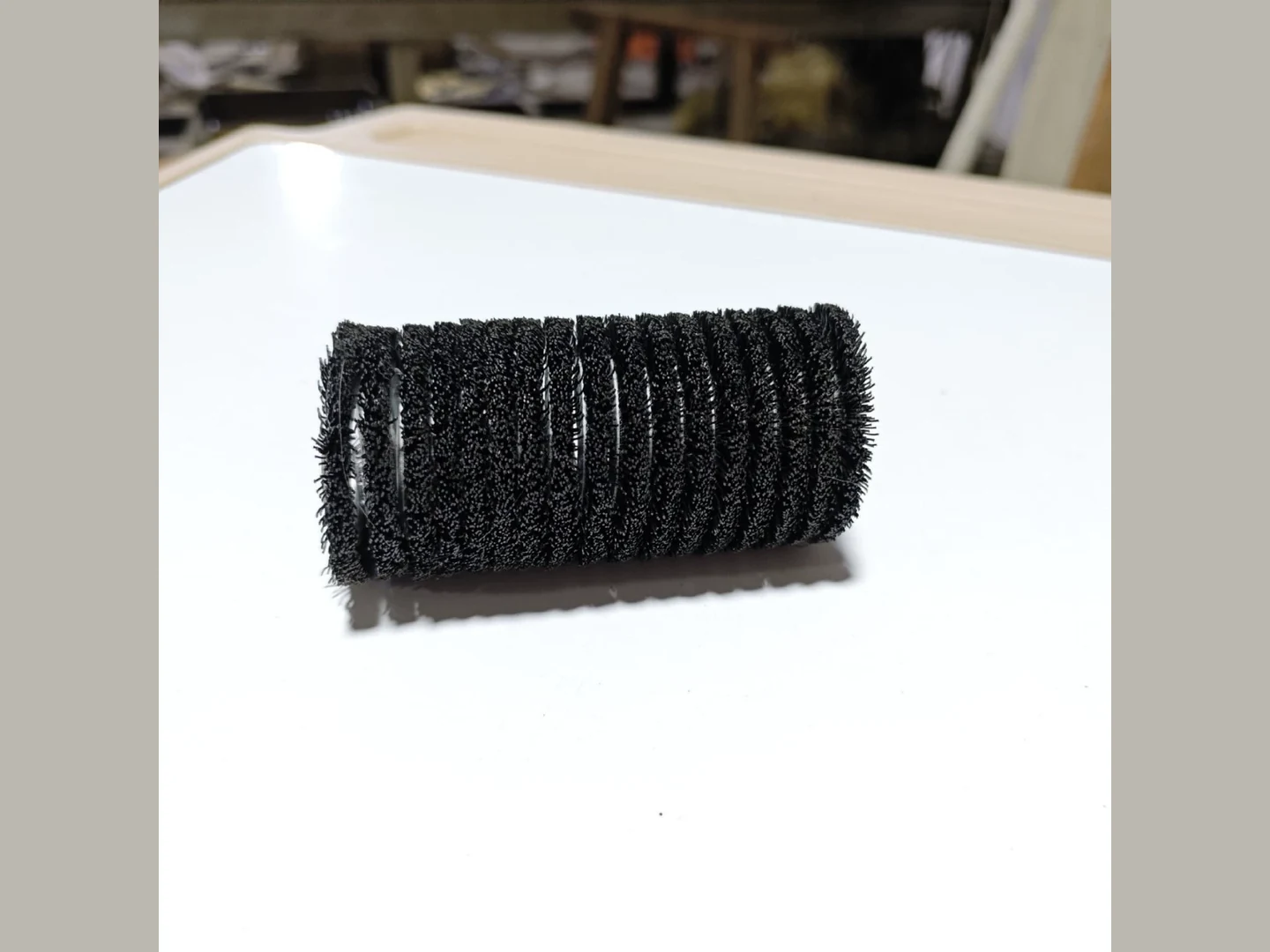
At a glance
- How it is driven
- Pushed and pulled through the passage
- How it mounts
- Threaded Removable
What is a spring brush?
It is a bore brush with a spring in it. In one form, the fill is wound in a spiral around a helical spring core, so the whole head flexes. In another, a length of coiled spring joins an ordinary brush head to a handle, rod or drill, and the spring does the bending. A third form uses a compressible radial section that squeezes down through a narrow point and opens again behind it.
In each case the spring does two jobs. It carries push, pull or rotation down to the head, and it lets the brush body follow a bend instead of jamming in it. A plain twisted-wire stem can do the first job but kinks if it is forced round a tight bend too often.
When do you need a spring brush instead of a tube brush?
| Passage | Better choice |
|---|---|
| Straight bore, tube or drilled hole | Tube brush on a twisted-wire stem or shank |
| Hose or soft tubing with gentle curves | Tube brush on a long flexible stem |
| Curved pipe, U-bend or elbow in hard pipe | Spring brush or flexible rod brush |
| Passage that narrows and then opens out | Compressible spring brush |
| Long run driven by a drill | Brush on a spring extension, or a whip brush on rods |
The rule of thumb: if you have already bent or broken stems in a passage, a spring section is the fix.
What spring brushes are in our range?
One product is listed, made to order: the spring brush, spiral-wound for bores, tubes, threads and shafts, in diameters from about 3.2 to 50.8 mm, from 100 pieces per design. For curved pipes and flues there is also the flexible rod brush, a twisted-wire brush on a flexible rod, which is listed with the tube brushes. Other sizes and lengths are built to the passage.
How is a spring brush built?
- Spring: stainless steel, usually 304, so it does not rust in wet passages and keeps its spring after bending.
- Fill: stainless wire for scale and hard deposits; nylon or PBT for wet and dry cleaning; flagged polyester for fine dust and lint; abrasive nylon for internal finishing.
- Ends: a threaded end for rods and extensions, a loop or handle for hand use, or a shank for a drill. A rounded or tufted tip leads the brush into bends.
- Sizes: brush diameter, head length and spring length are set by the passage. A typical head is around 40 mm across and 300 mm long, but small bores take far smaller heads.
How do you size a spring brush?
Start from the tightest part of the path, not the widest. The head diameter is set near the bore to wipe, a little over it to scrub, with less oversize for wire fill. The spring length has to cover the bend, so the head is always pulled or pushed by spring, not by a rigid stem. Measure the minimum bend radius: a tight bend needs a shorter head and a softer spring. Where the bore narrows, the compressible section has to squeeze through the narrow point without folding the fill over.
How should a spring brush be used?
Feed it in steadily and let the spring find the bend; forcing it bunches the coils. Push and pull is the normal motion. On a drill, run it slowly so the spring does not whip against the pipe, and keep it moving so it does not wear one spot. Pull it back and check the size if it starts to stick. Rinse or blow it out after use, so deposits do not set in the coils.
What do we need to quote a spring brush?
- The full path: bore diameters, length, bends and the tightest bend radius.
- Where you can reach it from, and any narrow point or obstruction.
- The pipe material and the deposit.
- Hand, rod or drill drive, and the end connection.
- Fill preference and the quantity per design.
Questions buyers ask about Custom Spring Brushes
What is the difference between a spring brush and a tube brush?
A tube brush has a twisted-wire stem or a shank and works best in straight bores. A spring brush has a coiled spring in the head or between the head and the handle, so it bends round elbows and U-bends and springs back. If stems keep kinking in a passage, a spring brush is the fix.
Can a spring brush be driven by a drill?
Yes, with a shank or a threaded end for rods. Run it slowly and keep it moving, so the spring does not whip against the pipe or wear one spot. For long runs, a brush on a spring extension or a whip brush on rods is easier to control.
How tight a bend can a spring brush get through?
It depends on the head length, the spring and the bore. A shorter head and a softer spring pass tighter bends. Send us the bore diameter and the tightest bend radius, or a drawing of the pipe run, and the head and spring are sized to it.
Continue Exploring
Recommended Reading & Related Brush Resources
Spring Brush
Order custom spring brushes for cleaning bores, tubes, threads, and shafts. Spiral-wound construction with PBT or stainless steel wire fill.
See the specification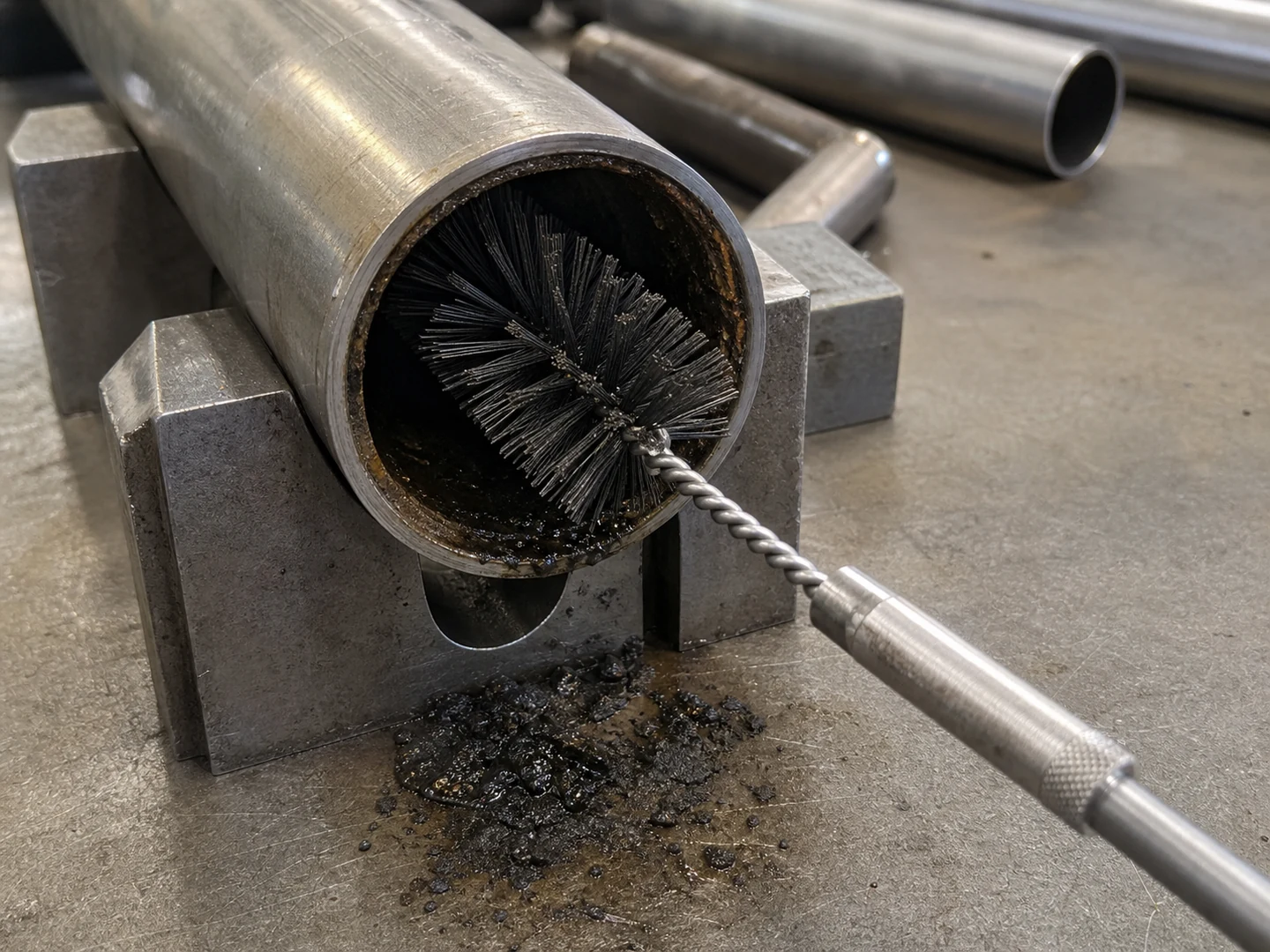
Tube & Pipe Cleaning
Tube and pipe brushes are twisted-wire bore brushes sized to the inside diameter: near-size to wipe, 5–20% oversize with nylon or PBT to scrub.
See the cleaning job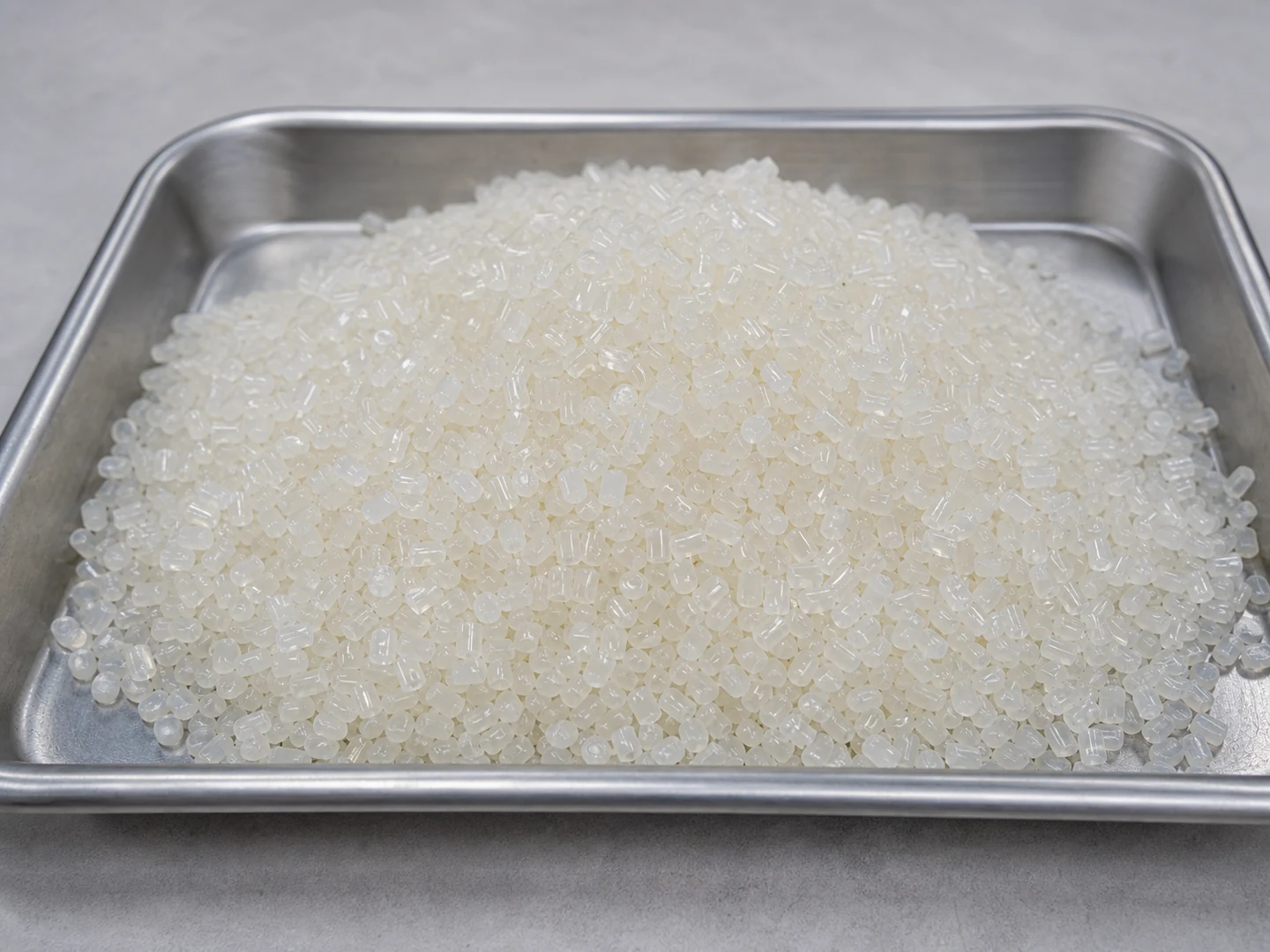
Nylon PA
Nylon is the default brush filament: tough, springy and long-wearing, in a stiffness range from soft detail fill to coarse scrubbing fill.
Compare this material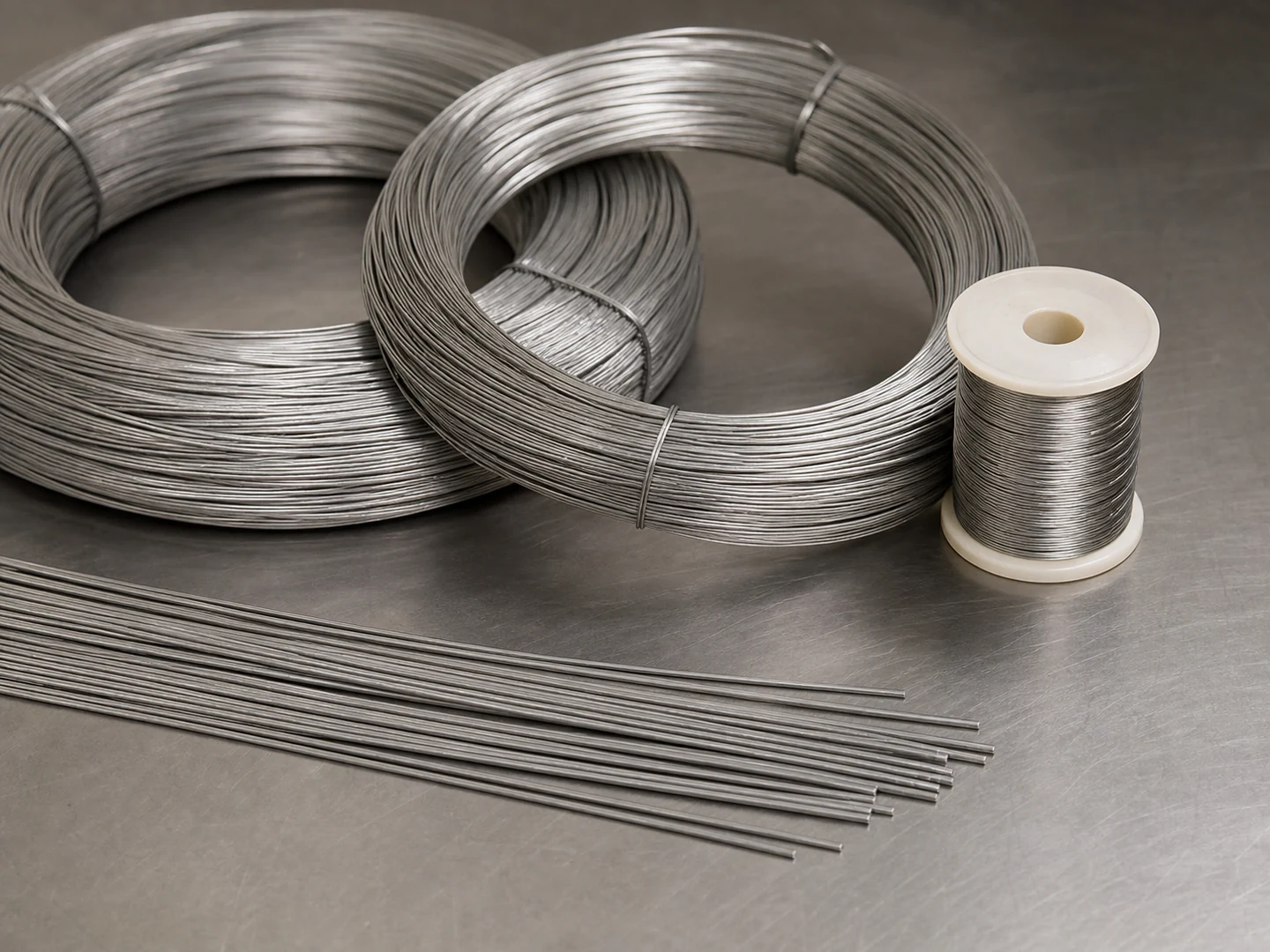
AISI 304 Stainless Steel Wire
AISI 304 stainless wire is the general-purpose stainless brush wire: firm, corrosion-resistant in water and detergents.
Compare this materialCustom Manufacturing RFQ
Discuss This Brush Type
Share the working surface, residue, dimensions, material direction, interface, quantity and drawing or sample photo.
We reply to every request within 24 hours, with a quotation or with the questions we need answered first. If the brush can be made on our existing tooling, we make the sample directly. If it needs new tooling, we quote a sample fee and a tooling fee, and the sample fee is credited against the bulk order. Need an NDA first? We sign yours before you send drawings, and the files you send are never shown to other customers.
- MOQ500 pcs for small hand-held brushes, 100 pcs for medium and large ones
- SampleTypically 3–7 days
- ProductionFrom 7 days after sample approval, by size and quantity
- Payment30% deposit and 70% before shipment above US$10,000; smaller orders on agreed terms
“We need a brush to remove wet residue from a stainless steel conveyor, about 800mm wide. The current brush wears quickly. We can send photos.”
“We sell drinkware and need a cleaning brush to include with the product. Quantity around 5,000 pieces.”