
Application
Bath & Personal Care Brush Use
Start by separating skin-contact use from bathroom-surface cleaning. Softness, hygiene, drying, handle control, and material requirements change depending on whether the brush touches the body, fixtures, grout, or another wet surface.
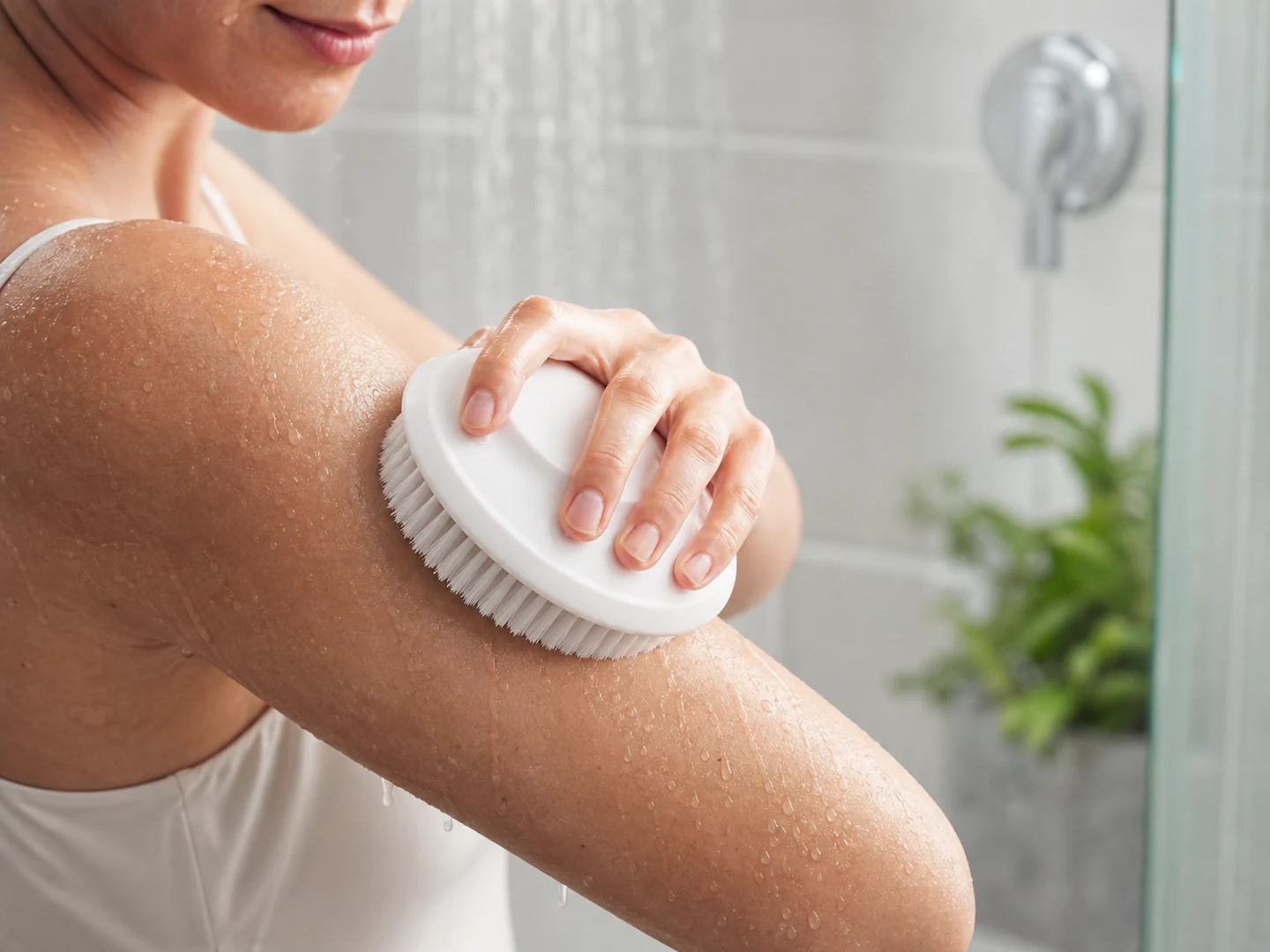
At a glance
- Cleaning target
- Skin oil / soap residue / cosmetic residue / loose skin
- Working environment
- Bathroom / Personal-Care Area / Humid Indoor Area
- Cleaning method
- Wet Brushing / Rinsing / Soaking
- Requirements to check
- Material-safety, hygiene and skin-contact requirements; ISO 22196 only when an antibacterial claim is made
Personal-care brushes touch skin, so tip finish and filament softness are the whole specification — a flagged or rounded tip exfoliates, a cut tip scratches.
What makes Bath & Personal Care Brush Use different from other specialty brush functions cleaning?
The main difficulty is removing dust, oil, process residue, particles, and bonded contamination from bathtub surfaces, shower corners, drains, tile joints, and washable personal-care items without damaging the surface, loading the brush, or carrying contamination back into the process.
The work happens in bathroom, personal-care area and humid indoor area against skin oil, soap residue, cosmetic residue and loose skin.
The part people get wrong: the surface, the residue and the access opening decide the brush together. Fix on any one of them alone and the geometry comes out wrong.
What are the most common cleaning targets in Bath & Personal Care Brush Use?
The work breaks into 5 targets. They look similar from outside the machine and behave nothing alike at the brush.
| Part or area | Residue type | Cleaning requirement |
|---|---|---|
| Body Exfoliation Brush | Skin oil, soap residue, cosmetic residue, loose skin | The head must reach the working face and apply even contact without marking the surface. |
| Nail and Hand Cleaning Brush | ||
| Scalp Cleaning Brush | ||
| Facial Cleansing Brush | ||
| Bath and Shower Detail Brush |
The dimensional envelope those targets impose on the brush:
| Parameter | Typical range |
|---|---|
| Overall length | 200–500 mm; 120–450 mm |
| Filament diameter | 0.30–1.00 mm; 0.10–0.40 mm |
| Head width | 15–90 mm; 3–100 mm |
| Trim length | 10–35 mm; 8–40 mm |
| Head size | 20–300 mm |
| Use temperature | 5–100°C |
Which brush types work for each cleaning target?
Handheld body brush, long-handle bath brush, facial brush, nail brush, or surface-cleaning block brush.
| Cleaning target | Recommended brush type | Why it fits |
|---|---|---|
| Body Exfoliation Brush | Handheld Detail Brushes | A hand-guided head lets the user set their own pressure, which is the point of exfoliation: the filament works only at a pressure the skin tolerates. |
| Nail and Hand Cleaning Brush | Nail cleaning is edge work under the nail plate, so a small stiff-tipped head under direct hand control is what reaches it. | |
| Scalp Cleaning Brush | The scalp is worked through hair, so the head needs widely spaced rounded tips on a hand-guided block that can be drawn across without pulling. | |
| Facial Cleansing Brush | Facial skin reddens easily, so a small soft head under direct hand control keeps the contact light and keeps it where the user intends. | |
| Bath and Shower Detail Brush | Tile joints, tap bases and drain rims are all small and awkward, so a hand-guided head reaches each of them without changing tools. |
The layouts this application is normally built in:
- Driven brush — use when dust, oil, process residue, particles, and bonded contamination needs repeatable scrubbing or controlled relative movement
- Passive or free-running brush — use for loose contamination and lower process complexity on bathtub surfaces, shower corners, drains, tile joints, and washable personal-care items
- Localized hand, strip, or tube brush — use where only an edge, gap, port, or maintenance point needs contact
In practical brush terms: reach first, then residue. A brush that fits but is too soft can be stiffened; a brush that does not fit is simply the wrong tool.
What filament materials work best for Bath & Personal Care Brush Use?
Soft synthetic filament, silicone, sponge, or selected natural fiber is considered from skin sensitivity, wet recovery, drying, shedding, and cleaning method.
| If the condition is… | Filament to start with | Why |
|---|---|---|
| Sensitive or coated surface | Nylon PA | balanced flex life and abrasion resistance |
| Wet, washdown, or detergent service | Polypropylene PP | acid, alkali, water, and detergent resistance |
| Bonded residue or aggressive cleaning | PBT | stable wet stiffness and low moisture uptake |
The constraints this application puts on the filament:
| Constraint | Value for this application |
|---|---|
| Filament hardness | Soft |
| Maximum service temperature | 80°C |
| Chemical exposure | Water, soap, shampoo or mild personal-care formulation, typically pH 4–9 |
| Cleaning method | Wet Brushing, Rinsing, Soaking |
How do I choose the right brush for my bath & personal care brush use equipment?
Tip finish and softness are fixed from the skin or surface being touched; head size and handle length then follow from how it is held.
The sequence that gets a usable sample first time:
- Identify the target part and measure the access opening or clearance
- Describe the residue: what it is, how thick it sits, and how strongly it holds
- Choose the construction that can physically reach that target
- Set the filament from surface risk, working temperature and cleaning chemistry
- Fix filament diameter, free trim length and density for the contact pressure you need
- Run one cycle and check the result before committing to a production quantity
Before you commit to a quantity, send the head size, the tip finish required, and the skin or surface it is intended for.
When is a bath and personal care brush the wrong tool?
Broken, inflamed or sun-damaged skin should not be brushed at all, and medicated washes work with no mechanical action whatsoever. Where skin is sensitive, a cloth or the hands do the job a brush would over-do.
What common mistakes should I avoid in Bath & Personal Care Brush Use?
- Specifying stiffness by preference rather than by skin sensitivity and tip finish
- Changing brush material while leaving excessive engagement, poor alignment, or no discharge path unchanged
- Copying a worn brush without recording motion, direction, mounting, and the original working diameter
When a brush is running but not cleaning, start here rather than adding pressure:
| Symptom | What to change |
|---|---|
| Residue remains | Increase relative motion or discharge, then change filament diameter or density; do not add pressure before checking loading by dust, oil, process residue, particles, and bonded contamination. |
| Surface marks or scratches | Reduce engagement, use finer or softer fill, and remove trapped abrasive particles from contact with bathtub surfaces, shower corners, drains, tile joints, and washable personal-care items. |
| Rapid wear or uneven cleaning | Check alignment, runout, support, motion, temperature, chemical attack, and whether the brush covers the complete working path. |
| Brush loads or redeposits residue | Open the fill pattern or add wash, vacuum, air, scraping, or a collection path so removed dust, oil, process residue, particles, and bonded contamination leaves the contact zone. |
Questions this page is asked
Which checks should precede direct skin or scalp contact?
Use only a brush identified for that body area and inspect for rounded intact tips, secure fill, clean surfaces and a controllable handle before each use. Apply light contact on a small area and stop for pain, persistent redness, broken skin, snagging or an unexpected reaction; a damaged or contaminated head should be replaced rather than used more gently.
How is a reusable personal-care brush released after washing?
Remove hair and product residue, wash and rinse by the product instructions, and keep water out of powered or non-washable sections. Dry the head fully in an open clean location, then inspect for odor, trapped residue, split tips, corrosion or shedding before storage and replace it when those conditions cannot be corrected.
Guides that go deeper on this
We have not written a guide specific to this one yet. The material that covers selection, filament, dimensions, maintenance and sourcing is collected in the technical resources library.
Continue Exploring
Recommended Reading & Related Brush Resources
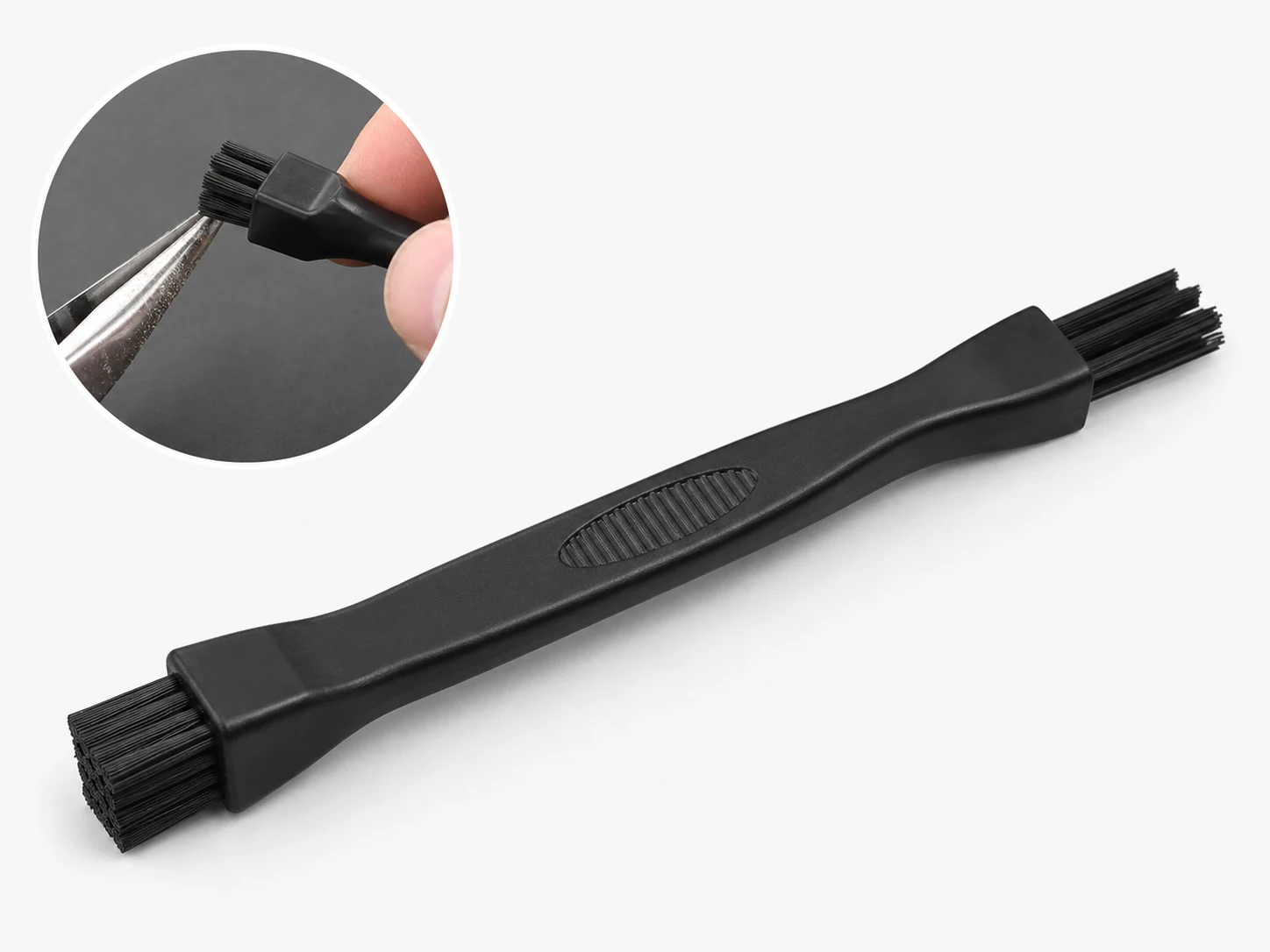
Two-in-One Tweezers Cleaning Brush
Custom two-in-one tweezers cleaning brush with precision slanted tips and soft nylon spoolie for…
See the specification
Brush Medical Scrub
Two-sided surgical hand scrub brush with nylon nail brush and sponge side for preoperative…
See the specification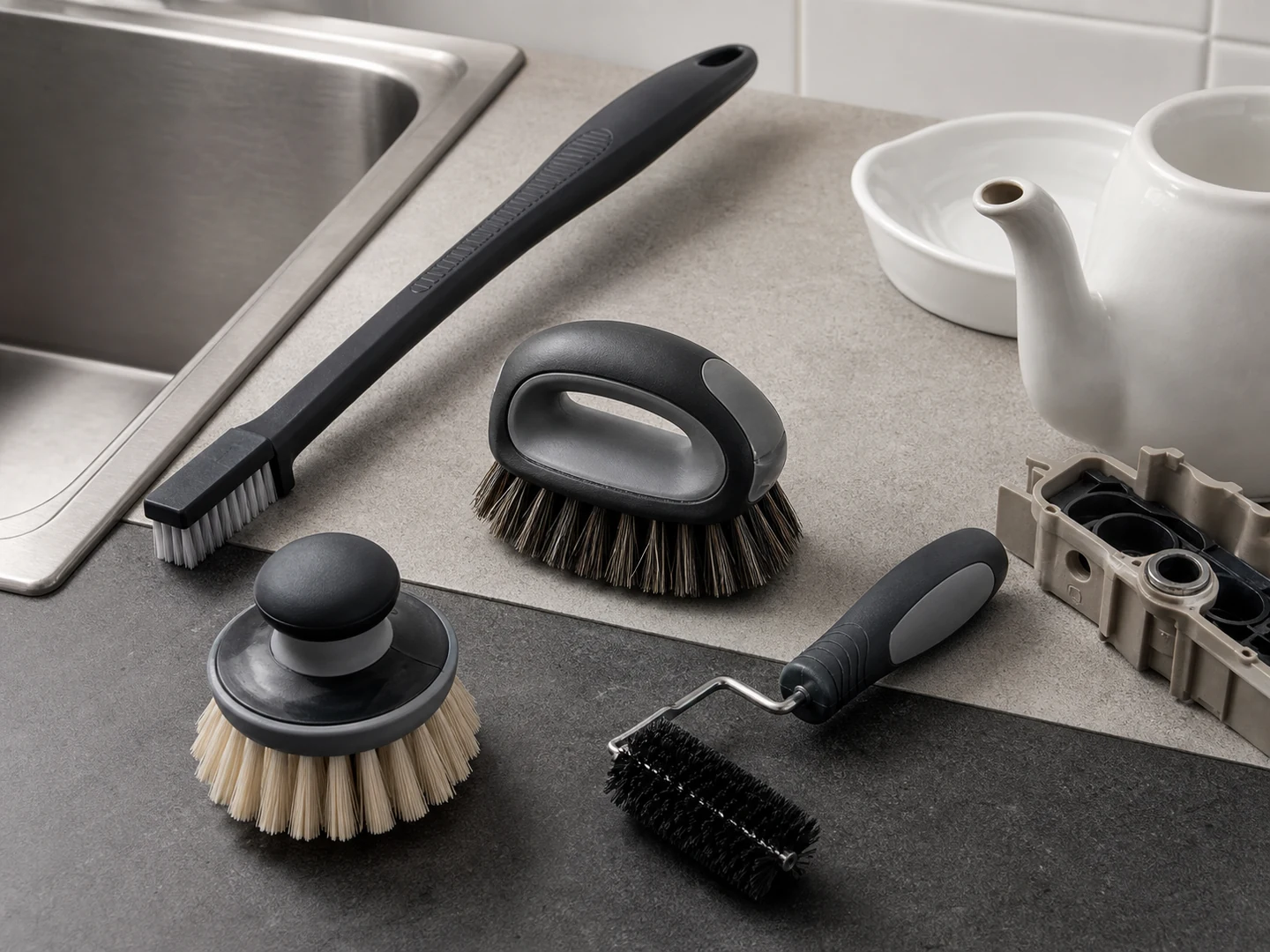
Custom Handheld Detail Brushes
Choose a handheld detail brush when you need direct control in seams, recesses, fittings,…
See how this type is built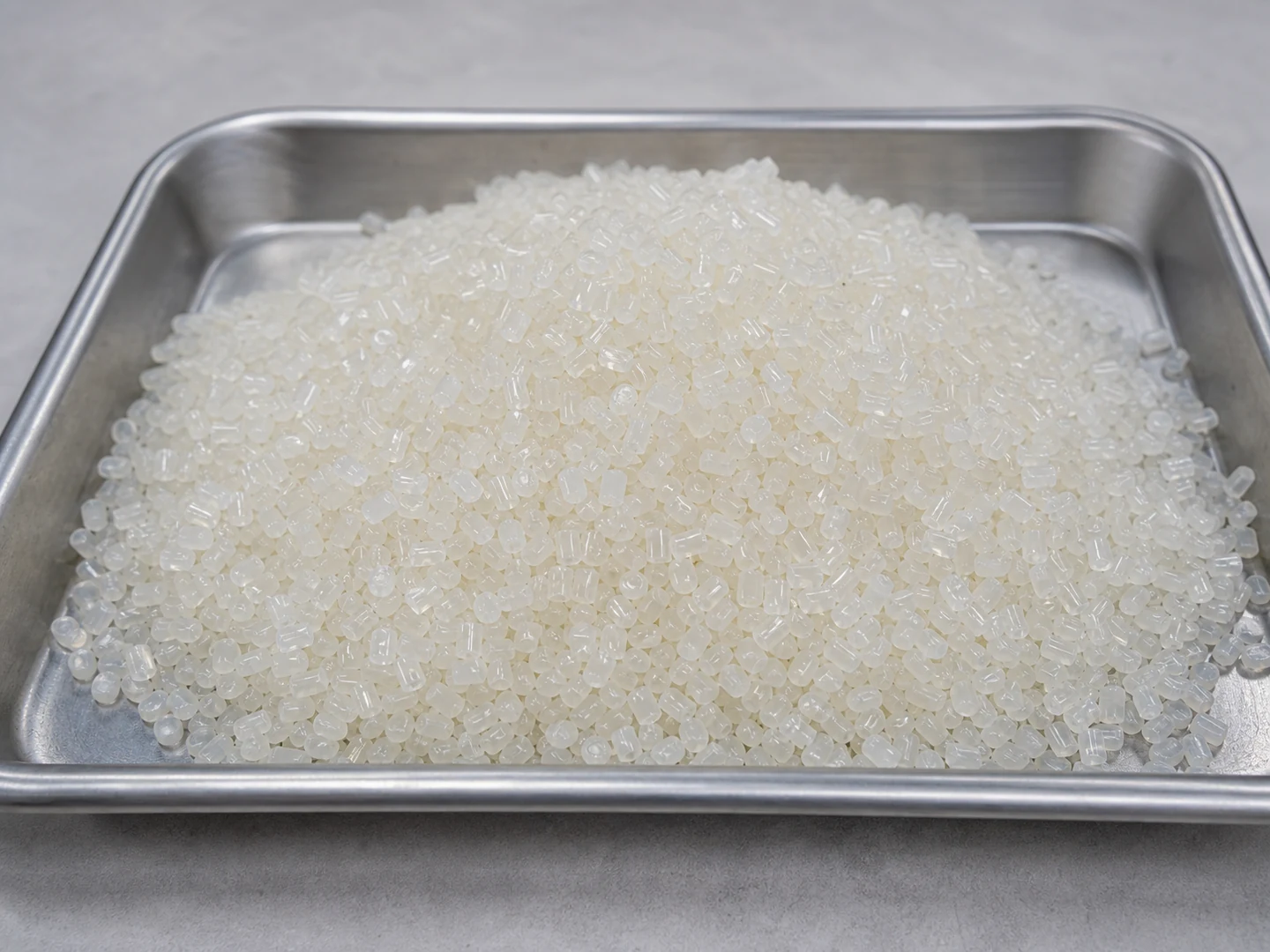
Nylon PA
Choose Nylon PA based on its stiffness, recovery, wear, wet-service, chemical, and temperature behavior.
Compare this materialCustom Manufacturing RFQ
Discuss This Application
Share the working surface, residue, dimensions, material direction, interface, quantity and drawing or sample photo.
Custom Brush RFQ
Request a Custom Cleaning Brush Quote
Upload a drawing, product photo, or sample photo and provide the core dimensions and cleaning conditions.
“We need a brush to remove wet residue from a stainless steel conveyor, about 800mm wide. The current brush wears quickly. We can send photos.”
“We sell drinkware and need a cleaning brush to include with the product. Quantity around 5,000 pieces.”