Quick Answer
Remove process residue before it hardens, rinse from the base toward the tips, dry with the face unloaded, inspect retention and shape, and store by material and use zone. The brush itself must not become a contamination source.
Cleaning by Residue
| Residue | Cleaning action |
|---|---|
| Dry dust / chips | Vacuum, controlled air, combing, then wipe the core and holder |
| Water-soluble residue | Warm water and compatible detergent followed by a complete rinse |
| Oil / grease | Compatible degreaser, mechanical agitation, rinse, and complete drying |
| Sticky food / process soil | Pre-rinse, detergent at process temperature, brush-face cleaning, and sanitation step |
| Metal swarf / abrasive grit | Comb and flush from the root; inspect for embedded particles before reuse |
| Chemical residue | Rinse using the process-defined neutralization or wash sequence |
Drying
Hang hand brushes or place them so the filament drains freely. Support cylinder and disc brushes by the shaft, hub, or non-working backing rather than the trim. Use airflow and time sufficient to dry the root, core, and holder. Wet storage promotes corrosion, odor, microbial growth, and permanent filament deformation.
Inspection Before Storage
- Loose, missing, crossed, or permanently spread filament.
- Cracked blocks, damaged channels, loose staples, resin failure, or corroded stem wire.
- Embedded metal, grit, fibers, or product that can transfer to the next part.
- Bent shaft, damaged threads, worn journals, loose hubs, or excessive runout.
- Material discoloration, softening, brittleness, odor, or chemical attack.
Storage Layout
Separate stainless, carbon steel, brass, abrasive, food-zone, sanitary, and electronics brushes. Protect fine filament from crushing. Keep long brushes horizontal on shaft supports or vertical from the mount. Label brush size, material, machine, use zone, cleaning date, and replacement limit.
Replacement Rule
Discard a brush that cannot be cleaned, has loose filament, no longer reaches the surface, has a bent stem or shaft, shows cracked retention, or produces longer cleaning cycles. Visible wear, missing or splayed bristles, soil that will not rinse out of the fill, and a bent or loosened stem are the conditions we treat as end of life for a brush in service.
Technical References
Which bristle material fits this job — PA612 Nylon, Polypropylene PP or AISI 304 Stainless Steel Wire?
| Material | Continuous temperature (°C) | Peak temperature (°C) | Water absorption | Hardness |
|---|---|---|---|---|
| PA612 Nylon | 90–110 | 130–150 | 0.3–0.7% | Shore D 70–80 |
| Polypropylene PP | 80–100 | 120–140 | ≤0.03% | Shore D 65–75 |
| AISI 304 Stainless Steel Wire | 400 | 500 | 0% | Rockwell B 70–95 depending on temper and cold work |
| AISI 316 Stainless Steel Wire | 400 | 500 | 0% | Rockwell B 70–95 depending on temper and cold work |
Figures as published by Brushtec / DuPont; Perlon; Alleima. Confirm the exact grade against the supplier datasheet before ordering.
When are Handheld Detail Brushes the wrong choice?
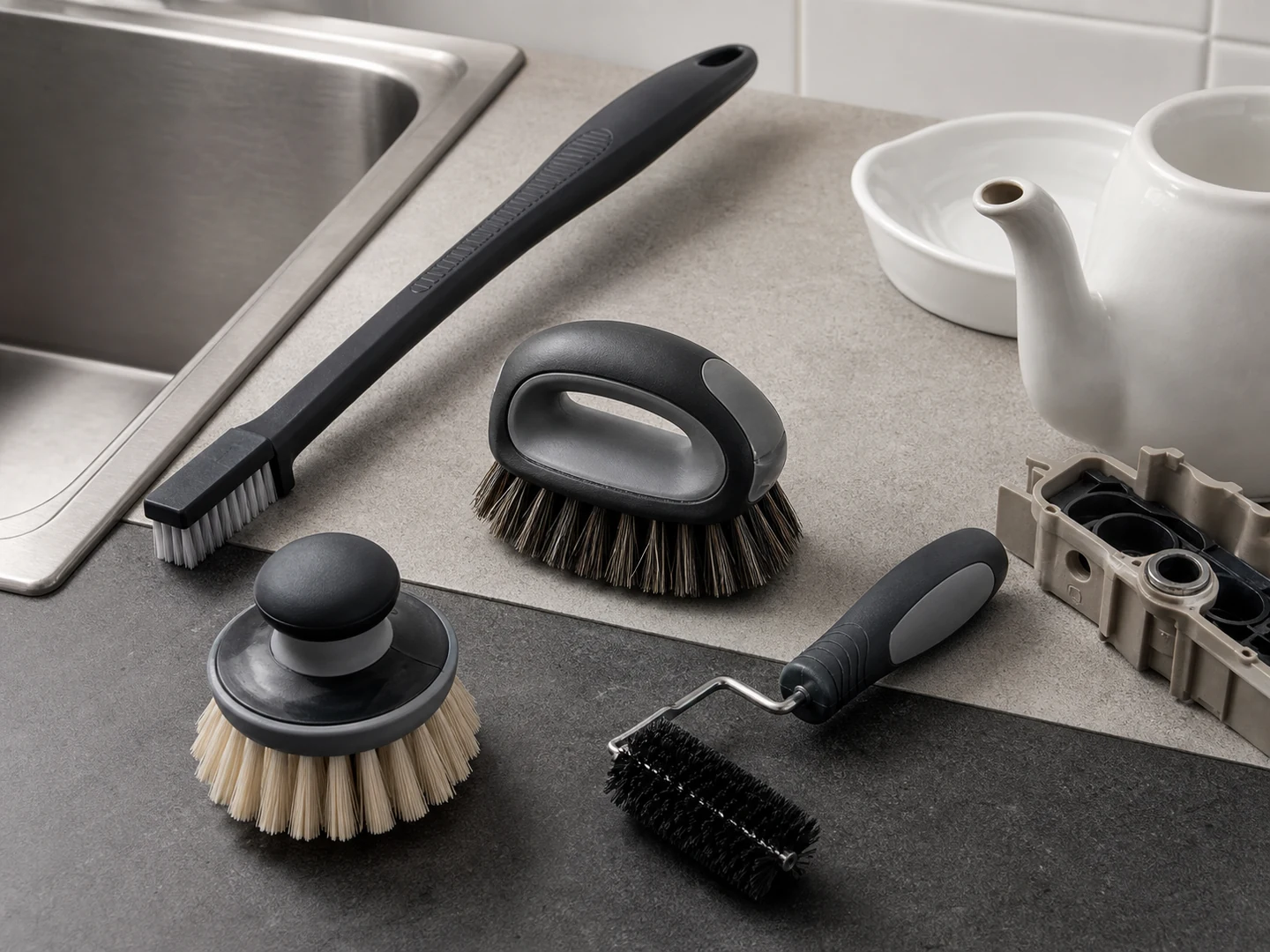
- Handheld Detail Brushes — Use a tube brush, powered brush, scraper, wipe, sponge, or vacuum when the target is internal, heavily bonded, or highly delicate.
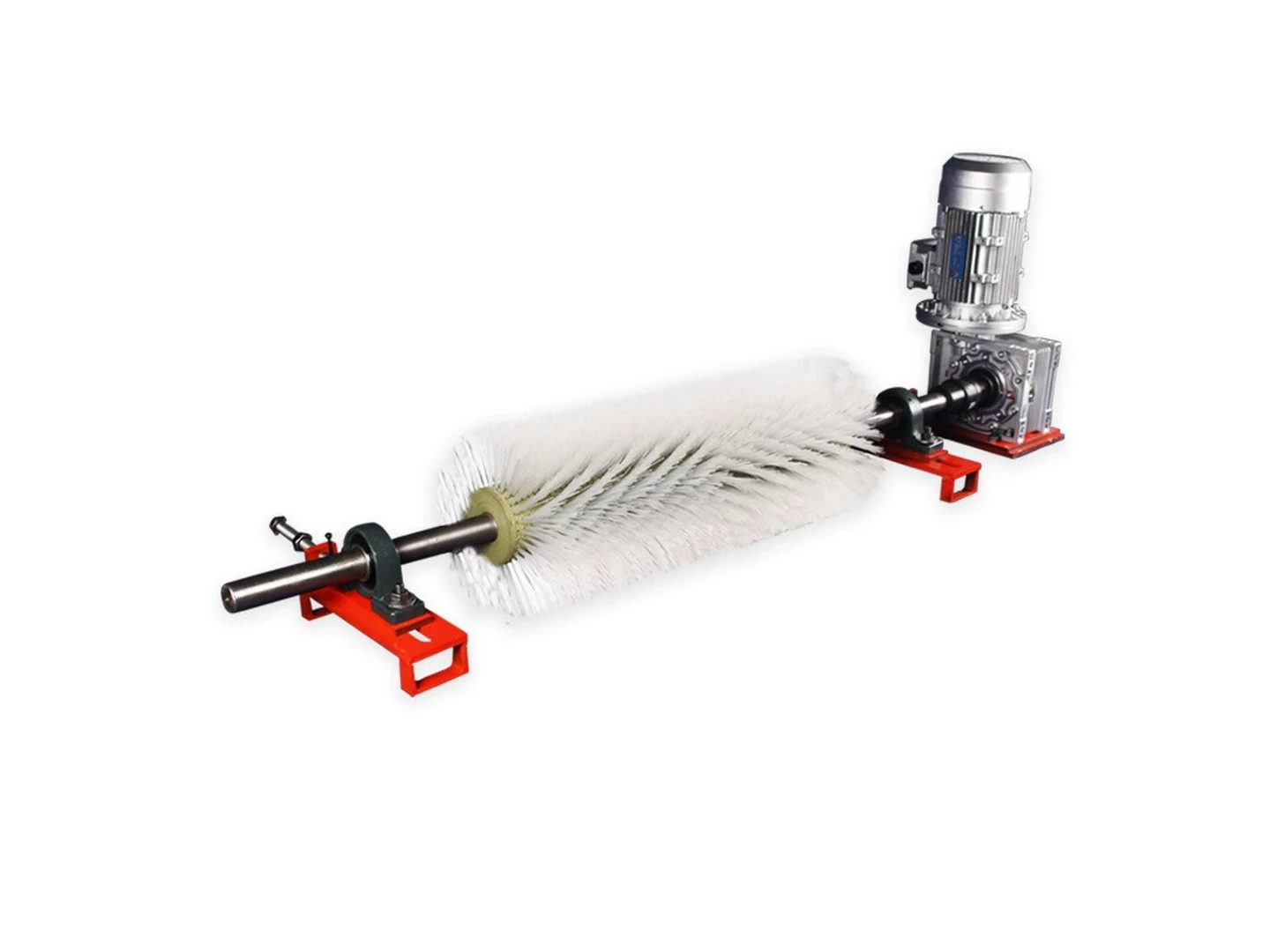
- Roller and Conveyor Brushes — Use a stationary strip brush for a fixed linear seal or wipe, or another process when rotating line contact interferes with the product or cannot discharge the residue safely.
- Tube & Pipe Bore Brushes — Use pigs, flushing, ultrasonic, chemical descaling, blasting, or a flexible cable system for long, sharply curved, or heavily scaled passages.
- PA612 Nylon — PA612 costs more than general PA6 and should be used where its wet stability, recovery or wear life creates a real process benefit.
What should replace Handheld Detail Brushes when they stop working?
- Handheld Detail Brushes — Handheld detail brushes cover general precision cleaning; auto-detailing brushes impose tighter controls for painted, polished, leather, display, and trim surfaces.
- Roller and Conveyor Brushes — Roller and conveyor brushes hold cylindrical line contact across a working width, including helix-wound builds where the filament path is set to move loosened material toward one side; a strip brush holds the same line without rotating, so it seals or wipes but cannot carry residue along the width.
- Tube & Pipe Bore Brushes — Tube and bore brushes work by radial contact inside a confined diameter; wire wheels and cups work mainly on external edges, profiles, welds, and broad surfaces.
- PA612 Nylon — Compare PA612 Nylon with PA66, PP, PBT. Change material when wet stiffness, temperature, chemical resistance, conductivity, particle shedding, or surface marking becomes the limiting factor.