
What Is Mold Growth on Brushes?
Mold growth on brushes is the visible colonization of fungi on bristle surfaces, handles, and ferrule joints. Mold spores are present in most indoor and outdoor air; they need only moisture, a food source, and the right temperature to activate. A wet brush stored in a dark, warm, or poorly ventilated space provides all three conditions. Food residue, oils, soap scum, and even dust serve as nutrients, while water trapped between bristles completes the trigger.
The problem affects a wide range of brushes: kitchen scrub brushes, bottle brushes, dish brushes, bathroom cleaning brushes, pet grooming brushes, paint brushes, makeup brushes, and even BBQ and chimney cleaning brushes. Mold not only ruins the bristles but can introduce allergens, irritants, and unpleasant odors into your workspace or onto surfaces you intend to clean.
Common Types of Brushes Affected by Mold
Any brush that regularly meets moisture can develop mold, but the risk varies with material and usage.
- Natural bristle brushes: Animal hair or plant fiber bristles absorb water deeply and hold it longer. Mold can grow inside the bristle shafts, making these the highest-risk category.
- Synthetic bristle brushes: Nylon, polyester, and other plastics resist water absorption, but mold can still colonize the spaces between bristles, especially where grime accumulates.
- Sponge-head brushes and scrub pads: Porous, damp, and often loaded with food or soap residue—these are classic mold magnets.
- Cleaning brushes with wooden handles: Moisture wicks into untreated wood, creating hidden mold zones at the ferrule.
- Specialty brushes: Bottle brushes, chain cleaning brushes, BBQ wire brushes, and chimney brushes are often stored in damp utility rooms or outdoors, delaying dry-out.
Knowing your brush material is the first step toward an effective prevention plan.
Natural vs. Synthetic Brush Mold Resistance
The table below compares natural and synthetic bristle brushes from a mold-management perspective. Use it to choose replacement brushes if mold is a recurring issue in your facility or routine.
| Factor | Natural Bristle (e.g., hog hair, Tampico) | Synthetic Bristle (e.g., nylon, polypropylene) |
|---|---|---|
| Moisture Absorption | High; bristles swell and hold water | Very low; water stays on the surface |
| Mold Growth Risk | High without rigorous drying | Moderate; depends on residue buildup |
| Cleaning Difficulty | Harder to deep-clean without damaging fibers | Easier to sanitize with chemicals or heat |
| Durability After Mold Remediation | Often permanently weakened | Usually recoverable if disinfected promptly |
| Odor Retention | Can hold musty smells even after treatment | Less likely to retain odor |
For high-moisture environments, synthetic brushes with antimicrobial additives or easy-drain designs are generally safer choices.
How to Choose a Brush That Resists Mold
When mold prevention is a priority, consider the following factors before purchasing a brush:
- Bristle material: Synthetic over natural in wet applications. Look for options labeled “quick-drying” or “mold-resistant.”
- Handle construction: One-piece molded plastic or stainless steel handles are less likely to trap moisture than wood or two-part handles with seams.
- Ventilation features: Some brushes have open-back designs or hanging holes to encourage airflow after cleaning.
- Antimicrobial treatments: Certain synthetic bristles and handles are impregnated with silver-ion or other EPA-registered antimicrobial additives to inhibit mold and bacteria growth. These do not replace cleaning but add a protective layer.
- Ease of disassembly: Brushes with removable heads or bristle blocks are easier to clean and dry completely.
Prevention Methods: Keeping Brushes Mold-Free
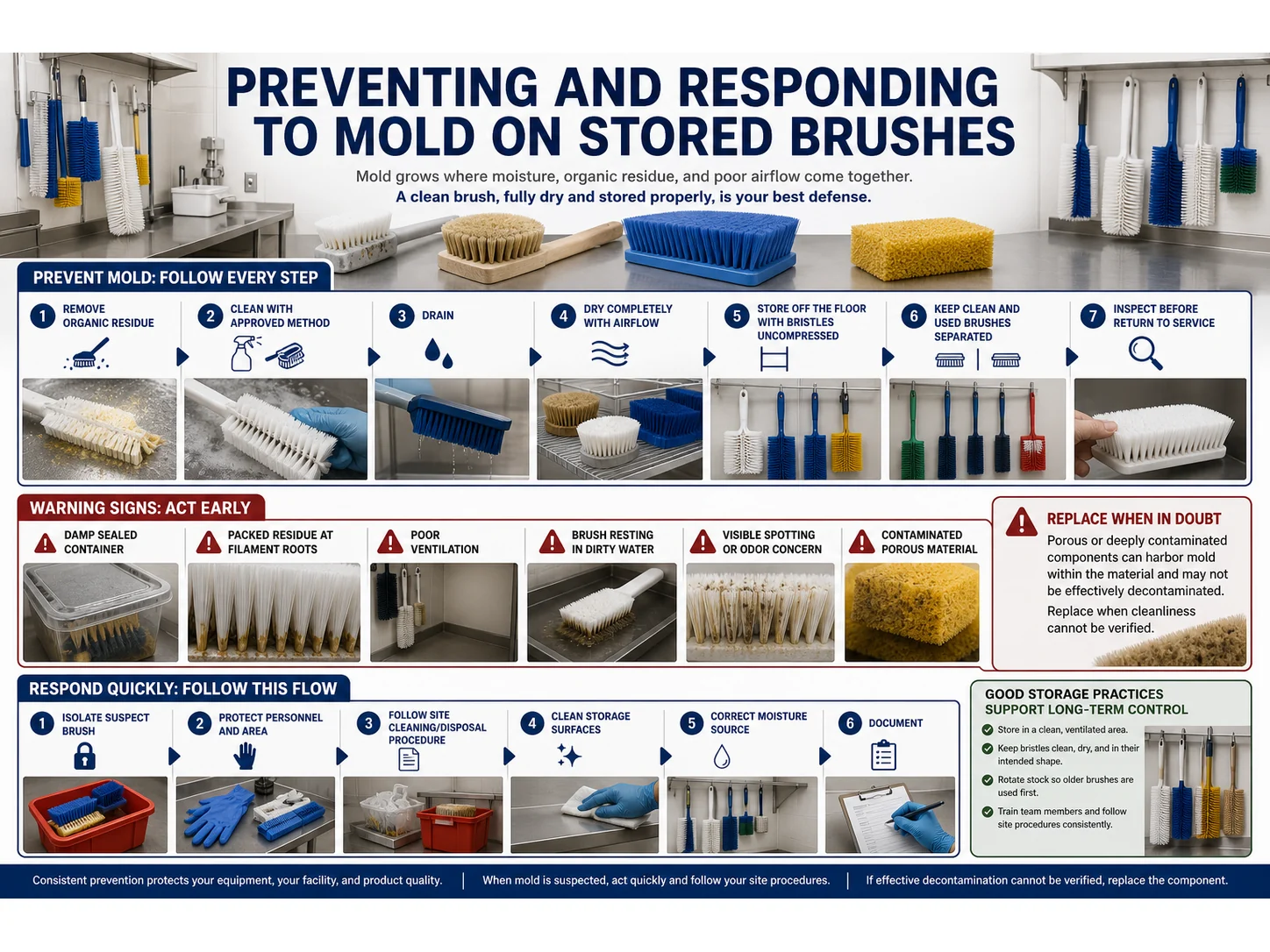
Prevention is always cheaper and safer than remediation. A consistent routine eliminates the moisture-residue combination mold needs.
1. Thorough Drying After Every Use
Shake out excess water vigorously. Wipe bristles with a clean, dry towel. Store brushes bristles down in a well-ventilated holder that allows air circulation. Avoid laying them flat on a sink surface. For brushes used in commercial kitchens or cleaning services, dedicated drying racks near forced airflow can cut dry time dramatically.
2. Regular Deep Cleaning
Rinse out food particles, soap, grease, and other residues immediately after use. Once a week (more often for food-contact brushes), soak the brush head in a solution of hot water and a mild detergent or enzymatic cleaner. For brushes that cannot be soaked (e.g., wooden handles), use a spray disinfectant and rinse thoroughly. A bottle brush, for instance, should be flushed with hot soapy water and then stood upside-down to dry.
3. Antimicrobial Treatments
Brushes treated with antimicrobial agents provide ongoing surface protection. Alternatively, periodic soaking in a diluted white vinegar solution (1 part vinegar to 3 parts water) or hydrogen peroxide (3% solution) can reduce spore counts. Rinse well and dry completely after any chemical treatment.
4. Smart Storage Conditions
Store brushes in a cool, dry place with low humidity. Avoid closed cabinets without airflow, especially in bathrooms and janitorial closets. If a brush must be stored in a damp environment, use a ventilated container with desiccant packs. Outdoor brushes like chimney or BBQ brushes should be brought inside after drying, not left on a wet patio.
Remediation: How to Safely Remove Mold from Brushes
If you discover mold on a brush, act quickly but safely. The method depends on the material and severity.
- Light surface mold (few spots, no deep color): Wash with hot, soapy water, scrub with an old toothbrush, and then soak in a sanitizing solution (see below). Rinse and dry completely.
- Moderate mold (visible patches, mild odor): Soak the brush head in a mold-killing solution for 15-30 minutes. Good options: white vinegar (undiluted), hydrogen peroxide (3%), or a diluted bleach solution (1 tablespoon bleach per gallon of water for colorfast synthetics only; never use bleach on natural bristles or metal ferrules). After soaking, scrub, rinse, and dry.
- Heavy mold (thick growth, deep staining, strong odor): The brush may be unsalvageable. Even if you kill the surface mold, spores and hyphae can remain embedded in porous materials. See the boundary section below.
Important safety tips: Wear gloves and a mask when handling moldy brushes, especially if you have respiratory sensitivities. Wash hands thoroughly afterward. Never boil a brush unless specified by the manufacturer; high heat can ruin bristles and loosen glue.
Common Mistakes in Brush Mold Prevention
- Storing brushes wet: The single largest cause of mold. Even a few hours of damp storage can start a colony.
- Ignoring the ferrule: The metal band where bristles meet the handle often traps moisture. Always dry this area carefully.
- Using contaminated brush on surfaces: A moldy dish brush spreads spores onto dishes; a moldy cleaning brush redeposits mold on surfaces you meant to clean.
- Soaking natural bristle brushes too long: Over-soaking weakens the fibers and creates more absorption, increasing future mold risk.
- Assuming “antimicrobial” means no cleaning required: Antimicrobial additives reduce mold but do not eliminate the need for proper drying and residue removal.
- Using harsh chemicals on delicate brushes: Bleach can corrode metal parts and degrade natural bristles. Always check the brush material before selecting a mold-killing agent.
When Mold Damage Is Irreversible
Not every moldy brush can be saved. It is time to discard the brush if you notice any of the following:
- Deep discoloration that persists after thorough cleaning – mold has likely penetrated into the core of natural bristles or porous plastic.
- Bristles becoming brittle, breaking, or falling out – the fungal digestion process has compromised the material integrity.
- A strong, musty odor that does not dissipate after multiple cleaning and drying cycles – volatile organic compounds from mold remain trapped.
- Visible mold regrows within a day or two despite repeated disinfection – indicates deep-seated contamination or a reservoir of spores in unreachable areas.
- Health symptoms (nose irritation, sneezing, asthma flare-ups) consistently triggered during brush use – suggesting allergenic mold species or mycotoxin production.
Dispose of irreversibly moldy brushes in a sealed bag. Do not compost natural bristle brushes that have heavy mold, as spores can spread.
Final Takeaway
Mold on brushes is a manageable problem when you combine material selection, a disciplined drying habit, regular cleaning, and smart storage. Choose synthetic bristles for wet work, rinse and dry immediately after use, and inspect brushes weekly for early signs of mold. If mold appears, act fast with appropriate disinfectants, but recognize when the brush has gone beyond recovery. By treating your brushes as tools that need maintenance—not disposable items—you extend their life and protect your environment from unnecessary mold exposure.
When Brushing Off Mold Growth Is the Wrong Choice
This brush is not enough when the main problem is blocked access, unsafe working conditions, damaged equipment, incompatible chemicals, or a process setting that keeps recreating the residue. In those cases, review surface finish, solvent exposure, access angle, scratch tolerance, and soil severity and confirm the surrounding cleaning method before increasing brush stiffness or contact pressure.
Frequently Asked Questions
Can mold on a brush make me sick?
Yes. Mold spores and fragments can cause allergic reactions, respiratory irritation, and in some cases, asthma symptoms. People with mold allergies or compromised immune systems should avoid handling moldy brushes without protective gear. Even for healthy individuals, using a moldy brush on food-contact surfaces or in living areas is unwise.
Is white vinegar really enough to kill mold on brushes?
White vinegar kills many common mold species, but it may not eliminate all spore types, especially on porous materials. For light mold on synthetic brushes, a vinegar soak followed by thorough drying is often sufficient. For natural bristles or heavy contamination, hydrogen peroxide or a brush replacement may be more reliable.
How often should I replace a brush to prevent mold?
There is no universal timeline—it depends on usage and care. Kitchen dish brushes and bottle brushes that stay wet daily may need replacement based on wear condition, operating load, and the equipment maintenance plan. A dry-stored cleaning brush might last a year or more. Replace any brush that shows signs of mold that cannot be fully removed, or when bristles start shedding.
Can I use bleach on a BBQ cleaning wire brush?
It is not recommended. Bleach can corrode the metal wires and leave a residue that might transfer to food surfaces. Instead, clean a BBQ brush with hot soapy water, rinse thoroughly, and dry completely. If mold is present, a short soak in white vinegar is safer. If the brush shows rust or heavy mold, replace it.
What is the best storage for a brush to prevent mold?
Hang brushes bristles down in a holder that allows air to circulate from all sides. Avoid closed containers or drawers unless the brush is bone dry. For brushes with a hanging loop, use a hook in a ventilated area. Silicone or metal holders with drainage holes are better than wood or plastic blocks that trap moisture at the bristle base.
Does antimicrobial treatment work on all brushes?
Not universally. Antimicrobial additives are most effective in synthetic bristles and non-porous handles. They slow microbial growth but do not stop it indefinitely. Regular cleaning and drying remain essential. Over time, antimicrobial finishes can wear off, so evaluate the brush condition periodically.
How can I tell if a brush is moldy or just stained?
Stains from food or dyes usually do not grow in size, do not smell musty, and can often be scrubbed off. Mold spots usually appear fuzzy or slimy under magnification, spread over time, and emit an earthy odor. If in doubt, treat the brush as if it has mold and follow the remediation steps; if the spots return rapidly, it is mold.
Can I put a moldy brush in the dishwasher to clean it?
Only if the brush is labeled dishwasher-safe. High-temperature wash cycles can kill mold, but the combination of heat and detergent may also degrade natural bristles, loosen adhesive, or warp plastic. For an unknown brush, manual cleaning with targeted disinfectants is safer and more controllable.
Technical References
Which bristle material fits this job — Nylon PA, AISI 304 Stainless Steel Wire or Silicone?
| Material | Continuous temperature (°C) | Peak temperature (°C) | Water absorption | Hardness |
|---|---|---|---|---|
| Nylon PA | 93 | 121 | 0.3–9% by PA grade and conditioning | Medium to firm; filament diameter and trim length control bending force. |
| AISI 304 Stainless Steel Wire | 400 | 500 | 0% | Rockwell B 70–95 depending on temper and cold work |
| Silicone | 200–250 | 280–300 | 0.1–1.0% | Shore A 20–80 |
Figures as published by Brushtec / DuPont; Alleima. Confirm the exact grade against the supplier datasheet before ordering.
What should replace Nylon PA when it stops working?
- Nylon PA — Compare Nylon PA with PP, PBT, PET. Change material when wet stiffness, temperature, chemical resistance, conductivity, particle shedding, or surface marking becomes the limiting factor.
- AISI 304 Stainless Steel Wire — Use AISI 316 stainless steel wire for chloride, marine, dairy, beverage, chemical washdown, or higher pitting-resistance requirements. Use carbon steel for dry aggressive cutting and brass or abrasive nylon for lower marking risk.
- Silicone — Compare Silicone with PP, TPE, Nylon. Change material when wet stiffness, temperature, chemical resistance, conductivity, particle shedding, or surface marking becomes the limiting factor.