
Application
Pond Filter Cleaning
For Pond Filter Cleaning, the brush must reach the working area, disturb or collect biofilm/algae/silt and sand/suspended particles, and release it without creating unacceptable surface damage or process interference. Brush selection starts with access, contact motion, and the cleaning method used in the process.
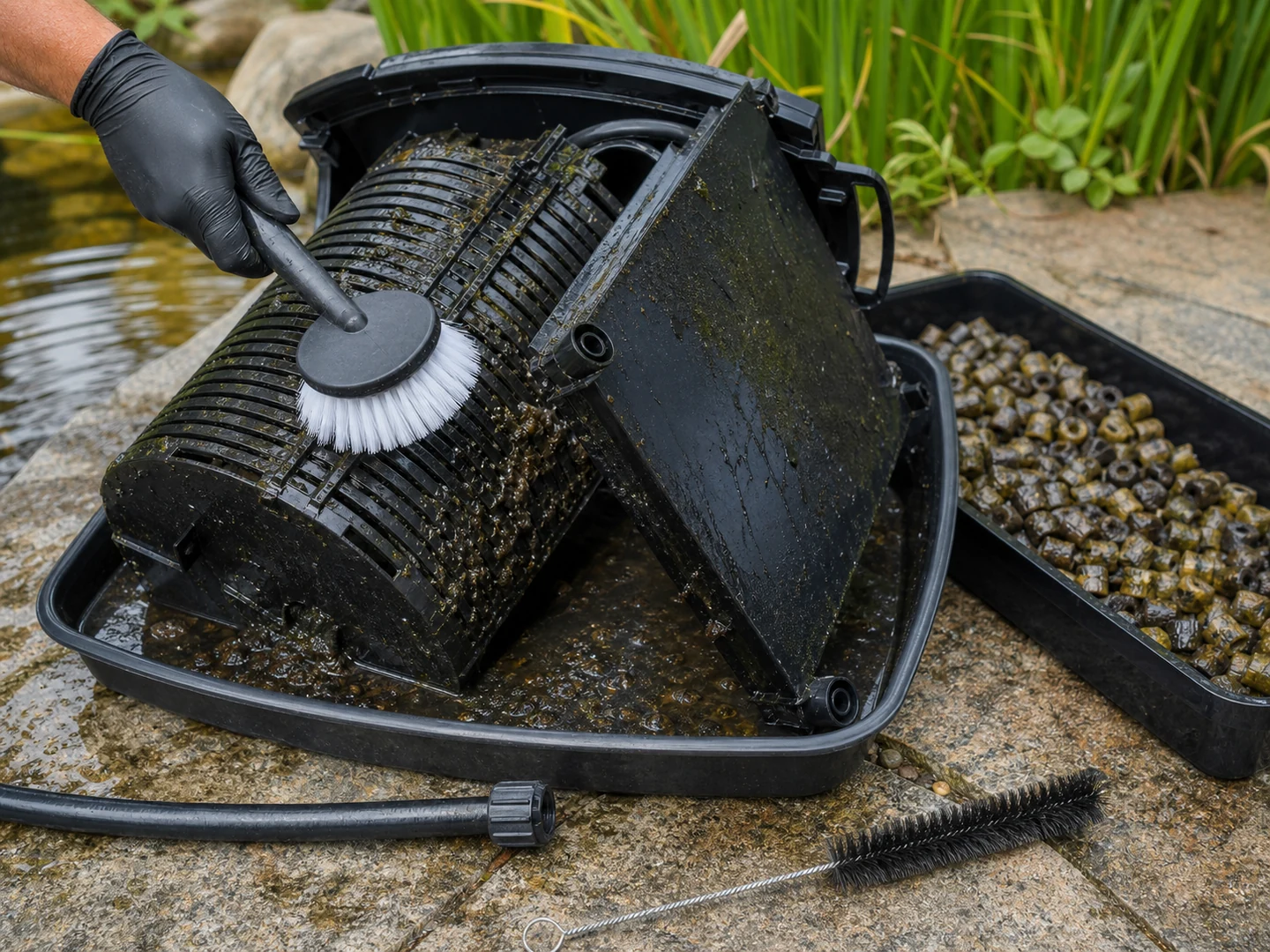
At a glance
- Cleaning target
- Biofilm/Algae/Silt and Sand/Suspended Particles
- Working environment
- Underwater / Wet Indoor Area
- Cleaning method
- Wet Brushing / Soaking
- Requirements to check
- If Used in Contact with Drinking Water, Follow NSF/ANSI 61-Related Material Requirements; Hygiene SOP
Pond filters are large, outdoors, and often use brush media themselves, so the work covers both the housing screens and those media brushes, within whatever the pond’s water protocol allows.
What makes Pond Filter Cleaning different from other facility, floor and outdoor cleaning?
The main difficulty is removing algae, biofilm, suspended solids, and organic debris from filter chambers, tanks, ponds, media, and aquatic equipment without damaging the surface, loading the brush, or carrying contamination back into the process.
The work happens in underwater and wet indoor area against biofilm, algae, silt and sand and suspended particles.
The part people get wrong: the surface, the residue and the access opening decide the brush together. Fix on any one of them alone and the geometry comes out wrong.
What are the most common cleaning targets in Pond Filter Cleaning?
The work breaks into 4 targets. They look similar from outside the machine and behave nothing alike at the brush.
| Part or area | Residue type | Cleaning requirement |
|---|---|---|
| Filter-Chamber | Biofilm, Algae, Silt and Sand, Suspended Particles | The tips must enter the apertures far enough to push lodged material back out, without wedging in the openings. |
| Brush-Media Filter | The filament field must stay open in flowing water and hold what it is placed there to collect, without packing shut or shedding into the water. | |
| Pump and Intake | The head must reach the working face and apply even contact without marking the surface. | |
| Pipe and Outlet | The brush must wrap a projecting part and clean all round it without marking the polished finish. |
The dimensional envelope those targets impose on the brush:
| Parameter | Typical range |
|---|---|
| Brush length | 300–2,000 mm |
| Brush diameter | 50–250 mm |
| Water temperature | 5–40°C |
Which brush types work for each cleaning target?
Large soft block brush, screen brush, tube brush or equipment-specific cleaning attachment.
| Cleaning target | Recommended brush type | Why it fits |
|---|---|---|
| Filter-Chamber | Handheld Detail Brushes | The chamber is a box packed with media, so a hand-guided head clears the walls and media faces without unpacking the whole unit. |
| Brush-Media Filter | Filter Brushes | Here the brush is the filter medium: its filament surface catches the solids, so density matters more than stiffness and it is cleaned by rinsing. |
| Pump and Intake | Handheld Detail Brushes | The pump intake screen is where flow drops first, so a hand-guided head clears it without pushing debris on into the impeller. |
| Pipe and Outlet | An outlet spigot stands proud in the water and grows algae all round, so a soft head that wraps the part cleans every side in one pass. |
The layouts this application is normally built in:
- Driven brush — use when algae, biofilm, suspended solids, and organic debris needs repeatable scrubbing or controlled relative movement
- Passive or free-running brush — use for loose contamination and lower process complexity on filter chambers, tanks, ponds, media, and aquatic equipment
- Localized hand, strip, or tube brush — use where only an edge, gap, port, or maintenance point needs contact
In practical brush terms: reach first, then residue. A brush that fits but is too soft can be stiffened; a brush that does not fit is simply the wrong tool.
What filament materials work best for Pond Filter Cleaning?
Durable nylon or polypropylene for housings and screens; softer contact for foam media; chemical use governed by pond protocol.
| If the condition is… | Filament to start with | Why |
|---|---|---|
| Housings and rigid screens | PA66 Nylon | firm enough to clear a blocked screen without deforming it |
| Foam and biological media | Nylon PA, soft grade | rinses the media without tearing the cell structure |
| Acid or alkali regeneration at pH 2–12 | Polypropylene PP | unaffected across the whole regeneration range |
The constraints this application puts on the filament:
| Constraint | Value for this application |
|---|---|
| Filament hardness | Soft–Medium |
| Maximum service temperature | 80°C |
| Chemical exposure | Water; Hypochlorite; Acid / Alkali Regeneration Solution pH 2–12 |
| Cleaning method | Wet Brushing, Soaking |
How do I choose the right brush for my pond filter equipment?
Chamber and screen dimensions size the housing brushes, media brushes are a separate item, and the pond’s own protocol caps any chemistry.
The sequence that gets a usable sample first time:
- Identify the target part and measure the access opening or clearance
- Describe the residue: what it is, how thick it sits, and how strongly it holds
- Choose the construction that can physically reach that target
- Set the filament from surface risk, working temperature and cleaning chemistry
- Fix filament diameter, free trim length and density for the contact pressure you need
- Run one cycle and check the result before committing to a production quantity
Before you commit to a quantity, send the filter chamber dimensions, the screen aperture, and the pipe bores.
When is a pond filter brush the wrong tool?
Backwashing and a pressure rinse do most of the work on foam and bead media, and brush media are best agitated in pond water rather than scrubbed. Save the brush for housings, screens and the pipework where flow alone leaves a film.
What common mistakes should I avoid in Pond Filter Cleaning?
- Specifying pond volume instead of the filter chamber and screen dimensions
- Changing brush material while leaving excessive engagement, poor alignment, or no discharge path unchanged
- Copying a worn brush without recording motion, direction, mounting, and the original working diameter
When a brush is running but not cleaning, start here rather than adding pressure:
| Symptom | What to change |
|---|---|
| Residue remains | Increase relative motion or discharge, then change filament diameter or density; do not add pressure before checking loading by algae, biofilm, suspended solids, and organic debris. |
| Surface marks or scratches | Reduce engagement, use finer or softer fill, and remove trapped abrasive particles from contact with filter chambers, tanks, ponds, media, and aquatic equipment. |
| Rapid wear or uneven cleaning | Check alignment, runout, support, motion, temperature, chemical attack, and whether the brush covers the complete working path. |
| Brush loads or redeposits residue | Open the fill pattern or add wash, vacuum, air, scraping, or a collection path so removed algae, biofilm, suspended solids, and organic debris leaves the contact zone. |
Guides that go deeper on this
Continue Exploring
Recommended Reading & Related Brush Resources
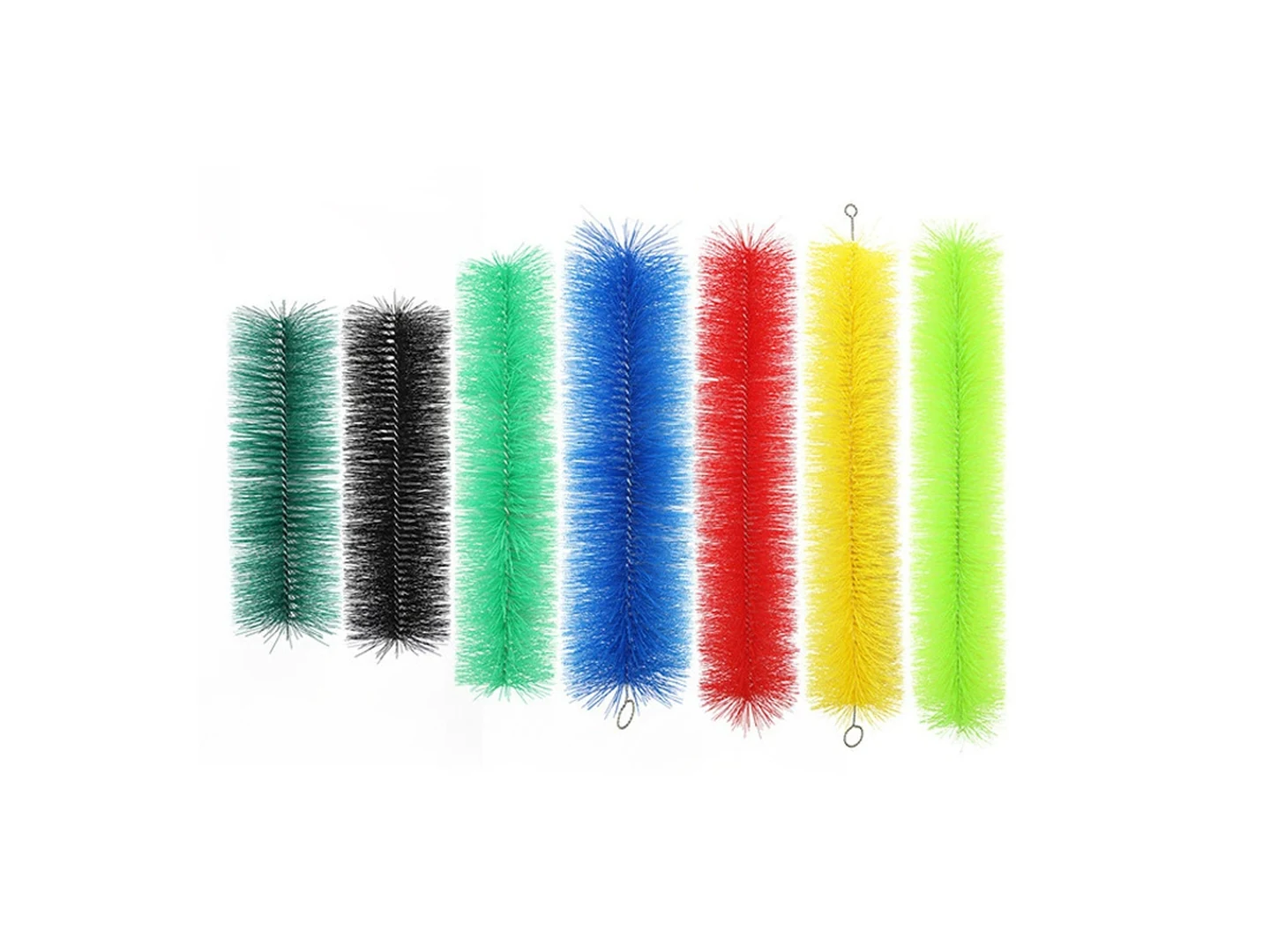
Pond Filter Brush
Hanging polypropylene pond filter brush for mechanical and biological filtration in koi ponds and…
See the specification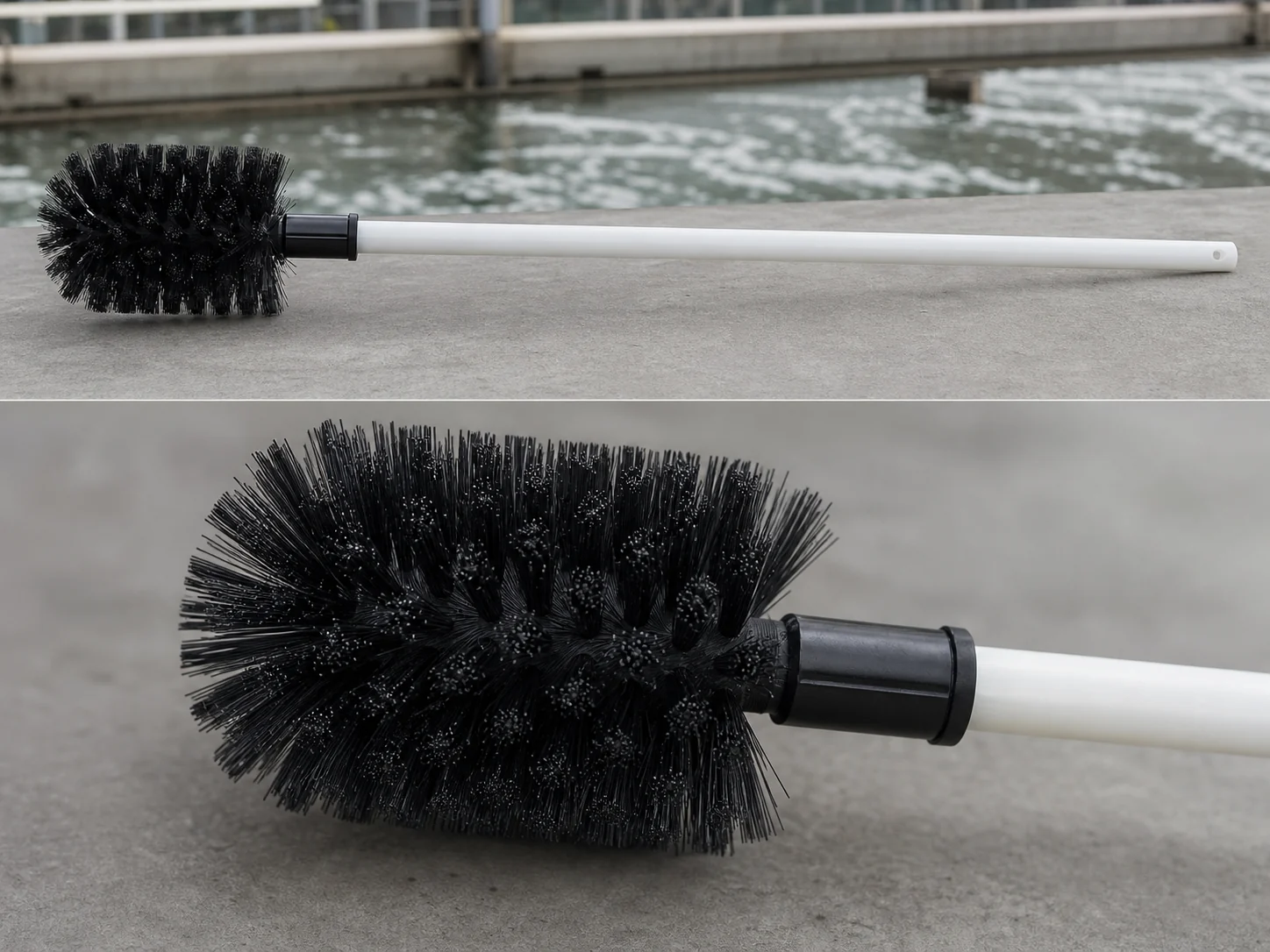
500mm PBT Pond Filter Brush
500mm PBT pond filter brush with a 120 mm round head and fixed PP…
See the specification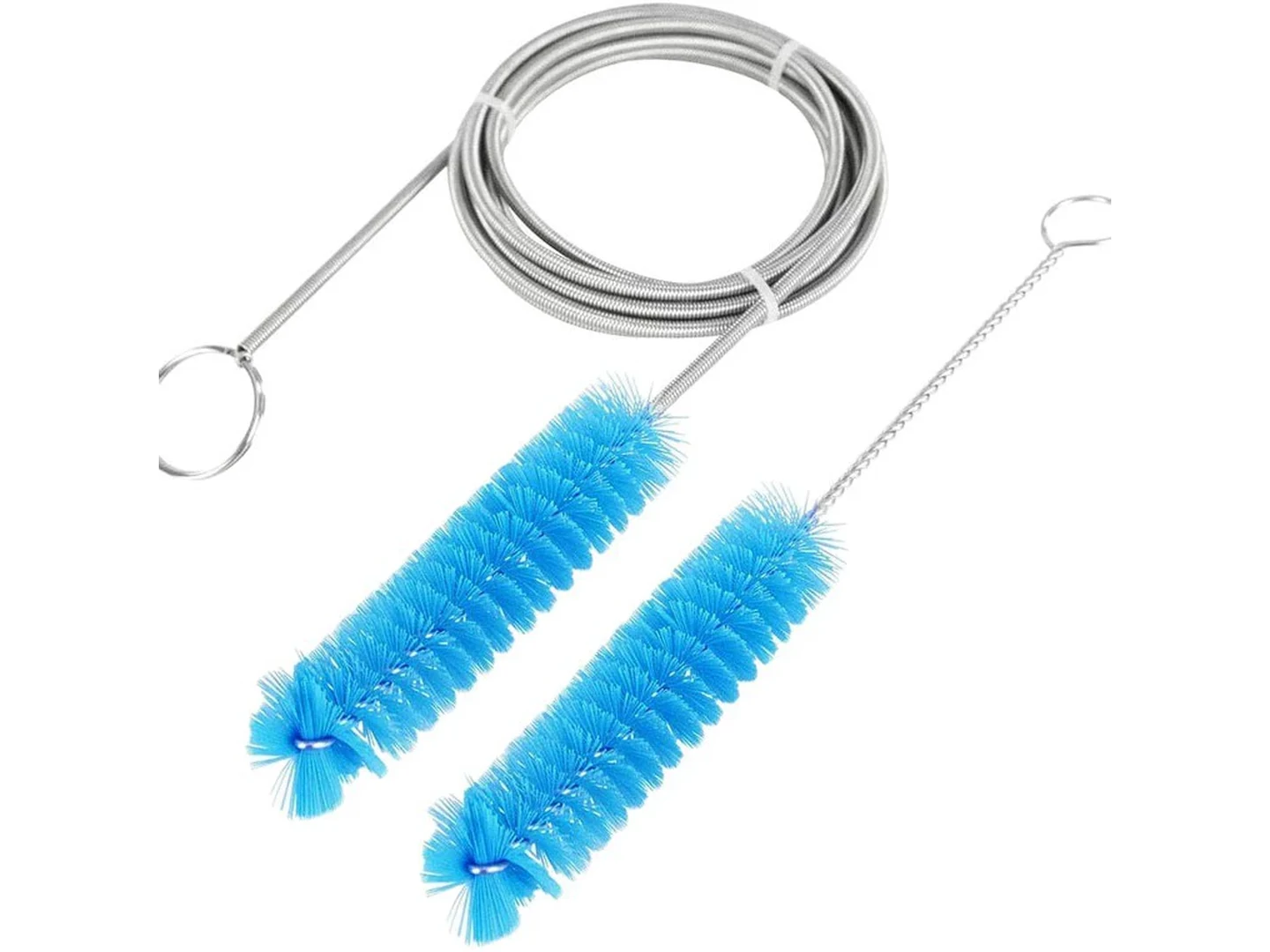
Aquarium Filter Brush
Custom aquarium filter brushes in Nylon PA and PBT for mechanical solids capture and…
See the specification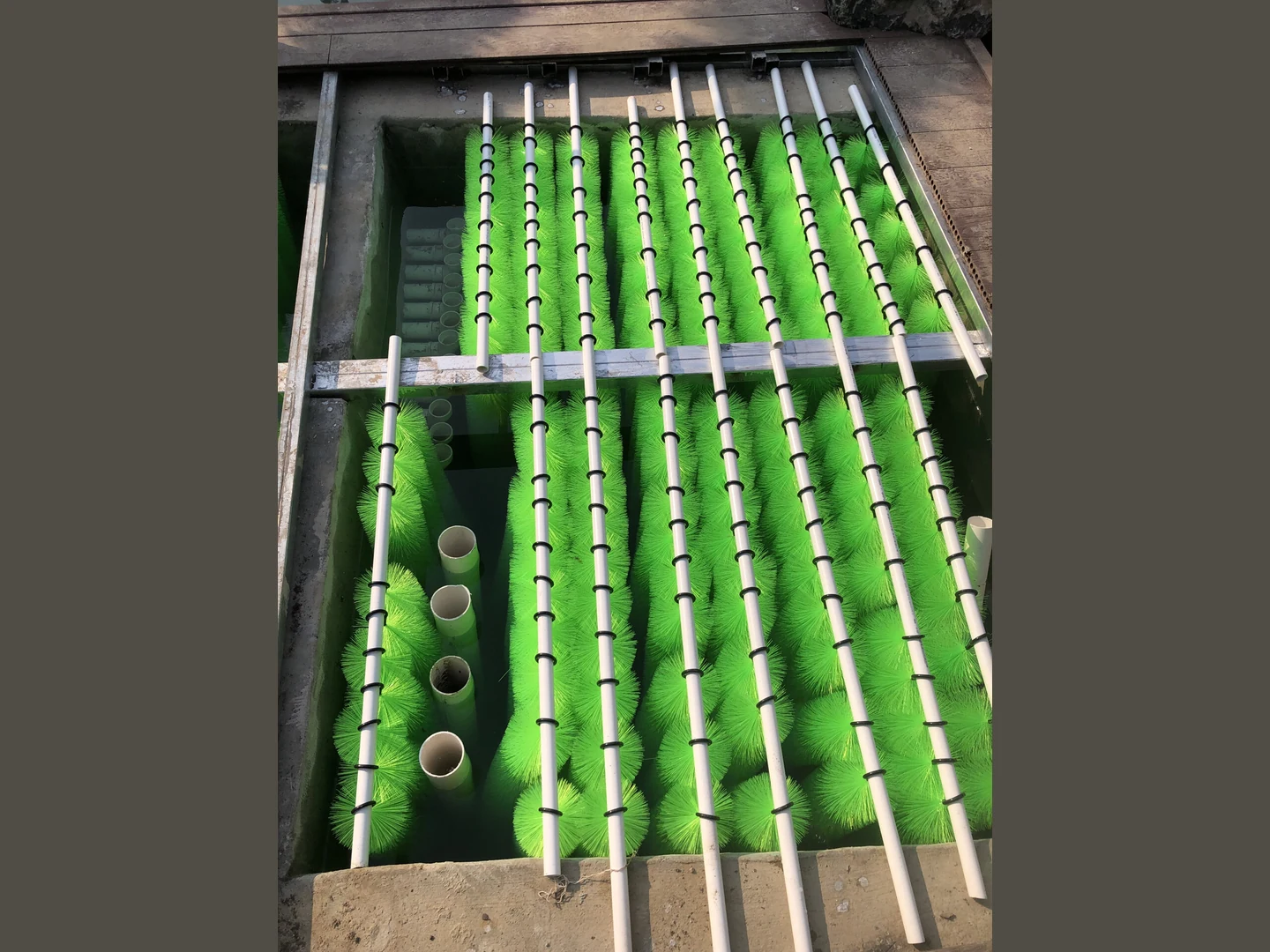
Custom Filter Brushes
Choose a filter brush when an open brush body must collect, intercept, agitate, or…
See how this type is built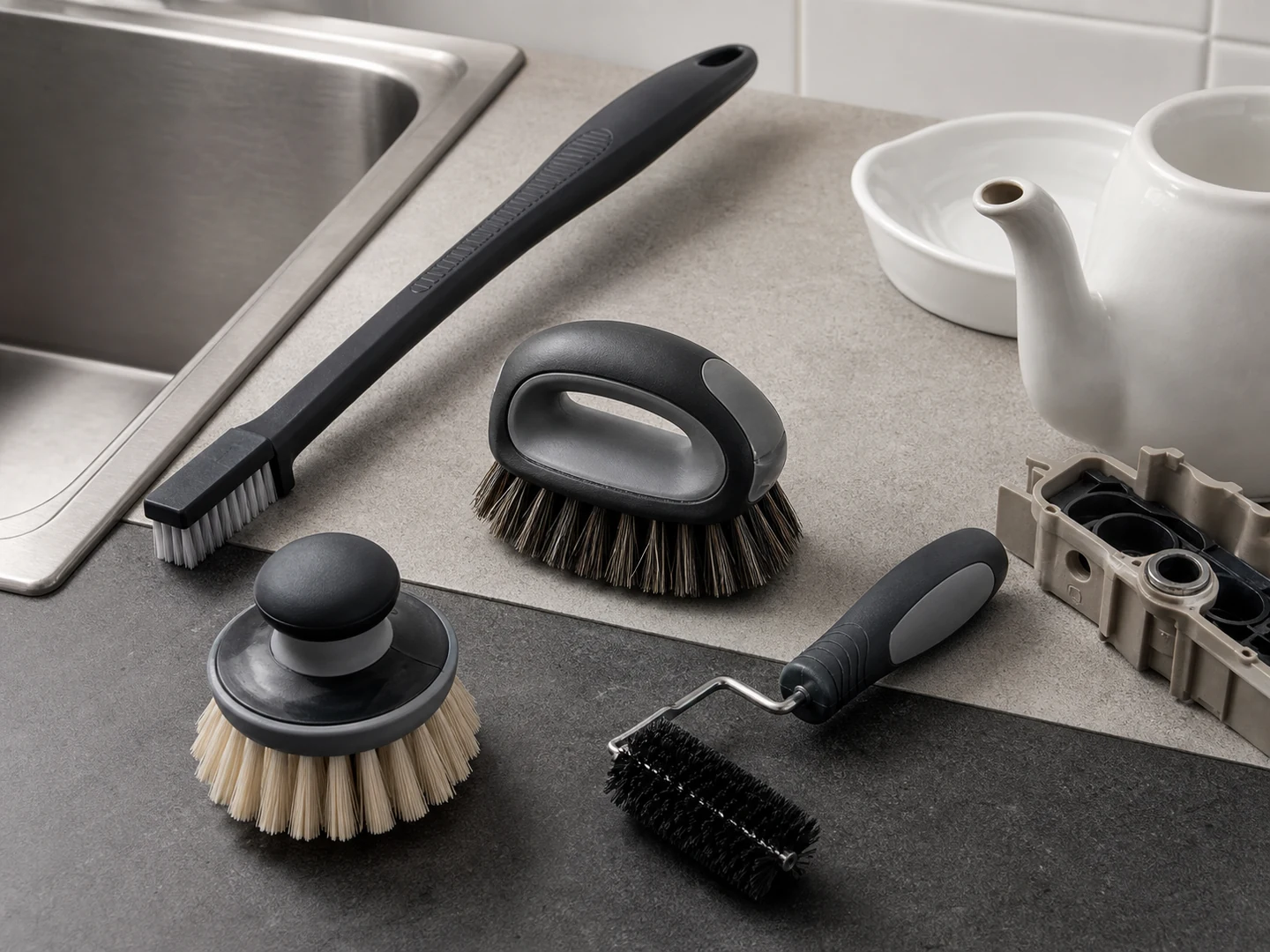
Custom Handheld Detail Brushes
Choose a handheld detail brush when you need direct control in seams, recesses, fittings,…
See how this type is built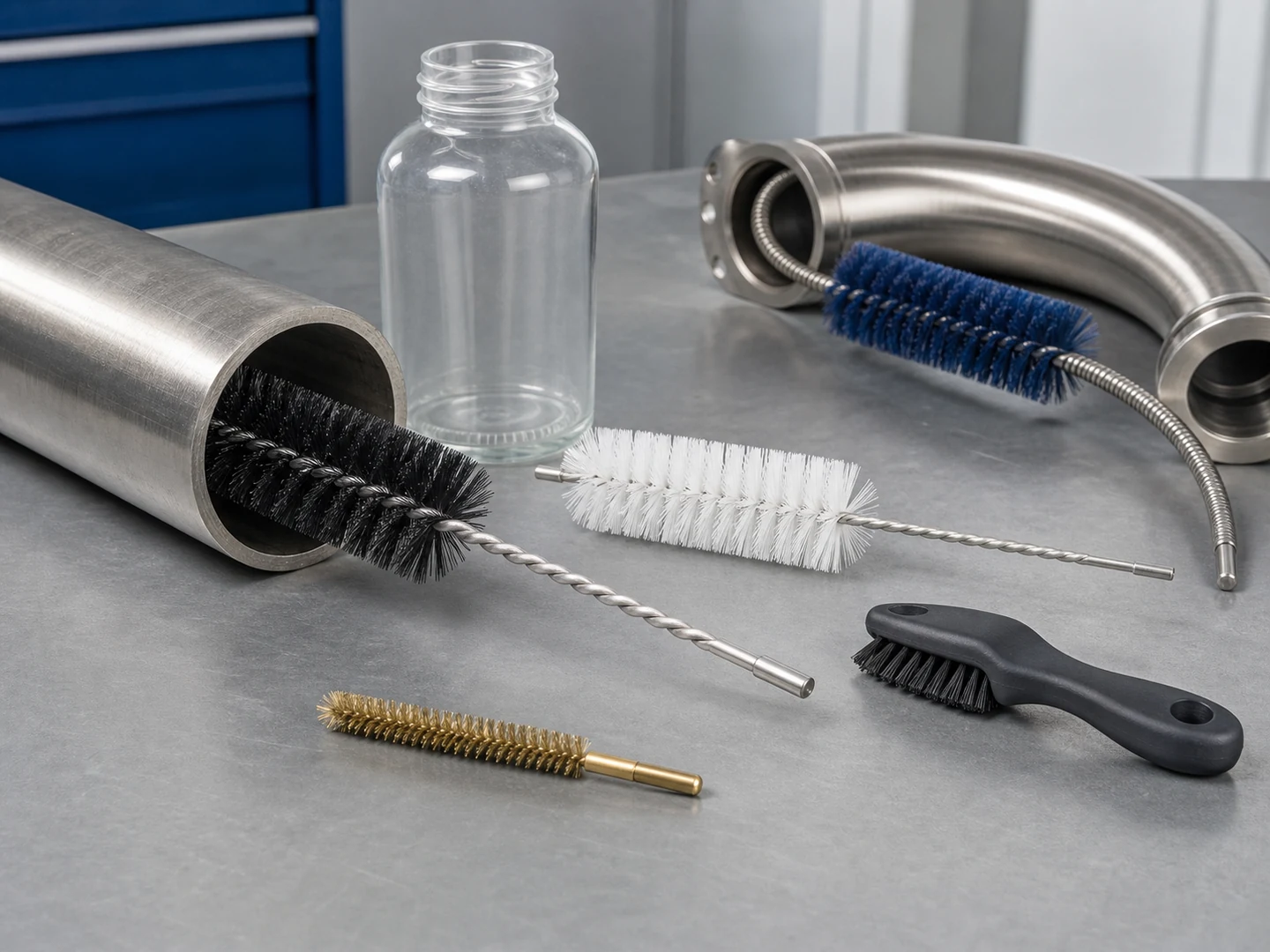
Custom Tube & Pipe Bore Brushes
Choose a tube, pipe, or bore brush when the working surface is inside a…
See how this type is built
Nylon PA
Choose Nylon PA based on its stiffness, recovery, wear, wet-service, chemical, and temperature behavior.
Compare this material
PBT
Choose PBT based on its stiffness, recovery, wear, wet-service, chemical, and temperature behavior. Do…
Compare this materialCustom Manufacturing RFQ
Discuss This Application
Share the working surface, residue, dimensions, material direction, interface, quantity and drawing or sample photo.
Custom Brush RFQ
Request a Custom Cleaning Brush Quote
Upload a drawing, product photo, or sample photo and provide the core dimensions and cleaning conditions.
“We need a brush to remove wet residue from a stainless steel conveyor, about 800mm wide. The current brush wears quickly. We can send photos.”
“We sell drinkware and need a cleaning brush to include with the product. Quantity around 5,000 pieces.”