
Application
Chimney and Flue Soot Cleaning
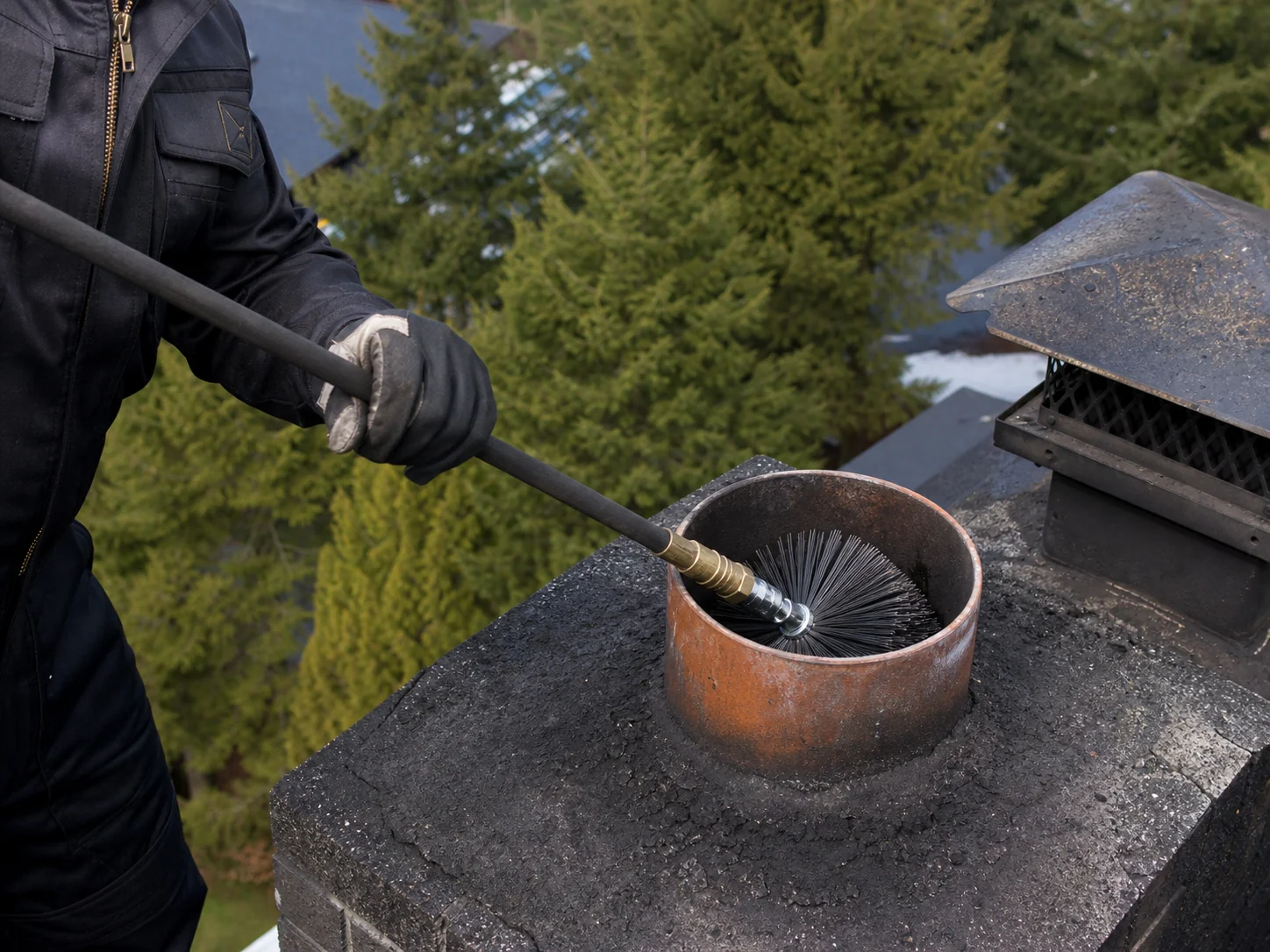
For Chimney and Flue Soot Cleaning, the brush must reach the working area, disturb or collect soot/tar/carbonized deposits, and release it without creating unacceptable surface damage or process interference. Brush selection starts with access, contact motion, and the cleaning method used in the process.
At a glance
- Cleaning target
- Soot/Tar/Carbonized Deposits
- Working environment
- Dry Indoor Area / Outdoor
- Cleaning method
- Dry Brushing
- Requirements to check
- Working-at-Height / Confined-Space SOP; Fire-Prevention Requirements
Flue brushes are sized to the liner rather than the appliance: a rigid masonry stack takes stiff fill, while a flexible liner takes a brush that will not catch or tear the corrugation.
What makes Chimney and Flue Soot Cleaning different from other facility, floor and outdoor cleaning?
The task is to remove Soot/Tar/Carbonized Deposits while controlling surface damage, residue carryover, brush shedding and chemical or temperature degradation.
The work happens in dry indoor area and outdoor against soot, tar and carbonized deposits.
The part people get wrong: this is not one job. The same equipment carries several targets, each with a different opening and a different residue, and one brush rarely covers them all.
What are the most common cleaning targets in Chimney and Flue Soot Cleaning?
There are 5 distinct targets here, and the brush that suits one will usually not reach another.
| Part or area | Residue type | Cleaning requirement |
|---|---|---|
| Residential Fireplace Chimney | Soot, Tar, Carbonized Deposits | The brush must pass the full length of the passage and hold contact with the wall without folding over at the far end. |
| Pellet-Stove Flue | ||
| Boiler Flue | ||
| Industrial Stack | ||
| Flexible Liner |
The dimensional envelope those targets impose on the brush:
| Parameter | Typical range |
|---|---|
| Contaminant | Soot/Tar/Carbonized Deposits |
| Required hardness | Hard |
| Maximum temperature | 200°C |
| Chemical exposure | No Added Medium; Tar Cleaner |
| Cleaning method | Dry Brushing |
| Environment | Dry Indoor Area/Outdoor |
Which brush types work for each cleaning target?
Select hand, tube, strip, roller, disc or machine-mounted geometry from access and motion.
| Cleaning target | Recommended brush type | Why it fits |
|---|---|---|
| Residential Fireplace Chimney | Tube & Pipe Bore Brushes | A masonry flue is a tall rough bore worked from a rod or rope, so the brush must fill the section and hold contact on all four walls as it is drawn through. |
| Pellet-Stove Flue | A pellet flue is small in diameter with several elbows, so a short flexible bore brush is what negotiates the bends and still scrubs the wall between them. | |
| Boiler Flue | Boiler flues run hot and lay down hard scale, so the bore brush is sized as a close fit and worked repeatedly rather than passed through once. | |
| Industrial Stack | A stack is long enough that the brush travels on a driven shaft or a winch line, so the head has to keep its shape over many passes without collapsing. | |
| Flexible Liner | A stainless liner is corrugated and damages easily, so the bore brush must fill the section without a hard edge that could catch in the corrugation. |
All rod work, from the top down or the bottom up, with the flue sealed at the far end so the soot falls into a collector rather than the room.
In practical brush terms: reach first, then residue. A brush that fits but is too soft can be stiffened; a brush that does not fit is simply the wrong tool.
What filament materials work best for Chimney and Flue Soot Cleaning?
Wire throughout — carbon or galvanized steel for masonry flues, 304 stainless for stainless liners, because a carbon-steel brush leaves deposits in a stainless liner that then corrode it.
| If the condition is… | Filament to start with | Why |
|---|---|---|
| Masonry flue | Carbon Steel Wire | hardest cut on tar and carbonised soot |
| Stainless liner | Stainless Steel 304 Wire | a carbon-steel brush leaves deposits that corrode the liner |
The constraints this application puts on the filament:
| Constraint | Value for this application |
|---|---|
| Filament hardness | Hard |
| Maximum service temperature | 200°C |
| Chemical exposure | No Added Medium; Tar Cleaner |
| Cleaning method | Dry Brushing |
How do I choose the right brush for my chimney and flue soot equipment?
Start with hard fill, a 200°C ceiling and no added medium, then size to the liner bore and soften the fill if the liner is flexible.
The order that avoids rework:
- Identify the target part and measure the access opening or clearance
- Describe the residue: what it is, how thick it sits, and how strongly it holds
- Choose the construction that can physically reach that target
- Set the filament from surface risk, working temperature and cleaning chemistry
- Fix filament diameter, free trim length and density for the contact pressure you need
- Run one cycle and check the result before committing to a production quantity
Before you commit to a quantity, send the liner bore, the flue height, whether the liner is rigid or flexible, and the deposit type.
When is a chimney and flue soot brush the wrong tool?
Glazed creosote is chemically treated or removed with a rotary chain or power sweep, because a brush slides straight over it. A flue with a cracked liner or a failed joint is a repair job, and sweeping it first only spreads the problem.
What common mistakes should I avoid in Chimney and Flue Soot Cleaning?
- Sizing to the appliance rather than the liner, and not saying whether the liner is flexible
- Changing the filament while leaving excessive engagement, poor alignment or no discharge path unchanged
- Copying a worn brush without first recording its motion, direction, mounting and original working diameter
When a brush is running but not cleaning, start here rather than adding pressure:
| Symptom | What to change |
|---|---|
| Residue remains | Increase discharge or relative motion before adding pressure |
| Surface marks | Reduce engagement and use finer/softer fill |
| Rapid wear | Check alignment, temperature and chemical attack |
| Redeposition | Add wash, vacuum or collection path |
Questions this page is asked
Which findings should stop routine soot brushing?
Stop for suspected chimney fire damage, cracked or displaced liner sections, heavy glazed deposits, a blocked connector, unstable masonry, an inaccessible offset or any condition that prevents controlled full-length cleaning. Keep the appliance out of service until a qualified person identifies the condition and authorizes the corrective method.
What must be checked after chimney brushing before the appliance is used?
Contain and remove loosened debris from the base, connector and cleanout, then inspect the accessible liner, joints, cap, damper and appliance connection for blockage or damage. Restore covers and draft components and return the system to service only under the appliance and chimney instructions after the vent path is confirmed clear.
Guides that go deeper on this
No catalogue item for this yet
Every brush here is made to order, and this one has no catalogue entry so far. Send the working surface, the residue, the access opening and the quantity, and it is quoted through the same specification route as the rest of the range.
Custom Manufacturing RFQ
Discuss This Application
Share the working surface, residue, dimensions, material direction, interface, quantity and drawing or sample photo.
Custom Brush RFQ
Request a Custom Cleaning Brush Quote
Upload a drawing, product photo, or sample photo and provide the core dimensions and cleaning conditions.
“We need a brush to remove wet residue from a stainless steel conveyor, about 800mm wide. The current brush wears quickly. We can send photos.”
“We sell drinkware and need a cleaning brush to include with the product. Quantity around 5,000 pieces.”