Quick Answer
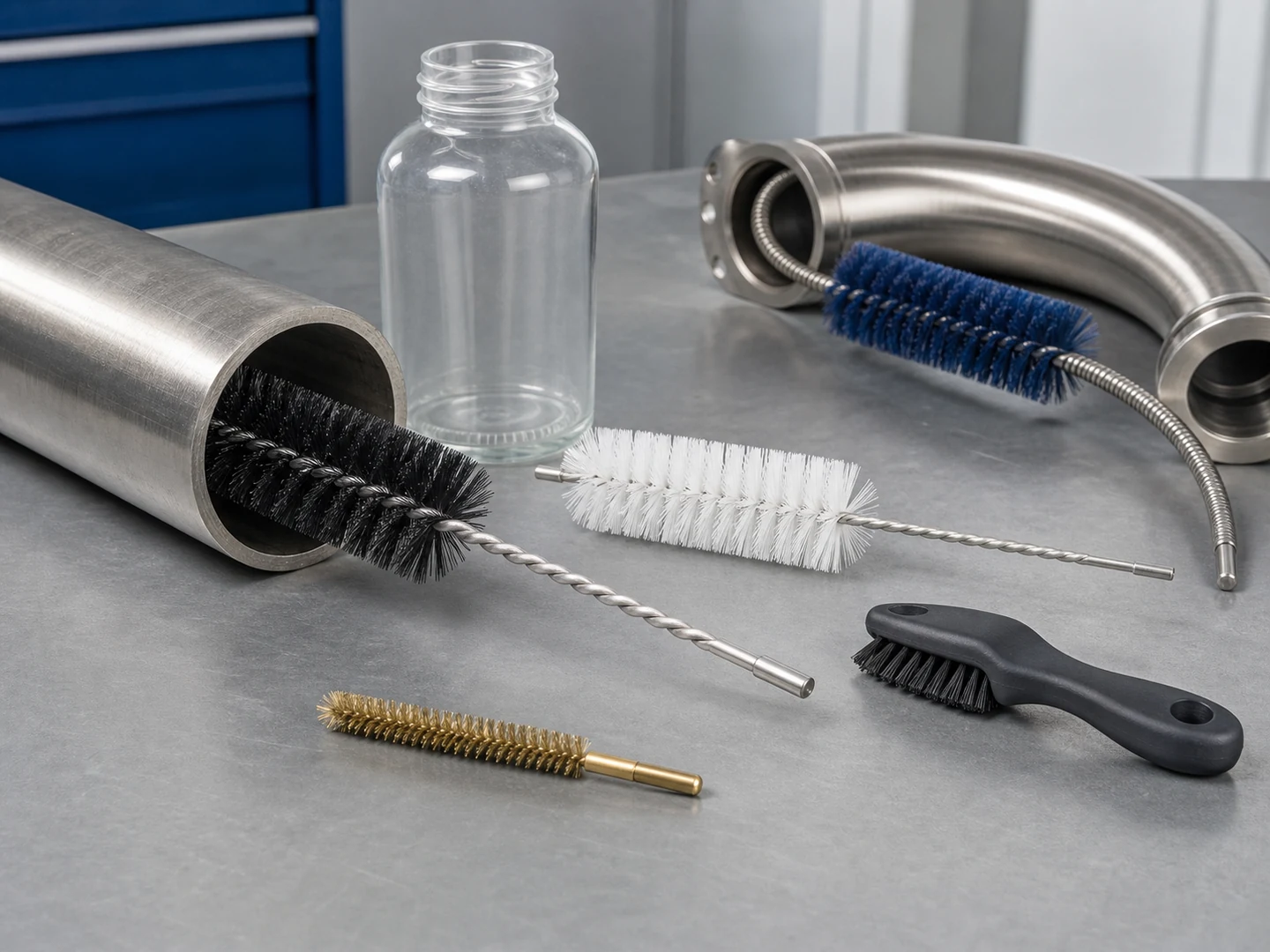
A tube brush must contact the internal wall without jamming, folding over, or leaving untouched bands. Match brush diameter to the bore, then set brush-section length, stem, tip, filament, and drive for the passage geometry and residue.
Published Construction Ranges
| Construction | Published range | Use |
|---|---|---|
| Single stem / single spiral | Brush diameter 1/8–2 in; brush section 1–5 in; overall length 6–16 in | Hand use and light internal cleaning |
| Double stem powered brush | Brush diameter 1/4–2 in; brush section 1–3 in; overall length 4–5.5 in | Higher torsional strength and denser powered cleaning |
| Abrasive nylon tube brush | Diameter 1/4–1.75 in; grit 80–500; 600 grit in selected fine constructions | Deburring, oxide removal, thread and bore finishing |
| Flue / large-pipe brush | Diameter 1–16 in with threaded connector and extension rods | Large pipes, flues, and long access |
Diameter Selection
For loose dust and wiping, use near-size contact so the filament tips reach the wall with modest deflection. For scrubbing, the brush can be larger than the bore so the filament bends against the wall. Fine, long polymer filament accepts more oversize than short coarse wire. For instrument channels, STERIS publishes a sizing method of measured channel diameter plus 3 mm and channel length plus 5 cm; that rule belongs to channel-style instrument brushes and should not be transferred unchanged to rigid industrial bores.
Passage Geometry Changes the Brush
| Passage | Construction choice |
|---|---|
| Blind hole | Fan, radial, or protected tip to clean the bottom without an exposed cut stem |
| Cross hole or port intersection | Abrasive nylon or side-tuft contact that reaches the intersecting edge |
| Long straight tube | Threaded connector, extension rod, cable, or powered tube-cleaning system |
| Curved hose or multiple bends | Flexible stem, pull-through cable, or cleaning pig rather than a rigid stem |
| Stepped or mixed diameter | Tapered, dual-diameter, or staged brush section |
Filament by Deposit
Use fine nylon 612 or PBT for soft wiping and wet cleaning; polypropylene for broad chemical exposure; stainless steel for corrosion-resistant aggressive cleaning; carbon steel for economical rust and scale removal on ferrous parts; brass or phosphor bronze for softer metal contact; abrasive nylon for controlled cutting without loose wire fragments.
Quote Data
Provide minimum and maximum bore diameter, passage length, bends, steps, bottom geometry, surface finish, residue, manual or powered use, equipment speed, access side, required stem or thread, temperature, fluid, quantity, and a section drawing.
Technical References
- CDC — Cleaning, Guideline for Disinfection and Sterilization in Healthcare Facilities
- American Brush Manufacturers Association — Brush Lingo
- NIST — Metric SI Units
Which bristle material fits this job — PA612 Nylon, AISI 304 Stainless Steel Wire or AISI 316 Stainless Steel Wire?
| Material | Continuous temperature (°C) | Peak temperature (°C) | Water absorption | Hardness |
|---|---|---|---|---|
| PA612 Nylon | 90–110 | 130–150 | 0.3–0.7% | Shore D 70–80 |
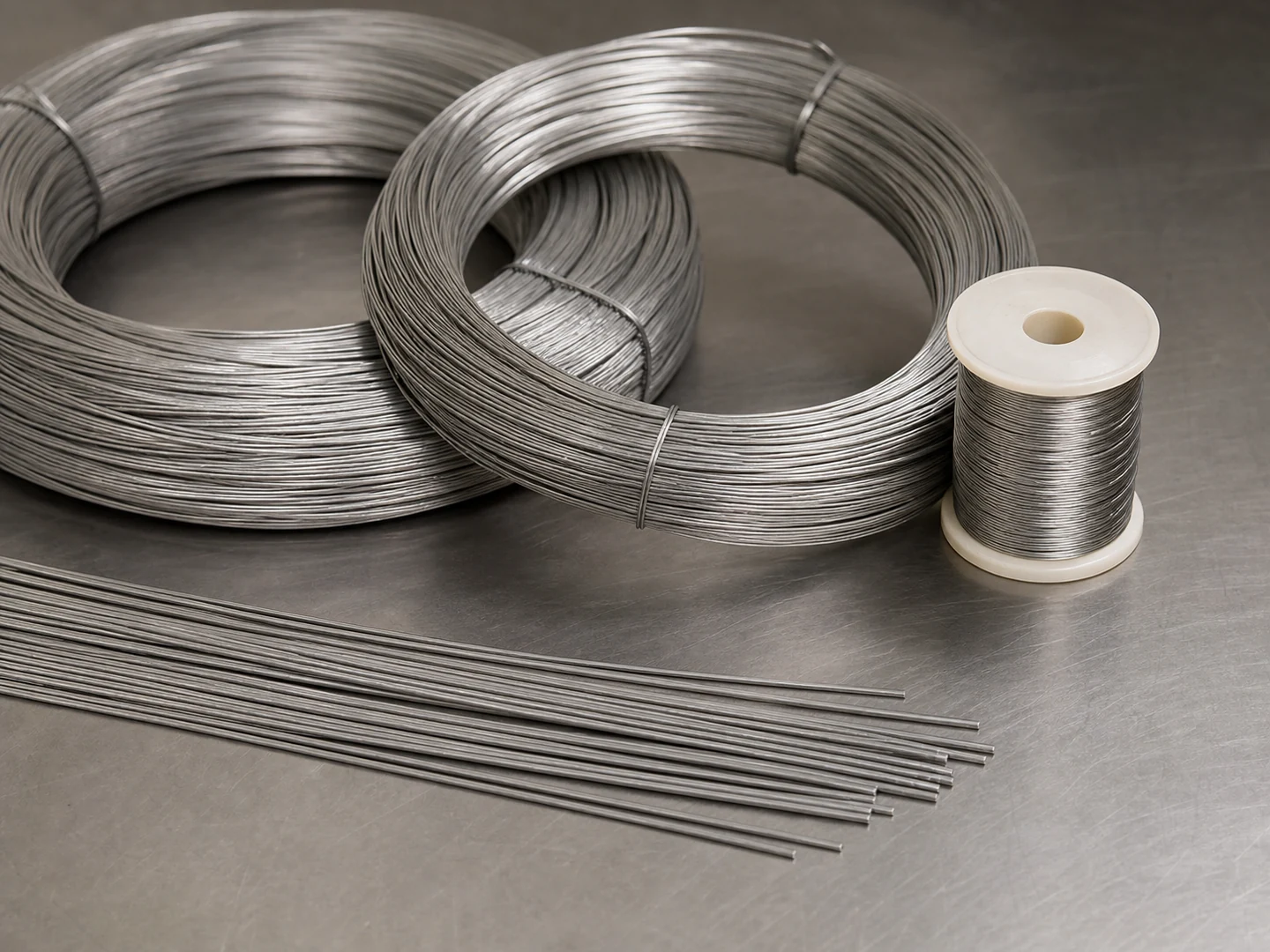
| AISI 304 Stainless Steel Wire | 400 | 500 | 0% | Rockwell B 70–95 depending on temper and cold work |
| AISI 316 Stainless Steel Wire | 400 | 500 | 0% | Rockwell B 70–95 depending on temper and cold work |
| Abrasive Nylon | 120 | 150 | 0.1–1.0% | Abrasive filament; stiffness and cutting level is controlled by PA base, grit type, grit size, filament diameter and trim height. |
Figures as published by Brushtec / DuPont; Alleima; Perlon. Confirm the exact grade against the supplier datasheet before ordering.
When are Tube & Pipe Bore Brushes the wrong choice?
- Tube & Pipe Bore Brushes — Use pigs, flushing, ultrasonic, chemical descaling, blasting, or a flexible cable system for long, sharply curved, or heavily scaled passages.
- PA612 Nylon — PA612 costs more than general PA6 and should be used where its wet stability, recovery or wear life creates a real process benefit.
- AISI 304 Stainless Steel Wire — Avoid using AISI 304 as the default in marine, brine, hypochlorite, and persistent chloride environments; use AISI 316 when higher pitting and crevice-corrosion resistance is required.
- AISI 316 Stainless Steel Wire — AISI 316 is not immune to chloride stress-corrosion cracking, concentrated hypochlorite, strong reducing acids, or crevice attack; duplex or higher-alloy grades may be required in severe conditions.
What should replace Tube & Pipe Bore Brushes when they stop working?
- Tube & Pipe Bore Brushes — Tube and bore brushes work by radial contact inside a confined diameter; wire wheels and cups work mainly on external edges, profiles, welds, and broad surfaces.
- PA612 Nylon — Compare PA612 Nylon with PA66, PP, PBT. Change material when wet stiffness, temperature, chemical resistance, conductivity, particle shedding, or surface marking becomes the limiting factor.
- AISI 304 Stainless Steel Wire — Use AISI 316 stainless steel wire for chloride, marine, dairy, beverage, chemical washdown, or higher pitting-resistance requirements. Use carbon steel for dry aggressive cutting and brass or abrasive nylon for lower marking risk.
- AISI 316 Stainless Steel Wire — Use AISI 304 for general wet service without persistent chlorides. Use duplex, 904L, or higher-alloy wire when AISI 316 is insufficient for chloride stress-corrosion, severe crevice conditions, or aggressive acids.