What Is Precision Bore Cleaning Brush Selection?
Precision bore cleaning brush selection means choosing a brush with the correct filament material, diameter, length, and drive method to clean an internal cylindrical surface—usually a machined bore, tube ID, or cross‑drilled channel—to a specific cleanliness or surface finish target. Selection balances cleaning aggressiveness against the risk of scratching, galling, or embedding particles in the bore wall.
Common Types of Bore Cleaning Brush Materials
Most industrial bore brushes use one of five filament families. The right choice depends on the bore material, the type of contamination, and how sensitive the surface finish is.
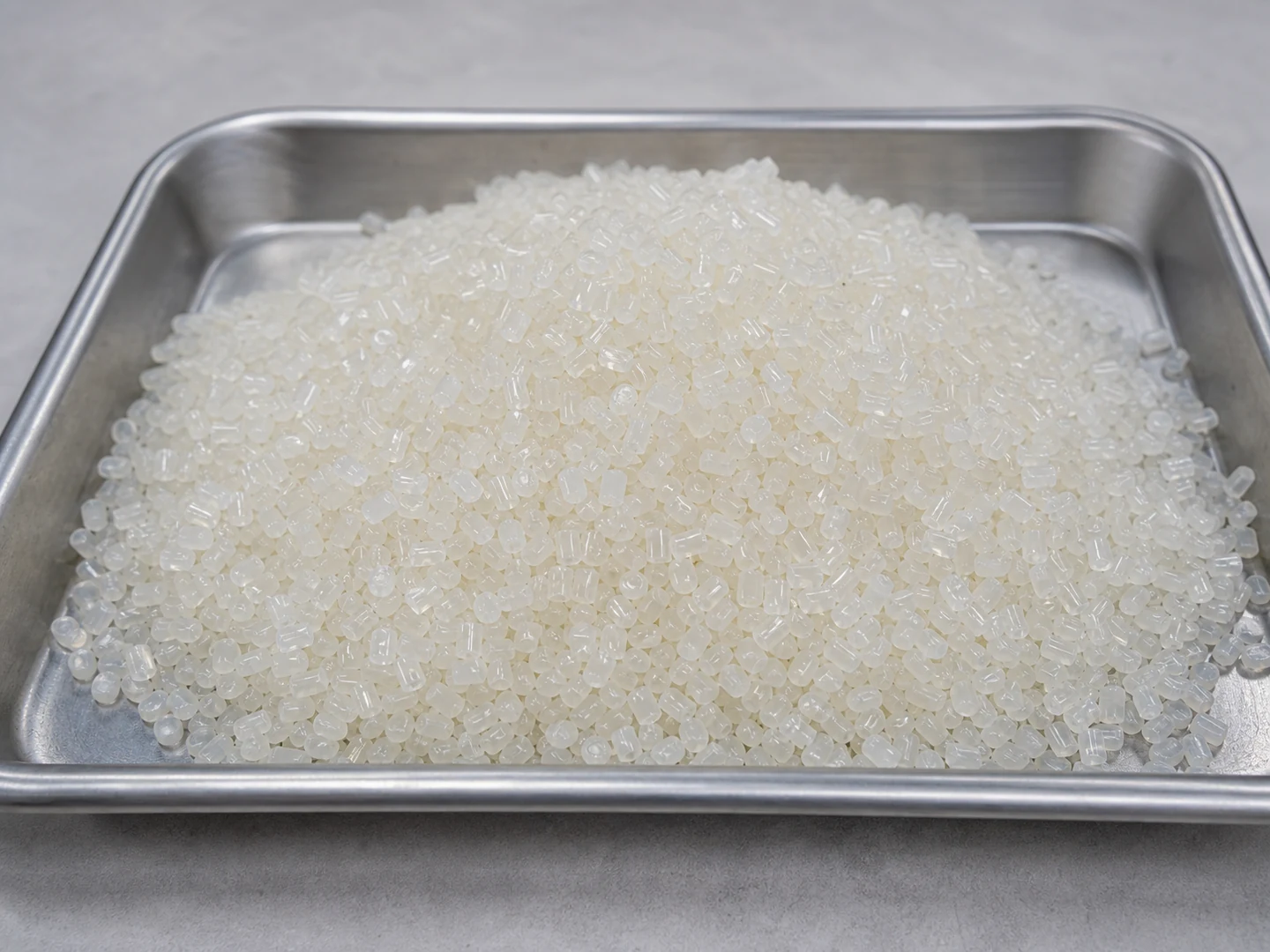
- Nylon – Soft, non‑abrasive, chemical‑resistant. Works well for light debris, dust, and gentle scrubbing with solvents.
- Brass wire – Softer than steel, conductive, spark‑resistant. Removes carbon, light oxidation, and soft deposits without scratching many metals.
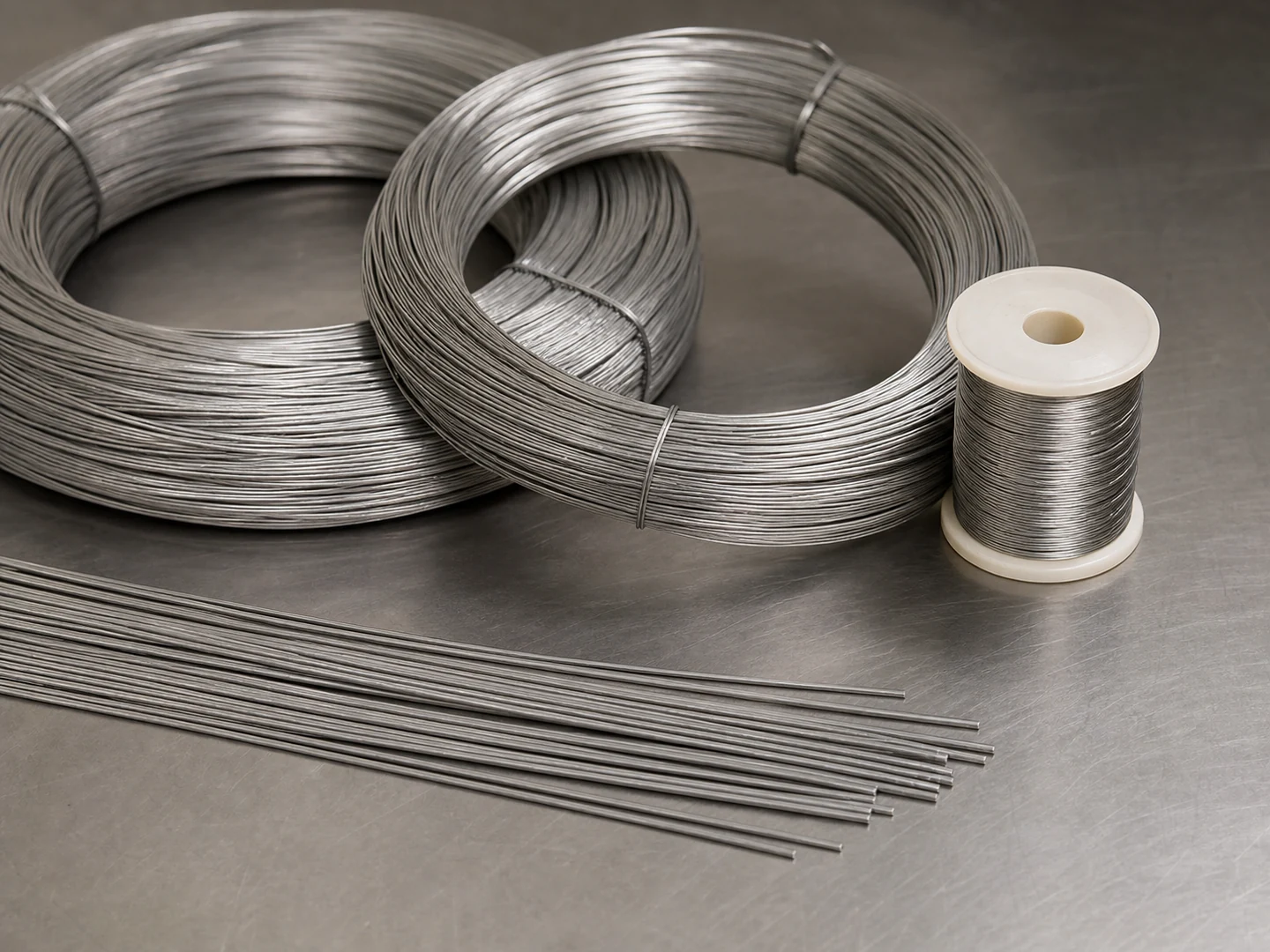
- Stainless steel wire – Hard, aggressive, durable. Breaks up rust, scale, and hard carbon. Risk of scratching softer metals and embedding particles in finished surfaces.
- Abrasive nylon – Nylon filaments impregnated with abrasive grit (silicon carbide, aluminum oxide). Provide a controlled cut, deburr cross‑hole edges, and lightly hone while cleaning.
- Soft polishing – Cotton, felt, or non‑woven fiber brushes used with compounds to achieve a polished or mirror finish after cleaning.
Material Comparison Table
| Brush Material | Best For | Avoid On | Typical Contamination | Surface Effect |
|---|---|---|---|---|
| Nylon | Aluminum, soft brass, plastics, o‑ring grooves | Heavy scale or hard carbon | Dust, light oil, chips | No scratching |
| Brass wire | Steel, cast iron, bronze, spark‑sensitive areas | Soft aluminum in precision bores | Carbon, light rust, soft deposits | Minimal scoring, slight polishing |
| Stainless steel wire | Hardened steel, cast iron, heavy rust removal | Aluminum, brass, finished stainless bores, chrome‑plated surfaces | Rust, scale, baked‑on carbon | Can scratch and embed particles |
| Abrasive nylon | Deburring cross‑holes, controlled material removal, surface prep | Precision‑finished bores with tight Ra tolerance without testing | Burrs, light scale, paint | Mild abrasive cut, can change surface finish |
| Soft polishing | Final polishing, cosmetic surfaces, sealing surfaces | Heavy contamination removal | Residue, tarnish, light oxidation | Polished finish, no stock removal |
How to Choose the Right Bore Cleaning Brush
Work through a few checks before ordering or specifying a brush. Confirm these facts about the bore and the cleaning task:
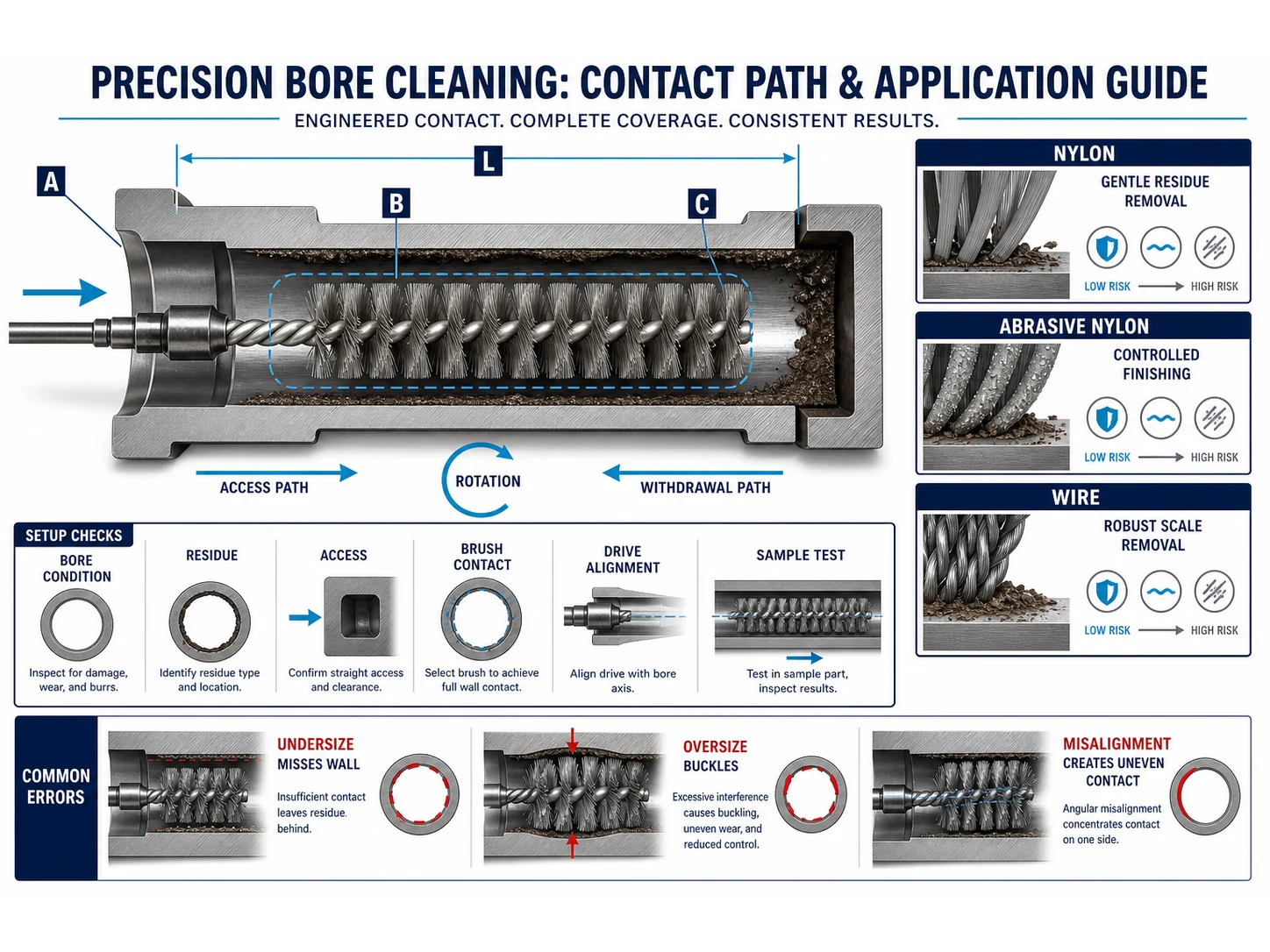
- Bore ID and tolerance – Measure the actual inner diameter, not the nominal size. For tight‑tolerance bores, the brush’s overall diameter should be slightly larger than the bore to ensure contact, but not so large that the filament bends excessively or the brush binds.
- Bore material and hardness – Softer metals (aluminum, brass, copper) need a softer filament, often nylon or brass. Harder steel can tolerate stainless steel wire if the finish requirement permits.
- Contamination type – Light dust and oil may need only nylon. Carbon and light rust usually call for brass. Heavy scale or rust might require stainless steel, but always consider the surface effect.
- Surface finish target – If the bore has a specified Ra or requires a sealing surface, avoid any wire brush that can score. Nylon, soft polishing, or carefully selected abrasive nylon with a fine grit are safer.
- Cross‑hole positions and edges – Cross‑drilled holes introduce edges that catch bristles or create burrs. An abrasive nylon brush can simultaneously clean and deburr those edges. A straight wire brush may snag or fold bristles.
- Depth and access – Deep bores require a brush with a long twisted‑wire stem or flexible shaft. Confirm that the stem material and diameter can transmit torque without whipping or buckling.
- Drive method – Hand‑operated brushes offer control but limited speed. Power‑driven brushes (drill, rotary tool, CNC) need a shank that matches the chuck and a stem rated for the RPM.
- Cleanliness standard – For critical applications (hydraulic, fuel system, medical), specify a brush that leaves no filament residue and is compatible with the required particle test result level.
Key Setup and Operating Factors
Even the right brush can cause trouble if not used correctly. Pay attention to:
- Speed and feed – Running a wire brush at excessive RPM can generate heat, embed particles, or fling bristles. Follow manufacturer guidelines for maximum speed. Feed the brush through the bore at a steady rate; dwell time may be needed for stubborn contamination.
- Fluid flushing – In blind holes or long bores, flushed chips and debris must escape. Use a brush with an open filament pattern or pair brushing with a flushing fluid (solvent, coolant, cleaning solution) to clear loose particles.
- Cross‑hole hazard – When a brush passes a cross‑hole, bristles can momentarily expand into the hole and rebound. This can chip hole edges or break bristles. Reduce speed near cross‑holes, and consider a brush with tightly twisted filaments or a composite design.
- Brush direction – For tight bores, one‑way passage may be required—brushes with a non‑reversing twist can unscrew if reversed. Know whether your brush is designed for rotary or draw‑bar use.
Common Mistakes in Bore Brush Selection
Even seasoned technicians can make costly errors. Watch for these pitfalls:
- Using a stainless steel wire brush on a soft or precision‑finished bore – This can permanently score the surface, ruin sealing, or create stress risers. Always match hardness.
- Choosing by diameter only – Two brushes with the same OD can have vastly different filament density, trim length, and aggressiveness. A dense fill may remove more material; a sparse fill may simply miss deposits.
- Ignoring cross‑hole positions – A standard brush can catch on a cross‑hole, bend bristles, or round the hole edge. This can sabotage downstream flow characteristics or assembly.
- Assuming “clean” means zero surface effect – Any abrasive brush changes the surface. Verify that the finish after cleaning still meets the print requirement. A surface profilometer check is prudent for critical bores.
- Overlooking filament retention – Cheaply made brushes can shed bristles. In fluid system bores, lost bristles become a contaminant that can block orifices or damage components downstream.
- Skipping a test on a scrap or representative part – Before committing to production, test the chosen brush on a similar bore to confirm cleaning effectiveness and acceptable surface alteration.
When a Bore Brush Is the Wrong Choice
Bore brushes solve many cleaning problems, but they have limits. Recognize when another process is required:
- Precision honing required – If the bore needs a specific dimensional tolerance, cross‑hatch pattern, or roundness correction, a honing tool is necessary, not a cleaning brush.
- Micro‑sized bores (below 1 mm) – Standard twisted‑wire brushes become impractical. A custom micro brush with a finer stem or a non‑contact method like ultrasonic cleaning may be the usually safer option.
- Blind holes with complex geometry – When debris is packed deep and cannot be flushed, ultrasonic cleaning, high‑pressure fluid jet, or a purpose‑built flushing fixture may outperform a brush.
- Bores with delicate coatings or linings – Anodized, plated, or coated bores can be damaged by any mechanical contact. Flushing, chemical cleaning, or non‑contact methods should be considered.
- Critical cleanliness levels (the specified cleanroom level406, NAS 1638) – Where particle test result is paramount, a brush alone may not achieve the required cleanliness without a validated flushing or ultrasonic system, and bristle shedding risk is unacceptable.
Final Takeaway
Select a precision bore cleaning brush by matching filament aggressiveness and material to the bore metal, contamination type, and surface finish specification. Always measure the actual bore ID, note cross‑hole locations, and consider the drive method. Validate with a test part before scaling. When in doubt, start with the least aggressive brush that can do the job and only move up if necessary.
Frequently Asked Questions
Can I use a wire brush on a polished stainless steel bore?
A stainless steel wire brush will likely scratch a polished finish. For a polished bore, use a soft brush such as nylon, cotton fiber, or a non‑woven polishing brush with appropriate compound to avoid surface damage.
What is the difference between brass and nylon bore brushes?
Brass wire brushes offer more aggressive cleaning and can remove carbon and light oxidation, but they can scratch softer metals. Nylon brushes are non‑abrasive and safe for soft metals, plastics, and sensitive surfaces, but they are less effective on stubborn deposits.
When should I choose an abrasive nylon brush?
Choose abrasive nylon when you need to deburr cross‑hole edges, lightly texture a surface for bonding, or remove light scale while maintaining better control than a wire brush. They are especially useful in automated or repeatable processes.
How do I measure bore ID correctly for brush ordering?
Use a bore gauge, inside micrometer, or precision pin gauge to measure the smallest ID along the bore length. Specify the brush OD slightly larger than the measured ID (typically 5–15% oversize, depending on brush type) to ensure firm contact without binding.
Can a bore brush remove heavy rust?
A stainless steel wire brush can remove heavy rust, but it may also pit or scratch the base metal. If dimensional integrity or surface finish matters, consider chemical rust removal, media blasting, or honing after brushing.
What drive method is best for deep bores?
For deep bores, a brush with a long, thick twisted‑wire stem driven by a low‑speed, high‑torque drill or rotary tool works well. Avoid flexible shafts that whip. Some applications use a draw‑bar setup to pull the brush through rather than push.
Are there alternatives if a standard brush doesn’t fit my bore geometry?
Yes. For stepped bores, blind holes, or micro diameters, consider custom‑made brushes, flushing with high‑pressure fluid, ultrasonic cleaning, or pull‑through abrasive cords. A supplier can often design a brush with the exact stem length, filament pattern, and diameter needed for challenging geometries.
Which bristle material fits this job — Nylon PA, AISI 304 Stainless Steel Wire or Abrasive Nylon?
| Material | Continuous temperature (°C) | Peak temperature (°C) | Water absorption | Hardness |
|---|---|---|---|---|
| Nylon PA | 93 | 121 | 0.3–9% by PA grade and conditioning | Medium to firm; filament diameter and trim length control bending force. |
| AISI 304 Stainless Steel Wire | 400 | 500 | 0% | Rockwell B 70–95 depending on temper and cold work |
| Abrasive Nylon | 120 | 150 | 0.1–1.0% | Abrasive filament; stiffness and cutting level is controlled by PA base, grit type, grit size, filament diameter and trim height. |
| Brass Wire | 150–200 | 250–300 | 0% | Rockwell B 40–90 |
Figures as published by Brushtec / DuPont; Alleima; Perlon. Confirm the exact grade against the supplier datasheet before ordering.
What should replace Nylon PA when it stops working?
- Nylon PA — Compare Nylon PA with PP, PBT, PET. Change material when wet stiffness, temperature, chemical resistance, conductivity, particle shedding, or surface marking becomes the limiting factor.
- AISI 304 Stainless Steel Wire — Use AISI 316 stainless steel wire for chloride, marine, dairy, beverage, chemical washdown, or higher pitting-resistance requirements. Use carbon steel for dry aggressive cutting and brass or abrasive nylon for lower marking risk.
- Abrasive Nylon — Compare Abrasive Nylon with PP, PBT, PET. Change material when wet stiffness, temperature, chemical resistance, conductivity, particle shedding, or surface marking becomes the limiting factor.
- Brass Wire — Compare Brass Wire with Steel wire, stainless wire, nylon. Change material when wet stiffness, temperature, chemical resistance, conductivity, particle shedding, or surface marking becomes the limiting factor.