What Is a Laboratory Glassware Brush?
A laboratory glassware brush is a cleaning tool designed with a handle and bristle head shaped to reach internal surfaces of specific lab glassware. Unlike generic brushes, these are tailored to match vessel geometry, preventing residue buildup while protecting delicate glass surfaces.
For laboratory chemical hygiene and safe work-practice context, this section references OSHA — 1910.1450 Occupational Exposure to Hazardous Chemicals in Laboratories.
For lockout/tagout and maintenance isolation context, this section references OSHA — 1910.147 Control of Hazardous Energy.
For brush construction terminology, bristle/fill/backing/stem terms, this section references American Brush Manufacturers Association — Brush Lingo.
These brushes are essential in any wet lab, as improper cleaning can introduce contaminants, alter experimental results, or damage expensive glassware. Choosing the correct brush type is as important as the cleaning protocol itself.
Types of Lab Glassware Brushes by Vessel Shape
Lab brushes are designed to fit the unique contours of different glassware. Below are the four main vessel-specific brush types:
For engineering drawing, dimensions, tolerance, thread, fit, and RFQ specification context, this section references ASME — Y14.5 Dimensioning and Tolerancing.
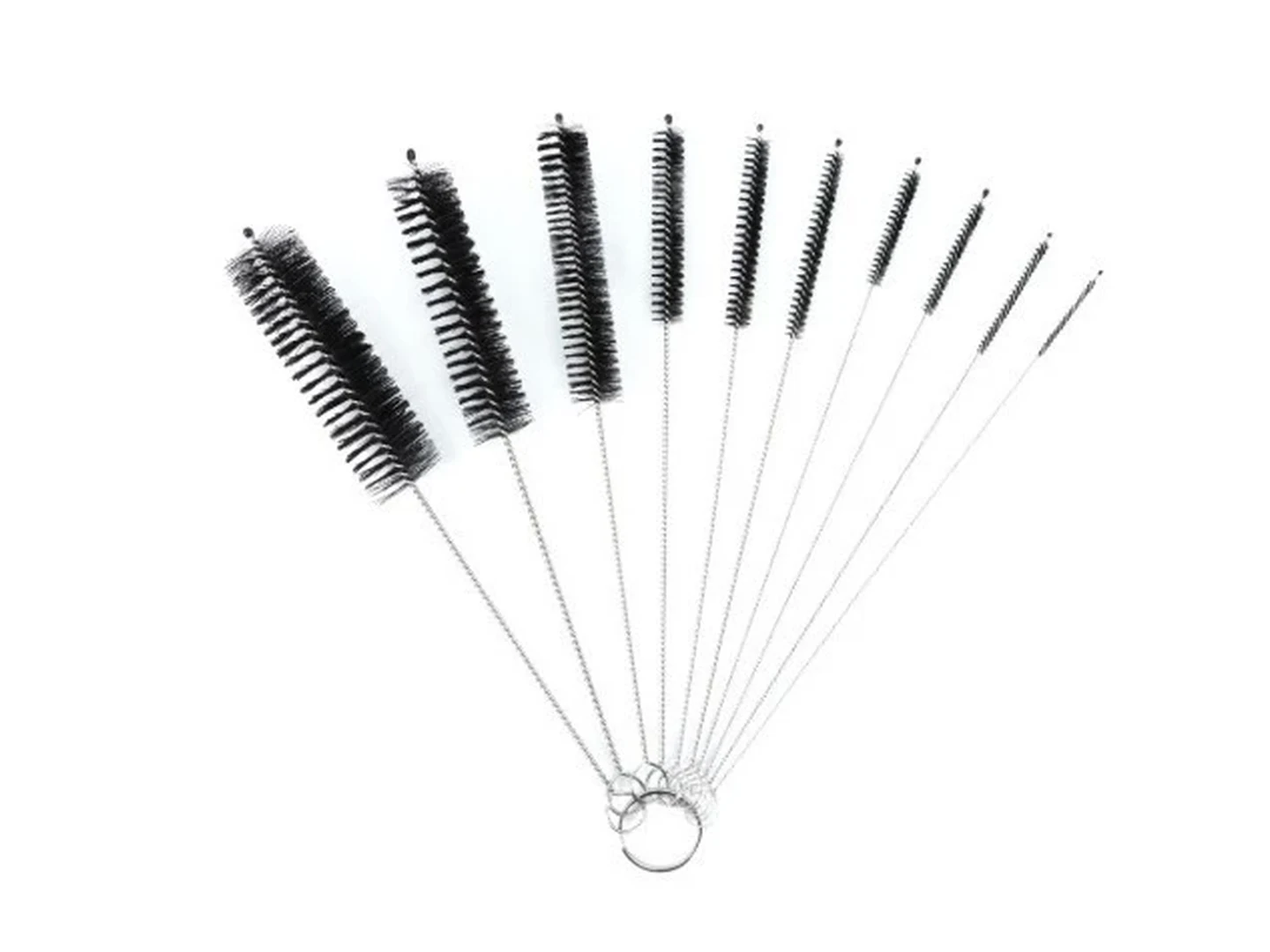
- Test tube brush: Narrow, cylindrical head with bristles often arranged in a fan or spiral pattern on a twisted wire core. Sizes range to match different tube diameters and lengths.
- Flask brush: Features an angled or flexible neck to reach the sloping shoulders of Erlenmeyer, round-bottom, or volumetric flasks. Bristle shape may be circular or fan-shaped.
- Beaker brush: Typically has wide, radial bristles at the tip, allowing effective scrubbing of flat bottoms and vertical walls. Some have an additional side brush for the inner wall.
- Cylinder brush: Long and straight, designed for graduated cylinders, burettes, and other tall, narrow vessels. The brush head is often cylindrical with a uniform diameter.
Using the wrong shape leads to poor contact, missed residue, and wasted time. Always match the brush to the vessel profile.
Bristle Material Comparison: Nylon, Natural, and Stainless Steel
Bristle material directly affects cleaning power, chemical resistance, and the risk of scratching glass. The table below compares the three most common options.
For chemical exposure and occupational safety reference context, this section references NIOSH — Pocket Guide to Chemical Hazards.
| Material | Chemical Resistance | Temperature Limit | Abrasion Risk | Best For |
|---|---|---|---|---|
| Nylon | Good resistance to common lab chemicals, alcohols, and mild solvents; may degrade with strong concentrated acids or bases over time | ~100 °C; may soften above this, avoid autoclaving | Low | General laboratory use, routine cleaning of most glassware |
| Natural bristle (goat, horsehair) | Limited; attacked by strong acids, alkalis, and oxidizing agents | ~60 °C; heat can cause brittleness or shrinkage | Very low | Delicate or historical glassware, soft glass, applications requiring gentle scrubbing |
| Stainless steel | Excellent; virtually inert to most lab chemicals | High; can withstand autoclave temperatures | High | Stubborn residues on robust glass (e.g., Pyrex), heavy-duty cleaning; never for precision volumetric glassware |
Select the material that meets both your chemical exposure and your temperature requirements while avoiding unnecessary abrasion.
How to Choose: Matching Brush to Chemical Exposure and Temperature
Start by reviewing the standard operating procedure (SOP) for your lab’s cleaning process:
- Identify cleaning agents: If you use organic solvents, detergents, or diluted acids/bases, nylon is typically safe. For aggressive washes (e.g., chromic acid, piranha solution), check material compatibility carefully; many brushes are not resistant. Stainless steel handles chemical extremes well but may be too harsh for the glass.
- Consider temperature: If your cleaning includes hot water, autoclaving, or drying ovens, ensure the brush material can handle the heat without melting, softening, or losing bristle integrity. Nylon is borderline for autoclave temperatures; natural bristles will degrade; stainless steel is stable.
- Assess glass type: Borosilicate glass (e.g., Pyrex) tolerates more mechanical action than soda-lime glass. For scratched-prone surface or volumetric ware, avoid metal bristles entirely.
- Evaluate residue type: Soft residues (media, proteins) usually release with nylon or natural brushes. Hard, baked-on residues might require more aggressive bristles, but consider a pre-soak or ultrasonic cleaning before turning to metal brushes.
When in doubt, start with the softest effective option. It is easier to step up to a stiffer brush than to repair scratched glassware.
Common Mistakes When Selecting or Using Lab Brushes
- Using metal brushes on volumetric glassware: Even stainless steel bristles can leave micro-scratches that alter calibration and trap contaminants. This is prohibited in most analytical labs.
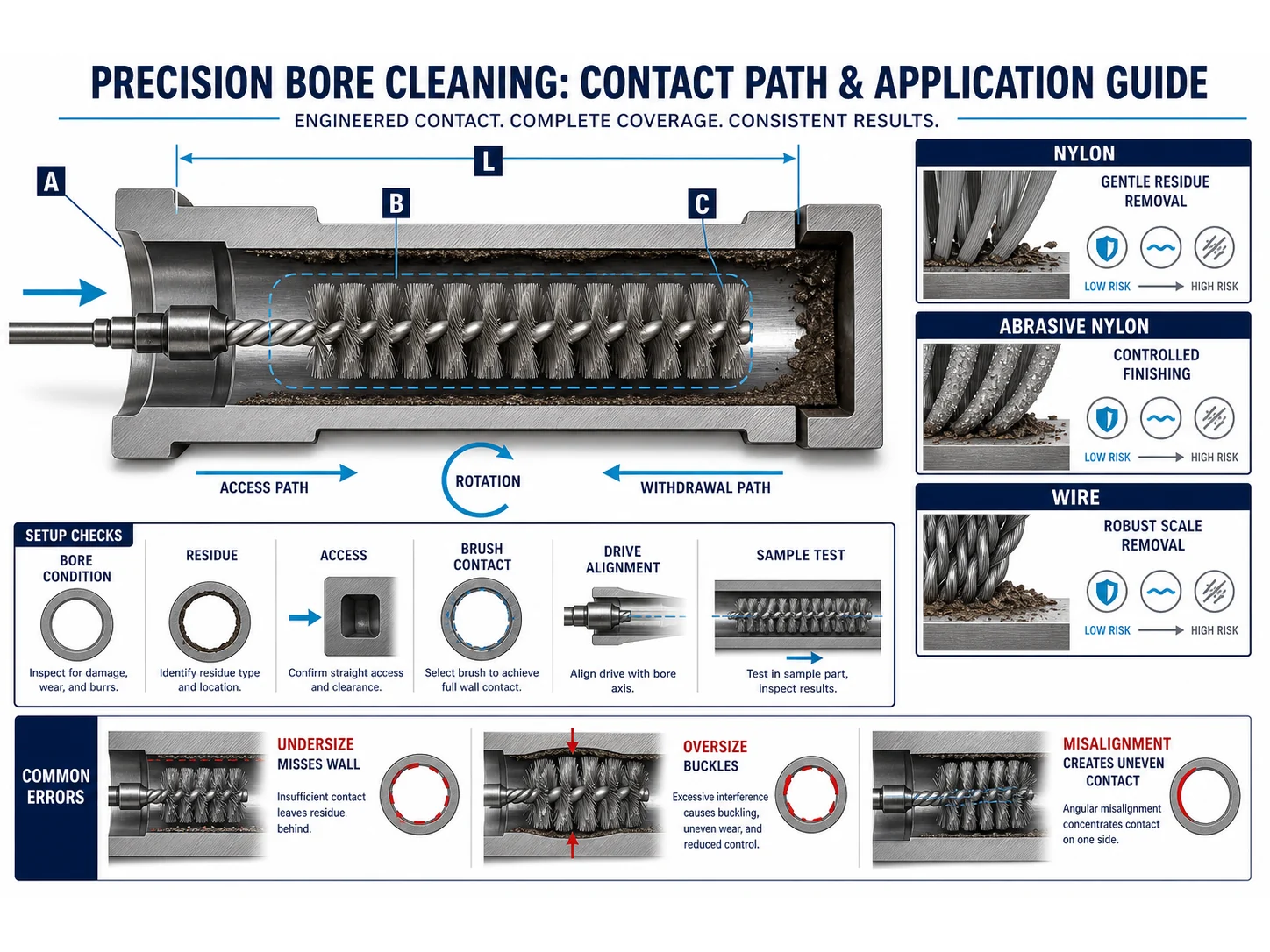
- Ignoring brush size: A brush too large can stress joints and necks; too small leaves blind spots. Always check diameter and length before purchase.
- Cross-contaminating by using one brush for multiple chemistries: Without proper cleaning between uses, a brush can transfer residues to the next piece of glassware. Assign brushes to specific solutions or decontaminate thoroughly.
- Leaving loose bristles in glassware: Worn brushes shed bristles, which can clog ports, contaminate samples, or cause scratching. Inspect brushes regularly and replace when bristles become loose or deformed.
- Applying excessive force: Bending a brush at an extreme angle to reach a stubborn spot can break the brush or scratch the glass.
- Assuming a test tube brush works for all vessels: A test tube brush cannot effectively clean the flat bottom of a beaker or the wide body of a flask. Use the intended brush for each vessel type.
When a Brush Isn’t Enough: Ultrasonic Cleaning for Precision Needs
Brushes are manual labor–intensive and may fail to remove residues from narrow crevices or hard-to-reach areas, especially in volumetric flasks or cuvettes. For trace analysis, cell culture, or pharmaceutical work, ultrasonic cleaners offer a non-abrasive alternative. Ultrasonic baths use cavitation to lift particles from the glass surface evenly, without scratching.
Consider ultrasonic cleaning when:
- Working with Class A volumetric glassware where calibration integrity is critical.
- Processing tall, narrow vessels like burettes that are difficult to brush evenly.
- Removing dried or heat-denatured proteins that require prolonged soaking.
- Cleaning items with multiple crevices (e.g., stopcocks, fritted discs) that a brush cannot reach.
A brush is still useful for preliminary removal of gross debris before ultrasonic treatment, but it should not be the final cleaning step in high-stakes applications.
Final Takeaway
Select a laboratory glassware brush based on vessel shape, bristle material compatibility with your cleaning chemistry, and the level of cleanliness required. Match the brush to the task, avoid metal on precision glass, and know when to use ultrasonic methods instead. A thoughtful brush choice protects both your glassware and your experimental results.
Practical Use Note
In daily use, the practical test is simple: check whether the brush reaches the full contact area, removes the target residue, and leaves the surface in the required condition. Record what changes when access shape, residue type, manufacturer instructions, and whether the task is general cleaning or validated reprocessing changes, because many brush failures are caused by the working condition shifting rather than by the brush body alone.
Frequently Asked Questions
What is the function of a test tube brush in the laboratory?
The primary function of a laboratory test tube brush is to clean the interior walls of test tubes, removing chemical residues, biological films, or particulate matter that could contaminate future experiments. Its design ensures contact with the tube’s entire inner surface without damaging the glass.
Can I use the same brush for different chemicals?
It is not recommended unless the brush is thoroughly cleaned and decontaminated between uses. Even trace residues can cause cross-contamination or dangerous reactions. Many labs dedicate brushes to specific cleaning stations or chemical classes to prevent this risk.
How do I know if a brush is scratching my glassware?
After cleaning, hold the glassware up to light and look for fine lines or dull areas that cannot be wiped away. Under a microscope, scratches appear as sharp grooves. If scratching is suspected, switch to a softer bristle material or adopt ultrasonic cleaning.
What size test tube brush should I use for a 16 mm tube?
Choose a brush with a head diameter slightly larger than the tube’s inner diameter to ensure firm contact. For a 16 mm tube, a brush head diameter of about 17–19 mm is typical. Also confirm the brush length is sufficient to reach the tube’s bottom.
Are there brushes designed for cuvettes or narrow-neck glassware?
Yes, special micro brushes or cuvette brushes have very fine, soft bristles and slim handles. However, for extremely narrow or precise items like spectrophotometer cuvettes, ultrasonic cleaning or specialty detergents are often safer than brushing.
How often should I replace a lab brush?
Replace brushes when bristles become bent, clogged with debris, loose, or fall out, as this reduces cleaning efficiency and increases the risk of scratching. Regular inspection under typical use conditions is recommended; a rule of thumb is to discard at the first sign of significant wear.
Can a lab brush replace autoclaving or disinfection?
No. A brush physically removes dirt but does not sterilize. For sterile or aseptic work, cleaning with a brush should be followed by appropriate sterilization (autoclave, dry heat, chemical disinfectant) as required by the protocol.
Is a nylon test tube brush autoclavable?
Standard nylon (e.g., Nylon 6,6) softens near 100 °C, so it may deform under typical autoclave conditions (121 °C). If you need a brush that can be autoclaved, choose stainless steel or verify that a heat-resistant polymer brush (such as PEEK or PTFE) is suitable, though these are less common.