
Custom Cleaning Brush
Boiler Tube Brush
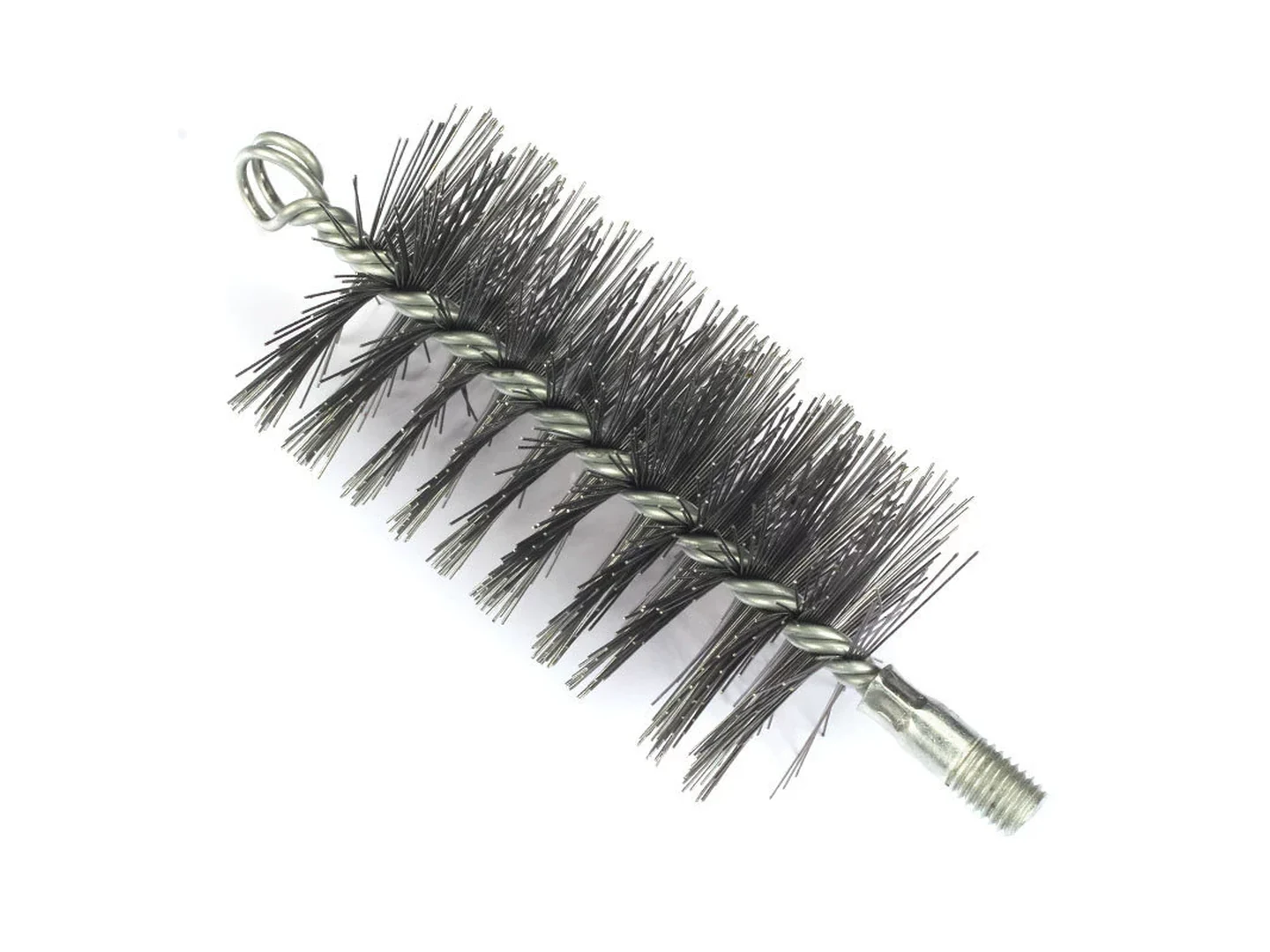
Heavy-duty boiler tube brushes remove soot, scale, rust, and carbon from boiler and heat exchanger tube IDs.
Small brush
500 pcs
Minimum order
Held in one hand: tube, bottle, detail and swab brushes — including long-handled ones with a small head.
Production lead time, once the specification is confirmed
- Up to 500 pcsWithin 7 days
- 501–50,000 pcsWithin 14 days
- Over 50,000 pcsWithin 21 days
Peak season can extend these times; the shipping date is confirmed in writing with your quotation. Sampling and shipping are quoted separately.
A heavy-duty internal tube-cleaning brush built for boiler, heat exchanger, and condenser tube IDs where soot, carbon, scale, rust, and mineral deposits reduce heat transfer and flow. Available in stainless steel, carbon steel, brass, nylon, and polypropylene fill with threaded or plain-shank ends for hand or powered service.
What can this brush do for you?
Removes full-wall deposits without skipped bands
The continuous spiral fill wraps the stem so the brush contacts the entire tube circumference in a single push-pull or rotating pass. Single-spiral fill handles light soot and film; double-spiral fill keeps more working tips engaged in heavy carbon or scale. Operators can work a complete pass without repositioning the brush to catch missed sections.
Deposit-removal force matched to tube metal
The fill material can be specified for the tube you are cleaning instead of using one aggressive wire on every boiler. 316 stainless steel wire cuts rust and hard scale on steel and stainless tube IDs; brass wire cleans copper, Admiralty, and cupronickel tubes with lower scoring risk; nylon or polypropylene fill removes light films from coated or sensitive surfaces. This keeps the cleaning contact appropriate to the tube material, not just to the deposit.
Extension-ready connection for long tube banks
A threaded end in 8-32, 1/4-28, or M6 lets the brush join extension rods, a drill or air motor, or a flexible shaft when the tube pass is longer than an operator’s arm. Boiler tube banks behind headers and tube sheets stay serviceable without cutting new access openings.
Controlled interference for usable brush life
Wire fill is set near size so the tips scrape the tube wall without bending the stem or binding in the pass. Polymer fill is set 5–20% oversize so the filaments flex and scrub instead of collapsing flat. The correct interference reduces wire breakage, stem fatigue, and the force needed to push the brush through fouled tube runs.
Wet, chemical, and high-fouling service tolerance
316 stainless steel stem and fill resist damp soot, descaler residue, and alkaline wash environments common in boiler maintenance. Carbon steel construction is available for cost-driven steel-tube programs, while nylon and PP stems suit chemical exposure where metal contact or corrosion must be avoided. The brush can return to service after cleaning instead of being treated as a single-use item.
What is a Boiler Tube Brush?
A boiler tube brush is a purpose-sized internal cleaning brush used on the inside diameter of boiler tubes, economizer tubes, superheater and reheater tubes, and similar round heat-transfer passages. The working section consists of wire or polymer filaments anchored into a twisted-wire or rod stem; the far end carries either a loop handle for hand work or a threaded shank for powered drive and extension.
In service, the operator inserts the working end into the tube and uses push-pull strokes, rotation, or powered rotation to break loose deposits from the tube wall. After brushing, loosened soot, scale, and debris are removed by vacuum, water flush, blow-down, or chemical rinse. On fire-side passes the brush removes soot and fly-ash carbon; on water-side passes it removes scale, rust, and sludge from tube IDs and mud-drum connections.
This is a mechanical cleaning tool, not a chemical descaler. It removes loose or lightly bonded deposits and prepares tube walls for final rinse or inspection; hard, cement-like scale or baked-on deposits may require descaling chemicals, hydroblasting, or mechanical cutters before brushing. It is also not designed for tight U-bends or tube passages with internal obstructions; a flexible shaft brush head is the correct tool for those geometries.
Technical Specifications
The table lists standard and configurable parameters for boiler tube brushes. Values can be adjusted to the tube ID, deposit type, and drive method of the project.
| Parameter | Specification / Available Options |
|---|---|
| Brush outside diameter | 6–100 mm, matched to tube ID and fouling thickness |
| Fill / working length | 25–150 mm; longer fill sections available for extended passes |
| Overall length | 100–500 mm; longer reach by threaded extension rod or flexible shaft |
| Fill materials | 316 stainless steel wire, carbon steel wire, brass wire, nylon PA, polypropylene PP |
| Wire / filament diameter | 0.20–0.50 mm; finer for soot and light fouling, heavier for scale and carbon |
| Stem / core | Galvanized carbon steel, 304/316 stainless steel, or nylon / PP stem; twisted-wire or rod construction |
| Fill pattern | Single spiral, double spiral, full-circumference spiral; standard or heavy density |
| End connection | 8-32, 1/4-28, M6 thread, plain shank, loop handle, or project-specific adapter |
| Contact setting | Near-size contact for wire fill; 5–20% oversize for polymer fill; lower interference with wire fill |
| Working environment | Wet or dry service; material grade selected for descaler, detergent, or alkaline cleaner exposure |
| Brush type | Custom Tube & Pipe Bore Brushes |
| How it is driven | Hand-driven on rods or a flexible shaft |
| Cleaning target | fire-tube boiler pass, water-tube boiler and mud-drum tube run, and reheater bank cleaning |
| Surface or part | tubes, carbon steel, passages, sheets, metal, tube walls, drums, and holes |
| Residue or debris | carbon, scale, rust, soot, sludge, mineral deposits, carbon deposit, and process residue |
| Mounting / connection | 8-32, 1/4-28, M6 thread, plain shank, loop handle, or project-specific adapter |
For tube lengths beyond the overall brush length, the threaded end accepts an extension rod or flexible shaft so the same working section can be driven deeper into straight or gently curved tube banks.
Where does this brush work best?
- Fire-tube boiler passes: removes soot, fly ash, and carbon from the gas-side tube ID during annual shutdowns, efficiency inspections, or after soot blower performance falls off. The working section follows the full pass between tube sheets.
- Water-tube boiler and mud-drum tube runs: loosens scale, rust, and sludge after draining or before chemical descaling; cleans tube IDs, cross-hole passages, and drum connections for circulation recovery.
- Economizer, superheater, and reheater banks: reaches fly-ash and light carbon deposits in deep tube banks with extension rods; removes buildup ahead of tube-wall inspection.
- Shell-and-tube heat exchangers and condensers: cleans tube-side fouling, biofilms, scale, and process residue; brass fill preferred on copper alloy and cupronickel tubes.
- Boiler tube-sheet and retubing preparation: cleans old gasket material, rust, and scale from tube holes and tube ends before inserting or rolling replacement tubes, so the expanded joint seats on clean metal.
How do I choose the right one?
1. Measure the tube inside diameter and fouling thickness
Measure the clean tube ID and estimate how much deposit has built up. The brush OD must allow the working end to enter the fouled tube without jamming. For wire fill, order near-size contact; for nylon or polypropylene fill, order 5–20% oversize so the filaments flex and scrub. Too little contact leaves deposit bands; too much interference binds the brush and bends the stem.
2. Match the fill to the tube material and deposit
| Fill material | Best use | Use with caution / avoid |
|---|---|---|
| 316 stainless steel wire | Rust, hard scale, and baked carbon on carbon steel or stainless steel tubes | Soft copper and cupronickel tubes where scoring risk is unacceptable |
| Carbon steel wire | General soot and rust removal on carbon steel tubes where cost is the main driver | Stainless steel, copper, and alloy tubes due to iron contamination and stain risk |
| Brass wire | Copper, brass, Admiralty, and cupronickel heat exchanger tubes; lighter scale and fouling | Hard silica or thick rust that needs heavy steel-wire force |
| Nylon PA / PP | Light films, wet sludge, coated or polished IDs, and pre-cleaning before finer finishing | Baked-on carbon, hard scale, and heavy rust deposits |
3. Decide the stem, reach, and end connection
For short tube passes and tube sheets, a loop-handle or plain-shank brush is enough. For deep boiler tube banks, specify a threaded 8-32, 1/4-28, or M6 end and pair it with extension rods or a flexible shaft. A twisted-wire stem follows gradual curves; tight return bends require a small-diameter flexible shaft brush head instead of a rigid long stem.
4. Set manual or powered operation
Manual brushing suits spot cleaning, small tube counts, and light deposits. Powered brushing with a drill or air motor is faster for long tube passes and heavy fouling. If powered use is planned, tell us the drive spindle and speed range so the end connection and stem construction match the machine.
5. Know when another cleaning method is required
Use chemical descaling, hydroblasting, or mechanical tube cutters before brushing if the deposit is cement-like hardness, thick silica or sulfate scale, or baked carbon that a wire fill cannot break. Do not use a rigid boiler tube brush in tubes with internal sleeves, baffles, deep pitting, or tight U-bends; those conditions create the risk of stem breakage, tube-wall damage, or a stuck brush.
Can I customize this brush?
A boiler tube brush is normally specified to a particular tube program rather than ordered from a fixed catalog size. Provide the tube ID, tube length, tube material, deposit type and thickness, access space at the tube end, and whether the cleaning will be hand or powered. A drawing, section photo, or sample tube shortens the definition.
- Brush diameter and fill length – exact OD and working section length for the tube pass or a calculated interference class.
- Fill material and filament diameter – 316 stainless steel, carbon steel, brass, nylon PA, or polypropylene PP, with wire or filament diameter from 0.20 to 0.50 mm.
- Fill pattern and density – single spiral, double spiral, full-circumference spiral, or heavy-density fill for high-deposit runs.
- Stem and core – galvanized carbon steel, 304/316 stainless steel, or polymer stem; length, flexibility, handle, and shank form matched to access and drive.
- End connection – 8-32, 1/4-28, M6, plain shank, loop handle, or an adapter built for your existing extension rod or power tool.
- Color, marking, and identification – color-coded fills, pad printing, laser marking, or labeled packaging for multiple tube sizes in the same plant.
- Packaging – bulk, individual bag, tube-run kits, or project-specific packing for shutdown or turnaround work.
For projects that require material declarations, inspection reports, or third-party testing, we can support those requirements during the customization process.
When is a boiler tube brush worn out rather than just dirty?
How do I know whether the brush is the correct size before putting it in a tube?
Insert the brush into a clean or near-clean tube section first. The brush should enter with firm resistance and contact the wall evenly without forcing the stem into a bow. If it slides through without contact, the diameter is too small; if it binds or folds the fill back, the diameter is too large. For powered use, run a short test pass and check for chatter or stem whip.
What should I do before brushing a fouled boiler tube?
Drain or isolate the tube bank, remove loose debris at the tube mouth, and verify the tube is not blocked by hard lumps that can grab the brush. Check tube-wall condition for pitting, bulges, or existing damage. If the tube is heavily scaled, a chemical soak or mechanical cutter pass may be needed before the brush can travel the full length.
Does a boiler tube brush replace chemical descaling?
No. The brush removes loose soot, carbon, rust, and lightly bonded scale. Hard, cement-like mineral scale usually requires a chemical descaler, hydroblasting, or a mechanical tube cleaner first. The brush is effective before chemical cleaning to improve contact and after it to remove loosened residue.
How can I verify the tube is clean after brushing?
Inspect the full tube length with a light or borescope and compare the ID to an unbrushed reference tube. Wipe a white cloth through the pass; visible soot, scale, or rust color indicates remaining deposit. For heat-exchanger service, repeat passes until the pressure drop or flow returns to the expected value.
What are the signs a brush should be replaced?
Look for flattened or missing fill, broken wires, stems that stay bent, or an OD worn below tube contact. A brush that enters the tube with little resistance is no longer cleaning. Replace it before individual wires begin shedding into the pass and become another contamination source.
Can the brush be used in a curved or U-bend boiler tube?
Gradual curves can be followed by a twisted-wire stem, but tight return bends and U-bends should not be forced with a rigid long-stem brush. For those passages, specify a small-diameter brush head on a flexible shaft. Always confirm the bend radius and access opening before ordering.
Guides that go deeper on this
Boiler Tube Brush vs Standard Brushes on HVAC Coils
Read this guideGuideBoiler Tube Brush vs Standard Brushes: Heat Exchangers
Read this guideGuideBoiler Tube Brush vs Standard Brushes: Small Tube Bores
Read this guideGuideHow to Maintain Boiler Tube Brushes in Production
Read this guideGuideHow to Maintain Chimney and Boiler Tube Brushes in Production
Read this guideGuideHow to Maintain Tube Brushes for Plastic Processing Lines
Read this guideGuideTube and Bore Cleaning Brush Design
Read this guideCustom Manufacturing RFQ
Describe Your Application
Please share the brush dimensions, working area, residue type, material direction, quantity, and a drawing or photo for quotation.
Drawing or photo optional — it speeds things up, it does not gate the enquiry.
Custom Brush RFQ
Send Your Brush Project
Upload a drawing, product photo, or sample photo and provide the core dimensions and cleaning conditions.
“We need a brush to remove wet residue from a stainless steel conveyor, about 800mm wide. The current brush wears quickly. We can send photos.”
“We sell drinkware and need a cleaning brush to include with the product. Quantity around 5,000 pieces.”