What Is a Boiler Tube Brush?
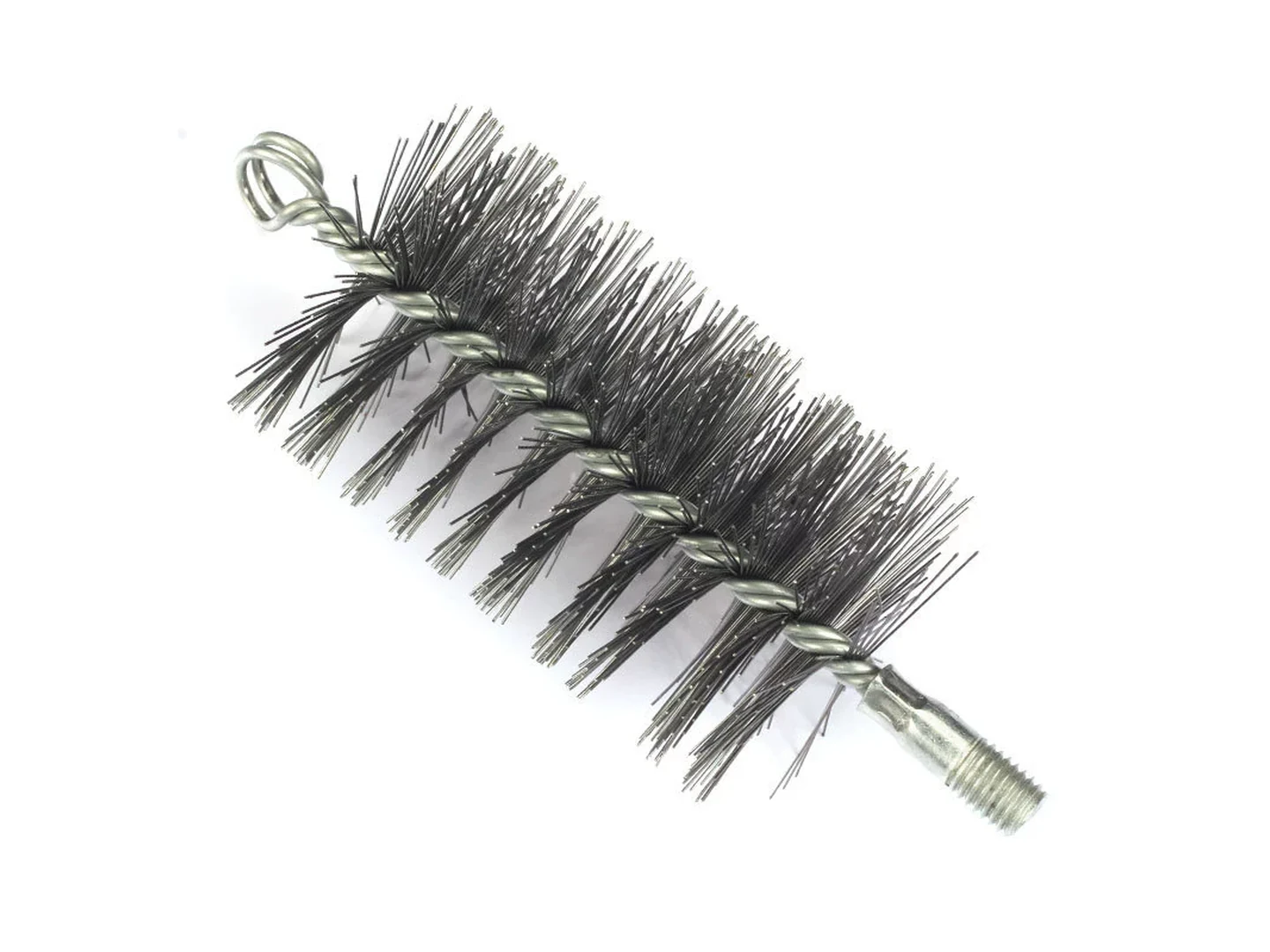
A boiler tube brush is a long, flexible, or semi‑rigid brush engineered to travel through straight and curved boiler tubes, scrubbing internal surfaces to restore heat transfer performance. Unlike standard cleaning brushes, it is built for high-temperature residue, limited access paths, and often automated or powered rotation. The core typically consists of a twisted‑wire stem or a flexible center‑rod that can follow tube bends without kinking, while filament material is chosen to match deposit type and tube metallurgy.
For boilers, chillers, cooling towers, condenser systems, heat-exchanger maintenance, and O&M practices, this article cites U.S. Department of Energy FEMP — Operations & Maintenance Best Practices: A Guide to Achieving Operational Efficiency, Release 3.0; boiler, chiller, cooling tower, and heat-exchanger maintenance chapters.
For HVAC filters, coils, fins, condenser coils, condensate drains, and AC maintenance, this article references U.S. Department of Energy — Air Conditioner Maintenance.
For engineering drawings, GD&T, dimensions, tolerances, model/drawing requirements, and RFQ dimension control, this article references ASME — Y14.5 Dimensioning and Tolerancing.
For lockout/tagout standard during machine servicing, this article references OSHA — 1910.147 Control of Hazardous Energy.
For brush construction terminology, filament/backing/stem terms, this article references American Brush Manufacturers Association — Brush Lingo.
Common Types of Boiler Tube Brushes
Boiler tube brushes vary by construction, bristle type, and drive method. The most common options include:
- Twisted‑wire tube brushes – A single‑ or double‑stem twisted wire with bristles secured between the coils. Best for light‑to‑medium soot and scale in straight tubes or mild bends.
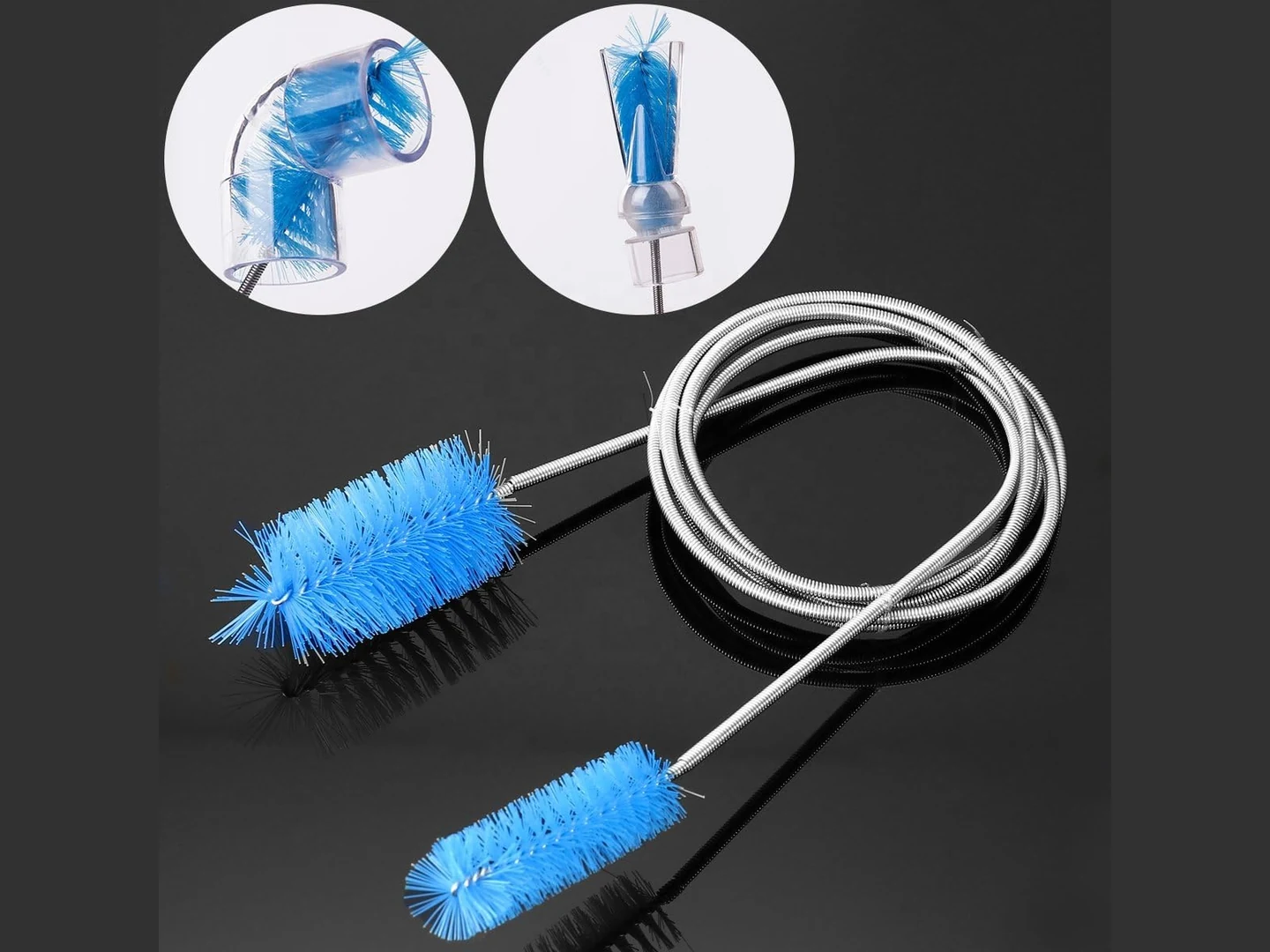
- Flexible shaft tube brushes – A center shaft made of nylon or wound‑wire that can navigate tighter bends. Often driven by an electric or pneumatic motor.
- Power‑driven tube cleaning brushes – These mount on a flexible shaft and connect to a drill or dedicated tube cleaner, often used with water flush or chemical assistance.
- Custom‑fit boiler tube brushes – Built to a specific tube ID, length, and bend radius when off‑the‑shelf options do not match the equipment layout.
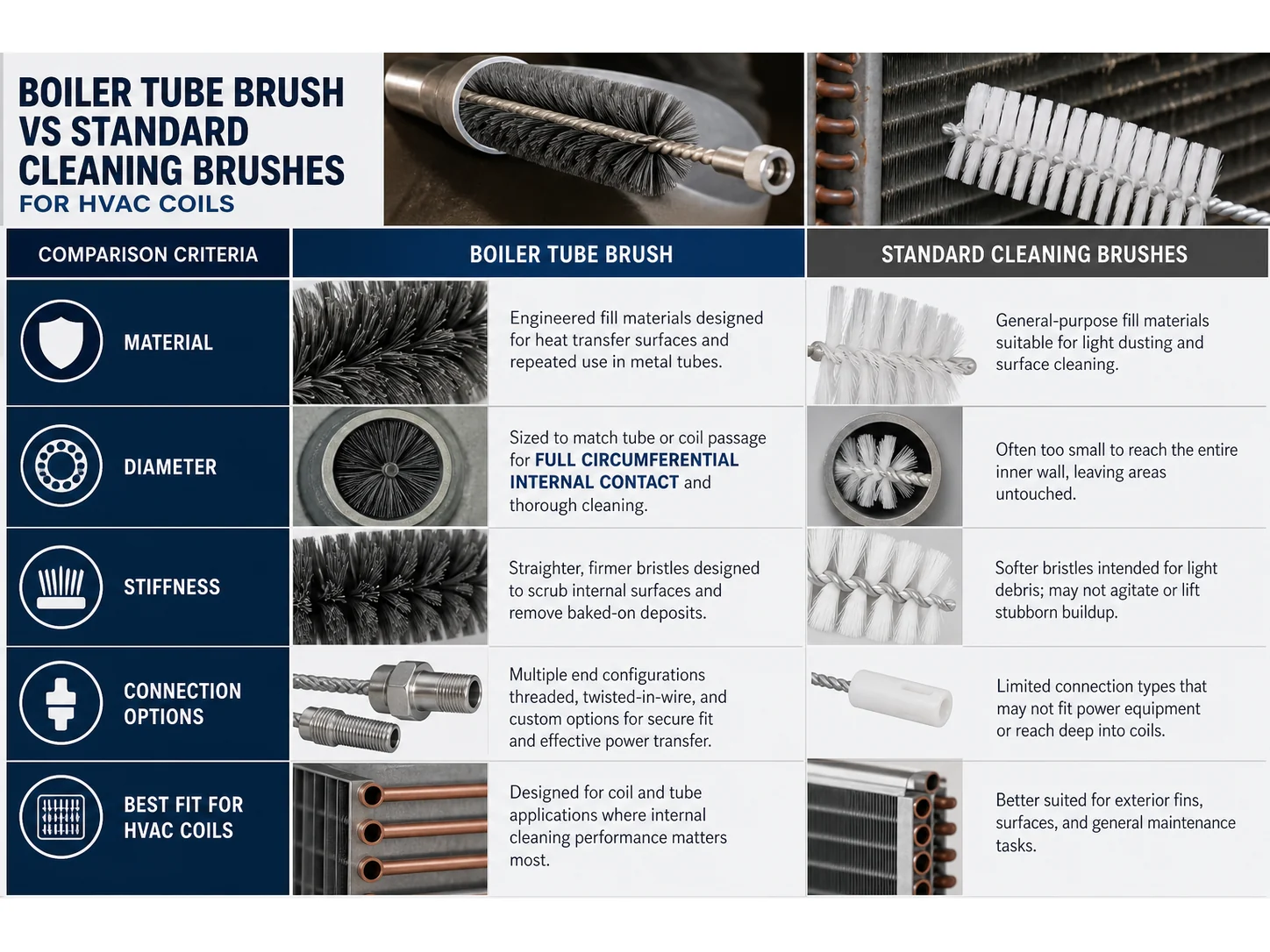
Boiler Tube Brush vs Standard Cleaning Brush: Key Differences
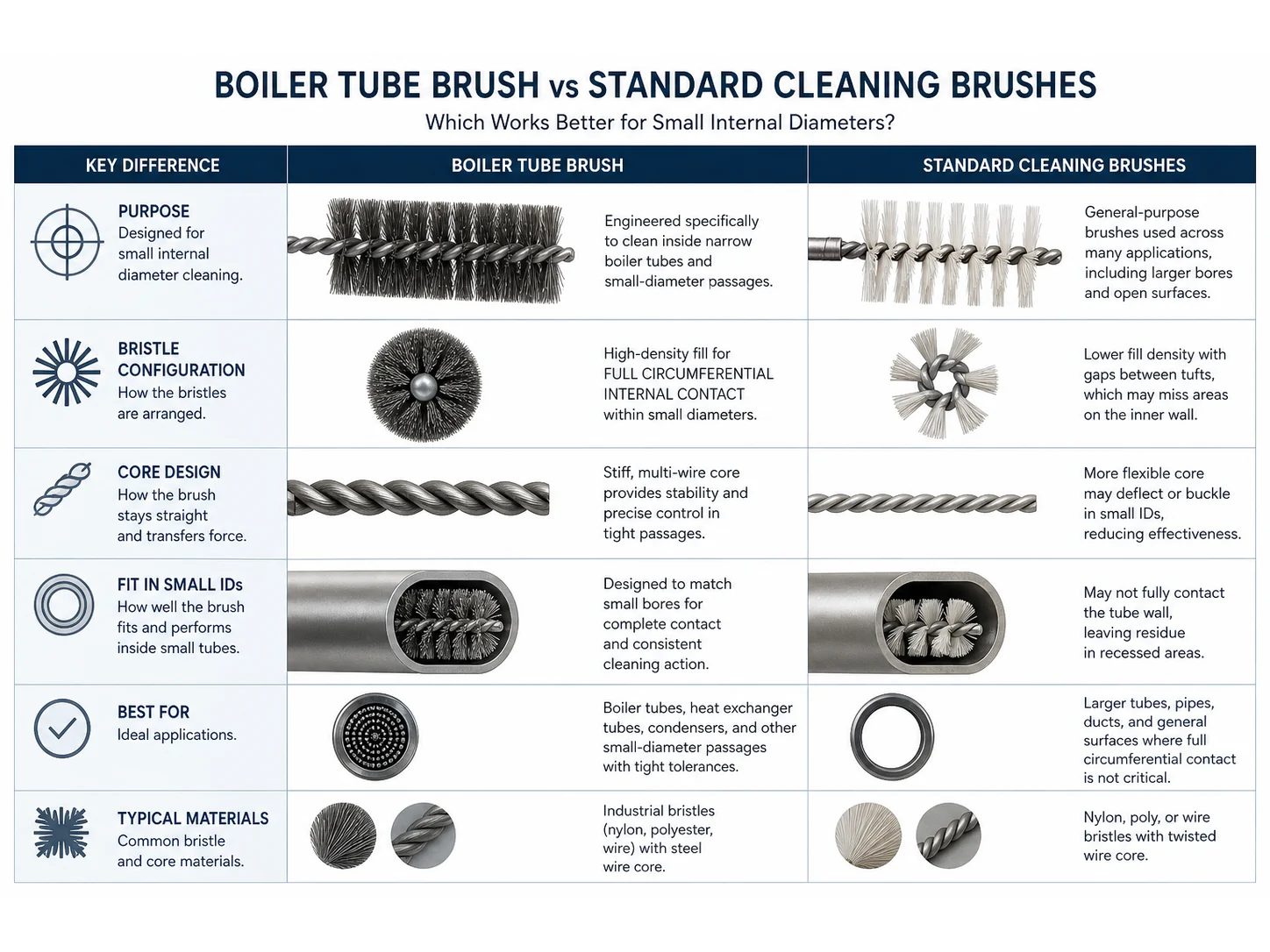
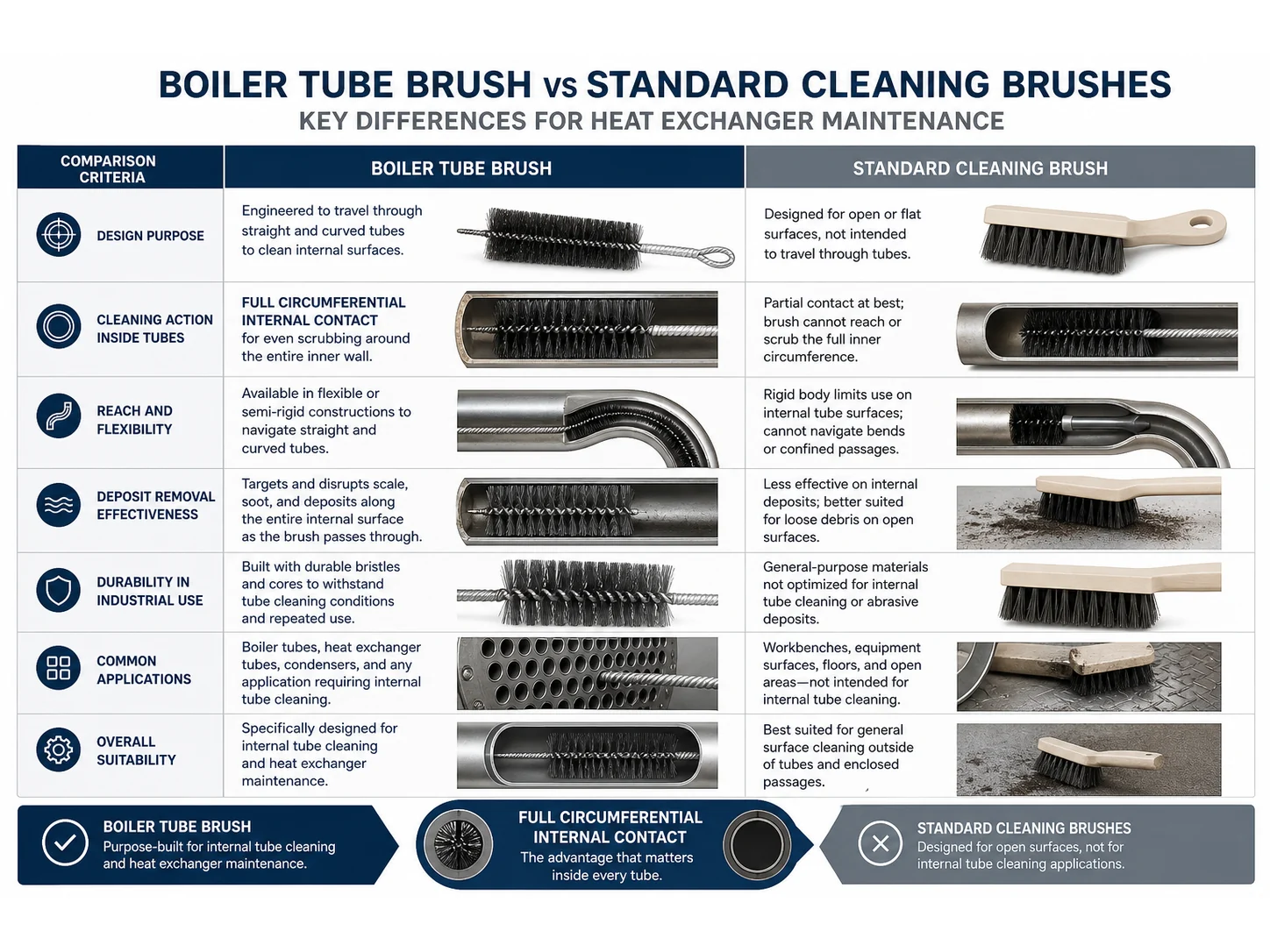
| Factor | Boiler Tube Brush | Standard Cleaning Brush |
|---|---|---|
| Shape & Reach | Long, cylindrical profile with flexible stem for tube interiors | Short, rigid handle or flat shape for open surfaces |
| Bristle Material | Heat‑resistant steel, brass, nylon, or abrasive‑filled filaments | Usually softer nylon, polyester, or natural fibers |
| Mounting Interface | Often attaches to drill, shaft, or tube cleaner drive | Hand‑held or fits into general brush holders |
| Compatibility with Curved Tubes | Designed to follow typical boiler tube bends without jamming | Cannot navigate curves; may break or get stuck |
| Residue Handling | Built for baked‑on carbon, scale, and wet sludge | Best for loose dust, light debris, or light wiping |
| Chemical Exposure | Filaments chosen with acid/alkali resistance for chemical cleaning | May degrade quickly under chemical attack |
| Hygiene & Compliance | Some meet food‑grade or pharmaceutical tube standards | Rarely designed for sanitary applications |
How to Choose the Right Boiler Tube Brush
Selecting a boiler tube brush is not just about matching the diameter. Use these decision factors to avoid downtime and tube damage:
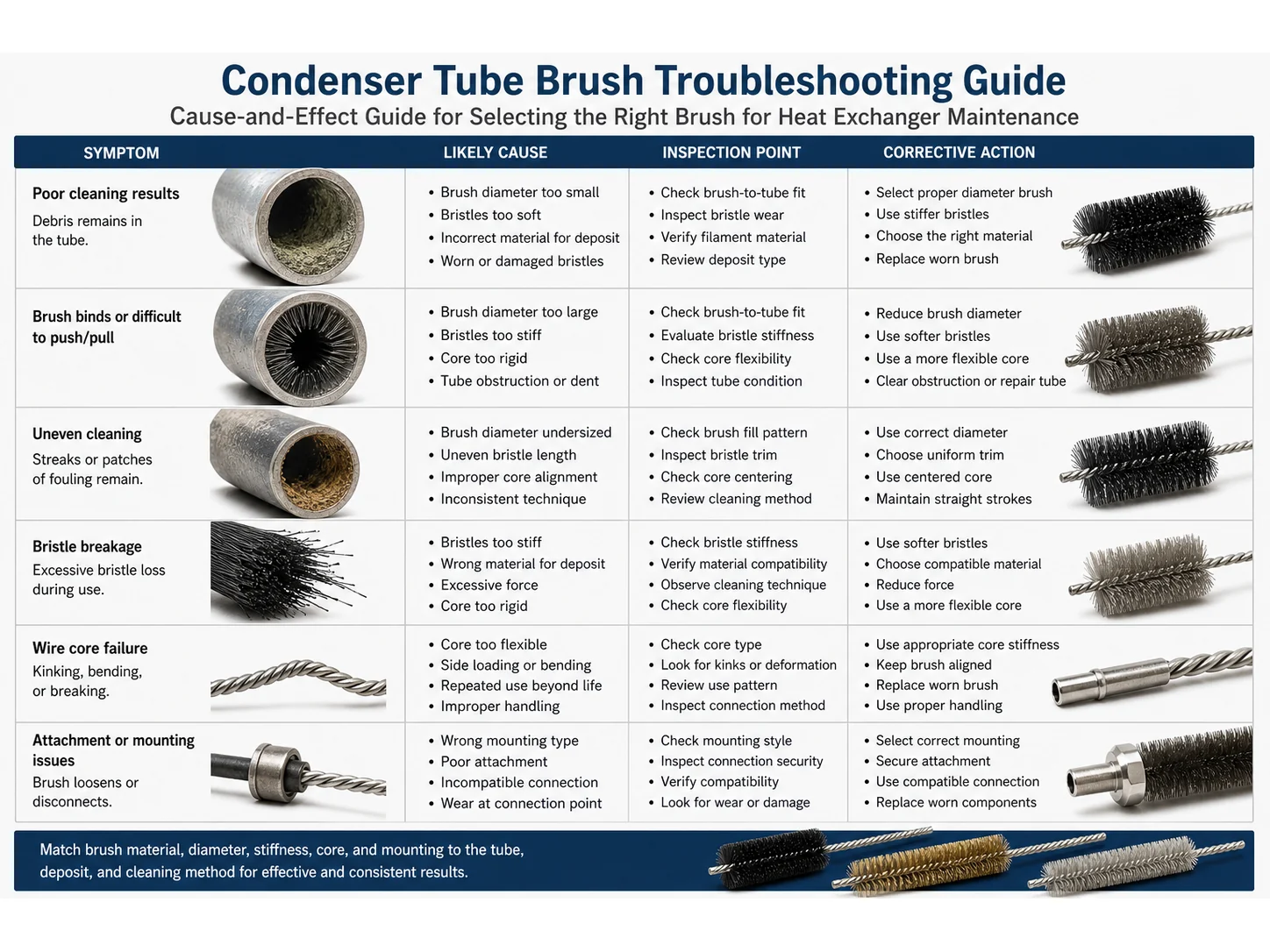
- Tube inner diameter (ID) and length – The brush OD should be 1–3 mm larger than the tube ID for effective scrubbing without excessive friction.
- Deposit type – Dry soot calls for a stiffer bristle (steel or abrasive nylon); wet sludge or chemical cleaning often requires a softer, chemical‑resistant filament like polypropylene.
- Tube material – Soft metals like copper or aluminum demand non‑sparking, non‑scratching filaments (brass or nylon) to prevent erosion.
- Bend radius – Tubes with tight bends need a flexible shaft brush. Define the minimum radius the brush must pass through without kinking.
- Power source – Decide between manual, drill‑driven, or dedicated tube cleaner. Larger diameters and longer passages usually need powered rotation.
- Wet or chemical exposure – If the brush will be used with acid descaling, confirm filament and stem material resistance.
- Hygiene requirements – For food, dairy, or pharmaceutical heat exchangers, brushes must be validated for cleanability and may need FDA‑compliant materials.
- Maintenance frequency – High‑frequency cleaning schedules favor durable, replaceable‑tip designs to reduce per‑use cost.
Placement and Usage Factors That Affect Brush Performance
Even the best brush will perform poorly if usage conditions are overlooked:
- Access limitations – Some boiler designs require extra‑long brush assemblies to reach the far tube sheet. Measure the total reach required, not just tube length.
- Dry vs. wet cleaning – Dry brushing creates airborne dust; wet brushing with water or chemical flush reduces dust but may require corrosion control.
- Brush storage – Store brushes hanging vertically to prevent filament deformation. Wet chemical brushes must be rinsed and dried to extend life.
- Rotation speed – Excessive RPM can overheat and fuse soot or glaze the tube surface. Follow brush supplier speed recommendations.
Common Mistakes When Using Boiler Tube Brushes
- Choosing by cost drivers alone – A low-cost brush that wears quickly, loses bristles inside the tube, or damages the surface ends up costing far more in repairs and lost efficiency.
- Ignoring tube material compatibility – Using a steel brush on soft metals can score the tube ID and promote corrosion sites.
- Skipping a size verification – Even a slight oversize brush can jam, break off inside the tube, and require expensive extraction.
- Assuming one brush fits all tubes – A multi‑pass boiler may have different tube IDs, bends, or deposits that need separate brush styles.
- Overlooking the stem length – A stem that is too short leaves a dirty section at the far end; too long and it whips or kinks.
- Neglecting safety during powered cleaning – Failing to secure the drive and tube sheet can lead to entanglement or tube puncture.
When a Boiler Tube Brush Is Not Enough
A boiler tube brush handles routine mechanical cleaning well, but there are limits:
- Heavy, hard scale – Cement‑like silicate scale may need chemical cleaning, hydro‑blasting, or a specialized tube scraper before brushing will be effective.
- Severely pitted or plugged tubes – If corrosion has created deep pits, brush cleaning cannot restore the surface; tube replacement or eddy‑current testing should be evaluated.
- Non‑circular geometries – Finned or spiral tubes require a brush profile designed for that shape, not a standard round boiler tube brush.
- Single‑pass proof of cleanliness – When documentation requires 100% visual inspection or borescope verification, brushing is only one step in the procedure.
- Custom tube configurations – If the boiler has non‑standard bends or a mix of sizes, request a supplier drawing review and, if possible, a sample test on a scrap tube section before committing to a full batch.
Final Takeaway
Match the boiler tube brush to the tube ID, deposit type, bend radius, and material sensitivity. Standard cleaning brushes rarely survive inside boiler tubes—the right boiler tube brush cuts cleaning time, protects tube metal, and keeps the heat exchanger running closer to design efficiency. When off‑the‑shelf options hit a limitation, a custom drawing review and sample test with a qualified supplier reduces risk far better than forcing a generic brush into a job it cannot finish.
Frequently Asked Questions
Can I use a standard wire brush for boiler tube cleaning?
Standard wire brushes are too short, too rigid, and often have thick wire bristles that can scratch soft tube metals. They also cannot bend around tube curves and may break off, leaving debris inside the tube. A purpose‑built boiler tube brush with the correct filament and flexible stem is safer and more effective.
What bristle material should I choose for superheater tubes?
Superheater tubes operate at very high temperatures and can have baked‑on, hard deposits. Stainless steel bristles are common for aggressive cleaning, but you must verify that the tube alloy can tolerate steel contact. For sensitive alloys, brass or high‑temperature nylon may be required.
How do I know what diameter brush to order?
Measure the tube’s inner diameter with a calibrated gauge. Order a brush with an overall OD 1–3 mm larger than the tube ID for a snug fit. If the tube has heavy scale, start with a slightly smaller OD and follow with the final size to avoid jamming.
Can the same brush clean both fire‑tube and water‑tube boilers?
Not always. Fire‑tube boilers have larger, straight tubes and can accept stiffer, shorter brushes. Water‑tube boilers often require longer, more flexible brushes to navigate bends and reach distant tubes. Evaluate each pass separately.
How often should boiler tube brushes be replaced?
Replace a brush when bristles become permanently flattened, the stem develops kinks, or filament material shows chemical degradation. High‑volume operations may track usage hours per brush; many set a preventive replacement interval based on the number of tubes cleaned.
Are there brushes suitable for food‑grade heat exchangers?
Yes, sanitary tube brushes with stainless steel or FDA‑complaint nylon filaments, smooth stems, and color‑coded handles are available. They must withstand CIP (clean‑in‑place) chemicals and often require third‑party verification for material compliance.
What if my boiler tubes have tight bends?
Choose a flexible shaft brush with a wound‑wire or nylon core designed for the minimum bend radius of your tubes. Check with the brush supplier for a bend‑radius specification and consider a trial piece if the geometry is complex.
Should I run the brush dry or wet?
Wet brushing with water or a mild alkaline solution helps control dust and can improve cleaning speed, but it introduces corrosion risk if the tubes are not dried adequately after cleaning. Dry brushing is simpler but requires proper ventilation and respiratory protection.