
Brush Type
Custom Machine Table Brush Plates
Plate Brush
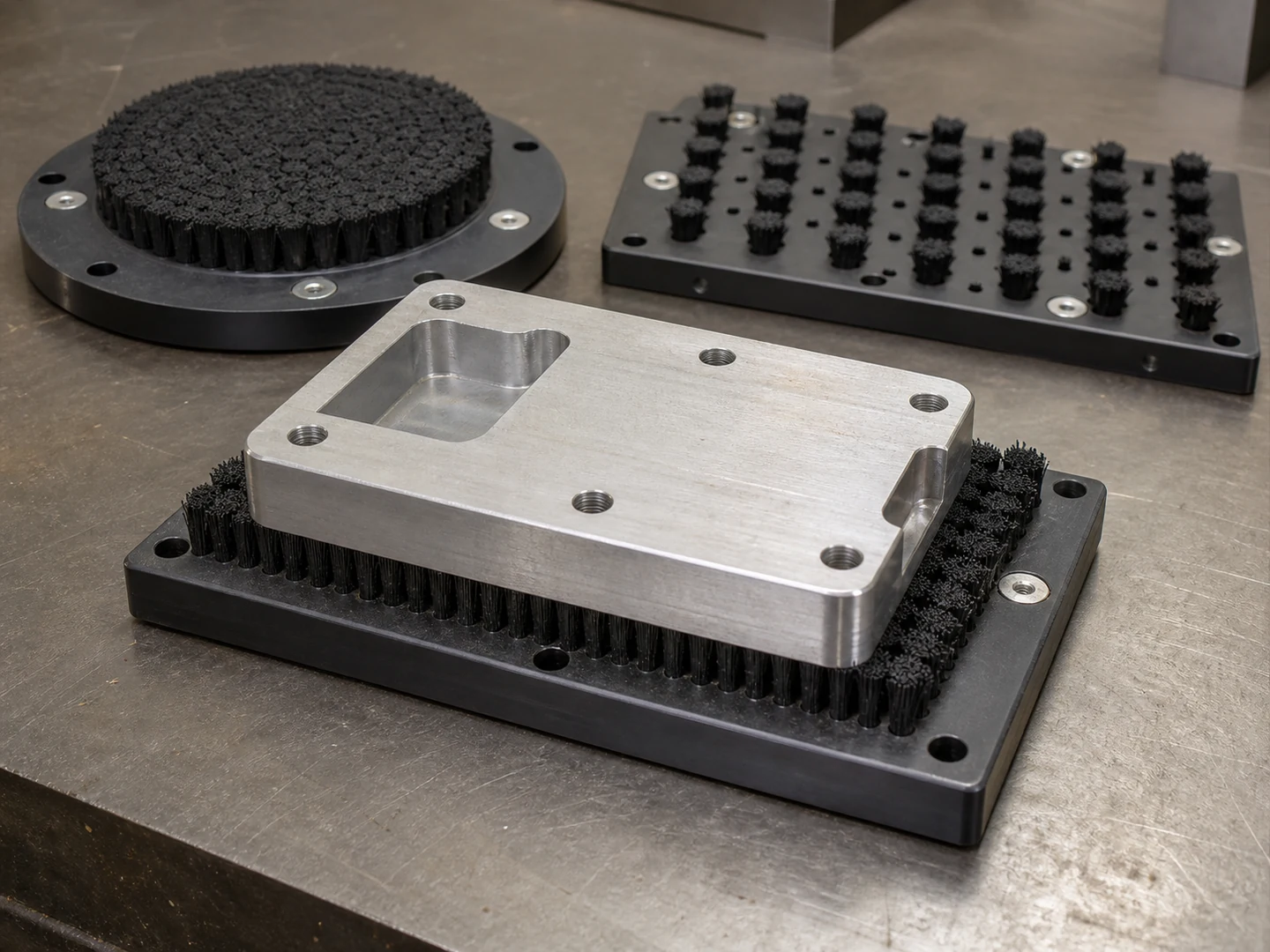
Choose a machine table brush plate when a broad field of bristles must support, guide, wipe, brake, or protect sheet material and components on equipment.
At a glance
- How it is driven
- Machine-driven
- How it mounts
- Countersunk holes, threaded inserts, adhesive fixing, machine recess or modular frame.
When should you choose this brush type?
Choose a machine-table brush plate when a broad field of tufts needs to support, guide, or wipe a panel over an area. A strip seal brush is the better comparison when you need one continuous line of contact for a gap, edge, seal, or narrow wiping path rather than distributed support.
What are Machine Table Brush Plates?
Machine table brush plates use a flat or shaped backing populated with many tufts to create distributed support. Instead of concentrating force at one line or point, the brush field spreads contact over panels, sheet metal, glass, coated parts, or delicate components moving across a table or machine bed.
The plate outline, cutouts, tuft pattern, angle, trim, and density are matched to the part path and the required balance between support and drag. The backing must fit the machine recess or frame while countersunk fasteners and rigid edges remain below the working filament surface.
What dimensions can I customize?
| Contact setting | Keep 1–6 mm working deflection and distribute the load through the plate rather than a few high tufts. |
|---|---|
| Panel length | 100–3000 mm |
| Panel width | 50–1500 mm |
| Bristle height | 10–150 mm |
| Bundle pitch | 5–30 mm |
Where is this brush type commonly used?
Start with the job the brush needs to do, then confirm dimensions, contact direction, material, and mounting.
What configurations are available?
Full-area tufted plate
A continuous brush field for broad support, wiping, or low-friction transport.
Zoned-density plate
Different tuft densities or trim heights create support, braking, or directional control in selected areas.
Shaped or cutout plate
The backing follows machine features, sensors, clamps, or process openings while keeping bristles around the active path.
Modular panel system
Smaller replaceable panels form a larger table so worn zones can be serviced without replacing the complete assembly.
Angled tuft layout
Tufts are set at an angle to guide parts, reduce edge catching, or move dust toward a collection side.
What material is right for this brush type?
Nylon PA
General support and wiping with good recovery and wear resistance.
PBT
Wet or frequently cleaned equipment where lower water absorption is preferred.
PET polyester
Dimensional stability and moderate stiffness in dry or wet industrial service.
PVC
Economical low- to medium-duty support where the temperature and chemical environment are suitable.
Soft or antistatic filament
Delicate panels or electronics handling where surface marking or static charge must be controlled.
Filament materials to compare
What do I need to know before ordering?
Supply the complete plate drawing, mounting-hole positions, recess depth, part size and weight, travel direction, required support height, allowable drag, surface sensitivity, and cleaning conditions.
Questions this page is asked
How should a machine-table brush plate be qualified for the actual workpiece load?
Map the supported area, mass, overhang, travel direction and local loads from clamps, rollers or transfer points on the real machine. Verify that tuft compression remains stable, the base does not deflect, and every fastener or insert stays below the contact plane throughout the approved load range.
What trial is needed before a brush table handles a scratch-sensitive or static-sensitive panel?
Run clean representative coupons through the complete support and transfer path at the intended load and speed, then inspect for marks, retained chips and charge behavior using the site's accepted method. A conductive fill claim is not enough by itself; verify the installed path to ground and the measured result under the actual humidity and contamination conditions.
What should be checked when one machine-table brush panel is replaced?
Confirm the replacement's base thickness, tuft height, density, orientation, mounting pattern and surface level against the adjacent accepted panels. Move a representative workpiece slowly across every joint and correct steps, gaps, proud fasteners or uneven drag before restoring normal machine travel.
Guides that go deeper on this
Continue Exploring
Recommended Reading & Related Brush Resources
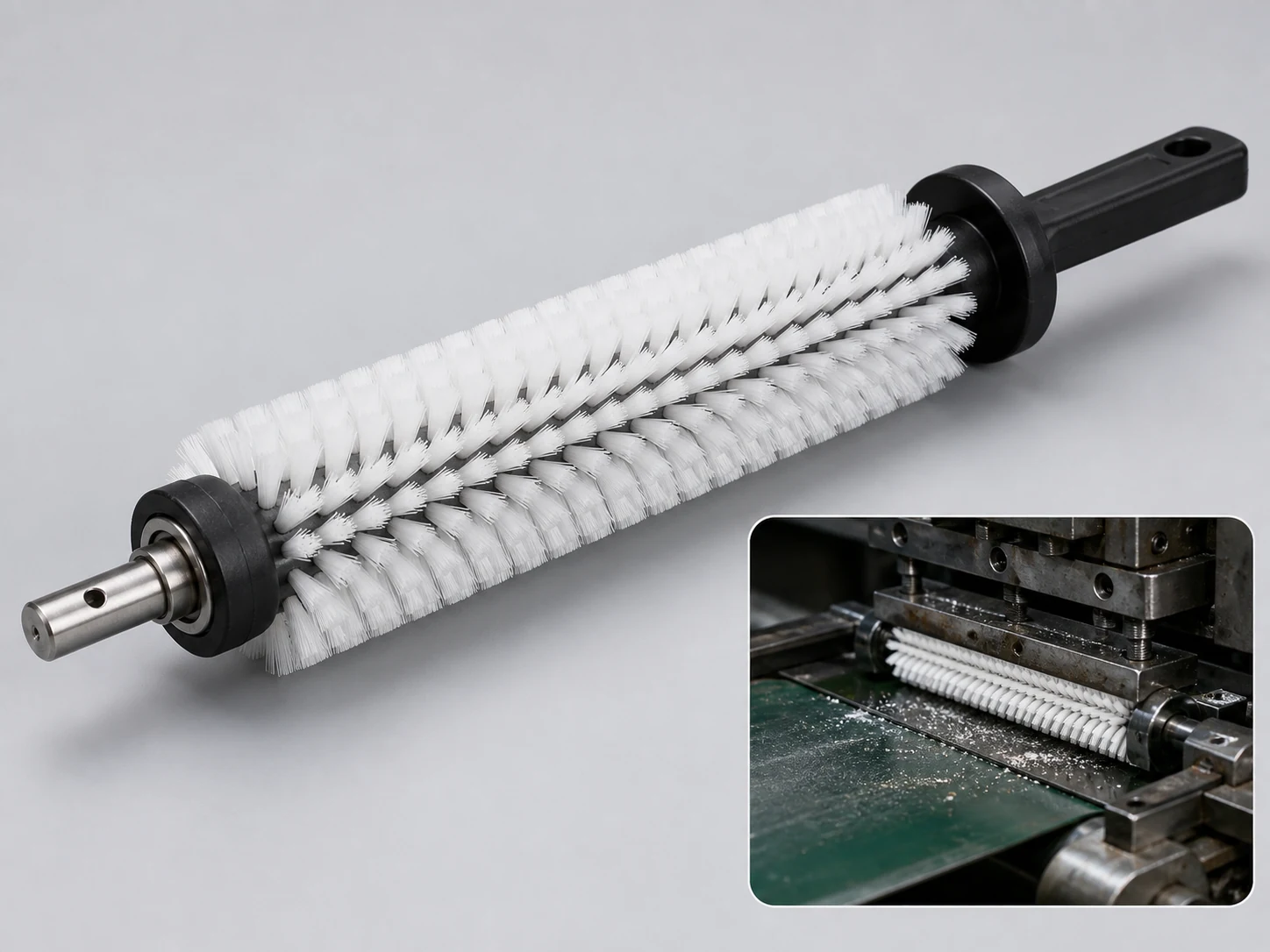
Machine Tool Punch Press
Custom nylon cleaning brush for punch presses. Clears metal chips, slugs, and stamping debris…
See the specification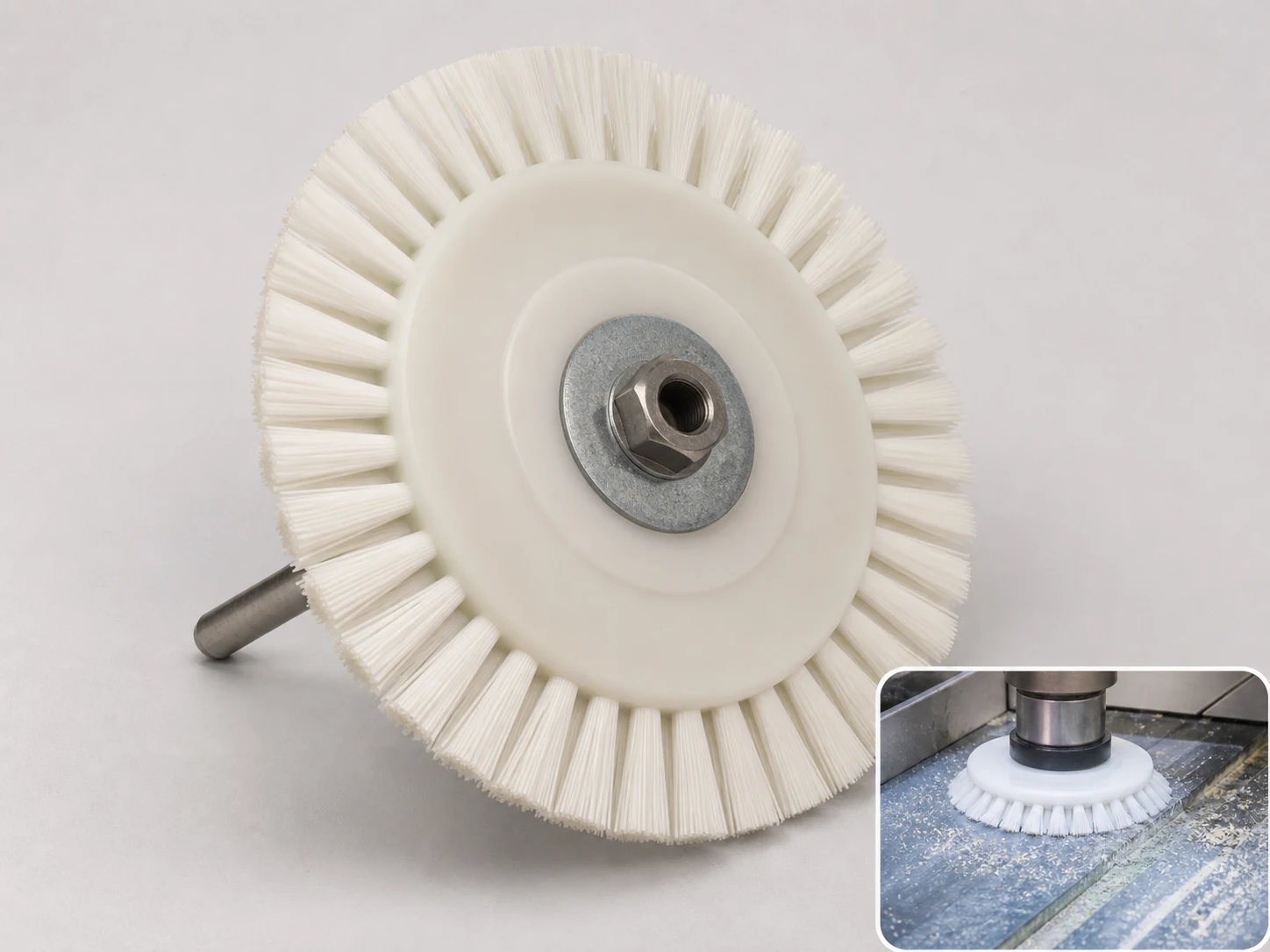
Plastic-Base Industrial Disc Cleaning Brush
Machine-mounted plastic-base disc brush with nylon PA filament for flat-face, edge, and localized cleaning…
See the specification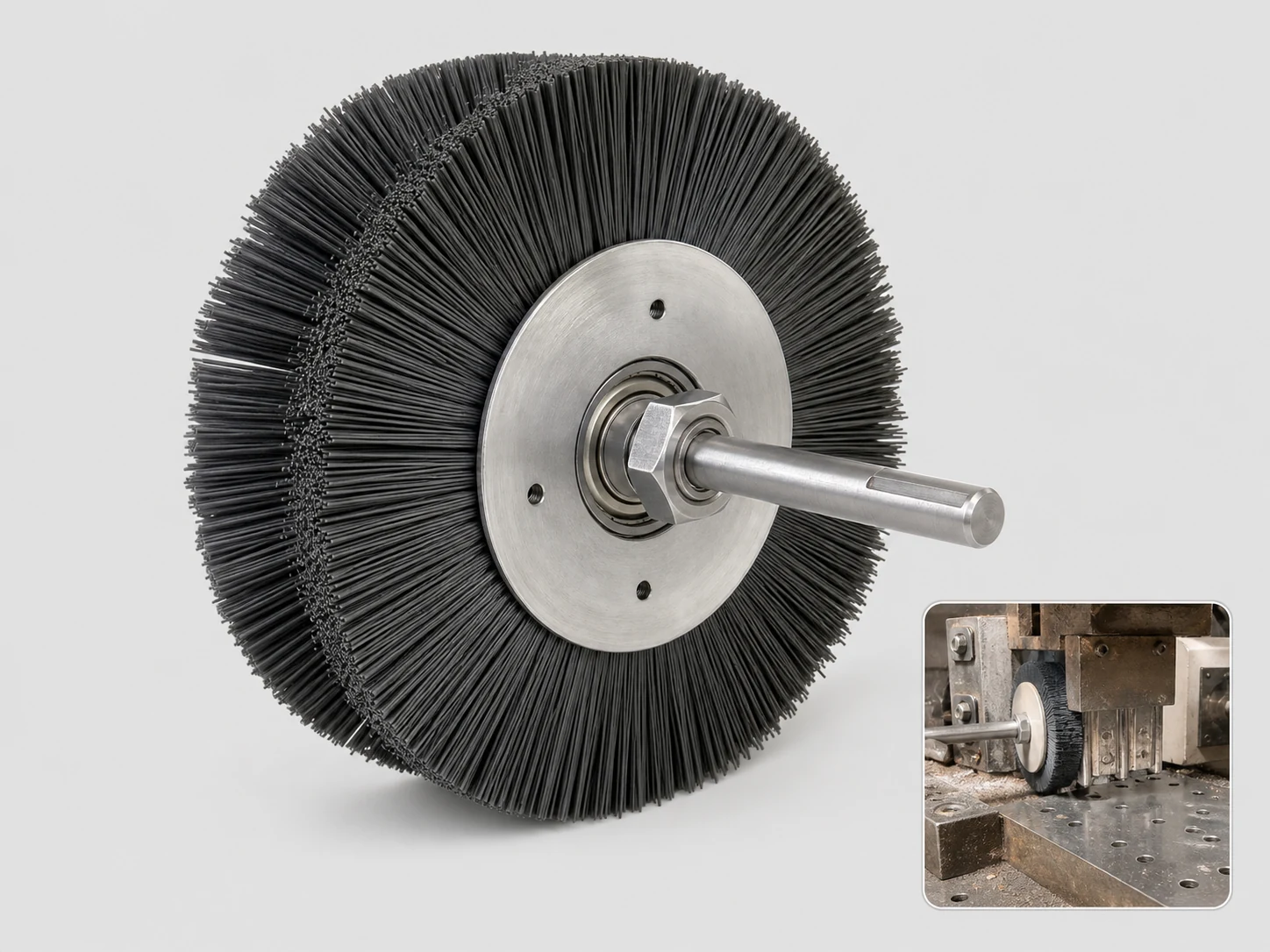
Brush Plate Punch Press
Custom-size tufted brush plates for CNC punch press tables. PBT/PET fibers support sheet metal,…
See the specification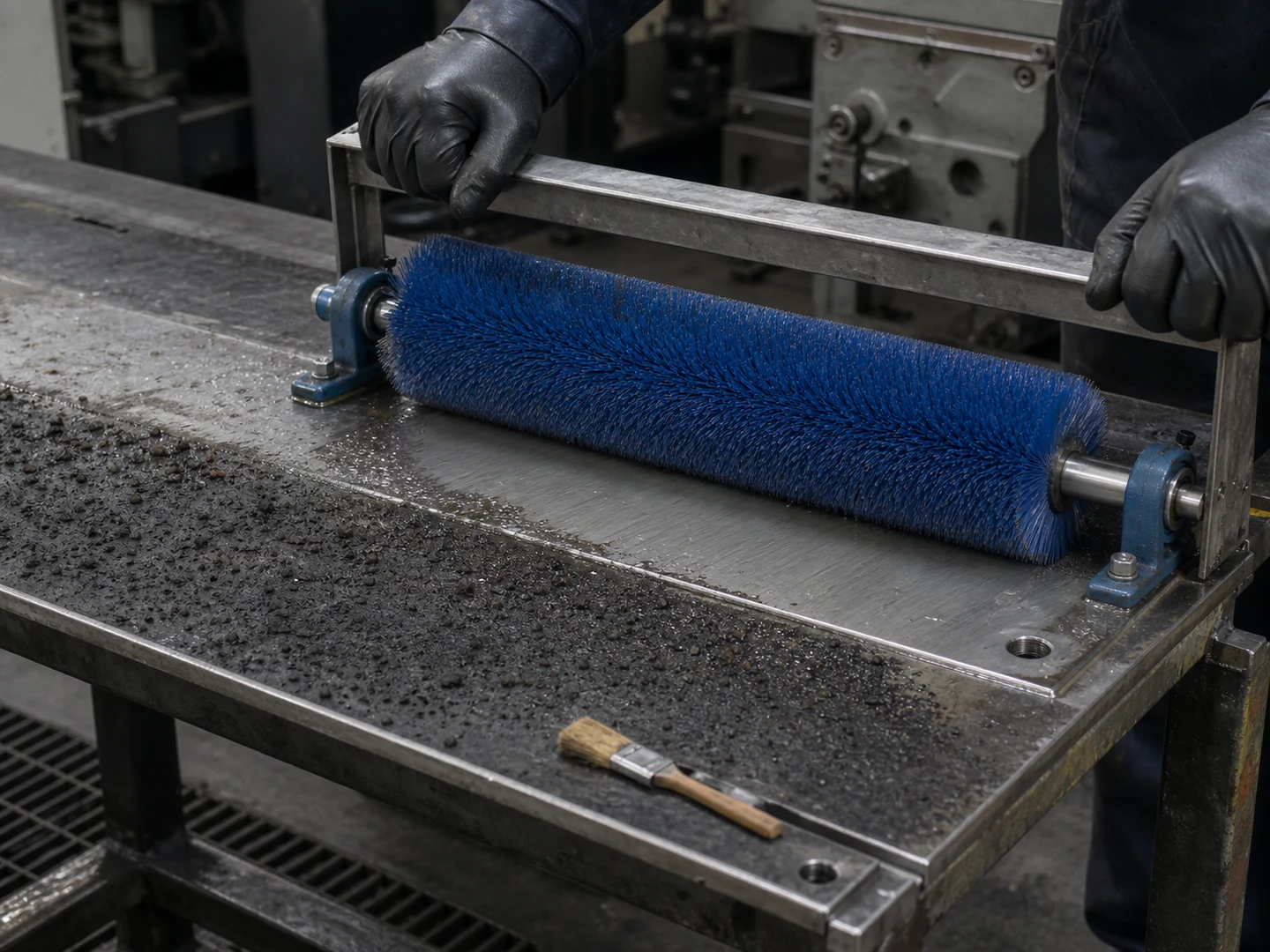
Industrial Machine Cleaning
For Industrial Machine Cleaning, the brush must reach the working area, disturb or collect…
See the cleaning job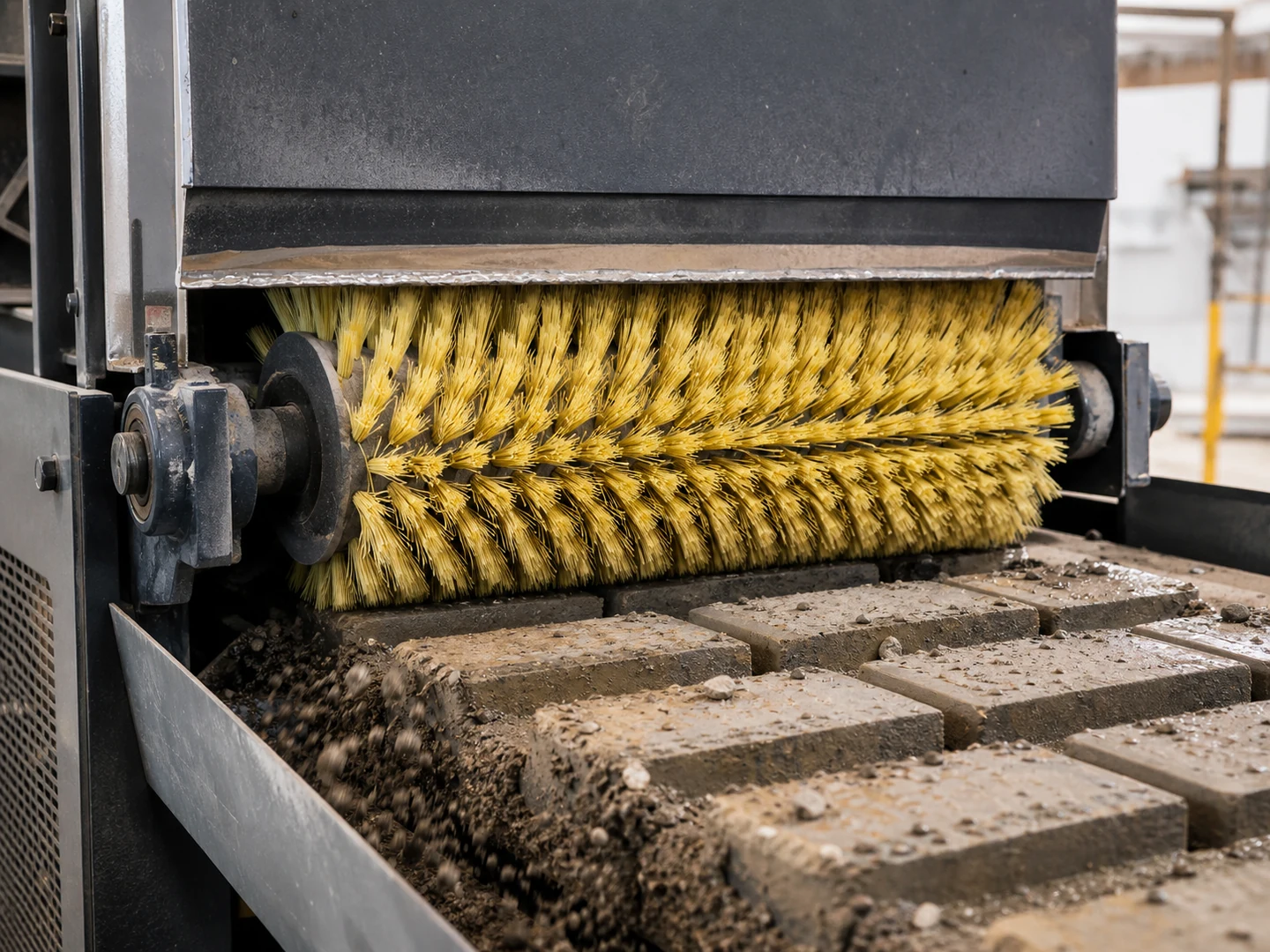
Brick, Tile & Building Material Machine Brush Use
For Brick, Tile & Building Material Machine Brush Use, the brush must reach the…
See the cleaning job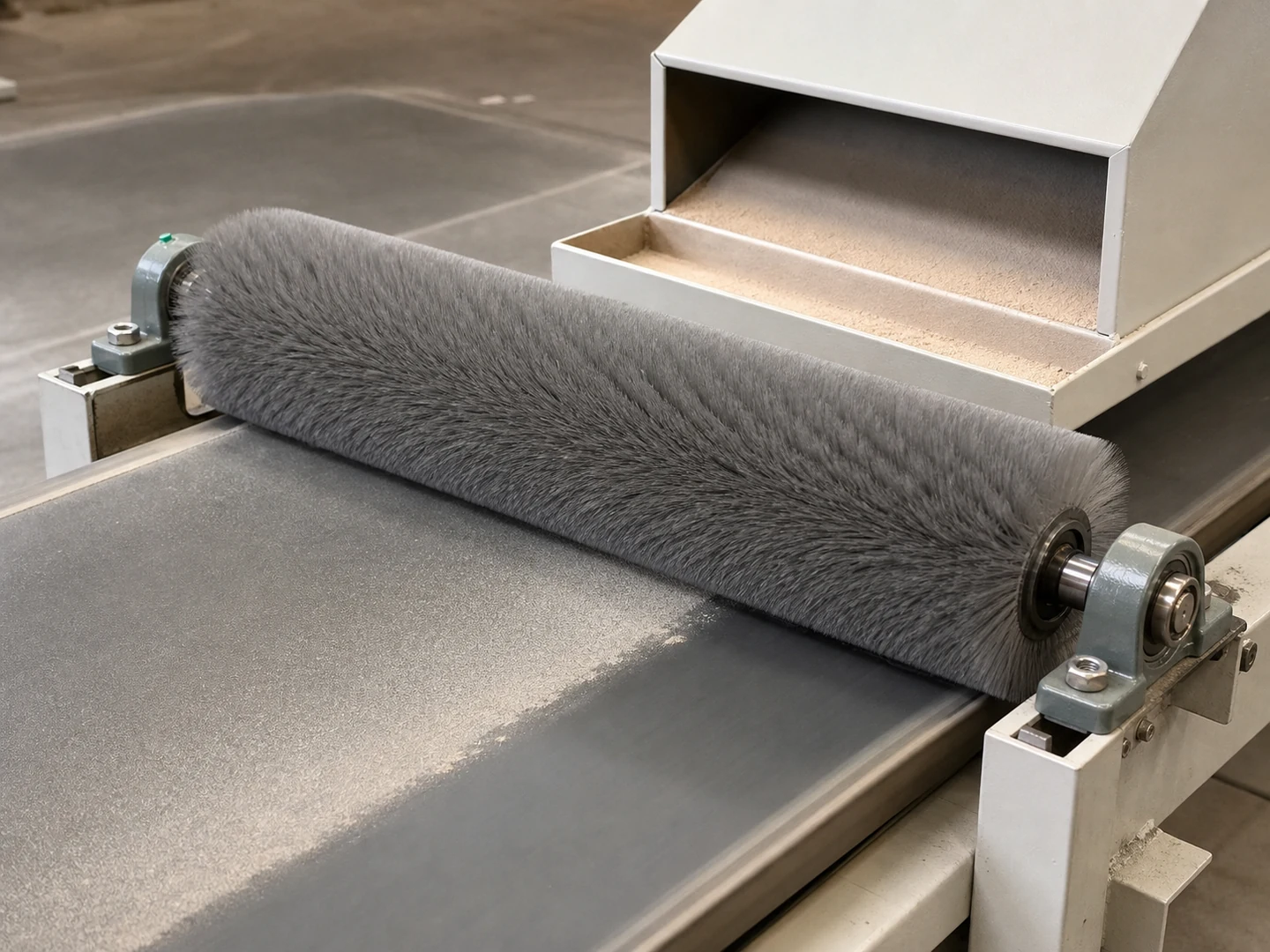
Dust Removal
For Dust Removal, the brush must reach the working area, disturb or collect loose…
See the cleaning job
Nylon PA
Choose Nylon PA based on its stiffness, recovery, wear, wet-service, chemical, and temperature behavior.
Compare this material
PBT
Choose PBT based on its stiffness, recovery, wear, wet-service, chemical, and temperature behavior. Do…
Compare this materialCustom Manufacturing RFQ
Discuss This Brush Type
Share the working surface, residue, dimensions, material direction, interface, quantity and drawing or sample photo.
Custom Brush RFQ
Request a Custom Cleaning Brush Quote
Upload a drawing, product photo, or sample photo and provide the core dimensions and cleaning conditions.
“We need a brush to remove wet residue from a stainless steel conveyor, about 800mm wide. The current brush wears quickly. We can send photos.”
“We sell drinkware and need a cleaning brush to include with the product. Quantity around 5,000 pieces.”