
Application
Air Conditioner Filter, Vent & Fin Cleaning
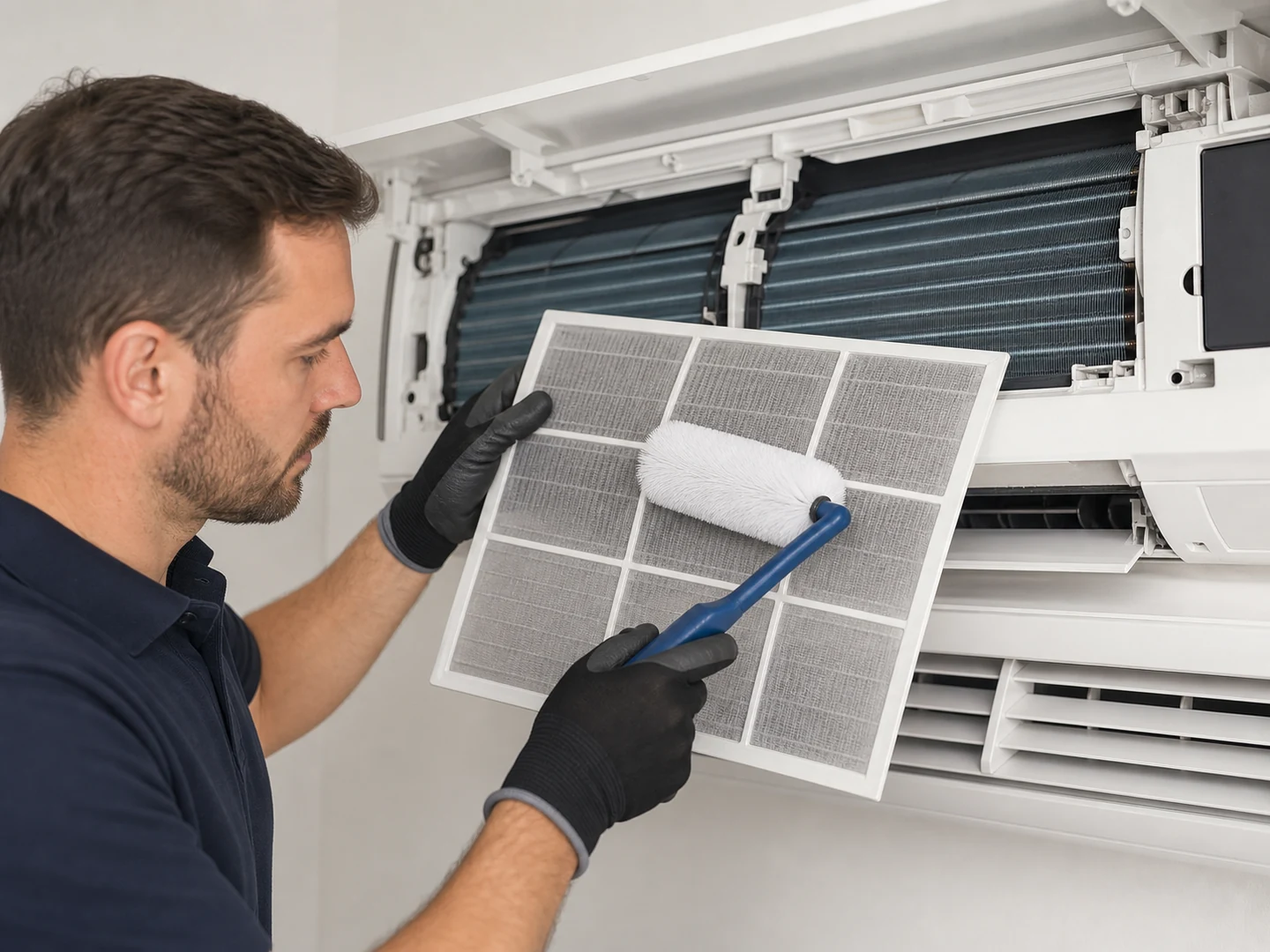
For Air Conditioner Filter, Vent & Fin Cleaning, the brush must reach the working area, disturb or collect dust/fibers/mold deposits, and release it without creating unacceptable surface damage or process interference. Choose the brush structure from the available access, contact direction, and cleaning process.
At a glance
- Cleaning target
- Dust/Fibers/Mold Deposits
- Working environment
- Dry Indoor Area / Wet Indoor Area
- Cleaning method
- Dry Brushing / Wet Brushing
- Requirements to check
- Indoor-Air-Quality Maintenance SOP; Low Filament-Shedding Requirement
Aluminium fins bend under almost nothing, so coil and fin work runs along the fin direction with a narrow brush, and the drain line is cleaned separately because that is where the mould is.
What makes Air Conditioner Filter, Vent & Fin Cleaning different from other household and appliance cleaning?
The main difficulty is removing dust, oil, process residue, particles, and bonded contamination from filters, vents, coil fins, fan housings, and narrow air-path details without damaging the surface, loading the brush, or carrying contamination back into the process.
The work happens in dry indoor area and wet indoor area against dust, fibers and mold deposits.
The part people get wrong: the residue tells you the filament, but the access opening tells you the construction. Get them in that order and the shortlist is short.
What are the most common cleaning targets in Air Conditioner Filter, Vent & Fin Cleaning?
5 targets, each with its own opening, residue and contact requirement.
| Part or area | Residue type | Cleaning requirement |
|---|---|---|
| Air-Filter | Dust, Fibers, Mold Deposits | The tips must enter the apertures far enough to push lodged material back out, without wedging in the openings. |
| Evaporator-Fin | The head must reach the working face and apply even contact without marking the surface. | |
| Condenser-Coil | ||
| Vent and Louver | The head must be narrower than the opening and stiff enough to lift residue without splaying at the mouth. | |
| Drain-Pan and Drain-Line | The brush must pass the full length of the passage and hold contact with the wall without folding over at the far end. |
The dimensional envelope those targets impose on the brush:
| Parameter | Typical range |
|---|---|
| Filament diameter | 0.08–0.35 mm; 0.30–1.20 mm |
| Working depth | 10–150 mm |
| Overall length | 300–700 mm; 120–450 mm |
| Working length | 50–250 mm; 10–120 mm |
| Fin spacing | 1–4 mm |
| Brush width | 20–500 mm |
Which brush types work for each cleaning target?
Narrow fin brush, radiator brush, soft hand brush, flexible crevice brush, or machine-specific coil-cleaning head.
| Cleaning target | Recommended brush type | Why it fits |
|---|---|---|
| Air-Filter | Handheld Detail Brushes | A hand-guided head with tips finer than the mesh lifts trapped lint back out of the filter face instead of driving it through. |
| Evaporator-Fin | Fin pitch is close and the aluminium folds under a thumb, so a hand-guided head lets the operator work along the fin direction rather than across it. | |
| Condenser-Coil | The condenser stands outdoors and packs dust between the fin rows, so a hand-guided head can be entered from the clear side and drawn straight back out. | |
| Vent and Louver | A narrow head fits between fixed louver blades and takes the dust film off both faces of each blade, where a cloth only reaches the front edge. | |
| Drain-Pan and Drain-Line | Tube & Pipe Bore Brushes | The condensate line is a small closed bore that blocks with algae, so only a bore brush on a shaft travels its length and pulls the plug back to the pan. |
The layouts this application is normally built in:
- Driven brush — use when dust, oil, process residue, particles, and bonded contamination needs repeatable scrubbing or controlled relative movement
- Passive or free-running brush — use for loose contamination and lower process complexity on filters, vents, coil fins, fan housings, and narrow air-path details
- Localized hand, strip, or tube brush — use where only an edge, gap, port, or maintenance point needs contact
In practical brush terms: reach first, then residue. A brush that fits but is too soft can be stiffened; a brush that does not fit is simply the wrong tool.
What filament materials work best for Air Conditioner Filter, Vent & Fin Cleaning?
Soft nylon, PBT, microfiber, or protected flexible filament is used for fins and louvers; stiffer fill is reserved for robust frames and removable filters.
| If the condition is… | Filament to start with | Why |
|---|---|---|
| Sensitive or coated surface | Nylon PA | balanced flex life and abrasion resistance |
| Wet, washdown, or detergent service | Polypropylene PP | acid, alkali, water, and detergent resistance |
| Bonded residue or aggressive cleaning | PBT | stable wet stiffness and low moisture uptake |
The constraints this application puts on the filament:
| Constraint | Value for this application |
|---|---|
| Filament hardness | Medium |
| Maximum service temperature | 80°C |
| Chemical exposure | No Added Medium; Neutral Detergent; Disinfectant |
| Cleaning method | Dry Brushing, Wet Brushing |
How do I choose the right brush for my air conditioner filter, vent & fin equipment?
Fin pitch caps the brush thickness and fin-pack depth sets the reach; vents and drain lines are sized separately from the coil.
Work through it in this order:
- Identify the target part and measure the access opening or clearance
- Describe the residue: what it is, how thick it sits, and how strongly it holds
- Choose the construction that can physically reach that target
- Set the filament from surface risk, working temperature and cleaning chemistry
- Fix filament diameter, free trim length and density for the contact pressure you need
- Run one cycle and check the result before committing to a production quantity
Before you commit to a quantity, send the fin pitch, the fin-pack depth, the vent opening, and the drain-line bore.
When is an air conditioner filter, vent and fin brush the wrong tool?
Coil chemistry with a rinse reaches deep into a fin pack where no brush arrives, and a fin comb is what straightens bent fins. A blocked drain line is cleared with air or a flush, and brushing across a fin pack closes the airway rather than opening it.
What common mistakes should I avoid in Air Conditioner Filter, Vent & Fin Cleaning?
- Giving unit capacity instead of fin pitch and the depth the brush has to reach
- Changing brush material while leaving excessive engagement, poor alignment, or no discharge path unchanged
- Copying a worn brush without recording motion, direction, mounting, and the original working diameter
When a brush is running but not cleaning, start here rather than adding pressure:
| Symptom | What to change |
|---|---|
| Residue remains | Increase relative motion or discharge, then change filament diameter or density; do not add pressure before checking loading by dust, oil, process residue, particles, and bonded contamination. |
| Surface marks or scratches | Reduce engagement, use finer or softer fill, and remove trapped abrasive particles from contact with filters, vents, coil fins, fan housings, and narrow air-path details. |
| Rapid wear or uneven cleaning | Check alignment, runout, support, motion, temperature, chemical attack, and whether the brush covers the complete working path. |
| Brush loads or redeposits residue | Open the fill pattern or add wash, vacuum, air, scraping, or a collection path so removed dust, oil, process residue, particles, and bonded contamination leaves the contact zone. |
Questions this page is asked
How should a brush contact thin air-conditioner coil fins?
Use the soft nonmetallic method permitted by the coil manufacturer and work with the fin direction from an accessible face while controlling depth and debris exit. Trial a small section and stop if fins bend, coating changes, debris is packed inward or the tool approaches tubing or wiring; damaged fins require the specified service tool or qualified repair.
What checks release an air conditioner after brush cleaning?
Remove loosened debris, clear the condensate path where the model procedure requires it, and confirm that approved wet-cleaned parts are rinsed or neutralized and fully drained. Refit dry filters and panels, inspect wiring and controls for moisture, and restore power only after the airflow path and every removed guard or cover are correctly assembled.
Guides that go deeper on this
Continue Exploring
Recommended Reading & Related Brush Resources
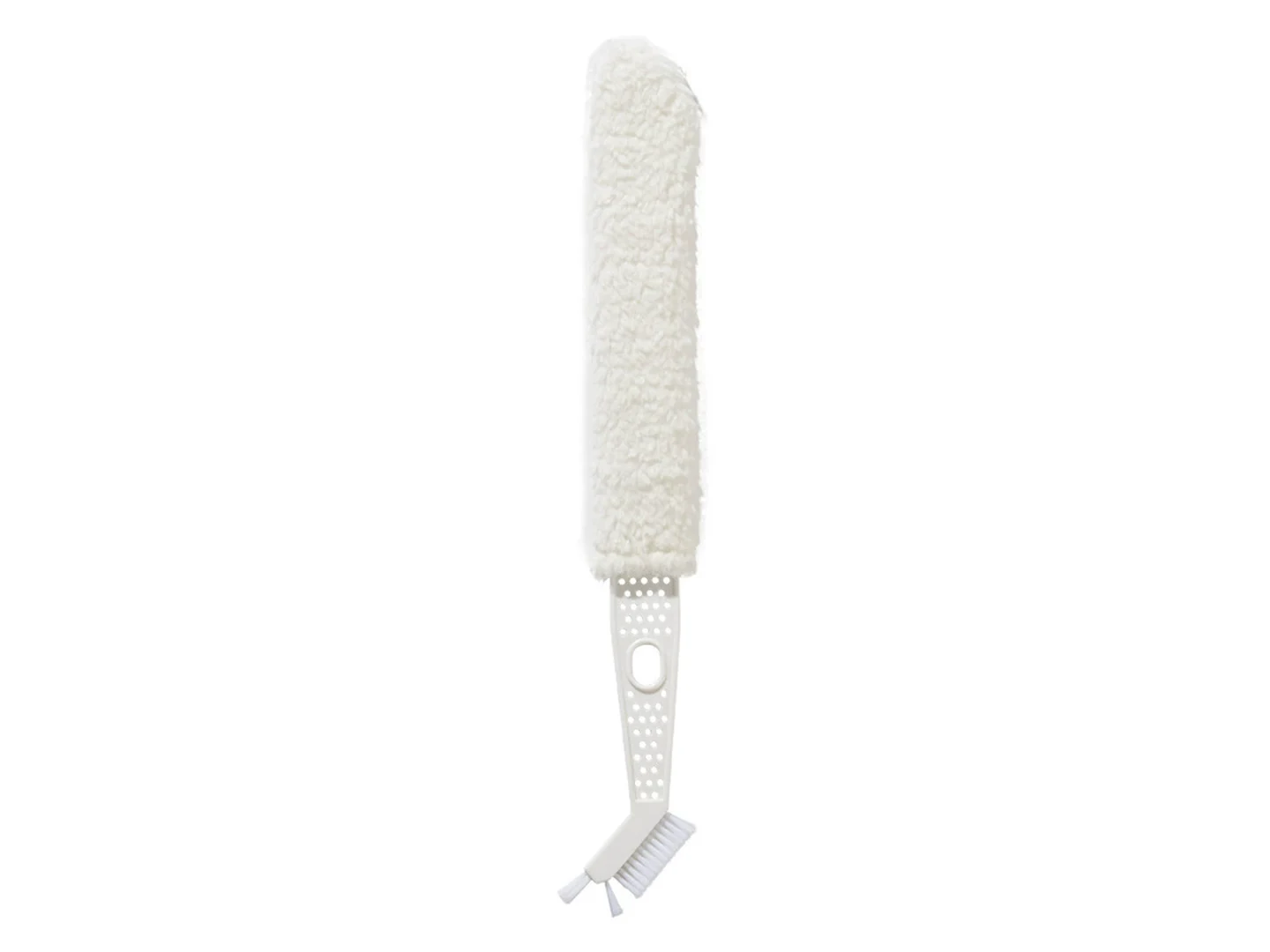
Air Conditioner Cleaning Brush
Custom air conditioner cleaning brush for HVAC maintenance. Fine nylon or PBT filament reaches…
See the specification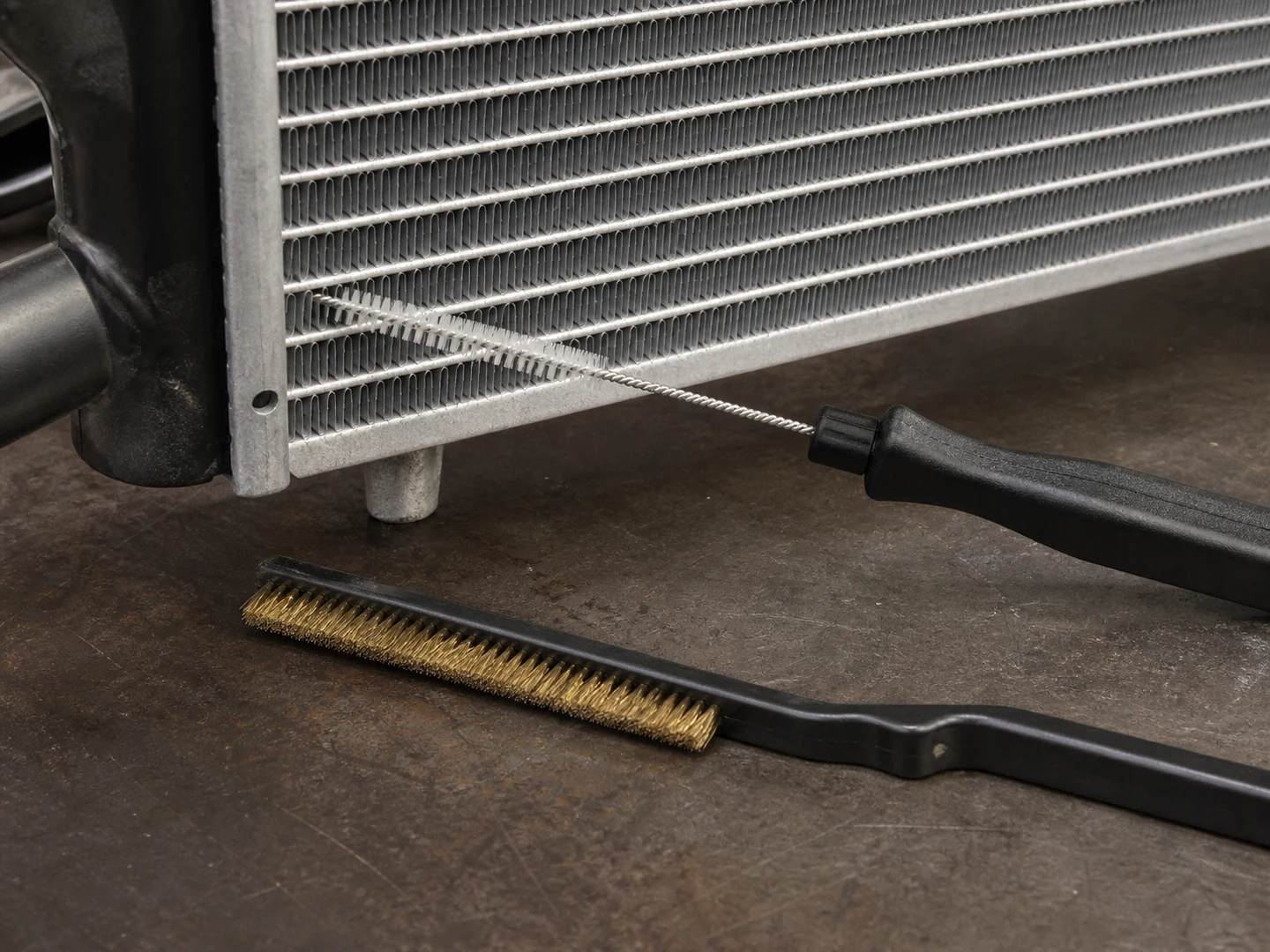
Radiator Fin Brush
Custom radiator fin brush with brass wire or Nylon PA fill for HVAC coil…
See the specification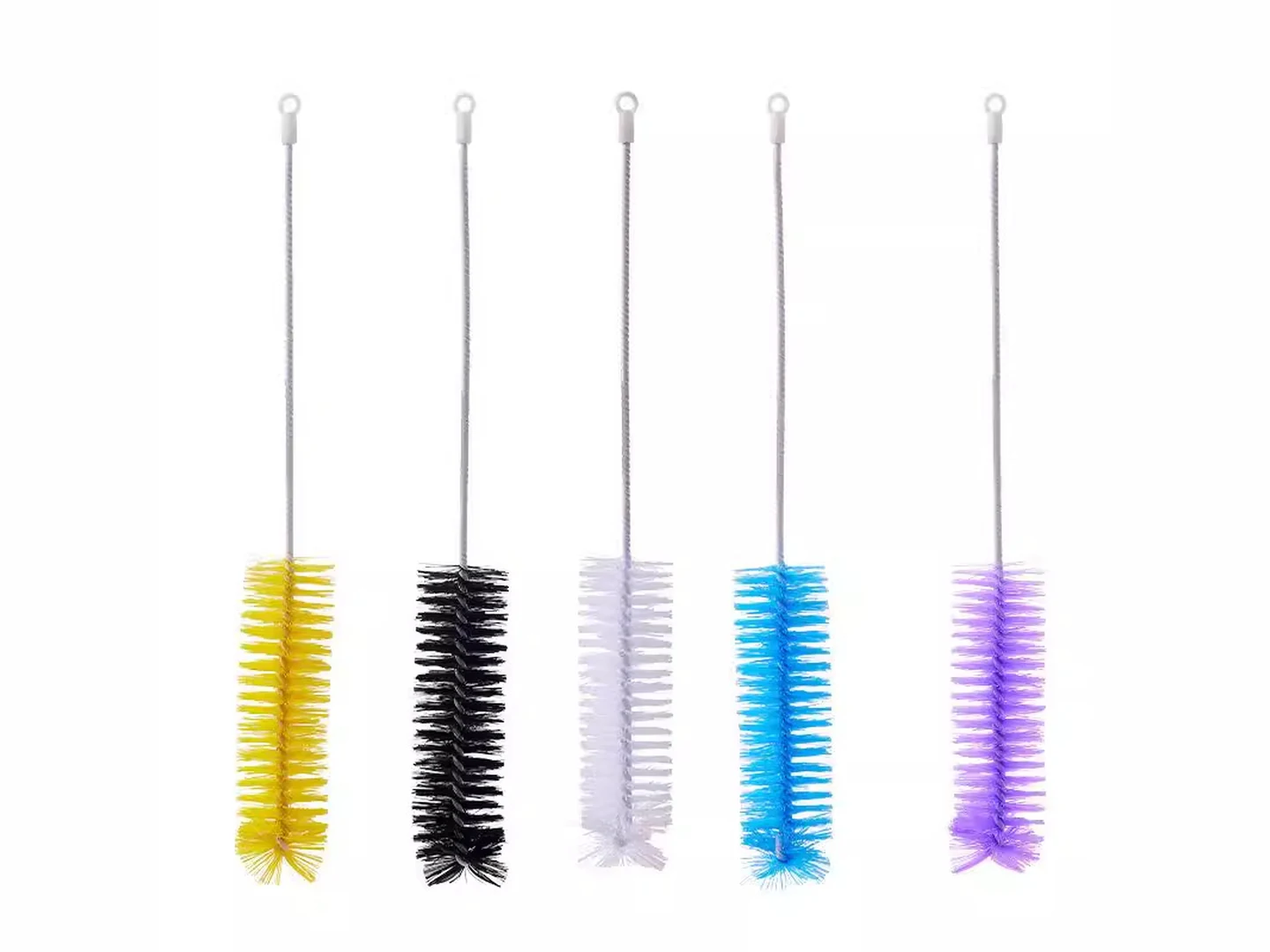
AC Fin Cleaning Brush
Custom AC fin cleaning brush with PBT, PP, or nylon filaments to clean condenser…
See the specification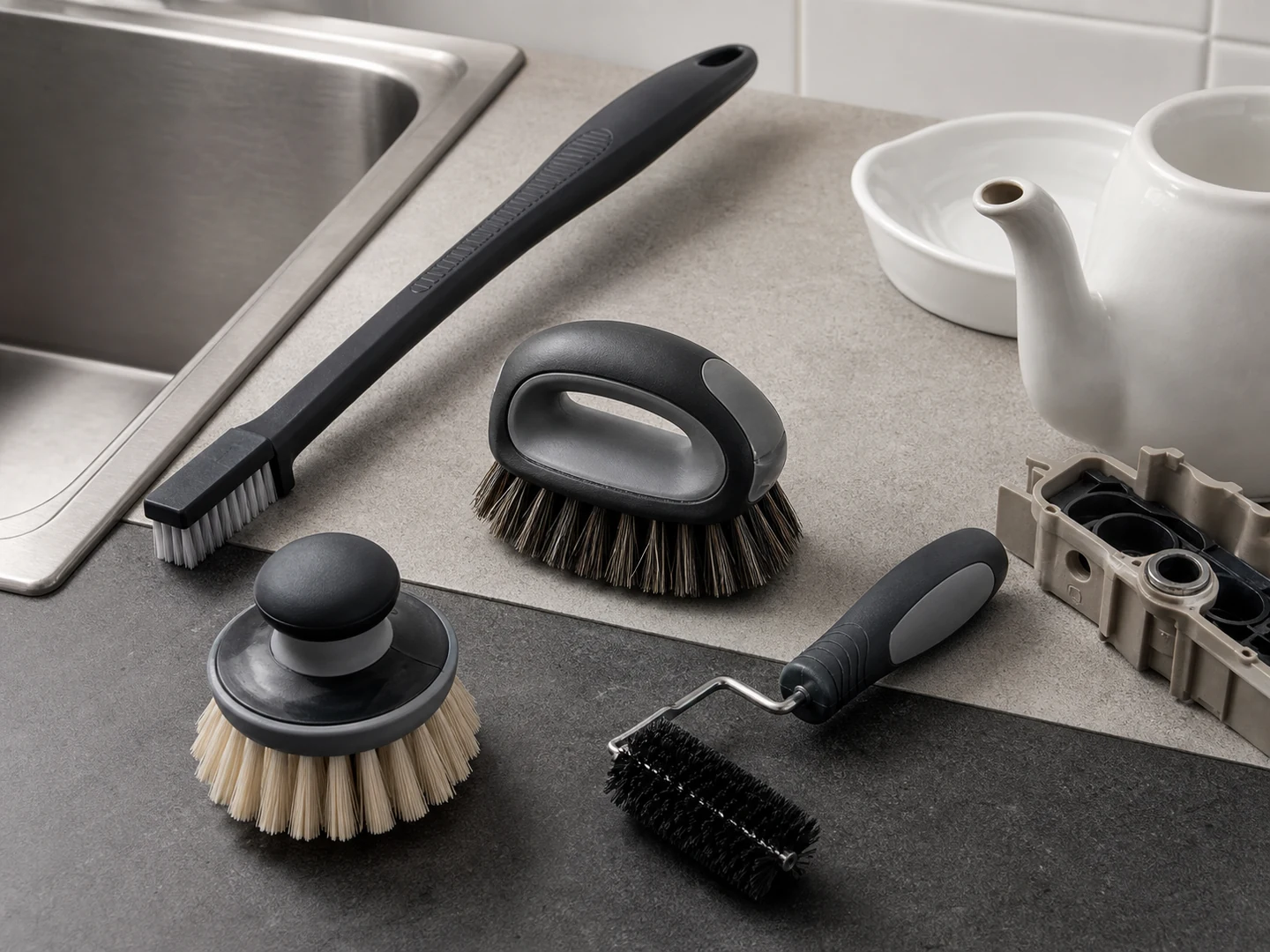
Custom Handheld Detail Brushes
Choose a handheld detail brush when you need direct control in seams, recesses, fittings,…
See how this type is built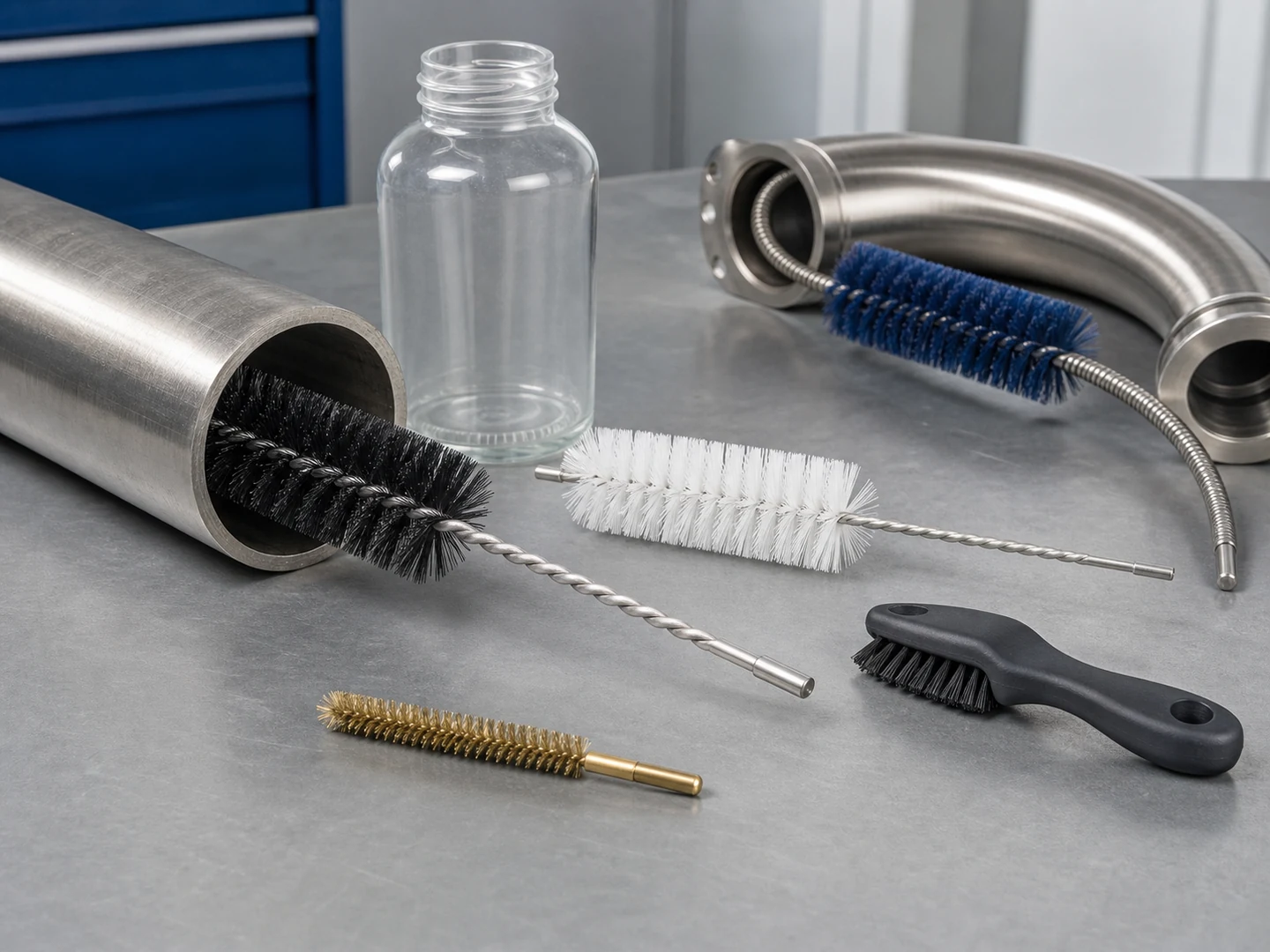
Custom Tube & Pipe Bore Brushes
Choose a tube, pipe, or bore brush when the working surface is inside a…
See how this type is built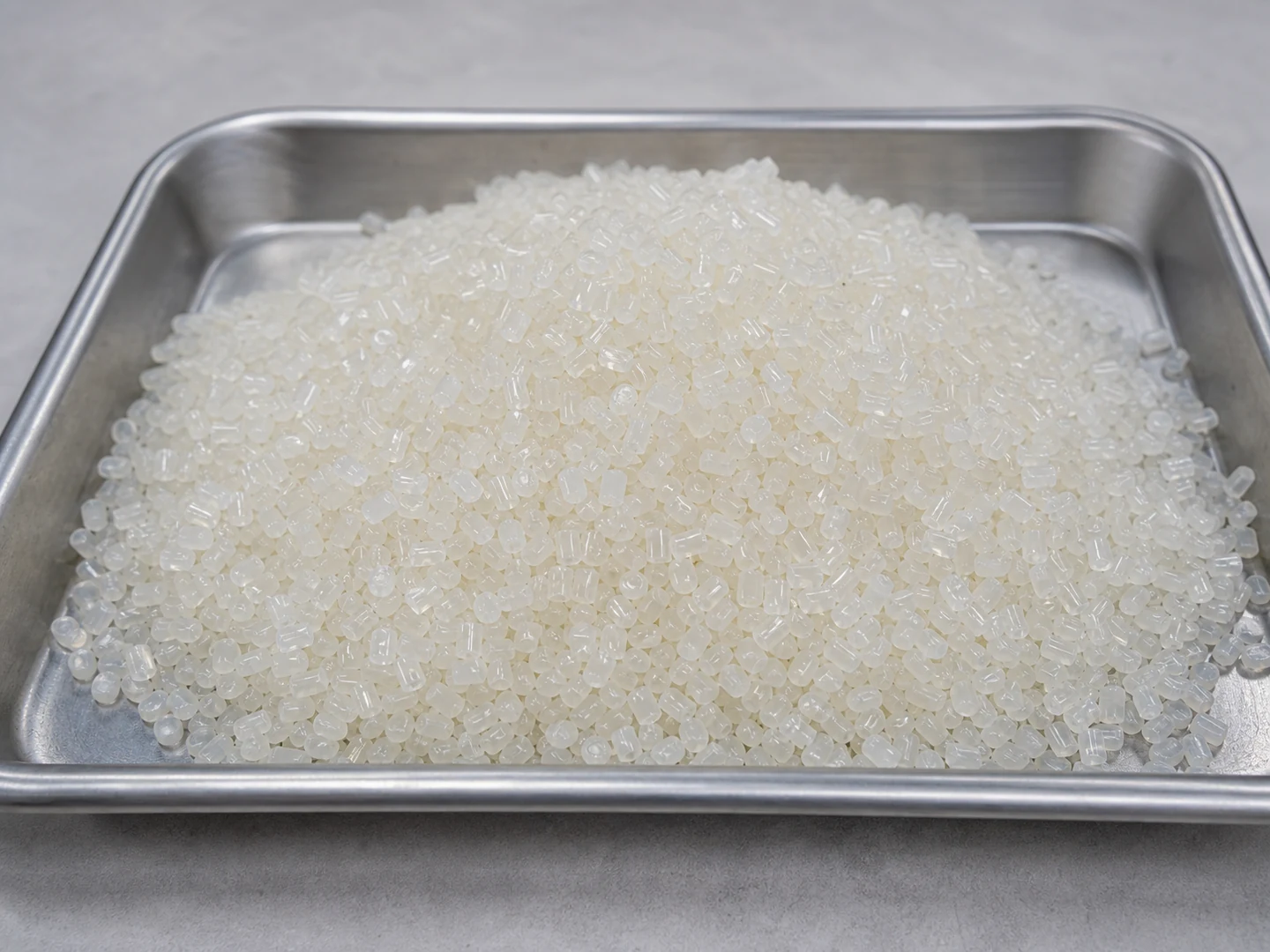
Nylon PA
Choose Nylon PA based on its stiffness, recovery, wear, wet-service, chemical, and temperature behavior.
Compare this material
Polypropylene PP
Choose Polypropylene PP based on its stiffness, recovery, wear, wet-service, chemical, and temperature behavior.…
Compare this material
PBT
Choose PBT based on its stiffness, recovery, wear, wet-service, chemical, and temperature behavior. Do…
Compare this materialCustom Manufacturing RFQ
Discuss This Application
Share the working surface, residue, dimensions, material direction, interface, quantity and drawing or sample photo.
Custom Brush RFQ
Request a Custom Cleaning Brush Quote
Upload a drawing, product photo, or sample photo and provide the core dimensions and cleaning conditions.
“We need a brush to remove wet residue from a stainless steel conveyor, about 800mm wide. The current brush wears quickly. We can send photos.”
“We sell drinkware and need a cleaning brush to include with the product. Quantity around 5,000 pieces.”