
Custom Cleaning Brush
AC Fin Cleaning Brush
Custom AC fin cleaning brush with PBT, PP, or nylon filaments to clean condenser and evaporator coils in 1–6 mm fin spacing without bending fin edges.
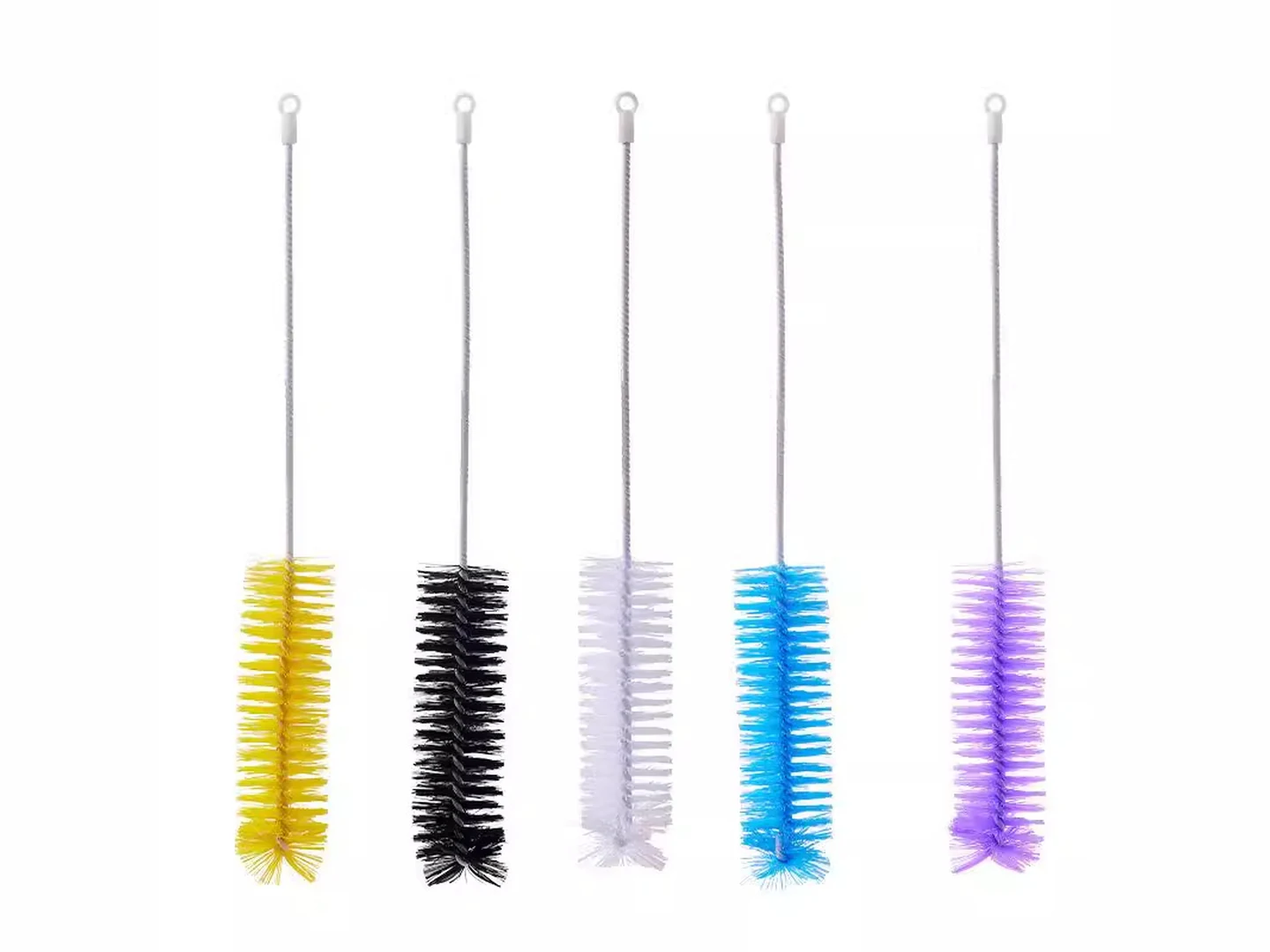
Small brush
500 pcs
Minimum order
Held in one hand: tube, bottle, detail and swab brushes — including long-handled ones with a small head.
Production lead time, once the specification is confirmed
- Up to 500 pcsWithin 7 days
- 501–50,000 pcsWithin 14 days
- Over 50,000 pcsWithin 21 days
Peak season can extend these times; the shipping date is confirmed in writing with your quotation. Sampling and shipping are quoted separately.
A filament-based AC Fin Cleaning Brush built to slide between tightly spaced condenser and evaporator coil fins and lift out dust, lint, grease film, and packed debris without bending the soft aluminum or copper fin edges. Head width, trim length, and PBT, polypropylene, or nylon fill are configured to the fin spacing, coil depth, and cabinet access of the unit being serviced.
What can this brush do for you?
Follows the fin spacing, not the fin edges
Fine filaments in the 0.08–0.35 mm range are sized to enter rows spaced 1–6 mm apart. The flexible tips contact the debris between fins while deflecting around the aluminum or copper edges, so the brush cleans the gap without folding the fins over.
Cleans through the full coil depth
Trim lengths from 15–60 mm let the filaments reach past the visible face rows into the middle of the coil pack. Instead of cleaning only the front edge, the brush removes debris two, three, or more rows deep, where airflow blockage actually begins.
Works dry or with wet coil-cleaner residue
PBT, polypropylene, and nylon fills remain effective when used dry or with common detergent-based coil cleaners and a water rinse. Use the brush as a pre-cleaning step before chemical foam or as a follow-up to move softened dirt out of the coil after dwell time.
Loose debris clears from the brush instead of reloading the coil
Straight or lightly flagged filament rows release pulled dust and lint with a tap or rinse, which keeps the same debris from being redeposited on the next stroke. Flagged options hold more fine dust; straight trim favors penetration in the tightest gaps.
One head geometry covers the coil face and surrounding zones
The narrow head width from 10–60 mm works down the coil face, while the front edge of the same brush can be worked along the drain pan ledge, coil frame, and end plates without switching tools.
What is an AC Fin Cleaning Brush?
An AC Fin Cleaning Brush is a manual hand brush with a narrow head and long, closely set rows of fine filaments. It is designed for mechanical cleaning of air-conditioner condenser and evaporator coils: the flat aluminum or copper fin surfaces that air passes through. During use, the operator pulls the brush across the coil face in the direction of the fin rows, then works the filament tips into the gaps to dislodge material trapped between fins.
The brush fills the space between two other HVAC maintenance steps. It is not a fin straightener: bent fins should first be restored with a fin comb so the rows are parallel and accessible. It is also not a chemical wash by itself: heavy grease or baked-on deposits usually need an approved coil cleaner and dwell time before brushing completes the removal. In a routine preventive maintenance cycle, the brush is used after loose surface debris is vacuumed or blown out and before or after the rinse step, depending on whether the coil is wet-cleaned.
Because condenser and evaporator surfaces are easily deformed, the brush’s working contact is controlled: filament diameter, fill density, and trim length are chosen so the brush complies with the fin rather than forcing through it. That is the main difference between a purpose-built AC fin cleaning brush and a general stiff scrub brush.
Technical Specifications
The values below cover the standard production range for this AC fin brush. Final dimensions are set from the coil fin spacing, coil thickness, and cabinet access, not left at the range midpoint.
| Parameter | Value / Options |
|---|---|
| Overall length | 300–700 mm, selected for cabinet depth and operator control |
| Head width | 10–60 mm, matched to the working coil face or passage gap |
| Working length / head length | 50–250 mm, set by the coil area the operator can stroke without repositioning |
| Trim length | 15–60 mm, the exposed filament length that contacts the coil |
| Working depth into coil | 10–150 mm, depending on coil rows and filament support |
| Filament diameter | 0.08–0.35 mm, selected to enter the fin gap without spreading fin edges |
| Fin spacing range | 1–6 mm between fins, used to define fill density and filament choice |
| Fill material | PBT, polypropylene PP, or nylon PA, each with a different stiffness and chemical profile |
| Head / block material | PP, ABS, or stainless steel spine, chosen for wet or chemical exposure |
| Handle | Integral plastic handle, TPE overmolded grip, or extended stainless handle |
| Configuration | Single-row, multi-row rectangular, angled head, or double-sided head as the coil demands |
| Operating condition | Dry coil cleaning, detergent exposure, or water rinse, with material grade specified for the process |
| Brush type | Custom Handheld Detail Brushes |
| How it is driven | Hand-guided |
| Cleaning target | split-system evaporator and condenser coil, rooftop packaged unit, and drain pan ledge cleaning |
| Surface or part | coils, fins, edges, coil faces, aluminum, copper fins, gaps, and drain pans |
| Residue or debris | dust, grease, lint, grease film, pollen, fine dust, and heavy grease |
| Mounting / connection | Fixed |
Filament diameter and fin spacing are the two values that most affect fit. The remaining dimensions control reach, stroke coverage, and how much force the technician can apply without deforming the coil.
Where does this brush work best?
- Split-system evaporator and condenser coils where the coil face sits behind a filter or louver and dust, lint, and pollen cake into the first few fin rows.
- Rooftop packaged units, air handlers, and heat pump coils where a long handle lets a technician reach deep into the cabinet without removing the entire coil.
- Commercial refrigeration condensers and walk-in evaporator coils where grease film from kitchen air mixes with dust and builds on the fin surface.
- Fan coil units and ducted terminal units in hotels, offices, and apartments where access is through a small panel and a narrow head is required.
- Drain pan ledges, coil end plates, and frame edges adjacent to the fin pack that collect the same residue and need to be cleared before reassembly.
How do I choose the right one?
Start with fin spacing and coil type
Measure the gap between fins or count fins per inch. Tighter spacing requires smaller filament diameter and lower fill density so the brush can enter the gap. Wider spacing can take thicker filaments that remove heavier debris. Sending a sample of the coil face or a photo with a ruler helps confirm the required configuration.
Match brush depth and reach to the coil
Use trim length and working depth based on how many rows the brush must clear. A shallow residential coil may only need 15–20 mm of penetration, while a commercial condenser with several rows may need 50 mm or more. The handle length has to keep the hand outside sharp cabinet edges while still allowing straight strokes along the fin rows.
Choose the filament material for the residue and process
| Filament material | Typical choice when |
|---|---|
| PBT | The coil sees grease, oil film, or repeated wet coil-cleaner use and the technician needs a firmer filament with good chemical resistance. |
| Polypropylene PP | The coil is soft aluminum, dry dust and lint are the main debris, and the brush must stay economical for frequent replacement. |
| Nylon PA | Flagged tips or water-carrying properties are useful for holding fine dust or working with rinsed, softened residue. |
Know when to pair the brush with another tool
If fins are already bent or folded, straighten them with a fin comb before brushing; otherwise the brush rides over the closed gaps and leaves debris underneath. For baked-on or hardened deposits, apply an approved coil cleaner and let it dwell first, then use the brush to remove what has been loosened. If the deposit is mineral scale or corrosion, mechanical brushing alone will not restore airflow; descaling treatment or a coil replacement evaluation is the next step.
For microchannel coils with extremely shallow exposed fins, the brush can still be used, but filament diameter and hand pressure must be reduced. In many of those cases, chemical cleaning with a low-pressure rinse is safer than aggressive mechanical contact.
Can I customize this brush?
This AC fin brush is supplied as a project-matched product, not a fixed off-the-shelf part. We build the head, filament, and handle around the coil the technician actually works on. To specify a custom configuration, provide the coil type, fin spacing or fins per inch, coil depth, working access clearance, cleaning direction, residue type, and any chemical product used in the process. A photo of the coil face and cabinet access will help.
We can adjust:
- Head geometry — width, length, angle, double-sided placement, or a shaped tip for corner access
- Filament package — material, diameter, trim length, fill density, straight or flagged finish, and working depth
- Handle and reach — overall length, grip shape, TPE overmold, hanging hole, or stainless extension for deep cabinets
- Block and spine — plastic block for corrosion-free use or metal spine where a rigid narrow head is required
- Color and marking — custom color, pad print, laser mark, or molded logo for distributor programs
- Packaging — bulk cartons, individual polybags, retail display cards, or project-specific packing
If the project needs material declarations, inspection documentation, or third-party testing support, we can assist with those requirements during specification.
Which filament survives the cleaning chemicals an AC fin cleaning brush meets?
Can I use this brush while the air conditioner is running?
No. Disconnect power at the unit and follow lockout/tagout before touching the coil. Condenser and evaporator areas can contain sharp fin edges, stored electrical charge, and moving fan parts. Let the coil reach a safe temperature, then verify power is off before starting.
How do I know the filament diameter is right for my fin spacing?
Test on a small section near the edge of the coil. The brush should enter the gap with light hand pressure and slide along the fin rows without visibly pushing fin edges sideways. If the fins deflect or the brush catches, the filament is too thick or the fill is too dense. If the filaments bend over and slide across the surface without entering, the diameter or trim length is insufficient.
Will the brush remove heavy grease or hardened scale by itself?
It will remove loosened grease, dust, lint, and soft debris, but hardened scale and baked-on deposits need an approved coil cleaner and dwell time first. Use the brush after the chemical works to move the softened material out of the gap, then rinse. If the blockage remains hard after cleaning, the coil needs a different treatment, not more brushing force.
How do I check that the coil is actually clean after brushing?
Hold a light on one side of the coil and look through from the other. The fin gaps should show clear light paths without shadowed blocks. Also check the drain pan and the lower rows, which collect the debris that falls during brushing. For a measured check, compare static pressure or airflow before and after service if the system is instrumented.
What is the best way to keep the brush clean between units?
Rinse the head with water after use, remove trapped lint from the filament rows, and let the brush dry before storing. If the brush is used on a heavily greased coil, wipe or rinse it before moving to the next unit to avoid carrying residue across equipment. Replace the brush when filaments remain bent, matted, or noticeably shortened from wear.
Is this brush safe for microchannel coils?
Microchannel coils use much shallower and more fragile exposed fins. If brushing is used, specify a softer filament with a smaller diameter and light hand pressure. In many cases, chemical cleaning with a low-pressure rinse is the better choice, and mechanical contact should be limited to loose debris only.
Guides that go deeper on this
Custom Manufacturing RFQ
Describe Your Application
For an accurate quotation, please provide the main dimensions, material preference, working surface, residue, quantity, and a drawing or photo.
Drawing or photo optional — it speeds things up, it does not gate the enquiry.
Custom Brush RFQ
Send Your Brush Project
Upload a drawing, product photo, or sample photo and provide the core dimensions and cleaning conditions.
“We need a brush to remove wet residue from a stainless steel conveyor, about 800mm wide. The current brush wears quickly. We can send photos.”
“We sell drinkware and need a cleaning brush to include with the product. Quantity around 5,000 pieces.”