
Application
Air Conditioner Filter Cleaning
For Air Conditioner Filter Cleaning, the brush must reach the working area, disturb or collect dust/fibers/mold spores/hair, and release it without creating unacceptable surface damage or process interference. Brush selection starts with access, contact motion, and the cleaning method used in the process.
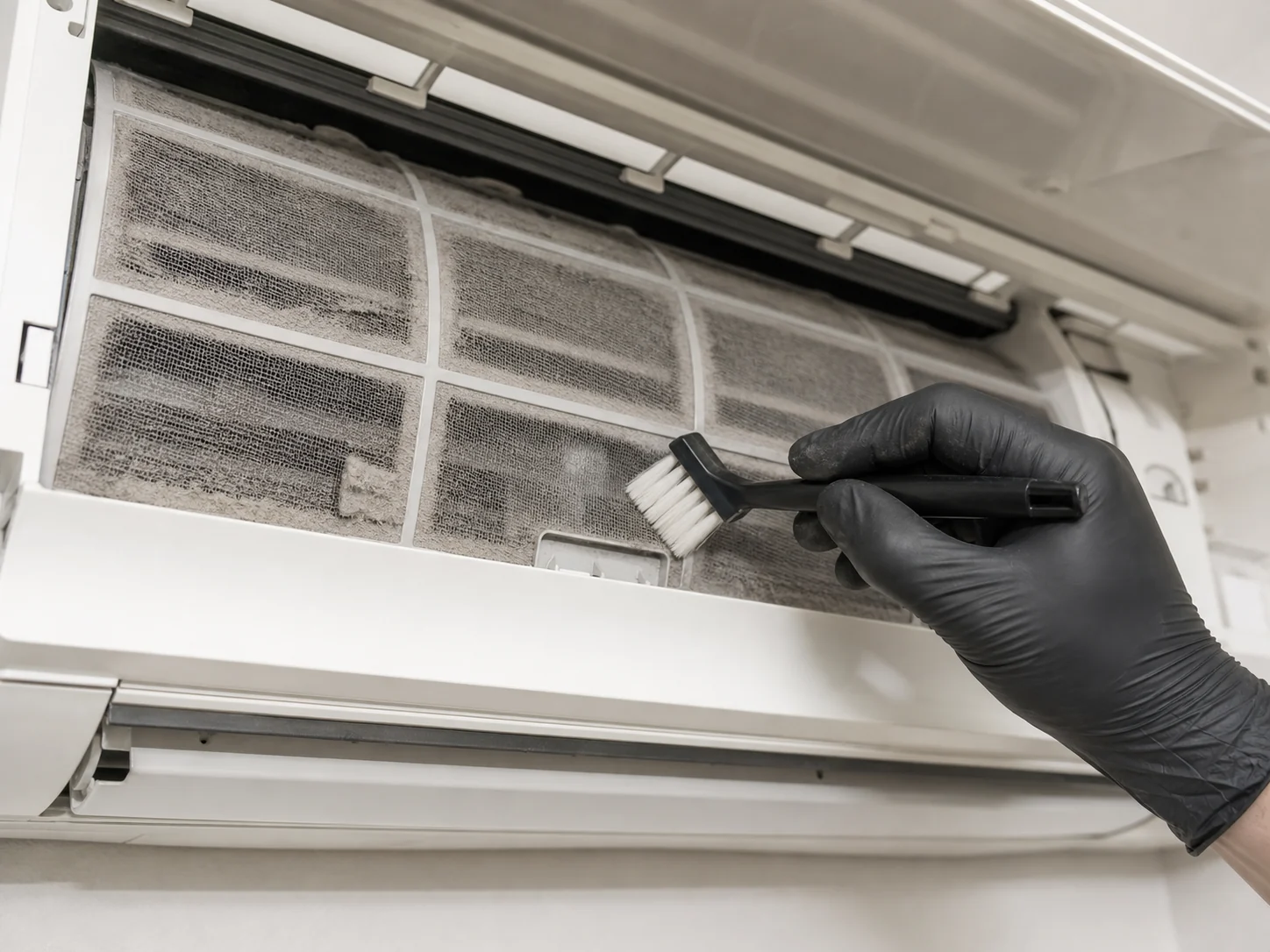
At a glance
- Cleaning target
- Dust/Fibers/Mold Spores/Hair
- Working environment
- Wet Indoor Area / Dry Indoor Area
- Cleaning method
- Dry Brushing / Wet Brushing
- Requirements to check
- ISO 16890 Filter-Classification Requirements; HVAC Maintenance Procedure; Filter-Media Damage Control
A washable filter stays reusable only while its media survives cleaning, so the brush works with the pleat rather than across it and stops well short of what would open the mesh.
What makes Air Conditioner Filter Cleaning different from other facility, floor and outdoor cleaning?
The task is to remove Dust/Fibers/Mold Spores/Hair while controlling surface damage, residue carryover, brush shedding and chemical or temperature degradation.
The work happens in wet indoor area and dry indoor area against dust, fibers, mold spores and hair.
The part people get wrong: the surface, the residue and the access opening decide the brush together. Fix on any one of them alone and the geometry comes out wrong.
What are the most common cleaning targets in Air Conditioner Filter Cleaning?
The work breaks into 5 targets. They look similar from outside the machine and behave nothing alike at the brush.
| Part or area | Residue type | Cleaning requirement |
|---|---|---|
| Washable Mesh Filter | Dust, Fibers, Mold Spores, Hair | The tips must enter the apertures far enough to push lodged material back out, without wedging in the openings. |
| Pleated Filter Surface | ||
| Split-System Filter | ||
| Window and Portable AC Filter | ||
| Commercial Return-Air Filter |
What the equipment leaves you to work inside:
| Parameter | Typical range |
|---|---|
| Contaminant | Dust/Fibers/Mold Spores/Hair |
| Required hardness | Soft–Medium |
| Maximum temperature | 80°C |
| Chemical exposure | Water; Neutral Low-Foam Detergent pH 6–9 |
| Cleaning method | Dry Brushing/Wet Brushing |
| Environment | Wet Indoor Area/Dry Indoor Area |
Which brush types work for each cleaning target?
Select hand, tube, strip, roller, disc or machine-mounted geometry from access and motion.
| Cleaning target | Recommended brush type | Why it fits |
|---|---|---|
| Washable Mesh Filter | Handheld Detail Brushes | A mesh panel is cleared from the clean side outward, so a hand-guided head with tips fine enough to enter the mesh squares pushes the lodged lint back out the way it came in. |
| Pleated Filter Surface | Pleat valleys are narrow slots, so a slim hand-held head runs down each valley where a flat pad only touches the pleat peaks. | |
| Split-System Filter | The filter screen is thin and unsupported in its frame, so a lightly filled hand-held head clears it without pushing the mesh out of the frame. | |
| Window and Portable AC Filter | These filters are small and shallow-framed, so a short detail head reaches the frame corners where dust packs first. | |
| Commercial Return-Air Filter | A return-air panel loads heavily between services, so a stiffer hand-held head is what breaks the packed dust mat before it will release. |
All five are worked through the filter frame and mesh by hand at the wash sink; nothing is mounted in the airflow.
In practical brush terms: match the construction to the access before anything else. A geometry that cannot reach the target will not be rescued by a better filament.
What filament materials work best for Air Conditioner Filter Cleaning?
Soft PA66 or PP. The filter medium is the fragile part, not the dirt, so the fill has to release dust on the back-stroke without opening the pleat or pulling fibres out of the medium.
| If the condition is… | Filament to start with | Why |
|---|---|---|
| Pleated filter medium | PA66 Nylon, soft grade | releases dust on the back-stroke without opening the pleat |
| Wet cleaning with low-foam detergent | Polypropylene PP | takes up no water, so it does not lose its form |
What the duty rules out before you start comparing grades:
| Constraint | Value for this application |
|---|---|
| Filament hardness | Soft–Medium |
| Maximum service temperature | 80°C |
| Chemical exposure | Water; Neutral Low-Foam Detergent pH 6–9 |
| Cleaning method | Dry Brushing, Wet Brushing |
How do I choose the right brush for my air conditioner filter equipment?
Start with soft-to-medium fill, an 80°C ceiling and water, then work with the pleat depth and pitch rather than across them.
The sequence that gets a usable sample first time:
- Identify the target part and measure the access opening or clearance
- Describe the residue: what it is, how thick it sits, and how strongly it holds
- Choose the construction that can physically reach that target
- Set the filament from surface risk, working temperature and cleaning chemistry
- Fix filament diameter, free trim length and density for the contact pressure you need
- Run one cycle and check the result before committing to a production quantity
Before you commit to a quantity, send the filter dimensions, the media type, and the pleat depth and pitch.
When is an air conditioner filter brush the wrong tool?
A rinse under running water removes what a brush would push through the media, and it does not open the mesh. A filter that is torn, deformed or rated disposable is replaced, and cleaning a HEPA or electrostatic element destroys its rating.
What common mistakes should I avoid in Air Conditioner Filter Cleaning?
- Choosing stiffness without the media type, since a HEPA or electrostatic element cannot be brushed at all
- Changing the filament while leaving excessive engagement, poor alignment or no discharge path unchanged
- Copying a worn brush without first recording its motion, direction, mounting and original working diameter
If the brush is already in service and the result is wrong, work from the symptom:
| Symptom | What to change |
|---|---|
| Residue remains | Increase discharge or relative motion before adding pressure |
| Surface marks | Reduce engagement and use finer/softer fill |
| Rapid wear | Check alignment, temperature and chemical attack |
| Redeposition | Add wash, vacuum or collection path |
Guides that go deeper on this
No catalogue item for this yet
Every brush here is made to order, and this one has no catalogue entry so far. Send the working surface, the residue, the access opening and the quantity, and it is quoted through the same specification route as the rest of the range.
Custom Manufacturing RFQ
Discuss This Application
Share the working surface, residue, dimensions, material direction, interface, quantity and drawing or sample photo.
Custom Brush RFQ
Request a Custom Cleaning Brush Quote
Upload a drawing, product photo, or sample photo and provide the core dimensions and cleaning conditions.
“We need a brush to remove wet residue from a stainless steel conveyor, about 800mm wide. The current brush wears quickly. We can send photos.”
“We sell drinkware and need a cleaning brush to include with the product. Quantity around 5,000 pieces.”