
Custom Cleaning Brush
Cartridge Filter Cleaning Brush
Custom cartridge filter cleaning brushes with PP or Nylon filaments sized to pleat depth, spacing, and residue type.
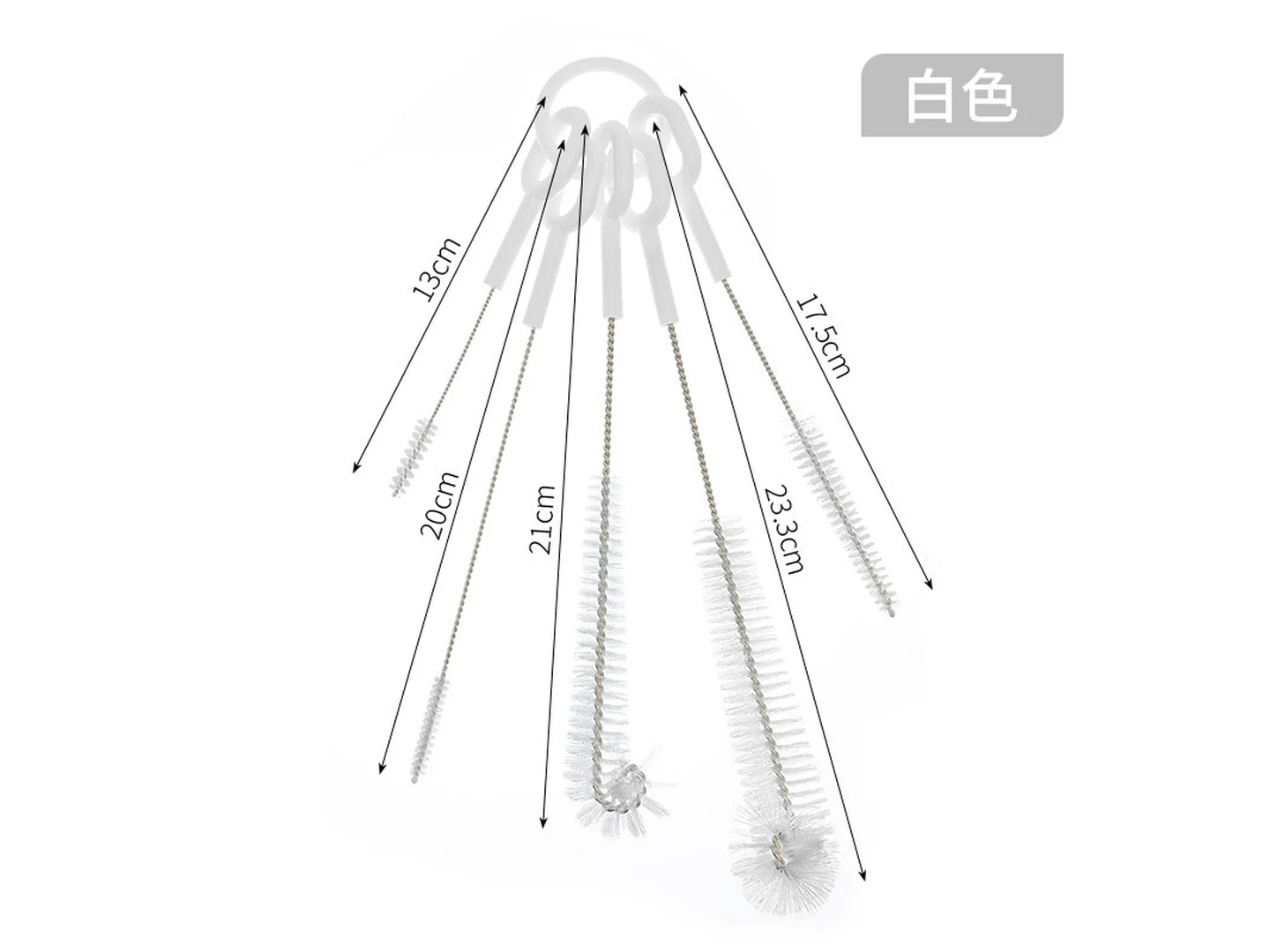
Small brush
500 pcs
Minimum order
Held in one hand: tube, bottle, detail and swab brushes — including long-handled ones with a small head.
Production lead time, once the specification is confirmed
- Up to 500 pcsWithin 7 days
- 501–50,000 pcsWithin 14 days
- Over 50,000 pcsWithin 21 days
Peak season can extend these times; the shipping date is confirmed in writing with your quotation. Sampling and shipping are quoted separately.
A configurable hand brush for cleaning pleated cartridge elements on industrial filtration machines. It uses PP or Nylon filaments matched to the media to remove embedded dust, scale, oil film, and trapped particles from pleat valleys, pleat tips, and end-cap grooves without tearing the filter surface.
What can this brush do for you?
Penetrate pleat valleys without tearing the media
The free trim length and filament diameter are selected to match your pleat depth and spacing. This lets the filament tips reach into the narrow channel between pleats and dislodge trapped powder, pollen, or scale while the base stays supported, reducing the chance of snagging or puncturing paper and polymer media. If your current cleaning tool rides over the pleat crest instead of getting into the valley, this geometry fixes that.
Clean from pleat tip to center core in one pass
The working section length can extend from the outer pleat tip down toward the center core, so contaminants don’t remain packed near the inside diameter. A flat or radial head covers the outer circumference, while cylindrical, basket, or frame-shaped heads match the inner contour. This gives continuous contact instead of cleaning only the outer surface you can see.
Remove embedded particles and oil films
Nylon PA filaments provide higher stiffness and abrasion resistance to break up packed dust and stubborn oil film on robust filter fabric. Polypropylene filaments offer softer contact and better resistance to moisture and many process chemicals. Both are non-metallic, so they don’t score the filter element the way steel bristles would.
Reach into end caps, grooves, and sealing areas
Many cartridge failures start at the potting, gasket seat, or end-cap groove, not on the pleats. The brush head can be shaped to clean those areas in the same stroke as the pleat face, helping remove buildup that can break the seal or cause bypass.
Work in dry dust or wet cleaning operations
The PP or Nylon fill, combined with stainless steel or polymer cores and sealed handles, allows the same brush design to be used dry during filter knock-out or after a water or detergent soak. Specify the cleaning method up front so the stem and handle materials match the chemicals and temperature.
What is a Cartridge Filter Cleaning Brush?
A Cartridge Filter Cleaning Brush is a hand-guided or machine-mounted cleaning tool built specifically for reusable pleated filter elements. Unlike a general utility brush, it is configured around the cartridge geometry: pleat depth, pleat spacing, media type, and the end-cap or center-tube areas that also collect residue. The brush uses soft-to-medium synthetic filaments rather than metal bristles, so it can remove contamination mechanically without cutting the filter surface.
In service, the brush is pushed or rotated against the pleated media to loosen dust cake, trapped particles, scale, or oil film. The loosened residue is then removed by vacuum, compressed air, or rinse water. This is a periodic maintenance step for cleanable cartridges, not a replacement for the machine’s reverse-pulse or backflush system. It works alongside those systems to restore airflow or liquid flow after the primary cleaning cycle has already knocked down the heaviest material.
Technical Specifications
| Parameter | Configuration / Available Range |
|---|---|
| Head form | Flat, radial, cylindrical, basket, tank, frame-shaped, or custom profile |
| Mesh-contact head width | 20–120 mm, matched to cartridge outside diameter |
| Working section length | 50–250 mm, set to pleat depth or active filter zone |
| Overall reach | 180–800 mm, including handle and stem |
| Free trim length | 10–50 mm, selected by pleat channel depth |
| Filament diameter | 0.10–0.60 mm, finer for delicate media, coarser for heavy buildup |
| Fill materials | Polypropylene (PP), Nylon (PA), or a mix by zone |
| Stem / core | Stainless steel, galvanized steel, or polymer; flexible cores available |
| Handle / mounting | Wood, PP, metal tube, loop handle, or machine-drive interface |
| Operating environment | Dry dust, damp media, water-based cleaners, mild solvents |
| Brush type | Custom Handheld Detail Brushes |
| How it is driven | Hand-guided |
| Cleaning target | dust collector cartridge filter, coolant and process liquid filtration cartridge, and compressed air and gas coalescing element cleaning |
| Surface or part | pleats, filters, grooves, metal, end-cap grooves, tubes, pleated polymer, and housings |
| Residue or debris | dust, scale, particles, oil film, trapped particles, powder, dust cake, and fine dust |
| Mounting / connection | Wood, PP, metal tube, loop handle, or machine-drive interface |
All dimensions and filament parameters can be adjusted for a specific filter cartridge. The values above cover common industrial configurations; if your filter has unusual pleat spacing or very deep pleats, we can set the head form and trim length accordingly.
Where does this brush work best?
- Dust collector cartridge filters on woodworking, powder coating, metal grinding, and blasting machines where fine dust packs into pleats and increases pressure drop.
- Coolant and process liquid filtration cartridges with reusable pleated polymer media that accumulate scale, swarf, and oil films across the pleat faces.
- Compressed air and gas coalescing elements where oily residues trap particles inside the media pack and along the outer wrap.
- HVAC and intake filter panels with reusable synthetic media that need periodic dry cleaning between replacement cycles.
- End cap, center tube, and gasket areas on cartridge housings where trapped particles affect seating and seal performance.
How do I choose the right one?
Start by mapping the cartridge geometry
Record the cartridge outside diameter, inside diameter, pleat depth, pleat count, pleat spacing, and overall length. These drive head form, head width, working section length, filament diameter, and trim length. A brush built to the cartridge fits the filter rather than forcing a generic brush into a space where it either misses the valley or jams.
Match filament material and diameter to the media and residue
Nylon (PA) offers higher stiffness and abrasion resistance for packed dust, dried scale, and oily film on sturdy polymer filter media. PP is softer, absorbs less water, and resists many acids, alkalis, and solvents, making it a better choice for delicate media or wet chemical cleaning. Filament diameter between 0.10 and 0.25 mm is typically used for narrow pleat spacing and delicate paper/polymer blends; 0.30 to 0.60 mm suits wider pleats, heavy dust cake, or reusable polyester media. If unsure, start with the finest diameter that still removes the residue, then increase only if cleaning is incomplete.
Pick the head form by where you need to clean
| Head form | Typical use |
|---|---|
| Flat | Outer pleat tips and face cleaning on larger diameter cartridges |
| Radial | 360° contact around the outside circumference |
| Cylindrical | Inner diameter / center tube and deep pleat interiors |
| Basket / frame | Full inside coverage and end-cap / groove access |
| Tank | Large tank or vessel filter surfaces |
| Custom profile | Odd pleat geometry, stepped diameters, or combined areas |
Set reach and working length for the entire filter depth
Working section length should equal the pleat depth or the dirtiest zone; overall reach must let the operator or drive shaft hold the brush with enough control. If the filter is deeper than 250 mm of active pleat area, we can extend the core, add a flexible stem, or split the working section into zones.
Consider dry or wet cleaning before specifying stem and handle
If the brush will be used dry only, standard stainless or galvanized stem and any handle work. For wet cleaning, including water-based detergent or solvent exposure, use stainless steel or polymer core and a compatible handle. PP fill is preferred when the brush stays immersed or is exposed to chemical baths.
When a different tool or method is the better choice
If the media is torn, brittle, or already beyond its service life, brushing will not restore it and can worsen damage; replace the element. If the cartridge has a very tight pleat spacing below 1 mm, a flat scraper may not work; consider a custom radial design with ultra-fine filaments or alternative cleaning such as ultrasonic bath for liquid cartridges. For heavy, caked-on deposits fused to the media, start with air back-pulsing, soaking, or chemical cleaning, then use the brush for final residue removal. Wire brushes should be avoided on pleated filter media because they cut, tear, or damage the surface.
Can I customize this brush?
Every cartridge filter cleaning brush is configured to the specific filter and cleaning method. Provide the following: cartridge dimensions (OD, ID, pleat depth, pleat count/spacing, length), media material and condition, residue type, whether cleaning is dry or wet, chemical/temperature exposure, and whether the brush is held by hand or attached to a rotating drive.
We can adjust:
- Head geometry — width, working length, form, end shape, multi-diameter profile
- Filament zone — PP or Nylon, diameter, trim length, crimp/straight, density, variable stiffness zones
- Stem / core — length, material, flexibility, cross-section, threaded or drive end
- Handle / mounting — length, shape, grip, hanging hole, shaft adapter, machine coupling
- Color and marking — color coding, pad print, laser marking, identification bands
- Packaging — bulk, individually wrapped, oiled for corrosion protection, retail kit, project pack
If the project requires material documentation, inspection reports, or third-party testing, we can supply these as part of the custom order.
Which filament survives the cleaning chemicals a cartridge filter cleaning brush meets?
How can I tell whether the filament diameter is safe for my filter media?
Check the filter manufacturer’s cleaning specification. As a general test, brush a small, less critical area near the bottom of the pleat and then inspect under bright light with magnification. Look for broken fibers, surface scuffing, or lifted fibers on the media face. If any appear, reduce filament diameter or stiffness. If the pleat face remains smooth and residue is removed, the combination is safe.
Will this brush remove a dust cake on its own, or do I need to back-pulse first?
The brush dislodges particles mechanically, but a thick, compressed dust cake should first be loosened by the machine’s reverse-pulse system, vibration, or gentle tapping. Brushing into a fully caked filter can compact the dust deeper into the pleats. Use the brush after initial knock-down or after soaking for the final surface cleaning.
Can I use the same brush for dry-cleaning and wet-cleaning my cartridges?
Yes, if the core, stem, and handle are specified for wet use. PP fill is preferred when the brush will be immersed in water or detergent; Nylon can absorb moisture over time but is still usable if dried after cleaning. If you clean cartridges both ways, tell us during configuration so the metal parts and adhesives are selected accordingly.
How do I know when the brush has reached the full pleat depth?
Mark the overall length against the filter depth before you start, or use a brush with a depth stop. After cleaning, inspect a sample pleat valley near the core with a flashlight; if residue remains at the bottom, the working section is too short or the head form is not matching the pleat geometry. A different head profile or longer trim length will correct it.
Should I replace the brush if some filaments are bent or missing?
Yes. Bent or missing filaments create uneven contact pressure; they may skip pleats or gouge the media where the wire or core becomes exposed. During routine maintenance, check for permanently flattened trim, broken filaments, loose ferrule, rust on metal parts, and handle cracks. Replace the brush when any of these are found; continuing with a damaged brush risks filter damage.
Guides that go deeper on this
Custom Manufacturing RFQ
Describe Your Application
For an accurate quotation, please provide the main dimensions, material preference, working surface, residue, quantity, and a drawing or photo.
Drawing or photo optional — it speeds things up, it does not gate the enquiry.
Custom Brush RFQ
Send Your Brush Project
Upload a drawing, product photo, or sample photo and provide the core dimensions and cleaning conditions.
“We need a brush to remove wet residue from a stainless steel conveyor, about 800mm wide. The current brush wears quickly. We can send photos.”
“We sell drinkware and need a cleaning brush to include with the product. Quantity around 5,000 pieces.”