
Custom Cleaning Brush
Filter Bag Cleaning Brush
PP and nylon filter bag cleaning brush for offline baghouse maintenance. Removes dry dust cake and fibers from pleats, seams, and cages.
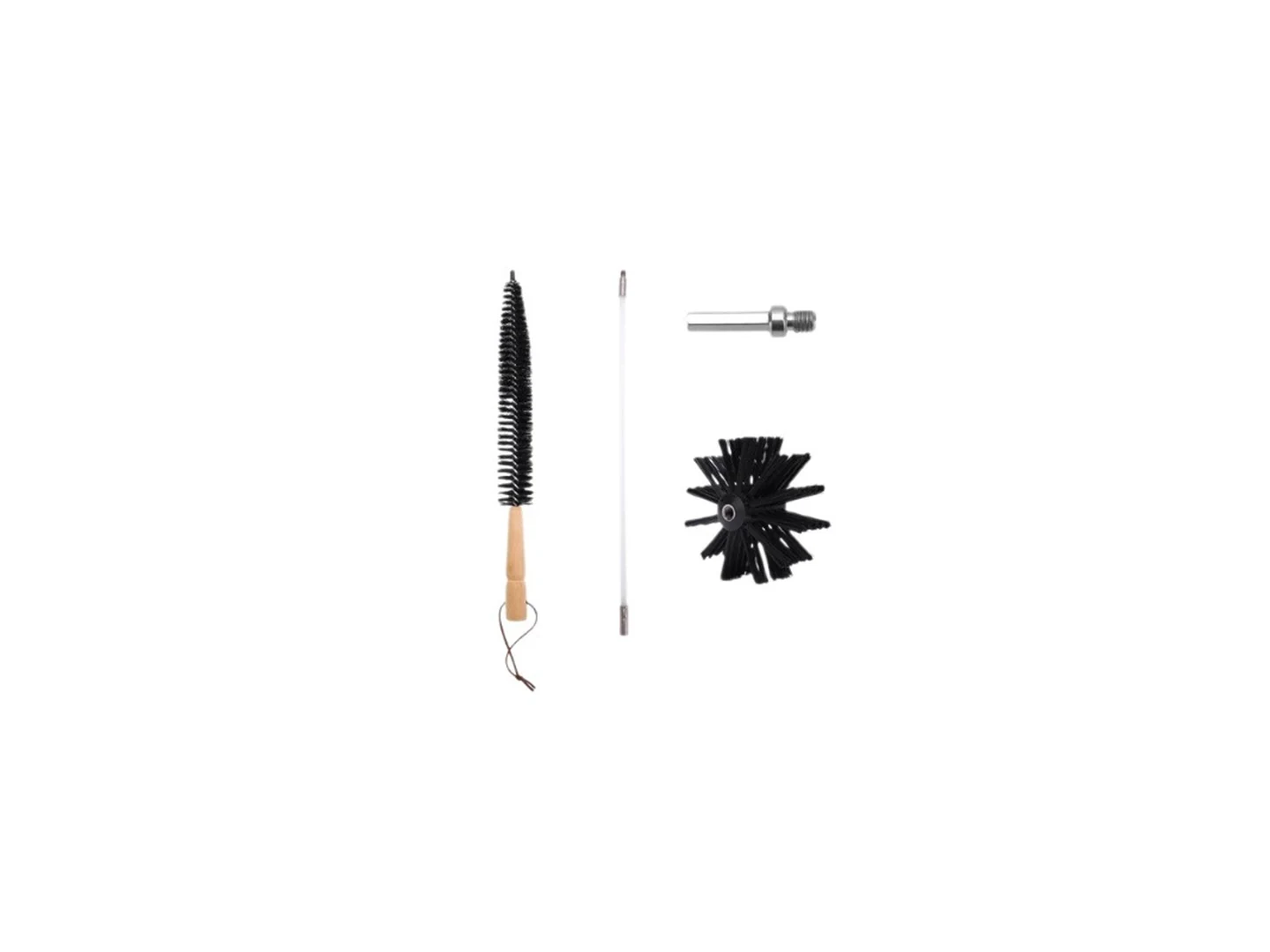
Small brush
500 pcs
Minimum order
Held in one hand: tube, bottle, detail and swab brushes — including long-handled ones with a small head.
Production lead time, once the specification is confirmed
- Up to 500 pcsWithin 7 days
- 501–50,000 pcsWithin 14 days
- Over 50,000 pcsWithin 21 days
Peak season can extend these times; the shipping date is confirmed in writing with your quotation. Sampling and shipping are quoted separately.
This industrial filter bag cleaning brush is built for offline maintenance of pleated and woven filter media in baghouses and dust collectors. It removes loose dry dust cake, powder, and fibers from pleat valleys, seams, and support cages with PP and nylon fill options matched to media sensitivity.
What can this brush do for you?
Enter Pleat Valleys Without Spreading the Media
The flat and tapered head options start at 15 mm wide and follow the valley of a pleated filter bag instead of forcing the pleats apart. Narrow faces and comb-configured heads keep contact on the dusted surfaces while the media stays in its original geometry, reducing the risk of creases and bypass paths.
Lift Loose Dust Cake Instead of Grinding It In
Filament diameters from 0.20 mm to 0.40 mm let the tips loosen surface dust rather than abrade the weave. Longer trim lengths up to 35 mm flex over the fabric surface for gentle release; shorter trim lengths around 10 mm deliver firmer action on compacted dust cake. The result is dust that falls into the hopper rather than getting forced deeper into the inlet side.
Follow Seams, Cuffs, and Cage Wires
Dust collects hardest where the fabric changes direction — stitching lines, cuff rings, and vertical cage bars. A comb or narrowed edge section works those lines without catching threads, while a cylindrical head option turns around individual bars to clear bridged powder and fiber buildup.
Reach Into the Compartment Without Climbing Over Rows
Overall lengths from 200 mm to 500 mm let operators work from the walkway or access opening without leaning over neighboring bags. For top-access baghouses and deeper filter rows, longer versions keep both hands and the operator’s breathing zone away from the dust cloud the brush releases.
Keep the Tool Working Between Maintenance Windows
Polypropylene fill resists wetting and does not hold dust the way natural fiber brushes do. Nylon PA fill resists bending fatigue over repeated stroke cycles. Both keep the brush from becoming a second dust source while it is being carried between compartments.
What is a Filter Bag Cleaning Brush?
A filter bag cleaning brush is a hand-guided maintenance brush with a shaped filament head — flat, tapered, pleat, comb, or cylindrical — filled with polypropylene or nylon filaments. It is used during baghouse shutdowns to remove dry dust accumulation from the inlet side of fabric filter bags, pleated media, seams, cage bars, and nearby access surfaces.
The brush is drawn along the long axis of a pleat or bag, usually from top to bottom, so that loosened dust falls toward the hopper. The face width stays smaller than the pleat pitch or bag diameter, and the filaments are chosen to flex over the fabric rather than scrape it. Light, repeated strokes release the dust cake; heavy scrubbing is not the purpose.
This is a dry maintenance tool. It is intended for loose powder, dry fibers, dust cake, and surface agglomerates that have not set into a hard or wet deposit. It does not replace pulse-jet cleaning, does not repair holes or split seams, and is not the right tool for wet, oily, or chemically set residues.
Technical Specifications
All values below are standard project ranges. Dimensions, filament diameter, trim length, and head form are set for the specific filter bag or pleat geometry.
| Parameter | Specification / Options |
|---|---|
| Head width | 15 – 90 mm, selected to fit the pleat pitch or bag surface |
| Brush section length | 60 – 180 mm (filament-filled section) |
| Overall length | 200 – 500 mm; longer configurations available on request |
| Trim length | 10 – 35 mm; shorter trim for firmer release, longer trim for softer contact |
| Filament diameter | 0.20 – 0.40 mm |
| Head forms | Flat, tapered, pleat, comb, cylindrical; hybrid head designs can be evaluated |
| Fill materials | Polypropylene (PP) or Nylon (PA6/PA6.6) |
| Handle / block | PP handle and molded filament block; other handle materials can be specified |
| Operating condition | Dry, offline baghouse maintenance; not for wet, oily, or chemically bound residues |
| Dry-use temperature | PP: up to 80°C (176°F) short contact; PA6.6: up to 120°C (248°F) short contact on cooled media |
| Brush type | Custom Handheld Detail Brushes |
| How it is driven | Hand-guided |
| Cleaning target | reverse-air and shaker baghouse, pulse-jet collector, and pleated filter bag and pleated filter element cleaning |
| Surface or part | pleats, filters, seams, cages, comb, cuffs, holes, and woven filter media |
| Residue or debris | dust, dust cake, powder, fiber, dry dust cake, loose dust, and pitch |
| Mounting / connection | Fixed |
Media contact sensitivity is controlled mainly by filament diameter and trim length together. For membrane or coated media, confirm the combination with a test bag before full use.
Where does this brush work best?
- Reverse-air and shaker baghouses taken offline for scheduled maintenance, where the brush reaches bag surfaces between cage wires and removes loose dust cake.
- Pulse-jet collectors when certain bags show residual cake that the pulse system has not fully released; a maintenance pass identifies heavy spots and blinded areas before damage spreads.
- Pleated filter bags and pleated filter elements in dry dust collectors, where powder fills the narrow pleat valleys and normal reverse cleaning does not clear the base of the fold.
- Seams, stitching lines, snap-band cuffs, and the area around tubesheet holes, where dust and fiber build-up is often missed during routine inspection.
- Dry powder and fiber applications in wood processing, cement and minerals, powder coating, food ingredient handling, and similar dust collection systems that run non-oily, non-hygroscopic dusts.
How do I choose the right one?
Start with pleat geometry
Measure the pleat valley, not the total bag face. The head width must enter the valley without pressing the pleat walls apart. For dense pleat packs, a 15–30 mm tapered or comb head is usually the right starting point; for open woven bags with wide spacing, a 40–90 mm flat head covers more surface per stroke.
Match the head form to the surface
Flat and tapered heads work best for open planer surfaces and gentle pleat valleys. A pleat or comb head enters dense folds and works both flanks at once. A cylindrical head is useful for cleaning inside a bag or around vertical cage wires. If both tasks appear in one baghouse, a dual-end design can cover the pleat face and seams with a single tool.
Select the filament and trim for media sensitivity
Softer PP filament with a smaller diameter and longer trim is the first choice for thin woven fabric, membrane bags, or media that shows abrasion marks. PA6.6 with a larger diameter and shorter trim is better for thicker felt or heavier dust cakes that need more working action. Use the lightest combination that removes the dust, not the stiffest one that will do the job.
| Your condition | Starting choice |
|---|---|
| Dense pleats, tight valleys | Tapered or comb head, 15–30 mm, PP 0.20–0.25 mm, trim 25–35 mm |
| Open woven bag or wide pleat | Flat head 40–90 mm, PA6.6 0.30 mm, trim 15–25 mm |
| Seams, cuffs, cage wires | Comb or narrowed edge, PA6.6 0.30 mm, trim 10–15 mm on edge |
| Membrane or coated media | Flat/soft face, PP 0.20 mm, trim 25–35 mm; test on spare bag |
| Heavy felt with compacted cake | Flat or tapered, PA6.6 0.40 mm, trim 10–15 mm |
Size the overall length for the actual access
Short 200–300 mm brushes give more control for bench cleaning and close inspection. For top-access baghouses, use 400–500 mm lengths so the brushing face stays visible at the far end. If the baghouse requires working through a side door around bends, a longer handle does not help — a compact head with the right width matters more.
Know when a brush is not the answer
If the dust is wet, oily, chemically set, or has already penetrated the felt, brushing will not recover the bag. Replace the filter or follow the media supplier’s washing instructions. Online pulse-jet or reverse-air cleaning remains the working method during operation; this brush is an offline supplement. For torn, brittle, or heat-damaged media, do not brush — mark the bag for replacement.
Can I customize this brush?
The standard ranges above are starting points. For a custom filter bag cleaning brush, share the bag diameter, pleat pitch, pleat depth, media type, dust type and particle size, access distance, and any handle preference. A drawing, bag sample, or photo of the baghouse opening helps fix the geometry faster.
We can adjust:
- Head geometry — width, filament-filled length, taper angle, pleat/comb tooth pitch, cylindrical diameter, or a dual-end flat-plus-comb configuration
- Filament fill — PP, PA6, PA6.6, mixed fill, filament diameter, trim length, density, and stagger pattern
- Handle and interface — overall length, straight or D-grip, extension-coupling option for long reach, and molded zone-color marking
- Core and block materials — PP, glass-filled block options, or stainless reinforcement for longer tools
- Packaging — bulk carton, individual polybag, maintenance-kit packing, or project-specific labeling
For combustible dust or ESD-sensitive baghouses, we can evaluate static-dissipative or conductive fill options as part of the project scope. If your maintenance program requires material declarations, inspection reports, or third-party testing, these can be supported within the custom project requirements.
What has to be checked before and after a filter bag cleaning brush is used?
Can this brush be used on wet or oily filter bags?
No. The PP and nylon fills are intended for dry dust and fiber removal. Wet or oily residue will smear into the media, load the filaments, and increase the chance of media damage during brushing. Wet bags should follow the filter supplier’s cleaning or replacement procedure.
What should I check before taking the brush into the baghouse?
Confirm the compartment is isolated and locked out, then inspect the brush itself: look for broken or bent filaments, cracks in the block, a loose handle or ferrule, and any oil or moisture on the head. Carry only dry, clean tools into the filter area; a brush that drops fibers into the baghouse becomes a new contamination source.
How can I tell if I am pressing too hard?
Watch the filament tips and the media. If the filaments bend flat against the block, if the pleat wall flexes away from the stroke, or if the fabric starts to polish, reduce pressure. Correct brushing uses repeated light strokes along the pleat from top to bottom — not heavy back-and-forth scrubbing.
Will this brush work on membrane or ePTFE-laminated filter bags?
Only as a controlled maintenance step. Use soft PP fill, a smaller filament diameter, and longer trim length, and test on a sacrificial bag first. Membrane surfaces are easily damaged by aggressive brush action; often vacuuming or reverse-air cleaning is safer than hand brushing.
How should the brush be stored between maintenance windows?
Knock or blow loose dust from the head after use, keep the brush dry, and hang it by the handle rather than resting it on the filament face. Store it away from solvents and direct heat. Before return to service, check that the filaments have recovered their alignment and the handle is still firmly seated.
Guides that go deeper on this
Custom Manufacturing RFQ
Describe Your Application
For a custom quote, we need the key dimensions, surface or part, residue, material preference, quantity, and reference image or drawing.
Drawing or photo optional — it speeds things up, it does not gate the enquiry.
Custom Brush RFQ
Send Your Brush Project
Upload a drawing, product photo, or sample photo and provide the core dimensions and cleaning conditions.
“We need a brush to remove wet residue from a stainless steel conveyor, about 800mm wide. The current brush wears quickly. We can send photos.”
“We sell drinkware and need a cleaning brush to include with the product. Quantity around 5,000 pieces.”