
Custom Cleaning Brush
Handheld Mesh Filter Cleaning Brush
Handheld mesh filter cleaning brush for clearing blinded screens, sieve apertures, wedge wire, baskets.
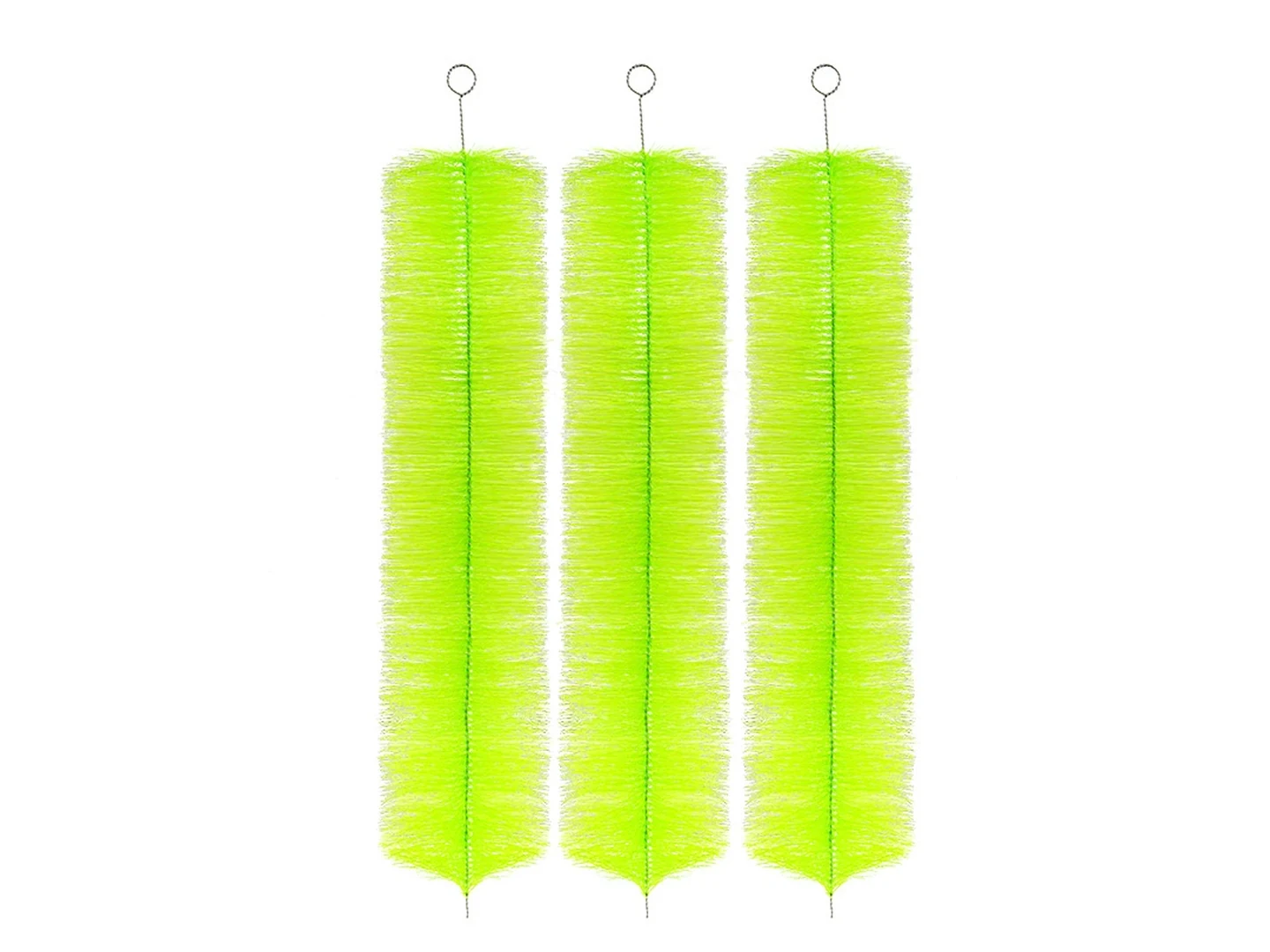
Small brush
500 pcs
Minimum order
Held in one hand: tube, bottle, detail and swab brushes — including long-handled ones with a small head.
Production lead time, once the specification is confirmed
- Up to 500 pcsWithin 7 days
- 501–50,000 pcsWithin 14 days
- Over 50,000 pcsWithin 21 days
Peak season can extend these times; the shipping date is confirmed in writing with your quotation. Sampling and shipping are quoted separately.
A hand-guided brush for clearing blinded wire mesh, perforated plate, wedge wire screens, and filter baskets. Standard nylon PA filaments remove fines, fibers, powder and wet residue from apertures without attacking the screen surface, with a brass wire option for tougher embedded deposits.
What can this brush do for you?
Clears blindings without bending or scratching the mesh
Nylon PA filaments from 0.10 to 0.40 mm flex into open apertures and push trapped particles out from between the wires. The filament tip applies pressure to the particle, not to the mesh plane, so a properly matched brush restores open area without deforming fine stainless wire.
Head profiles that match how your screen is built
Flat, tapered, pleat, comb, and cylindrical head forms place the working surface where blinding actually builds up. A comb head works into wedge-wire slots and ribbed profiles, while a tapered or cylindrical fill reaches the curved wall of a basket or round separator screen.
Stiffness controlled by filament diameter, not guesswork
Filament diameter is the primary stiffness adjustment. Fine mesh gets fine, flexible filaments that enter small openings; coarse mesh and perforated plate get thicker filaments that generate enough lateral scrub force to move sticky or embedded residue. The brush is matched to the screen class instead of forcing one generic stiffness onto every screen in the plant.
Wet-service nylon that keeps its backbone
Nylon PA absorbs very little water, so the brush does not go limp when used with detergent, rinse water, or damp screens. The filament stays resilient through repeated washdowns, and the block and handle can be specified in materials that withstand the cleaning chemicals on your line.
No rust, no paint chips, no broken wire debris on the screen
Nylon filament does not corrode, rust, or shatter into wire fragments the way a hardened steel brush can on a thin screen. When brass wire is the correct option for tough residue, it is selected deliberately for sturdy metal mesh — not as an accidental default.
What is a Handheld Mesh Filter Cleaning Brush?
A Handheld Mesh Filter Cleaning Brush is a manual cleaning tool built to restore the open area of filters, screens, and sieves by dislodging particles trapped in the apertures. It is used directly on the working surface of wire mesh, perforated plate, wedge wire screens, or baskets after the equipment is stopped, emptied, or opened for changeover.
The operator moves the brush across the screen in short, overlapping strokes, letting the filament tips work into the openings. The brush does not rely on a powered spindle or a fixed installation; the operator controls pressure, angle, and coverage so localized blinding can be cleared without overscrubbing the surrounding mesh.
This is a hand-cleaning tool for attached residue on screen media. It is not a replacement for a full wash cycle, ultrasonic cleaning, high-pressure washing, or chemical treatment when those steps are part of the process. It clears the particles that prevent those systems from working efficiently.
Two fill concepts serve different jobs. The standard nylon PA filament is the daily cleaning choice for woven mesh, fine screens, and synthetic surfaces. The brass wire option is reserved for sturdy metal mesh where embedded polymer, hardened fines, or oxide-type residue needs a stronger mechanical edge. The brush is built around the screen, not the screen around the brush.
Technical Specifications
Dimensions and filament data below represent the standard production envelope. Each value can be set to your screen aperture, panel size, and access space.
| Parameter | Value / Range |
|---|---|
| Filament material | Nylon PA standard; brass wire as a special option |
| Filament diameter | 0.10–0.40 mm, selected to aperture size and screen wire diameter |
| Trim length | 10–35 mm from the brush block; shorter for stiffer surface scrubbing, longer for deep contours and slot penetration |
| Fill density | Standard, dense, or extra-sparse, matched to residue loading and mesh pattern |
| Head width | 15–90 mm across the fill face |
| Brush section length | 60–180 mm along the handle axis |
| Head form | Flat, tapered, pleat, comb, or cylindrical; combined forms available |
| Block material | Polypropylene standard; stainless or project-specified material for harsh washdown or higher-temperature use |
| Handle | Wood, polypropylene, or project-specified material with ergonomic or extended-grip options |
| Overall length | 200–500 mm from handle end to brush block end |
| Brush type | Custom Handheld Detail Brushes |
| How it is driven | Hand-guided |
| Cleaning target | vibratory and rotary separator screen, wedge wire screen and drum filter, and centrifuge basket and perforated plate cleaning |
| Surface or part | screens, filters, baskets, perforated plate, wedge wire, slots, comb, and wire mesh |
| Residue or debris | fines, wet residue, powder, fiber, particles, blinding fines, polymer residue, and flour |
| Mounting / connection | Fixed |
For strong acids, oxidizing agents, or sustained high-temperature exposure, confirm the exact fluid and operating temperature before finalizing nylon or brass so the filament and handle are matched to the process.
Where does this brush work best?
- Vibratory and rotary separator screens in food, chemical, and powder processing where blinding fines and fibers reduce sifting capacity. Nylon filaments restore the openings without nicking the stainless wire.
- Extruder screen packs and melt filter screens after cooled polymer residue has been cleared or partially removed, where a brass wire configuration removes carbonized or adherent material from sturdy mesh.
- Wedge wire screens and drum filters in water treatment, pulp, and mining, where a comb or tapered head follows slot geometry and clears fibrous or sticky buildup.
- Centrifuge baskets and perforated plates in sugar, salt, and chemical separation where wet residue hardens in the holes and a manual brush clears localized plugging between cycles.
- Inline strainer baskets and filter housings where operators need a quick hand tool to remove solids during changeover or batch switching.
- Fine food screens and sifters for flour, starch, spices, and powdered ingredients, where nylon PA provides rinseable, non-corrosive contact and protects the mesh from metal-wire damage.
How do I choose the right one?
Selecting the right configuration comes down to four questions: what is the opening, what is the screen made of, what is stuck in it, and how the operator will reach the screen.
Start with the actual aperture
Measure the opening width, slot width, or hole diameter rather than mesh count alone. The filament diameter should enter the opening freely. For fine woven mesh, keep the filament diameter no larger than roughly half the aperture width; for perforated plate and coarse mesh, thicker filaments are acceptable because the hole is large and structural stiffness is more useful. If filaments skate over the surface without entering the openings, the diameter is too large. If filaments collapse and twist instead of pushing residue out, the diameter may be too fine for the deposit.
Match the trim and head form to the profile
Use a flat head with shorter trim for a large, flat panel; a tapered or comb head for wedge-wire slots and contoured sections; and a cylindrical head for the inside of a basket or round screen rim. Longer trim reaches into pockets and curved surfaces, but it reduces direct scrub force. Shorter trim creates a stiffer working face for surface-level residue. The head width and brush section should cover the screen in a controlled number of passes, not force a single awkward sweep.
Choose nylon or brass by residue and screen material
Nylon PA is the default for woven stainless, fine mesh, synthetic mesh, and any surface where preserving the wire, coating, or aperture geometry matters. Brass wire is the option for sturdy stainless woven mesh and perforated plate with embedded polymer, oxidized residue, or hardened deposits that nylon cannot dislodge. Do not use brass wire on fine synthetic mesh, thin woven cloth, or coated surfaces; the metal edge can cut, score, or permanently enlarge the openings. When in doubt, test the chosen filament on a scrap screen panel before full use.
| Screen condition | Suggested configuration |
|---|---|
| Fine woven stainless mesh, dry powder blinding | Nylon PA, 0.10–0.20 mm filament, flat head, short trim |
| Coarse perforated plate or welded mesh, wet residue | Nylon PA, 0.25–0.40 mm filament, flat or tapered head |
| Wedge-wire slots or ribbed surface | Nylon PA or brass wire, comb or tapered head, longer trim |
| Sturdy stainless mesh with embedded polymer or oxidation | Brass wire, flat or tapered head, shorter trim for scrub force |
| Round basket or curved filter screen | Cylindrical or tapered head, nylon PA or brass, matched to radius |
Confirm the operating environment
Nylon PA retains stiffness in wet and detergent conditions, but it is not the right material for strong acids, aggressive oxidizers, or sustained high temperatures. Brass wire tolerates many solvents but will react with ammonia or oxidizing acids. Provide the cleaning chemical, wash temperature, and whether the brush is used dry or wet, and we will select filament, block, and handle materials that hold up on your line.
When another tool is the better answer
If the screen is blocked by hard mineral scale, weld spatter, or fully carbonized deposit, a hand brush alone will not deliver enough energy. Use power rotary brushing, high-pressure washing, or chemical/ultrasonic cleaning as the first step. If the screen is a very fine polymer membrane or filter cloth, even soft nylon can disturb the surface; consider backwashing or non-contact cleaning instead. If the screen is deep inside a narrow housing with no hand access, a tube brush or flexible shaft brush is the correct tool. Use this handheld brush for accessible mesh surfaces where manual, controlled action is the right level of force.
Can I customize this brush?
This brush is nearly always specified as a custom product because no two screen installations share the same mesh, panel, and access points. Send us the screen type, aperture or slot size, wire diameter, panel dimensions, residue description, cleaning method, and a photo or drawing of the screen. From there we can configure:
- Filament or fill material — nylon PA in the required diameter and density, brass wire in the optional configuration, or another project-specified filament.
- Head geometry — flat, tapered, pleat, comb, cylindrical, or a combined form for screens with multiple contact zones.
- Dimensions — head width, brush section length, trim length, and overall length set to your panel and reach.
- Fill density and pattern — standard, dense, or extra-sparse; rows or staggered fill for specific aperture spacing.
- Block and handle — polypropylene, wood, stainless, or other project-suitable material; ergonomic grip, hanging hole, handle length, and shape.
- Color and marking — color coding by screen size or line, laser marking, pad printing, embossing, or identification text for traceability.
- Packaging — bulk, individual bag, case pack, retail card, or project-specific packing.
If your project requires material documentation, inspection support, or third-party testing against your internal or customer specifications, we can assist with those requirements during the customization process.
Which filament survives the cleaning chemicals a handheld mesh filter cleaning brush meets?
How do I know if the filament is clearing the aperture or just sliding over the screen?
Brush a small patch with short, overlapping strokes and inspect it against a light or plain background. If the openings still show packed powder or fibers, try a finer filament or a head profile that enters the slots. If the wires look pressed flat or shiny, you are using too much pressure or too stiff a filament. The filament tips should move in and out of the openings freely, not ride on top of the wire crown.
Should I wet the screen before brushing?
For dry, free-flowing powder, brush dry first; moisture can turn dust into paste and make blinding worse. For sticky, oily, or clay-like residue, pre-wet with a compatible cleaning solution and let it soften before brushing. Do not use water on a screen that must stay dry or on a residue that hardens when wet.
What pressure should the operator use on fine mesh?
Use the weight of the hand plus light guidance pressure. Fine woven wire deforms under point force, so hard scrubbing can create localized low spots or enlarge openings. If the residue requires hard pressure, the brush is undersized in diameter or the wrong material for the job.
How do I clean and store the brush between uses?
Rinse the filament with water or a compatible solvent, shake out loose solids, and hang the brush with the filament facing down. Inspect for flattened or bent filaments, loose tufts, cracked block, and handle damage. Replace the brush when the filament no longer springs back or when trapped debris presents a contamination risk.
Can one brush work for several different mesh sizes in the plant?
Only within a narrow range. A brush sized for coarse mesh will not enter fine apertures and may damage fine wire. A brush fine enough for fine mesh will be too flexible to move residue on coarse mesh. When a plant runs multiple screen classes, a matched set with color-coded handles for each mesh range is the cleaner choice.
What should I check before using a brass wire option on a new screen?
Test it on a scrap or non-critical edge first. Brass is softer than stainless steel wire, but on thin wire cloth or synthetic mesh it can still cut or distort openings. Mark the test area, inspect for wire damage, and confirm the cleaning result before releasing the brush for regular use.
Guides that go deeper on this
Custom Manufacturing RFQ
Describe Your Application
Please share the brush dimensions, working area, residue type, material direction, quantity, and a drawing or photo for quotation.
Drawing or photo optional — it speeds things up, it does not gate the enquiry.
Custom Brush RFQ
Send Your Brush Project
Upload a drawing, product photo, or sample photo and provide the core dimensions and cleaning conditions.
“We need a brush to remove wet residue from a stainless steel conveyor, about 800mm wide. The current brush wears quickly. We can send photos.”
“We sell drinkware and need a cleaning brush to include with the product. Quantity around 5,000 pieces.”