
Application
Floor Scrubbing
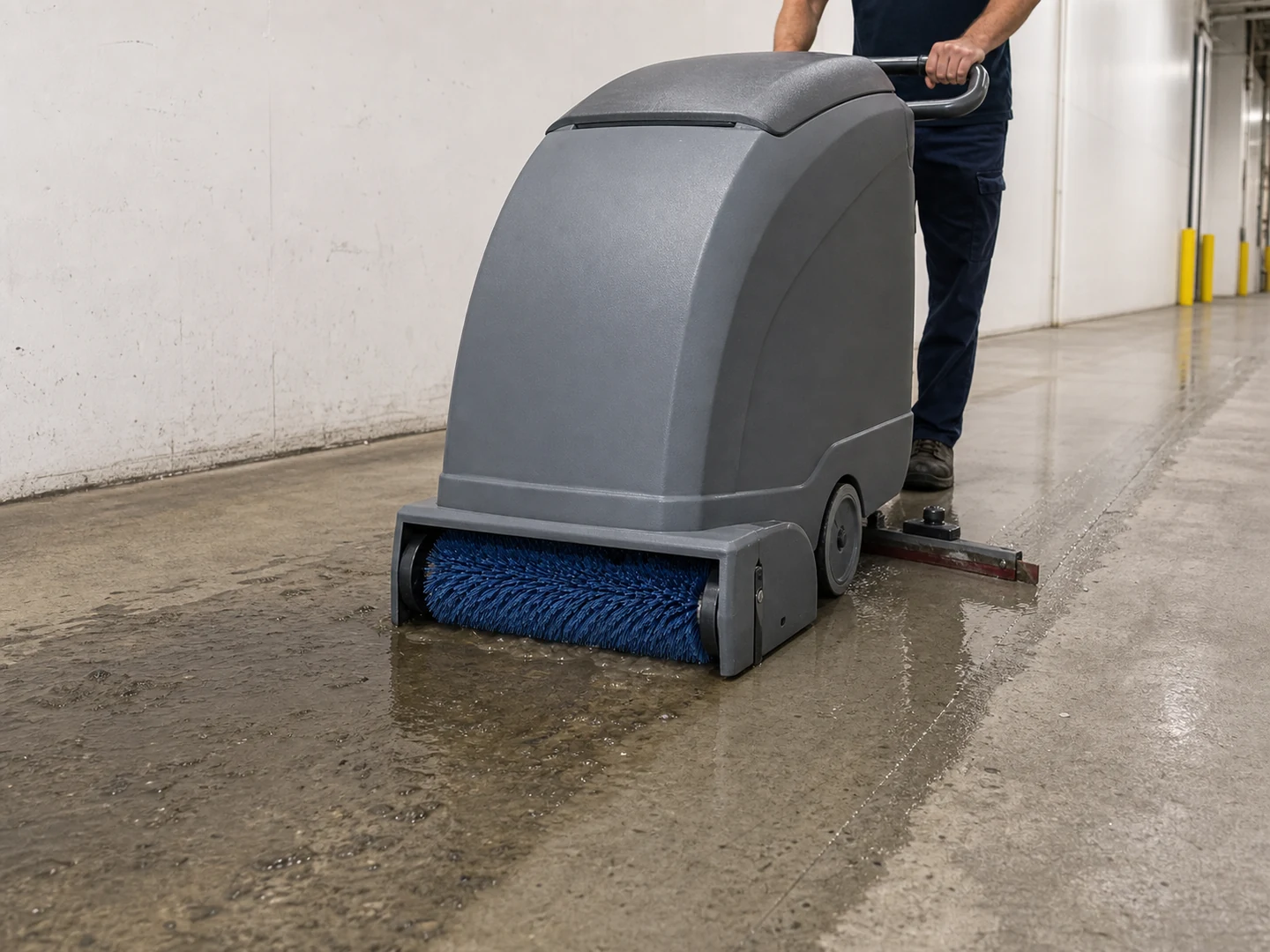
For Floor Scrubbing, the brush must reach the working area, disturb or collect dust/soil/oil and grease/shoe marks, and release it without creating unacceptable surface damage or process interference. The suitable brush structure depends on access, the required contact motion, and the cleaning method.
At a glance
- Cleaning target
- Dust/Soil/Oil and Grease/Shoe Marks
- Working environment
- Wet Indoor Area
- Cleaning method
- Wet Brushing
- Requirements to check
- Floor-Material Compatibility; Equipment Rated-motion Control
Scrubber brushes divide by machine before they divide by floor: a disc gives flat face contact, a cylindrical brush scrubs and picks up debris, and only a side brush reaches the wall.
What makes Floor Scrubbing different from other facility, floor and outdoor cleaning?
The main difficulty is removing soil, grit, fibers, oil, mud, snow, and packed debris from floors, carpets, roads, curbs, footwear, and outdoor pavement without damaging the surface, loading the brush, or carrying contamination back into the process.
The work happens in wet indoor area against dust, soil, oil and grease and shoe marks.
The part people get wrong: this is not one job. The same equipment carries several targets, each with a different opening and a different residue, and one brush rarely covers them all.
What are the most common cleaning targets in Floor Scrubbing?
There are 5 distinct targets here, and the brush that suits one will usually not reach another.
| Part or area | Residue type | Cleaning requirement |
|---|---|---|
| Concrete Floor Scrubbing | Dust, Soil, Oil and Grease, Shoe Marks | The brush must cover a large area per pass and keep even pressure across the whole width. |
| Epoxy and Resin Floor Scrubbing | Cured coating, resin and adhesive residue | |
| Tile and Grout Floor Scrubbing | Dust, Soil, Oil and Grease, Shoe Marks | |
| Food-Plant Floor Scrubbing | ||
| Warehouse and Workshop Floor Scrubbing |
The dimensional envelope those targets impose on the brush:
| Parameter | Typical range |
|---|---|
| Trim length | 20–80 mm; 20–50 mm |
| Filament diameter | 0.25–0.80 mm; 0.20–0.60 mm |
| Working diameter / width | 100–700 mm |
Which brush types work for each cleaning target?
Disc brush for flat face contact, cylindrical brush for scrubbing plus debris handling, and side brush for edges.
| Cleaning target | Recommended brush type | Why it fits |
|---|---|---|
| Concrete Floor Scrubbing | Floor Scrubber Sweeper Brushes | Concrete is open and slightly rough, so filament reaches into that texture where a pad only rides the high points. |
| Epoxy and Resin Floor Scrubbing | A resin floor is a finished coating that shows swirl, so a brush at even pressure across the deck cleans it without burnishing a pattern into the surface. | |
| Tile and Grout Floor Scrubbing | The soil sits in the grout line below the tile face, so filament that drops into the joint is what cleans it and a flat pad never touches it. | |
| Food-Plant Floor Scrubbing | A food-plant floor is textured for grip and holds fat in that texture, so a stiff-filament deck brush is what breaks the film out of the profile. | |
| Warehouse and Workshop Floor Scrubbing | A warehouse floor mixes tire marks with dry grit over a very large area, so what matters is a wide brush holding contact across the full deck width. |
The layouts this application is normally built in:
- Driven brush — use when soil, grit, fibers, oil, mud, snow, and packed debris needs repeatable scrubbing or controlled relative movement
- Passive or free-running brush — use for loose contamination and lower process complexity on floors, carpets, roads, curbs, footwear, and outdoor pavement
- Localized hand, strip, or tube brush — use where only an edge, gap, port, or maintenance point needs contact
In practical brush terms: reach first, then residue. A brush that fits but is too soft can be stiffened; a brush that does not fit is simply the wrong tool.
What filament materials work best for Floor Scrubbing?
Nylon or polypropylene for routine washing; abrasive filament for defined stripping; specialty natural fiber for polishing.
| If the condition is… | Filament to start with | Why |
|---|---|---|
| Sensitive or coated surface | Nylon PA | balanced flex life and abrasion resistance |
| Wet, washdown, or detergent service | Polypropylene PP | acid, alkali, water, and detergent resistance |
| Bonded residue or aggressive cleaning | PBT | stable wet stiffness and low moisture uptake |
The constraints this application puts on the filament:
| Constraint | Value for this application |
|---|---|
| Filament hardness | Medium |
| Maximum service temperature | 60°C |
| Chemical exposure | Neutral or Alkaline Floor Cleaner pH 7–12 |
| Cleaning method | Wet Brushing |
How do I choose the right brush for my floor scrubbing equipment?
The machine picks the form — disc, cylindrical or side — and the floor finish caps the fill. Area only decides how many you need.
The order that avoids rework:
- Identify the target part and measure the access opening or clearance
- Describe the residue: what it is, how thick it sits, and how strongly it holds
- Choose the construction that can physically reach that target
- Set the filament from surface risk, working temperature and cleaning chemistry
- Fix filament diameter, free trim length and density for the contact pressure you need
- Run one cycle and check the result before committing to a production quantity
Before you commit to a quantity, send the machine make and model, the brush diameter and mount, and the floor finish.
When is a floor scrubbing brush the wrong tool?
Chemical stripping removes a finish coat far more evenly than an abrasive brush, and heavy grease needs a degreaser with dwell time before any machine passes. On a sealed decorative floor, a pad rather than a brush is usually what the specification allows.
What common mistakes should I avoid in Floor Scrubbing?
- Specifying floor area instead of the machine’s brush mount, diameter and rotation
- Changing brush material while leaving excessive engagement, poor alignment, or no discharge path unchanged
- Copying a worn brush without recording motion, direction, mounting, and the original working diameter
When a brush is running but not cleaning, start here rather than adding pressure:
| Symptom | What to change |
|---|---|
| Residue remains | Increase relative motion or discharge, then change filament diameter or density; do not add pressure before checking loading by soil, grit, fibers, oil, mud, snow, and packed debris. |
| Surface marks or scratches | Reduce engagement, use finer or softer fill, and remove trapped abrasive particles from contact with floors, carpets, roads, curbs, footwear, and outdoor pavement. |
| Rapid wear or uneven cleaning | Check alignment, runout, support, motion, temperature, chemical attack, and whether the brush covers the complete working path. |
| Brush loads or redeposits residue | Open the fill pattern or add wash, vacuum, air, scraping, or a collection path so removed soil, grit, fibers, oil, mud, snow, and packed debris leaves the contact zone. |
Questions this page is asked
How should a floor brush and cleaner be trialed before full-area scrubbing?
Select a representative hidden lane and control cleaner dilution, water, speed, down pressure, passes and recovery with the proposed brush. After drying, compare soil removal, gloss, color, coating loss, scratching, grout or joint condition and traction against an untreated reference and the floor-maker's limits.
What should be checked after a floor-scrubbing trial?
Verify solution pickup, dry-time and slip controls along with edge cleaning, streaking, debris capture, machine vibration and an even brush-wear pattern. Stop and correct fit, balance, squeegee or recovery faults before increasing aggression, since retained water and uneven contact can create a hazard even when soil is removed.
Continue Exploring
Recommended Reading & Related Brush Resources
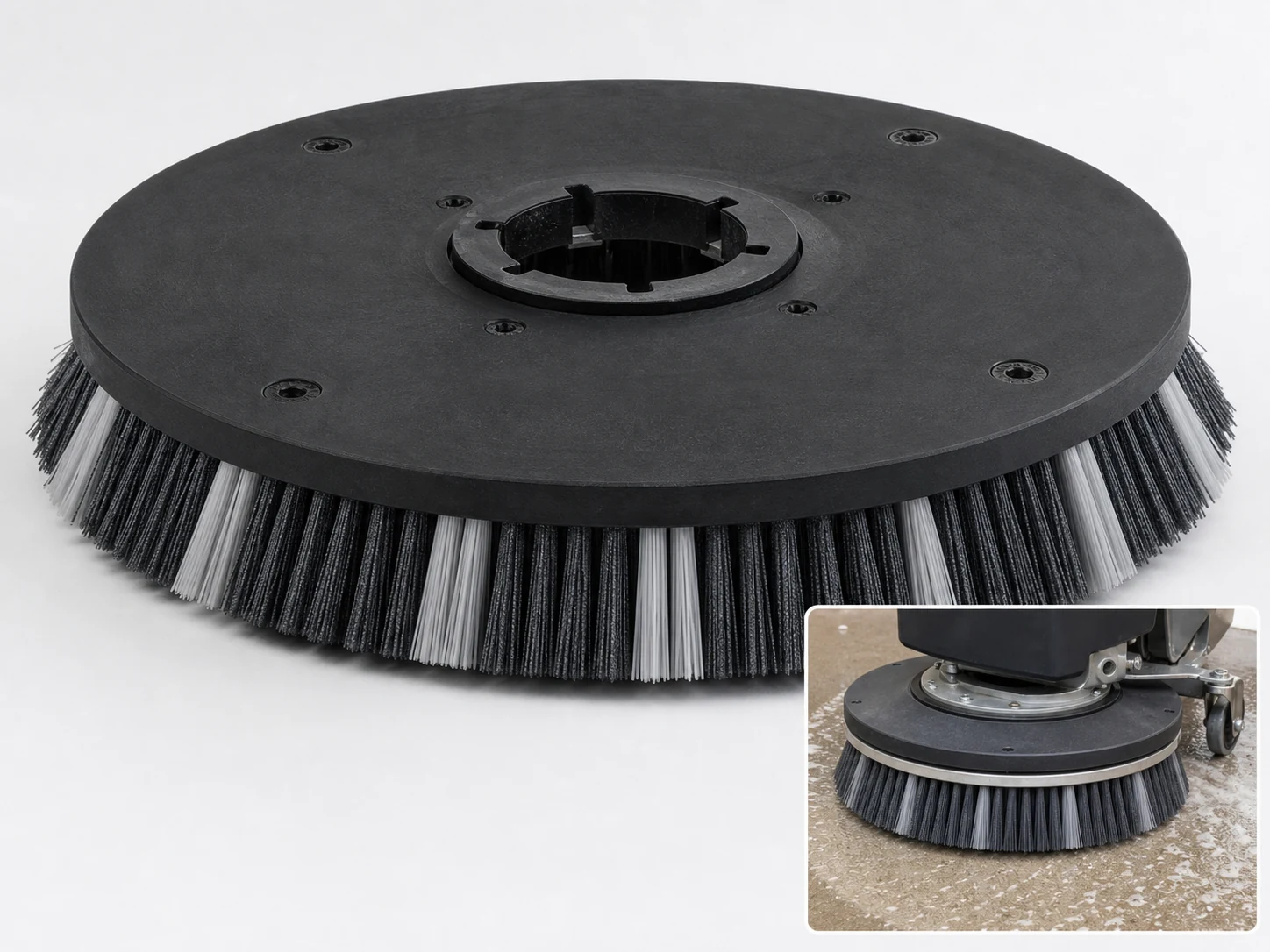
Floor Stripping Brush
Custom floor stripping brush for removing old finish, wax, and sealer from VCT, concrete,…
See the specification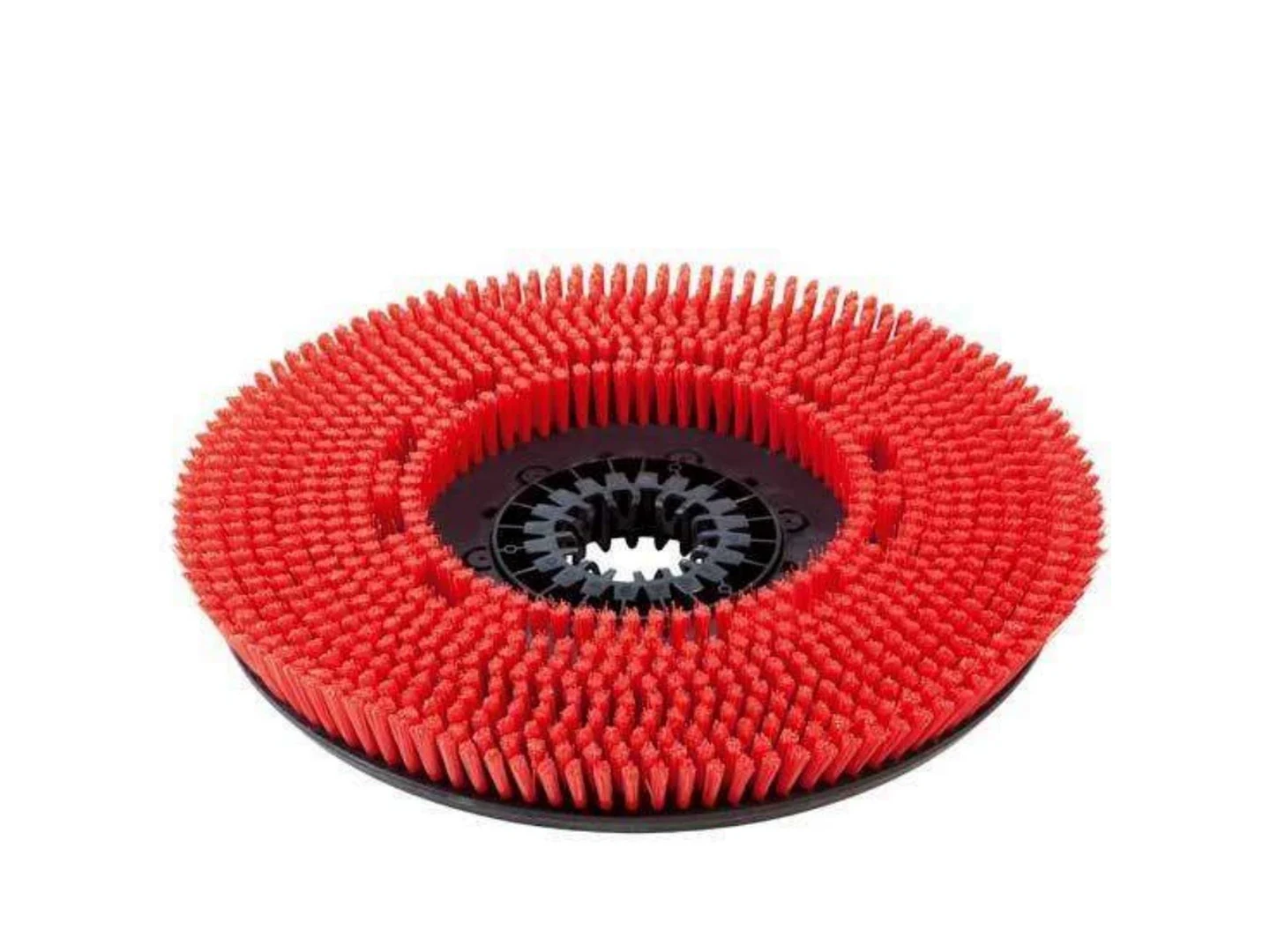
Floor Sweeper Brush
Replace your floor sweeper brush with a machine-matched cylindrical main broom or disk side…
See the specification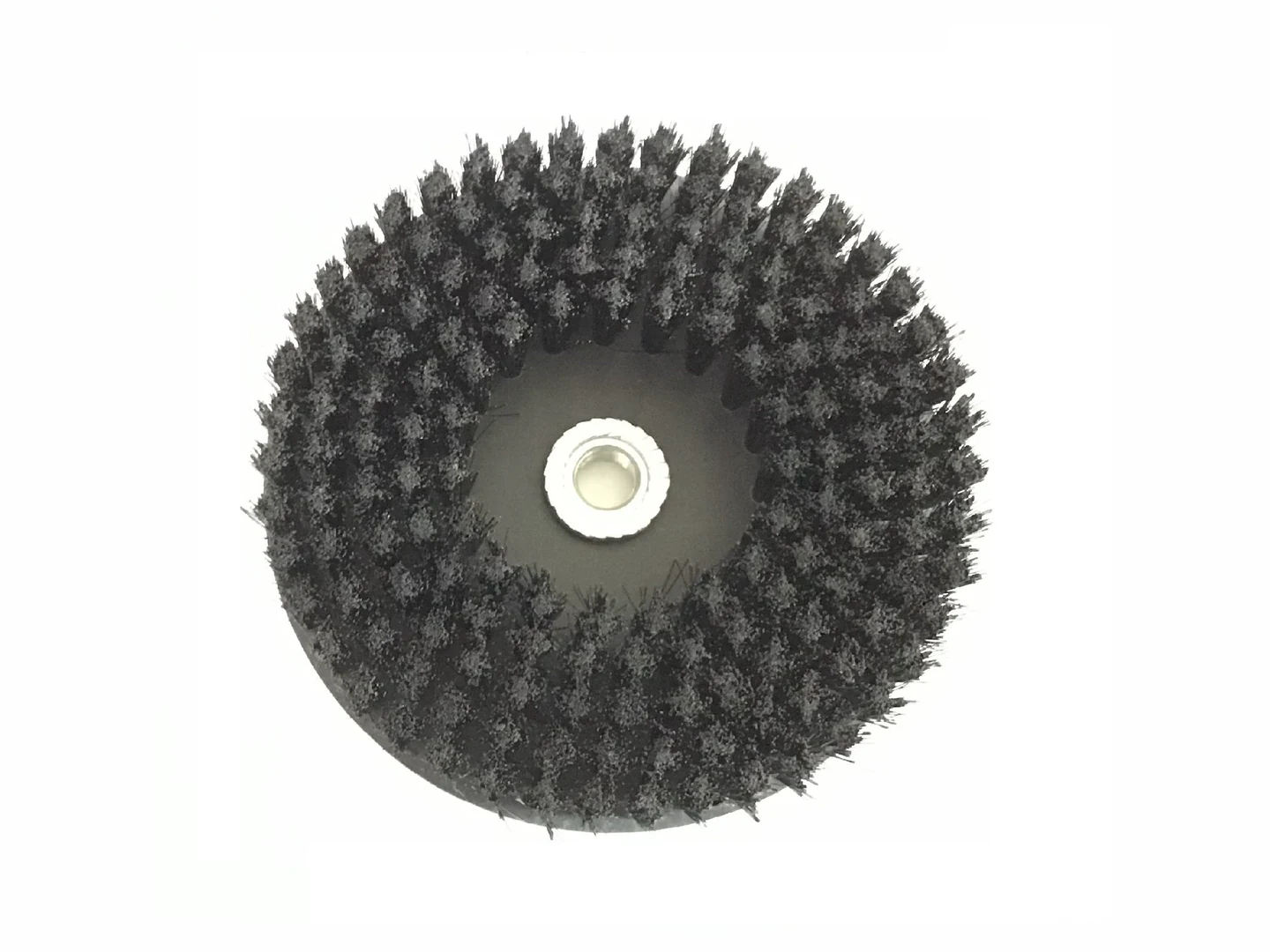
Floor Burnisher Brush
Custom floor burnisher brush with heat-stabilized Nylon PA filaments for high-speed dry burnishing of…
See the specification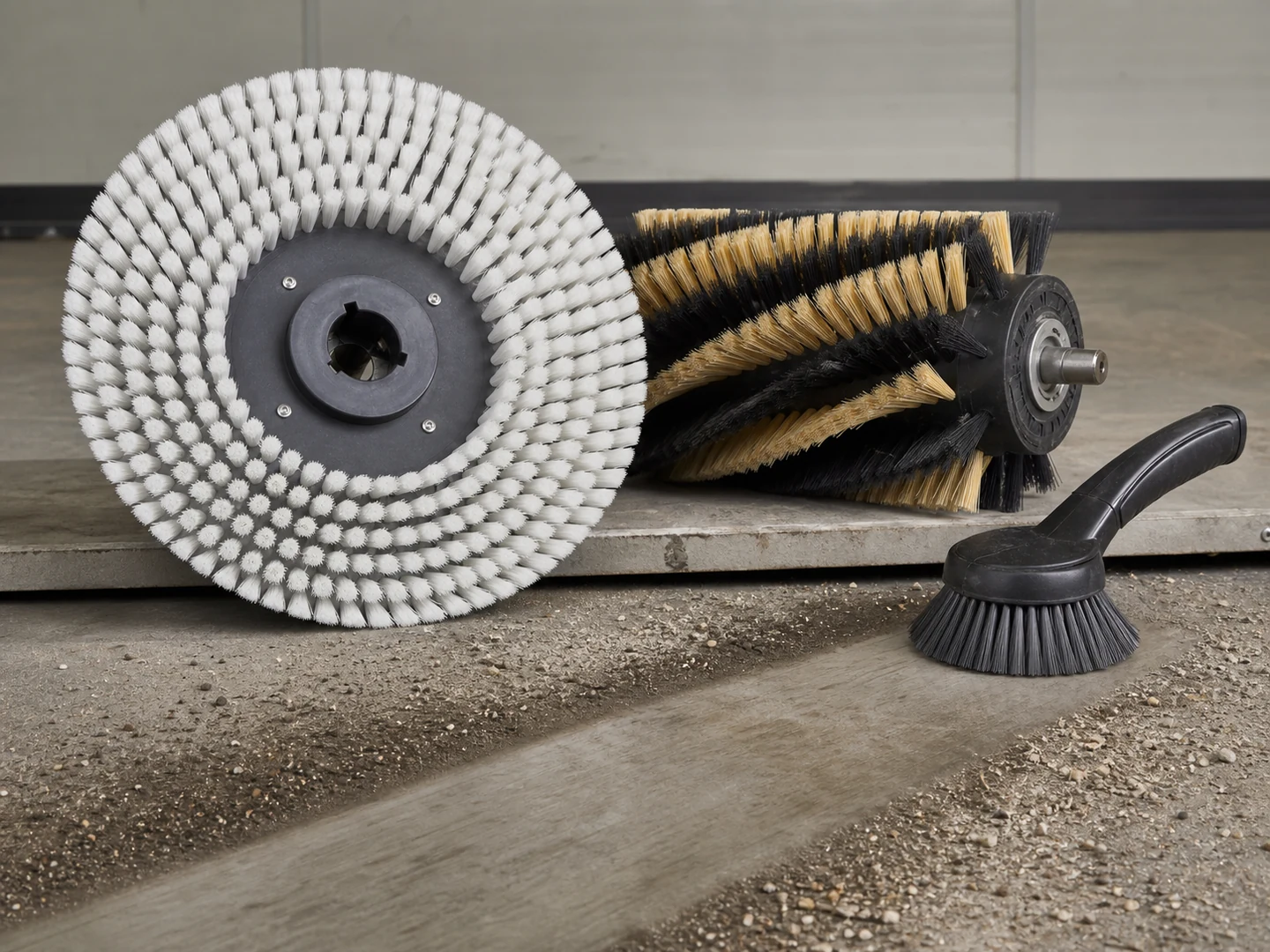
Custom Floor Scrubber Sweeper Brushes
Choose this brush type when a floor machine needs a disc, roller, main broom,…
See how this type is built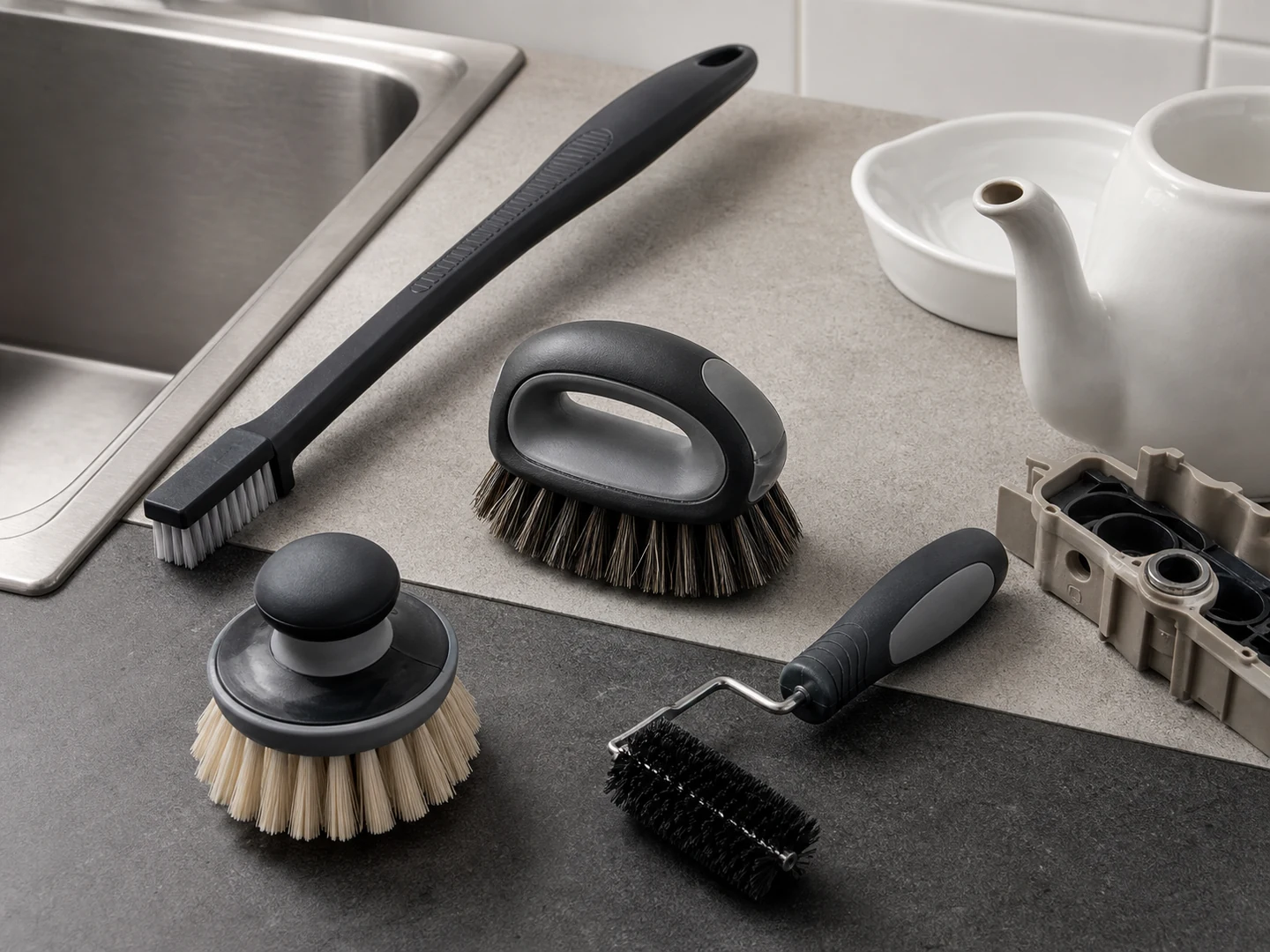
Custom Handheld Detail Brushes
Choose a handheld detail brush when you need direct control in seams, recesses, fittings,…
See how this type is built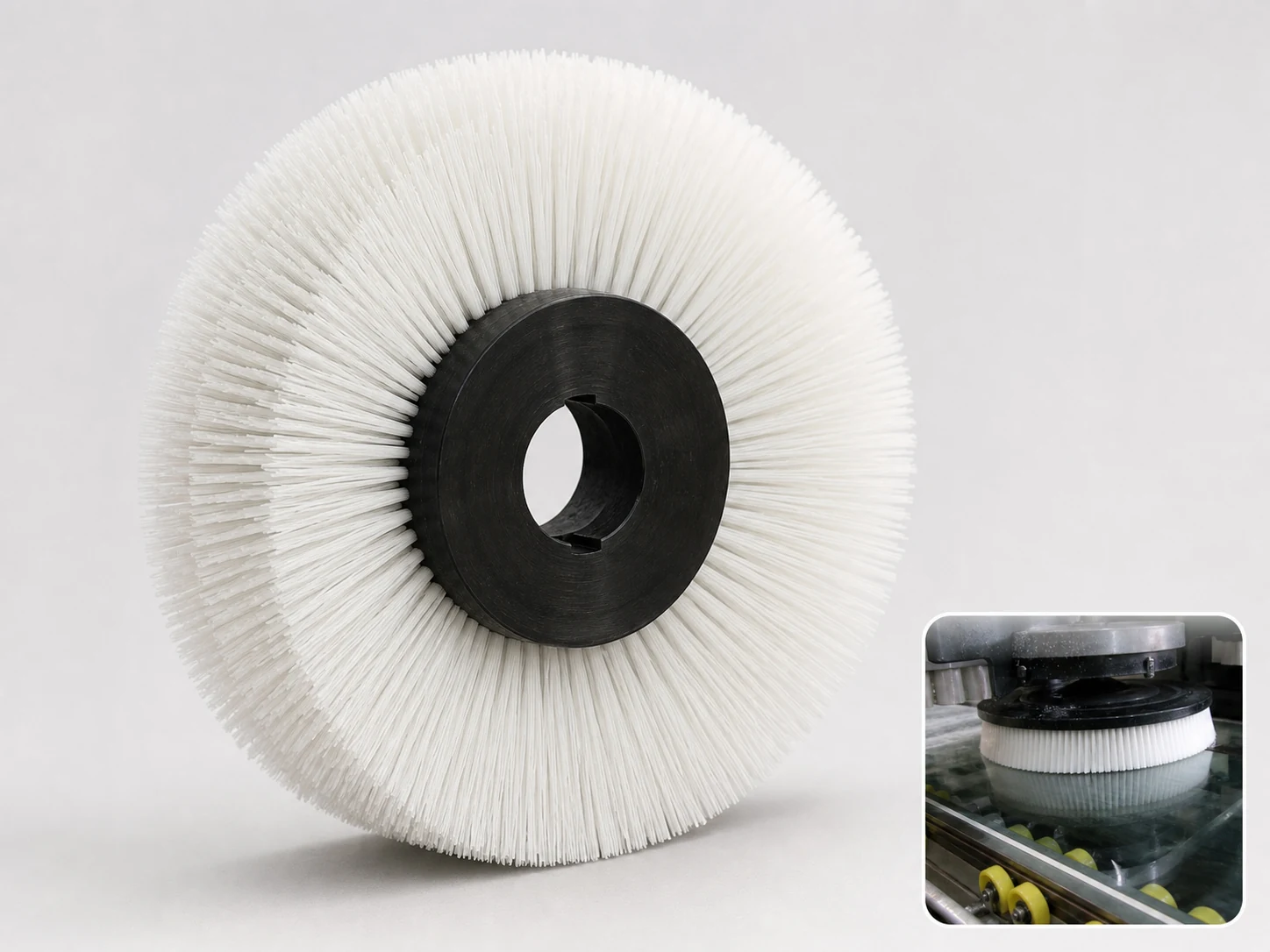
Custom Disc Brushes
Choose a disc brush when a circular face must scrub, wipe, polish, sweep, or…
See how this type is built
Polypropylene PP
Choose Polypropylene PP based on its stiffness, recovery, wear, wet-service, chemical, and temperature behavior.…
Compare this material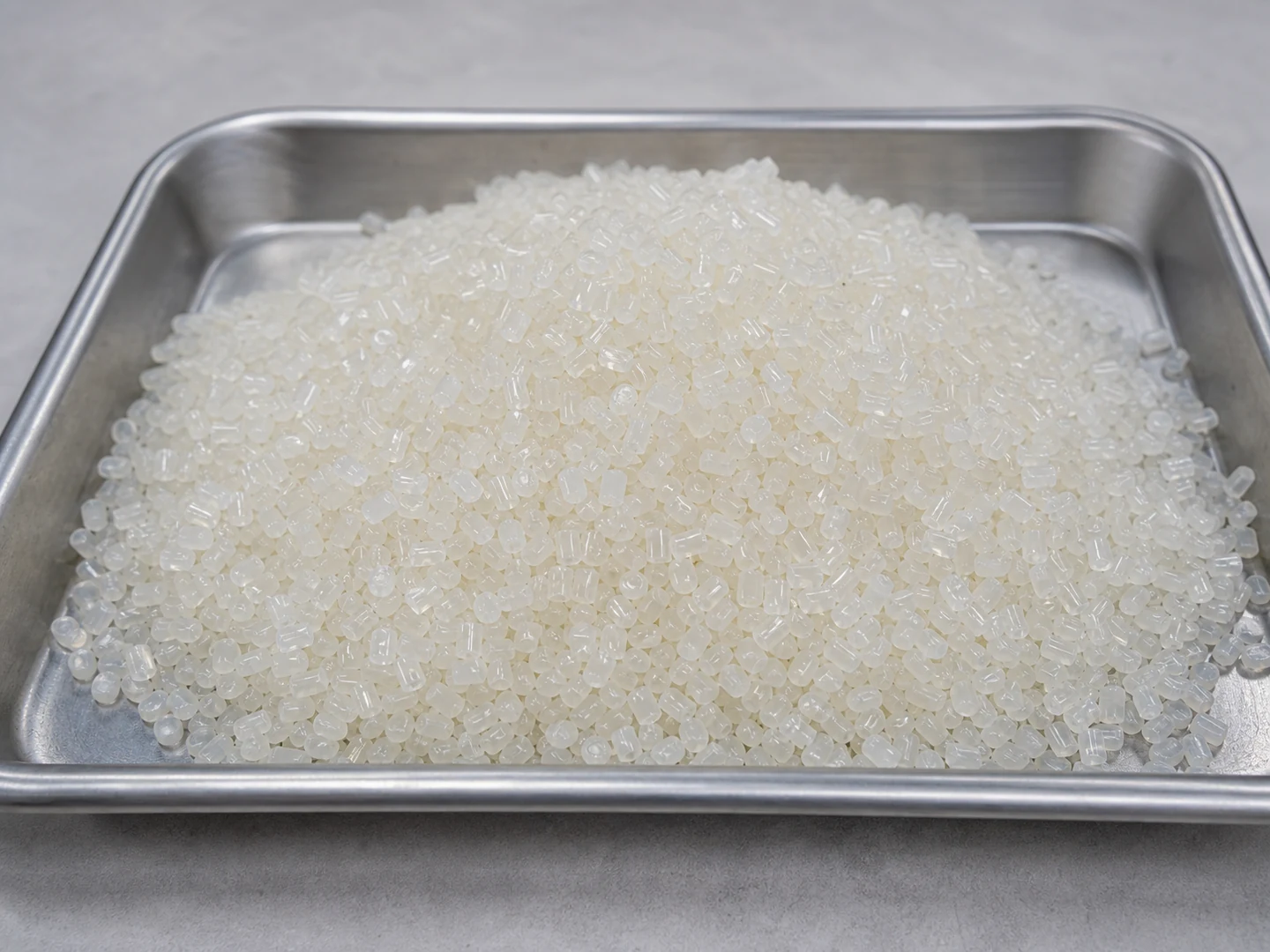
Nylon PA
Choose Nylon PA based on its stiffness, recovery, wear, wet-service, chemical, and temperature behavior.
Compare this materialCustom Manufacturing RFQ
Discuss This Application
Share the working surface, residue, dimensions, material direction, interface, quantity and drawing or sample photo.
Custom Brush RFQ
Request a Custom Cleaning Brush Quote
Upload a drawing, product photo, or sample photo and provide the core dimensions and cleaning conditions.
“We need a brush to remove wet residue from a stainless steel conveyor, about 800mm wide. The current brush wears quickly. We can send photos.”
“We sell drinkware and need a cleaning brush to include with the product. Quantity around 5,000 pieces.”