Quick Answer
Facility work is defined by two things the industrial jobs do not have: the surface is usually someone else’s asset, and the operator is rarely a specialist. So the brush has to be forgiving — hard enough to do the job, soft enough that a wrong guess does not damage a floor coating, a roof covering or an aluminium fin.
The Surfaces and What They Tolerate
- Hard floors — the coating is the asset. Grout lines and traffic lanes need contact pressure across the whole path width, not more aggression in one spot.
- Outdoor paving, decking and roofs — three substrates that look like one job. Timber raises its grain, roof coverings puncture, paving takes almost anything.
- Gutters, facades and high reach — the constraint is the pole and the working angle, long before the fill.
- Escalators, steps and comb plates — fixed brushes inside a rated assembly. They are specified and replaced, not operated.
- Building plant — HVAC coils, filters, condenser fins — thin aluminium that closes under anything stiff, cleaned in place with the unit off.
Filament by Surface
| Surface | Where to start | Why |
|---|---|---|
| Coated hard floor, machine scrubbing | PA66 Nylon or PBT | recovers under a deck at working pressure without cutting the coating |
| Grease-loaded industrial floor | Polypropylene PP | resists a strong alkaline degreaser where nylon hydrolyses |
| Timber decking and painted exterior | Nylon PA, firm grade | lifts growth without raising the grain |
| Paving and hard mineral surfaces | Polypropylene PP or Abrasive Nylon | the substrate tolerates a cut the others do not |
| Aluminium fins and coils | Soft PA66 Nylon or PP | flexes before it deforms the fin it is meant to open |
| Escalator and step assemblies | Flame Retardant Nylon | the assembly rating governs the fill, and low shedding keeps filament out of the step chain |
Construction and Mounting
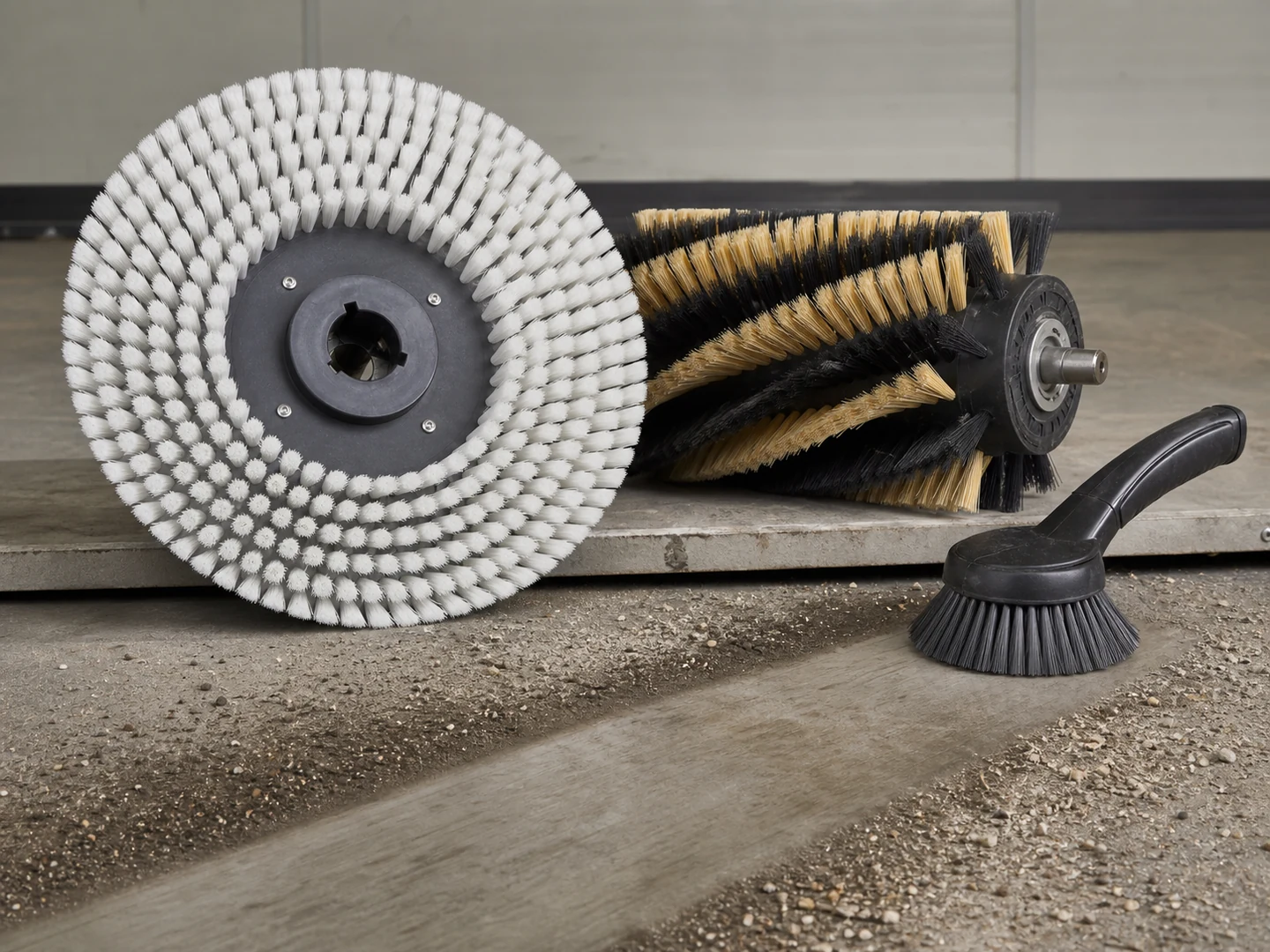
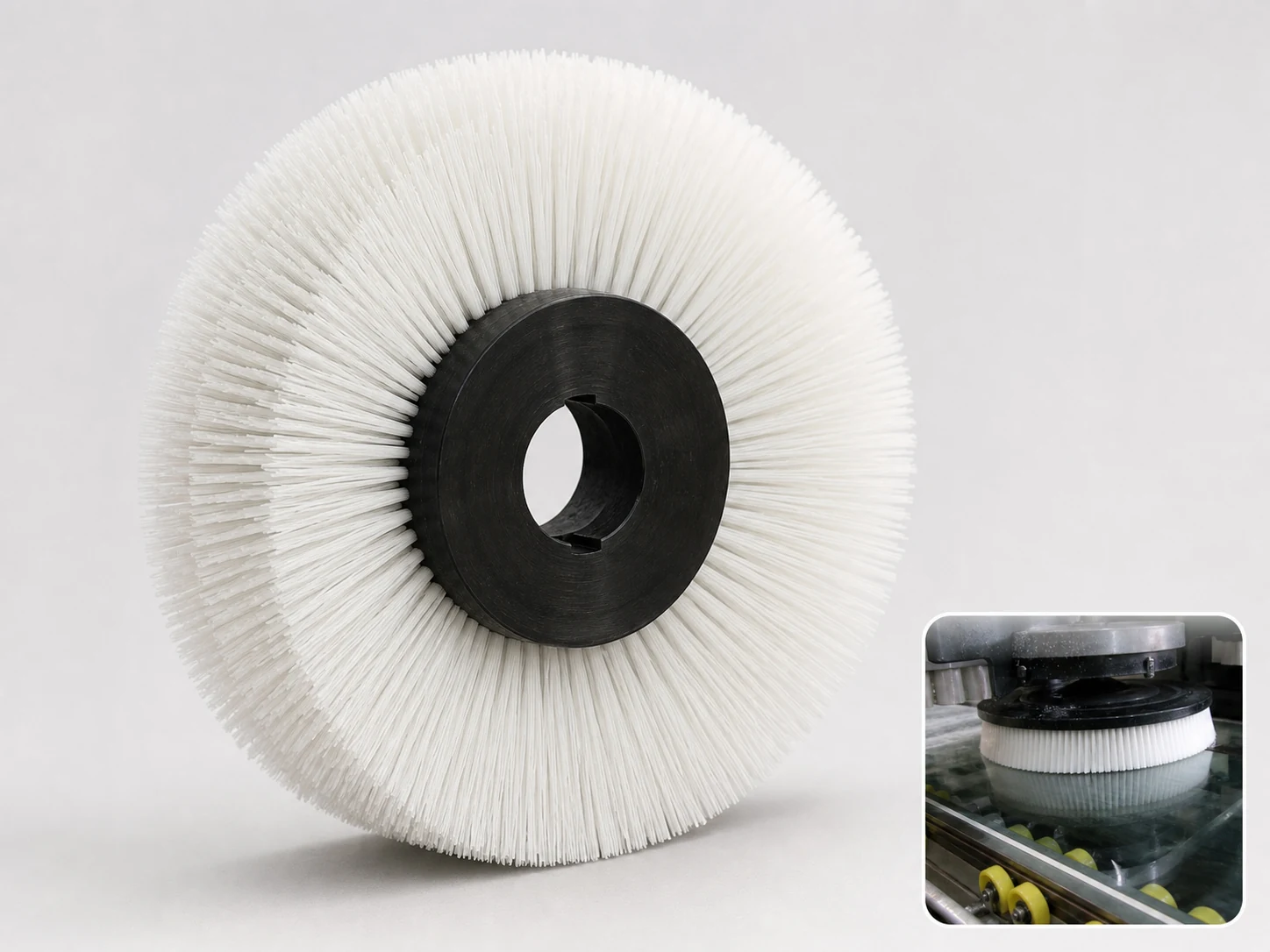
Three families cover most of it: deck-mounted discs and cylinders on walk-behind or ride-on machines, pole-mounted heads for reach, and fixed strips inside equipment. For machine brushes the mount and diameter are the specification and the fill is the variable; for pole work the reverse is true, because the operator sets the pressure and a stiffer fill just makes that harder to control.
Where It Goes Wrong
- Scrubbing a grease film before the degreaser has had its dwell time. The brush spreads it over a wider area.
- One brush for paving, decking and roof. The setting that clears the paving is the setting that damages the other two.
- Working across HVAC fins instead of along them. The pass that removes the dust closes the gaps it was meant to open.
- Reaching further by adding pole length. Beyond a certain reach the operator cannot control contact at all, and a lift or a different method is the honest answer.
What to Send for a Quote
The surface and its coating, the machine and its brush mount and diameter, the chemistry in use, the working width, and for reach work the height and the angle. Say if the surface is under warranty — that usually decides the fill on its own.
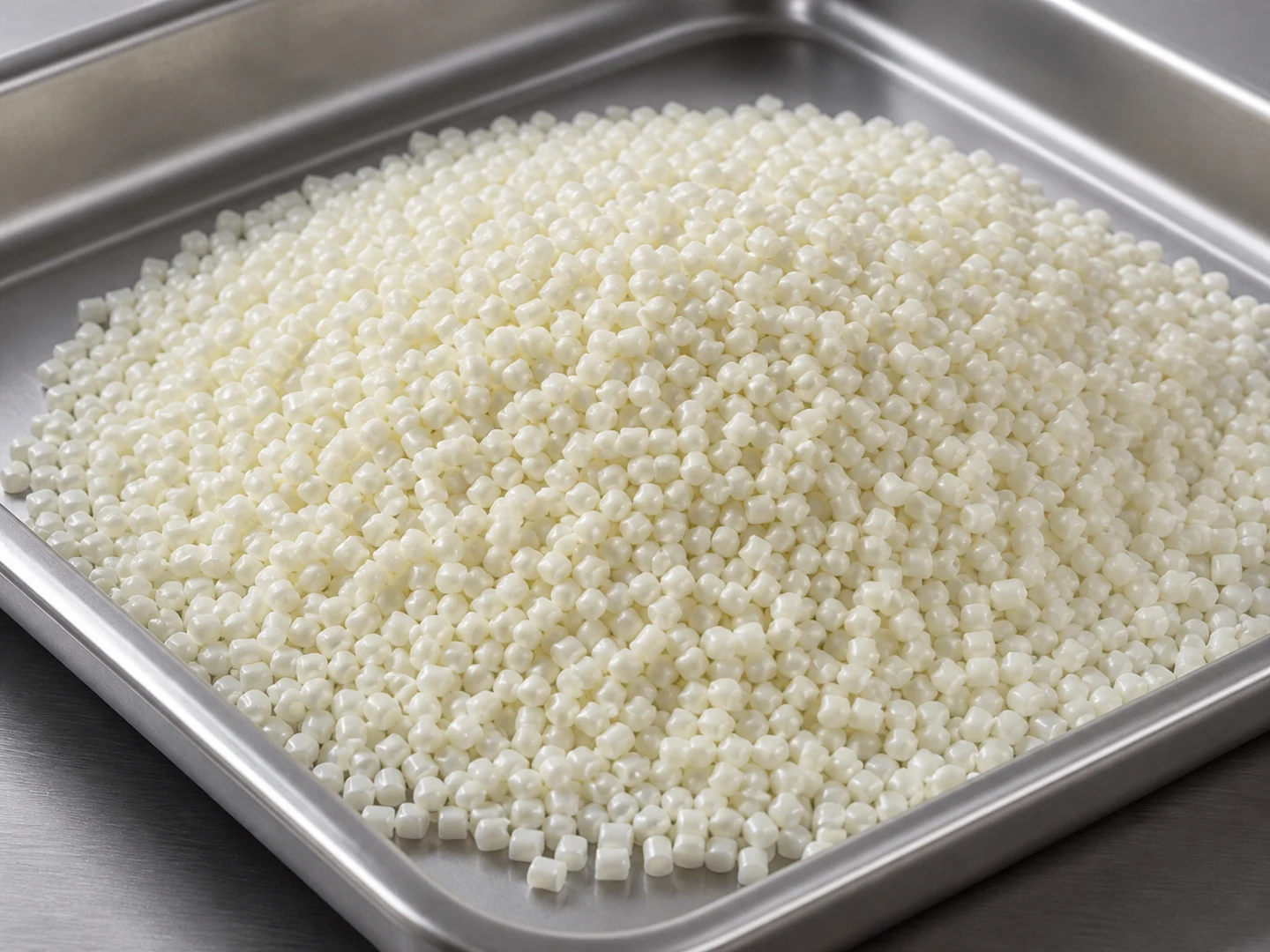
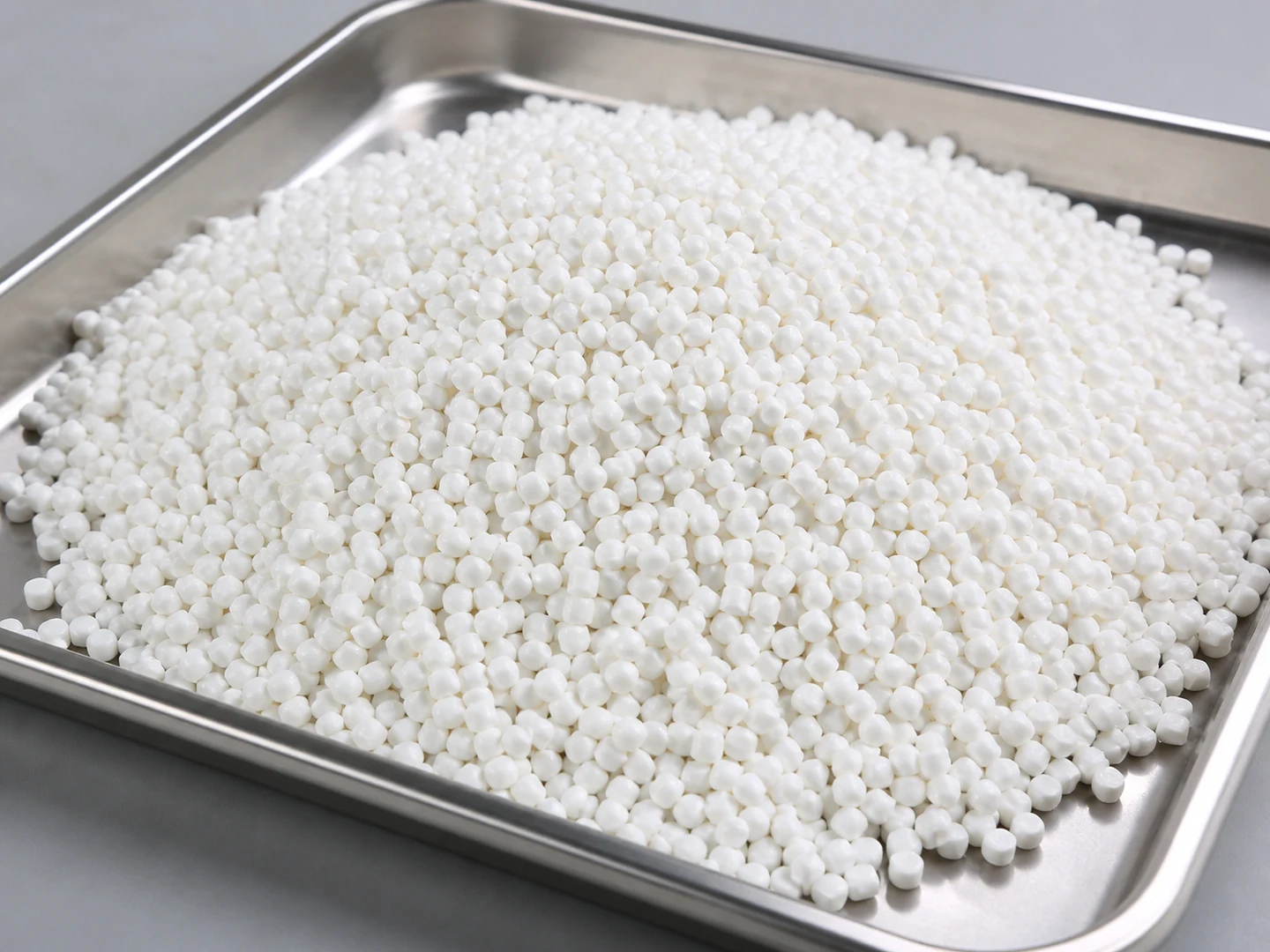
Which bristle material fits this job — PA66 Nylon, PBT or Polypropylene PP?
| Material | Continuous temperature (°C) | Peak temperature (°C) | Water absorption | Hardness |
|---|---|---|---|---|
| PA66 Nylon | 100–120 | 150–180 | 1.0–1.8% | Shore D 80–88 |
| PBT | 120–140 | 160–180 | 0.05–0.20% | Shore D 80–90 |
| Polypropylene PP | 80–100 | 120–140 | ≤0.03% | Shore D 65–75 |
| Nylon PA | 93 | 121 | 0.3–9% by PA grade and conditioning | Medium to firm; filament diameter and trim length control bending force. |
| Flame Retardant Nylon | 150 | 180 | 1–8% by PA grade | Set by the specific grade, reinforcement and additive package; compare with ordinary filament through sample testing. |
Figures as published by Brushtec / DuPont; Perlon. Confirm the exact grade against the supplier datasheet before ordering.
When are Floor Scrubber Sweeper Brushes the wrong choice?
- Floor Scrubber Sweeper Brushes — Use a pad, squeegee, vacuum, or pressure wash when the task is polishing, liquid recovery, or non-brush soil removal.
- Disc Brushes — Use a cylindrical brush when line contact and debris pickup matter more than a flat rotating footprint, or use another method when the surface cannot tolerate circular brushing.
- Road Sweeper Brooms — Use vacuum-only pickup, plow, pressure wash, or milling for fine airborne dust, packed ice, or bonded deposits.
- Handheld Detail Brushes — Use a tube brush, powered brush, scraper, wipe, sponge, or vacuum when the target is internal, heavily bonded, or highly delicate.
What should replace Floor Scrubber Sweeper Brushes when they stop working?
- Floor Scrubber Sweeper Brushes — Floor scrubber and indoor sweeper brushes are selected around a scrub deck and controlled downforce; road-sweeper brooms are designed for outdoor debris pickup, gutter reach, impact, and dust-control systems. Closest alternative: Road Sweeper Brooms.
- Disc Brushes — Disc brushes use a flat circular working face; cylindrical floor or roller brushes use tangential line contact and are better when debris pickup or continuous width contact is important. Closest alternative: Floor Scrubber Sweeper Brushes.
- Road Sweeper Brooms — Road-sweeper brooms prioritize debris pickup, gutter reach, impact resistance, surface following, and dust control; floor-machine brushes prioritize scrubbing chemistry, controlled downforce, and indoor floor finish. Closest alternative: Floor Scrubber Sweeper Brushes.
- Handheld Detail Brushes — Handheld detail brushes cover general precision cleaning; auto-detailing brushes impose tighter controls for painted, polished, leather, display, and trim surfaces.