
What Is a Gutter Cleaning Brush?
A gutter cleaning brush is a cleaning tool with a narrow, elongated brush head attached to a long handle or extension pole. Its bristles are typically made of polypropylene (PP), nylon, or a blend, with moderate stiffness to grab clumps of wet leaves and mud while minimizing scratching on gutter materials like aluminum, vinyl, or steel. The brush head is often shaped to fit the gutter trough—round, flat, or tapered—and may include a swivel or angled neck for navigating tight corners.
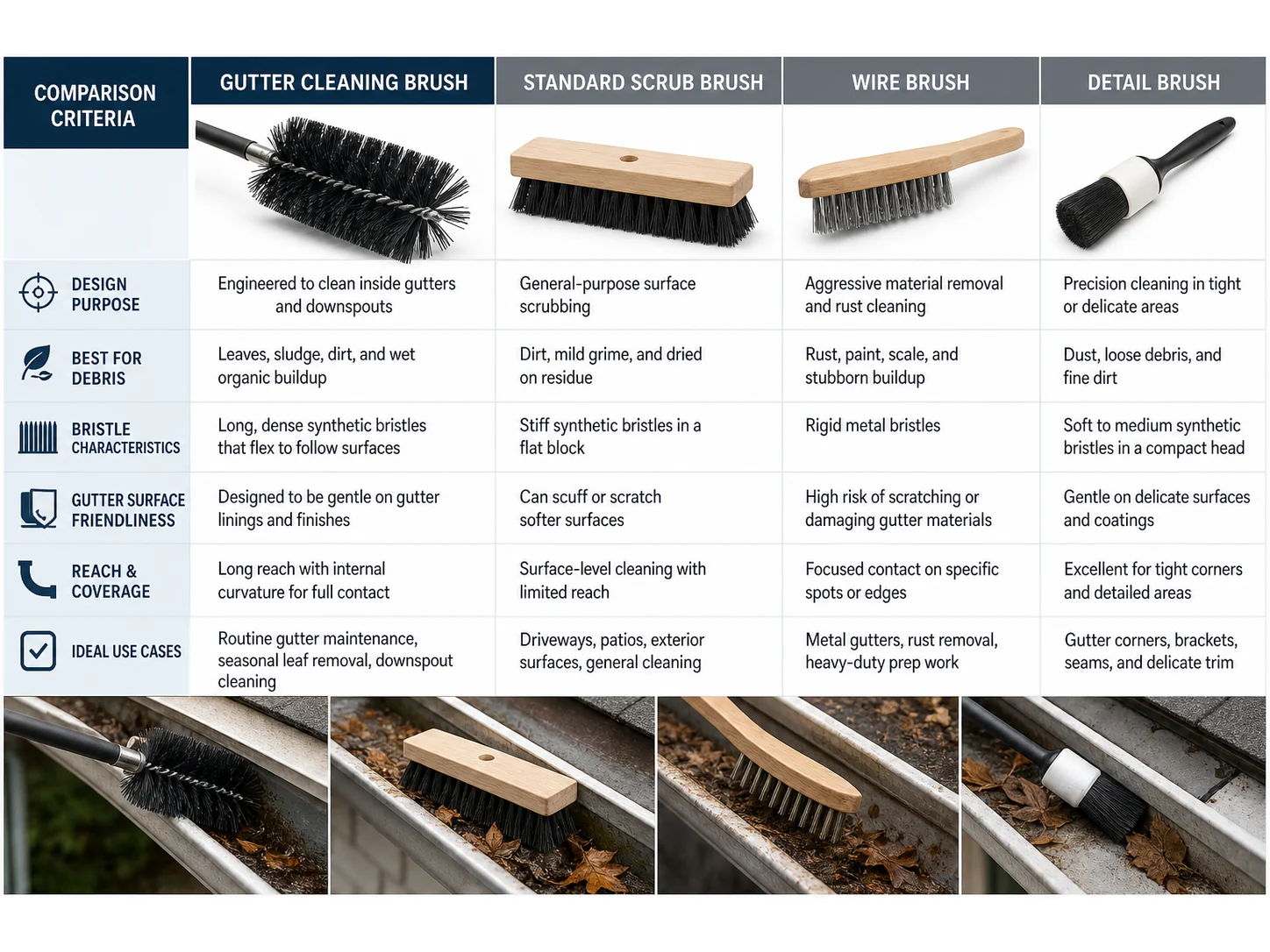
Common Types of Cleaning Brushes Compared
In gutter maintenance, people often improvise with whatever long-handled brush is on hand. However, each brush type has distinct characteristics that affect cleaning speed, debris removal, and gutter surface protection.
- Gutter cleaning brush: Purpose-built with soft-to-medium bristles, gutter-shaped head, and telescoping or sectional handle. Often features a split-tip or flagged bristle design to trap debris.
- Standard long-handle scrub brush: A general-purpose brush with stiff plastic or natural fiber bristles, a wide rectangular head, and a fixed wooden or plastic handle. Good for scrubbing flat surfaces but tends to push debris around inside a gutter rather than lifting it out.
- Wire brush with long handle: Features metal bristles (steel, stainless steel, or brass) and is excellent for rust, paint, or heavy grime removal on hard surfaces. Too aggressive for most gutters; risks scratching, gouging, or causing corrosion on aluminum.
- Deck brush: Often has a wide head and very stiff bristles for cleaning decks, patios, and driveways. Too broad to fit inside most gutter troughs, and the stiff bristles can damage sealant or coatings.
- Bottle brush / tube brush: A narrow, cylindrical brush with radial bristles, typically used for cleaning bottles, pipes, or test tubes. Sometimes used for downspouts but lacks the reach and debris-capturing ability for open gutters.
Gutter Cleaning Brush vs Standard Brushes: Key Differences
The table below compares typical gutter cleaning brushes against standard alternatives based on critical factors for gutter maintenance.
| Feature | Gutter Cleaning Brush | Standard Scrub Brush | Wire Brush (Long Handle) | Deck Brush |
|---|---|---|---|---|
| Bristle Material | PP, nylon, or flagged poly | PP, polyester, or palmyra | Steel, brass, or stainless steel | Stiff poly or natural fiber |
| Stiffness | Soft to medium | Medium to very stiff | Very stiff | Stiff to extra stiff |
| Head Shape & Size | Narrow, curved, or tapered; fits gutter troughs | Wide rectangular; often too large for gutters | Narrow rectangular or cylindrical; fits but abrasive | Very wide; rarely fits inside gutters |
| Handle Reach | Telescopic or sectional, typically 12–30 ft | Fixed, usually 4–6 ft | Fixed or threaded; often shorter than gutter needs | Accepts extension poles but heavy when extended |
| Debris Removal Style | Lifts and grabs leaves & sludge | Pushes or scrubs; leaves may scatter | Scrapes and abrades; good for stuck-on grime | Scrubs large surfaces; pushes debris |
| Risk of Gutter Damage | Low (soft bristles, plastic-safe) | Moderate (if bristles too stiff) | High (scratches aluminum, removes coatings) | High (stiff bristles, broad pressure points) |
| Wet/Dry Use | Excellent in wet, muddy conditions | Works, but bristles may mat down with sludge | Rusts if not stainless; poor in wet organic debris | Absorbs water; heavy when wet |
| Cost / Replacement | Moderate; replace when bristles wear or deform | Low; replace when bristles flatten | Low to moderate; bristles may rust or break | Low; replace when bristles wear |
How to Choose the Right Brush for Gutter Cleaning
Selecting between a gutter cleaning brush and a standard brush comes down to four primary factors: the debris type, the gutter material, the required reach, and the cleaning frequency.
1. Assess the Debris Type
- Loose dry leaves: A medium-stiff gutter cleaning brush with flagged bristles quickly sweeps and lifts leaves.
- Wet, compacted sludge: Look for a brush with durable, water-resistant bristles (PP or nylon) that won’t mat down. Soft-to-medium stiffness is enough; you’re lifting, not scraping.
- Mixed debris with twigs and pine needles: A brush with a more aggressive, hooked-tip bristle can snag and pull out stringy material. Wire brushes may grab but will damage gutter surfaces.
2. Match Bristle Stiffness to Gutter Material
- Aluminum gutters: Use only soft or medium poly/nylon bristles. Wire brushes will leave scratches that promote corrosion.
- Vinyl gutters: Soft bristles are best; even stiff plastic bristles can cause micro-scratches that dull the surface.
- Galvanized steel gutters: More tolerant of medium-stiff brushes, but avoid steel wire bristles to prevent galvanic corrosion.
3. Evaluate Handle Reach and Flexibility
Gutter cleaning brushes usually come with sectional or telescoping handles that reach 12 to 30 feet. Standard long-handle brushes rarely exceed 6 feet; attaching them to a universal extension pole can work, but the connection often wobbles or breaks under the weight of wet debris. For one-story homes, a 12–18-foot gutter brush is sufficient; two-story structures require 24–30 feet. Consider a brush with a swivel head if you must clean around corners from the ground.
4. Cleaning Frequency and Brush Durability
If you clean gutters twice a year, a moderate-quality gutter brush with replaceable heads offers good value. For commercial use (quarterly or more), invest in a heavy-duty brush with chemical-resistant bristles and a sturdy fiberglass or aluminum handle. Standard brushes, when used for gutters, wear unevenly because they are not designed for the narrow, curved path; expect faster bristle splay and handle fatigue.
Common Mistakes When Using Brushes for Gutter Cleaning
- Choosing a brush that is too stiff. Aggressive bristles may scratch gutter material, removing protective coatings and leading to rust or leaks.
- Using a brush that barely fits the gutter width. A too-narrow brush takes many passes; too-wide jams and bends the bristles permanently.
- Ignoring handle compatibility. A standard brush with a non-standard thread or low-cost push-on handle can detach inside the gutter, creating a retrieval problem.
- Assuming all wire brushes are waterproof. Non-stainless steel bristles rust quickly when used in wet gutter muck, leaving orange stains and weakening the brush.
- Cleaning from a ladder with a short-handled brush. This defeats the safety advantage of a long-reach gutter cleaning brush. Always work from the ground when possible.
- Neglecting to rinse the brush after use. Organic sludge dries on bristles, making them stiff and less effective next time. Rinse and hang dry.
When a Gutter Cleaning Brush Is the Wrong Choice
A gutter cleaning brush excels at removing loose and semi-compacted debris, but it has limits:
- Fully clogged downspouts: Brushes cannot clear dense blockages deep inside a downspout. A plumber’s snake or pressurized water jet is needed.
- Heavily compacted, clay-like sludge: If debris has hardened over time, a brush alone may only skim the surface. Pre-soak with water or use a specialized gutter scoop first.
- Gutters with tight internal brackets or hangers: The brush head may catch and bend. A thinner, more flexible brush or a custom narrow design might be required—request a supplier drawing review if standard shapes hang up.
- Extreme organic growth (moss, lichen): These often bond to the gutter surface. A brush may not fully remove them; consider a dedicated soft-wash or chemical treatment followed by gentle brushing.
- Delicate historic metal gutters: Even soft bristles can abrade aged copper or lead-coated materials. Consult a preservation expert before mechanical cleaning.
Final Takeaway
For routine gutter maintenance involving leaves, twigs, and moderate sludge, a purpose-built gutter cleaning brush with soft-to-medium flagged bristles and a telescoping handle outperforms any standard brush in reach, debris removal, and surface safety. Standard scrub brushes, wire brushes, and deck brushes may work in a pinch for small, accessible areas, but their lack of tailored fit, incorrect bristle stiffness, and limited handle length can turn a simple task into a frustrating and potentially damaging chore. Match the brush to the debris type, gutter material, and required reach, and remember that no brush replaces proper flushing or professional help when blockages are extreme.
Frequently Asked Questions
Can I use a standard wire brush to clean my gutters?
It is not recommended. Wire brushes, even those with a long handle, can scratch aluminum and vinyl gutters, removing protective finishes and promoting rust. They are also prone to rusting themselves when used in wet, organic debris. Save wire brushes for metal surface prep, not gutter cleaning.
What bristle material is safest for aluminum gutters?
Polypropylene (PP) or flagged nylon bristles with a soft to medium stiffness are safest. They clean effectively without marring the aluminum surface. Avoid any metal-bristle brush or extremely stiff plastic.
How do I choose the right diameter for a gutter cleaning brush?
Measure the internal width of your gutter trough. The brush head should be slightly narrower—typically ½ to 1 inch less—to allow it to move freely without jamming. Standard K-style gutters are often around 5–6 inches wide, so a 4–5 inch brush head works well. For half-round gutters, a round or tapered brush that matches the curve is better than a flat rectangular head.
Is a flexible gutter brush better than a rigid one?
It depends on your gutter configuration. A brush with a flexible wire or rubber neck can snake under gutter brackets and around corners more easily, reducing the need to reposition your ladder or extension pole. For straight runs with few obstacles, a rigid neck often provides better leverage and debris control.
Can a gutter cleaning brush handle wet, heavy sludge?
Yes, when designed with water-resistant bristles that resist matting. Look for brushes with crimped or flagged polypropylene bristles. However, if sludge is extremely compacted, pre-wet the gutter, let it soak, then brush in sections to avoid overloading the brush head.
Can I attach a gutter cleaning brush to a pressure washer?
Some commercial gutter cleaning attachments combine a brush with a pressure washer wand, but a standard gutter cleaning brush is not designed to withstand high-pressure water flow. The connection point may leak, and the bristles can blow out. If pressure washing, use a dedicated gutter cleaning attachment and follow the manufacturer’s guidelines for pressure settings to avoid denting or cutting gutters.
How often should I replace my gutter cleaning brush?
With typical twice-yearly use, a quality brush may last 3–5 years. Replace it when bristles become permanently bent, flattened, or fall out, or when the handle connection becomes loose and unsafe. Rinsing after each use and storing it hanging indoors extends the life considerably.
I have an unusual gutter shape—are custom brushes available?
Yes, many brush manufacturers can build custom gutter cleaning brushes with specific head dimensions, bristle patterns, and handle attachments. If you have a unique profile or commercial application, work with a supplier to review a CAD drawing or sample before ordering a production run. This ensures the brush fits without trial-and-error expense.
Technical References
Which bristle material fits this job — Nylon PA, AISI 304 Stainless Steel Wire or Polypropylene PP?
| Material | Continuous temperature (°C) | Peak temperature (°C) | Water absorption | Hardness |
|---|---|---|---|---|
| Nylon PA | 93 | 121 | 0.3–9% by PA grade and conditioning | Medium to firm; filament diameter and trim length control bending force. |
| AISI 304 Stainless Steel Wire | 400 | 500 | 0% | Rockwell B 70–95 depending on temper and cold work |
| Polypropylene PP | 80–100 | 120–140 | ≤0.03% | Shore D 65–75 |
| Rubber | 100 | 130 | very low | Specified by compound and Shore hardness; published TPE families can span roughly 50–80 Shore A, but that is a product-family example rather than a universal rubber range. |
| UV-resistant Anti-aging Filament | 140 | 170 | 0.1–1.0% | Defined by the carrier polymer, diameter and weathering condition. |
Figures as published by Brushtec / DuPont; Alleima; Perlon. Confirm the exact grade against the supplier datasheet before ordering.
What should replace Handheld Detail Brushes for gutter cleaning?
- Handheld Detail Brushes — Handheld detail brushes cover general precision cleaning; auto-detailing brushes impose tighter controls for painted, polished, leather, display, and trim surfaces.
- Nylon PA — Compare Nylon PA with PP, PBT, PET. Change material when wet stiffness, temperature, chemical resistance, conductivity, particle shedding, or surface marking becomes the limiting factor.
- AISI 304 Stainless Steel Wire — Use AISI 316 stainless steel wire for chloride, marine, dairy, beverage, chemical washdown, or higher pitting-resistance requirements. Use carbon steel for dry aggressive cutting and brass or abrasive nylon for lower marking risk.
- Polypropylene PP — Compare Polypropylene PP with Nylon, PBT, PET. Change material when wet stiffness, temperature, chemical resistance, conductivity, particle shedding, or surface marking becomes the limiting factor.