
Material
Carbon Fiber
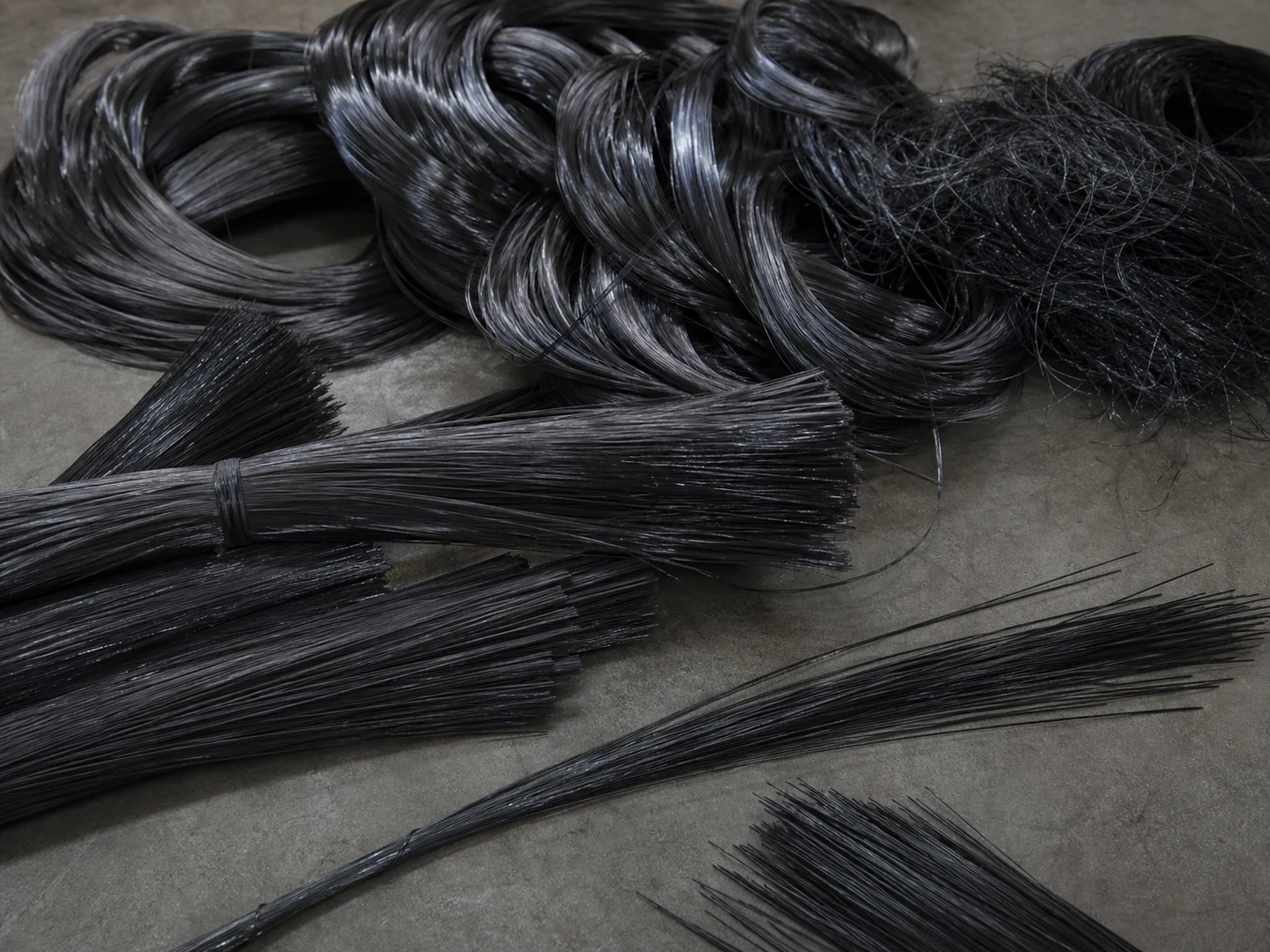
Conductive carbon filament
Choose Carbon Fiber based on its stiffness, recovery, wear, wet-service, chemical, and temperature behavior. Do not select stiffness from the material name alone. Specify filament diameter, free trim, density, grade, and service conditions as one set.
Datasheet values
- Fiber diameter
- 5–10 µm
- Density
- 1.75–1.95 g/cm³
- Electrical resistivity
- about 1.5–2.0 × 10⁻⁵ ohm·m
- Use temperature
- up to 150–200°C in polymer-bound brushes
- Surface resistance
- 10²–10⁶ ohms in grounded brush assemblies
Carbon fiber is a high-carbon filament material with electrical conductivity, low thermal expansion and resistance to many acids, alkalis, salts and solvents.
What is Carbon Fiber, and what makes it different from other brush filaments?
In the conductive carbon filament family, Carbon Fiber is specified, supplied as continuous carbon filament bundle, conductive tuft and carbon-fiber strip or roller fill, drawn in round and flat bundle sections and set in straight rows, staggered, zoned and fan pattern fill patterns.
Carbon Fiber is used in custom cleaning brushes for grounded static-removal strips and precision contact on films, optics and electronics where very fine conductive fibers are required.
It is usually weighed against Conductive Nylon and Anti-static Filament, and the deciding difference is moisture uptake and working temperature rather than anything you can read off the name.
Compare Carbon Fiber with Conductive nylon, anti-static filament, stainless micro-wire, standard nylon. Change material when wet stiffness, temperature, chemical resistance, conductivity, particle shedding, or surface marking becomes the limiting factor.
What stiffness and contact pressure can I expect from Carbon Fiber?
Carbon Fiber is high axial modulus at the fiber level, but a brush tuft flexible because its filaments are extremely fine and unsupported. It Carbon Fiber changes brush stiffness through filament diameter, free trim, density, crimp, and contact. Use finer filament and longer trim for conformable contact; use coarser filament, shorter trim, or higher density for stronger displacement or cutting.
Filament-level figures for this grade and the ones it is usually compared to. A finished brush behaves differently again.
| Property | Carbon Fiber | Conductive Nylon | Anti-static Filament |
|---|---|---|---|
| Shore hardness | Not Applicable(Individual Fibers Are Characterized by Modulus; industry reference range) | Shore D 75–88 | Shore D 72–86 |
| Continuous temperature (°C) | 200–350 (Limited by Sizing / Binder) | 80–110 | 80–110 |
| Peak temperature (°C) | 400–500 (Inert Environment / Short-Term, industry reference range) | 130–160 | 130–160 |
| Water absorption, 24 h | ≤0.10% (Fiber Itself) | 0.5–2.5% (Depending on Nylon Base Material, ISO 62/ASTM D570) | 0.5–2.5% (Depending on Nylon Base Material, ISO 62/ASTM D570) |
| Filament diameter (mm) | 0.005–0.012 | 0.05–1.00 | 0.05–1.00 |
| Flexibility | High Flexibility(Fine Bundle) | Medium Flexibility | Medium to High Flexibility |
The part people get wrong: the same grade can feel soft or aggressive depending on diameter, trim and density. Specify that geometry before the material, or the sample will surprise you.
How does water affect Carbon Fiber performance?
The carbon fiber itself takes up no more than about 0.10%, so the filament dimension is stable; what moves in wet service is the resin or binder around it.
Low water sensitivity in the fiber does not settle the question: bonding and electrical contact both have to be tested in the wet condition the brush will actually see.
What this means for your application: moisture uptake is low enough to ignore in service, which is why this grade holds its stiffness through washdown.
A practical check: run one wet cycle and compare tip contact against the dry state. If the wet brush leaves residue behind or no longer reaches the bottom of the bore, change the material rather than the geometry.
What temperature limits apply to Carbon Fiber?
No single brush-service temperature should be assigned from the carbon fiber name alone. Fiber sizing, binder or holder material, grounding hardware, and the finished assembly set the usable limit.
The filament tables quote 200–350 (Limited by Sizing / Binder)°C continuous and 400–500 (Inert Environment / Short-Term, industry reference range)°C peak. The tighter number above is the one to build to, because a brush is loaded while it is hot.
Where it stops working: validate with a sample if the process sits near the top of that band. A permanent bend under load means the answer is a higher-temperature filament family, not a heavier trim.
Diameter, trim length and applied load all shift the real limit, so a thin filament touching lightly survives conditions that would flatten a thick one under pressure.
What chemicals attack Carbon Fiber?
Resistant to many acids, alkalis, salts, and solvents, with finished performance controlled by surface sizing and holder resin.
Compatibility is a function of concentration, temperature and contact time together. A short rinse in a dilute solution is a different exposure from an overnight soak in a concentrated one, even with the same chemical on the label.
Before you commit to a quantity: Specify the exact Carbon Fiber grade or alloy, filament or profile size, color, straight or crimped form, working temperature, wet or dry use, chemical exposure, surface finish, and any required material documentation.
What is the practical lower limit for filament diameter?
The floor is roughly 0.005 mm; finer than that and the filament snaps rather than flexes. In practice you are choosing inside 0.005–0.012 mm.
Free trim runs 2–100 mm, and the two interact: a finer filament needs a shorter trim to keep useful stiffness, while a thicker one carries a longer trim and still lands pressure on the tip.
Split the range by duty: roughly 0.005–0.01 mm for light wiping, dusting and surfaces that mark easily, and 0.01–0.012 mm where residue is packed on and point pressure matters more than surface risk.
Tip treatments available on this filament: sizing, desizing, nickel plating, conductive-adhesive fixing and end trimming.
In practical brush terms: reaching deep into a bore or crevice is a diameter problem before it is a length problem. A thicker filament on a moderate trim pushes further in before the tips fold over.
What applications typically use Carbon Fiber?
Grounded static-removal strips and precision contact on films, optics and electronics where very fine conductive fibers are required.
Where it turns up in practice:
- Dust Removal
- Connector & Slot Cleaning
- PCB Cleaning
- Printer & Scanner Cleaning
- Brick, Tile & Building Material Machine Brush Use
- Carpet Machine Cleaning
It is normally set into these constructions:
- Custom Roller and Conveyor Brushes
- Custom Handheld Detail Brushes
If the sample comes back rejected: Brittle fiber fragments, conductive contamination and incomplete grounding can make carbon fiber unsuitable for exposed electronics or cleanliness-critical areas.
How do I specify Carbon Fiber for a custom brush?
Send the brush type, filament diameter, free trim length, density, contact setting, wet or dry duty, working temperature and the actual cleaning chemistry together. Any one of them on its own leaves the stiffness undefined.
What usually goes wrong at this step:
- Selecting Carbon Fiber from the material name alone without setting filament diameter, trim length, and density
- Using dry stiffness to predict wet behavior without checking moisture absorption or liquid exposure
- Ignoring trapped abrasive particles, chemical concentration, temperature, or contact motion when assessing surface risk
Reference standards behind the figures on this page: ASTM D3039/D3039M; ISO 14125; ISO 10618; IEC 61340-5-1:2024; IEC TS 61340-5-4:2021; ASTM D257.
Source: Toray Composite Materials America — Carbon fibre product data. Carbon fibre works here as a fine conductive fill rather than as a structural reinforcement. Flex-fatigue resistance is low compared with metal wire, and no universal finished-brush temperature limit follows from the fibre — the anchoring and the process set that.
What else does the datasheet specify for Carbon Fiber?
| Filament cross-section | Round / Flat Bundle |
|---|---|
| Electrical behaviour | Highly Conductive; Surface Resistance Can Be as Low as 10^1–10^4 Ω(Structure Dependent) |
| Continuous service temperature (°C) | 200–350(Limited by Sizing / Binder) |
| Peak temperature (°C) | 400–500(Inert Environment / Short-Term, industry reference range) |
Questions this page is asked
What should identify the carbon-fiber bundle used in a static-control brush?
Specify the fibre manufacturer and tow grade, filament count or linear density, filament diameter where available, sizing type and level, bundle construction, holder and bonding materials, and lot traceability. Approve electrical and mechanical results on that conditioned bundle because a composite-reinforcement data sheet does not by itself define a brush tuft's resistance, flexibility or shedding.
How should the grounding path of a carbon-fiber brush be released?
Measure continuity or resistance through the actual fibre contact, backing, holder, bonding points, mounting hardware and verified equipment ground in the installed geometry, then confirm the intended static-control result on the real moving surface. Repeat the check after contamination, cleaning, humidity and wear cycles, and define rejection limits for an open, intermittent or drifting path instead of relying on raw-fibre conductivity.
What wear checks are needed before carbon-fiber contact is accepted near sensitive parts?
Cycle the complete brush at the specified contact, speed and environment, then inspect representative surfaces and downstream collection points for broken fibres, conductive dust, bundle pullout, exposed backing and changed contact coverage. Set retirement and cleaning criteria from particle or residue limits and retained static-control performance, because a brush can remain electrically connected while shedding unacceptable conductive fragments.
Where these figures come from
| Property | Published value | Source |
|---|---|---|
| Chemical resistance | Resistant to many acids, alkalis, salts, and solvents, with finished performance controlled by surface sizing and holder resin. | Toray Composite Materials America Retrieved 2026-07-20 |
| Published datasheet figures |
|
Toray Composite Materials America Retrieved 2026-07-20 |
| Hardness and stiffness | High axial modulus at the fiber level, but a brush tuft flexible because its filaments are extremely fine and unsupported. | Toray Composite Materials America Retrieved 2026-07-20 |
| Limitations | Brittle fiber fragments, conductive contamination and incomplete grounding can make carbon fiber unsuitable for exposed electronics or cleanliness-critical areas. | Toray Composite Materials America Retrieved 2026-07-20 |
| Temperature resistance | Up to 200°C with a high-temperature holder and binder. | Toray Composite Materials America Retrieved 2026-07-20 |
| Water resistance | Low water sensitivity of the carbon fiber does not remove the need to Test bonding and electrical contact in wet service. | Toray Composite Materials America Retrieved 2026-07-20 |
Guides that go deeper on this
Continue Exploring
Recommended Reading & Related Brush Resources
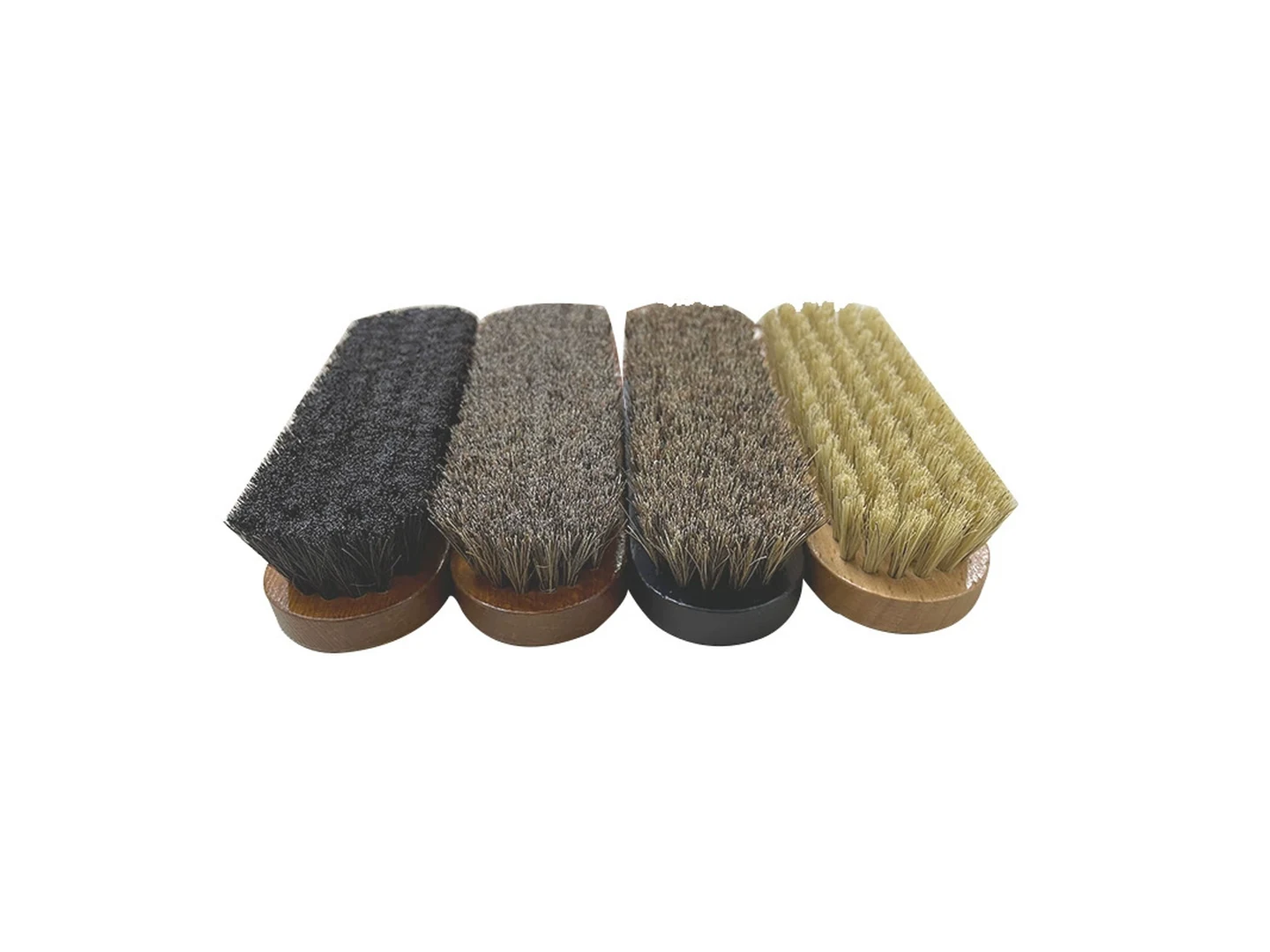
Carbon Fiber Panel Cleaning Brush
Conductive carbon fiber filament panel brush for dry dust removal from films, coated webs,…
See the specification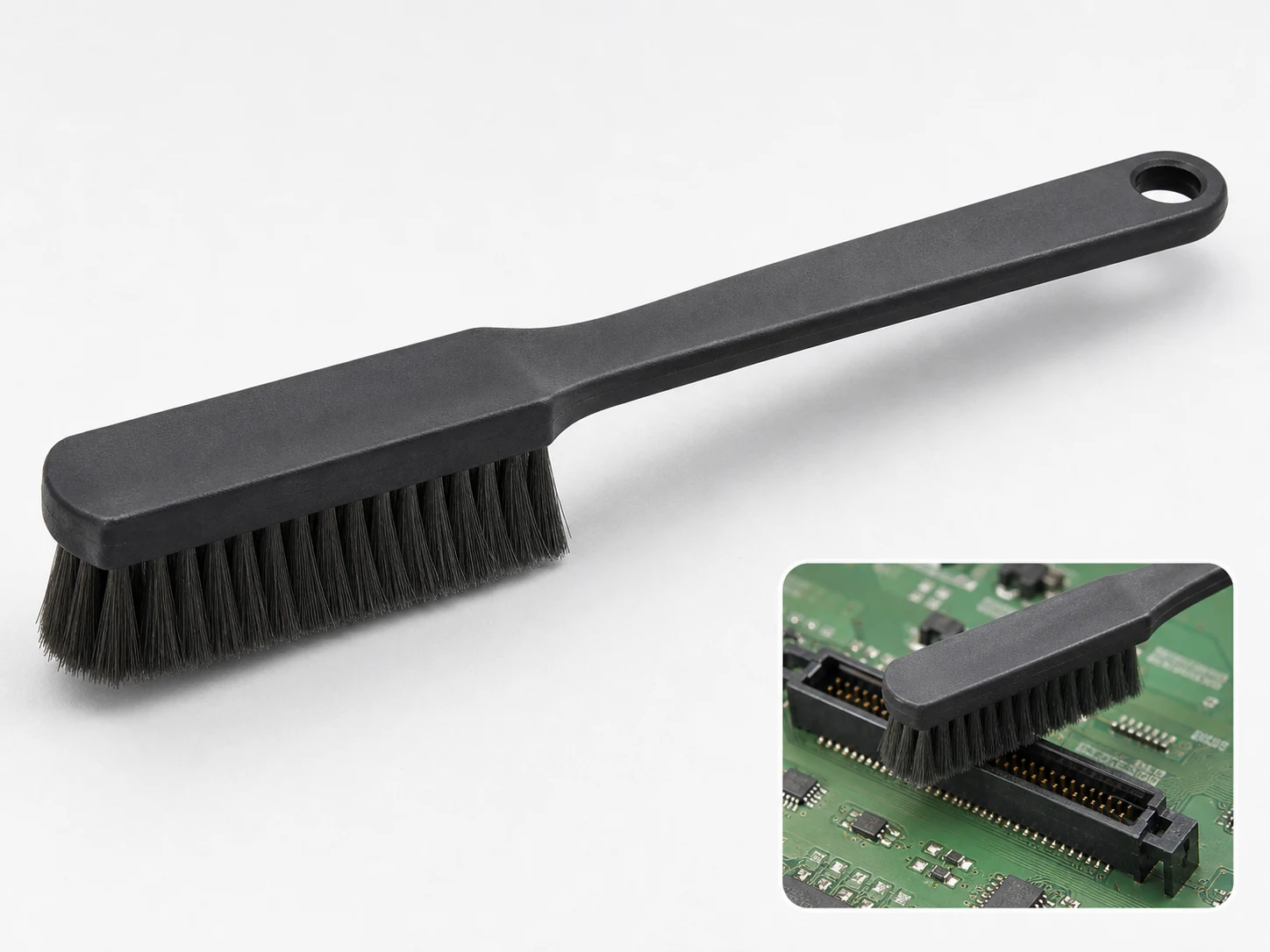
Anti-Static Carbon Fiber Brush
Anti-static carbon fiber brushes with conductive handles for static-free dust removal from vinyl records,…
See the specification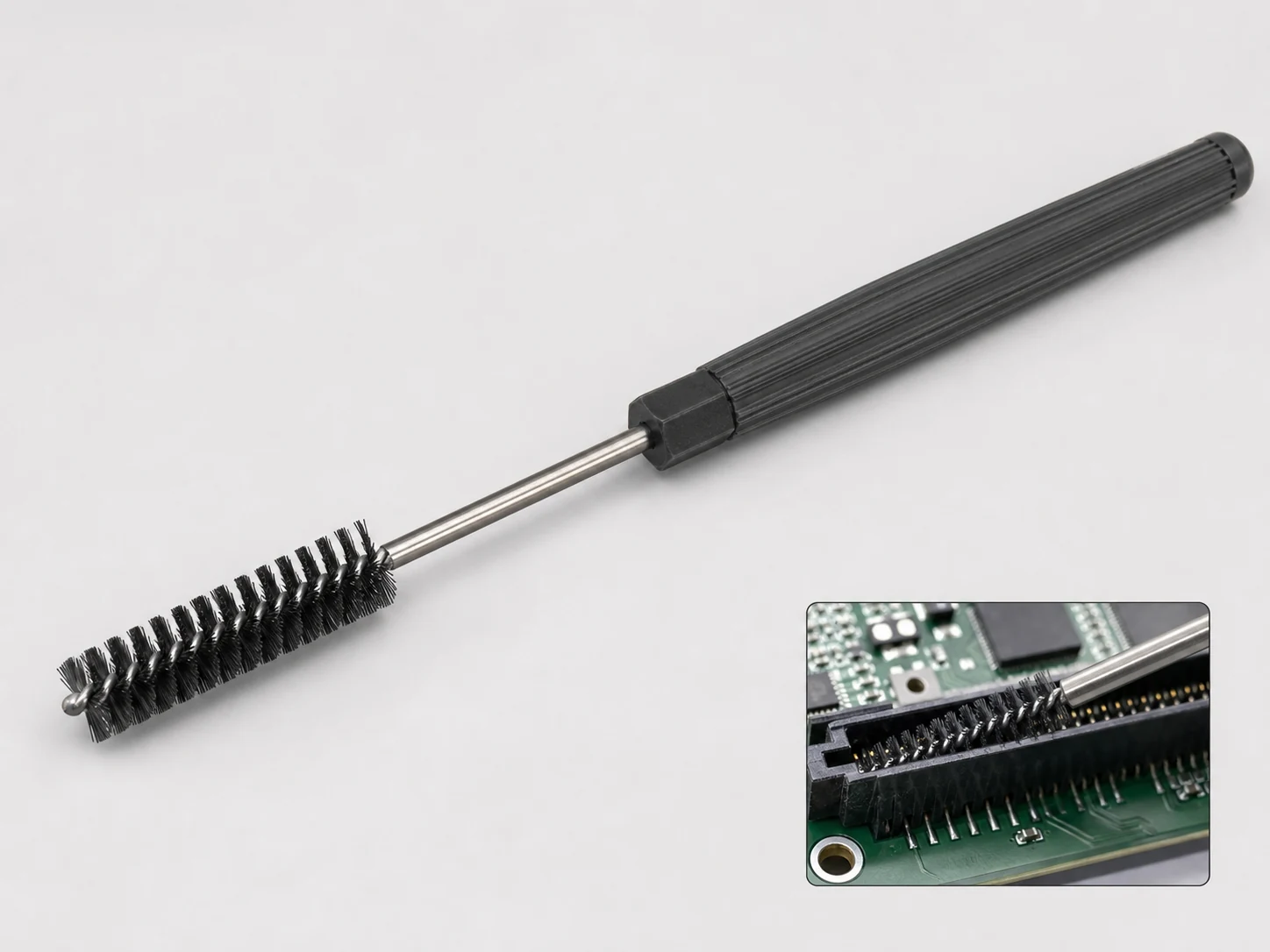
Anti-Static Carbon Fiber Printing Brush
Custom-width anti-static carbon fiber brush for paper webs, film paths, sheet feed lines and…
See the specification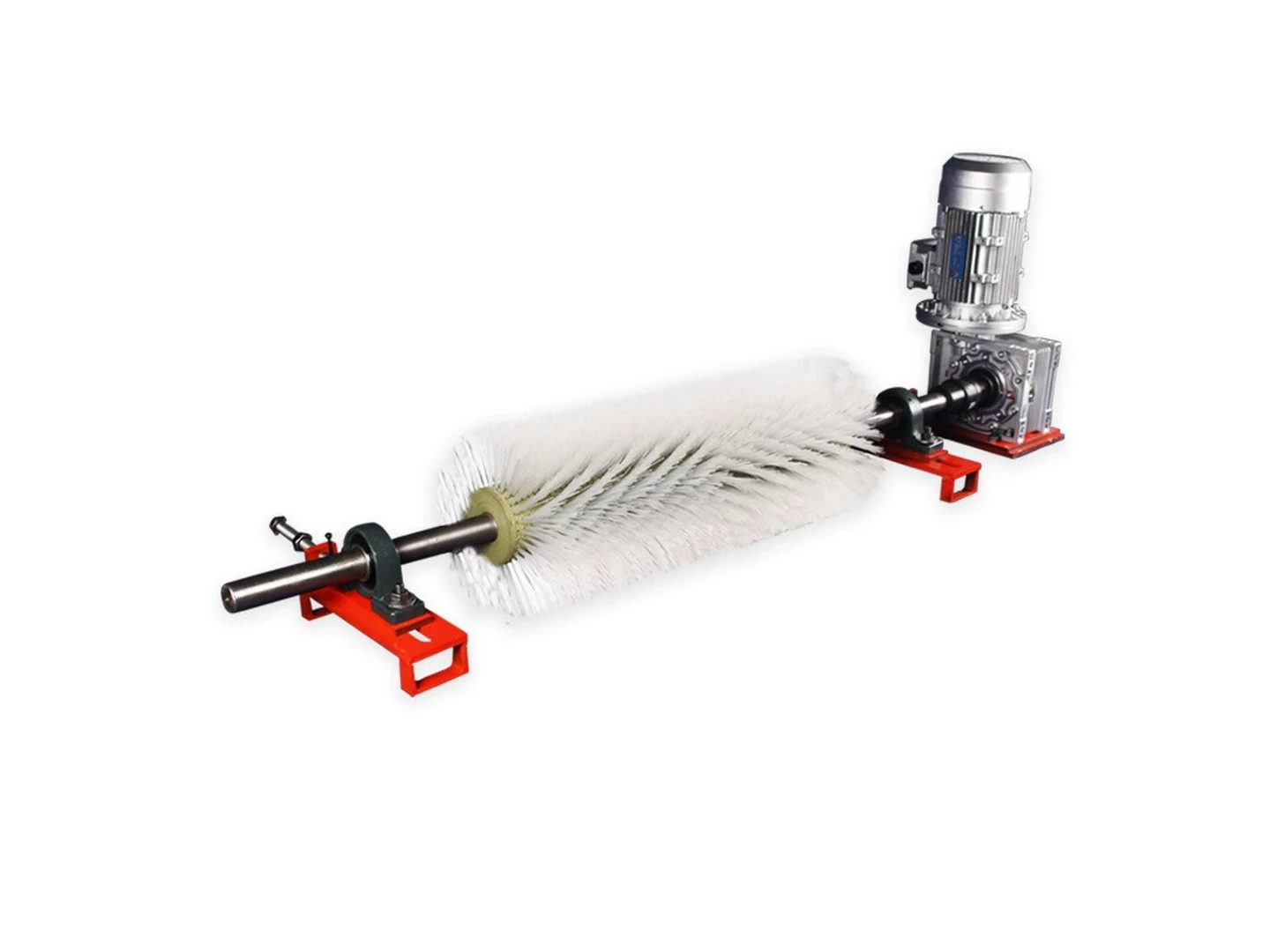
Custom Roller and Conveyor Brushes
Choose a roller or conveyor brush when a cylindrical brush must clean, wipe, guide,…
See how this type is built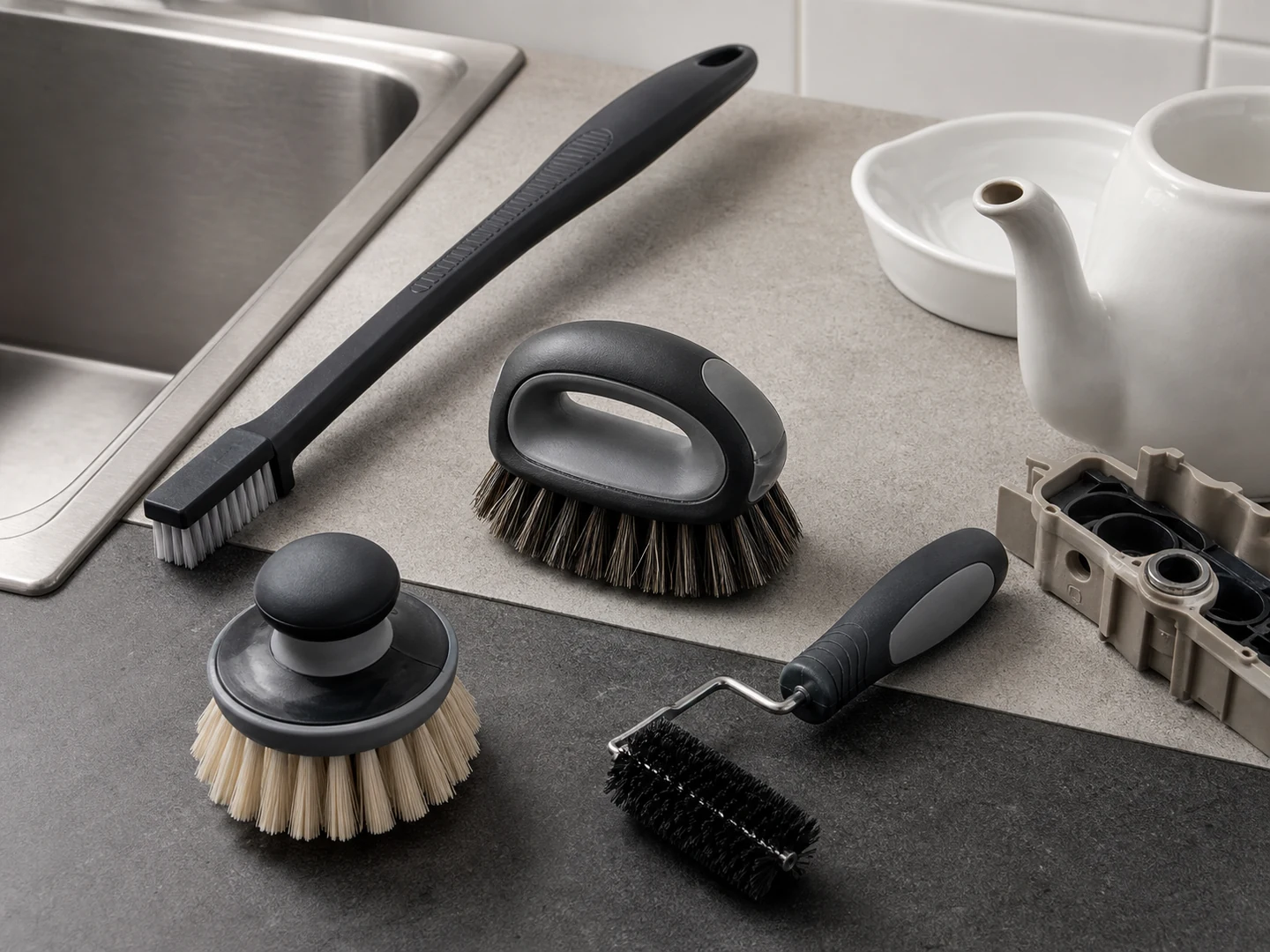
Custom Handheld Detail Brushes
Choose a handheld detail brush when you need direct control in seams, recesses, fittings,…
See how this type is built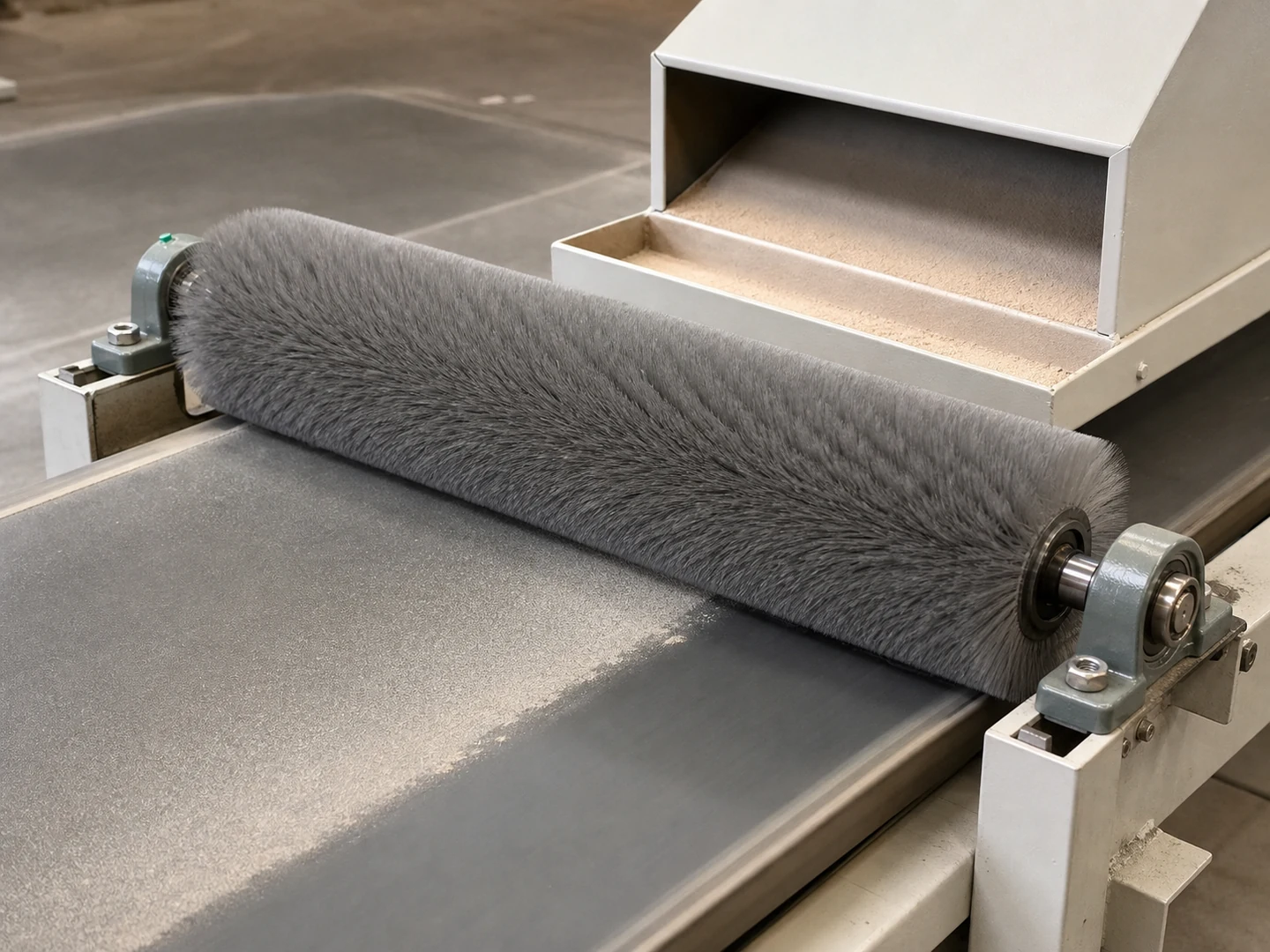
Dust Removal
For Dust Removal, the brush must reach the working area, disturb or collect loose…
See the cleaning job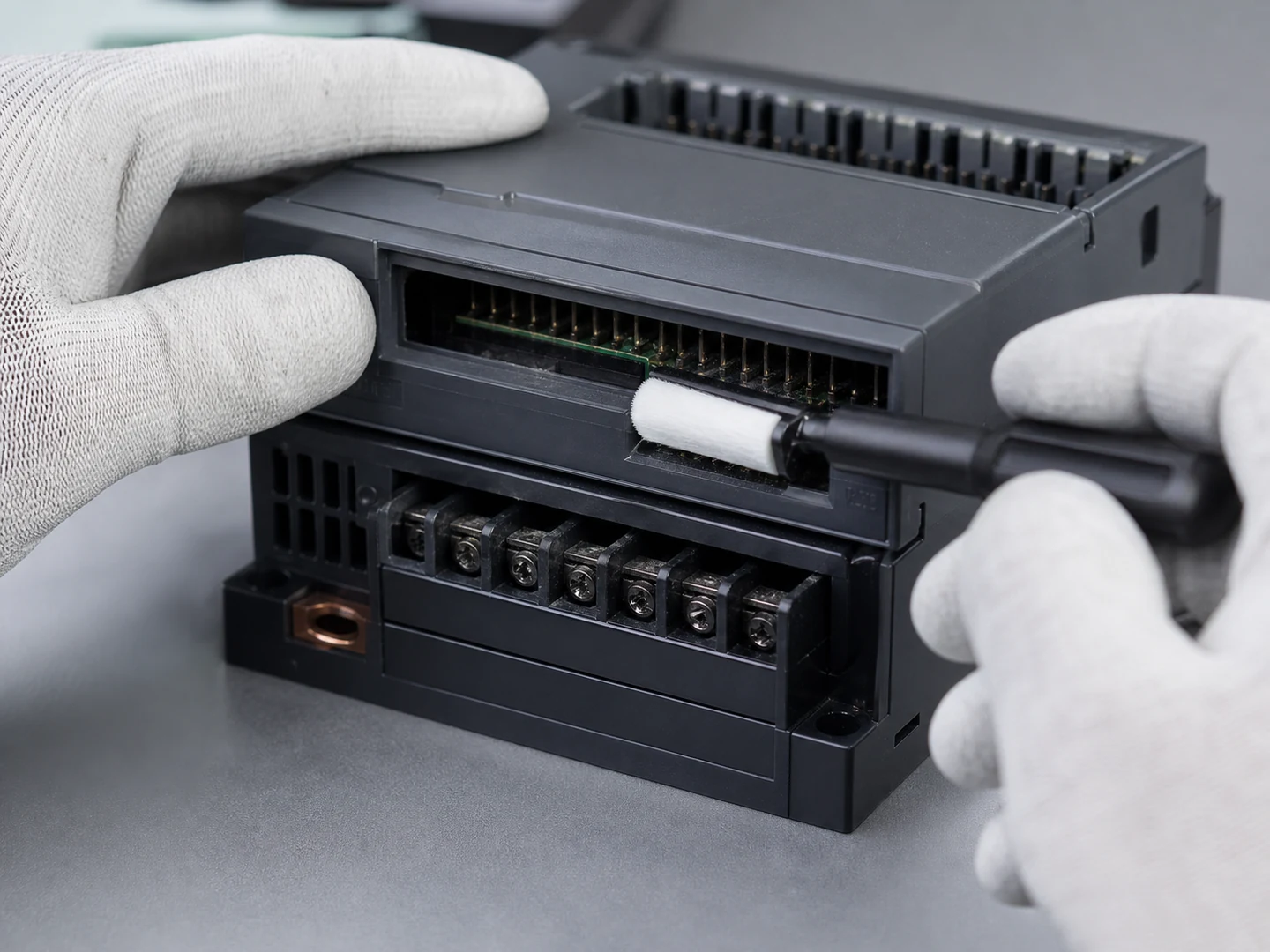
Connector & Slot Cleaning
For Connector & Slot Cleaning, the brush must reach the working area, disturb or…
See the cleaning job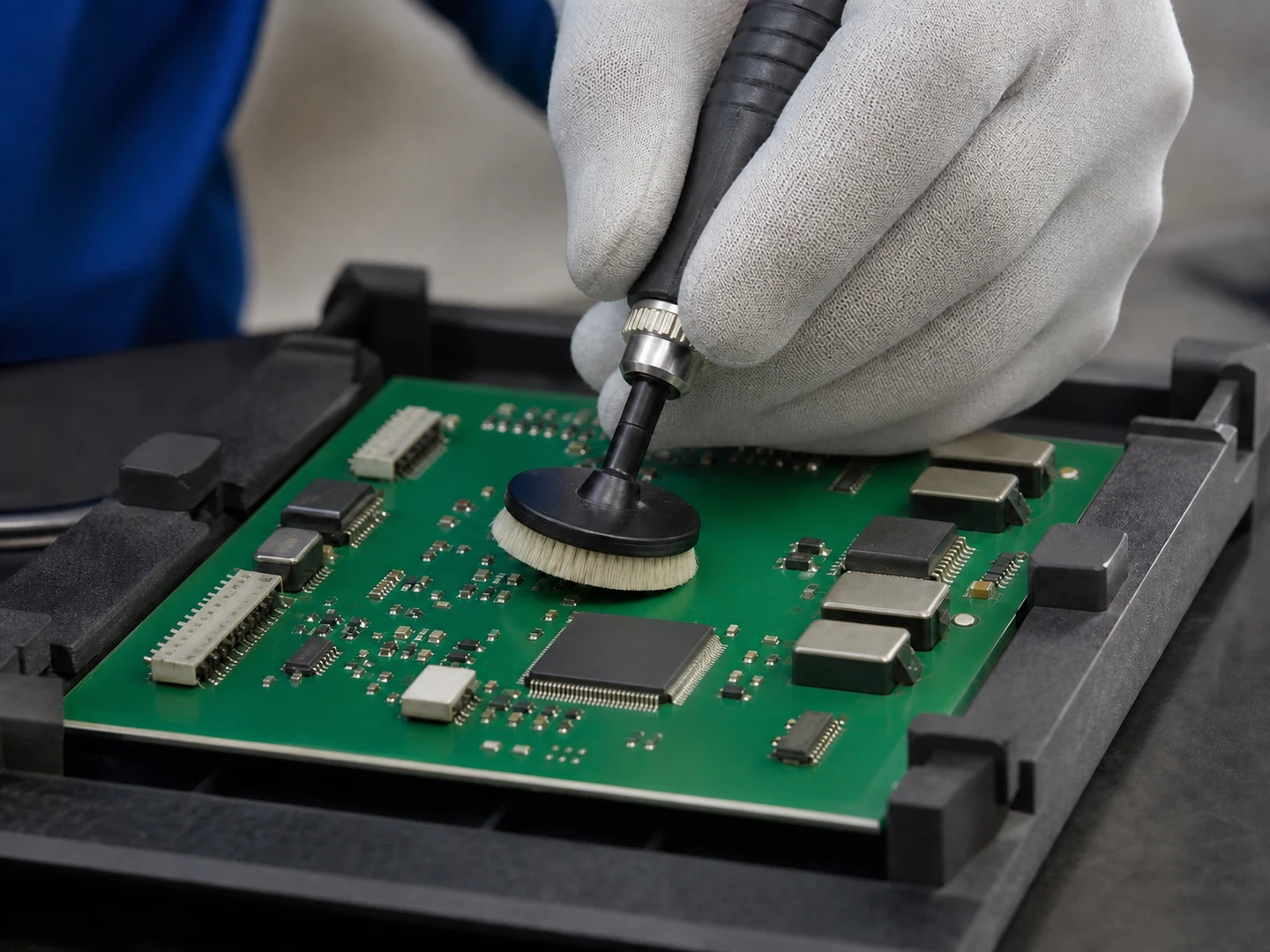
PCB Cleaning
For PCB Cleaning, the brush must reach the working area, disturb or collect flux/weld…
See the cleaning jobCustom Manufacturing RFQ
Discuss This Material
Share the working surface, residue, dimensions, material direction, interface, quantity and drawing or sample photo.
Custom Brush RFQ
Request a Custom Cleaning Brush Quote
Upload a drawing, product photo, or sample photo and provide the core dimensions and cleaning conditions.
“We need a brush to remove wet residue from a stainless steel conveyor, about 800mm wide. The current brush wears quickly. We can send photos.”
“We sell drinkware and need a cleaning brush to include with the product. Quantity around 5,000 pieces.”