
Custom Cleaning Brush
Carbon Fiber Brush
Conductive carbon fiber brush for static-free removal of dust and lint from sensitive surfaces, electronics, and industrial machines.
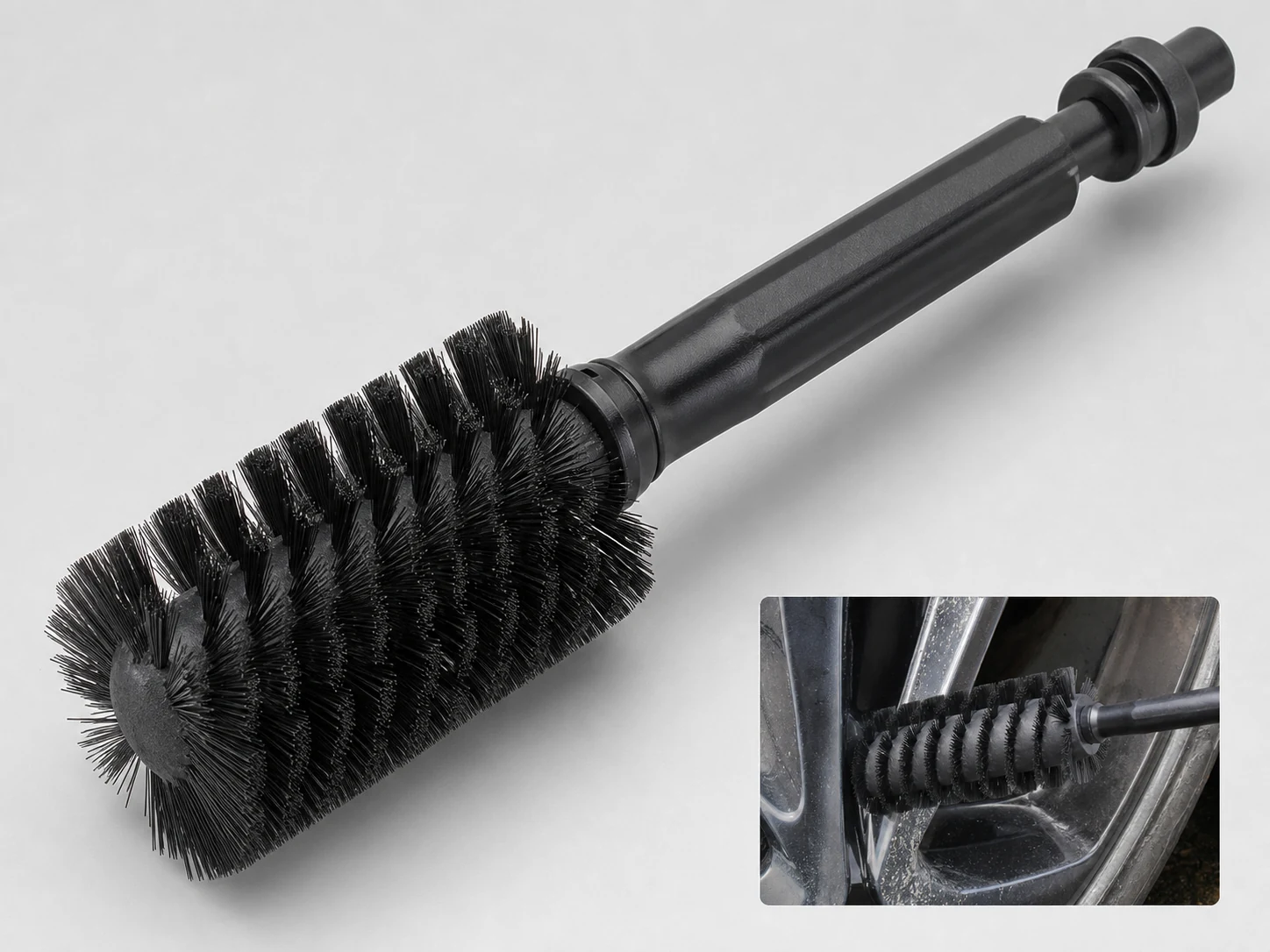
Medium brush
100 pcs
Minimum order
Worked with two hands or on a pole: chimney, gutter and pond-filter brushes, discs, cups and tank brushes.
Production lead time, once the specification is confirmed
- Up to 100 pcsWithin 7 days
- 101–5,000 pcsWithin 14 days
- 5,001–50,000 pcsWithin 21 days
- Over 50,000 pcsConfirmed with your quotation
Peak season can extend these times; the shipping date is confirmed in writing with your quotation. Sampling and shipping are quoted separately.
A conductive carbon fiber brush that removes static-attracted dust, lint, and loose debris from sensitive surfaces without leaving charge, scratches, or residue. Available in hand-held and machine-mount configurations for vinyl record grooves, electronic boards, optical surfaces, and industrial machine cleaning zones.
What can this brush do for you?
Conductive filaments release static-held dust instead of pushing it around
Carbon fiber filaments are intrinsically conductive. When the handle or holder is grounded, the filament tips create a discharge path that neutralizes the surface charge holding the dust in place. Particles lift into the brush and stay there instead of reattaching after the stroke.
Fine filament tips enter narrow features without scratching
Individual carbon fiber filaments are typically around 7 µm in diameter, so they flex into record grooves, between component leads, and across textured machine surfaces without scoring or burnishing the contact area. The tips bend under light pressure and recover their shape for the next pass.
Dry contact leaves no oil, coating, or adhesive behind
Carbon fiber is dry and inert. There are no lubricants, binders, or coatings on the filament surface that could transfer to the part. This matters where downstream printing, coating, assembly, or inspection would reject surface contamination.
A controlled ground path built into the handle or mount
The brush is designed with a continuous conductive path from the filament tips through the handle or holder to the grounding point. A typical reference range of 10²–10⁴ Ω surface resistivity keeps discharge controlled rather than producing a spark or uncontrolled bleed-off.
Active face and trim matched to the actual contact area
Filament length, row spacing, trim angle, and active face width are sized to the record surface, board zone, web width, or machine roller face. One stroke covers the intended contact zone instead of requiring repeated passes with uneven coverage.
What is a Carbon Fiber Brush?
A Carbon Fiber Brush is a cleaning tool built around rows, bundles, or strips of fine conductive carbon fiber filament. The filaments are secured in a conductive or dissipative handle, ferrule, or backing bar, and the brush is either held by an operator or mounted to a machine station so the working face contacts the surface that needs cleaning.
During use, the filament tips mechanically dislodge loose particles while the conductive path bleeds off the static charge that made those particles cling to the surface. The result is a dry cleaning action that removes dust, lint, fibers, and other lightweight debris without the charge buildup that occurs with ordinary non-conductive brushes.
This is not a scrub brush for heavy deposits, grease, scale, or baked-on contamination. It is intended for loose particulate and static control on surfaces where contact must remain gentle, dry, and electrically safe. Grounding is essential for the static-dissipative function; without a proper ground path, the brush only wipes dust from one area to another.
Technical Specifications
The specifications below represent a standard reference configuration. Face dimensions, trim, filament bundle construction, and mounting interface are adjustable to fit the intended surface and machine position.
| Parameter | Value / Options |
|---|---|
| Filament material | PAN-based conductive carbon fiber |
| Filament diameter | 5–12 µm, commonly 7 µm |
| Surface resistivity path | 10²–10⁴ Ω reference range for ESD-safe discharge |
| Handle / holder construction | Conductive aluminum, stainless steel, dissipative polymer, or custom metal ferrule |
| Grounding interface | Ground cord terminal, conductive handle body, or machine holder with grounding lug |
| Trim length | 5–30 mm, selected for groove depth, component clearance, or web contact |
| Active face width | 10–600 mm or custom to part, board, or web width |
| Row / bundle density | Single row, multi-row, full strip, or custom bundle spacing |
| Mounting options | Hand handle, aluminum backing bar, clamp bracket, or custom machine interface |
| Operating condition | Dry particulate removal; solvent exposure and temperature require project-specific construction confirmation |
| Cleaning action | Non-abrasive, flexible contact for delicate surfaces |
| Brush type | Custom Handheld Detail Brushes |
| How it is driven | Hand-guided |
| Cleaning target | vinyl record surface and groove, electronics assembly and inspection, and converting line cleaning |
| Surface or part | grooves, boards, webs, roller, panels, bars, guide rails, and pcb surfaces |
| Residue or debris | dust, fiber, lint, carbon, particles, loose debris, static-attracted dust, and scale |
| Mounting / connection | Ground cord terminal, conductive handle body, or machine holder with grounding lug; Hand handle, aluminum backing bar, clamp bracket, or custom machine interface |
Where does this brush work best?
- Vinyl record surfaces and grooves: dry removal of dust, lint, and static-attracted particles from the groove path and flat areas before playback or storage.
- Electronics assembly and inspection: PCB surfaces, component areas, and inspection stations where static-controlled cleaning prevents recontamination and ESD damage.
- Printing, coating, slitting, and converting lines: web or roller face cleaning ahead of print units, coaters, and laminators to remove lint and airborne dust.
- Optical and film surfaces: lenses, glass panels, display surfaces, and film negatives where static charge attracts dust and contact must be non-scratching.
- Industrial machine surfaces: sensor faces, encoder windows, inspection ports, guide rails, and control panel areas where static holds fine particles after cleaning.
How do I choose the right one?
Match the brush face to the contact zone
Start by identifying what the filaments actually need to touch. For record grooves, use a row-style hand brush with trim length long enough to bottom the groove without dragging heavily on the label or lead-in. For flat boards, webs, or machine components, a wider strip or multi-row face gives more consistent coverage in fewer strokes.
Select density for the debris load
Light dust on an optical surface needs a lower-density filament bundle so the tips can flex and follow the surface. A web line carrying higher lint volume benefits from denser rows and a wider active face. Overly dense packing prevents filament movement and reduces actual tip contact.
Verify the ground path before relying on ESD performance
A carbon fiber brush only dissipates static when the filament-to-ground circuit is continuous. Check resistance from the filament tips to the handle ground terminal or machine grounding lug. The reading should fall within the specified 10²–10⁴ Ω range for controlled discharge. An open or megohm-level reading means the brush is functioning only as a mechanical wiper.
Consider stiffness against the surface
Carbon fiber is stiffer than nylon but finer than most abrasive filaments. For very soft films, lacquered surfaces, or delicate optical coatings, choose finer filament bundles and shorter trim to reduce pressure. For textured industrial surfaces, a longer trim with more filament support can maintain contact without bending flat.
Know when a different brush is the better tool
Carbon fiber brushes remove loose particles and control static, but they are not intended for greasy residue, caked dust, scale, or heavy bonded contamination. Use a stiffer nylon, PBT, or brass brush for visible deposits that need mechanical removal, a wire brush for scale, and a solvent-moistened non-shedding wipe for oils and fingerprints.
Can I customize this brush?
Carbon fiber brushes are normally configured to the surface, machine position, and cleaning motion rather than ordered as a fixed off-the-shelf shape. To define the correct configuration, provide the contact surface dimensions, groove depth or feature profile, part material, target particle type, cleaning motion or machine speed, and the grounding requirement.
We can adjust:
- Filament construction: carbon fiber grade, filament diameter, bundle size, density, and row count
- Trim geometry: length, flat, angled, contoured, or custom-profiled trim to follow grooves, rollers, or stepped surfaces
- Face dimensions: active width, strip length, backing bar size, and overall brush footprint
- Handle or mount: hand handle, conductive aluminum bar, stainless steel holder, clamp bracket, or machine-specific interface
- Grounding: ground cord, lug position, terminal type, or integrated conductive path to the machine frame
- Identification: color coding, pad print, laser marking, or private-label marking
- Packaging: bulk, individual bag, kit, or project-specific packing configuration
If your project requires documentation, material declarations, inspection data, or third-party testing support, we can assist with those requirements during the customization process.
When is a carbon fiber brush worn out rather than just dirty?
How can I verify the brush is actually dissipating static?
Use a multimeter set to resistance. Place one probe on the filament tips and the other on the handle ground terminal or machine grounding lug. The reading should fall within the 10²–10⁴ Ω reference range. If the reading is open or above 10⁶ Ω, check the ferrule, handle, and ground connection before using the brush in an ESD-sensitive area.
Will a carbon fiber brush remove fingerprints, oils, or sticky residue?
No. Carbon fiber brushes remove dry dust, lint, and loose particles. Oily or sticky contamination will smear under the brush and may load the filaments. Clean those deposits first with a compatible solvent wipe, then use the carbon fiber brush for residual dry particulate and static control.
Can carbon fiber filaments shed onto the surface?
Trimmed carbon fiber can release micro-filaments as the brush wears. For optical, cleanroom, or coating-critical processes, select bonded or encapsulated row construction and validate the brush on a sample surface. If fiber release is unacceptable, a conductive synthetic filament brush may be the safer alternative.
What should I inspect during routine maintenance?
Check the filament rows for flattened or matted bundles, broken filament ends, uneven trim, and visible wear patterns. Verify ground resistance at the same time. If the brush no longer springs back after contact or the resistance drifts outside the specified range, replace it before it causes recontamination or an ESD failure.
Can one carbon fiber brush be used for both record grooves and machine web cleaning?
Usually not in a single configuration. A record brush needs short, low-density rows that follow groove curvature, while a web or machine brush needs a wide backing and trim optimized for continuous linear contact. Separate geometries deliver better results for each job.
Is the brush suitable for wet or solvent cleaning?
Carbon fiber itself tolerates many solvents, but the handle, adhesive, and ferrule may not, and wet filaments lose the dry dust-lifting behavior that makes the brush effective. If the process involves solvents or moisture, confirm the complete construction against the chemical and validate the configuration before production use.
Guides that go deeper on this
Carbon Fiber Brush: Material and Size for Static-Sensitive Parts
Read this guideGuideConductive Nylon vs Carbon Fiber Brush: Which Fits Best?
Read this guideGuideHow to Choose Anti-Static Carbon Fiber Brush
Read this guideGuideHow to Choose Carbon Fiber Brush for PCB Dust Removal
Read this guideGuideTurbine Carbon Deposit Cleaning Brushes for Marine Engines
Read this guideGuideNatural Fiber vs Synthetic Brush Filament
Read this guideGuideTire Lubricant Swab Head: Cotton or Synthetic Fiber?
Read this guideCustom Manufacturing RFQ
Describe Your Application
Please share the brush dimensions, working area, residue type, material direction, quantity, and a drawing or photo for quotation.
Drawing or photo optional — it speeds things up, it does not gate the enquiry.
Custom Brush RFQ
Send Your Brush Project
Upload a drawing, product photo, or sample photo and provide the core dimensions and cleaning conditions.
“We need a brush to remove wet residue from a stainless steel conveyor, about 800mm wide. The current brush wears quickly. We can send photos.”
“We sell drinkware and need a cleaning brush to include with the product. Quantity around 5,000 pieces.”