What Is an Air Conditioner Cleaning Brush?
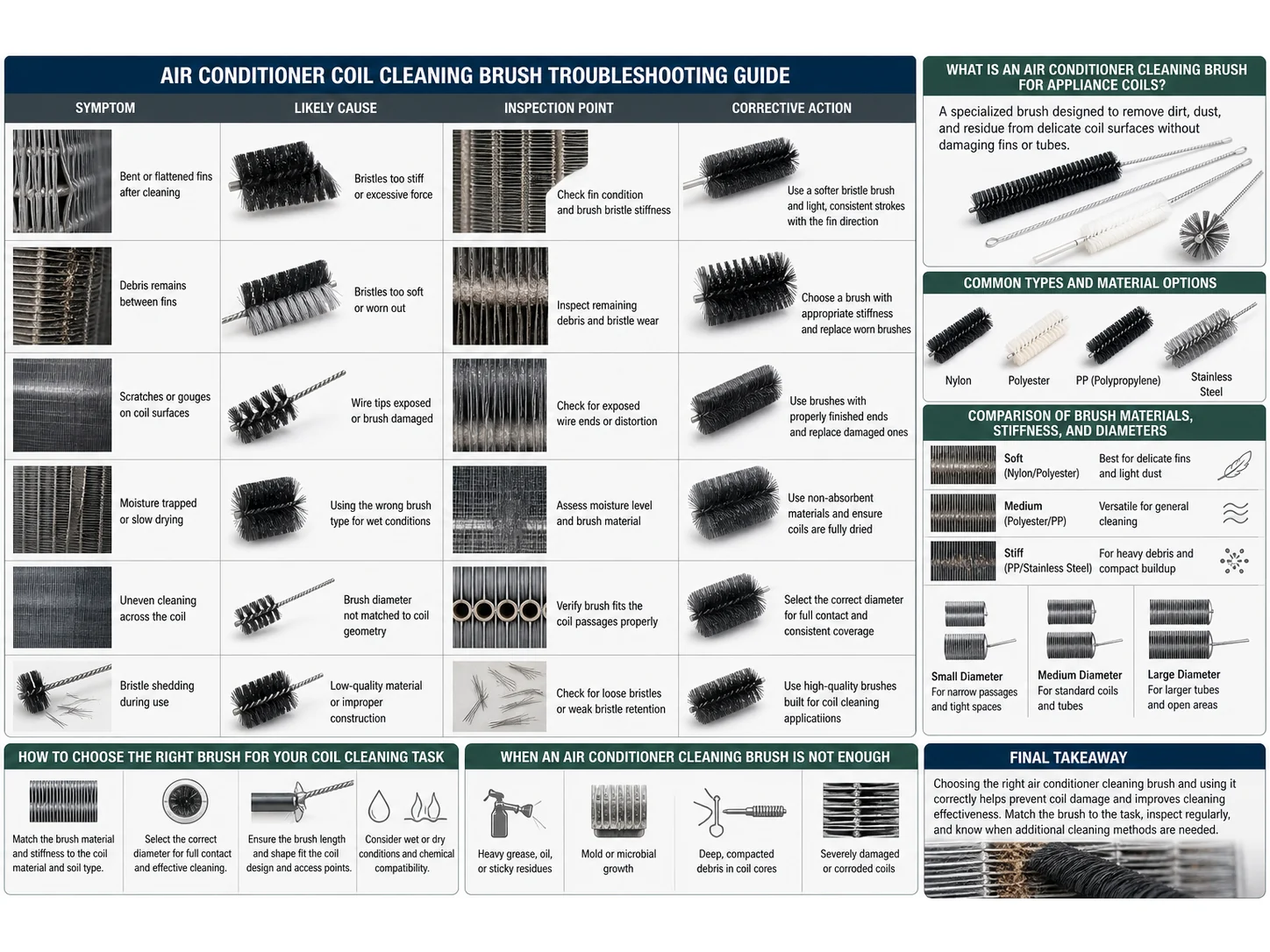
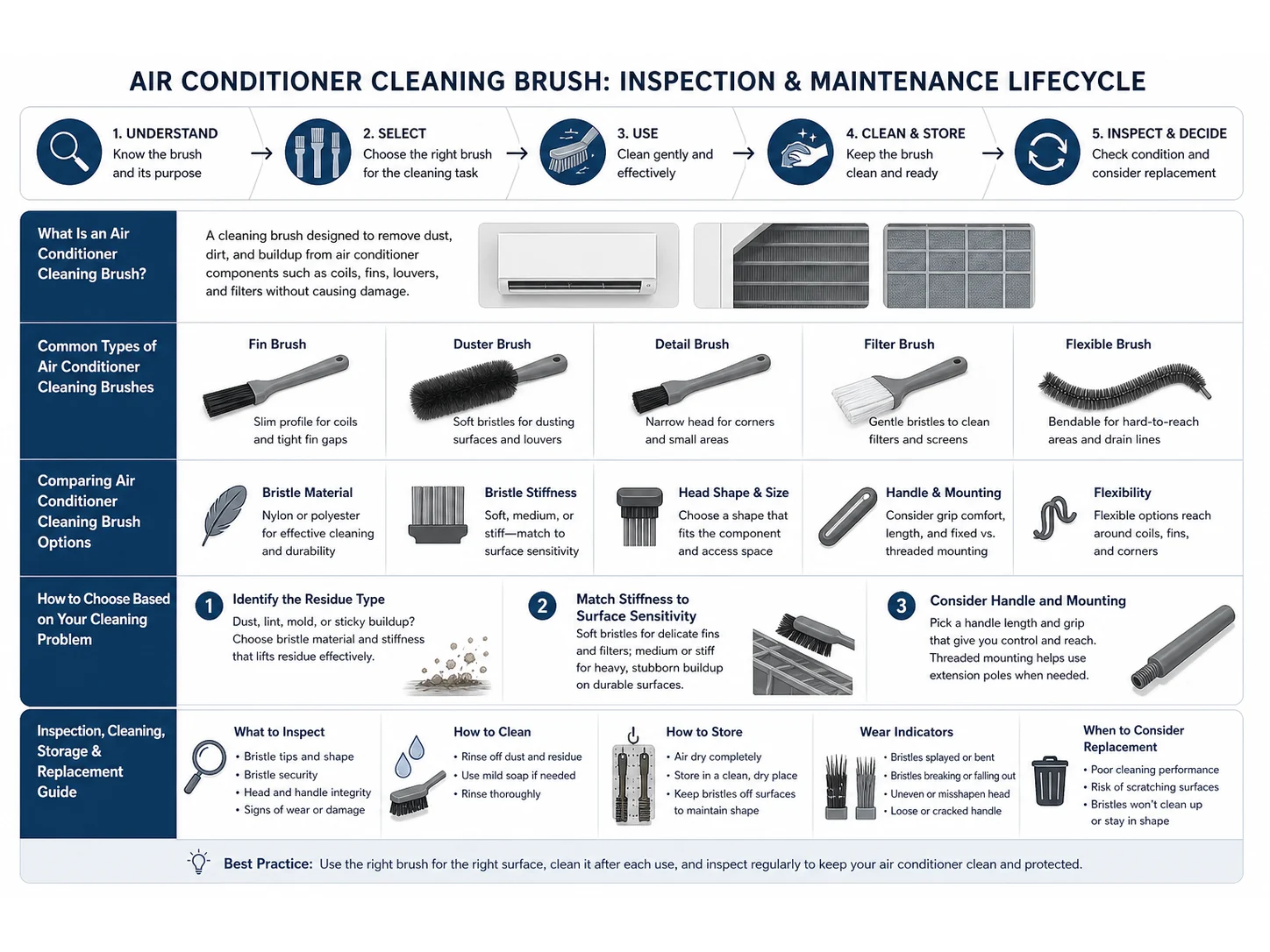
An air conditioner cleaning brush is a hand tool with bristles engineered to clean the heat-exchange surfaces, air pathways, and condensate drains of air conditioning equipment. Unlike generic scrub brushes, a proper AC brush balances stiffness, material, and shape to clean effectively without damaging fragile fins or spreading contaminants. In home maintenance kits, these brushes are used for seasonal tune-ups, filter deep-cleaning, and clearing minor drain clogs.
Common Types of Air Conditioner Cleaning Brushes
For fire-safety language, this article uses USFA — Heating Fire Safety as the public-safety source.
For combustion-appliance and chimney-adjacent risk language, CPSC — Carbon Monoxide Information Center is used as a safety reference.
For fire-safety language, this article uses USFA — Clothes Dryer Fire Safety Flyer as the public-safety source.
For roof-access and work-at-height cautions, the supporting public-safety reference is HSE — Safe Working on Roofs.
For the safety point in this section, the relevant OSHA reference is OSHA — 1910.23 Ladders.
For the environmental or chemical-safety point in this section, the supporting reference is EPA — Nonpoint Source: Urban Areas.
Home maintenance kits typically include one or more of the following brush types. Each is designed for a specific cleaning interface and residue problem.
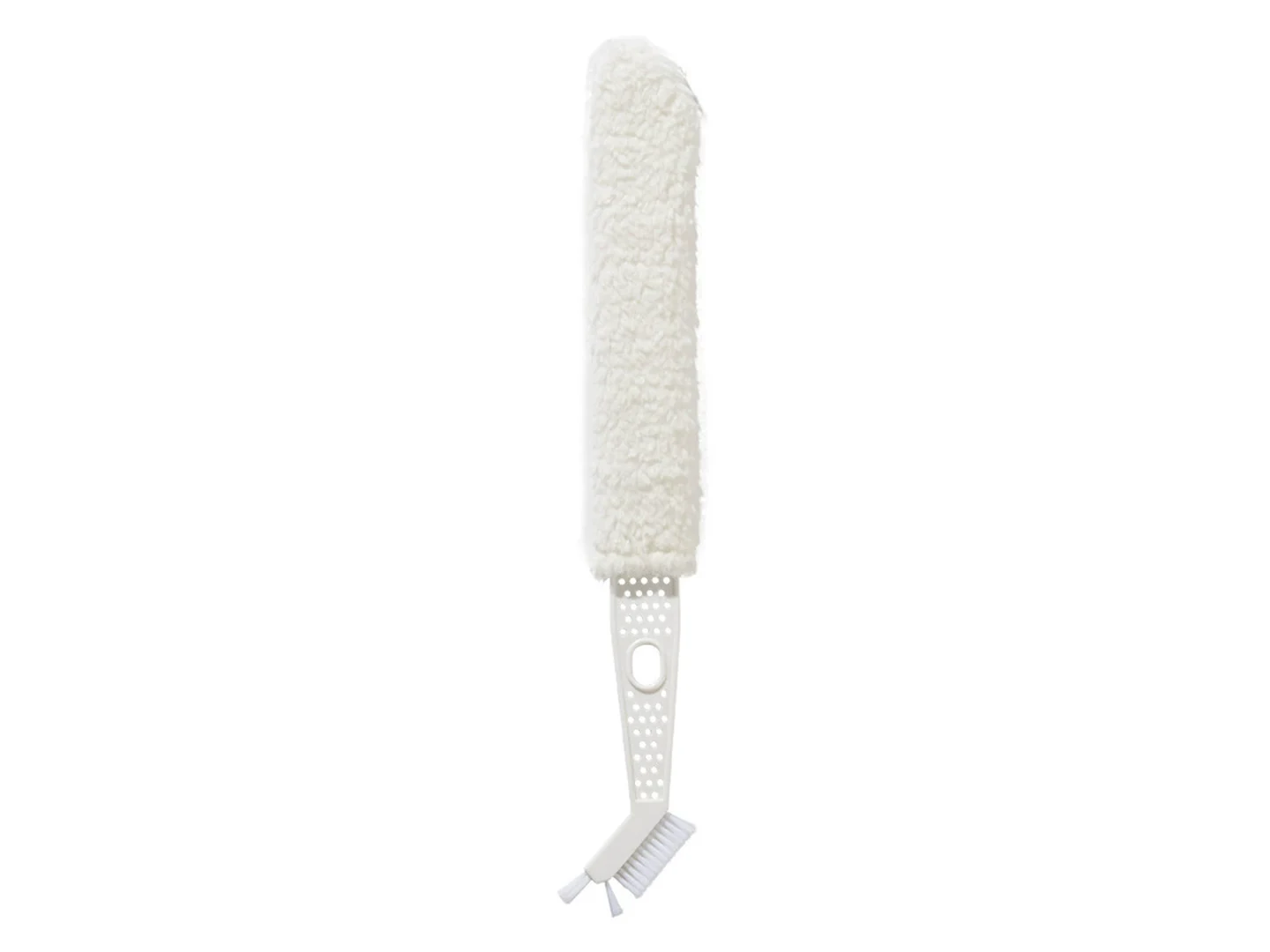
- Fin Cleaning Brush (Comb-Style) – Features soft, closely spaced bristles or a combination of bristles and a fin-straightening comb. Used to dust off aluminum condenser and evaporator fins without bending them.
- Coil Cleaning Brush – Often has longer, stiff-yet-flexible bristles to reach deep between coil rows. May use nylon, polyester, or animal-hair bristles to agitate lodged dirt.
- Filter Brush – A flat or cylindrical brush with medium-soft bristles for scrubbing washable air filters. Must not tear the filter media.
- Drain Line Brush – A narrow, flexible brush (sometimes with a long, bendable handle) used to clear slime and blockages in AC condensate drain pipes. An AC drain pipe cleaning brush is a common sub-type.
- Multi-Purpose Detail Brush – Small, angled brushes for louvers, vents, and tight housing corners. Often included in kits for general dusting.
Comparing Air Conditioner Cleaning Brush Options
The table below compares key attributes that affect cleaning performance and surface safety. Use it to narrow down your options based on the part you’re cleaning and the type of residue.
| Brush Type | Typical Bristle Material | Stiffness Level | Handle / Mounting | Best for Residue | Surface Sensitivity |
|---|---|---|---|---|---|
| Fin Cleaning Brush | Polyester, nylon, flagged poly | Soft | Short grip, sometimes comb-backed | Light dust, pollen | Very high – avoid bending fins |
| Coil Cleaning Brush | Nylon, horsehair, Tampico | Medium to stiff (but flexible) | Long handle or ergonomic grip | Compacted dirt, light grease | Moderate – fins can still bend |
| Filter Brush | Nylon, polyester | Soft to medium | Handheld, often wide | Lint, dust, light mold | High – filter media can tear |
| Drain Line Brush | Nylon, polypropylene, stainless steel (for tough clogs) | Medium to stiff | Long flexible shaft, often manual or drill-attachable | Slime, algae, minor scale | Moderate – PVC drain walls are durable |
| Multi-Purpose Detail Brush | Nylon, natural fiber blends | Soft to medium | Pen-shaped, angled, or toothbrush-style | Dust, cobwebs, surface dirt | High – plastic louvers can scratch |
How to Choose Based on Your Cleaning Problem
Start with the actual residue and the part you need to clean, then work through the following decision factors.
1. Identify the Residue Type
- Light dust, pollen, or pet hair on fins or filters: A soft polyester fin brush or a gentle filter brush works best.
- Compacted dirt between coil rows: Choose a coil brush with medium stiffness and flagged bristles to hold cleaning solution.
- Oily or smoke-laden buildup: Look for a brush with chemical-resistant bristles (nylon or polypropylene) that won’t degrade with coil cleaners.
- Drain slime or algae: A flexible drain line brush with a long reach and medium-stiff bristles clears bio-growth without damaging PVC.
2. Match Stiffness to Surface Sensitivity
Aluminum fins are incredibly delicate. A wire brush—even a light-gauge one—will bend or destroy them. Stick to flagged poly or soft nylon for fin cleaning. For drain lines, somewhat stiffer bristles (or even a stainless steel version for heavy scale) can be used because the pipe walls are sturdy, but always confirm compatibility with your drain material.
3. Consider Handle and Mounting
- For coil cleaning, a long handle or angled grip helps reach deep into the unit without forcing your hand into tight spaces.
- Drain line brushes often come with a flexible shaft that can be inserted several feet and turned by hand or with a cordless drill on low speed.
- For filters, a wide, flat brush with a comfortable grip makes quick work of hand-washing.
4. Evaluate Wet or Chemical Exposure
Many coil cleaning sprays and foams are alkaline or acidic. Nylon and polypropylene bristles generally resist these chemicals, but natural fibers like horsehair or tampico may degrade faster. Check the brush’s chemical compatibility if you plan to use commercial coil cleaners.
5. Hygiene and Maintenance Frequency
If you clean your AC frequently (monthly or quarterly), prioritize brushes that are easy to sanitize. Synthetic bristles can be rinsed with mild bleach solutions, while natural fiber brushes may retain moisture and promote microbial growth if not dried thoroughly.
Setup, Usage, and Placement Factors
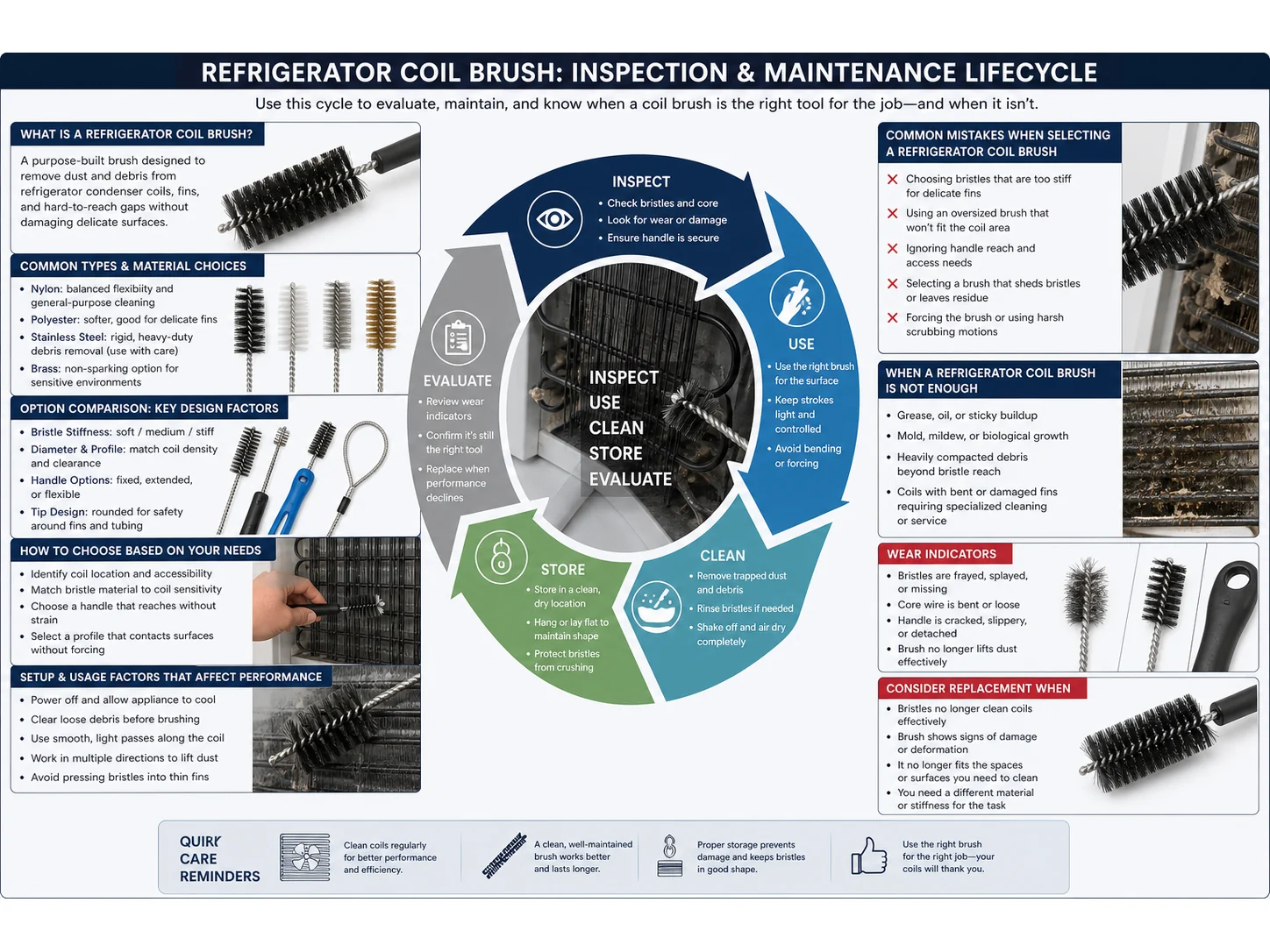
Even the best air conditioner cleaning brush will underperform if used incorrectly. Always turn off power to the unit before cleaning. Work in the direction of fin alignment—never across the fins. For drain lines, insert the brush slowly while rotating to avoid pushing the clog deeper. After use, rinse and dry brushes completely; moisture left on bristles can harbor mold that transfers back to the AC during the next cleaning.
Common Mistakes When Choosing an Air Conditioner Cleaning Brush
- Using a wire brush on condenser or evaporator fins. Even “soft” wire brushes can irreversibly damage aluminum, reducing heat exchange and causing air leaks.
- Choosing stiffness by feel alone. A brush that feels soft to your hand might still be too stiff for fragile fins. Look for “fin-safe” or “flagged” bristle descriptions.
- Ignoring handle length. A short handle on a coil brush forces you to lean into the unit, increasing the risk of bumping and bending components.
- One brush for everything. A brush that excels at scrubbing washable filters is unlikely to clean deep between coil rows effectively. Kits with multiple brush types address different cleaning interfaces.
- Skipping chemical compatibility checks. Some bristle materials swell, soften, or shed when exposed to strong alkaline cleaners, leaving residues that can clog fins.
- Choosing the lowest-cost option without assessing build quality. Loose ferrules, shedding bristles, and weak handle connections lead to early failure and potential contamination inside the AC.
When an Air Conditioner Cleaning Brush Is Not Enough
A brush alone cannot remove heavy mold colonization deep inside evaporator coils or ductwork. In such cases, professional bioremediation, coil pulling, or foaming disinfectant applications are required. If fins are severely crushed or corroded, a brush cannot restore them—fin straightening tools or coil replacement may be necessary. Additionally, if you need a brush for a non-standard equipment interface (e.g., an unusual coil depth or a drain line with multiple sharp bends), off-the-shelf brushes may not fit. In those situations, a custom brush design or a sample test with a supplier drawing review ensures the right geometry and bristle material before purchasing.
Final Takeaway
Choosing the right air conditioner cleaning brush for your home maintenance kit starts with the cleaning problem, not the product. Match bristle material and stiffness to your residue type and surface sensitivity, ensure handle length and mounting fit your equipment access, and verify chemical resistance if you use coil cleaners. Test on a small hidden area first. By treating the brush as a task-specific tool rather than a generic accessory, you protect your AC’s components and maintain efficient, healthy air flow.
Frequently Asked Questions
Can I use the same brush for my AC coils and my washable filter?
It’s not ideal. Coil brushes often have deeper, stiffer bristles that could tear filter media, while filter brushes may not reach far enough between coil rows. A dedicated kit with multiple brushes gives more reliable results without damaging either part.
What bristle material is safest for aluminum AC fins?
Flagged polyester or soft flagged nylon is the safest. The split bristle tips pick up dust without being aggressive enough to bend fins. Avoid any metal wire, even if labeled “soft.”
How do I know what stiffness I need for a coil cleaning brush?
If you’re dealing with fluffy dust on exposed fins, choose a brush with soft, flagged bristles. For dirt packed deeper between coil layers, a medium-flex brush that springs back when gently pressed against your palm will provide more scrubbing power while still being gentle enough for fins.
Can a drain line brush be used with a drill?
Many flexible drain line brushes are designed for low-speed drill use, but always check the product specifications. High RPMs can whip the brush and damage the pipe or cause personal injury. Hand-rotation is safer for small residential drain lines.
How long should the handle be for cleaning a typical split-system indoor unit?
For most residential wall-mounted or ductless indoor units, a handle length of 6 to 12 inches is sufficient. For deep reach into packaged or central air handler coils, look for handles up to 18 inches or a flexible extension.
What’s the difference between an “AC drain pipe cleaning brush” and a regular drain brush?
The term “AC drain pipe cleaning brush” usually indicates a smaller diameter (often ¼” to ½”) and a flexible but sturdy shaft designed specifically for the narrow, curving condensate drain lines of air conditioners. Standard plumbing drain brushes may be too wide or too stiff.
How do I prevent my AC brush from growing mold between uses?
After each use, rinse the brush with clean water and, if needed, a mild disinfectant solution. Shake out excess moisture and leave it to dry completely in a ventilated area before storing. Synthetic bristles dry faster and resist microbial growth better than natural fibers.
When should I replace an air conditioner cleaning brush?
Replace it when bristles become permanently bent, heavily matted, or start shedding. A worn brush cleans poorly and may leave bristles inside the AC unit where they could clog drain lines or restrict air flow.