
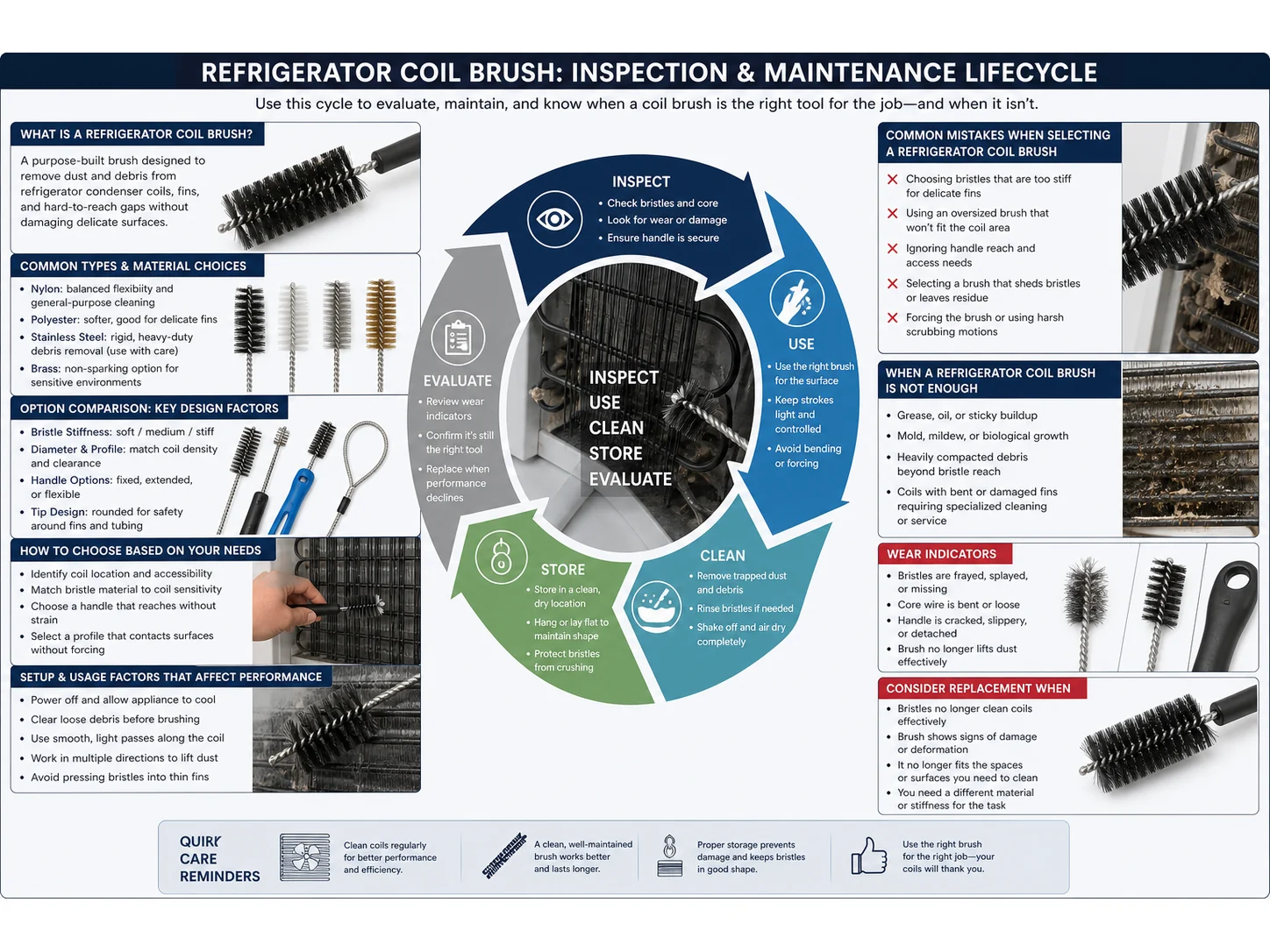
What Is a Refrigerator Coil Brush?
A refrigerator coil brush is a specialized cleaning brush with a slim profile, a long handle (usually 24 to 36 inches), and soft but firm bristles. Its purpose is to safely dislodge debris from tightly spaced condenser coils without scratching or bending the delicate aluminum fins. While many people improvise with a vacuum crevice tool or a paintbrush, a purpose-made coil brush reaches farther, conforms to narrow gaps, and reduces the risk of damage during routine maintenance.
Common Types and Material Choices
Refrigerator coil brushes vary mainly by bristle material, stiffness, diameter, handle length, and attachment style. Understanding these differences helps you match the brush to your cleaning environment.
- Bristle material: Nylon, polyester, polypropylene, horsehair, or flagged-tip synthetics. Nylon is common for dry dust; polyester handles mild chemicals better; soft natural fibers are best for hyper-sensitive surfaces.
- Stiffness: Soft for aluminum fins, medium for steel coils, firm for heavily caked-on grime on durable surfaces.
- Handle type: Straight fixed handle, flexible gooseneck, bent tip, or threaded end for extension.
- Mounting/interface: Molded one-piece, screw-on handle, or quick-connect for interchangeable heads.
Option Comparison: Key Design Factors
| Factor | Option A – Economy Nylon Straight Brush | Option B – Medium-Duty Polyester with Flexible Handle | Option C – Premium Horsehair/Flagged Synthetics |
|---|---|---|---|
| Bristle Stiffness | Medium-soft | Medium | Soft to very soft |
| Typical Diameter | 1.5–2 inches | 1–2 inches | 0.5–1.5 inches |
| Handle/Core | Plastic straight rod | Flexible wire core with foam grip | Twisted wire core with ergonomic handle |
| Mounting | Molded one-piece | Molded or screw-on | Often quick-connect for changeable heads |
| Best For | General household dust removal on accessible coils | Tight spaces, pet hair, moderate residue | Delicate fins, food-grade environments, frequent cleaning |
How to Choose Based on Your Home Maintenance Needs
Picking the right coil brush isn’t just about size; it’s about matching the tool to the residue type, surface sensitivity, equipment interface, and cleaning routine. Use these decision points:
- Residue type: Light household dust needs only soft nylon; oily kitchen residue or sticky pet dander may require a slightly stiffer bristle and chemical compatibility.
- Surface sensitivity: Thin aluminum condenser fins (common on modern refrigerators) bend easily. Stick to soft flagged bristles or horsehair. Brush stiffness above “medium” often does more harm than good here.
- Equipment interface: Measure the gap between coil rows and the distance from the access panel to the coils. The brush diameter must clear those gaps without forcing. A flexible handle helps navigate around tubing and brackets.
- Wet or chemical exposure: If you plan to dip the brush in a mild detergent solution, avoid natural fibers that hold moisture and degrade. Polyester or polypropylene resists water and mild cleaners better.
- Hygiene expectations: In homes with allergy concerns or for use in a kitchen environment, choose a brush that can be rinsed, sanitized, and dried quickly. Flagged tips trap less debris and are easier to clean.
- Maintenance frequency: For quarterly cleaning, an economy brush works. For monthly or commercial-level cycles, invest in a durable, quick-connect system with replaceable heads.
- Custom size requirements: Standard 24–36 inch lengths cover most home refrigerators. If you have an unusually deep unit, consider a brush with a threaded end for adding extensions, but avoid stacking multiple extensions if they become flimsy.
Setup and Usage Factors That Affect Performance
Beyond the brush itself, a few real-world conditions change how well a coil brush works in a maintenance kit:
- Access clearance: If the refrigerator is built in or has a tight toe-kick, a straight handle may not work. A flexible or bent-neck brush allows you to clean without pulling the unit out every time.
- Static buildup: Dry synthetic bristles can create static electricity, making dust cling to the brush. A quick spray with a static dissipator or slightly dampening the bristles helps, but only if the core material isn’t water-sensitive.
- Combination with vacuum: Using the brush to loosen debris while a vacuum hose captures airborne dust is the most effective method. Choose a brush with a handle that lets you maneuver one hand near the vacuum nozzle safely.
Common Mistakes When Selecting a Refrigerator Coil Brush
- Choosing stiffness over surface safety: Many people grab a wire brush or an old BBQ brush. Metal bristles scratch and bend fins, leading to reduced heat dissipation and possible refrigerant leaks.
- Ignoring handle length: A short, stubby brush forces you to reach deep, increasing the chance of cutting your arm on sharp coil edges. Too long, and you lose control.
- Using the wrong diameter: A brush that’s too thick can’t get between coil rows; too thin and it merely tickles the surface without dislodging compacted lint.
- Skipping chemical compatibility: Some degreasers degrade nylon bristles or soften glues that hold the brush together. Always verify material resistance if cleaning solutions will be used.
- One-brush-for-all mindset: A refrigerator coil brush is not a bottle brush, not a dryer vent brush, and certainly not a chimney sweep. Using it on the wrong surface dulls the bristles and may spread contamination.
When a Refrigerator Coil Brush Is the Wrong Choice
A dedicated coil brush excels at routine dust and hair removal, but it has clear limits. Recognize when a different approach or professional input is safer and more effective:
- Heavily impacted coils: If coils are matted with years of greasy dirt, a brush alone won’t do the job. Foaming coil cleaners and a wet wipe-down are needed first; the brush returns as a finishing tool.
- Deeply recessed or “sealed system” coils: Many newer refrigerators hide coils behind panels that require a technician to access safely. No brush can clean what you can’t reach without voiding a warranty.
- Mold or biofilm growth: If dark, musty growth is present, a brush may spread spores. A professional cleaning with antimicrobial treatment and a HEPA vacuum is the right call.
- Commercial-grade or temperature-critical units: Walk-in coolers, scientific fridges, or units with microchannel coils have specific cleaning protocols. Here, a simple consumer coil brush may not meet sanitation or surface-temp requirements—a supplier drawing review or sample test may be necessary to avoid damage.
- When a custom brush is needed: Unusual coil spacing, extreme temperatures, or a requirement for stainless steel core and FDA-approved bristles means off-the-shelf won’t work. In these cases, a maintenance kit should include a tailored solution based on an engineer’s drawing review.
Final Takeaway
A refrigerator coil brush is the right choice for a home maintenance kit when the coils are accessible, the residue is primarily dry and loose, and the cleaning frequency is regular enough to prevent extreme buildup. Select a soft or medium nonscratching bristle, a flexible handle that reaches without forcing, and a material that holds up to your cleaning habits. If coils are heavily impacted, hidden, or subject to sanitary standards beyond standard household cleaning, step up to a more comprehensive solution or call a qualified technician.
Frequently Asked Questions
Can I use a refrigerator coil brush on other appliances?
Yes, in many cases. The same brush can clean behind baseboard heaters, inside air conditioner grilles, around dryer lint filters, or in tight crevices of electronic equipment cabinets. Just make sure the bristles are clean and not transferring grease or metal particles to a new surface.
How do I know if my brush is too stiff for refrigerator coils?
Press the bristles gently against the skin of your inner forearm. If you feel a scratching sensation or the bristles don’t splay easily, it is likely too stiff for thin aluminum fins. Stick with flagged (split) tips or natural fibers for delicate coil surfaces.
Should I wet the brush or use it dry?
For most routine cleaning, use it dry alongside a vacuum to capture dislodged dust. If using a coil cleaner spray, check the brush material’s chemical tolerance. Dampen the brush slightly, but never saturate it—water trapped in the core can rust internal wire structures and lead to handle failure.
What’s the difference between a refrigerator coil brush and a test tube brush?
Although they can look similar, a test tube brush is typically smaller, has a twisted wire core, and stiffer bristles designed for scrubbing glassware. A coil brush is longer, often has a plastic or coated core, and uses softer bristles to protect fragile fins. Using a test tube brush could easily damage condenser coils.
Can a coil brush replace a vacuum cleaner attachment?
It’s best used in combination. A brush loosens debris that a vacuum might not pull out of tight coil gaps. A vacuum alone may not agitate sufficiently; a brush alone clouds dust into the room. Together they provide a thorough clean with less mess.
How often should I replace a refrigerator coil brush?
In a typical home maintenance kit, replace it when bristles become permanently bent, flattened, or frayed—usually after one to two years of quarterly use. If the brush is used with harsh chemicals or on very rough surfaces, it may wear faster. A worn brush loses its cleaning effectiveness and can no longer reach deep into coil fins.
Are there any safety concerns with using a coil brush?
Unplug the refrigerator before cleaning to avoid electric shock from the fan or wiring. Be mindful of sharp metal edges on coil tubing and wear cut-resistant gloves if needed. Never insert a brush with a metal core into live electrical panels or near exposed wiring.
Can I use a refrigerator coil brush for BBQ cleaning?
It’s not recommended. A coil brush lacks the stiffness and scraping ability needed for grill grates, and the soft bristles can melt if they contact a hot surface. Use a proper BBQ cleaning wire brush or a grill scraper for that job.
Technical References
- U.S. Department of Energy — Air Conditioner Maintenance
- EPA — Should You Have the Air Ducts in Your Home Cleaned
- EPA — Particulate Matter Basics
- OSHA — 1910.147 Control of Hazardous Energy
- EPA — Mold Cleanup in Your Home
- NIST — Metric SI
Which bristle material fits this job — Nylon PA, Horsehair or AISI 304 Stainless Steel Wire?
| Material | Continuous temperature (°C) | Peak temperature (°C) | Water absorption | Hardness |
|---|---|---|---|---|
| Nylon PA | 93 | 121 | 0.3–9% by PA grade and conditioning | Medium to firm; filament diameter and trim length control bending force. |
| Horsehair | 60–80 | 100–120 | 8–15% | — |
| AISI 304 Stainless Steel Wire | 400 | 500 | 0% | Rockwell B 70–95 depending on temper and cold work |
| Conductive Nylon | 80–110 | 130–160 | 0.5–2.5% | Shore D 75–88 |
| PBT | 120–140 | 160–180 | 0.05–0.20% | Shore D 80–90 |
Figures as published by Brushtec / DuPont; Alleima; Perlon. Confirm the exact grade against the supplier datasheet before ordering.
What should replace Handheld Detail Brushes for refrigerator coil brush?
- Handheld Detail Brushes — Handheld detail brushes cover general precision cleaning; auto-detailing brushes impose tighter controls for painted, polished, leather, display, and trim surfaces.
- Nylon PA — Compare Nylon PA with PP, PBT, PET. Change material when wet stiffness, temperature, chemical resistance, conductivity, particle shedding, or surface marking becomes the limiting factor.
- Horsehair — Compare Horsehair with Boar bristle, goat hair, microfiber. Change material when wet stiffness, temperature, chemical resistance, conductivity, particle shedding, or surface marking becomes the limiting factor.
- AISI 304 Stainless Steel Wire — Use AISI 316 stainless steel wire for chloride, marine, dairy, beverage, chemical washdown, or higher pitting-resistance requirements. Use carbon steel for dry aggressive cutting and brass or abrasive nylon for lower marking risk.