
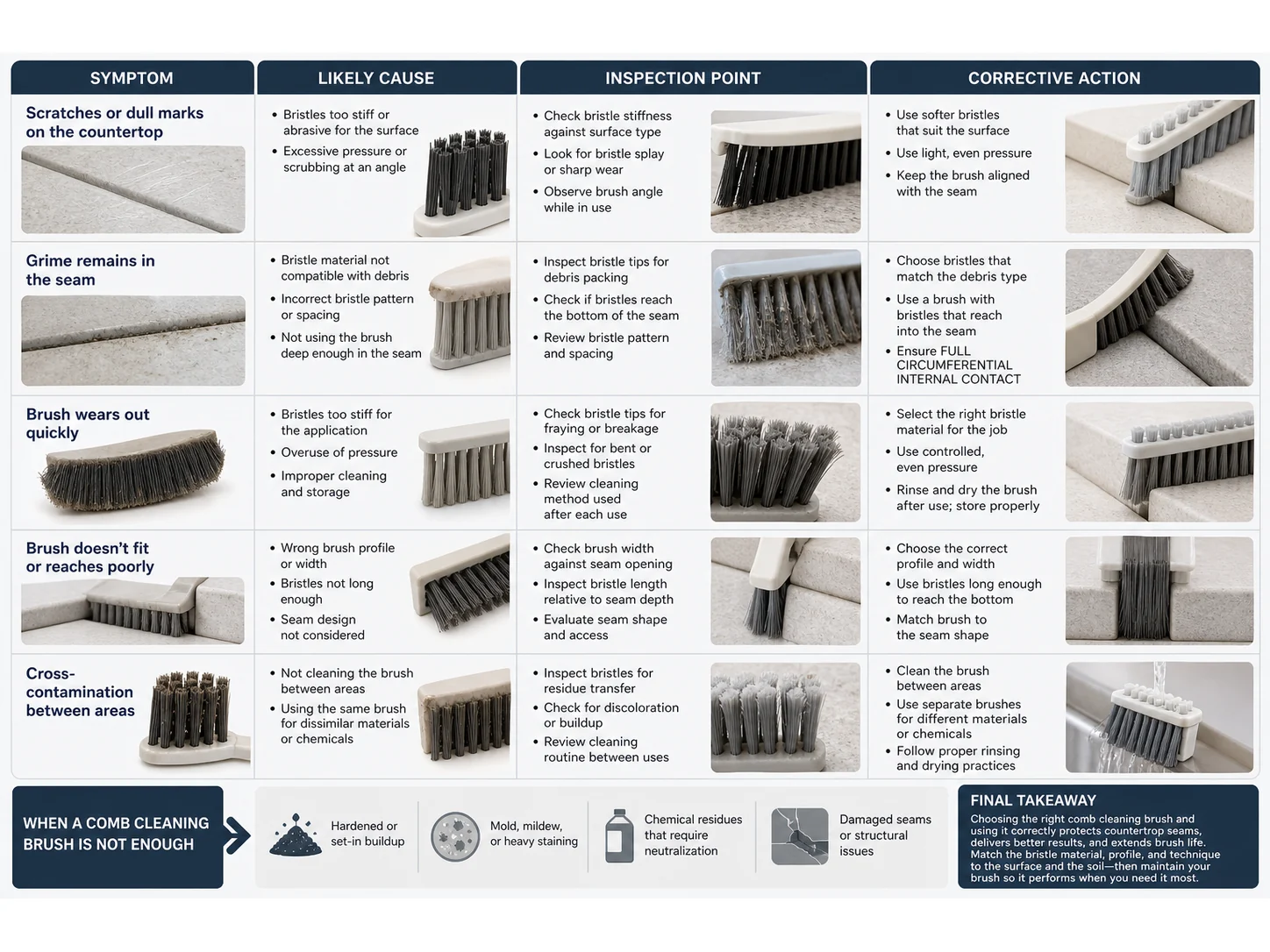
What Is a Comb Cleaning Brush?
A comb cleaning brush is a narrow-profile brush whose bristles are often set in a single row or multiple parallel rows to mimic the teeth of a comb. It is engineered to slide into tight spaces like the joint between a countertop and a backsplash, lifting out food particles, grease, grime, and light buildup without damaging the surrounding surfaces when used correctly.
Common Types and Material Options
Comb cleaning brushes vary by bristle material, stiffness, handle design, and brush profile. The most common materials are nylon, polypropylene, brass, and stainless steel. Each is suited to different surface types and residue challenges.
- Nylon bristles: Soft to medium stiffness; safe for most countertop surfaces including laminate, solid surface, and sealed stone; good for everyday food residue and light grease.
- Polypropylene bristles: Similar to nylon but often more chemical-resistant; works well with cleaning solutions; good for wet environments.
- Brass bristles: Medium stiffness; slightly abrasive; suitable for tough, baked-on grime on durable surfaces like stainless steel; risk of scratching on delicate stone or glossy finishes.
- Stainless steel bristles: Very stiff and aggressive; intended for heavy-duty industrial cleaning; can easily scratch most residential countertop materials.
Comparison Table: Bristle Material vs. Surface Compatibility
| Bristle Material | Stiffness | Best For | Avoid On | Wet/Dry Use | Typical Lifespan |
|---|---|---|---|---|---|
| Nylon | Soft–Medium | Laminate, solid surface, sealed granite, quartz, tile grout | Unsealed stone, extremely sharp metal edges | Both | Moderate, can fray if overflexed |
| Polypropylene | Medium | Commercial kitchens, areas with chemical cleaners, tile | High-gloss polished surfaces (risk of micro-scratches if aggressive) | Primarily wet | Good; resists chemical breakdown |
| Brass | Medium–Firm | Stainless steel seams, baked-on grease on durable backsplashes | Marble, soft stone, acrylic, polished quartz | Both, often dry | Long, but bristles can bend |
| Stainless Steel | Firm–Very Stiff | Heavy carbon buildup, industrial equipment seams | All residential countertop materials, fiberglass, porcelain | Both, often with solvent | Very long, but can scratch if misused |
How to Choose the Right Comb Cleaning Brush for Countertop Seams
Selecting the right comb cleaning brush depends on four key factors: the seam width, the type of residue, the surface material, and the cleaning frequency.
- Seam width: Measure the average gap. Brushes with a single row of bristles often fit seams as narrow as 1/16 inch, while flared multi-row designs work best for wider gaps (1/4 inch or more).
- Residue type: Soft food particles and light grease can be handled by nylon or polypropylene. Hardened, sticky, or carbonized residues may require brass, but only on scratch-resistant surfaces.
- Surface sensitivity: Polished marble, high-gloss quartz, and acrylic solid surfaces are easily scratched. Stick to soft nylon and test in an inconspicuous spot first.
- Handle design: A long, ergonomic handle reduces hand fatigue and lets you apply even pressure. A non-slip grip is essential if you plan to use the brush wet or with degreasers.
- Wet or chemical exposure: If you frequently use bleach, degreasers, or acidic cleaners, opt for polypropylene bristles and a plastic or coated metal handle to prevent corrosion.
- Hygiene requirements: In commercial kitchens, look for brushes that can withstand high-temperature dishwasher cycles or steam sterilization without melting or losing bristle integrity.
Common Comb Cleaning Brush Mistakes
Many users damage their countertops or fail to clean effectively because of these errors:
- Using metal bristles on sensitive stone: Even a single pass with a brass or steel comb brush can leave permanent scratches on marble, limestone, or polished quartz. Always verify the recommended bristle material for your surface.
- Choosing the wrong brush width: A brush that is too thick won’t enter the seam; one that is too thin may flex excessively and miss debris at the bottom. Measure the gap before buying.
- Applying excessive pressure: More pressure doesn’t mean better cleaning. It can splay bristles, reduce brush life, and increase the risk of surface damage. Let the bristles do the work.
- Cleaning dry without a suitable agent: On greasy residues, dry brushing merely moves grease around. Use a mild detergent or degreaser paired with a wet-compatible brush for thorough removal.
- Neglecting brush maintenance: A clogged bristle brush can re-deposit grime. Rinse the brush after each use and allow it to air dry. Inspect for bent or broken bristles regularly.
- Using one brush for all surfaces: Cross-contamination of abrasives or chemicals can dull or etch surfaces. Dedicate a specific comb brush for each surface type or at least for wet vs. dry applications.
When a Comb Cleaning Brush Is the Wrong Choice
A comb cleaning brush is excellent for routine maintenance of countertop seams, but it has limits. If you are dealing with deeply embedded mold in silicone caulk, hardened grout haze, or heavy limescale, a brush alone will not suffice. In such cases, consider:
- A plastic scraper or seam scraper to remove bulk buildup before brushing.
- A steam cleaner for sanitizing and softening stubborn residue.
- Replacing old, cracked caulk entirely, as a brush cannot restore a failed seal.
- When in doubt, test a small hidden section of the seam with the brush and chosen cleaner before applying to the entire length.
Final Takeaway
Avoiding comb cleaning brush mistakes is largely about matching the tool to the task. Measure the seam, identify the residue, test on an inconspicuous spot, and choose a brush material that cleans without scratching. Regular gentle maintenance with the right brush will keep countertop seams looking fresh and hygienic without damaging expensive surfaces.
Frequently Asked Questions
Can I use a metal comb cleaning brush on quartz countertops?
It is not recommended. Quartz is engineered stone with a polished surface that can be dulled or scratched by brass and especially stainless steel bristles. Stick to soft nylon or polypropylene brushes for quartz seams.
How often should I replace my comb cleaning brush?
Replace the brush when bristles become permanently splayed, frayed, or contaminated. In a home kitchen with daily light use, a quality nylon comb brush may last several months to a year. In commercial settings, inspect weekly and replace when bristle stiffness diminishes or shape deforms.
What is the best way to clean a comb cleaning brush after use?
Rinse the brush under warm water immediately after use to remove loose debris. For greasy residue, use a mild soap and gently work it through the bristles with your fingers (wearing gloves if needed). Shake out excess water and hang or store bristles-up to air dry. Brushes with fully plastic handles are often dishwasher-safe on the top rack.
Can a comb cleaning brush remove dried caulk?
No, a comb cleaning brush is not designed to remove cured caulk or adhesive. Attempting to do so may bend or break the bristles. Use a dedicated caulk removal tool or scraper first, then finish with a brush to clean the exposed seam.
What size comb cleaning brush fits standard countertop seams?
Most countertop seams between the counter and backsplash are between 1/8 and 1/4 inch wide. A brush with a bristle row thickness of about 1/16 to 1/8 inch will fit most residential gaps. For unusually narrow or wide seams, take a measurement and look for brushes described as “thin profile” or “extra-wide cleaning comb.”
Is it safe to use a comb cleaning brush with bleach or strong degreasers?
It depends on the brush material. Polypropylene and certain nylon blends resist chemical degradation better than natural fibers or plastic-coated metal. Always check the manufacturer’s chemical compatibility chart if available, or test a drop of the cleaner on a hidden part of the handle to ensure it won’t soften or discolor. Avoid letting brass or steel brushes soak in corrosive chemicals, as this can weaken the bristles or corrode the core.
Technical References
Which bristle material fits this job — Nylon PA, AISI 304 Stainless Steel Wire or Silicone?
| Material | Continuous temperature (°C) | Peak temperature (°C) | Water absorption | Hardness |
|---|---|---|---|---|
| Nylon PA | 93 | 121 | 0.3–9% by PA grade and conditioning | Medium to firm; filament diameter and trim length control bending force. |
| AISI 304 Stainless Steel Wire | 400 | 500 | 0% | Rockwell B 70–95 depending on temper and cold work |
| Silicone | 200–250 | 280–300 | 0.1–1.0% | Shore A 20–80 |
Figures as published by Brushtec / DuPont; Alleima. Confirm the exact grade against the supplier datasheet before ordering.
What should replace Nylon PA for countertop seams?
- Nylon PA — Compare Nylon PA with PP, PBT, PET. Change material when wet stiffness, temperature, chemical resistance, conductivity, particle shedding, or surface marking becomes the limiting factor.
- AISI 304 Stainless Steel Wire — Use AISI 316 stainless steel wire for chloride, marine, dairy, beverage, chemical washdown, or higher pitting-resistance requirements. Use carbon steel for dry aggressive cutting and brass or abrasive nylon for lower marking risk.
- Silicone — Compare Silicone with PP, TPE, Nylon. Change material when wet stiffness, temperature, chemical resistance, conductivity, particle shedding, or surface marking becomes the limiting factor.