
Custom Cleaning Brush
Floor Burnisher Brush
Custom floor burnisher brush with heat-stabilized Nylon PA filaments for high-speed dry burnishing of sealed VCT, concrete, stone, and terrazzo.
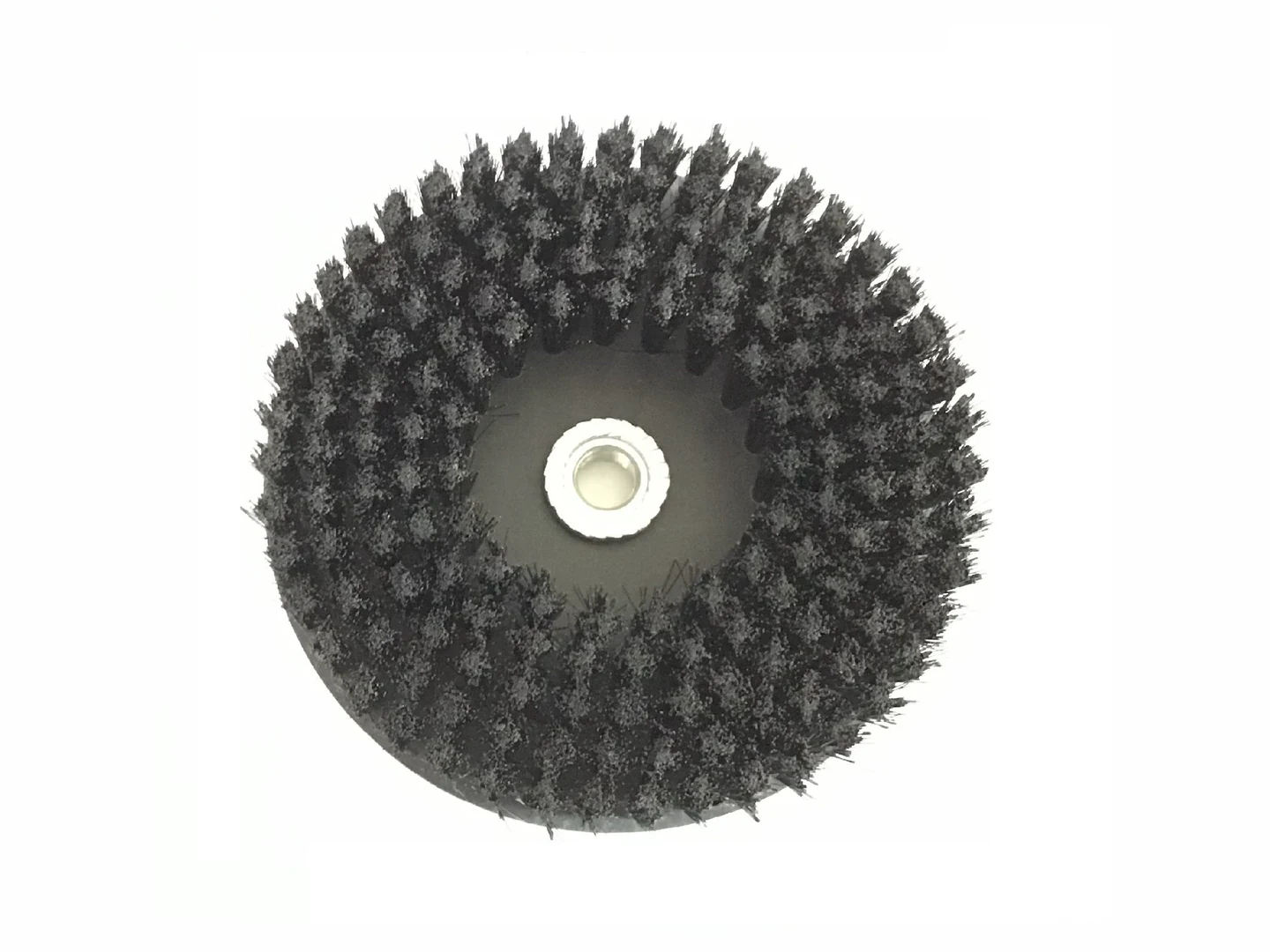
Large-format brush
100 pcs
Minimum order
Built one at a time on a core or channel: full-width rollers, sweeper brooms and long strip.
Production lead time, once the specification is confirmed
- Up to 100 pcsWithin 20 days
- 101–1,000 pcsWithin 30 days
- Over 1,000 pcsConfirmed with your quotation
Peak season can extend these times; the shipping date is confirmed in writing with your quotation. Sampling and shipping are quoted separately.
A high-speed rotational burnishing brush for sealed hard floors, built with dense Nylon PA filaments that polish the existing floor finish without stripping it. The hub and drive pattern are matched to the customer’s burnisher so the brush centers correctly and applies even tip pressure at high RPM.
What can this brush do for you?
Polishes the finish without cutting it away
The Nylon PA bristle tips flex and slide over the floor coating at burnisher speed, generating just enough frictional heat to smooth micro-scratches, scuffs, and light heel marks back into the gloss. The brush works the top layer of finish rather than removing it, so the floor keeps its protective film between stripping cycles.
Stays centered on your drive plate
The molded hub is built to the machine’s actual drive pattern — center-lock, clutch plate, three-lug, spline, pin drive, or threaded — not a generic universal cutout. Correct centering reduces deck vibration and side-to-side wobble, which keeps filament wear even and the gloss pattern uniform across the working pass.
Handles the heat of high-speed dry burnishing
Heat-stabilized Nylon PA retains its stiffness and bristle memory at the speeds generated by 1500–3000 RPM burnishers. Filaments recover after flexing instead of melting, matting, or folding over, so the contact area stays consistent for more of the brush’s service life.
Works over grout lines, expansion joints, and minor surface relief
The open bristle structure lets the tips follow small floor irregularities without skipping the low spots or slamming the high spots. Loose dust and powder released during burnishing can move through the filament pack instead of being pressed back into the finish, which helps reduce swirls and hazing.
Dense, even fill for a streak-free gloss
The filament pack is tufted at high density across the full diameter, so the polish pressure is distributed rather than concentrated at the outer edge. This produces a more uniform sheen and reduces the hot-edge wear that shortens the life of lower-fill brushes.
What is a Floor Burnisher Brush?
A Floor Burnisher Brush is a disk-shaped rotary brush that mounts to a high-speed burnisher and uses Nylon PA bristle tips to polish an already-sealed hard floor. The floor coating is already present; the brush’s job is to take the top few microns of that coating, soften them with controlled frictional heat, and smooth them back to a reflective surface.
In operation, the brush spins at the machine’s rated burnishing speed, typically in the 1500–3000 RPM range. The deck is set so only the bristle tips contact the floor. If the full trim length is crushed onto the floor, the tips stop flexing, heat builds at the block, and the brush begins to smear the finish instead of polishing it.
This is a dry maintenance tool, not a wet cleaning or stripping brush. It is normally used between scrub-and-recoat cycles to restore appearance, remove light scuffs, and extend the life of the floor finish. It does not remove deep scratches, strip old coating, or replace a scrubbing process.
Technical Specifications
The values below represent the standard configuration range. Items marked as machine-specific are confirmed against your burnisher model before production.
| Parameter | Value / Options |
|---|---|
| Brush diameter | 100–500 mm, sized to machine deck and drive plate |
| Trim length | 20–80 mm, typical burnishing range 25–50 mm |
| Filament diameter | 0.25–1.20 mm; fine grades 0.30–0.60 mm for high gloss, heavier grades 0.80–1.20 mm for more aggressive polishing |
| Fill material | Nylon PA, PA6, PA66, or PA612, heat-stabilized |
| Bristle profile | Straight, crimped, or flagged; selected for finish type and gloss target |
| Hub / drive | Machine-specific: center-lock, clutch plate, three-lug or five-lug, spline, pin drive, or thread |
| Block / backing | Molded polypropylene, aluminum, or project-specified material |
| Operating speed | Match machine rating; typically 1500–3000 RPM |
| Recommended use | Dry burnishing of sealed hard floors |
| Brush type | Custom Floor Scrubber Sweeper Brushes |
| How it is driven | Machine-driven, mounted in the equipment |
| Cleaning target | vinyl composition tile, healthcare corridor and patient area, and polished concrete and epoxy floor cleaning |
| Surface or part | floors, concrete, stone, hubs, tile, epoxy, guards, and terrazzo |
| Residue or debris | polish, and old coating |
| Mounting / connection | Machine-specific: center-lock, clutch plate, three-lug or five-lug, spline, pin drive, or thread |
For correct contact, set deck pressure within the machine’s specified range so the bristle tips work rather than crushing the full trim. Flattening the trim reduces gloss, builds heat at the backing, and shortens filament life. The correct setting becomes visible in the finish: the floor should take on gloss within the first passes, and the brush should ride with light, steady contact instead of chattering.
Where does this brush work best?
The brush is designed for floors that already have a finish film and need gloss restored between stripping cycles.
- Vinyl composition tile in retail stores, supermarkets, and schools where nightly burnishing keeps a high-traffic floor presentable without recoating every week.
- Healthcare corridors and patient areas where a sealed vinyl or resilient floor needs a clean, reflective surface after daily traffic and scuffing.
- Polished concrete and epoxy floors in showrooms, dealerships, and warehouses that carry a clear sealer or guard and require a maintenance tool that does not cut the coating.
- Terrazzo and sealed stone floors in airports, lobbies, and convention centers where a soft nylon tip polishes the protective finish without abrading the stone.
- Warehouse and logistics areas with sealed concrete or tile that receive regular walk-behind or ride-on burnishing as part of the weekly maintenance route.
How do I choose the right one?
Select the brush in this order: machine drive and capacity first, then the finish and gloss target, then the floor’s surface relief and use schedule.
1. Match the drive and deck first
Record the burnisher make, model, RPM, drive-plate style, and the exact lug, slot, spline, or thread dimensions. A brush that fits the drive but is off-center will vibrate, wear one side, and create swirl marks in the gloss. Supply a photo or drawing of the existing drive plate when the model is uncertain.
2. Set the filament diameter for the work you need
Fine filaments around 0.30–0.60 mm flex easily and produce the highest gloss with the least risk of haze. Heavier filaments around 0.80–1.20 mm are the choice when light heel marks, scuffs, or surface film need more mechanical action, but they cut more heat into the finish and can dull the final image if the film is thin.
3. Select trim length for tip contact and machine clearance
Shorter trim in the 20–35 mm range gives firmer tip contact and better control on large open floors. Longer trim in the 40–80 mm range increases filament flex and forgiveness over grout lines and joints, but requires more deck clearance and can reduce the effective working diameter if the bristles lean heavily at speed.
4. Pick the diameter from the machine’s pad driver and the route
The brush diameter cannot exceed what the deck and motor can drive at rated speed. Within that limit, larger diameters cover more area per pass on open floors; smaller diameters maneuver around fixtures, racks, and tight perimeter zones.
5. When to choose a different tool
- If the floor coating must be removed, use a stripping brush or pad, not this burnisher brush.
- If the floor is wet-cleaned or heavily soiled, use a floor scrubber brush designed for water and detergent contact.
- If the floor is unsealed wood, raw stone, or porous concrete without a finish film, do not burnish; the heat will darken or burn the surface.
- If the finish is very thick and you need mechanical leveling, a diamond-impregnated pad or a more aggressive buffing solution is the better route.
Can I customize this brush?
Yes. The brush is produced as a project-specific consumable, not as a one-size shell with a generic drive cutout. To configure it, we need the burnisher make and model, RPM rating, drive-plate drawing or sample, current brush size, floor finish type, and the gloss level or maintenance schedule you are trying to hold.
- Diameter and block geometry, including overall height and edge profile for deck clearance.
- Drive pattern: center-lock, clutch plate, three-lug or five-lug, spline, pin drive, thread, or a customer-specific molded insert.
- Nylon PA type and processing: PA6, PA66, PA612, heat-stabilized, moisture-conditioned, or specialty grades.
- Filament configuration: diameter, straight, crimped, or flagged, trim length, tuft density, and any color-coding stripe or marker tuft.
- Backing or block material: molded polypropylene, aluminum, or another material specified for the machine deck.
- Trim profile: flat, beveled, radiused, or two-level trim for edge blending.
- Identification: custom color, printed label, molded part number, or brand mark.
- Packaging: bulk cartons, individual sleeves, master packs, or project-specific unit labeling.
If your project requires material documentation, inspection records, dimension reports, or third-party testing support for the filament or block material, we can arrange these as part of the customization scope.
How long does a floor burnisher brush last before it needs replacing?
How can I tell whether the brush is running true on the deck?
Run the machine briefly with the brush mounted and the deck raised, then watch the outer edge from the side. If the rim visibly wobbles or the filament pack leans more on one side, the drive plate, hub, or deck leveling is off. After one shift on a clean floor, the wear on the bristle tips should look even around the full diameter; a heavy wear band on only one arc means the brush is not centered.
Does the burnisher brush work with both water-based and solvent-based floor finishes?
Yes, when used dry. Nylon PA is compatible with normal floor finish chemistries, but the filament diameter and trim may need to shift with the finish type. Water-based finishes often respond better to finer, softer filaments because they cure harder and thin; solvent-based finishes can tolerate a slightly heavier filament if the film is thick enough. Specify the finish system so the filament can be matched.
What happens if I burnish a floor with too little finish film?
Burnishing converts some of the finish into heat and flows it back smooth. If the film is too thin, the brush can burn through to the substrate, leaving a dull, hazy, or darkened spot. Check the floor’s coat history, and run a small test area in a low-visibility corner before putting the brush on the full route.
When should I replace the brush instead of adjusting the machine?
Replace when the trim length has worn below about 40–50% of its original length, when individual filaments melt, flag, or fold and will not return, or when the brush no longer raises the gloss within a normal number of passes. If gloss drops suddenly, check the deck pressure and drive centering first; if those are correct, the filament pack is worn out.
Is a floor burnisher brush the same as a floor scrubber brush?
No. A floor scrubber brush is used with water or detergent to remove soil from the floor surface, and it works the substrate more aggressively. A burnisher brush runs dry over an existing finish to restore gloss. Using a scrubber brush on a finish will cut it; using a burnisher brush to remove heavy soil will simply smear the dirt and overheat the bristles.
Can I use this brush on unsealed concrete or raw stone?
Do not use it on unsealed wood, raw unsealed stone, or porous concrete without a finish film. The heat and nylon contact will burn, darken, or embed dust into the surface. Seal the floor first, then burnish the sealer; if the substrate itself needs smoothing, use the appropriate diamond or carbide tool instead.
Guides that go deeper on this
Custom Manufacturing RFQ
Describe Your Application
Please share the brush dimensions, working area, residue type, material direction, quantity, and a drawing or photo for quotation.
Drawing or photo optional — it speeds things up, it does not gate the enquiry.
Custom Brush RFQ
Send Your Brush Project
Upload a drawing, product photo, or sample photo and provide the core dimensions and cleaning conditions.
“We need a brush to remove wet residue from a stainless steel conveyor, about 800mm wide. The current brush wears quickly. We can send photos.”
“We sell drinkware and need a cleaning brush to include with the product. Quantity around 5,000 pieces.”