
Custom Cleaning Brush
Floor Polisher Brush Attachment
Floor polisher brush attachment in nylon, wool, or microfiber fill for rotary floor machines.
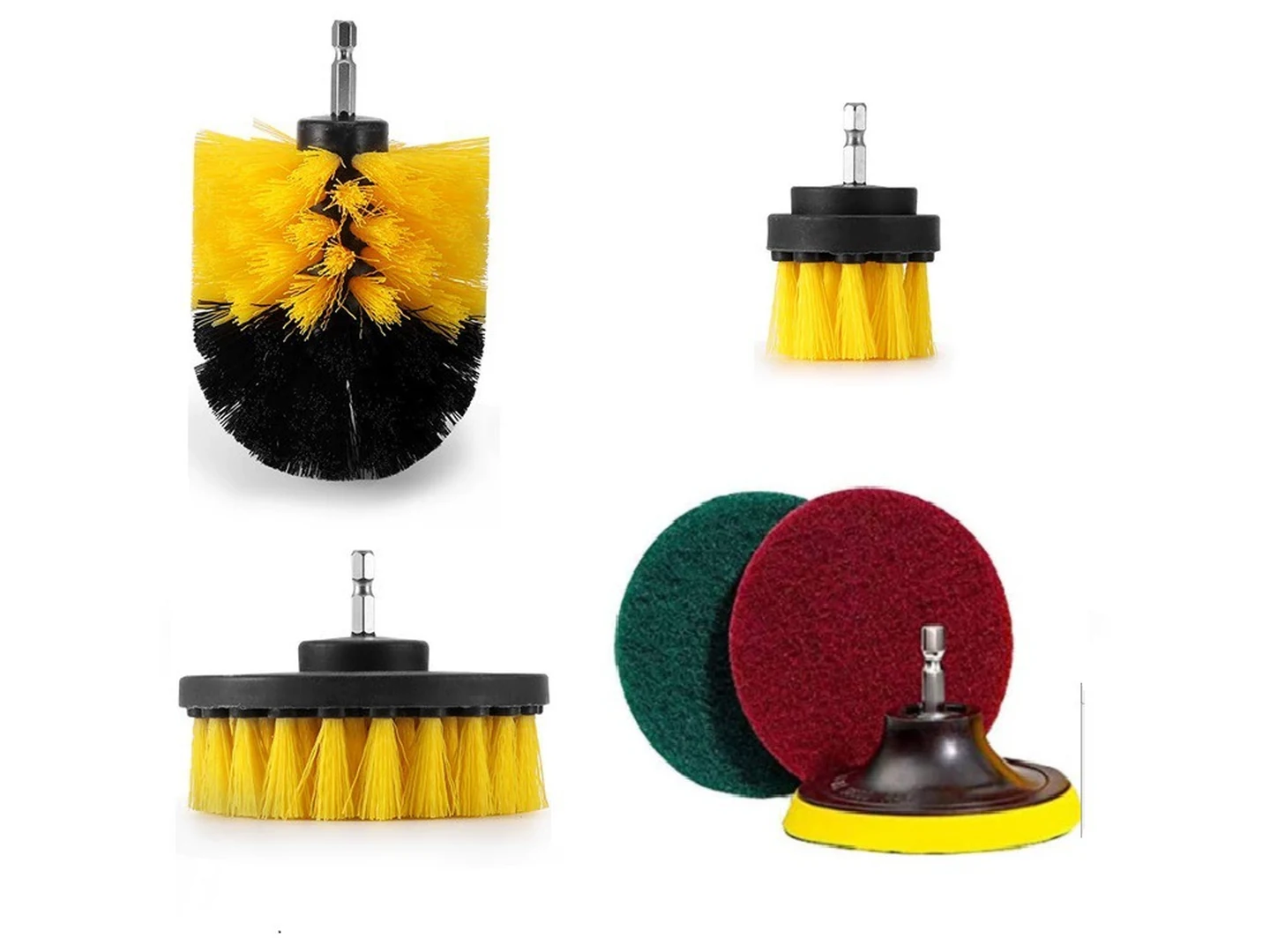
Large-format brush
100 pcs
Minimum order
Built one at a time on a core or channel: full-width rollers, sweeper brooms and long strip.
Production lead time, once the specification is confirmed
- Up to 100 pcsWithin 20 days
- 101–1,000 pcsWithin 30 days
- Over 1,000 pcsConfirmed with your quotation
Peak season can extend these times; the shipping date is confirmed in writing with your quotation. Sampling and shipping are quoted separately.
A machine-mounted floor polisher brush attachment that locks onto standard rotary floor polishers, swing machines, and scrubber decks. Nylon, wool, or microfiber fill converts the machine’s rotation and deck weight into even, controlled brushing action across large floor areas.
What can this brush do for you?
Mounts to the Machine Deck You Already Run
Rotary floor polishers only turn into cleaning tools when they carry a brush built for the drive. This attachment uses the standard clutch-plate, center-lock, or stud pattern on the machine’s deck, so it drops onto the polisher the operator already has. Worn brushes can be swapped between shifts without reworking the equipment side or adding a second machine for scrub work.
Contact Across the Full Swept Circle
The block pattern places fill under the entire swept area, including the outer edge ring and the zone near the drive hub. You get a uniform scrub pattern across the pass width instead of a clean outer ring with an untouched island in the center where block spacing left a dead gap.
Channels Wet Soil Instead of Packing It
Open lanes between fill blocks let dirty slurry, loosened finish, and spent chemical move outward as the disc spins. When that exit path is missing, wet soil packs under the hub, glazes the filament, and slows the job down even though the machine keeps running at full speed.
Aggression Set by the Fill, Not by Guesswork
Fill is selected for the actual job: soft crimped nylon carries detergent under light pressure for daily dirt; stiffer or grit-loaded nylon cuts embedded grime and worn finish before recoat; wool carries polish compound into the floor; microfiber lifts fine dust and lays down final gloss. The brush’s cutting rate and floor contact follow from filament diameter and trim length, not from machine speed alone.
Balanced Fill Pattern for Stable Rotation
Block count, spacing, and weight are arranged so the rotating disc stays balanced at standard deck speeds, typically 175 rpm. A poorly distributed fill pattern makes the machine walk, chatter, or bounce under load, which shows up on the floor as swirl marks and on the operator as extra wrestle time.
Protects the Hub and the Adjacent Wall
A raised hub guard keeps the backing plate and drive interface off the floor as filament wears down, while an outer rim guard option stops the fill from chewing baseboards and kick plates along walls. Both reduce the repair calls that come from running a brush too far past its service interval.
What is a Floor Polisher Brush Attachment?
A Floor Polisher Brush Attachment is a filled disc that replaces a floor machine’s drive pad or worn brush, putting the machine’s rotation and deck weight behind rows of bristle tips rather than behind a pad face. The disc mounts to the machine’s drive deck through a clutch plate, center-lock, or matching stud pattern. When the deck spins at standard polisher speed, the filament tips sweep across the floor and perform the scrubbing, leveling, or polishing work.
In a wet cleaning routine, the attachment runs over an applied detergent or stripper solution, loosening soil and worn finish while the channels between blocks let slurry travel outward instead of packing under the hub. In a dry pass, wool or microfiber fill carries polish compound or lifts fine dust without adding water to the floor. The bristle tips are the working surface; trim length defines how much filament bends under deck pressure, and filament diameter defines how aggressively each tip contacts the floor.
This is not a concrete grinder, a diamond abrasive tool, or a hand scraper. The attachment is built for scrubbing, finish preparation, and polishing work on floor surfaces that the machine can already travel over safely when the correct fill has been selected for the coating and the residue.
Technical Specifications
The values below are the standard build range for this product. Diameter, interface, fill, and trim are adjusted to the machine and the floor before production.
| Parameter | Specification / Options |
|---|---|
| Overall diameter (disc) | 100–500 mm, matched to machine deck size and guard clearance |
| Working width | 100–800 mm across disc or cylindrical constructions |
| Fill material | Nylon PA (standard, crimped, or grit-impregnated), wool, microfiber |
| Filament diameter | 0.25–1.20 mm, selected for aggression and floor-finish tolerance |
| Trim length | 20–80 mm; shorter, stiffer fills for scrubbing; longer fills for polishing spread |
| Block / fill layout | Segmented blocks, straight or angled rows, continuous ring, or custom pattern |
| Drive interface | Standard clutch-plate stud pattern, center-lock, snap-style, or machine-specific bore, keyway, spline, or thread |
| Backing / carrier | Steel, aluminum, or polymer backing matched to machine weight and exposure |
| Operating speed | Sized for standard rotary machine speeds, approximately 150–350 rpm (typical 175 rpm decks) |
| Operating condition | Wet with floor chemicals, or dry with polish compound and dust pick-up |
| Chemical exposure | Fill and backing selected for the detergent, pH range, and rinse cycle used on site |
| Brush type | Custom Floor Scrubber Sweeper Brushes |
| How it is driven | Machine-driven, mounted in the equipment |
| Cleaning target | facility maintenance crew, scrub-and-recoat preparation, and concrete warehouse floor cleaning |
| Surface or part | floors, pads, hubs, concrete, edges, guards, bends, and epoxy |
| Residue or debris | dust, polishing compound, tire marks, grease, fine dust, polish, and slurry |
| Mounting / connection | Standard clutch-plate stud pattern, center-lock, snap-style, or machine-specific bore, keyway, spline, or thread |
Where does this brush work best?
- Facility maintenance crews running rotary swing machines over VCT hallways, retail floors, and school corridors where scrub-and-recoat cycles repeat weekly or monthly.
- Scrub-and-recoat preparation on vinyl composition tile, linoleum, and rubber flooring, where grit-loaded nylon removes embedded soil and failing finish before the new coat is applied.
- Concrete warehouse floors, loading docks, and kitchen floors where heavy nylon fill pulls up grease, tire marks, and packed dirt under wet scrubbing with the existing polisher fleet.
- Terrazzo, marble, and stone floor polishing when wool fill carries polishing compound evenly into the surface instead of burning it into a pad edge.
- Hardwood gym floors and coated wood where fine or microfiber fill removes dust and light scuffs between maintenance coats without the scratch risk of aggressive pads.
- Epoxy and coated industrial floors where a controlled nylon fill cleans without cutting through the coating during routine service.
How do I choose the right one?
Lock the Drive Interface First
No brush works if the hub does not fit the deck. Record the clutch-plate stud pattern, center-lock shape, or machine-specific mount before looking at anything else. If the target floor machine uses a proprietary driver, send photos of the plate and center opening so the hub can be matched exactly.
Match the Diameter to the Machine and the Space
The disc should sit inside the machine’s guard or skirt with enough clearance to turn freely. A disc that is too large rubs the housing or swings past the operator’s control. A disc that is too small leaves an unscrubbed strip at the edge of each pass and slows the whole route.
Choose the Fill for the Floor and the Residue
| Floor condition / job | Suggested fill | Trim and stiffness direction |
|---|---|---|
| Daily soil on coated, smooth floors | Standard or crimped nylon PA | Longer trim, lighter filament |
| Embedded grime or old finish before recoat | Grit-impregnated nylon PA | Shorter trim, stiffer fill |
| Polishing with compound | Wool or wool blend | Longer, softer trim |
| Fine haze, dust, final pass | Microfiber | Dense fill, fine filament |
Softer fills with longer trim bend more under load and spread pressure over a larger area, which protects the coating. Shorter, stiffer fills concentrate force at the tips and remove more material per pass, which is what scrub-and-recoat prep needs. Test one brush on a low-visibility section before committing the full route, especially on polished or coated surfaces.
Let Trim Length Set the Pressure Style
Trim length and filament diameter together control how much of the deck weight reaches the floor. Long, light fill is for spreading chemicals and polishing, while short, heavy fill is for cutting residue. When choosing between two configurations for the same surface, the shorter trim will always be the more aggressive one.
When a Pad or Another Method Is the Better Tool
For thick finish removal with stripper on smooth VCT, a black stripping pad often releases film more efficiently than bristles because the pad face rides the flat surface evenly. Brushes win where grout lines, texture, or residue depth call for tip pressure. For concrete surface preparation, diamond abrasives or grinders are the better tool, not a floor polisher brush. If the route requires continuous clean-water recovery in one pass, a cylindrical scrubber dryer brush on an auto-scrubber is usually more suitable than a rotary disc.
Can I customize this brush?
Floor polisher brush attachments are configured per job because no two fleets, floors, or chemical programs are identical. To define the build, send the machine make and model, deck speed, interface photos and measurements, floor type and coating condition, cleaning chemical, and the planned service interval. A sample worn brush or a machine plate photo speeds the pattern confirmation considerably.
We can adjust:
- Disc size — diameter, block count, row spacing, and total fill area
- Fill — nylon PA, wool, or microfiber with project-specific filament diameter, trim, crimp level, or grit loading
- Hub interface — clutch plate, center-lock, snap-style, threaded, keyed, or custom adapter to the machine deck
- Backing — steel, aluminum, or polymer, with raised hub guard, recessed center, or outer rim guard
- Color and coding — color-coded fill to signal aggression level, plus branded backing or packaging
- Packaging — bulk crate, individual box, retail sleeve, or job-lot identification labeling
- Construction form — disc or cylindrical build when the project runs on scrubber dryer decks instead of rotary polishers
When the project requires material documentation, third-party testing, inspection reports, or certification support, those requirements can be included in the customization scope for the buyer’s specific program.
Which filament lasts longest on a floor polisher brush attachment?
How do I confirm the attachment will fit my floor machine before ordering?
Check the drive deck on the machine: count the clutch-plate studs or wings, measure the center opening and stud spacing, and photograph the plate with a ruler in frame. Send those measurements with the machine model. If the machine uses a proprietary snap or latch system, include the old brush or driver as a physical reference so the hub geometry can be matched directly.
How much trim wear is acceptable before replacement?
Replace the brush when roughly one quarter to one half of the original trim length has worn away, when the backing or block base becomes visible through the fill, or when wear is visibly uneven across the disc. Continuing past that point moves contact from the filament tips to the block body, which increases motor load and can contact the hub with the floor.
Should the bristles flatten completely under the machine’s weight?
No. The filament tips are the working surface. If the trim is crushed flat against the floor, pressure concentrates on the sides of the fibers instead of the tips, cutting drops, and the motor works harder for less result. Adjust deck pressure within the machine’s published range so the tips stay engaged but the bristles keep their upright working shape.
Can this brush be run dry, or does it always need water?
That depends on the fill. Wool and microfiber are commonly run dry with polish compound or for dust pick-up. Standard nylon is typically run with a chemical solution so the slurry can carry the loosened material away. Running a wet-designed nylon fill dry builds heat and glaze inside the fill quickly; check the fill and floor combination before taking a dry pass.
When should I use a pad instead of this brush?
When the floor is smooth and flat and the job is heavy finish removal with a stripper, a pad often removes the film layer more evenly because the entire pad face rides the surface. A brush is the better choice when the floor has grout lines, texture, surface irregularities, or residue packed into joints where tip pressure can dig in and a pad simply slides over.
How should the brush be stored between shifts?
Rinse the fill and backing after wet work, then store the brush standing upright, fill down, in a ventilated location where it can drain and dry. Do not stack wet brushes face-to-face or store them under chemical drums. Wool and microfiber fills hold moisture and can dull, shrink, or develop odor if left in a closed, damp storage area.
Guides that go deeper on this
Custom Manufacturing RFQ
Describe Your Application
For an accurate quotation, please provide the main dimensions, material preference, working surface, residue, quantity, and a drawing or photo.
Drawing or photo optional — it speeds things up, it does not gate the enquiry.
Custom Brush RFQ
Send Your Brush Project
Upload a drawing, product photo, or sample photo and provide the core dimensions and cleaning conditions.
“We need a brush to remove wet residue from a stainless steel conveyor, about 800mm wide. The current brush wears quickly. We can send photos.”
“We sell drinkware and need a cleaning brush to include with the product. Quantity around 5,000 pieces.”