
What Is Wire Brush Maintenance?
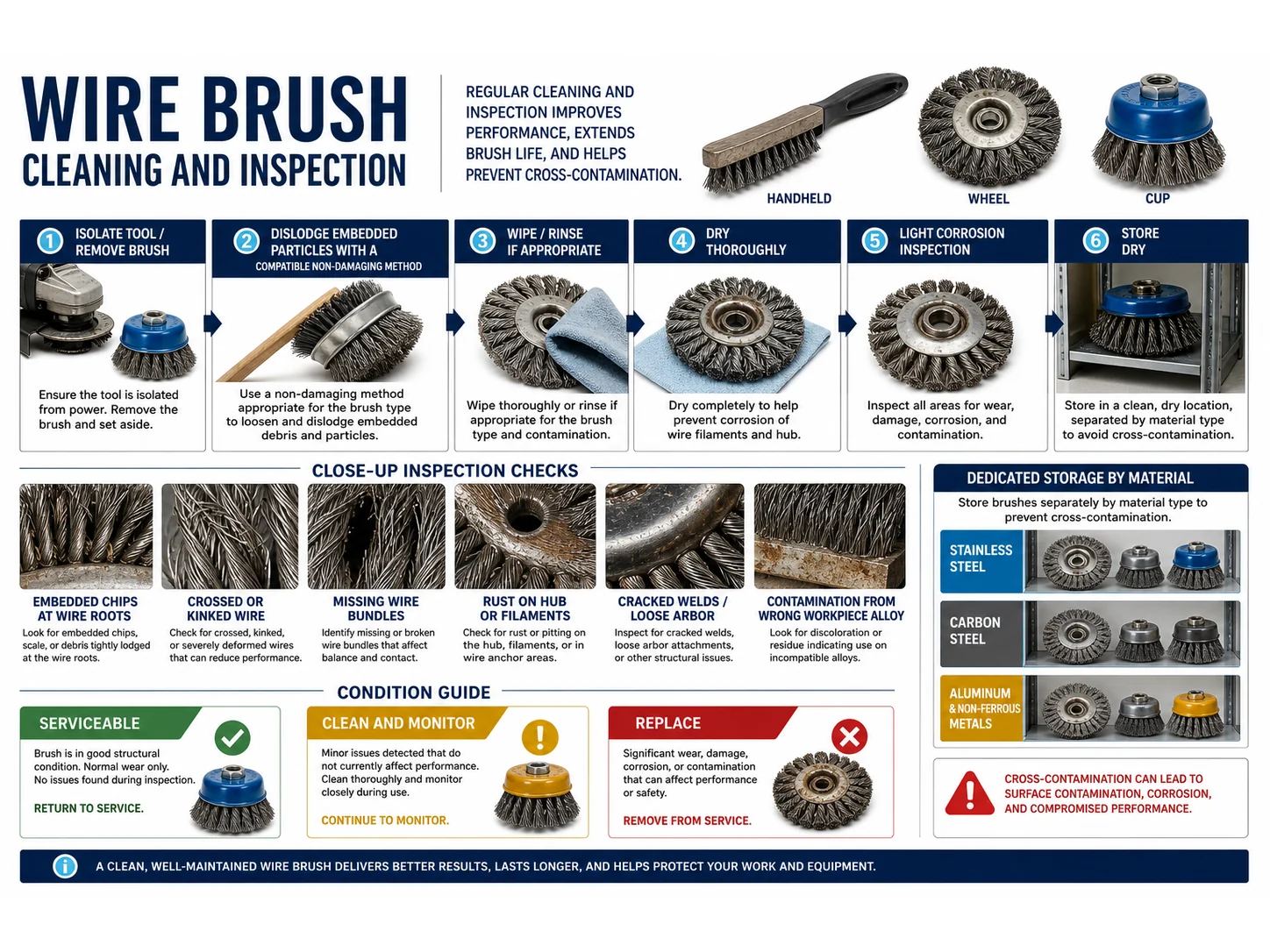
Wire brush maintenance is the regular process of removing trapped debris, metal fines, rust, and other contaminants from the bristles, ferrule, and handle of a wire brush, along with proper storage to prevent further corrosion. It is not simply rinsing a brush with water. Effective maintenance preserves the bristle geometry and filament stiffness that determine how well a brush cleans, deburrs, or prepares a surface.
Why Embedded Particles and Rust Are a Problem
Embedded particles make a wire brush act like a fine abrasive tool. Instead of brushing a surface, it can scratch, gouge, or transfer foreign material into the workpiece. On stainless steel, this can introduce carbon steel contamination that leads to rust spots later. Rust on bristles weakens individual wire filaments. As they corrode, they become brittle and break off more easily, which increases the risk of flying wire fragments and produces an uneven finish.
3 Primary Cleaning Methods for Wire Brushes
There is no single best cleaning method for every brush type. The right choice depends on the bristle material, the brush configuration (hand, cup, wheel, tube), and the type of contamination. The three most practical methods are mechanical cleaning, chemical soaks, and compressed air.
Mechanical Cleaning
Mechanical cleaning uses a secondary tool to knock debris loose. Common approaches include tapping the brush against a rigid object, using a stiff-bristle cleaning brush to comb through wire brush bristles, or lightly scrubbing with a non-woven abrasive pad. For heavily clogged wheels, a brass wire pick can lift packed material between rows. Always work in the same direction as the bristle lay and avoid bending wires sideways, which can permanently splay the brush face.
Chemical Soak
A chemical soak dissolves light rust and loosens greasy deposits. Mild acids like white vinegar or a diluted citric acid solution work for short-duration soaks on carbon steel wire. After soaking, rinse thoroughly with water, neutralize if needed, and dry immediately. Avoid aggressive acids like muriatic acid—they can embrittle steel bristles and attack the ferrule epoxy or wood handle. Never soak brushes with wooden handles or composite hubs for extended periods, as the substrate can swell and crack.
Compressed Air Blowout
Compressed air is the fastest way to remove loose dust and dry particulate from a brush. Direct the air stream across the bristle tips at a shallow angle, not straight into the brush face, to avoid blowing debris deeper into the knot or tufting. Keep air pressure at or below 90 psi and always wear eye protection. Compressed air alone will not remove rust or hardened grease; it should be combined with another method for a complete clean.
Method Comparison Table
| Method | Best For | Risk to Bristles | Time Required | Works on Rust |
|---|---|---|---|---|
| Mechanical (picking/combing) | Heavily packed debris, large cup brushes | Medium – can bend bristles if forced | 5–10 minutes per brush | No |
| Chemical soak (mild acid) | Light uniform rust, greasy buildup | Low – if short soak, rinsed, dried fast | 15–30 minutes soak plus drying | Yes |
| Compressed air blowout | Loose dust, dry grinding fines | Very low – if angled correctly | Under 1 minute per brush | No |
How to Remove Embedded Debris Without Damaging Bristles
Start by knocking off loose material. For a hand brush, tap the block or handle against a workbench edge. For a cup brush or wheel, spin it briefly against a clean scrap surface to throw off dry dust. Then inspect the bristle rows under good light. Use a brass pick or a dedicated wire brush cleaning comb to lift out chunks of solidified debris, working with the natural lay of the wires. If you hit a heavy clog, do not force the pick sideways—apply a small amount of penetrating oil to soften the bond, then try again. After mechanical removal, blow out the residue with compressed air. If rust is present, a quick soak in white vinegar for 15–20 minutes can dissolve surface oxidation. Rinse under warm water, shake out excess moisture, and dry the brush immediately with a clean cloth and a short blast of compressed air. Never let a wire brush air dry slowly; residual moisture is the number one cause of recurring rust between bristles.
Rust Prevention: Storage, Oiling, and Moisture Control
Clean brushes can rust again in days if stored poorly. Three simple practices dramatically extend the interval between cleanings:
- Dry storage: Keep brushes in a cabinet or drawer with low humidity. A simple desiccant pack or a small VCI (volatile corrosion inhibitor) emitter in the storage area helps protect steel bristles.
- Light oil wipe: After cleaning and drying carbon steel wire brushes, apply a thin film of a non-drying lubricant, such as a water-displacing oil or a mild mineral oil. Wipe off any excess to avoid contaminating the next workpiece. For brushes used on stainless steel, use a dedicated stainless-safe oil or skip oiling and focus on dry storage.
- Hang or separate brushes: Storing brushes bristle-down in a cup or bucket can trap moisture at the ferrule. Hang brushes or store them individually so air can circulate around the bristles.
- Moisture barrier during job pauses: If a brush will sit unused for more than a few hours in a humid environment, wrap the head lightly in a VCI paper or store it overnight in a sealed bag with a desiccant.
Common Mistakes to Avoid in Wire Brush Maintenance
- Using water alone and air drying: Water left in the bristle bundle causes deep rust that is harder to remove than surface oxidation. Always dry a brush thoroughly after any water contact.
- Soaking wooden handles or composite hubs: Extended liquid immersion can cause handles to swell, crack, or delaminate from the ferrule. Keep the handle out of the solution.
- Overbending bristles: Combing or picking against the natural lay permanently deforms the brush face and reduces cutting action. Always work with the bristle angle.
- Ignoring early rust: Light rust is easy to remove. Waiting until bristles are heavily pitted means the brush has already lost significant wire diameter and stiffness.
- Using excessive air pressure: Blowing directly at maximum line pressure can fold back fine bristles on soft wire brushes. Keep pressure moderate and angle the air stream.
When Wire Brush Maintenance Is the Wrong Choice
Maintenance extends life, but it cannot bring a worn-out brush back to full performance. A wire brush should be retired when the breakage rate becomes unacceptable. For hand brushing, that means more than an occasional broken wire per use. For power brushes running at high rpm, any noticeable increase in flying wires during the first few seconds of operation is a safety signal. Additionally, replace the brush if the bristles have worn shorter than about 60% of their original length, if the ferrule is cracked or loose, or if corrosion has pitted more than 30% of the wire cross-section. No cleaning method reverses metal loss from wear or deep pitting.
Final Takeaway
Good wire brush maintenance comes down to three habits: clean debris and rust promptly using the least aggressive method that works, dry the brush completely, and store it in a dry, protected environment with a light oil film on carbon steel. Match the cleaning method to the brush type and contamination level—mechanical removal for heavy debris, compressed air for dry dust, and mild chemical soaks only when rust is present. Treat maintenance as a quick regular task rather than a deep-cleaning ordeal, and your brushes will perform more consistently and safely.
Frequently Asked Questions
Can I use a water-displacing spray to clean and protect a wire brush?
Yes, a light spray of a water-displacing fluid can help loosen debris and provide some rust protection after cleaning. Wipe off the excess to avoid transferring silicone or lubricant to your workpiece.
How often should I clean my wire brush during a typical work shift?
For power brushes used continuously, blow out or tap out the brush every hour to prevent packing. For hand brushes, clean whenever you feel the cutting action drop or see visible buildup between bristles.
Is it safe to soak a stainless steel wire brush in vinegar to remove rust?
Stainless steel wire brushes generally do not rust from the bristles themselves, but they can accumulate carbon steel contamination that looks like rust. A short vinegar soak can remove that contamination, but rinse and dry immediately to protect the ferrule.
Can I sharpen a worn wire brush by grinding the bristle tips?
No. Wire brush bristles are drawn to a specific diameter and are not designed to be resharpened. Grinding the tips reduces wire length, alters the tip geometry, and can overheat the wire, making it brittle. A brush with flattened or rounded tips should be replaced.
What is the best way to dry a brush after a chemical soak?
Shake out excess water, wipe with a clean rag, then use compressed air to blow water out from the ferrule area and between rows. A final dry with a heat gun on low or a few minutes under a warm lamp ensures no moisture remains before oiling.
Does wire brush maintenance differ for brass-coated or bronze wire brushes?
The process is similar, but be gentler chemically. Brass-coated steel wire is slightly more corrosion-resistant, but strong acids can strip the coating. Bronze brushes are softer; avoid aggressive mechanical combing that can bend bristles permanently. Dry storage is still important for both.
How can I tell if a brush has internal rust if the outside still looks okay?
Gently flex a section of bristles against a white paper. If you see a reddish-brown dust, internal rust is present. Also check the base of the bristles near the ferrule or knot, where moisture tends to collect. If flexing causes several wires to snap, replace the brush.
Technical References
Which bristle material fits this job — AISI 304 Stainless Steel Wire, Carbon Steel Wire or Brass Wire?
| Material | Continuous temperature (°C) | Peak temperature (°C) | Water absorption | Hardness |
|---|---|---|---|---|
| AISI 304 Stainless Steel Wire | 400 | 500 | 0% | Rockwell B 70–95 depending on temper and cold work |
| Carbon Steel Wire | 200–300 | 350–450 | 0% | Rockwell C 40–60 |
| Brass Wire | 150–200 | 250–300 | 0% | Rockwell B 40–90 |
| Silicone | 200–250 | 280–300 | 0.1–1.0% | Shore A 20–80 |
Figures as published by Alleima. Confirm the exact grade against the supplier datasheet before ordering.
What should replace AISI 304 Stainless Steel Wire when it stops working?
- AISI 304 Stainless Steel Wire — Use AISI 316 stainless steel wire for chloride, marine, dairy, beverage, chemical washdown, or higher pitting-resistance requirements. Use carbon steel for dry aggressive cutting and brass or abrasive nylon for lower marking risk.
- Carbon Steel Wire — Compare Carbon Steel Wire with Carbon steel wire, brass wire, abrasive nylon. Change material when wet stiffness, temperature, chemical resistance, conductivity, particle shedding, or surface marking becomes the limiting factor.
- Brass Wire — Compare Brass Wire with Steel wire, stainless wire, nylon. Change material when wet stiffness, temperature, chemical resistance, conductivity, particle shedding, or surface marking becomes the limiting factor.
- Silicone — Compare Silicone with PP, TPE, Nylon. Change material when wet stiffness, temperature, chemical resistance, conductivity, particle shedding, or surface marking becomes the limiting factor.