What Is a PVA Sponge Roller?
A PVA sponge roller is a cylindrical cleaning tool made from polyvinyl alcohol foam. It is highly absorbent and soft when wet, making it ideal for picking up liquid and fine debris from flat surfaces. Unlike traditional cloth or synthetic brush rollers, PVA sponges hold a large volume of water and release it evenly with light pressure. They are commonly used in manual and machine mopping systems, in electronics cleaning, and in surface preparation.
For material-selection language, this section is supported by World Stainless — Corrosion Resistance of Stainless Steels.
For material-selection language, this section is supported by British Plastics Federation — Thermoplastics.
For brush terminology and construction language, this section references American Brush Manufacturers Association — Brush Lingo.
The open-cell structure of PVA sponge allows it to trap and release water efficiently, but the same porosity makes it vulnerable to mold, bacteria, and stiffening if not cared for correctly.
Why PVA Sponge Maintenance Matters
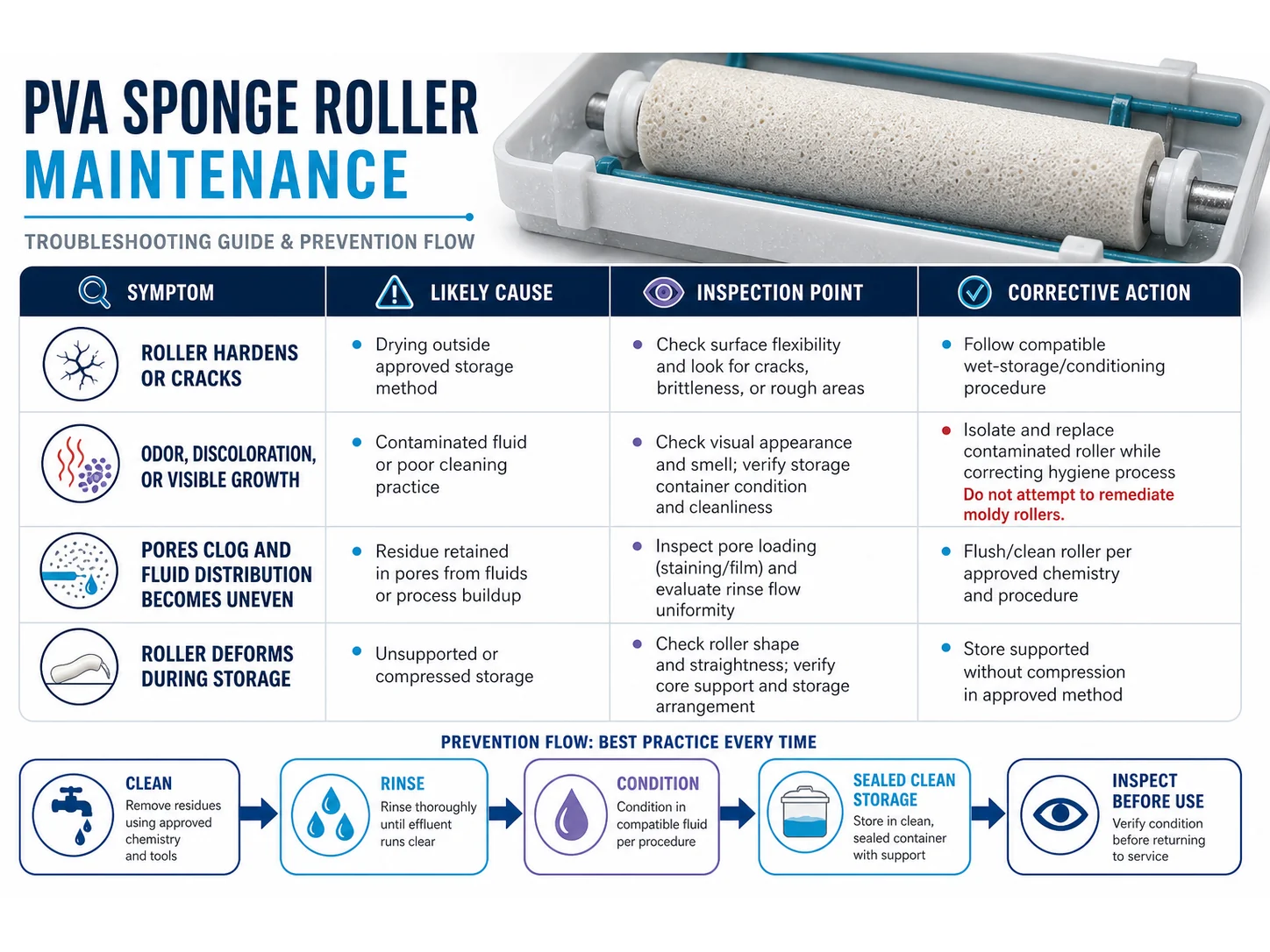
Without a routine care process, PVA sponge rollers deteriorate quickly. Mold thrives in damp, dark environments, and a wet sponge stored in a confined space becomes a breeding ground within hours. Hardening occurs when the sponge dries out completely in a compressed or contaminated state, causing the porous structure to collapse or become brittle. Both conditions reduce cleaning performance and can damage the surfaces you are cleaning.
Cleaning a PVA Sponge Roller: Key Steps
Regular cleaning prevents residue buildup that can feed mold and cause stiffness. Follow these steps:
- Rinse the roller immediately after use with clean, lukewarm water to remove loose dirt and cleaning solution.
- For deeper cleaning, gently squeeze the sponge in a bucket of clean water—do not wring or twist aggressively.
- If the roller has been used with detergents or chemicals, soak it in fresh water and squeeze multiple times until the water runs clear.
- Periodically, use a mild vinegar solution (one part white vinegar to three parts water) to kill bacteria without damaging the sponge. Soak for 10–15 minutes, then rinse thoroughly.
- Never use bleach, ammonia, or harsh solvents—they can break down the PVA material.
Drying and Storage Best Practices
Proper drying is the single most effective pva sponge maintenance step to prevent mold and hardening. After each use:
- Squeeze out excess water without twisting. Lay the roller on a dry, absorbent towel and roll it gently to remove surface moisture.
- Hang or place the roller in a well-ventilated area away from direct sunlight or heat sources. Sunlight and high heat can degrade the sponge and cause hardening.
- Never store a damp roller in a sealed container or tight space. Allow complete air circulation until the sponge is just slightly moist—not bone dry. Completely dry PVA sponge becomes hard and must be rehydrated before next use.
- Ideal relative humidity for storage is between 40–60%. In very dry environments, store the roller in a breathable bag with a slightly damp cloth to prevent over-drying.
Indicators of Degradation: When Cleaning Is Enough vs. Replacement
It’s important to recognize the difference between surface dirt and irreversible damage. Signs that cleaning may restore the roller:
- The sponge has a musty smell but no visible black spots—mold is still in the early stage and can be killed with vinegar soaks and proper drying.
- The roller feels stiff but rehydrates and softens after soaking in water for 15–30 minutes.
- There is visible dirt on the surface that can be rinsed away.
Signs that replacement is necessary:
- Dark mold spots penetrate deep into the sponge and do not disappear after cleaning—the mycelium has grown into the core.
- The sponge remains hard and brittle even after prolonged soaking, indicating chemical breakdown or permanent collapse of the cell structure.
- The roller develops surface cracks, crumbling edges, or loses its shape permanently, which can scratch delicate surfaces.
- Absorbency drops significantly despite thorough cleaning, suggesting the pores are clogged irreversibly.
- Persistent foul odor after disinfection, indicating bacterial contamination that poses a hygiene risk.
Common Mistakes to Avoid
Many roller failures are caused by simple, avoidable errors:
- Storing the roller wet in a closed bucket or under a sink where air cannot circulate.
- Using hot water for cleaning or drying in direct sunlight—heat can alter the PVA chemical structure.
- Wringing or twisting the sponge with excessive force, which can tear the foam and break the bonding to the core.
- Applying bleach or strong alkaline cleaners that degrade the PVA polymer.
- Allowing the roller to dry completely in a compressed position, leading to permanent flat spots.
- Using the same roller across incompatible chemicals without rinsing, causing internal contamination.
When PVA Sponge Rollers Are Not the Best Choice
While PVA sponge rollers excel at thin-film water pickup, they are not suitable for every task. For heavy debris or rough surfaces, a brush roller or microfiber roller may be more durable. PVA can be damaged by oils, solvents, and high-temperature applications. If your cleaning process involves aggressive chemicals or temperatures above 50°C (122°F), consider alternative materials such as silicone or natural rubber sponges.
Final Takeaway
Effective pva sponge maintenance boils down to three principles: rinse after use, dry in open air until just slightly moist, and store in a humidity-controlled space. Inspect the roller regularly and replace it at the first sign of irreversible damage to maintain cleaning quality and avoid cross-contamination. A simple care routine can double the service life of your PVA sponge roller while keeping it odor-free and fully functional.
PVA Sponge Roller Maintenance Checklist
| Problem | Likely Cause | Practical Check |
|---|---|---|
| Hardening | Drying method, chemical exposure, or storage issue | Review cleaning liquid, storage condition, and roller wetting behavior. |
| Mold or odor | Moist storage without cleaning | Check drying, rinsing, and storage airflow. |
| Uneven absorption | Surface clogging or uneven wear | Inspect the roller face and compare wetting across the width. |
| Surface marks | Contamination or excessive contact | Test on a sample surface and inspect trapped particles. |
Practical Use Note
In daily use, the practical test is simple: check whether the brush reaches the full contact area, removes the target residue, and leaves the surface in the required condition. Record what changes when screen opening, belt or surface material, carryback, uptime risk, and whether the brush can clean without process damage changes, because many brush failures are caused by the working condition shifting rather than by the brush body alone.
Frequently Asked Questions
How often should I clean my PVA sponge roller?
Ideally, rinse the roller after each use. A deeper cleaning with a mild vinegar solution every one to two weeks is recommended if the roller is used daily in a humid environment.
Can I soak a hardened PVA sponge roller to restore it?
Yes, soak the roller in lukewarm water for 15–30 minutes. Most hardened PVA sponges will rehydrate and become soft again if the hardening is due to drying and not chemical damage. If it remains stiff, replacement is needed.
What is the best way to kill mold on a PVA roller?
A vinegar soak (1:3 ratio) for 10–15 minutes, followed by thorough rinsing and air drying, is effective against surface mold. For deep mold penetration, replacement is the safest option.
Should I store my PVA sponge roller in water to keep it soft?
No. Constant submersion promotes mold and bacterial growth and can degrade the material over time. Store it damp but not soaking wet, in a ventilated space.
Why does my PVA roller have a bad odor even after cleaning?
Persistent odor usually indicates bacterial contamination within the sponge pores. Deep clean with vinegar, ensure thorough drying, and if the smell remains, replace the roller to prevent hygiene issues.
Can I use hot water to clean the roller?
Hot water (above 40°C / 104°F) can damage the PVA structure and cause it to become brittle. Stick to lukewarm or cool water.
How long should a PVA sponge roller last?
With proper pva sponge maintenance, a quality roller can last several months of daily use. Replacement frequency depends on usage intensity, chemical exposure, and adherence to drying/storage guidelines.
Is it safe to use a PVA roller after it has molded and been cleaned?
If the mold is superficial and fully removed with cleaning, it may be safe. However, deep mold discoloration or persistent odor indicates that spores remain, which can transfer to surfaces. In such cases, replace the roller.