
Custom Cleaning Brush
Nylon Brush Wheel
Nylon PA filaments work at the tips, so the wheel lifts oxide and loose contamination and leaves a satin finish without changing part geometry.
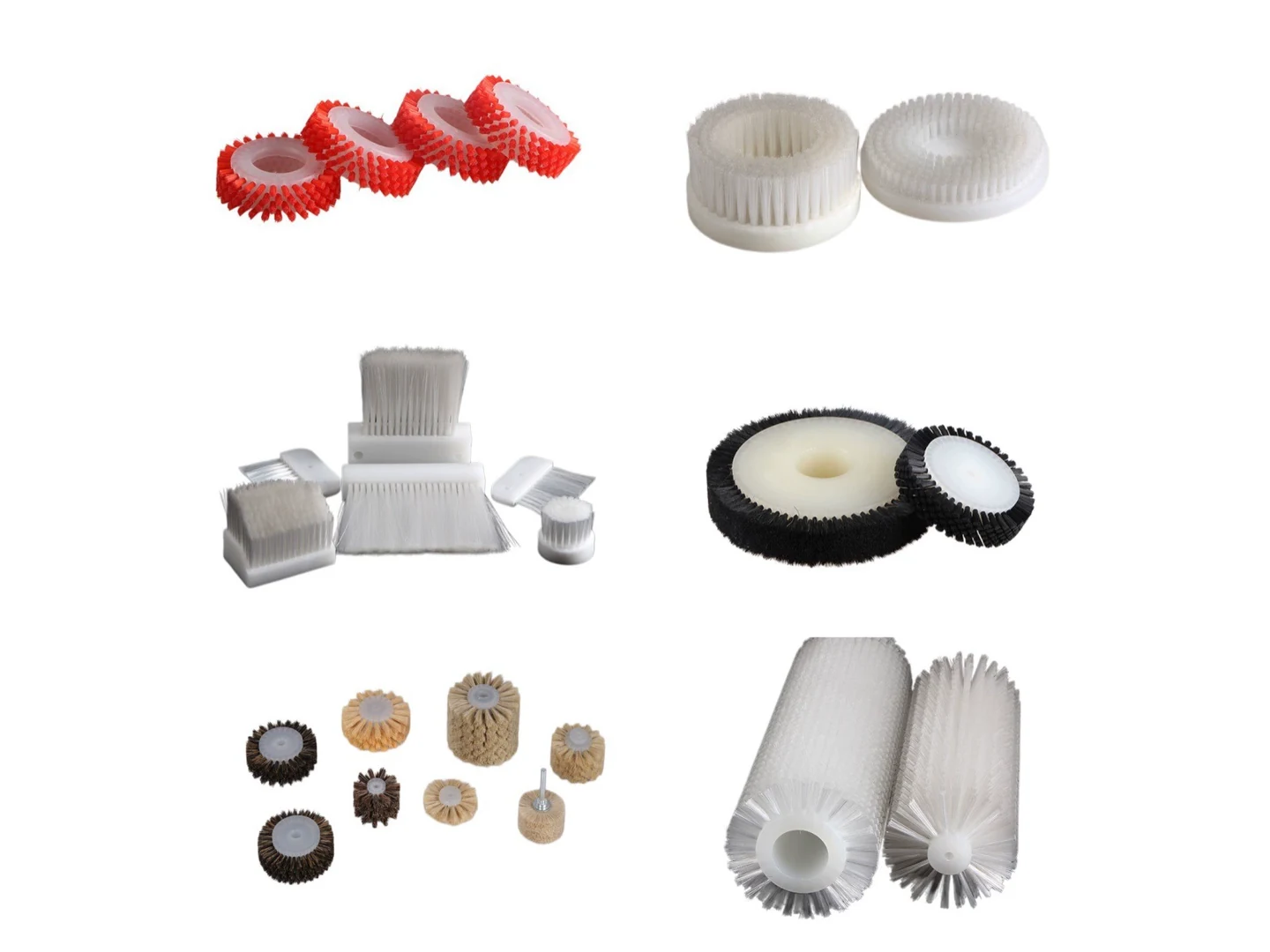
Medium brush
100 pcs
Minimum order
Worked with two hands or on a pole: chimney, gutter and pond-filter brushes, discs, cups and tank brushes.
Production lead time, once the specification is confirmed
- Up to 100 pcsWithin 7 days
- 101–5,000 pcsWithin 14 days
- 5,001–50,000 pcsWithin 21 days
- Over 50,000 pcsConfirmed with your quotation
Peak season can extend these times; the shipping date is confirmed in writing with your quotation. Sampling and shipping are quoted separately.
A rotary nylon brush wheel for surface cleaning, light oxide removal, and uniform satin finishing on flat faces, edges, profiles, and recesses. Designed for bench grinders, pedestal spindles, and dedicated brush machines, it removes dust, light residue, and loose particles without aggressive stock removal or wire shedding.
What can this brush do for you?
Clean and finish without changing part geometry
Nylon PA filaments flex under load and work primarily at the tips. The wheel removes loose contamination, light oxide, and surface residue while leaving the base material dimensionally intact. On aluminum, brass, stainless steel, and coated surfaces, this controlled contact reduces the risk of gouging or over-abrading that a stiffer wire wheel can cause.
Reach into profiles and recesses that rigid tools skip
Flexible filament tips follow fillets, grooves, and edge transitions as the wheel rotates. Shorter trim lengths deliver more direct pressure for flat faces; longer trim lengths conform around curved profiles. The wheel keeps contact in localized work zones without requiring the operator to switch tools.
Resists loading with loose debris
Nylon filaments shed dust, light oxide, and loose particles during rotation instead of trapping them between abrasive grains. The wheel stays open and effective longer than a coated abrasive flap wheel in dusty or oily conditions, reducing cleaning downtime and extending working time between dressings.
No metallic filament shedding into the workpiece
Unlike wire wheels, nylon filaments do not break into small metal fragments that can embed in aluminum, brass, or stainless parts. This matters when the workpiece later receives paint, plating, anodizing, or adhesive bonding, where embedded wire particles would create surface defects.
Uniform contact from a balanced, dense fill
The filament pack is filled to a controlled density and trimmed to a uniform length around the hub. A true-running wheel applies consistent contact pressure across the face width, which produces a more even satin finish and reduces operator fatigue from vibration.
Long service life relative to wire brushes
Nylon filaments recover their shape after deflection and resist brittle fracture. A properly specified nylon brush wheel will typically outlast a comparable wire wheel in light cleaning and finishing work, especially on softer metals where aggressive wire tips wear quickly or cause damage.
What is a Nylon Brush Wheel?
A Nylon Brush Wheel is a rotary brush built with densely packed nylon PA filaments anchored around a central hub, bore, or threaded arbor. It mounts on a rotating spindle—most often a bench grinder, pedestal grinder, or dedicated brushing machine—and contacts the workpiece with the filament tips while spinning. The wheel removes light contamination, oxide films, residues, and loose particles, and it can produce a controlled satin or brushed finish on metal, plastic, and composite surfaces.
The working action comes from the flex and recovery of the nylon filaments. As each filament tip strikes the surface, it wipes away loosely attached material and lightly burnishes the contact area. Because nylon is softer than steel and most abrasive grains, it does not cut deeply into the base material. The result is a cleaning and finishing step that preserves dimensional accuracy while improving surface uniformity.
Nylon brush wheels operate dry or with a light lubricant or polishing compound, depending on the residue and the desired finish. The most important operating consideration is contact pressure: the wheel is designed to work on the filament tips, not on the side of the filament pack. Heavy side pressure bends filaments past their useful flex range, generates excess heat, accelerates fatigue, and does not improve cleaning performance.
This is a tool for light surface preparation, oxide removal, residue cleaning, and final finishing. It is not a stock-removal tool. For heavy scale, deep rust pitting, or weld splatter removal, a knotted wire wheel, coated abrasive, or grinding wheel should be considered instead.
Technical Specifications
The table below lists the main parameters that determine fit and performance. All dimensions and material grades can be adjusted to the project requirement.
| Parameter | Value / Options |
|---|---|
| Wheel outer diameter | 25–350 mm, selected for machine clearance and contact area |
| Working face width | 5–100 mm, matched to the part width or target zone |
| Filament diameter | 0.15–0.80 mm, thinner for fine finishing, thicker for more aggressive cleaning |
| Free trim length | 10–60 mm, longer for contour conformance, shorter for higher tip pressure |
| Fill material | Nylon PA (PA6, PA66, PA612, heat-stabilized, anti-static, or abrasive-impregnated grades) |
| Arbor / hub | 6–32 mm bore, M10–M16 thread, keyed bore, set-screw hub, or custom flange |
| Filament shape | Straight, crimped, or spiral-set, depending on stiffness and conformance needs |
| Maximum operating speed | Determined by wheel diameter and construction; typical range 1,500–6,000 RPM for common sizes |
| Operating temperature | Continuous use up to 120 °C for standard nylon; heat-stabilized grades available for higher contact temperatures |
| Contact setting | Use only the filament tips; heavy side pressure bends filaments and increases fatigue without improving cleaning |
| Brush type | Custom Wheel Brushes |
| How it is driven | Machine-driven, mounted in the equipment |
| Cleaning target | metal fabrication and machining, automotive and powertrain component, and woodworking tool maintenance cleaning |
| Surface or part | edges, flat faces, profiles, bores, welds, metal, recesses, and hubs |
| Residue or debris | oxide, loose particles, rust, dust, light residue, weld discoloration, scale, and pitch |
| Mounting / connection | 6–32 mm bore, M10–M16 thread, keyed bore, set-screw hub, or custom flange |
Wheel outer diameter, face width, filament diameter, trim length, and hub configuration are the primary fit dimensions. Before ordering, verify the spindle speed of the machine against the wheel’s maximum rated speed; overspeeding generates frictional heat that can soften nylon and reduce service life.
Where does this brush work best?
- Metal fabrication and machining: removing light rust, oxide, tarnish, and weld discoloration from steel, aluminum, stainless, brass, and copper parts prior to coating or assembly.
- Automotive and powertrain components: cleaning gasket surfaces, flange faces, and internal bores; preparing castings for sealing or painting where wire brushes risk embedded fragments.
- Woodworking tool maintenance: removing pitch, resin, and sawdust buildup from saw blades, router bits, and shaper cutters without dulling carbide edges.
- Plastic and composite parts: light flash removal, edge softening, and surface preparation before bonding, painting, or printing.
- Electrical and electronic housings: gentle cleaning of connector bodies, terminal blocks, and enclosures where metallic brush remnants must be avoided.
- General surface finishing: producing a consistent satin or brushed appearance on flat faces, edges, and contoured profiles in low- to medium-volume production and maintenance shops.
How do I choose the right one?
Start with the machine and mounting interface. Measure the spindle or arbor size and the available space around the work area. The wheel outer diameter must fit the machine guard and provide enough reach to the contact zone. Confirm the bore, thread, keyway, or flange pattern matches the drive spindle. Oversizing the wheel for the machine will force the operator to work with excessive side pressure, which the nylon filament pack is not designed to handle.
Match filament diameter to the cleaning or finishing requirement. Thin filaments (0.15–0.30 mm) give soft, compliant contact for fine finishing, denibbing, and delicate surfaces. Thicker filaments (0.40–0.80 mm) apply more tip pressure for removing light oxide, paint residue, or baked-on deposits. If the job requires a more aggressive cut without switching to a wire or abrasive disc tool, an abrasive-impregnated nylon grade (with aluminum oxide or silicon carbide grain) can be specified.
Set trim length for conformance versus pressure. A longer trim length (30–60 mm) lets filaments bend around curves and into recesses, but the contact force at the tip is lower. A shorter trim length (10–20 mm) produces a stiffer brush with higher tip pressure, better for flat faces and edge deburring. For parts with mixed geometry, a face width that covers the largest continuous zone is usually the most efficient choice.
Consider the environment. Standard nylon absorbs moisture, which can reduce stiffness and cause dimensional change in humid or wet conditions. For wet cleaning, coolant exposure, or high-humidity plants, specify a moisture-stabilized PA grade. For high-speed or continuous production, heat-stabilized nylon resists softening from frictional heat better than general-purpose PA6.
Check the maximum operating speed rating. Every wheel diameter has a maximum safe RPM. Exceeding this speed causes filament flaring, heat buildup, and premature loss of fill. Compare the wheel rating against the actual spindle speed of the grinder or machine. If the machine runs faster than the wheel allows, select a smaller diameter or a reinforced hub construction.
When to use a different brush or cleaning method. For heavy rust scale, weld flux, or thick paint, a knotted wire wheel or coated abrasive disc will clean faster. For deep surface reconditioning or stock removal, a grinding wheel or non-woven convolute wheel is more appropriate. For extremely fine polishing or mirror finishing, move to a buffing wheel with compound. The nylon brush wheel is the right choice when the goal is light, controlled cleaning and finishing without altering part geometry.
Can I customize this brush?
Nylon brush wheels are highly configurable because each application has a different spindle, part geometry, residue type, and finish requirement. To define a custom wheel, provide the following: target wheel outer diameter, bore or thread specification, desired face width, filament diameter and trim length, part material, residue type, machine spindle speed, and whether the process is wet or dry. A drawing, sample part, or photo of the current brush accelerates the specification.
We can adjust:
- Wheel geometry — outer diameter, face width, hub thickness, and overall profile
- Filament material — PA6, PA66, PA612, heat-stabilized, moisture-stabilized, anti-static, or abrasive-impregnated nylon
- Filament configuration — diameter, trim length, straight or crimped set, density, and fill pattern
- Hub and mounting — bore, keyway, set screw, thread, flange, or custom adapter plate
- Finish and marking — color coding, laser marking, pad printing, or custom identification
- Packaging — bulk, individually wrapped, retail box, or project-specific packing
If your project requires material declarations, batch traceability, inspection reports, or third-party testing support, we can assist with those requirements as part of the customization process.
Which filament survives the cleaning and still lasts on a nylon brush wheel?
What should I check before mounting a nylon brush wheel?
Verify that the bore or thread matches the spindle, the wheel’s maximum RPM rating is higher than the machine speed, the wheel runs true when rotated by hand, and no filaments are visibly broken or melted near the hub. Also confirm that the machine guard is correctly positioned and that the work area is clear of loose parts that could be thrown by the wheel.
How can I tell when the wheel is worn out and needs replacement?
Replace the wheel when the trim length is reduced by about 50% from its original value, when the face width becomes uneven, when filaments show signs of melting, flattening, or permanent deformation, or when vibration increases noticeably during use. A wheel that no longer produces the required finish in the normal cycle time is also due for replacement.
Does a nylon brush wheel remove metal from the workpiece?
Standard nylon filaments remove only loosely attached material and very light surface films; they do not significantly cut the base metal. Abrasive-impregnated nylon wheels remove a small amount of material during finishing, but still far less than a wire or abrasive disc. If dimensional change is a concern, always test the wheel on a sample part and measure before and after brushing.
Can I use a nylon brush wheel with coolant or liquid?
Yes, but the nylon grade must be moisture-stabilized to avoid dimensional change and loss of stiffness. Standard PA6 absorbs water and may soften or swell in continuous wet use. Specify a stabilized grade and confirm that the hub and adhesive are compatible with the coolant chemistry.
What is the safe operating speed for a nylon brush wheel?
The maximum safe speed depends on the wheel diameter, filament length, and hub construction. As a general guide, smaller wheels can operate at higher RPM. Always use the speed rating printed on the wheel or provided in the specification sheet, and never exceed it. Overspeeding causes filament flaring, heat buildup, and possible filament ejection.
How do I remove residue that has built up on the wheel itself?
For most loose dust and light residue, run the wheel briefly against a clean scrap surface at normal speed. For heavy pitch, resin, or adhesive buildup, stop the wheel and clean it with a stiff hand brush and an appropriate solvent that is compatible with nylon. Do not use a wire brush to clean the nylon filaments, as it can tear or fray them and shorten service life.
Guides that go deeper on this
Car Wheel Brush: Material and Size for Weld Cleanup
Read this guideGuideCup Brush vs Wheel Brush Speed and Pressure Trade-Offs
Read this guideGuideHow to Choose Nylon Abrasive Wheel Brush
Read this guideGuideHow to Choose Nylon Brush Wheel
Read this guideGuideWheel Brush: Material and Size for Rust Removal
Read this guideGuideAbrasive Nylon Grit and Filament Selection
Read this guideGuideAngle Grinder Wire Wheel Brush Mistakes in Weld Cleanup
Read this guideGuideNatural Fiber vs Synthetic Brush Filament
Read this guideCustom Manufacturing RFQ
Describe Your Application
Please include the main sizes, application, residue, preferred material, interface, quantity, and any drawing or sample available.
Drawing or photo optional — it speeds things up, it does not gate the enquiry.
Custom Brush RFQ
Send Your Brush Project
Upload a drawing, product photo, or sample photo and provide the core dimensions and cleaning conditions.
“We need a brush to remove wet residue from a stainless steel conveyor, about 800mm wide. The current brush wears quickly. We can send photos.”
“We sell drinkware and need a cleaning brush to include with the product. Quantity around 5,000 pieces.”