
Custom Cleaning Brush
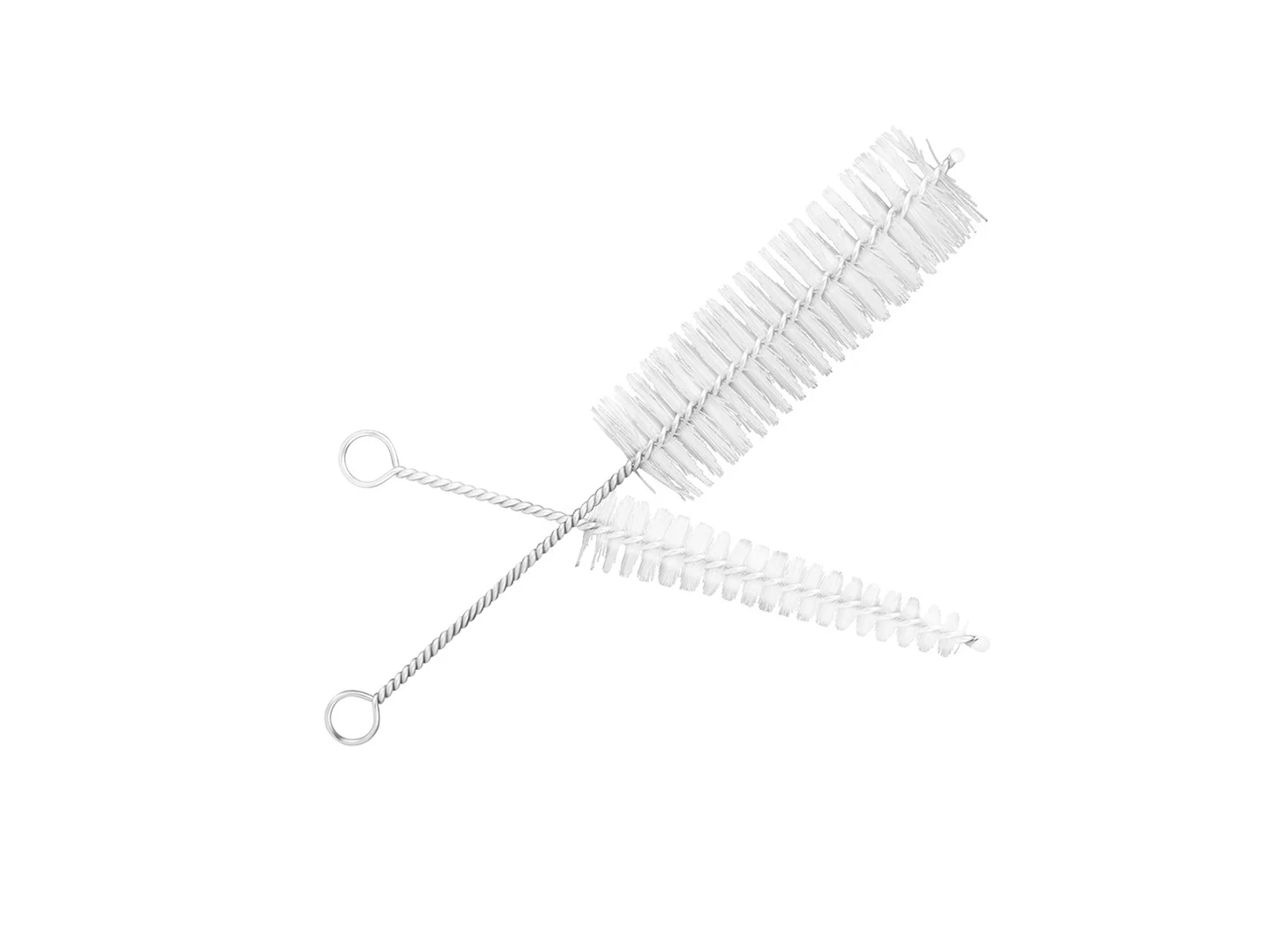
Nylon Tube Brush
Custom nylon tube brushes for bores, tubes, ports and internal passages. Flexible nylon fill, stainless or galvanized stems, 3.2–50.8 mm diameters.
Small brush
500 pcs
Minimum order
Held in one hand: tube, bottle, detail and swab brushes — including long-handled ones with a small head.
Production lead time, once the specification is confirmed
- Up to 500 pcsWithin 7 days
- 501–50,000 pcsWithin 14 days
- Over 50,000 pcsWithin 21 days
Peak season can extend these times; the shipping date is confirmed in writing with your quotation. Sampling and shipping are quoted separately.
A Nylon Tube Brush is a stem-mounted, spiral-fill brush for cleaning bores, tubes, ports, and internal passages. It removes chips, oil, coolant, light scale, and process deposits from internal walls, threads, cross holes, and blind holes without the scratching or sparking risk of wire-fill brushes.
What can this brush do for you?
Contacts the entire bore circumference
The nylon filaments are crimped continuously around the stem so they project in all directions. A rotating or push-pull stroke sweeps the full internal wall, and the filaments flex into cross holes, ports, and intersections that straight tools skip.
Removes residue without marring machined surfaces
Nylon is far softer than steel or brass wire. It dislodges cutting chips, oil films, coolant residue, light carbon, and powder without gouging aluminum, anodized surfaces, seal pockets, or coated bores. The non-sparking, electrically non-conductive fill is also useful around fuels, solvents, and areas where stray sparks are a hazard.
Recovers its shape after passing restrictions
PA nylon filaments bend through tapers, port intersections, and threads, then return to their original set. The brush keeps contact after passing a restriction instead of taking a permanent set the way some metal-fill brushes do.
Works with normal shop and process fluids
The nylon fill tolerates cutting oils, water-soluble coolants, common detergents, and many light solvents. With a 304 or 316 stainless steel stem, the brush can be used in wet parts washers and humid lines without rust streaking back into the bore.
Available in hand, driven, and through-hole configurations
Single-stem, double-stem, threaded, loop, ring, and flexible-extension designs let the same brush family cover blind holes, one-way ports, pull-through tube runs, and powered production cleaning.
What is a Nylon Tube Brush?
A Nylon Tube Brush is a cylindrical cleaning brush built on a wire stem. Nylon filament is twisted into the stem in a continuous spiral, leaving the filament ends standing around the core. The stem gives the brush its reach and rotation control; the filament does the cleaning.
In service, the brush is inserted to the working area and rotated, reciprocated, or pulled through. Filaments deflect against the bore wall and sweep loosened debris ahead of the fill. Rinsing or compressed air removes what the brush has freed.
This is a maintenance and preparation brush, not a cutting or finishing tool. It removes loosely adhered contamination and light deposits. Nylon is not intended for heavy rust, hard scale, weld spatter, or baked-on carbon; those jobs require abrasive or wire fill. The standard nylon PA fill also has a practical service limit around 100°C (212°F) in wet service, so steam and autoclave applications need a different filament grade.
Technical Specifications
The values below cover standard production. We adjust diameter, section length, overall length, filament diameter, and stem construction around your actual tube ID and cleaning process.
| Parameter | Standard range / options |
|---|---|
| Brush diameter | 3.2–50.8 mm (0.126–2.000 in), selected to the tube bore ID |
| Brush section length | 25–127 mm (1–5 in); longer sections available as a project option |
| Overall length | 152–406 mm (6–16 in); matched to reach and handling |
| Filament diameter | 0.08–0.25 mm (0.003–0.010 in) |
| Fill material | Nylon PA (PA6, PA6.6, PA612); PBT and PP alternatives for specific chemical or temperature conditions |
| Stem style | Single stem, double stem, threaded, loop, ring, flexible extension |
| Stem material | Galvanized steel; 304 or 316 stainless steel for wet and corrosive duty |
| Filament trim | Continuous spiral fill standard; straight, crimped, or flagged trim available |
| Typical max temperature, nylon PA | About 100°C (212°F) continuous in wet service; lower for sustained dry rotary use |
| Recommended interference | 0–10% over bore ID for wiping films; 10–20% for scrubbing soft residues; lower for delicate finishes |
| Brush type | Custom Tube & Pipe Bore Brushes |
| How it is driven | Hand-guided |
| Cleaning target | cnc and machined component, engine and drivetrain service, and fluid and process line cleaning |
| Surface or part | tubes, bores, holes, ports, passages, thread, walls, and blind holes |
| Residue or debris | scale, oil, coolant, chips, carbon, powder, grease, and light scale |
| Mounting / connection | Threaded Removable / Fixed |
Brush diameter is measured over the free filament tips. The selected diameter should compress enough to enter the tube while retaining wall contact.
Where does this brush work best?
- CNC and machined components: cross-drilled oil holes, hydraulic manifold bores, valve bodies, coolant channels, and tapers where chips and cutting fluid must be cleared before assembly.
- Engine and drivetrain service: oil galleries, brake cylinder bores, injector ports, bearing housings, and fuel-related passages where grease, sludge, and light carbon need removal.
- Fluid and process lines: heat exchanger tubes, spray bars, transfer tubes, dispensing nozzles, and filter housings where powder, scale, or product deposits reduce flow.
- Hygienic and laboratory tubing: sample tubes, glass cylinders, test tubes, and narrow process tubing where non-metallic contact and rinseability matter.
- Pipe and fitting preparation: cleaning inside threads, sockets, and ports before adhesive, sealant, or assembly to keep debris from contaminating the joint.
How do I choose the right one?
Measure the bore before choosing a diameter
Use the minimum tube ID, not the nominal size. Select near-size, 0–10% over, for wiping films and light coolant residue. Choose 10–20% over for scrubbing sticky grease, process powder, or soft scale. Above 20% oversize usually causes binding, stem flex, or early filament wear.
Match filament stiffness to the deposit and finish
For thin films, coolant staining, and polished or coated bores, choose 0.08–0.15 mm filament; it conforms without marking. For heavier oil, carbon, or soft scale, move to 0.15–0.25 mm. Finer filament cleans more gently; thicker filament removes more but can leave contact marks on delicate surfaces.
Let the access path decide the stem
Single stems suit blind holes and hand cleaning. Double stems or loops suit through holes because the operator can pull from both ends. Threaded stems suit powered operation. Flexible extensions follow bends and offset ports. Ring stems provide a retention point on workstations or tool boards.
Choose materials for the environment, not just the bore
Galvanized stems are adequate for dry or oil-wet machine shop use. Specify 304 or 316 stainless when the brush will be used in wet washers, detergents, coolants, or humid conditions. Standard nylon PA works below about 100°C (212°F); choose PBT or PP when higher-temperature or dimensionally stable wet service is required.
Know when nylon is the wrong fill
Nylon will not cut hard rust, mineral scale, burrs, or weld spatter. Use a wire, stainless steel, or coated-abrasive brush for those conditions. If the passage is under 3.2 mm or contains a bend the stem cannot follow, use a miniature flexible-shaft brush. If a single-use or lint-critical bore is involved, consider swabs or a disposable brush program instead.
Can I customize this brush?
Tube brushes are specified around the bore, not off the shelf. For a custom order, provide the minimum internal diameter, bore length, entry and exit points, surface material and finish, residue type, cleaning chemical, operating temperature, and whether the brush will be hand-driven or machine-driven. A drawing, sample tube, or photo of the access path shortens the development loop.
We can configure:
- Brush diameter, section length, and overall length
- Filament diameter, fill density, and trim style
- Fill material and nylon grade, including PA612, PBT, and PP
- Stem style and stem wire diameter, including flexible sections
- Stem material: galvanized, 304 stainless, or 316 stainless
- End treatment: loop, ring, threaded end, handle, or bare wire
- Color, marking, and packaging for production or retail programs
If the project requires material declarations, inspection records, or third-party testing, we can support those requirements as part of the customization process.
Which size and filament should a nylon tube brush be built with?
How do I verify the brush diameter is correct before production?
Measure the tightest point in the bore with pin gauges or a calibrated ID micrometer. Subtract or add the intended interference. Insert a sample brush into the tube: filaments should deflect evenly and the stem should stay straight when the brush is turned by hand. If the stem bows or the brush cannot be rotated without force, the oversize is too large.
Can this brush run on a drill or rotary tool?
Yes, when ordered with a threaded or machinable stem. Run smaller diameters below 1,000 RPM and keep brushes above 12 mm (0.5 in) under about 500 RPM. Reduce speed if the filament feels hot, smells, or becomes permanently bent. Nylon tube brushes are not designed for high-speed wire brush applications.
Does standard nylon PA lose stiffness in wet service?
Nylon PA absorbs some moisture, which can soften the filament and slightly change brush diameter. For wet washers or humid processes where consistent stiffness matters, specify PA612, PBT, or PP. For occasional rinsing with standard detergents, PA6 or PA6.6 is generally acceptable.
How should I clean and store the brush between jobs?
Rinse the filament with a compatible solvent or detergent and remove chips or powder trapped near the core. Air-dry before storage to prevent stem corrosion and filament compaction. Hang the brush by the loop or stem; do not store it resting on the filament, and keep it away from direct heat and ultraviolet light.
When should I replace a nylon tube brush?
Replace it when the filament tips are bent flat, the brush no longer fills the bore (visible gap between filaments and wall during insertion), or the stem has permanent bends or corrosion. A worn brush removes less deposit and can leave residual contamination in the bore.
Would a wire tube brush be a better fit for my tube?
If the deposit is hard scale, rust pitting, burned-on carbon, or metallic burrs, a wire or coated-abrasive brush will cut faster. Nylon is the better choice when the goal is surface-preserving removal of loose or soft contamination, non-sparking operation, or compatibility with machined finishes and coatings.
Guides that go deeper on this
How to Maintain Nylon Tube Brush in Production
Read this guideGuideMesh Screen Cleaning Brush Selection Guide
Read this guideGuideCustom Brush Sampling and Validation Plan
Read this guideGuideHow to Maintain Chimney and Boiler Tube Brushes in Production
Read this guideGuideHow to Maintain Tube Brushes for Plastic Processing Lines
Read this guideCustom Manufacturing RFQ
Describe Your Application
An accurate custom quote starts with the dimensions, working surface, residue, material choice, connection, quantity, and reference files.
Drawing or photo optional — it speeds things up, it does not gate the enquiry.
Custom Brush RFQ
Send Your Brush Project
Upload a drawing, product photo, or sample photo and provide the core dimensions and cleaning conditions.
“We need a brush to remove wet residue from a stainless steel conveyor, about 800mm wide. The current brush wears quickly. We can send photos.”
“We sell drinkware and need a cleaning brush to include with the product. Quantity around 5,000 pieces.”