
Custom Cleaning Brush
Customizable Reusable Flexible Medical Cleaning Brush
Configure a reusable flexible medical cleaning brush for instrument hinges, lumens and channels from 1 to 20 mm. Nylon PA or PP fill, lengths to 2,400 mm.
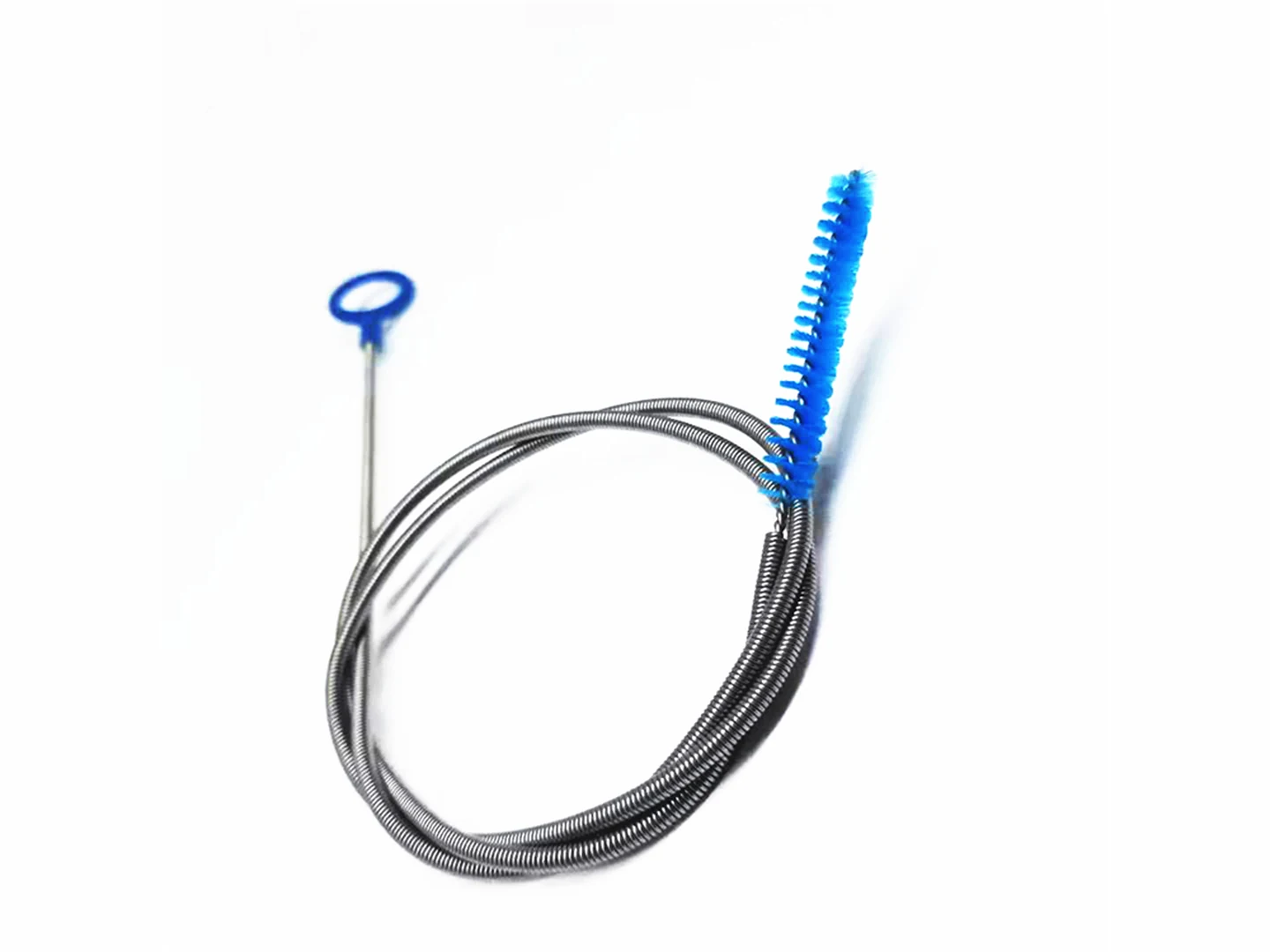
Small brush
500 pcs
Minimum order
Held in one hand: tube, bottle, detail and swab brushes — including long-handled ones with a small head.
Production lead time, once the specification is confirmed
- Up to 500 pcsWithin 7 days
- 501–50,000 pcsWithin 14 days
- Over 50,000 pcsWithin 21 days
Peak season can extend these times; the shipping date is confirmed in writing with your quotation. Sampling and shipping are quoted separately.
A configurable reusable brush for manual cleaning of surgical instrument hinges, serrations, lumens, and curved channels. Flexible shaft construction and controlled nylon PA or polypropylene filaments remove protein residue, lubricant, detergent film, and fine particles without scraping the underlying surface.
What can this brush do for you?
Follow curved lumen paths without binding
The flexible shaft bends with the channel instead of stopping at the first curve. This lets an operator clean suction channels, working channels, and curved instrument passages with one continuous stroke, so residue is not left in the bend where a rigid stem brush would lose contact.
Loosen protein and lubricant without scratching the instrument surface
Nylon PA filaments from 0.05 to 0.35 mm make contact through the filament tips, not a hard metal core. Finer diameters protect coated or polished surfaces while still breaking protein film; coarser diameters remove heavier lubricant and particle buildup from robust hinges and serrations.
Reach narrow internal passages with a controlled head
Head profiles starting near 1 mm clean box locks, small lumens, ratchets, and the bottom of blind channels without overfilling the opening. The working head length is matched to the contact area, so the brush scrubs the surface that actually holds residue.
Stay in service through the reprocessing cycle
The reusable construction uses filament anchoring, handle attachment, and shaft materials selected for repeated detergent, ultrasonic, thermal disinfection, and steam sterilization exposure. The brush remains dimensionally stable enough to be used again for the next instrument set.
Release what it removes instead of carrying it to the next instrument
Open filament spacing and a smooth shaft profile allow loosened debris, detergent film, and fine particles to rinse away during and after use. The brush itself is easy to inspect, rinse, and dry before it returns to the cleaning station.
What is a Customizable Reusable Flexible Medical Cleaning Brush?
A Customizable Reusable Flexible Medical Cleaning Brush is a manual cleaning tool built for instrument decontamination and device reprocessing areas. It combines a flexible shaft or stem with a filament head sized to the internal diameter of the lumen, channel, joint, or serration being cleaned. During use, the operator advances the head into the passage or across the hinge, then applies push-pull and rotating strokes so the filament tips contact surfaces where protein residue, lubricant film, detergent residue, and fine particles collect.
The reusable design means the brush is intended to remain in use across multiple instrument sets, not to be discarded after a single channel. Nylon PA and polypropylene filaments perform the mechanical removal, while the flexible core follows the access path rather than forcing the instrument to adapt to the brush.
This is a manual pre-cleaning and residue-removal tool, not an automated polishing or descaling device. It does not remove hardened cement, corrosion, or polymerized carbon that requires chemical soaking, ultrasonic energy, or dedicated mechanical reprocessing equipment. The correct configuration is determined by the smallest passage, the curve radius, the surface material, the type of residue, and the reprocessing chemicals and temperatures the brush will meet.
Technical Specifications
| Parameter | Specification / Options |
|---|---|
| Brush head width or diameter | 1–50 mm, matched to the passage or surface width |
| Working head length | 5–100 mm, adjusted to the internal contact area |
| Overall length, handheld configurations | 100–600 mm for hand, tube, and double-ended brushes |
| Flexible channel working length | 300–2,400 mm where curved channel access is required |
| Channel internal diameter compatibility | 1–20 mm |
| Filament diameter | 0.05–0.35 mm, finer for delicate surfaces, coarser for heavier residue |
| Fill material | Nylon PA (PA6, PA610, PA612 as project requires); polypropylene PP optional |
| Stem or shaft diameter | 0.5–3.0 mm |
| Shaft construction | Flexible polymer monofilament, twisted nylon, or coated stainless steel wire |
| Handle / interface | PP handle, loop, ring, straight stem, or attachment end configured to the workstation |
| Configuration | Hand brush, tube brush, double-ended, end-tuft, flexible channel brush |
| Reprocessing environment | Material grade selected for intended detergents, enzymatic cleaners, ultrasonic exposure, thermal disinfection, and steam sterilization cycles |
| Brush type | Custom Tube & Pipe Bore Brushes |
| How it is driven | Hand-guided |
| Cleaning target | manual cleaning station, endoscope and instrument channel reprocessing, and cleaning of orthopedic cleaning |
| Surface or part | instruments, channel, serrations, hinges, lumens, passages, bends, and narrow internal passages |
| Residue or debris | protein, lubricant, fine particles, protein residue, detergent film, corrosion, protein film, and detergent residue |
| Mounting / connection | PP handle, loop, ring, straight stem, or attachment end configured to the workstation |
All dimensions are configurable per instrument set. For a new project, provide the smallest internal diameter or gap, curve radius, required working length, surface material, and reprocessing method so the head profile and shaft are matched before sampling.
Where does this brush work best?
- Manual cleaning stations for reusable surgical instruments such as forceps, scissors, needle holders, clamps, and ratchets where box locks, serrations, and hinges trap protein and lubricant.
- Endoscope and instrument channel reprocessing where working, suction, and auxiliary channels from 1 to 20 mm internal diameter require a flexible shaft that follows bends.
- Cleaning of orthopedic, dental, and veterinary instruments including drills, reamers, cannulas, taps, and handpieces with narrow internal passages.
- Laparoscopic and minimally invasive instrument components such as cannulas, sleeves, and shaft interiors where controlled-diameter contact prevents scratching.
- Hospital central sterile and device reprocessing departments that need a reusable cleaning tool capable of surviving repeated detergent and thermal cycles.
How do I choose the right one?
Start with the smallest passage, not the instrument name
Measure the minimum internal diameter or gap where the brush must enter. The head diameter should come close to that opening while allowing the brush to advance and withdraw without forcing. For a 1 mm lumen, use a head near 1 mm; for a 4 mm channel, choose a profile that fills most of the diameter. A head that is too large can lodge or shed filament; a head that is too small will slide through without touching the wall.
Match filament diameter and stiffness to the residue and surface
Finer filaments from 0.05 to 0.15 mm suit delicate surfaces, narrow lumens, and soft protein films. Coarser filaments from 0.20 to 0.35 mm remove heavier lubricant, dried protein, and fine particles from robust stainless steel hinges and serrations. Nylon PA offers a useful balance of stiffness and chemical resistance; polypropylene PP is softer and can be supplied where the surface is coated or the detergent exposure is aggressive. Specify the actual detergent and thermal process before the material is finalized.
Balance flexibility with push-through performance
Long flexible channel brushes need enough column strength to advance through the lumen and enough flexibility to follow the specified bend radius. A shaft that is too soft will buckle; a shaft that is too stiff will jam or transfer pressure to the channel wall. Short hand brushes benefit from a more rigid stem for control inside serrations and box locks. Stem diameter and core material can be adjusted to satisfy both reach and curve requirements.
Confirm the reprocessing fit before committing to a configuration
The brush should remain dimensionally stable after the facility’s manual or automated cleaning sequence, including any thermal disinfection or steam sterilization. Provide the wash chemicals, temperature, and exposure time so the filament and handle materials are selected to survive the same environment they are used in. A reusable brush must hold up to its own reprocessing just as reliably as it cleans the instrument.
When to choose a different cleaning tool
If the channel is below 1 mm or has repeated tight S-curves, evaluate flushing combined with a fine channel cleaning wire or a single-use swab. If the residue is hardened cement, bone, corrosion, or heavy mineral scale, brushing alone is not enough; ultrasonic cleaning, chemical soaking, or dedicated descaling comes first. If the workflow requires strict single-use tools to control cross-contamination, select a disposable brush configuration instead of this reusable one.
Can I customize this brush?
This is a project-built brush family, not a fixed stock item. The head, shaft, filament, and handle are configured to the actual instrument or channel set so the brush fits the dead space instead of asking the operator to force a generic size.
- Head profile: single spiral, double spiral, tufted end, side-bristled tip, tapered, ball-end, or end-tuft geometry matched to the contact area.
- Filament package: Nylon PA (PA6, PA610, PA612) or polypropylene PP, filament diameter from 0.05 to 0.35 mm, density, trim length, and color coding for size traceability.
- Shaft or stem: flexible polymer monofilament, twisted nylon, or coated stainless core from 0.5 to 3.0 mm diameter, with length and stiffness tuned to channel curvature.
- Overall length and reach: 100 to 600 mm handheld configurations or 300 to 2,400 mm flexible channel configurations.
- Handle or interface: PP handle, loop, ring, straight stem, or attachment end to suit the operator or workstation.
- Marking and color: custom filament or handle color, size marking, laser marking, or lot identification for replacement control.
- Packaging: bulk pack, individually sleeved, or kit configuration for the reprocessing workflow.
To define the custom configuration, provide the smallest internal diameter or gap, curve radius, working length, substrate material, residue type, cleaning detergent, thermal process, and preferred handle or interface. A drawing, instrument photo, or sample channel helps validate the fit before bulk production. If the project requires material documentation, third-party testing, or cleaning validation support, we can assist with those requirements during development.
When is a customizable reusable flexible medical cleaning brush worn out rather than just dirty?
How do I know the brush head is correctly sized before using it in an instrument channel?
Dry-fit the brush in a clean representative channel first. It should advance with light resistance, contact the walls, and withdraw without binding, filament cuffs, or shaft kinking. If it grabs or requires excessive force, reduce the head diameter or filament density. If it slides through with no wall contact, increase the size.
What does brushing not replace in the cleaning sequence?
Brushing mechanically loosens attached protein, lubricant, and fine particles, but it does not replace enzymatic soaking, ultrasonic exposure, flushing, rinsing, disinfection, or sterilization. The brush is one step in the total reprocessing sequence, not the entire sequence.
How can I tell when the reusable brush should be retired?
Inspect the brush after each use and after each reprocessing cycle. Replace it when filaments are flattened, missing, permanently bent, or discolored, or when the shaft is kinked, cracked, or no longer holds the head securely. A worn brush loses contact, sheds particles, and can scratch instead of clean.
Is a flexible shaft always better than a rigid stem for instrument cleaning?
No. A rigid stem gives better control for open serrations, box locks, and hinge faces. A flexible shaft is needed only when the access path curves, such as inside a lumen or channel. Choose the shaft based on the actual access geometry rather than assuming flexibility is universally preferable.
How can I verify the brush contacted the entire internal surface?
After brushing and flushing, inspect reachable surfaces under good light or with magnification, or wipe the area with a white lint-free cloth. Visible film, discoloration, or odor indicates the head profile, working length, or stroke motion needs adjustment. For deep channels, a borescope or channel inspection tool can confirm complete contact.
Can one reusable brush clean both the outside of an instrument and its lumen?
It depends on the configuration. A double-ended or end-tuft design can cover external serrations and an internal lumen in a single tool, but if the two areas require very different diameters or stiffness, separate brushes matched to each area are safer. Forcing one size into both jobs often produces poor contact in one and binding in the other.
Guides that go deeper on this
Custom Manufacturing RFQ
Describe Your Application
Send the key measurements, cleaning requirement, residue, material direction, mounting method, quantity, and drawing or photo.
Drawing or photo optional — it speeds things up, it does not gate the enquiry.
Custom Brush RFQ
Send Your Brush Project
Upload a drawing, product photo, or sample photo and provide the core dimensions and cleaning conditions.
“We need a brush to remove wet residue from a stainless steel conveyor, about 800mm wide. The current brush wears quickly. We can send photos.”
“We sell drinkware and need a cleaning brush to include with the product. Quantity around 5,000 pieces.”