
Custom Cleaning Brush
Flexible Rod Brush
Twisted-wire flexible rod brush with nylon or polyester fill for curved pipes, flues, chimneys and bores. 20–60 mm diameter, 200–2000 mm length.
Small brush
500 pcs
Minimum order
Held in one hand: tube, bottle, detail and swab brushes — including long-handled ones with a small head.
Production lead time, once the specification is confirmed
- Up to 500 pcsWithin 7 days
- 501–50,000 pcsWithin 14 days
- Over 50,000 pcsWithin 21 days
Peak season can extend these times; the shipping date is confirmed in writing with your quotation. Sampling and shipping are quoted separately.
A twisted-wire flexible rod brush with nylon or polyester filament fill for cleaning long, curved pipes, flue runs, chimneys, and bores. The brush body flexes with the pipe so the filament ring stays in contact through bends, elbows, and offset sections where rigid wand brushes stop working.
What can this brush do for you?
Follows Bends, Elbows, and Offsets
The filament is captured between two twisted steel wires, and that same wire structure works as a flexible core along the entire length. When the brush enters an elbow or a rising flue section, it bends with the passage instead of locking at the turn. The contact zone keeps moving with the pipe.
Cleans the Full Bore, Not Just the Straight Sections
Because the fill is wound continuously around the core, the filament tips contact the inner wall around the full circumference. A push-and-pull stroke sweeps soot, dust, or loose film from the whole ID, and a small rotation between strokes moves loosened material along the spiral instead of packing it ahead of the brush.
Removes Deposits Without Gouging the Pipe or Lining
Nylon PA and polyester filament ends are stiff enough to break loose soot, ash, lint, and light film, but softer than the base steel or aluminum behind them. For galvanized flue pipe, coated ducts, and thin-wall tubing, the brush removes the layer you want gone without cutting into the surface underneath.
Long Reach Without a Rigid Wand
Overall lengths from 200 mm to 2,000 mm let the brush work from an access opening to the far end of a pipe or flue. The flexible stem feeds through small access points, smoke shelves, and inspection ports while keeping the brush square to the bore.
Fill Material Matched to the Operating Conditions
The brush is built with nylon PA or polyester fill depending on temperature, moisture, and chemical exposure. Nylon offers good toughness and shape recovery; polyester holds up better in hot-wet conditions and under many cleaning chemicals. The fill is selected for the environment, not left as a default.
What is a Flexible Rod Brush?
A Flexible Rod Brush is a twisted-in-wire cleaning brush that combines the brush head and the flexible rod into one continuous tool. A spiral of nylon or polyester filament is set between two steel wires, and the wires are twisted together to lock the fill in place. The twisted core is the brush body, the flexible stem, and the working handle all at once.
In operation, the brush is inserted into the pipe or flue and worked with repeated push–pull strokes. The filament tips sweep the inner wall while the core bends to follow the passage. This is a contact cleaning tool for loose or soft deposits — soot, ash, lint, dust, and light film — not a rodding tool for solid blockages and not a substitute for aggressive steel-wire brushing on hard, bonded deposits.
Because there is no joint between a separate head and handle, the brush will not loosen or pull apart when it is flexed inside a curved passage. That is the main reason it is specified for long pipe flue cleaning and other internal maintenance work where a rigid wand reaches only the first straight section.
Technical Specifications
Standard build parameters are shown below. Most values can be adjusted to the pipe ID, bend radius, residue, and working environment of the actual project.
| Parameter | Value / Options |
|---|---|
| Brush outside diameter | 20–60 mm standard; other sizes on request |
| Overall length | 200–2,000 mm, flexible stem |
| Filament material | Nylon PA or polyester |
| Filament gauge | 0.20–0.60 mm, selected for stiffness and contact |
| Core / stem | Twisted double wire in galvanized steel or 304 stainless steel |
| Fill pattern | Double-spiral standard; single-spiral for lighter contact or faster draining |
| Fill zone length | Matched to the bore depth and contact area; full-length or partial fill |
| End termination | Plain end, loop eye, threaded adapter, or project-specific fitting |
| Temperature limit | Nylon fill approx. 90°C continuous; polyester fill approx. 150°C continuous |
| Chemical exposure | Suitable for water, mild detergents, and many light solvents; confirm with the specific chemical |
| Brush type | Custom Spring Brushes |
| How it is driven | Hand-driven on rods or a flexible shaft |
| Cleaning target | chimney and stove flue pipe, boiler and furnace flue passage, and dryer exhaust and ventilation duct cleaning |
| Surface or part | flues, pipes, bends, bores, passages, elbows, tubes, and walls |
| Residue or debris | dust, soot, ash, lint, light residue, glaze, tar, and soft deposits |
| Mounting / connection | Threaded Removable / Fixed |
Where does this brush work best?
The brush is sized for cylindrical passages, not flat surfaces or open areas. Common installations include:
- Chimney and stove flue pipes: regular soot and ash removal inside metal flue runs before deposits harden into tar or glaze.
- Boiler and furnace flue passages: brushing loose combustion residue from accessible flue sections and heat-exchanger openings where the ID matches the brush diameter.
- Dryer exhaust and ventilation ducts: lint and dust removal in long metal duct runs with bends and offsets.
- Industrial pipe and tube interiors: dust, film, and light residue removal in non-sanitary process lines, machine bores, hollow shafts, and frame tubes.
- Flue and chimney access points: reaching through inspection ports or smoke shelves where a rigid rod cannot follow the path.
How do I choose the right one?
Start with the smallest ID and the tightest radius
Measure the narrowest bore diameter and the tightest elbow radius. Choose a brush outside diameter about 10–20% larger than the pipe ID so the filament tips press against the wall, but do not oversize the brush to the point where it cannot be fed through the elbow without permanent filament flattening. Dry-fit the brush through the worst bend before committing to a production order.
Choose the fill for temperature and chemistry
Nylon PA is the standard for dry soot, dust, and light detergent use up to about 90°C. Polyester is the better choice when the flue is warm, condensation is present, or the cleaning chemical is more aggressive, with a continuous service temperature up to about 150°C. Above that, switch to a metal-fill brush rather than expecting thermoplastic filament to survive.
Match the core to moisture and corrosion
Galvanized steel is sufficient for dry, indoor flue and duct cleaning. If the passage carries condensation, washdown water, or chemical vapor, specify 304 stainless steel wire so the core does not rust and shed contamination back onto the surface just cleaned.
Set length and end termination to the work method
Length is not just reach; it also affects control. A very long, small-diameter core flexes more, which is good for following bends but harder to push straight. For manual push–pull work, choose a loop eye or plain end. If the brush must connect to an extension rod or pull line, specify that termination during quoting and provide the mating thread or attachment dimension.
When this brush is not the right tool:
- Hard scale, rust, or bonded carbon: use a steel or stainless wire brush, or an abrasive-impregnated product after chemical treatment.
- Glazed or hardened creosote: the nylon/polyester fill cannot cut into the deposit; use a professional rotary steel brush and often a chemical creosote treatment first.
- Solid blockages: a flexible rod brush is not a rodding tool and the filament will simply pack around the blockage. Clear the obstruction with rods or a powered auger before brushing.
- Very small tubes below the 20 mm diameter range: switch to a smaller twisted wire or nylon tube brush configured for that ID.
Can I customize this brush?
Every dimension, fill material, core wire, and end feature can be adjusted to the installation. To define the configuration, we need the minimum bore ID, the tightest bend radius, total reach, deposit type, cleaning chemical, working temperature, and how the brush is used — hand-fed, pulled through, or attached to a rod or machine. A sample pipe or photo of the access point speeds up the sample build.
Common customization variables:
- Brush diameter and fill zone: set to the bore ID and the section of pipe that actually deposits material.
- Filament material and gauge: nylon PA or polyester, filament thickness, color, and stiffness profile.
- Core wire: galvanized steel or stainless steel, with wire diameter selected for flexibility and stiffness.
- Fill pattern: double-spiral for denser contact or single-spiral for lighter, faster-draining passes.
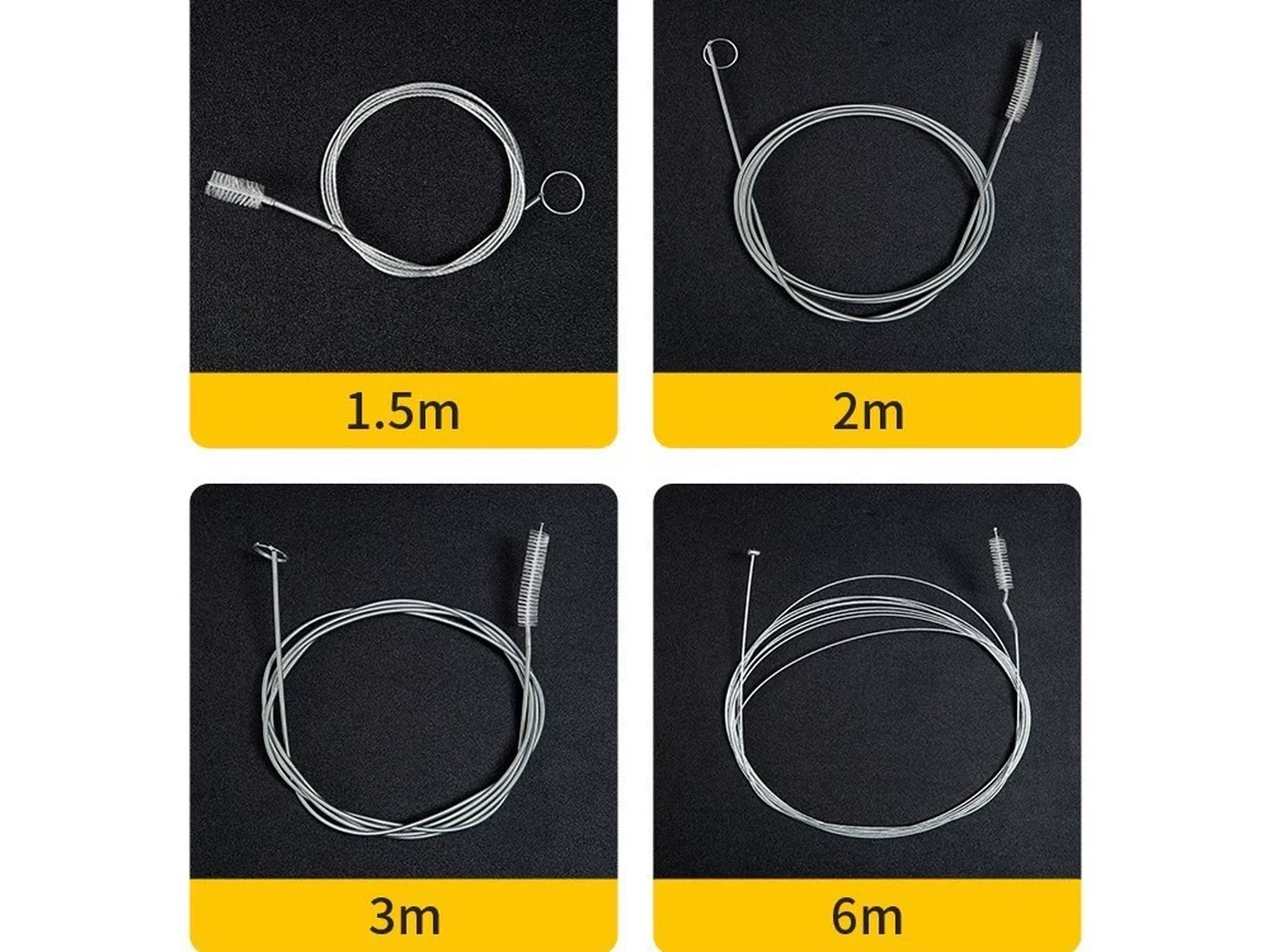
- Overall length: from short access brushes to long multi-meter configurations built around a flexible rod set.
- End termination: plain end, loop eye, threaded adapter, T-handle, or a connection matched to existing extension rods.
- Packaging and marking: bulk packing, individual bag or sleeve, private-label tag, and model marking as needed.
If your project requires material documentation, inspection reports, or third-party testing for a specific customer or application, those requirements can be supported during the customization process.
When is a flexible rod brush worn out rather than just dirty?
How do I tell whether the brush will pass through the tightest bend?
Measure the narrowest bore diameter and the elbow radius, then dry-fit a sample through that section. The brush should slide through without forcing and the filament should spring back after the bend. If the filament stays flattened or the core kinks, reduce the brush diameter, increase the core-wire gauge, or choose a more flexible fill configuration.
What deposits are too hard for this brush?
Scale, rust, bonded carbon, and glazed or hardened creosote are outside the brush’s working range. The nylon or polyester fill will not cut into those layers, and forcing it will only flatten the filament. Use a steel or abrasive brush after appropriate chemical treatment, or pre-treat the deposit before switching to this brush for final residue removal.
Should the brush be rotated during cleaning?
Yes — a partial rotation between push and pull strokes helps move loosened soot along the spiral instead of pushing it into a plug. Keep rotation slow and deliberate for hand use. If the brush is fitted to a drill or motor, limit speed to the value approved for the core construction; a long flexible stem rotated too fast can whip and damage the brush or the pipe.
How long will one brush last in chimney or flue work?
Service life depends on soot abrasiveness, the number of passes, and whether the brush is forced through tight bends. Inspect before each use for missing filament, broken wire ends, or a kinked core. Replace the brush when the outside diameter is visibly reduced, the core will not straighten after flexing, or the filament no longer recovers after passing a bend.
Does brushing remove all creosote from a chimney?
No. A nylon or polyester brush removes loose soot and soft, powdery deposits. Hardened or glazed creosote usually requires a chemical treatment and a more aggressive rotary wire brush. Brushing is one stage in a full chimney cleaning sequence, not a replacement for professional inspection or complete deposit removal.
How can I verify that the pipe or flue is actually clean?
After brushing, inspect the run with a light or borescope at the far end and at each bend. For a quick check, wipe a clean white cloth through a dry section — the cloth should show only light dust, not dark soot or loose debris. If residue remains at the elbow or seam, repeat the brush pass or adjust the diameter and fill zone.
Guides that go deeper on this
We have not written a guide specific to this one yet. The material that covers selection, filament, dimensions, maintenance and sourcing is collected in the technical resources library.
Custom Manufacturing RFQ
Describe Your Application
To quote this brush accurately, send the size, material, cleaning target, residue, quantity, and any available drawing or sample photo.
Drawing or photo optional — it speeds things up, it does not gate the enquiry.
Custom Brush RFQ
Send Your Brush Project
Upload a drawing, product photo, or sample photo and provide the core dimensions and cleaning conditions.
“We need a brush to remove wet residue from a stainless steel conveyor, about 800mm wide. The current brush wears quickly. We can send photos.”
“We sell drinkware and need a cleaning brush to include with the product. Quantity around 5,000 pieces.”