
Custom Cleaning Brush
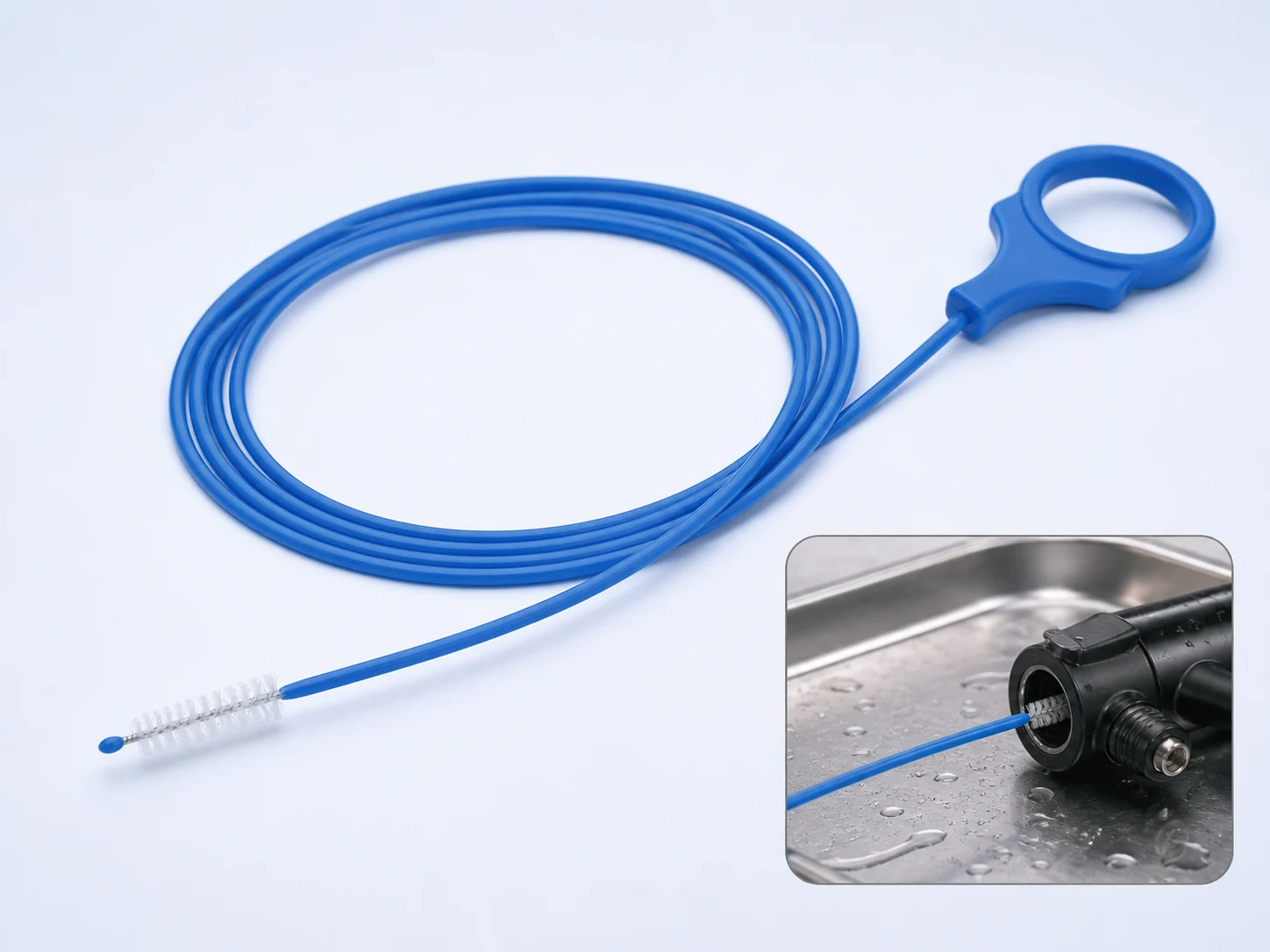
Injection Molded Endoscope Cleaning Brush
Custom injection molded endoscope cleaning brush for 2–10 mm channels. Nylon PA or PBT heads, 300–2,400 mm working lengths, single- and double-ended.
Small brush
500 pcs
Minimum order
Held in one hand: tube, bottle, detail and swab brushes — including long-handled ones with a small head.
Production lead time, once the specification is confirmed
- Up to 500 pcsWithin 7 days
- 501–50,000 pcsWithin 14 days
- Over 50,000 pcsWithin 21 days
Peak season can extend these times; the shipping date is confirmed in writing with your quotation. Sampling and shipping are quoted separately.
The injection molded endoscope cleaning brush is a flexible channel-cleaning tool for endoscope reprocessing, with a molded filament head sized to 2–10 mm internal channels and working lengths from 300 mm to 2,400 mm. It removes protein, lubricant, biofilm, and detergent film from instrument channels, ports, and valve housings while keeping head diameter, fill density, and trim consistent from brush to brush.
What can this brush do for you?
Keeps channel contact consistent across every brush
Injection molding locks the filament roots into a polymer core instead of relying on a twisted wire bundle. The result is a fixed head diameter, bristle density, and trim length, so the brush feels the same in the channel on the first pass and the last, and reprocessing staff can repeat the same manual stroke with predictable wall contact.
Follows curved endoscope channels without dead zones
The flexible shaft and short, molded head negotiate the bends between the biopsy or suction port and the distal tip. As the operator pushes, pulls, and rotates, the head stays in contact with the inside curve and proximal segment instead of skipping across the bend like a rigid straight brush.
Removes the adherent layer that flushing leaves behind
Protein residue, mucus, lubricant, and biofilm can adhere to lumen walls. Nylon PA or PBT filaments with the correct trim length mechanically release this layer while detergent and water carry the loosened debris out of the channel.
Protects channel linings with controlled interference
The head can be specified near-size for wiping or 5–20% oversize when flexible polymer fill is selected for more scrubbing force. This keeps the brushing aggressive enough to clean but below the damage threshold for channel linings; wire-fill options use lower interference.
Reduces tool changes at the port and valve
Single-ended, double-ended, and channel-and-valve combination heads let one brush pass the channel and then clean the port opening, suction cylinder, or valve cavity in the same workflow, which reduces the chance that a contaminated contact surface is skipped.
What is an Injection Molded Endoscope Cleaning Brush?
An injection molded endoscope cleaning brush is a lumen-cleaning tool with a molded filament head permanently captured on the distal end of a flexible shaft or sheath. While twisted-wire brushes wrap bristles between wire strands, this design injects the head polymer around the filament roots in a mold, fixing diameter, density, and trim before the brush enters the endoscope.
It is used during manual pre-cleaning and reprocessing: after patient use, the brush is inserted through the suction, biopsy, air, or water port and advanced through the channel while the operator pushes, pulls, and rotates. The head contacts the full circumference of the channel at the selected interference, dislodging protein, mucus, biofilm, lubricant, and dried detergent film so subsequent flushing can carry them out.
The brush is specified by channel inner diameter and working length, not by endoscope model alone, because gastroscopes, colonoscopes, bronchoscopes, and duodenoscopes carry different channel sizes and lengths across models and generations. Brushing is the mechanical phase of the cleaning sequence; it does not replace detergent exposure, flushing, leak testing, high-level disinfection, sterilization, or drying.
Technical Specifications
All dimensions are project-adjustable. The values below cover common flexible endoscope channel configurations; final head diameter, working length, and materials are matched to your endoscope model and reprocessing protocol.
| Parameter | Value / Options |
|---|---|
| Head construction | Injection-molded polymer core with captured filaments |
| Filament material | Nylon PA or PBT |
| Brush head diameter | 2–12 mm, matched to channel I.D.; near-size for wiping or 5–20% oversize for polymer-fill scrubbing |
| Brush head length | 10–50 mm |
| Working length | 300–2,400 mm |
| Sheath / shaft diameter | 0.8–3.0 mm |
| Channel compatibility | 2–10 mm internal diameter; larger channel and valve geometries by custom head design |
| Head arrangement | Single-ended, double-ended, or channel-and-valve combination |
| Tip style | Rounded molded tip or open tip, selected for distal-end protection |
| End fitting | Loop, thumb tab, bare shaft, or AER-compatible termination |
| Operating environment | Selected for enzymatic detergent, thermal reprocessing temperature, and cleaning chemistry exposure |
| Brush type | Custom Tube & Pipe Bore Brushes |
| How it is driven | Hand-guided |
| Cleaning target | flexible endoscope reprocessing, bedside pre-cleaning immediately, and instrument port and valve cavity cleaning |
| Surface or part | channel, ports, valves, housings, instruments, lumens, cylinders, and sheath |
| Residue or debris | protein, biofilm, lubricant, detergent film, mucus, leaves, and mold |
| Mounting / connection | Loop, thumb tab, bare shaft, or AER-compatible termination |
Where does this brush work best?
- Flexible endoscope reprocessing for suction or biopsy channels, air and water channels, and auxiliary lumens in gastroscopes, colonoscopes, duodenoscopes, bronchoscopes, cystoscopes, and ureteroscopes.
- Bedside pre-cleaning immediately after patient use, where protein and mucus must be removed from the channel before transport to sterile processing.
- Instrument ports and valve cavities when the brush is supplied as a channel-and-valve combination or double-ended configuration for the biopsy port, suction cylinder, or air/water valve housing.
- OEM and private-label cleaning kits where disposable or reusable channel brushes are packed with endoscopes, reprocessing trays, or single-use cleaning accessories.
- Reprocessing training and validation when the department needs a repeatable brush profile to standardize manual cleaning across staff and shifts.
How do I choose the right one?
Start from the channel, not the endoscope model name. Measure the narrowest internal diameter and the full length from port to distal tip, then match the brush to those values.
Match head diameter to safe interference
For routine wiping, choose a head diameter near the channel I.D. For flexible polymer fill, a 5–20% oversize head increases scrubbing force while usually remaining safe for the channel lining; wire fill uses less interference. Do not use a head that binds during insertion or requires force to advance.
Set working length for complete distal-tip access
The working length must cover the full channel from the port to the distal tip plus enough control allowance outside the endoscope. Too short leaves the distal segment uncleaned; too long reduces feel and control in short channels.
Choose the filament for the residue and surface
Nylon PA is softer, conforms to the channel wall, and is appropriate for routine biofilm and protein removal and gentle protocols. PBT is stiffer, holds its shape in warm detergent solutions, and provides more mechanical action for tenacious deposits; select it only when the channel material tolerates the higher scrubbing force.
Select the head arrangement for the workflow
Single-ended heads are best for one dedicated channel. Double-ended heads let one brush cover two channel sizes. Channel-and-valve combinations clean the lumen and the port or valve cylinder in sequence, which is useful when the same staff member is responsible for both surfaces.
Confirm shaft flexibility and reprocessing exposure
Tell us the cleaning chemistry, temperature, and whether the brush will be single-use or processed through multiple cycles. The shaft, sheath, and molded head core are then selected for the actual exposure; a brush optimized for cold enzymatic washing may not survive high-temperature thermal disinfection cycles without material changes.
When a different tool is the better choice. If the channel is blocked or cannot accept at least a near-size head without binding, do not force the brush. Use flushing or an appropriately smaller lumen brush. For optical surfaces, external control knobs, or electrical contacts, contact-free cleaning or soft nonabrasive wipes are more appropriate than a channel brush.
Can I customize this brush?
Yes. Endoscope channel diameters and lengths vary by manufacturer and model, so the brush is normally ordered as a project-specific configuration. To define the custom version, provide the channel I.D. and working length for each channel, endoscope model or drawing, required head arrangement, reprocessing chemistry and temperature, single-use or reusable intent, and any packaging requirement. A sample endoscope, channel diagram, or used reference brush helps us resolve fit details faster.
Typical adjustable variables include:
- Head geometry — head diameter, head length, tapered or straight profile, rounded or open tip, and multi-diameter tip sections.
- Filaments — nylon PA or PBT, filament diameter, trim length, density, and color.
- Head core polymer — selected for chemical and thermal exposure and bristle retention.
- Shaft / sheath — shaft diameter, flexibility, polymer or coated-wire core, and working length increments.
- Head arrangement — single-ended, double-ended, or channel-and-valve combination.
- End fitting and identification — loop, thumb tab, bare shaft, or color-coded ring for channel size.
- Packaging — bulk, individually wrapped, pouch, kitted with cleaning accessories, or private-label presentation.
- Project support — material declarations, inspection protocols, or third-party testing aligned with your project requirements.
What size should an injection molded endoscope cleaning brush be, and how long does it last?
How do I confirm the head diameter is safe for my endoscope channel?
Compare the head diameter to the narrowest internal channel dimension. Use near-size for wiping and up to 20% oversize only with flexible polymer fill; use lower interference with wire fill. Advance the brush slowly while rotating during the first pass. If you feel binding or sudden resistance, stop and select the next smaller head.
Can this brush be sterilized or reused?
The brush can be produced as single-use or reusable depending on the selected shaft, sheath, and head core materials. If reuse is intended, specify the cleaning, disinfection or sterilization method, temperature, and cycle count so the correct material combination is supplied and validated for your process. Many facilities choose single-use lumen brushes because it removes reprocessing variability from the patient-contact tool.
What is the practical difference between PA and PBT in the channel?
Nylon PA is softer and more conformable, which makes it suitable for routine protein and biofilm removal and for channels where low abrasion is required. PBT is firmer, holds its geometry in warm detergent solutions, and gives more scrubbing action on tenacious deposits. Choose the material based on the residue type and the channel lining tolerance, not interchangeably.
How do I know the brush reached the entire channel?
Measure the channel length from the port to the distal tip and add the control allowance outside the endoscope. The brush should advance to the known depth without forcing. After withdrawal, inspect the brush for visible debris and any lost filaments, then flush the channel and observe the effluent. Residual debris at the distal tip usually indicates that the working length or head length needs adjustment.
Can the same brush clean all channels in one endoscope?
Rarely, because air, water, suction, and biopsy channels often have different diameters. A single-ended brush should only be used in the channel it was sized for. If you need one device for two channel sizes, choose a double-ended or combination configuration, or build a color-coded set where each head diameter is dedicated to one channel.
Does brushing replace automated reprocessing or chemical disinfection?
No. Brushing removes adherent debris from the channel wall, but flushing, detergent exposure, rinsing, high-level disinfection or sterilization, and drying are separate required steps. The brush is the mechanical phase that makes those later steps effective, not a substitute for them.
Guides that go deeper on this
RELATED BRUSH RESOURCES
Recommended Reading & Related Brush Resources
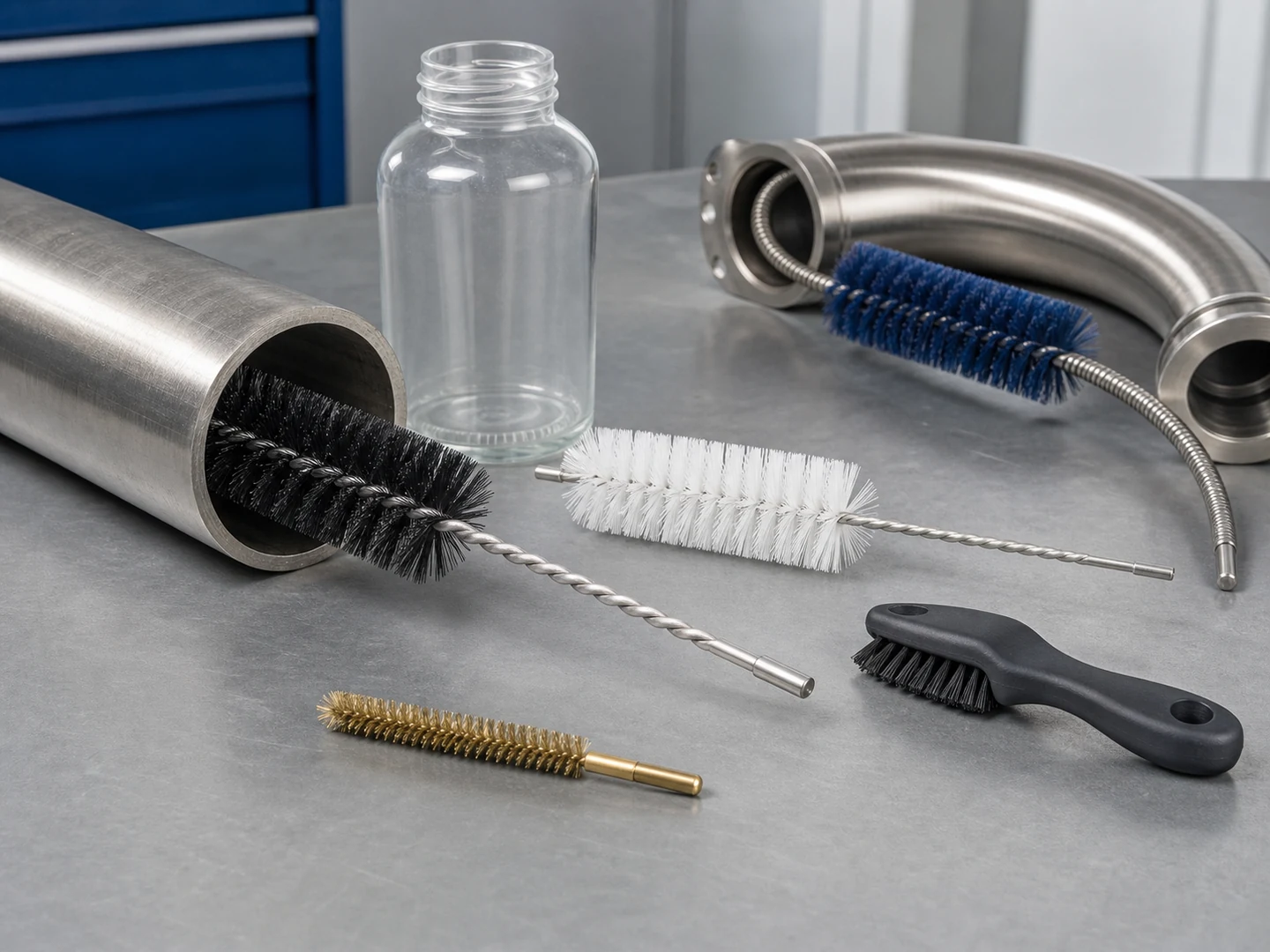
Custom Tube & Pipe Bore Brushes
Choose a tube, pipe, or bore brush when the working surface is inside a…
See how this type is built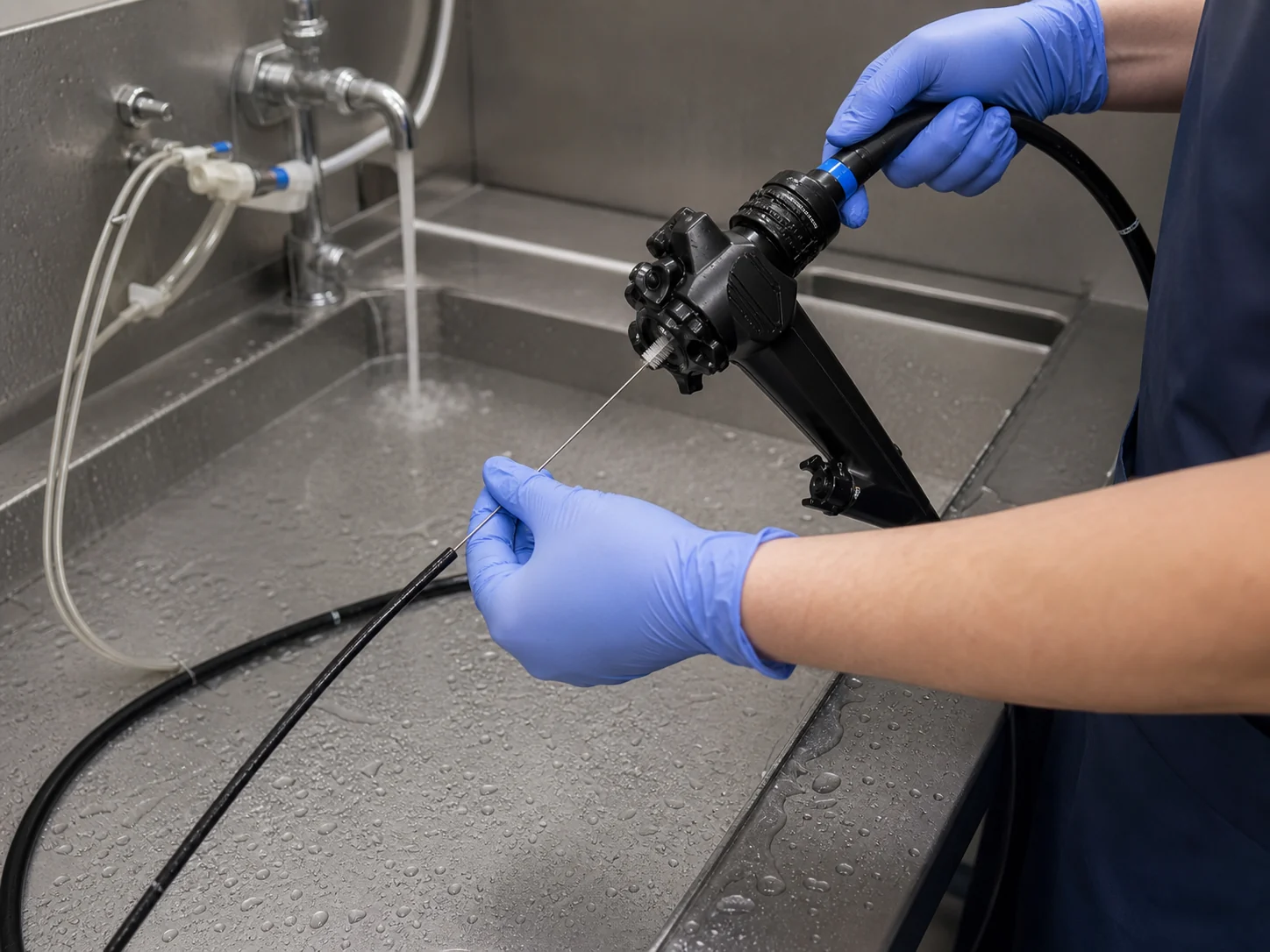
Endoscope Channel Cleaning
For Endoscope Channel Cleaning, the brush must reach the working area, disturb or collect…
See the cleaning job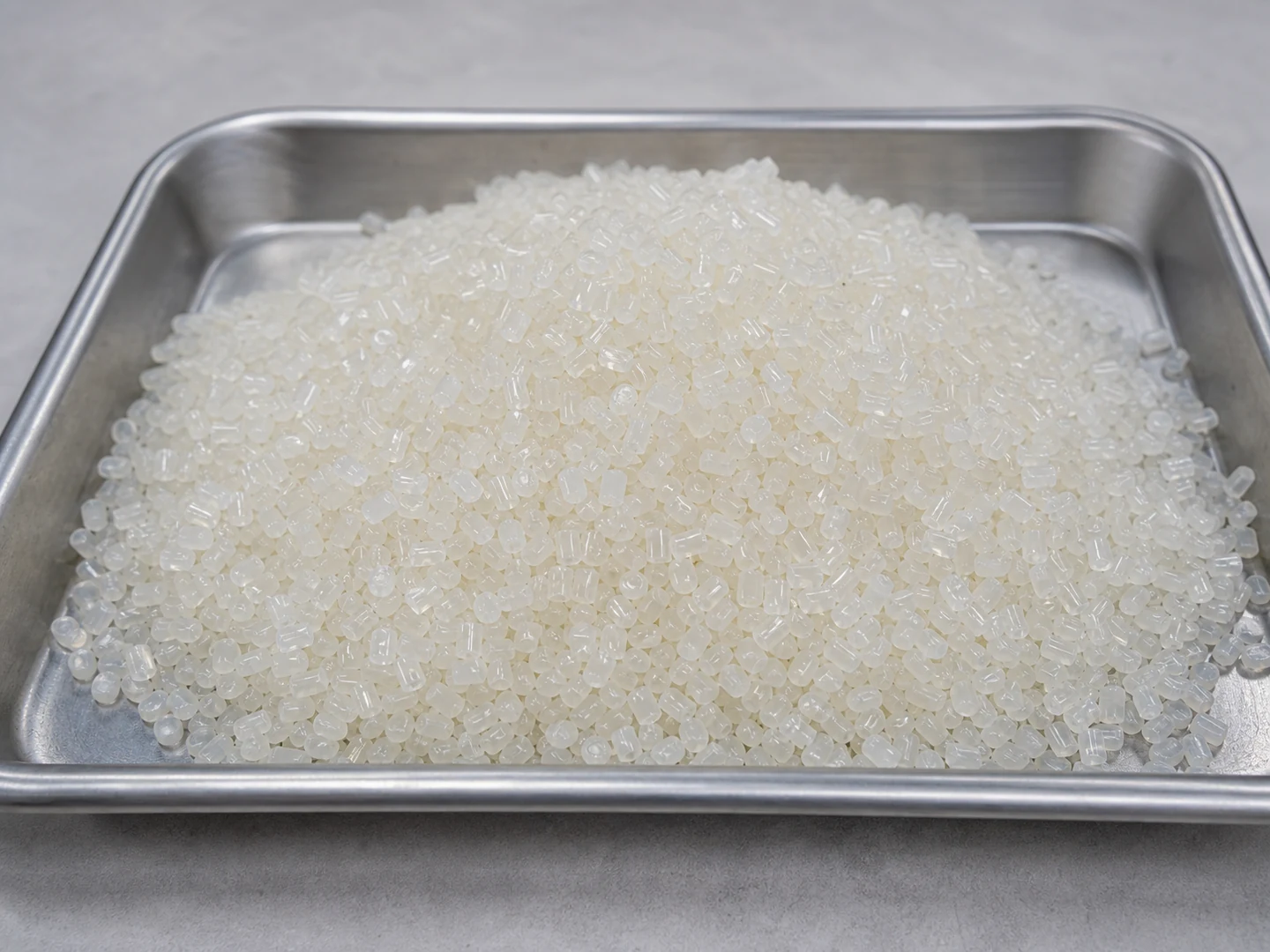
Nylon PA
Choose Nylon PA based on its stiffness, recovery, wear, wet-service, chemical, and temperature behavior.
Compare this material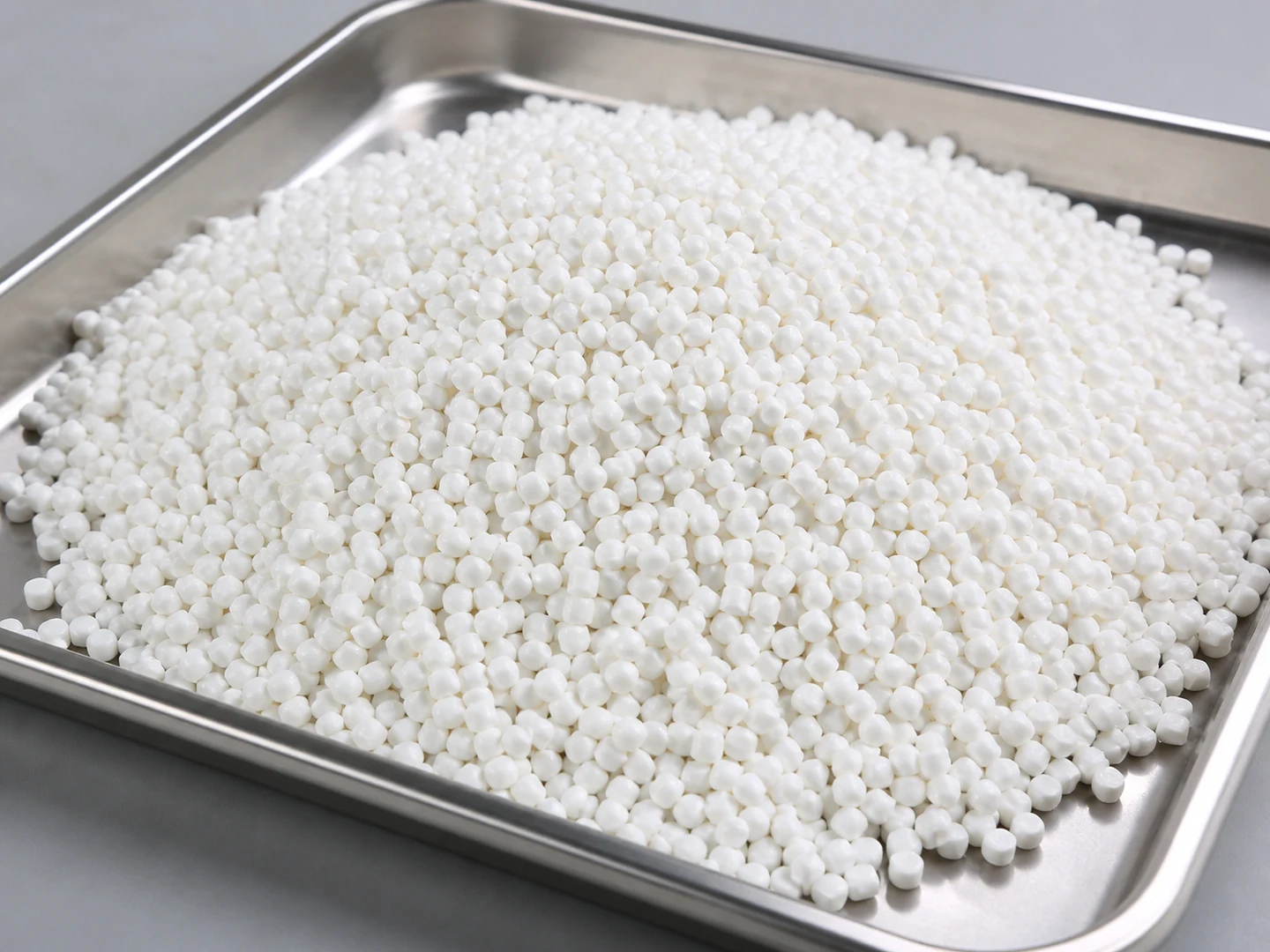
PBT
Choose PBT based on its stiffness, recovery, wear, wet-service, chemical, and temperature behavior. Do…
Compare this materialCustom Manufacturing RFQ
Describe Your Application
To prepare the correct quotation, provide the dimensions, cleaning task, residue, material, mounting details, quantity, and a drawing or photo.
Drawing or photo optional — it speeds things up, it does not gate the enquiry.
Custom Brush RFQ
Send Your Brush Project
Upload a drawing, product photo, or sample photo and provide the core dimensions and cleaning conditions.
“We need a brush to remove wet residue from a stainless steel conveyor, about 800mm wide. The current brush wears quickly. We can send photos.”
“We sell drinkware and need a cleaning brush to include with the product. Quantity around 5,000 pieces.”