
Custom Cleaning Brush
Colonoscope Tube Brushes
Flexible colonoscope tube brushes for endoscope working channels. Soft nylon fill, 230 cm length, 2.0–6.0 mm channel sizes. Custom configurations.
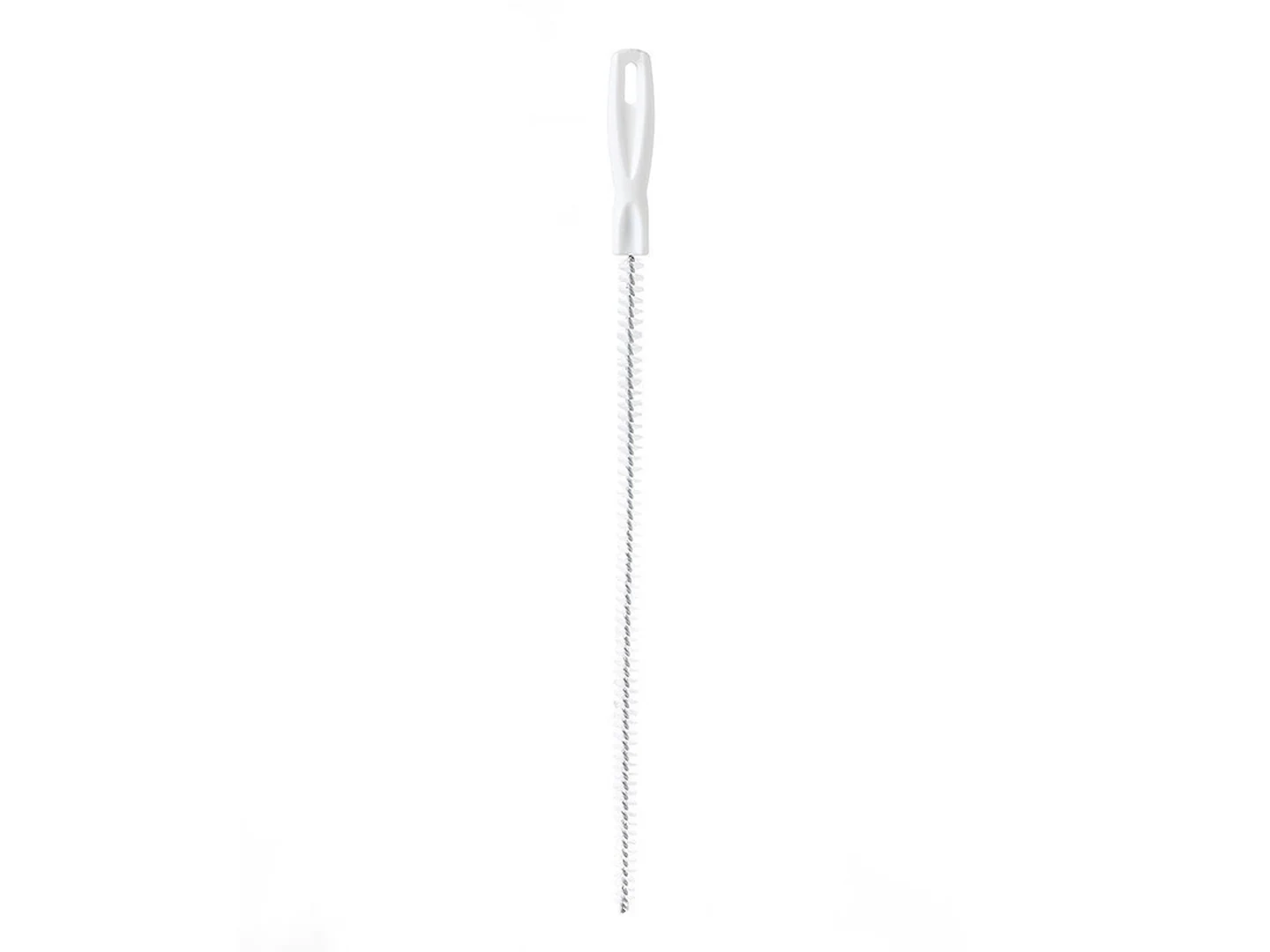
Small brush
500 pcs
Minimum order
Held in one hand: tube, bottle, detail and swab brushes — including long-handled ones with a small head.
Production lead time, once the specification is confirmed
- Up to 500 pcsWithin 7 days
- 501–50,000 pcsWithin 14 days
- Over 50,000 pcsWithin 21 days
Peak season can extend these times; the shipping date is confirmed in writing with your quotation. Sampling and shipping are quoted separately.
Colonoscope tube brushes are long, flexible channel-cleaning brushes built for the narrow working channels of colonoscopes and other flexible GI endoscopes. They reach the full channel length to loosen mucus, biofilm, and organic soil before automated reprocessing, using a soft nylon fill that protects the channel lining from mechanical damage.
Available for channels from 2.0 mm to 6.0 mm with a standard 230 cm overall length, these single-ended brushes can be configured to your scope model and reprocessing workflow.
What can this brush do for you?
Travels the Entire Working Channel Without Kinking
The flexible core rides inside a smooth 1.7 mm sheath, letting you advance the full 230 cm length from the biopsy port to the distal tip. The thin, round profile keeps the shaft from binding at the colonoscope’s flexures, so the brush follows the channel path without folding over or stalling.
Soft Nylon Fill Removes Soil Without Scratching the Channel
Soft nylon filaments flex under hand pressure to strip mucus, stool residue, and biofilm from the channel wall. Unlike stiff or wire-filled industrial brushes, the filament tips give way before the channel surface does, preserving the smooth internal finish that helps resist future biofilm attachment.
Tapered Head Reaches Ports, Valves, and Channel Transitions
The bristle section is tapered from about 5 mm down to match narrowing internal areas, including the suction port, air/water connection points, and the distal tip. That taper lets one brush clean the main channel and the tighter transition zones where cylindrical brushes leave residue behind.
Single-Ended Construction Reduces Snagging and Debris Packing
Bristles are limited to the distal end of the brush while the remaining shaft stays smooth and sheathed. This prevents reversed bristle sections from catching on internal steps or valves, and it clears a path for loosened debris to exit the channel during withdrawal instead of being pushed deeper inside.
Fits Directly Into Your Endoscope Reprocessing Sequence
The nylon PA/PBT fill is compatible with enzymatic detergents and routine manual cleaning steps. Use the brush at the bedside immediately after the procedure, then again during sink-based channel brushing before leak testing and high-level disinfection. No special solvent or procedure change is required.
What is a Colonoscope Tube Brush?
A colonoscope tube brush is a long, slender, single-ended cleaning brush designed to pass through the working channel of a flexible colonoscope. It combines a flexible core, a thin protective sheath, and a short nylon bristle section near the distal end. The brush enters through the biopsy port, advances to the instrument tip, and is withdrawn while gently rotating or reciprocating to loosen organic material from the internal channel surface.
These brushes solve a specific reprocessing problem: the colonoscope working channel is narrow, curved, and impossible to reach with a cloth or sponge, yet it carries patient material, mucus, and biofilm after every case. Manual brushing before automated reprocessing removes the gross soil that would otherwise interfere with disinfection or become baked onto the channel wall during drying.
This is not an industrial tube brush. It is not made for metal chips, scale, rust, or hardened carbon. Its fill is soft nylon, and its dimensions and stiffness are matched to the flexible, scratch-sensitive channels of medical endoscopes. The brush is one step in a validated reprocessing protocol, not a substitute for leak testing, high-level disinfection, or sterilization.
Technical Specifications
All dimensions can be adjusted to your scope model and channel size. The values below represent the standard product configuration.
| Parameter | Value / Options |
|---|---|
| Brush style | Single-ended channel-cleaning brush |
| Overall length | 230 cm standard; custom lengths to match scope working length |
| Brush head bristle diameter | 5–7 mm, tapered profile |
| Sheath diameter | 1.7 mm standard |
| Applicable channel diameter | 2.0 mm, 3.0 mm, 4.0 mm, 5.0 mm, 6.0 mm |
| Fill material | Soft nylon (PA or PBT filament) |
| Core / sheath construction | Flexible wire core with polymer protective sheath; stainless steel or polymer core options |
| Brush head length | Typically 30–50 mm; adjustable for port and valve access |
| Operating environment | Manual use with enzymatic detergents at room temperature; avoid strong solvents and high heat |
| Use configuration | Single-use or reusable per order; follow facility reprocessing policy |
| Brush type | Custom Tube & Pipe Bore Brushes |
| How it is driven | Hand-guided |
| Cleaning target | gi endoscopy departments cleaning colonoscope, reprocessing technicians brushing the suction channel, and endoscope maintenance and leak testing area cleaning |
| Surface or part | channel, tubes, ports, sheath, metal, walls, profiles, and tapers |
| Residue or debris | biofilm, mucus, rust, scale, metal chips, and carbon |
| Mounting / connection | Threaded Removable / Fixed |
Where does this brush work best?
- GI endoscopy departments cleaning colonoscope working channels immediately after patient procedures, before automated reprocessing.
- Flexible sigmoidoscopes and pediatric colonoscopes with working channel diameters from 2.0 mm to 6.0 mm.
- Reprocessing technicians brushing the suction channel, biopsy channel, and air/water connection ports during manual cleaning.
- Endoscope maintenance and leak testing areas where channel patency and residue removal must be confirmed before disinfection.
- Training and simulation labs using colonoscope models or retired scopes that still require proper channel hygiene.
How do I choose the right one?
Match the Brush to the Channel Diameter
Check the colonoscope’s working channel inner diameter, commonly 2.8 mm, 3.2 mm, 3.7 mm, or 4.2 mm. The bristle section should press lightly against the full channel circumference, and the sheath must pass without forcing. For a 2.8 mm channel, choose a brush sized for the 3.0 mm channel option; for a 4.2 mm channel, select the 4.0–5.0 mm range.
Confirm the Working Length Is Long Enough
Adult colonoscopes typically have a working length between 168 cm and 230 cm. A 230 cm brush covers the full channel plus enough external length to grip and control. A shorter brush will not reach the distal tip and will leave residue in the bending section. If you use an enteroscope or other longer scope, request a custom longer shaft.
Pick the Fill for the Debris You Need to Remove
Soft nylon fills handle fresh mucus, stool residue, and biofilm. If the channel contains dried or hardened organic material, flush the channel with enzymatic detergent and let it soak before brushing. Do not switch to a stiffer or wire brush to remove tough deposits; that risks scratching the channel and creating new biofilm attachment points.
Decide on Single-Use or Reusable
Single-use channel brushes eliminate the need to reprocess the brush itself and reduce cross-contamination risk, which is why they are common in high-volume GI units. Reusable brushes must withstand cleaning and high-level disinfection or sterilization according to the manufacturer’s instructions and your facility’s infection control policy. Match the configuration to your reprocessing capacity and compliance requirements.
When Another Tool Is the Better Choice
Use a wire tube brush for industrial metal tubes with scale or rust, but never inside a flexible endoscope channel. For air/water channels smaller than 2.0 mm, use a dedicated brush sized for those ports. If the channel has kinks, perforations, or visible damage, stop and refer the scope to biomedical engineering before brushing.
Can I customize this brush?
Colonoscope tube brushes are configurable because scope models and reprocessing protocols differ. We will ask for the working channel inner diameter, scope working length, port sizes, cleaning chemical, and whether the brush will be single-use or processed for reuse. A scope model number or sample drawing helps us match the geometry faster.
Common adjustments include:
- Channel sizing — brush head and sheath diameters matched to 2.0 mm through 6.0 mm channels, including non-standard in-between sizes.
- Overall length — custom shaft length to cover standard colonoscopes, longer enteroscopes, or shorter pediatric scopes.
- Bristle fill — nylon PA or PBT filament, filament diameter, softness, taper profile, and brush head length.
- Core and sheath — stainless steel or polymer core, twist density, sheath material, and flexibility profile.
- Handle end — loop, molded grip, no handle, or color-coded end for size identification.
- Packaging — bulk, individually pouched, procedure-kit presentation, or cleanroom-processed configurations.
If your project requires material declarations, biocompatibility documentation, cleaning validation support, or third-party inspection, we can assist with those requirements during customization.
When is colonoscope tube brushes worn out rather than just dirty?
How do I verify that the brush reaches the distal end of the colonoscope channel?
Mark the scope working length on the brush shaft before first use, or use the length indicator if included. Insert slowly until the mark aligns with the biopsy port. If the brush stops short, do not force it; withdraw and confirm the channel is clear before reinserting.
What should I check on the brush before each use?
Inspect the bristle section for loose, missing, or flattened filaments. Check the sheath for cuts, kinks, or separation from the handle. Pull gently on the brush head to confirm it is securely attached. If any defect is visible, discard the brush and use a new one.
Can I clean the air/water channel with the same brush?
Air/water channels are usually much smaller than the working channel, often under 2.0 mm. Use a dedicated brush sized for that specific channel. Forcing a working channel brush into an air/water port can damage the channel and leave bristles behind.
Does brushing replace high-level disinfection or sterilization?
No. Manual brushing loosens and removes gross organic soil. The scope must still undergo leak testing, high-level disinfection or sterilization, and drying according to the manufacturer’s reprocessing instructions and facility protocol. Brushing is an essential step, but it is only one step.
What should I do if the brush head comes off inside the channel?
Stop all movement and leave the brush in place. Use an endoscope retrieval device or forceps if available, or contact biomedical engineering immediately. Never try to push the brush further or flush the head deeper into the scope.
Are these brushes latex-free?
Most configurations are manufactured from nylon, PBT, stainless steel, and polymer components without natural rubber latex. Confirm your specific configuration during order review if latex-free documentation is required.
Guides that go deeper on this
Custom Manufacturing RFQ
Describe Your Application
Please include the main sizes, application, residue, preferred material, interface, quantity, and any drawing or sample available.
Drawing or photo optional — it speeds things up, it does not gate the enquiry.
Custom Brush RFQ
Send Your Brush Project
Upload a drawing, product photo, or sample photo and provide the core dimensions and cleaning conditions.
“We need a brush to remove wet residue from a stainless steel conveyor, about 800mm wide. The current brush wears quickly. We can send photos.”
“We sell drinkware and need a cleaning brush to include with the product. Quantity around 5,000 pieces.”