
What Is a Meat Processing Brush?
A meat processing brush is a brush designed specifically for the unique conditions of wet food production areas. Unlike general industrial brushes, these tools must handle direct contact with raw protein residues, frequent high-pressure washdowns, strong alkaline or acidic detergents, and routine sanitation with steam or hot water. They are typically made from materials that are non-absorbent, chemical-resistant, and easy to clean. In many cases, they must also be detectable by metal or X-ray inspection systems in case of lost bristles.
They are used to clean conveyors, cutting tables, grinding equipment, mixing vessels, and other surfaces where fat, blood, and meat slurry build up. The right brush reduces cleaning time, protects expensive machinery, and helps maintain compliance with food safety regulations.
Common Materials and Their Trade-offs
Bristle material is the most important decision because it determines chemical resistance, temperature tolerance, and the risk of scratching. Handle and core materials matter equally in wet zones because they must not absorb water or corrode.
- Polypropylene (PP): Cost-effective, good resistance to acids and alkalis, but limited heat resistance (typically up to 180°F). Do not use in high-temperature washdowns.
- Polyester (PBT, PET): Stiffer and more abrasion-resistant than PP, with better chemical resistance and higher heat tolerance (around 250°F). Good for general meat line cleaning.
- Nylon (PA 6, PA 6.6, PA 6.12): Abrasion-resistant, flexible, and available in food-grade formulations. Standard nylon absorbs moisture and may soften in hot water; specialty grades (like PA 6.12) reduce water absorption.
- PTFE (Teflon®): Extreme chemical resistance and non-stick properties. Excellent for high-fat areas but often expensive and less stiff.
- Stainless Steel: Used for bristles or as a core/handle material. Type 304 or 316 stainless resists corrosion and stands up to caustic cleaners and steam. Wire bristles can scratch soft surfaces, so use only where metal-to-metal contact is acceptable.
- Handle/Core Materials: Stainless steel is preferred for wet areas. Plastic cores (polypropylene, nylon) are common if weight is a concern. Wood handles must be avoided because they absorb moisture, harbor bacteria, and can splinter.
Some brushes use a combination of materials—a stainless steel core with polyester bristles, for example—to balance strength, cost, and hygiene.
Size, Stiffness, and Mounting Options
Brush size refers to overall length, bristle trim length, and block width. Stiffness determines how aggressively the brush cleans. Mounting style determines how operators or machines hold the brush.
- Diameter/Width: Narrow brushes (1–2 inches) are for crevices and small parts; wide block brushes (6–12 inches) cover larger flat surfaces like conveyors.
- Bristle Trim Length: Short trim (⅜–¾ inch) provides more scrubbing power; longer trim (1–2 inches) is more flexible for uneven surfaces.
- Stiffness: Soft (around 0.010–0.015 inch bristle diameter) won’t scratch polished stainless; medium (0.016–0.020 inch) is general-purpose; stiff (0.021 inch and up) removes heavy, dried-on residues but may damage surfaces. Confirm bristle gauge with your supplier.
- Mounting Options: Hand brushes often have molded plastic handles or contoured grips. Threaded handle sockets (like ¾-inch NPT) accept extension handles for walls or deep equipment. Machine-mounted brushes use a shank, flange, or drive keyway for automated scrubbers. Always verify mounting dimensions to prevent operator injury or machine damage.
Comparison Table: Key Material and Design Options
| Option | Bristle Material | Typical Stiffness | Max Wet Temp | Chemical Resistance | Best Use in Wet Zones | Notes |
|---|---|---|---|---|---|---|
| General Cleaning Brush | Polypropylene | Soft to Medium | 180°F | Good against acids and alkalis | Light residue on stainless surfaces; ambient washdown | Economical; avoid autoclaving |
| Medium-Duty Brush | Polyester | Medium to Stiff | 250°F | Very good; tolerates oxidizers | Heavy fat and protein removal; higher temperature wash | Good balance of cost and durability |
| Food-Grade Nylon Brush | Nylon (PA 6.12 or similar) | Medium to Stiff | 220°F (after soak conditioning) | Good; avoid strong acids | Scrubbing without scratching; areas with frequent hot water | Moisture absorption can cause softening; check grade |
| Non-Stick/High-Fat Brush | PTFE | Soft to Medium | 500°F | Excellent; nearly inert | High-fat residues, non-stick surfaces | Premium cost; low stiffness limits aggressive scrubbing |
| Heavy-Duty Metal Brush | Stainless Steel | Very Stiff | Steam-safe | Excellent against caustic cleaners | Removing baked-on debris on metal only | Will scratch; risk of bristle loss—requires detection protocol |
| Custom Hybrid Brush | Mixed (e.g., polyester + PTFE) | Variable | Depends on lowest tolerance material | Depends on blend | Unique requirements not met by standard options | Request sample and drawing review |
How to Choose the Right Meat Processing Brush
The best brush matches the residue, surface, and sanitation process. Answer these five questions before ordering:
- What exactly are you removing? Soft fats may need a stiffer brush, whereas sticky proteins might require a material that resists gumming up (like PTFE). Abrasive residues may call for stainless steel.
- What is the surface material and finish? Polished stainless steel (Ra <32 μin) requires a non-scratching bristle. Avoid wire and stiff nylon unless verified safe. Plastic belts are easily damaged; use soft to medium brushes.
- How will you clean the brush? Will it be washed by hand, run through a parts washer, or placed in an autoclave? Material temperature limits matter.
- What chemicals will the brush see? Check compatibility with acid washes, chlorinated cleaners, and alkaline foams. For example, nylon degrades in strong acids; polyester tolerates them better.
- What hygiene standard applies? If the plant follows 3-A Sanitary Standards or similar, brushes may need to be free of crevices, fully cleanable, and use detectable materials. Request compliance documentation—not a “FDA approved” claim alone.
Also consider replacement frequency and budget. A low-cost brush that must be discarded weekly may cost more over a year than a durable brush with a higher initial cost drivers. Always run a small-scale trial before committing to a large order.
Common Mistakes When Specifying a Meat Processing Brush
- Using black bristles in food zones. Black bristles are hard to see if they break off. Blue, white, or another high-visibility color is standard for detectable brushes.
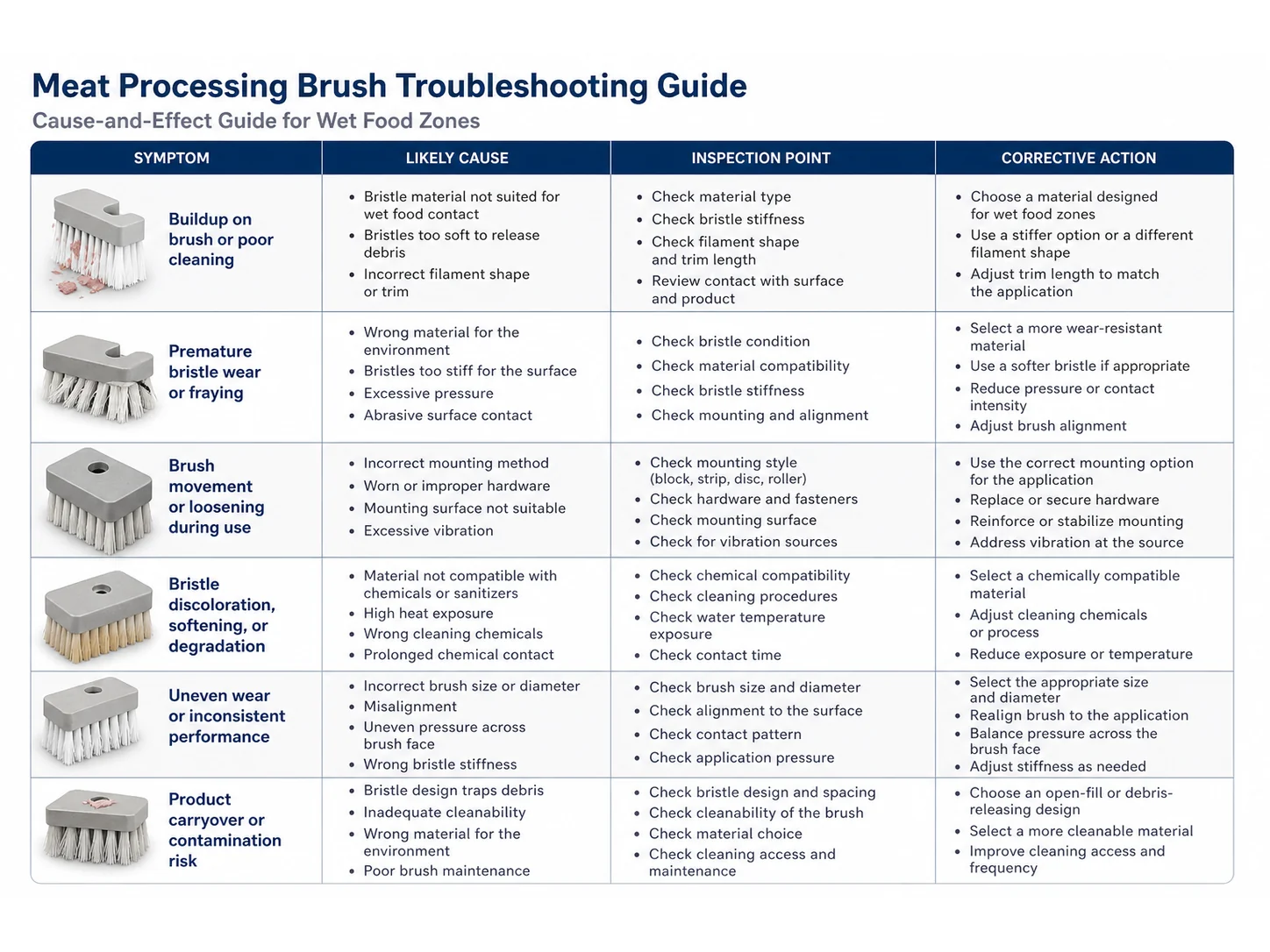
- Ignoring heat and chemical resistance. Putting a polypropylene brush through a hot washdown will cause bristle collapse. Verify both maximum temperature and continuous-exposure tolerance.
- Selecting oversized or undersized brushes. A brush that is too wide won’t clean recessed areas; one that is too narrow wastes labor. Always measure the actual equipment space.
- Forgetting the mounting interface. A brush with a handle socket that doesn’t match your extension system creates a safety hazard and downtime. For machine brushes, shaft diameter and keyway size must be exact.
- Assuming all “food-grade” labels are equal. Look for specific compliance statements (e.g., “manufactured from FDA 21 CFR-compliant materials”) rather than a generic marketing term.
- Mixing wood handles and wet zones. Wood absorbs moisture, warps, and can harbor bacteria. This is a GMP violation in most meat plants.
- Skipping a sample test. A material datasheet doesn’t show whether a brush will entrap residue or wear out prematurely on your equipment. Test on a small area first.
When a Standard Meat Processing Brush Is the Wrong Choice
Meat processing brushes are not a one-size-fits-all solution. Consider alternatives or custom engineering when:
- Extreme temperatures exceed 500°F (PTFE is the ceiling for most polymer bristles).
- Very aggressive chemicals (e.g., concentrated oxidizing acids) attack all available bristle materials. A full stainless steel brush might be needed, but then the scratching risk must be managed.
- The surface is irregular, fragile, or contains sensors that a stiff brush could damage. In those cases, a compliant foam swab or low-pressure spray system might be better.
- You need a brush for internal tube or pipe cleaning with tight ID dimensions. Standard block brushes won’t work; a custom tube brush with the exact outside diameter is necessary, and you should work from a supplier drawing.
- Regulatory or customer audit demands require a brush with full material traceability, certificate of conformance, and a validated detection protocol. Off-the-shelf catalog brushes may not provide enough documentation.
If your situation is outside these common applications, work with a brush manufacturer to develop a sample. Provide detailed operating conditions, photos of the surface, and cleaning chemical SDS sheets. A drawing review before production prevents expensive specification errors.
Final Takeaway
Choosing a meat processing brush for a wet food zone is a matter of matching the bristle material and stiffness to your residue, surface, and sanitation process. Start by eliminating materials that can’t handle your chemical wash or temperature. Then narrow by size and mounting requirements. Always test a sample. The right specification protects your equipment, your sanitation schedule, and your food safety record—without creating a new contamination risk.
Frequently Asked Questions
Can I use a general industrial brush in a meat plant?
It’s risky. General industrial brushes often have bristle materials that absorb water, can’t withstand food-grade detergents, or use metal components that corrode. They also may lack necessary compliance documentation for food contact. It’s safer to specify a brush designed for wet food zones.
What bristle color is best for food safety?
High-visibility colors like blue, white, or green are preferred because they contrast with meat and are easier to spot if a bristle breaks off. Some programs also require metal-detectable bristles or metal/X-ray detectable blocks.
How do I know if a brush is FDA compliant?
Ask the supplier for a written statement confirming that the brush materials meet FDA 21 CFR for food contact. A generic “FDA approved” label is not enough. You need documentation of compliance for the specific bristle, handle, and adhesive (if any).
What is the best way to attach a brush for extended reach?
Many meat plant brushes have a threaded socket (such as ¾-inch NPT) that accepts an FDA-acceptable fiberglass or stainless steel extension handle. Ensure the connection is tight and does not trap water. Quick-connect systems are also available but must be cleaned separately.
How often should meat processing brushes be replaced?
Replacement frequency depends on use and sanitation. A visual inspection at each cleaning cycle is mandatory. Look for splayed, kinked, or missing bristles, and cracks in the block. Most plants replace brushes when bristles lose their stiffness or appear worn, which might be weekly, monthly, or quarterly.
Can I autoclave all meat processing brushes?
No. Only brushes made from materials rated for steam sterilization (such as stainless steel, polyester with high heat resistance, or PTFE) can be autoclaved safely. Polypropylene and standard nylon will deform. Check the supplier’s temperature rating before autoclaving.
What is the difference between a soft and stiff brush in wet zones?
Soft brushes are gentle on surfaces but less effective on heavy, dried-on residues. Stiff brushes clean aggressively but can scratch surfaces, creating niches for bacteria. Typically, you want the softest brush that still removes the soil in your cleaning window.
Do I need a custom brush or is off-the-shelf okay?
Most standard flat surfaces can be cleaned with off-the-shelf brushes. You’ll need a custom brush if the width, length, bristle material combination, or mounting interface is not available in standard catalogs, or if your equipment geometry is unusual. When in doubt, request a drawing from the brush manufacturer to confirm fit before ordering.
Technical References
- eCFR — 21 CFR 178.1010 Sanitizing Solutions
- FDA — Food Code
- eCFR — 21 CFR 177.1500 Nylon Resins
- eCFR — 21 CFR 177.1520 Olefin Polymers
- eCFR — 21 CFR Part 117 Human Food CGMP and Preventive Controls
- eCFR — 9 CFR Part 416 Sanitation
Which bristle material fits this job — AISI 304 Stainless Steel Wire, Nylon PA or Polypropylene PP?
| Material | Continuous temperature (°C) | Peak temperature (°C) | Water absorption | Hardness |
|---|---|---|---|---|
| AISI 304 Stainless Steel Wire | 400 | 500 | 0% | Rockwell B 70–95 depending on temper and cold work |
| Nylon PA | 93 | 121 | 0.3–9% by PA grade and conditioning | Medium to firm; filament diameter and trim length control bending force. |
| Polypropylene PP | 80–100 | 120–140 | ≤0.03% | Shore D 65–75 |
| PBT | 120–140 | 160–180 | 0.05–0.20% | Shore D 80–90 |
Figures as published by Alleima; Brushtec / DuPont; Perlon. Confirm the exact grade against the supplier datasheet before ordering.
What should replace AISI 304 Stainless Steel Wire for wet food zones?
- AISI 304 Stainless Steel Wire — Use AISI 316 stainless steel wire for chloride, marine, dairy, beverage, chemical washdown, or higher pitting-resistance requirements. Use carbon steel for dry aggressive cutting and brass or abrasive nylon for lower marking risk.
- Nylon PA — Compare Nylon PA with PP, PBT, PET. Change material when wet stiffness, temperature, chemical resistance, conductivity, particle shedding, or surface marking becomes the limiting factor.
- Polypropylene PP — Compare Polypropylene PP with Nylon, PBT, PET. Change material when wet stiffness, temperature, chemical resistance, conductivity, particle shedding, or surface marking becomes the limiting factor.
- PBT — Compare PBT with Nylon, PP, PET. Change material when wet stiffness, temperature, chemical resistance, conductivity, particle shedding, or surface marking becomes the limiting factor.