
Custom Cleaning Brush
250x2000mm PA66 Road Sweeper Main Brush
250x2000mm PA66 road sweeper main brush with quick-change coupling, powder-coated steel core and nylon filament. Replacement broom for street sweepers.
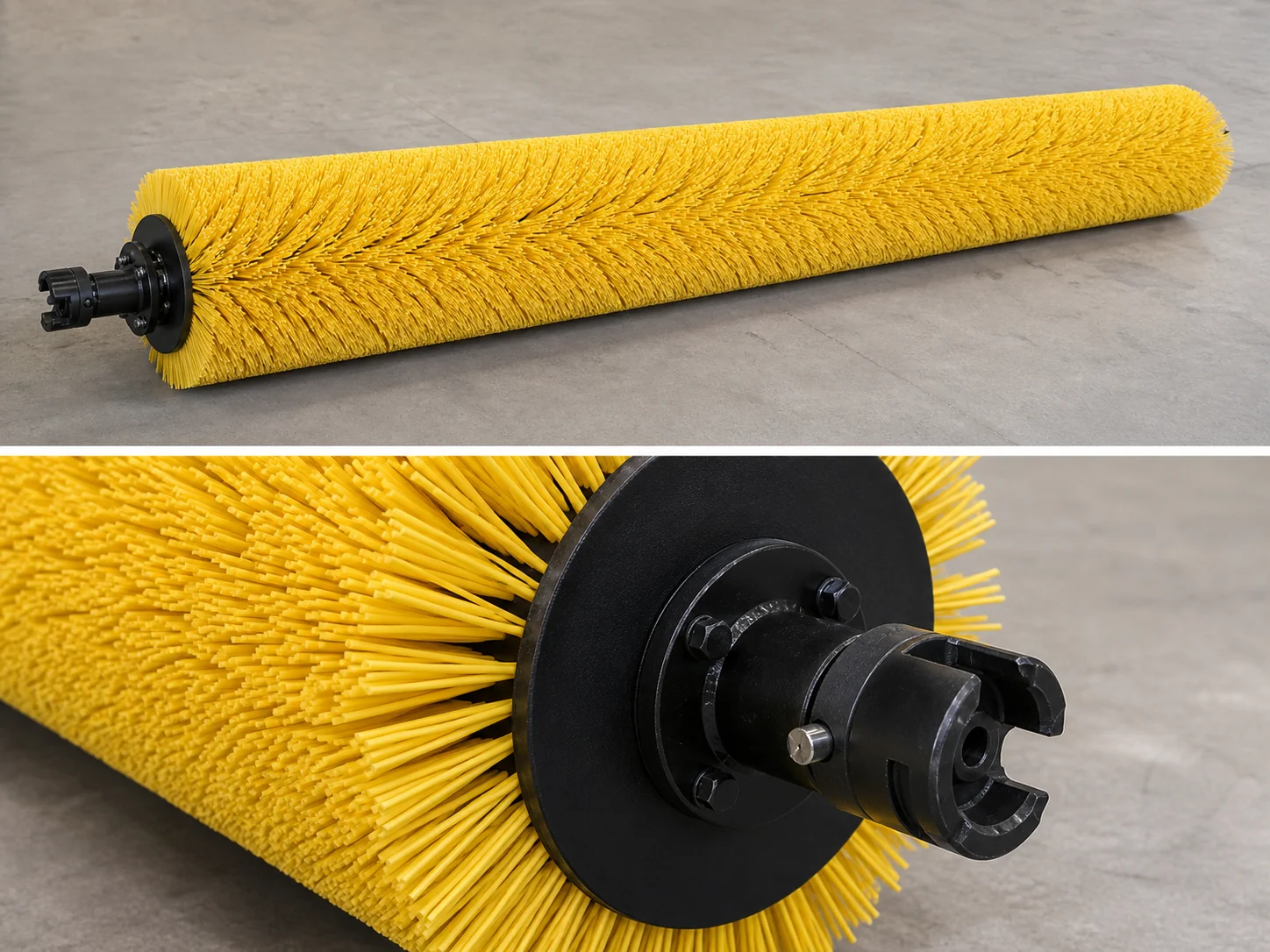
Large-format brush
100 pcs
Minimum order
Built one at a time on a core or channel: full-width rollers, sweeper brooms and long strip.
Production lead time, once the specification is confirmed
- Up to 100 pcsWithin 20 days
- 101–1,000 pcsWithin 30 days
- Over 1,000 pcsConfirmed with your quotation
Peak season can extend these times; the shipping date is confirmed in writing with your quotation. Sampling and shipping are quoted separately.
The 250x2000mm PA66 Road Sweeper Main Brush is a replacement main broom for truck-mounted and self-propelled road sweepers. Its 2000 mm working width, 250 mm diameter, and PA66 nylon filament provide consistent contact on asphalt and concrete, sweeping dust, sand, gravel, leaves, and roadside litter into the sweeper collection path.
What can this brush do for you?
Sweeps the full 2-meter path without leaving windrows
The 2000 mm working width is covered by PA66 filament arranged in overlapping rows so the brush contacts the road continuously from edge to edge. When the core rotates, no strip is skipped, and fine dust is not pushed into a line at the curb. This is the difference between a brush that looks full size and one that actually cleans the entire path.
PA66 holds its stiffness and flick action through abrasive wear
Nylon 6/6 resists sand and grit abrasion better than polypropylene and continues to flick gravel, leaves, and light litter out of pavement texture until the brush reaches its minimum trim length. The filament tips wear gradually without softening into a useless mat, so the brush keeps working through hundreds of sweep cycles.
Quick-change coupling cuts brush swap time
The core ends are fitted with a quick-change coupling matched to the sweeper drive flanges. Crews can pull a worn brush and lock in a replacement without removing drive pins or re-torquing multiple bolts. Less yard time means more route hours per shift.
Powder-coated carbon steel core built for wet, dirty service
The steel core and end plates are powder-coated to resist corrosion from road water, de-icing residue, and moisture trapped inside the brush housing. The coating also protects the structural core where filament segments are attached, so the brush body lasts beyond a single filament life when rebuilt or rebrushed programs are used.
Balanced rotation at road sweeping speeds
A 250 mm diameter brush with a 2000 mm length is a long rotating assembly. The core, segments, and filament are built to keep imbalance low so the brush runs smoothly at typical main broom speeds without hammering the sweeper bearings or drive motor.
What is a 250x2000mm PA66 Road Sweeper Main Brush?
This is the primary rotating broom mounted under or behind a road sweeper. It runs horizontally across the machine’s sweep path and rotates against the direction of travel, loosening debris from the road surface and throwing it forward into the hopper or onto the conveyor. Unlike a gutter brush, which concentrates material at the curb, the main brush cleans the full travel width in one pass.
The brush is built around a powder-coated carbon steel core tube with end flanges that carry the quick-change coupling. PA66 filaments are set into the core in a continuous spiral or in bolted segments. The 250 mm dimension is the nominal outside diameter with new bristles; the core diameter is smaller, and the difference is the working trim length. That trim length is what the operator watches to decide when the brush is worn out.
In operation, the sweeper applies controlled down pressure to hold the bristle tips against the pavement. The brush is a consumable wear part: filament tips shorten over time, and when they fall below the machine’s minimum trim length, the contact pattern degrades and the brush must be replaced or rebrushed.
Technical Specifications
The stock configuration is listed below. Dimensions, coupling, filament, and segmentation can be adjusted to the project; a drawing or flange sample gets the interface right.
| Parameter | Value / Options |
|---|---|
| Overall working width | 2000 mm |
| Nominal brush diameter | 250 mm |
| Bristle material | PA66 (nylon 6/6) |
| Core / base material | Powder-coated carbon steel tube with end flanges |
| Coupling | Quick-change coupling; flange and pin pattern matched to sweeper model |
| Bristle pattern | Straight, crimped/wavy, or mixed; continuous spiral or segmented rows |
| Bristle trim length | 70–100 mm from core to filament tip (project-configurable) |
| Filament diameter | 0.6–0.9 mm standard, other diameters available |
| Operating speed | Up to approximately 300 rpm; verify against machine manual |
| Temperature range | -20°C to 60°C ambient for standard PA66 |
| Wear reference | Replace when remaining trim length drops to 25–30 mm or per machine guidance |
| Brush type | Custom Road Sweeper Brooms |
| How it is driven | Machine-driven, mounted in the equipment |
| Cleaning target | municipal street sweeping, parking lot and commercial property, and road construction and maintenance cleaning |
| Surface or part | roads, concrete, asphalt, curbs, pavement, gutters, sweeper collection paths, and carbon steel |
| Residue or debris | dust, leaves, litter, sand, gravel, carbon, and fine dust |
| Mounting / connection | Quick-change coupling; flange and pin pattern matched to sweeper model |
Where does this brush work best?
- Municipal street sweeping — asphalt and concrete roads, curb lines, gutters, bike lanes, and intersections where dust, sand, leaves, and litter accumulate.
- Parking lots and commercial properties — outdoor lots, drive lanes, loading docks, and warehouse yards that need routine debris removal.
- Road construction and maintenance — sweeping milled material, dust, and debris before paving or after shoulder work.
- Airport apron and runway sweeping — foreign object debris (FOD) pickup where PA66 provides effective flick without damaging pavement.
- Ports, rail yards, and logistics terminals — open concrete and asphalt areas with sand, gravel, cargo spillage, and dust.
How do I choose the right one?
Confirm the coupling and drive interface first
Measure the existing end plates, pin centers, locking mechanism, and drive direction. A brush with the wrong coupling will not seat correctly and can damage the sweeper drive. Provide the machine make and model, or a dimensioned drawing of the current flange.
Check the working width against the housing
The 2000 mm working width must fit between the sweeper side plates with enough clearance for bristle deflection and minor core runout. If the machine uses sectional rings, confirm the segmentation pattern so the replacement drops into the same mounts.
Match filament stiffness to the road surface and debris
PA66 works well for routine municipal debris on asphalt and concrete. For polished concrete, decorative paving, or very soft surfaces, a softer PP or PET filament will reduce surface marking. For compacted mud, heavy winter grit, or hard-packed material, a mixed PA66/wire bristle or a stiffer nylon grade applies more cutting force. PA66 absorbs a small amount of moisture; in continuously wet service, stiffness drops slightly, so verify down pressure still gives acceptable contact.
Pick the bristle pattern for the debris type
A continuous spiral provides even contact and simple rebuilding. A segmented pattern with alternating straight and crimped/wavy filament improves throwing of leaves, wet litter, and stringy debris. Higher bristle density sweeps finer dust more completely but increases power draw and brush weight, so match density to the sweeper drive capacity.
Set speed and down pressure correctly
Run the brush at the sweeper manufacturer’s recommended speed. Excessive rotation overheats PA66 tips and accelerates wear. Too much down pressure bends the filament and shortens life; too little leaves a film of fine dust behind. Start with the machine’s standard setting and adjust after the first route inspection.
When to use a different brush: if the debris includes heavy metal shavings, large sharp rocks, or frozen material, a steel-mixed broom or an all-wire brush will last longer and cut better. If the surface is a decorative or polished finish, a softer filament is safer. This PA66 main brush is designed for normal road sweeping, not for excavating compacted material.
Can I customize this brush?
This road sweeper main brush is built to order around the machine and the route. To configure a replacement, we need the sweeper make and model, coupling drawing or sample, housing clearances, surface type, debris profile, sweep speed, down pressure, and whether the machine uses water dust suppression. A photo of the worn brush and its mount also helps.
We can adjust:
- Dimensions — overall length, brush diameter, core diameter, and trim length within the machine envelope
- Core and flanges — powder-coated carbon steel, stainless steel for marine or corrosive environments, or aluminum for weight reduction
- Coupling — quick-change, bolt-on flange, pin drive, splined hub, or custom adapter
- Bristle material — PA66, PA6, PP, PET, abrasive-impregnated nylon, steel-mix, or all-wire
- Filament parameters — diameter, trim length, straight/crimped/wavy form, density, row spacing, and pattern
- Segmentation — one-piece brush or split into 2–6 sections for easier handling and partial replacement
- Color and marking — filament color, segment identification, stamped or laser-marked end plates
- Packaging — bulk pallet, individual crate, export packing, or project-specific labeling
For fleet or government projects, we can assist with material declarations, dimensional inspection reports, balance documentation, and third-party testing required by the contract.
Which filament lasts longest on a 250x2000mm PA66 road sweeper main brush?
How do I know if the quick-change coupling will fit my sweeper?
Compare the end plate outside diameter, pin center pattern, pin diameter, drive direction, and any locking collar or snap feature with your existing brush. A mismatched coupling can slip, vibrate, or damage the drive shaft. Send a dimensioned drawing or the worn brush itself and we will match the interface.
Can I rotate the brush end-for-end to even out wear?
Only if the machine manual permits it and the coupling and filament pattern are symmetrical. Many main brushes are directional because the filament is set to flick debris forward. Reversing rotation direction against the set can snap bristles and overload the drive.
How can I check when the brush needs replacement?
Measure the remaining bristle length from the core to the tips at several points across the width. Replace the brush when the shortest measured trim falls below the machine’s specified minimum, commonly 25–30 mm. Also check for missing filament patches, wobble at the coupling, or a bent core, which require replacement even if trim length is still acceptable.
Will PA66 bristles lose stiffness when the brush is wet?
Nylon 6/6 absorbs roughly 2–3% moisture by weight at saturation, which can slightly reduce stiffness in continuously wet service. The brush still sweeps correctly, but the operator may need to adjust down pressure slightly. For routes that run mostly in rain or along standing water, a mixed wire filament or a stiffer nylon grade may hold contact better.
Can this brush be used with water dust suppression?
Yes, a light water spray is normal and helps control dust without harming PA66. Avoid directing high-pressure water at the bristles for extended periods and store the brush dry to prevent filament set and core corrosion. The powder-coated core is designed for wet service, but standing water should be drained from the housing between shifts.
What is the difference between PA66 and steel-mixed main brushes?
All-PA66 cleans routine road debris with less pavement wear, less noise, and no wire breakage. A steel-mixed brush adds cutting action for compacted mud, hard-packed gravel, or frozen material but can leave wire marks on decorative surfaces. Choose PA66 for standard municipal routes; choose steel-mix for severe deposits or renovation cleanup.
Guides that go deeper on this
Custom Manufacturing RFQ
Describe Your Application
Please include the main sizes, application, residue, preferred material, interface, quantity, and any drawing or sample available.
Drawing or photo optional — it speeds things up, it does not gate the enquiry.
Custom Brush RFQ
Send Your Brush Project
Upload a drawing, product photo, or sample photo and provide the core dimensions and cleaning conditions.
“We need a brush to remove wet residue from a stainless steel conveyor, about 800mm wide. The current brush wears quickly. We can send photos.”
“We sell drinkware and need a cleaning brush to include with the product. Quantity around 5,000 pieces.”