What Is a Colonoscope Tube Brush?
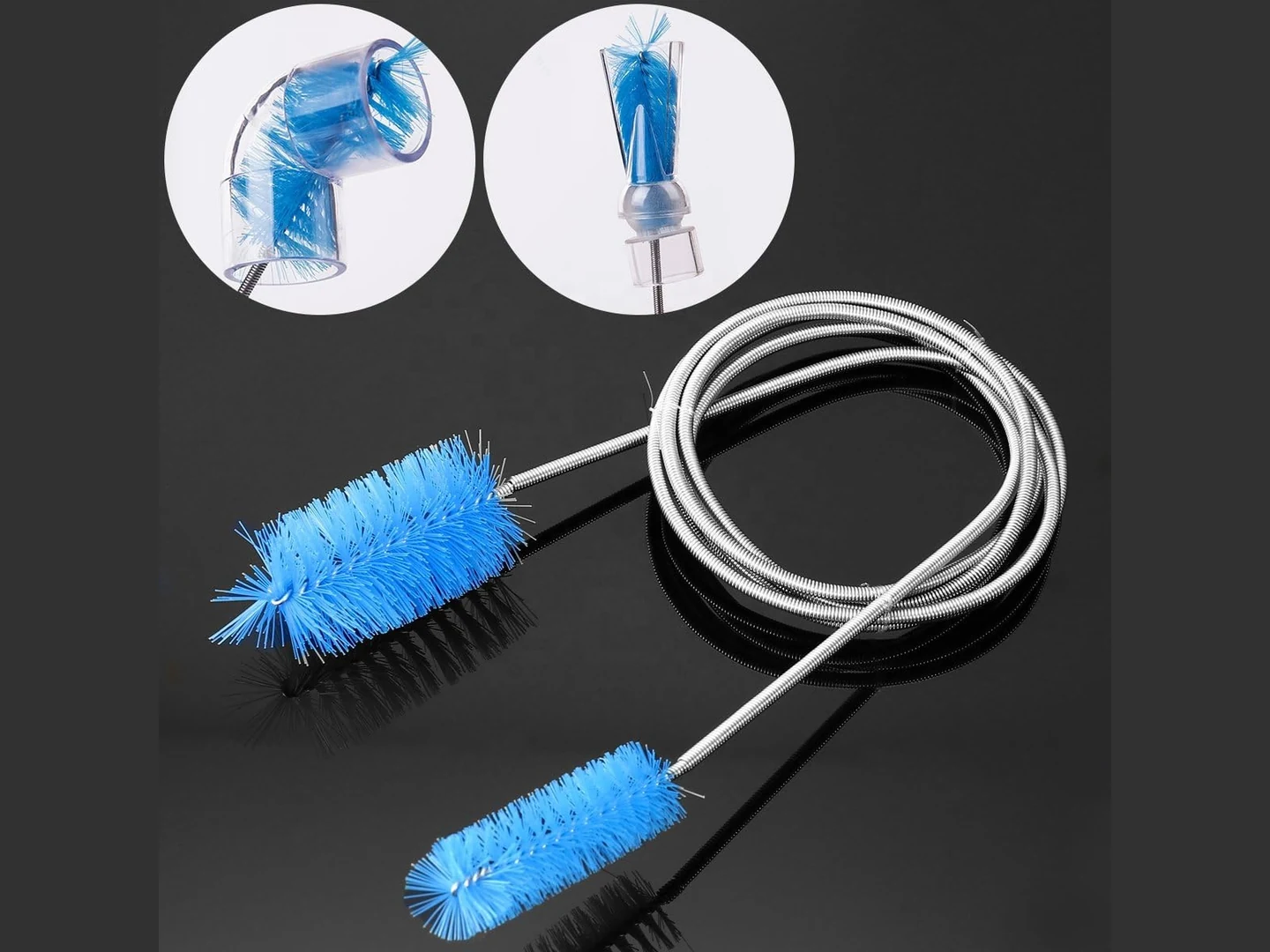
A colonoscope tube brush is a thin, elongated brush engineered to pass through the working channel and auxiliary channels of a flexible colonoscope. Its primary function is to mechanically dislodge adherent soil, mucus, and bioburden before high-level disinfection or sterilization. Unlike generic test tube brushes, these brushes must meet strict requirements for flexibility, kink resistance, and corrosion resistance when exposed to enzymatic cleaners and chemical disinfectants.
Common Brush Materials and Their Trade-offs
For reusable medical-device cleaning claims, the practical boundary is the device maker’s validated instructions and the FDA — Reprocessing Medical Devices in Health Care Settings rather than a brush-only rule.
For healthcare cleaning language, this article keeps its claims within the general boundary of the CDC — Disinfection and Sterilization Guideline, which is written for disinfection and sterilization in healthcare facilities.
Where the article discusses healthcare settings rather than ordinary cleaning, the CDC — Core Infection Prevention and Control Practices is used as the general infection-control frame.
For dimension and measurement language, NIST — Metric SI supports the use of consistent SI/metric specifications.
For brush terminology and construction language, this section references American Brush Manufacturers Association — Brush Lingo.
The material of the bristles and stem determines cleaning efficiency, durability, and compatibility with disinfectants. Below is a comparison of the most frequently used materials.
| Material | Typical Use Case | Advantages | Limitations |
|---|---|---|---|
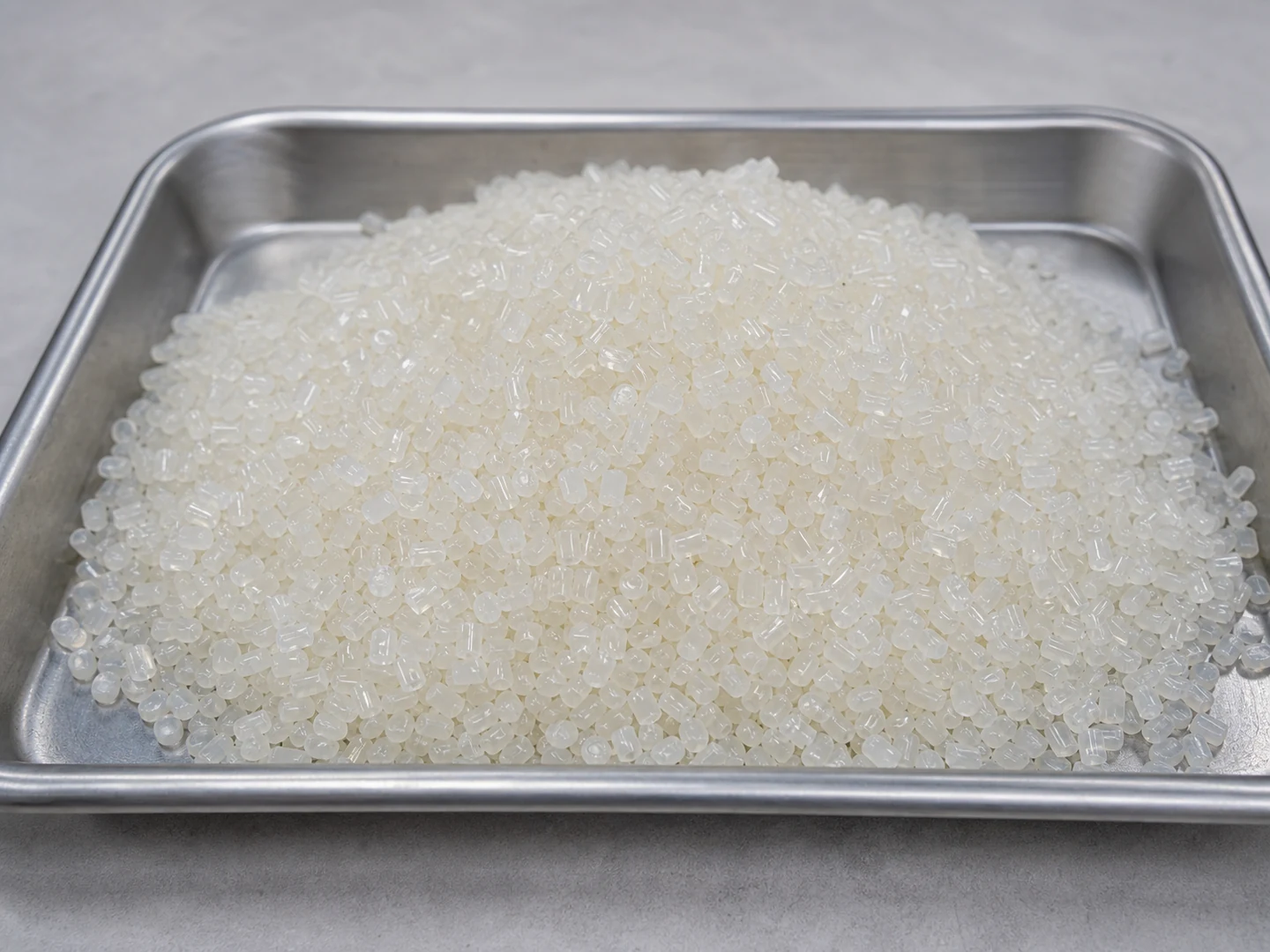
| Nylon (soft) | Delicate channel lining, light biofilm | Gentle, resistant to most chemicals, low particle shedding | May not remove hardened debris; can mat down over time |
| Nylon (stiff/abrasive) | Moderate to heavy buildup; reusable scopes | Better scrubbing action; retains stiffness after autoclaving | Risk of micro-scratches if used aggressively |
| Polypropylene | Single-use brushes; cost-sensitive environments | Economical, adequate stiffness, compatible with common detergents | Less durable; bristles may deform in high-temperature disinfection |
| Brass or bronze wire | Extremely stubborn occlusions, metal channels only | Aggressive cleaning; can restore patency in clogged channels | Will damage polymer-lined channels; must not be used on flexible endoscopes with plastic lining |
| Stainless steel (304/316) | Rigid channel instruments | Corrosion-resistant, durable | Unsuitable for flexible channels due to risk of puncturing the lining; heavy |
Key Size and Fit Parameters for Narrow Channels
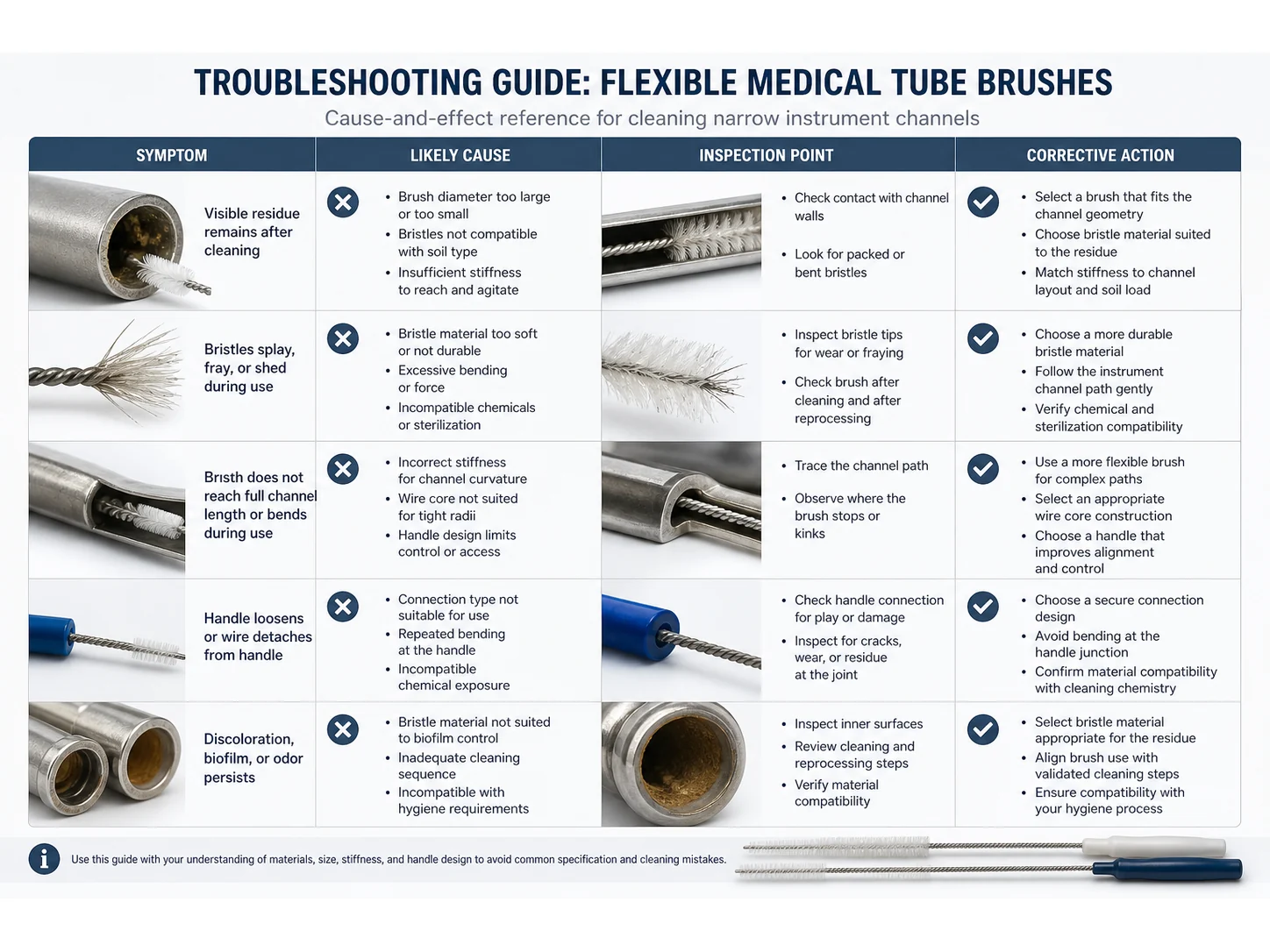
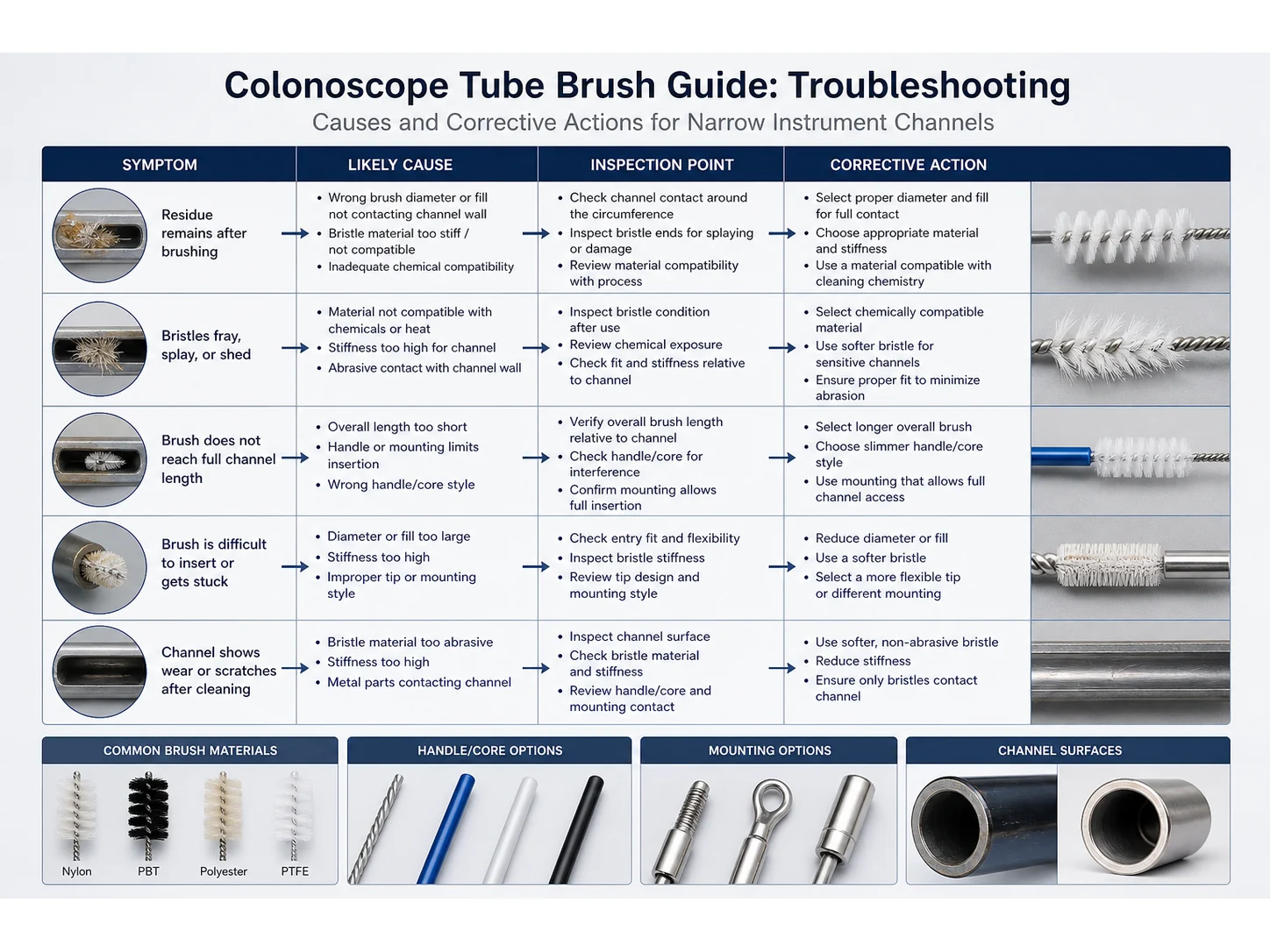
Choosing the correct brush size is critical. A brush that is too large will jam or tear the channel lining, while one that is too small leaves residue behind. The three essential measurements are:
- Brush outer diameter (OD): Should be approximately 0.1–0.2 mm smaller than the narrowest channel ID to avoid binding but large enough to make full contact with the walls.
- Working length: Must reach the entire channel length plus any angulated sections; typically 1.5× the channel length for manual reprocessing to allow a back-and-forth stroke.
- Tip design: A rounded, non-abrasive tip reduces the risk of perforating the channel end.
Stiffness, Handle/Core, and Mounting Options
Beyond material and diameter, the brush’s core and handle influence how it navigates tight bends and how it can be gripped during use.
- Twisted wire core: Most common; offers flexibility and moderate column strength. Can distort if stored coiled.
- Plastic monofilament core: Better chemical resistance and memory; often used for single-use brushes.
- Handle termination: Loop, straight tail, or luer-lock adapter. A loop handle is standard for manual reprocessing; a luer-lock fitting allows connection to automated flushing systems.
- Mounting: Some brushes are designed to integrate with automated endoscope reprocessors (AERs); confirm that the brush attachment matches the AER port before purchasing.
How to Choose the Right Brush Based on Residue and Surface Sensitivity
Different procedures produce different types of residue. Brushes should be matched to the clinical use pattern:
- Soft, mucoid film: Low-abrasion nylon or polypropylene is usually sufficient. Frequent brushing reduces buildup before it hardens.
- Dried or baked-on debris: Stiffer nylon or a combination brush with gentle abrasive tips may be needed. Avoid metal unless the channel is metal-lined.
- Biofilm: Brushes alone rarely remove established biofilm. They are part of a multi-step process that includes enzymatic soak and chemical disinfection. Consider brushes with channel-scrubbing design features.
- Channel lining material: PTFE, FEP, or other polymer linings are sensitive to wire bristles. Always select a non-metallic brush unless the original equipment manufacturer instructions explicitly permit metal.
Wet or Chemical Exposure: Compatibility Considerations
Brushes must withstand the chemical environment of endoscope reprocessing. Key factors:
- Enzymatic detergents: Most brush materials tolerate neutral pH enzyme solutions, but check heat tolerance if using warm solutions.
- High-level disinfectants: Glutaraldehyde, ortho-phthalaldehyde (OPA), peracetic acid, and hydrogen peroxide-based chemistries can degrade some plastics. Verify the brush material is rated for the exact disinfectant used.
- Sterilization: If brushes are reusable and must be autoclaved, choose heat-resistant materials like high-temperature nylon or stainless steel. Many single-use brushes cannot survive steam sterilization.
- Drying and storage: Residual moisture can promote microbial growth on the brush itself. Brushes should be thoroughly dried and stored in a clean, non-shedding environment.
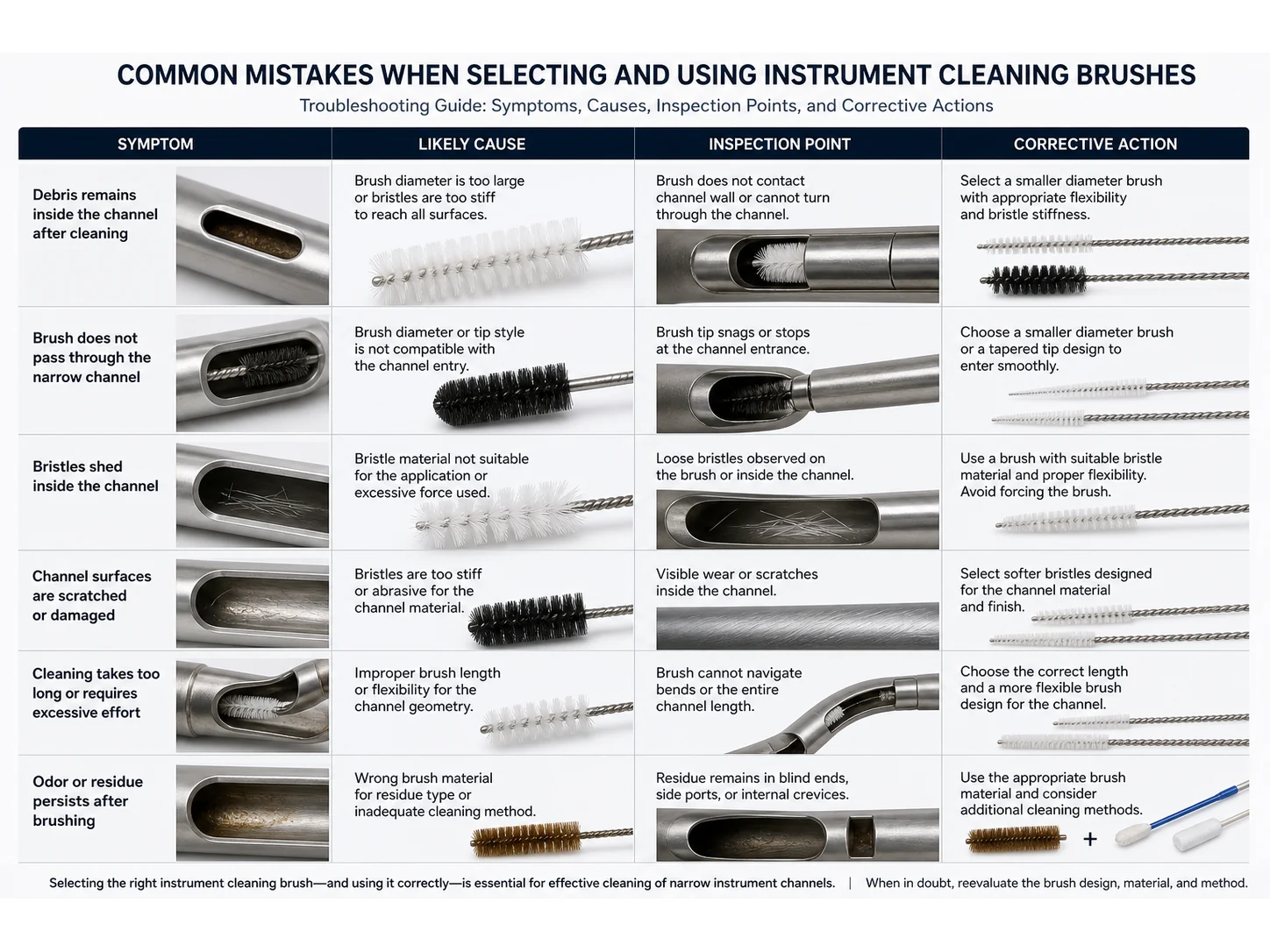
Common Mistakes When Selecting a Colonoscope Tube Brush
Avoid these errors during selection and procurement:
- Choosing by cost drivers or brand familiarity only: Ignoring channel diameter and lining material leads to damage or ineffective cleaning.
- Using generic laboratory brushes: Standard test tube brushes lack the tip safety, diameter consistency, and chemical documentation required for medical endoscopes.
- Ignoring the instrument manufacturer’s reprocessing manual: Colonoscope manufacturers specify brush dimensions and material compatibility. Deviation can void service warranties.
- Assuming all nylon brushes are equal: Bristle density, filament diameter, and heat-set treatment affect cleaning performance and channel safety.
- Over-brushing or excessive force: This can cause channel deformation or create rough surfaces that trap future debris.
- Not matching the brush to the reprocessing workflow: Automated systems may require a specific brush attachment; manual systems may need a longer brush to ensure full stroke length.
When a Colonoscope Tube Brush Isn’t Enough
A brush is only one component of endoscope reprocessing. It may not be sufficient when:
- Heavy biofilm formation: Mechanical brushing alone cannot remove biofilm. The process must include enzymatic soaking, chemical disinfection, and possibly ultrasonic cleaning for removable parts.
- Channel damage or pitting: If the channel interior is already compromised, brushes can make it worse. A borescope inspection or manufacturer evaluation may be needed first.
- Complex multi-channel scopes: Duodenoscopes and some colonoscopes have elevator mechanisms or narrow side channels requiring specialized brushes or sponges. Using a standard tube brush on these can miss critical areas.
- Inadequate documentation: For new equipment, always request a supplier’s material data sheet and dimensional drawing. If you cannot get a drawing showing the exact bristle length, core material, and tip construction, consider a different source or conduct a sample test before full procurement.
Final Takeaway
A colonoscope tube brush is a deceptively simple tool that directly affects patient safety and scope longevity. Rather than selecting the lowest-cost or most familiar option, match the brush to the specific channel diameter, lining material, residue type, and chemical exposure of your reprocessing protocol. Verify compatibility with the instrument manufacturer’s manual, avoid metal bristles on plastic-lined channels, and conduct a visual inspection after cleaning. When performance requirements exceed what your current brushes can deliver, consider testing samples side by side under real-use conditions before making a purchase decision.
Frequently Asked Questions
Can I use a standard test tube brush for my colonoscope?
No. Standard laboratory test tube brushes are not designed for medical endoscope channels. They often have exposed wire tips, inconsistent diameters, and no chemical compatibility data. Using them risks puncturing the channel lining and invalidating the scope warranty.
What diameter brush do I need for a colonoscope working channel?
Always refer to the colonoscope’s reprocessing manual. Typical working channels range from 3.2 mm to 4.2 mm. The brush outer diameter should be about 0.1–0.2 mm smaller than the minimum channel inner diameter to allow smooth movement while maintaining wall contact.
Are metal brushes ever acceptable for endoscope channels?
Only if the channel is entirely metal and the manufacturer explicitly permits metal bristles. Most flexible endoscopes have plastic-lined channels that scratch or tear with metal brushes. For routine reprocessing, stick with nylon or polypropylene.
How often should a reusable colonoscope tube brush be replaced?
Replace when bristles show matting, distortion, or loss of stiffness, or according to the brush manufacturer’s recommended cycles. Inspect before each use. Single-use brushes should be discarded after one cleaning cycle to prevent cross-contamination.
Can I use the same brush for manual and automated reprocessing?
Maybe, but check the brush attachment. Automated endoscope reprocessors often require a specific connector (e.g., luer-lock). A loop-handle brush for manual cleaning may not attach securely. If switching between processes, verify compatibility first.
What should I do if my brush gets stuck in the channel?
Never pull forcefully. Stop immediately and follow the endoscope manufacturer’s emergency retrieval procedure. Forcing it can tear the channel lining or break off the brush tip, requiring costly repair. Some facilities keep a retrieval device on hand for such events.
Is it necessary to request a material data sheet for a brush purchase?
Yes, especially if you use aggressive disinfectants like peracetic acid or if the brush will be autoclaved. A material data sheet confirms temperature and chemical compatibility. For new suppliers, requesting a drawing of the brush tip and bristle profile is a prudent step before ordering in bulk.
How do I test a new brush design before full rollout?
Obtain samples and perform a side-by-side comparison with your current brush on a few used scopes. After brushing and reprocessing, inspect the channel with a borescope for residual soil and check for any channel surface changes. This practical evaluation often reveals issues not captured in spec sheets.