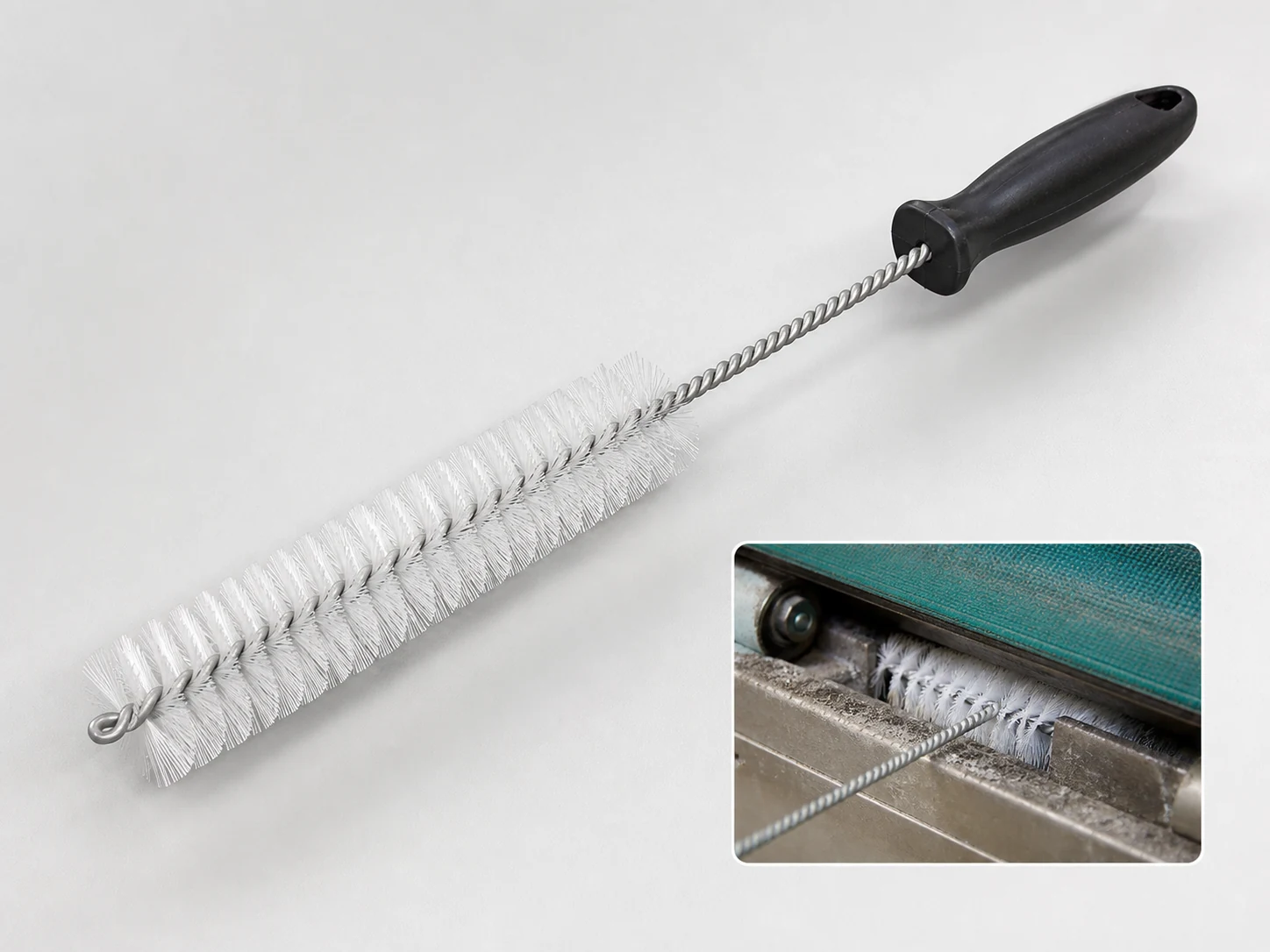
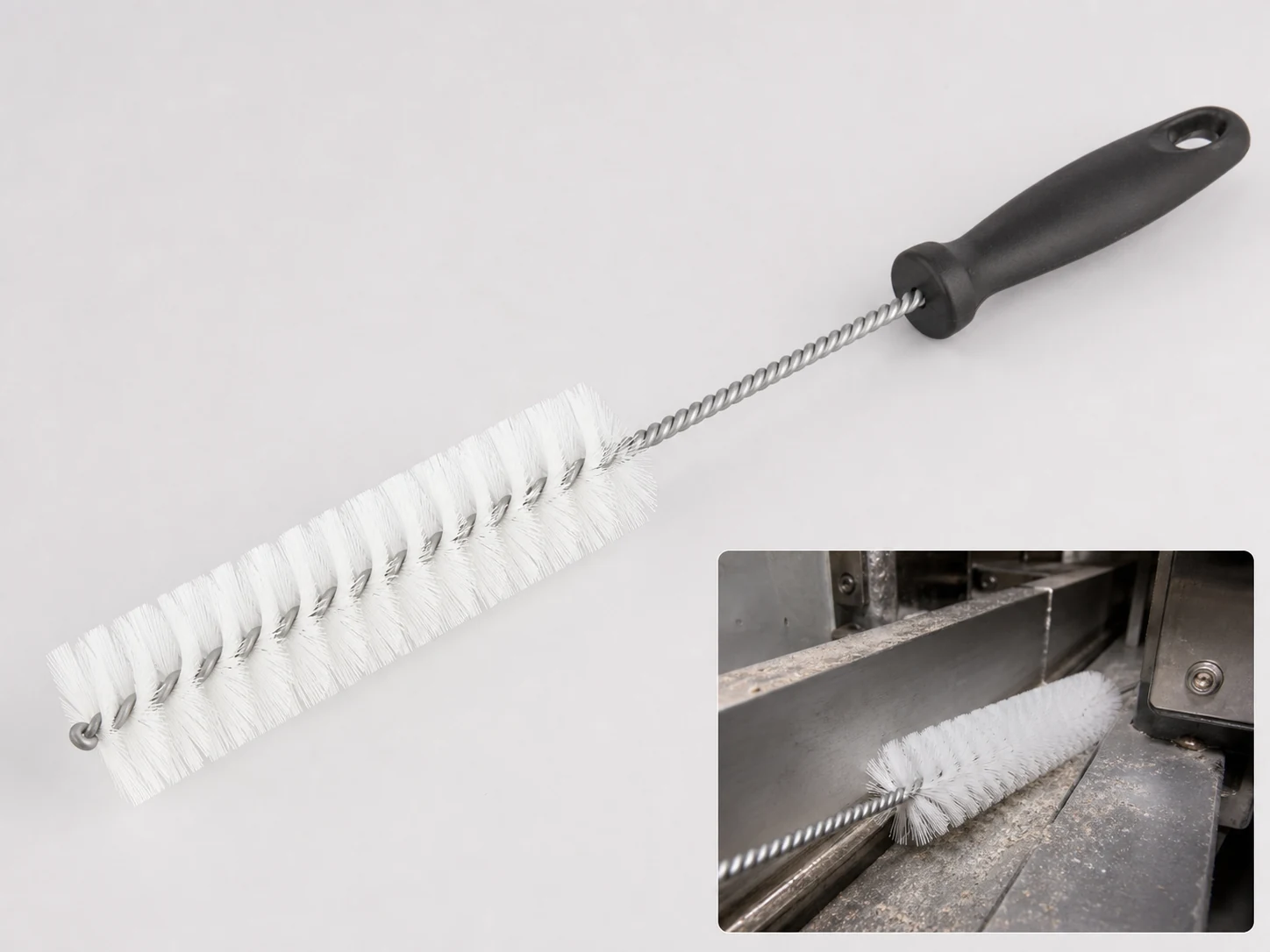
What Is a Surgical Instrument Nylon Brush?
A surgical instrument nylon brush is a channel cleaning brush with bristles made from nylon, a synthetic polymer valued for its chemical resistance, low water absorption, and non-abrasive cleaning action. In medical device reprocessing, these brushes are used on lumened instruments such as endoscopes, suction tubes, biopsy forceps channels, and cannulas. Nylon bristles provide effective mechanical removal of proteinaceous soils without scratching stainless steel or delicate internal linings, making them a common choice for instruments that require rigorous yet surface-safe cleaning.
Common Types and Configurations
For reusable medical-device cleaning claims, the practical boundary is the device maker’s validated instructions and the FDA — Reprocessing Medical Devices in Health Care Settings rather than a brush-only rule.
For healthcare cleaning language, this article keeps its claims within the general boundary of the CDC — Disinfection and Sterilization Guideline, which is written for disinfection and sterilization in healthcare facilities.
Where the article discusses healthcare settings rather than ordinary cleaning, the CDC — Core Infection Prevention and Control Practices is used as the general infection-control frame.
For material-selection language, this section is supported by British Plastics Federation — Thermoplastics.
For brush terminology and construction language, this section references American Brush Manufacturers Association — Brush Lingo.
Not all surgical instrument nylon brushes are the same. The following variations are commonly encountered when sourcing for narrow instrument channels:
- Diameter and overall length: Brushes range from sub-millimeter channel sizes up to several millimeters. Length must match the full channel plus additional grip area.
- Bristle stiffness: Soft, medium, and firm bristles are available. Soft is used for delicate optics or polymer channels, while medium/firm may be used for robust stainless steel lumens with tenacious deposits.
- Core and handle design: Twisted wire cores provide flexibility and are common for long, curved channels. Plastic handles or integrated loop ends offer ergonomic grip for manual cleaning. Some brushes feature interchangeable tips.
- Mounting style: Fixed handle, drill-attachable, or machine-mountable brushes exist depending on whether cleaning is manual or automated.
Key Selection Factors: A Comparison
When evaluating a surgical instrument nylon brush for narrow channels, these factors should be compared side by side. The table below summarizes the most critical decision points.
| Factor | Options | Best For | Considerations |
|---|---|---|---|
| Bristle Material | Pure nylon, nylon with abrasive additives, heat-stabilized nylon | Standard cleaning, slightly abrasive cleaning, high-temperature sterilization | Additives may alter chemical resistance; verify compatibility with detergents. |
| Diameter (Brush OD) | Measured in mm; typically 1–5 mm for narrow channels | Must match or slightly exceed channel ID for effective contact | Too large causes jamming; too small leaves residue. Check channel tolerance. |
| Bristle Stiffness | Soft, medium, firm | Soft: polymer/optics. Medium: general stainless. Firm: stubborn deposits in robust channels. | Firm bristles may scratch delicate surfaces. Always validate on a sample. |
| Core/Handle Type | Twisted wire, solid plastic, looped wire, detachable | Twisted wire for flexibility; plastic for rigidity; detachable for automation | Wire cores can trap moisture; ensure corrosion-resistant materials. |
| Mounting Method | Fixed handle, drill chuck, machine specific | Manual cleaning vs. automated washer/disinfector | Verify interface dimensions with equipment manufacturer. |
| Chemical Resistance | Check against enzymatic cleaners, alkaline detergents, and disinfectants | All cleaning processes | Nylon generally resists many chemicals but can degrade with strong acids or oxidizing agents at high temperatures. |
How to Choose the Right Brush for Narrow Instrument Channels
Selection should follow a logical sequence based on the instrument and cleaning protocol. Here are the steps to guide your decision:
- Measure the channel accurately. Use a pin gauge or consult the instrument IFU (Instructions for Use) to determine the smallest internal diameter and working length. The brush diameter should be slightly larger than the channel ID to ensure bristle contact, but not so large that it risks binding or excessive friction.
- Identify the typical residues. Protein-rich soils, lipids, or surgical lubricants may require different bristle stiffness or density. Soft, dense bristles can effectively wipe protein films, while slightly stiffer brushes may be needed for hardened deposits.
- Assess surface sensitivity. Polymer channels, optical surfaces, or coated lumens demand soft nylon bristles to prevent micro-scratches. Stainless steel channels can tolerate medium or firm bristles if properly validated.
- Review chemical exposure. The brush must withstand the entire reprocessing cycle: immersion in enzymatic cleaners, exposure to high-level disinfectants, and sometimes steam sterilization. Nylon is generally robust, but verify with the brush supplier for specific chemical resistance data.
- Consider ergonomics and workflow. If manual cleaning is performed, handle design and weight matter for technician fatigue. For automated systems, ensure the brush can be securely mounted and won’t detach during washing cycles.
- Check for custom sizing needs. If standard brushes do not match a unique channel geometry, custom diameter or length may be required. Request a drawing review from the supplier to confirm fit and functionality without risking instrument damage.
Common Mistakes When Selecting a Surgical Instrument Nylon Brush
Even experienced sterile processing teams can make these mistakes. Avoid them to ensure effective cleaning and instrument longevity.
- Matching diameter only, ignoring length. A brush that fits the cross-section but is too short fails to clean the entire channel. Always verify the working length plus grip.
- Assuming one stiffness works for all instruments. Using a firm brush on a flexible endoscope channel can damage the internal lining, leading to expensive repairs.
- Overlooking core material corrosion. A twisted wire core may rust if not made of stainless steel or if exposed to harsh chemicals. This can introduce foreign material into the instrument.
- Skipping validation with actual soils. A brush that looks right might not remove specific residues effectively. Always test with the actual cleaning chemistry and worst-case soiling.
- Neglecting brush durability. Frequent reuse can cause bristle deformation or shedding. Define replacement frequency based on visual inspection and cleaning performance testing.
When a Surgical Instrument Nylon Brush Is Not Enough
While nylon brushes are versatile, they have limits. Recognizing these boundaries helps avoid inadequate cleaning and potential infection control risks.
- Heavy, baked-on or dried debris. For channels with thick, dehydrated residues, a pre-soak step with enzymatic detergent is essential. The brush alone may not loosen such deposits without excessive force.
- Extremely small or convoluted channels. Some instrument lumens are exceptionally narrow (<1 mm) or have sharp bends where a twisted wire brush cannot navigate without kinking. In such cases, a pull-through cleaning device, sponge style brush, or ultrasonic cleaning may be more appropriate.
- If instrument manufacturer specifies a different cleaning method. Always follow the device IFU. If the manufacturer prohibits bristle brushes or mandates a specific brush material, the nylon brush must be validated or an alternative chosen.
- Need for validated cleaning efficacy data. For regulatory compliance, some facilities require documented cleaning verification. If the brush supplier cannot provide supporting data or reference cleanability tests, a sample test or in-house validation should be performed before full adoption.
- Special surface treatments. Hydrophilic coatings or fragile optical windows may require a brush with even softer tips (e.g., extra-soft nylon or brush-free cleaning methods). A standard nylon brush might still be too aggressive.
Final Takeaway
Choosing a surgical instrument nylon brush for narrow instrument channels requires balancing cleaning efficacy with surface protection. Start with accurate channel measurements, then match bristle stiffness and material compatibility to the specific residues and instrument materials. Avoid common shortcuts like size alone, and remember that the right brush is part of a broader cleaning and validation process. When in doubt, request a supplier drawing review and conduct a sample test to confirm the brush performs safely and effectively in your reprocessing workflow.
Frequently Asked Questions
What is the ideal bristle stiffness for endoscope channels?
Soft nylon bristles are generally recommended for flexible endoscope channels to prevent damage to the inner lining. Medium stiffness may be used for rigid portions, but always consult the endoscope manufacturer’s IFU.
Can surgical instrument nylon brushes be reused after sterilization?
Yes, many nylon brushes are designed for multiple use cycles and can withstand steam sterilization. However, inspect the brush before each use for bristle wear, deformation, or corrosion. Replace when signs of fatigue appear to maintain cleaning performance.
How do I measure the channel to order the correct brush diameter?
Use a calibrated pin gauge set to determine the minimum internal diameter along the entire channel length. The brush diameter should be 0.1–0.5 mm larger than the measured ID, but this depends on channel tolerances and bristle flexibility. For critical applications, order a sample set for fit testing.
Are there specific nylon types used for medical cleaning brushes?
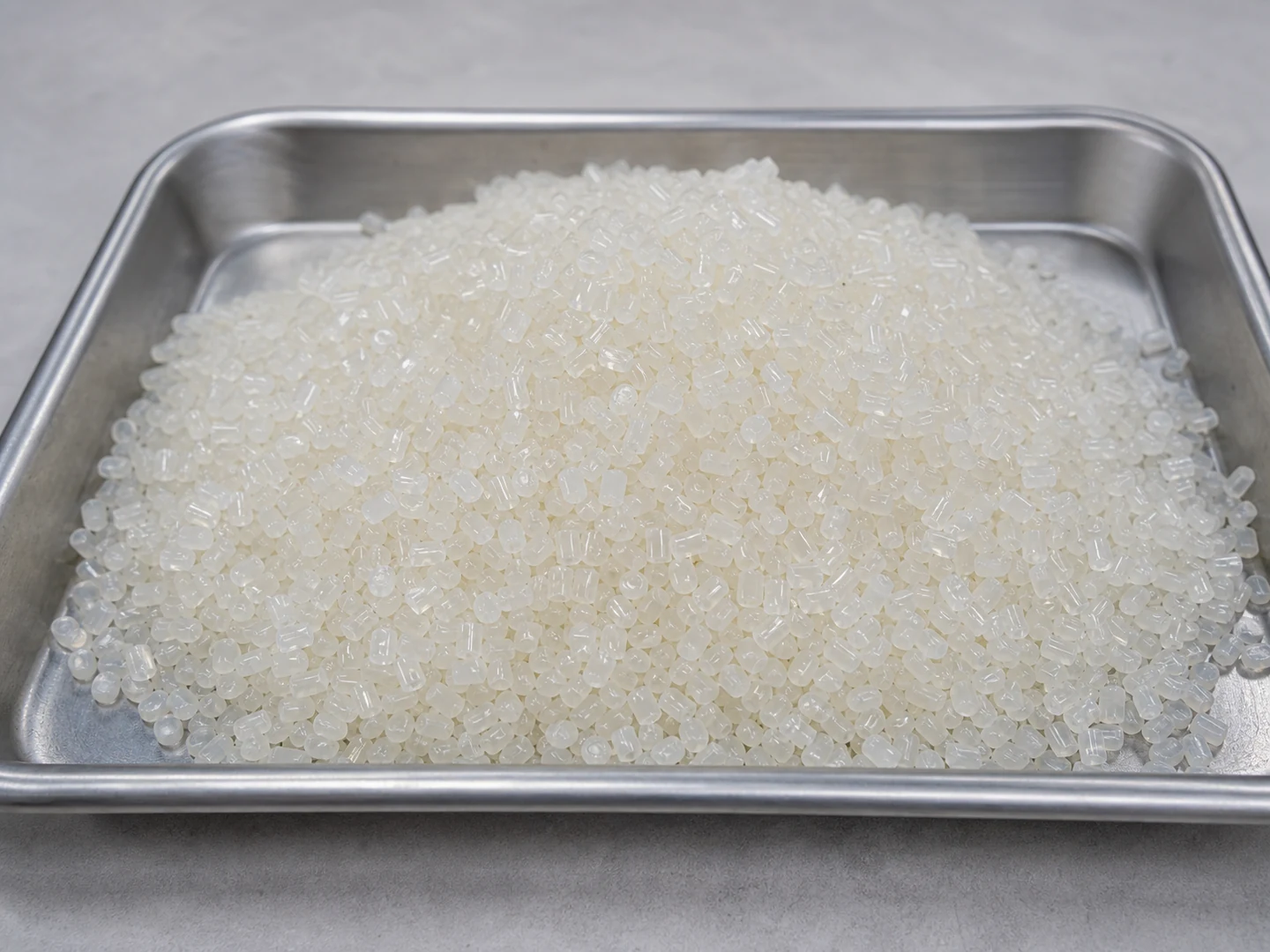
The most common type is PA 6.12 or heat-stabilized nylon, which offers good chemical resistance and thermal stability during autoclaving. Avoid nylon types that absorb excessive moisture, as they can soften and lose bristle resilience.
What is the difference between a nylon brush and a wire brush for surgical instrument cleaning?
Nylon brushes are non-abrasive and safe for most instrument surfaces, whereas wire brushes (usually stainless steel or brass) are more aggressive and can scratch delicate components. Wire brushes are typically reserved for robust, non-critical instruments where heavy deposit removal is required, but they are rarely suitable for narrow, sensitive channels.
Is a twisted wire handle better than a plastic handle for narrow channel brushes?
Twisted wire handles provide flexibility, which is essential for navigating curved channels. Plastic handles offer more rigidity and may be easier to grip but are less suited for tortuous lumens. The choice depends on the channel geometry: straight channels can use either, while curved channels usually require a flexible wire core.
Can I get a custom-sized surgical instrument nylon brush if standard sizes don’t fit?
Yes, most brush manufacturers can produce custom diameters, lengths, and bristle configurations. Provide a detailed drawing of the channel, including inner diameter, length, and any bends, so the supplier can design a brush that fits without causing damage. Prototype testing is strongly recommended.
Do nylon brushes shed bristles and cause contamination?
High-quality, properly used nylon brushes should not shed bristles under normal conditions. Bristle loss usually indicates excessive force, chemical degradation, or end-of-life wear. Regular inspection and replacement according to a preventive maintenance schedule will mitigate this risk.